Shepherd Ibrahim Koc recalls his youth with fondness as he grazes cattle on a barren field that was once lush with vegetation on the edge of Turkey's largest lake.
An occasional shrub marks the spots from where Lake Van has retreated over years of global heating and drought.
"The animals are thirsty," the 65-year-old lamented.
"There is no water," Koc said, echoing sentiments expressed by a growing number of Turks who have watched their mountains lose ice caps and their water reservoirs dry up.
A weather map of Turkey -- an agricultural superpower stretching from Bulgaria in the west to Iran in the east -- shows much of the country suffering from a prolonged drought.
Shrinking shorelines are exposing lakebeds that pollute the air with a salty dust. Scientists fear the problems could grow only worse.
"I think these are our good days," Faruk Alaeddinoglu, a professor at Van Yuzuncu Yil University, told AFP.
"We will witness the lake continuing to shrink in the coming years."
Lake Van covers approximately 3,700 square kilometers (1,400 square miles), reaching a maximum depth of 450 metres (1,475 feet).
Its surface area has shrunk by around 1.5 percent in recent years, according to measurements Alaeddinoglu carried out last autumn.
"That is a terribly large amount of water for a 3,700 square kilometer area," he said.
- 'Barren land'-
In the Celebibagi neighbourhood on the lake's northern shore, the waters have receded by around four kilometers.
A long walk along the exposed lakebed is littered with bird bones, craggy bushes and dried dirt covered with sodium and other minerals.
"We are walking in an area which was once covered with the lake's waters," said Ali Kalcik, a local environmentalist.
"Now, it's a barren land without a living thing."
The sight of dazzling flamingos dancing in the air against the backdrop of mountains signals the spot where the lake finally begins.
Alaeddinoglu said the lake's size had changed in the past because of rifts in tectonic plates that make Turkey into one of the most active earthquake zones in the world.
But he blamed the ongoing water loss on rising temperatures that result in "less precipitation and excessive evaporation".
Almost three times as much of the lake's water evaporates than comes back down in the form of rain, Alaeddinoglu said.
Lush gardens of newly-built summer cottages are also draining water from the region, where President Recep Tayyip Erdogan has built a government retreat.
- 'Business is dying' -
The problem has become so severe that officials are urging local farmers not to grow crops requiring too much water.
This means farmer Kinyas Gezer can no longer afford to grow sugar beets, which are a particularly thirsty vegetable.
"All my labour has been wasted," the 56-year-old lamented, pointing to his shrivelled apricots.
"If it goes on like this, we will abandon farming. The business is dying."
The water's loss also exposes pollution, according to Orhan Deniz, a professor of Yuzuncu Yil University, whose campus sits on the lake's shore.
"Large patches of slime mixed with mud give off a bad smell and make human pollution more evident," he said.
"In the 1990s, we would swim during lunch break and then go back to university," he said, gazing at the lake from his office.
"Now it's not possible to step in the water, let alone swim in it," he said.
- 'A bird massacre' -
The lake is still popular with tourists and some locals swim along its more scenic parts.
Van Governor Ozan Balci said his office has spent 80 million lira ($3 million) cleaning up the lake.
"We are doing our best to protect the lake because of its cultural heritage and people's common memory," he told AFP.
In the shoreline village of Adir, some locals swam and others picnicked under a tree.
But dead gulls lying not too far from the vacationers betrayed the ecological problems facing the lake.
Experts say pearl mullets that form the basis of the gulls' diet migrated early this year because of the drought.
Deprived of food, the gulls simply starved to death.
"The remaining birds here have one more week. Then they will also die," local villager Necmettin Nebioglu, 64, said.
"In the past, the seagulls would follow us while we were swimming. Now look, it's a bird massacre," he said, pointing to a pile of carcasses on the shore.
On the banks of the River Wye on the border between England and Wales, Pat Stirling flings a plastic measuring jug tied to a rope into the water.
Up and down the river, a team of 250 others have been doing the same, hoping to save it from an unfolding ecological crisis.
"The river is declining. The next thing is it's partially dead, then it's completely dead," Stirling told AFP between tests.
The researchers say that after years of being ignored, their data has finally forced admissions about a pollution problem caused mostly by chicken manure.
The Wye Valley and its meandering river have notably inspired the Romantic poet William Wordsworth who eulogized it in the 1798 poem "Tintern Abbey".
Stretching 250 kilometers (155 miles) from its source in mid-Wales to the Severn estuary, the Wye cuts through stunning countryside.
But in 2020 signs began to emerge that the river and its rare wildlife were under threat.
People noticed that the usually smooth stones on the floor of the river had become "slimed up", said Stirling, 43, a carbon footprint consultant originally from Australia.
- 'Disgusting stuff' -
Bird and insect life dwindled and anglers noticed that fish were struggling to grow to larger sizes.
Most noticeably, the Water Crowfoot -- an aquatic flowering plant that the river was once thick with -- was disappearing.
First thoughts turned to a nearby sewage treatment plant.
But as nothing had changed in the way the plant operated locals concluded that it was no more polluting than previously.
"You can take a shot of sewage overflow but what you can't take a photo of is the shocking amounts of animal manure coming out of the intensive poultry units," Stirling said.
A study of planning applications on both sides of the border pointed to the vast number of poultry units that had sprung up along the river in recent years.
Campaigners estimate that there are now 20 million farmed birds in the area of the River Wye in over 760 units.
The units supply a chicken processing plant run by Avara Foods in Hereford, which a decade ago won a huge contract to supply UK supermarket giant Tesco.
After one reported pollution incident, Stirling investigated and found "this horrendous smell and this truly disgusting stuff everywhere".
- 'Declining' -
"Something had gone awfully wrong. I took samples and identified that it was coming from a specific farm", he said.
The manure produced by the chicken sheds contains high levels of the essential nutrient phosphorus, excessive amounts of which damage water quality.
The manure is either spread onto farmland and then washed into the river by rain or into the river directly from the ground where it is dropped by free-range chickens.
Wye phosphorus levels were "nearly 60 percent greater than the national average", Lancaster University scientist Paul Wither told MPs last year.
Conservation watchdog Natural England, which advises the government, in May downgraded the water quality rating of the river, following declines in important species like Atlantic salmon and white-clawed crayfish.
Stirling said he believed the updating of the classification to "unfavorable-declining" only happened due to the noise generated by campaigners and "citizen scientists" like him.
He welcomed the body's interest but added: "We also know they would never have done anything if we hadn't (got involved in testing)."
- Positive signs -
If the river is to avoid the two lowest categories -- "part-destroyed" or "destroyed" -- the authorities need to urgently pull the right "levers", he said.
Some of the signs are positive.
In a letter to farmers this month, Avara foods explained that contracts would be changed so their manure could not be sold within the Wye catchment area.
Its aim was to make sure that "our supply chain is demonstrably not part of the problem by 2025", it said.
The firm told AFP that although they would play their part to "mitigate the impact of our supply chain" Avara Foods were not "direct polluters".
"Farms in our supply chain use or sell poultry litter... yet we recognize the potential impact this may have," it added.
Stirling said he believed Avara's new position was linked to a law suit in the United States involving its joint owner, food giant Cargill, and other poultry producers.
A judge in January ruled that the companies were responsible for degrading the Illinois River in a similar way to the pollution of the Wye.
For now Stirling and his team of citizen scientists will carry on testing and feel hopeful they can make a difference.
"What gets measured gets managed and we are seeing that happen. We are getting traction because of the public data noise," he said.
A new paper published in the journal The Humanistic Psychologist articulates the clinical utility of individualizing psychological assessment by making use of the Enactivist Big-5 Theory of Personality, an approach that is grounded in the enactivist perspective of human cognition. The authors argue for a mutual synthesis of enactivist cognitive science and individualized psychological assessment. “Theoretically, I believe it can be very rewarding to see the ways in which theories in scientific psychology, like the Big Five, can become more humanized by dialoguing them with phenomenology,” said...
Parents should limit the amount of time children spend on social media and video games, researchers have said, after a new study found inactive teenagers are more likely to have signs of heart damage when they are young adults.
Academics said that this heart damage could be setting the stage for heart attacks and strokes in later life.
Even children who have a normal weight were still at risk, experts found. In the new study 766 British youngsters were tracked for 13 years. Sitting time was assessed using smartwatches with an activity tracker for seven days.
By the end of century, more than one billion cows worldwide could suffer from heat stress if global warming continues unabated, threatening their fertility, milk production and lives, according to research published on Thursday.
Nearly eight out of 10 cows across the planet are already experiencing excessively high body temperatures, spiked respiration rates, bowed heads and open-mouthed panting -- all symptoms associated with severe heat stress, the study said.
In tropical climates, 20 percent of cattle endure those symptoms year-round.
These numbers are projected to balloon if cattle farming continues to expand in the Amazon and Congo basins, where temperatures are on track to rise more quickly than the global average.
If emissions of climate-heating greenhouse gases continue to rise, the study predicts heat stress will become a year-round problem in Brazil, southern Africa, northern India, northern Australia and central America by 2100.
"A very important determinant of how many cows are exposed to this heat is decisions about land-use change," lead author Michelle North of University of KwaZulu-Natal in South Africa told AFP.
"Deforestation of tropical forests for livestock expansion is not a viable development future, because it makes climate change worse and will expose hundreds of millions more cattle to severe heat stress," she added.
The study, published in Environmental Research Letters, found that in a worst-case scenario, cattle husbandry will nearly double in Asia and Latin America and increase more than fourfold in Africa.
Losing livelihoods
If greenhouse gases are curbed sufficiently -- including by cutting the use of fossil fuels and by limiting the expansion of cattle farming -- the number of cows suffering could be reduced by half in Asia and by four-fifths in Africa.
Commercial ranchers stand to lose a lot of money from heat stress. It already costs as much as 1.7 billion dollars annually in the United States alone.
But these farmers usually have insurance, good relations with banks and the ability to draw on loans to help them recover from heat-related losses, said North.
When heat or other climate disasters hit small-scale farmers, however, "it can lead to farmers literally losing their livelihoods, even if the net losses may appear 'negligible'", she said.
North and her team found that global milk supplies would be reduced by 11 million tonnes per year by 2050 under a high greenhouse gas emission scenario.
If emissions are aggressively reduced, nearly half of that amount would still be lost, mostly in Asia and Africa, where milk supplies are already low.
In the near term, overheated cows can be helped by providing them with access to shade and fans, and feeding them earlier in the day.
The microscope is an iconic symbol of the life sciences – and for good reason. From the discovery of the existence of cells to the structure of DNA, microscopy has been a quintessential tool of the field, unlocking new dimensions of the living world not only for scientists but also for the general public.
For the life sciences, where understanding the function of a living thing often requires interpreting its form, imaging is vital to confirming theories and revealing what is yet unknown.
This selection of stories from The Conversation’s archive presents a few ways in which microscopy has contributed to different forms of scientific knowledge, including techniques that take visualization beyond sight altogether.
1. Seeing as identifying
Over the past few centuries, the microscope has undergone a gradual but significant evolution. Each advance has allowed researchers to see increasingly smaller and more fragile structures and biomolecules at increasingly higher resolution – from cells, to the structures within cells, to the structures within the structures within cells, down to atoms.
But there is still a resolution gap between the smallest and largest structures of the cell. Biophysicist Jeremy Berg drew an analogy to Google Maps: Though scientists could see the city as a whole and individual houses, they couldn’t make out the neighborhoods.
“Seeing these neighborhood-level details is essential to being able to understand how individual components work together in the environment of a cell,” he writes.
Scientists are working to bridge that resolution gap. Improvements to the 2014 Nobel Prize-winning superresolution microscopy, for example, have enhanced the study of lengthy processes like cell division by capturing images across a range of size and time scales simultaneously, bringing clarity to details traditional microscopes tend to blur.
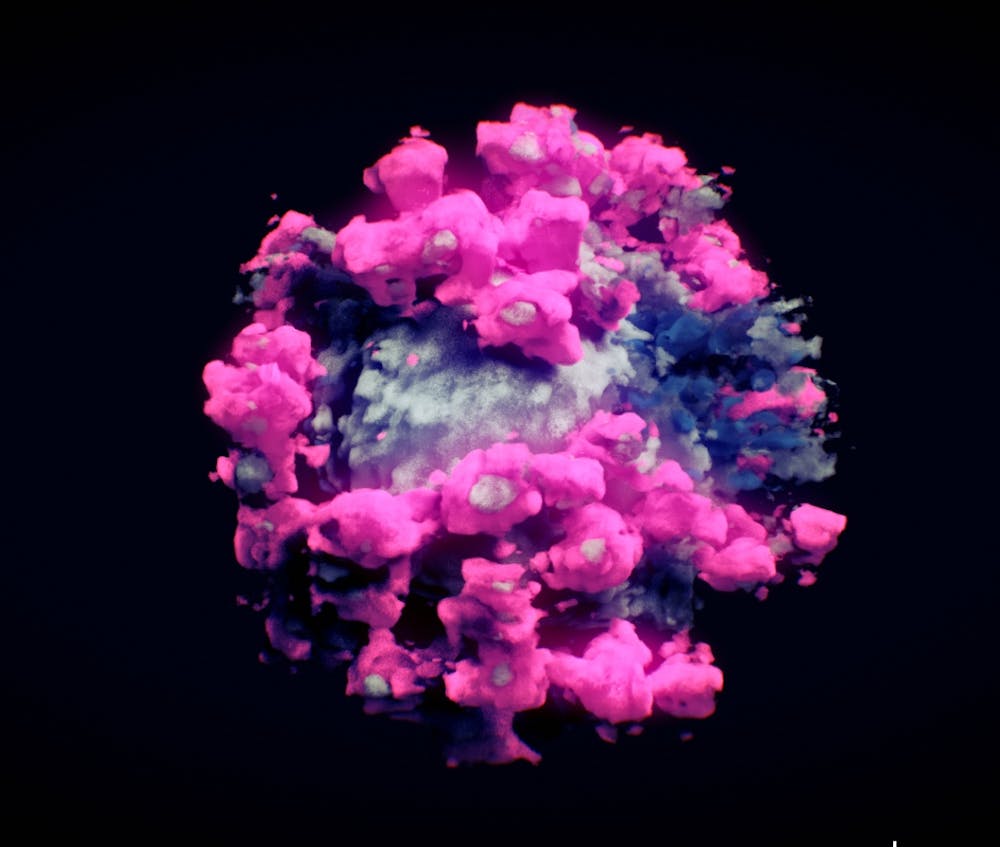
Cryo-electron tomography shows what molecules look like in high resolution – in this case, the virus that causes COVID-19. Nanographics, CC BY-SA
Another technique, cryo-electron microscopy, or cryo-EM, won a Nobel Prize in 2017 for bringing even more complex, dynamic molecules into view by flash-freezing them. This creates a protective glasslike shell around samples as they’re bombarded by a beam of electrons to create their photo op. Cryo-ET, a specialized type of cryo-EM, can construct 3D images of molecular structures within their natural environments.
These techniques not only generate images at or near atomic resolution but also preserve the natural shape of difficult-to-capture biomolecules of interest. Researchers were able to use cryo-EM, for instance, to capture the elusive structure of the protein on the surface of the shape-shifting hepatitis C virus, providing key information for a future vaccine.
Further enhancements to science’s visual acuity will reveal more of the fine details of the building blocks of life.
“I anticipate seeing new theories on how we understand cells, moving from disorganized bags of molecules to intricately organized and dynamic systems,” writes Berg.
2. Seeing as scoping
Microscopy images are often framed as snapshots – circumscribed parts of a whole that have been magnified to reveal their hidden features. But nothing in an organism works in isolation. After discerning individual components, scientists are tasked with charting how they interact with each other in the macrosystem of the body. Figuring this out requires not only identifying every component that makes up a particular cell, tissue and organ but also placing them in relation to each other – in other words, making a map.
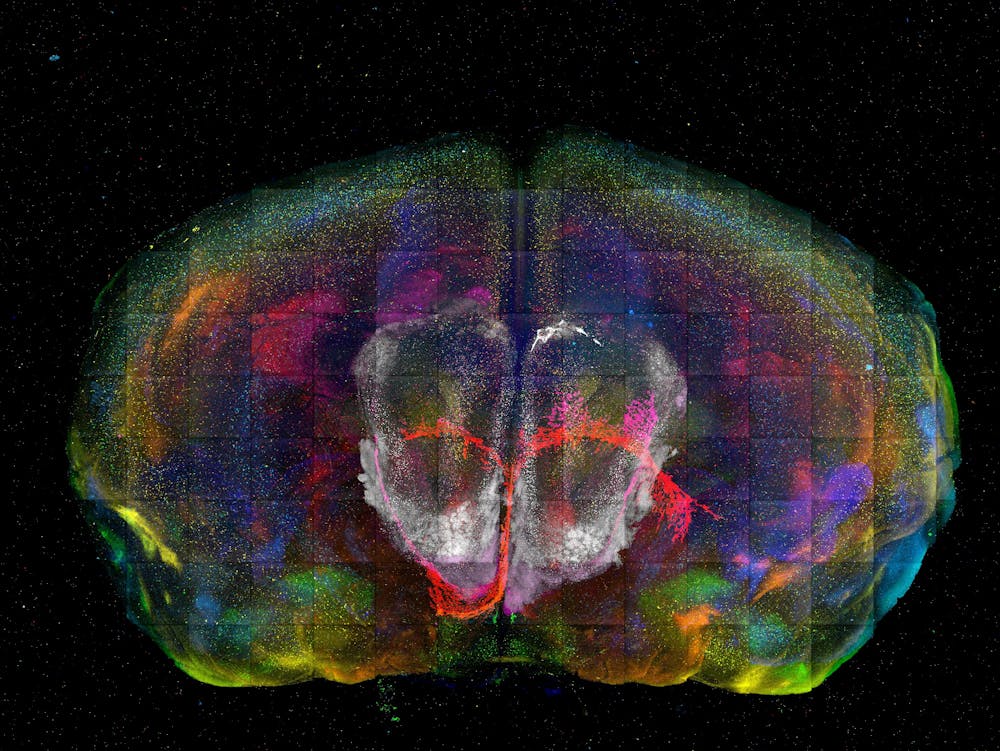
Researchers have been charting the brain by stitching together multiple snapshots like a photo mosaic. They use different techniques to label a specific cell type and then image the whole brain at high resolution. Layer by layer, each run-through creates an increasingly detailed and more complete model. Neuroscientist Yongsoo Kim likens the process to a satellite image of the brain. Combining millions of these photos allows researchers to zoom into the weeds and zoom out to a bird’s-eye view.
Zooming in on this image of a mouse brain reveals rectangular lines where images were stitched together, with each colored dot representing a specific brain cell type. Yongsoo Kim, CC BY-NC-ND
But building a map of a city, however detailed, is not the same as understanding its rhythm and atmosphere. Likewise, knowing where every cell is located relative to each other doesn’t necessarily tell researchers how they function or interact. Just as important as charting out the landscape of an organ is coming up with a working theory of how it all fits together and performs as a whole. Right now, Kim notes, analysis lags behind technical advances in data collection.
“Incredibly rich, high-resolution brain mapping presents a great opportunity for neuroscientists to deeply ponder what this new data says about how the brain works,” Kim writes. “Though there are still many unknowns about the brain, these new tools and techniques could help bring them to light.”
3. Seeing as recognizing
Every improvement in technology brings a parallel improvement in the data it collects, both in quality and in quantity. But that data is only useful insofar as researchers are able to analyze it – high granularity isn’t helpful if those details aren’t appreciable, and high output isn’t beneficial if it’s too overwhelming to organize.
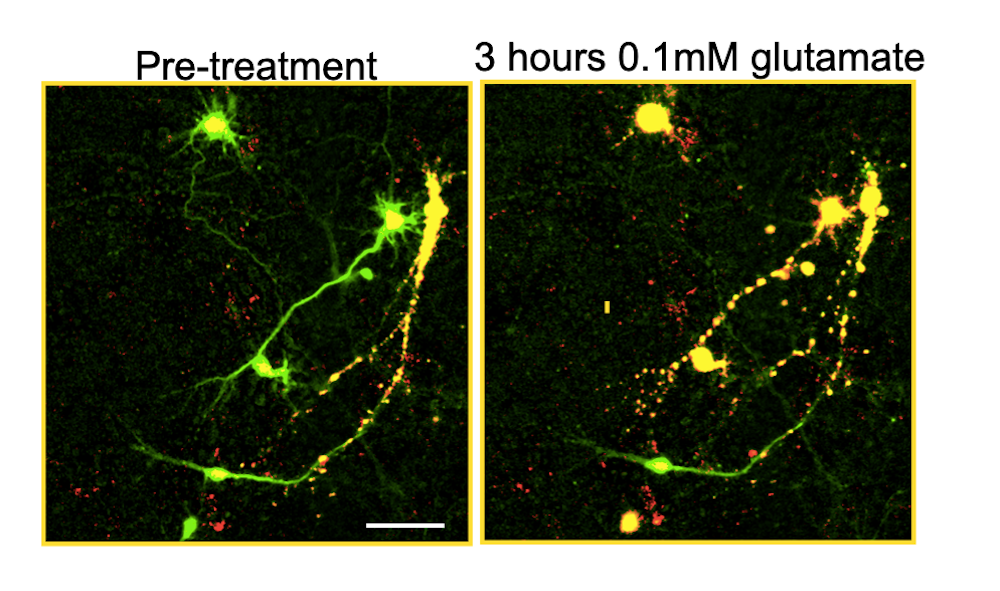
Automated microscopes, for example, have made it possible to take time-lapse images of cells, resulting in massive amounts of data that require manual sifting. Neuroscientist Jeremy Linsley and his team encountered this dilemma in their own work on neurodegenerative disease. They’ve been relying on an army of interns to scour hundreds of thousands of images of neurons and tally each death – a slow and expensive process.
These images show living neurons colored green and dead neurons colored yellow. Jeremy Linsley, CC BY-NC-ND
So they turned to artificial intelligence. Researchers can train an AI model to recognize specific patterns by feeding it many sample images, pointing out structures of interest and extrapolating the algorithm to new contexts. Linsley and his team developed a model to distinguish between living and dead neurons with greater speed and accuracy than people trained to do the same task.
They also opened the black box of the model to figure out how it was finding dead cells, revealing new signals of neuron death that researchers previously weren’t aware of because they weren’t obvious to the human eye.
“By taking out human guesswork, (AI models) increase the reproducibility and speed of research and can help researchers discover new phenomena in images that they would otherwise not have been able to easily recognize,” writes Linsley.
4. Seeing as appreciating
Even before they had the instruments to zoom in on samples, researchers had a tool in their arsenal to study the living world that they still use today: art.
Centuries ago, scientists and artists examined plants, animals and anatomy through illustration. Sketches of unfamiliar species in their natural environments aided in their classification, and drawings of the human body advanced study of its structure and function. With the help of the printing press, these artistic renderings – which later included the view under the lenses of early microscopes – popularized scientific knowledge about the natural world.
Though hand drawings have since given way to advanced imaging techniques and computer models, the legacy of communicating science through art continues. Scientific publications and BioArt competitions highlight laboratory images and videos to share the awe and wonder of studying the natural world with the general public. Using visualizations in classrooms and art museums can also promote science literacy by giving students a chance to look through the eye of the microscope as a scientist would.
Biologist and BioArt Awards judge Chris Curran believes that making visible the processes and concepts of science can grant a greater depth of understanding of the natural world necessary to being an informed citizen.
“That those images and videos are often beautiful is an added benefit,” she writes.
This video of cells migrating in a zebra fish embryo won first place in the 2022 Nikon Small World in Motion Competition.
And the abstract qualities of science can be made tangible in ways that don’t involve sight. Proteins, for instance, can be translated into music by mapping their physical properties into sound: amino acids turn into notes, while structural loops become tempos and motifs. Computational biologists Peng Zhang and Yuzong Chen enhanced the musicality of these mapping techniques by basing them on different music styles, such as that of Chopin. Consequently, a protein that prevents cancer formation, p53, sounds toccata-like, and the protein that binds to the hormone and neurotransmitter oxytocin flutters with recurring motifs.
Framing scientific images as art often requires no more than a change in perspective. And uncovering the poetry of science, many researchers would agree, can help reveal the artistry of life.
A video showing a close encounter between a hiker in Utah and a mountain lion defending her cubs went viral in 2020. The video, during which the hiker remained calm as the mountain lion followed him for several minutes, served as a visceral reminder that sharing the land with carnivores can be a complicated affair.
For conservation scientists like me, it also underscored that Americans have a fraught relationship with large carnivores like wolves, bears and mountain lions. My colleagues and I have proposed a federal policy that, when combined with other initiatives, could allow for sustainable coexistence between people and carnivores.
In a 2020 viral video, a Utah hiker encounters a mountain lion on the trail. Warning – strong language.
Major state and federal government efforts are underway to reintroduce grizzly bears to the Northern Cascades and gray wolves to Colorado. These are places where stable populations of these animals have not roamed for many decades.
More human development and, in some cases, expanding carnivore populations have led to more encounters between humans and carnivores. Coyote attacks on pets are more common, alligator bites are on the rise in some regions, and the killing of livestock by wolves has spread.
To manage these risks, people too often default to the widespread killing of carnivores. In 2021 alone, the U.S. Department of Agriculture Wildlife Services euthanized nearly 70,000 bears, wolves, mountain lions, bobcats, coyotes and foxes.
In the same year, controversial laws passed in Idaho and Montana that substantially reduced wolf numbers because people perceive these animals as risks to livestock production and game species hunting.
Thousands of animals die every year in wildlife killing contests that often target carnivores such as coyotes and bobcats. These contests are legal in more than 40 U.S. states – under the guise that they help with wildlife management and protect livestock.
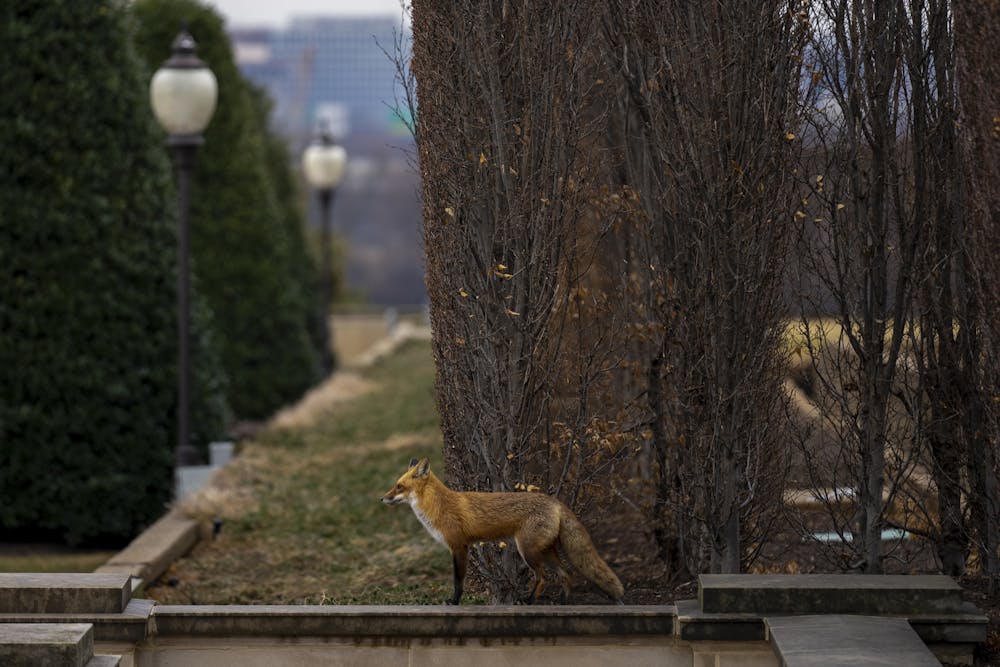
Instead, coexisting with carnivores can benefit both carnivores and people. For example, the presence of wolves and mountain lions lowers the frequency of vehicle collisions with deer, saving money and human lives. Foxes, likewise, reduce an abundance of small mammals that carry ticks, likely reducing cases of Lyme disease in humans. Sea otters maintain healthy kelp forests that support tourism and fisheries and capture carbon.
Many carnivores’ presence on the landscape benefits people. Foxes, for example, eat rodents that may carry Lyme disease. AP Photo/Andrew Harnik
However, the U.S. has no unified approach for making interactions with carnivores more peaceful in the spaces that people share with them. Shared spaces – like multiuse forests and grasslands, coastlines, croplands and even cities – constitute over 70% of the continental U.S. by one estimate.
A federal policy like the one my colleagues and I propose that sets goals for sharing spaces with carnivores could allow for coexistence between people and carnivores while also recognizing local priorities.
While much of wildlife management takes place at the state level, having a federal policy framework could provide resources and incentives for states and communities to adopt specific coexistence strategies relevant to the carnivores in their area.
Large-scale policy goals may include lowering conflicts, increasing human tolerance to risks and fostering self-sustaining carnivore populations.
Coexistence strategies should prioritize using proven, nonlethal deterrence methods such as properly disposing of trash or other attractants, bringing pets inside, erecting barriers to separate livestock from carnivores in risky places and times, and working with guard animals such as dogs that are trained to protect herds from carnivores. These strategies not only reduce carnivores’ impact on human property and well-being but also facilitate carnivore recovery.
Several local projects demonstrate that nonlethal deterrence programs work. In Montana’s Blackfoot watershed, natural resource managers and local residents coordinate the disposal of livestock carcasses away from ranches. This prevents grizzlies and wolves from approaching the ranches.
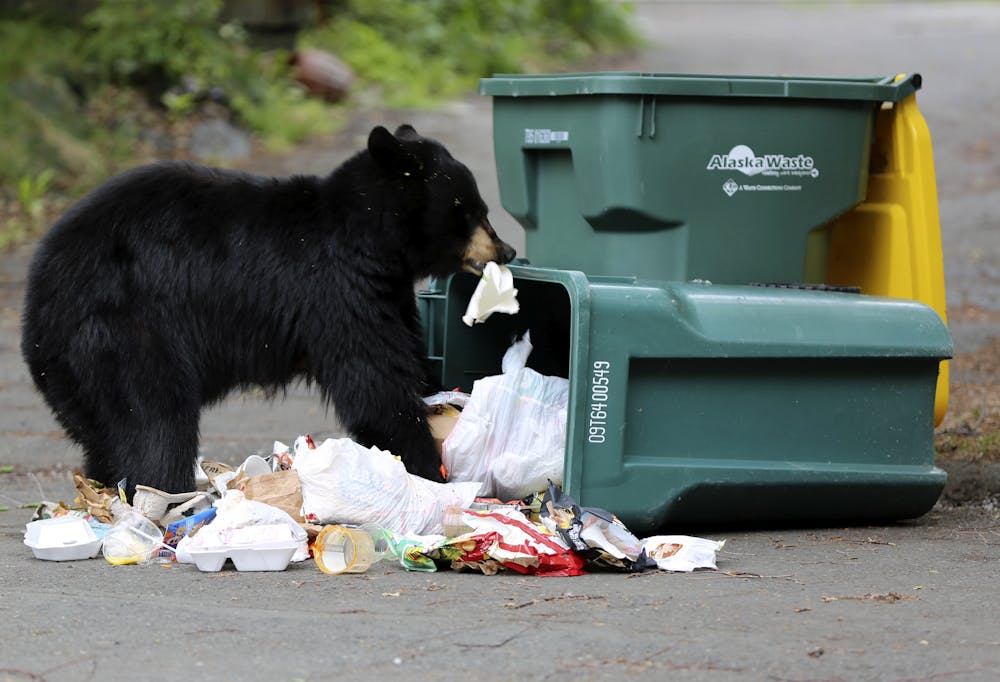
The city of Durango, Colorado, has supplied its residents with automatically locking bear-resistant trash containers. These containers keep bears from damaging property or scaring residents while looking for food in them. A study found that these new trash containers reduced trash-related conflicts with bears by 60%.
A bear in Anchorage, Alaska, sifts through trash. Some cities have issued their residents locking trash cans, which prevent bears from encroaching on local residences. AP Photo/Mark Thiessen
Negative encounters with carnivores still occur in these cases, but now that the communities are collectively adapting to them, they are less severe. And these carnivores are less likely to be euthanized.
Some states are also taking incremental steps toward coexistence. For example, to reduce animal suffering, New Mexico passed the Wildlife Conservation and Public Safety Act in 2021 that bans the use of a trap, snare or poison to kill an animal on public land.
In 2023, Maryland and Colorado authorized provisions that help fund provisions to prevent lethal encounters with black bears and gray wolves, respectively.
A broader coexistence framework
These local and state-level successes are encouraging, but not enough to address the issue at a broader, national scale. A federal coexistence policy could harness the insights from these individual communities’ coexistence efforts and encourage other communities to adopt these techniques.
For example, members of universities, businesses, tribes, government and nongovernmental organizations and the public could come together at regional coexistence workshops to showcase their coexistence actions, receive support for new ideas and share tools and best practices.
A federal policy could allow states and communities to try out high-risk, high-reward initiatives, like Pay for Presence programs. One such program, established in northern Mexico near the U.S. border in 2007, compensates landowners for the documented presence of jaguars on their properties.
A federal policy might also facilitate the adoption of market-based solutions like predator-friendly meats. The predator-friendly certification enables ranchers who do not use lethal predator control to sell their meat products at a premium price.
A federal coexistence policy could also support community outreach and education programs. Teaching communities about carnivore behavior can help them to avoid potentially risky situations, like jogging with a dog or leaving children unattended in mountain lion territory.
By reducing negative encounters, these programs can enhance the adoption of nonlethal coexistence strategies, foster more positive attitudes toward carnivores and share the benefits carnivores offer humans.
There are promising signs that the federal government and some states are starting to pay more attention to coexistence with carnivores. As the segment of the American public that views wildlife as deserving of rights and compassion grows, translating an ethic of coexistence into good policy could better align policy with public values.
Our new study, published today, shines a new light on rock art of Sarawak (a state of Malaysia on the island of Borneo). The rock art we have dated records resistance to colonial forces in Malaysian Borneo during the 17th to 19th centuries.
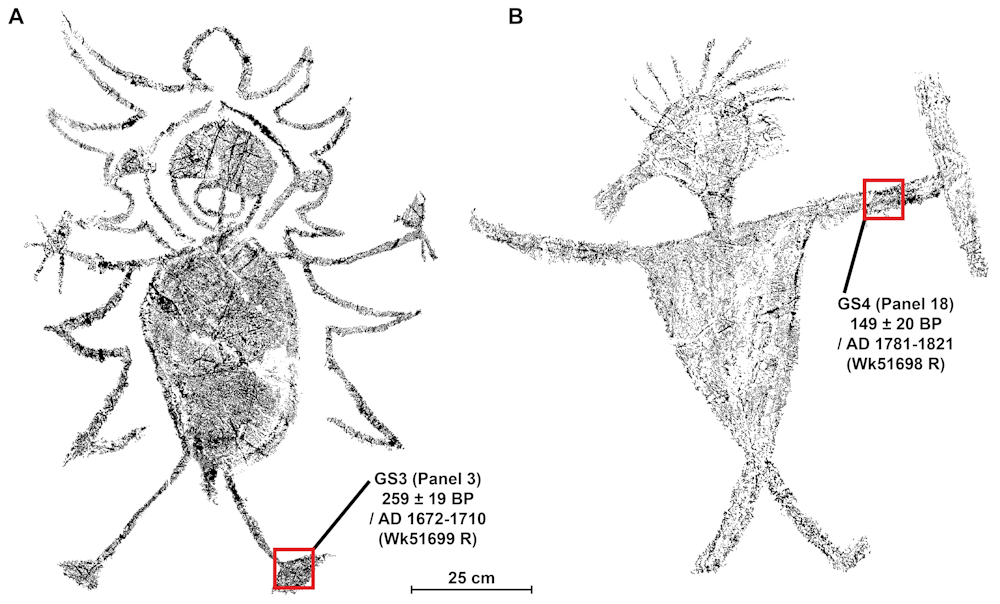
The two rock art drawings that were dated and interpreted by our new research. Digital tracing and design by Lucas Huntley., CC BY-ND
Gua Sireh is one of the region’s best-known rock art sites, attracting hundreds of visitors each year. The cave is about 55 kilometres south-east of Sarawak’s capital, Kuching.
Hundreds of charcoal drawings cover the walls of Gua Sireh. People are shown wearing headdresses. Some are armed with shields, knives and spears in scenes of hunting, butchering, fishing, fighting and dancing.
Excavations in the 1950s, 1970s and 1980s revealed people intermittently used Gua Sireh for around 20,000 years, before abandoning the site around 1900. The Indigenous people who used the cave were the ancestors of the contemporary Bidayuh (inland tribal people), also known as “Land Dayaks” in early ethnographic accounts.
Malayo-Polynesian Austronesian speakers (whose language originates in Taiwan) spread across Island South-East Asia and the Pacific starting around 3,000 to 4,000 years ago. Austronesian influence at Gua Sireh dates from about 4,000 years ago, indicated by the first appearance of charred rice and pottery.
The presence of Austronesian communities at Gua Sireh is a part of broader evidence for dynamic human migrations in the region over thousands of years.
Further cultural interactions at the site occurred around 2,000 years ago, with grave goods, such as glass beads, showing contact between the Bidayuh and coastal traders.
In the 17th to 19th centuries, there was a period of increasing conflict when Malay elites controlling the region exacted heavy tolls on local Indigenous tribes. Using radiocarbon dating, we have been able to date two large, elaborate human figures to this period. They were drawn between 1670 and 1830.
We interpreted our results informed by the oral histories of the Bidayuh, who have continuing custodial responsibilities over the site today.
In addition to radiocarbon dating and oral history, another strand of evidence we used to interpret these new dates were the images themselves.
One figure we looked at in our carbon dating brandishes two short-bladed Parang Ilang, the principal weapon used during the warfare that marked the first decades of white rule in Borneo. We have dated this figure as drawn between 1670 and 1710 when Malay elites dominated the Bidayuh.
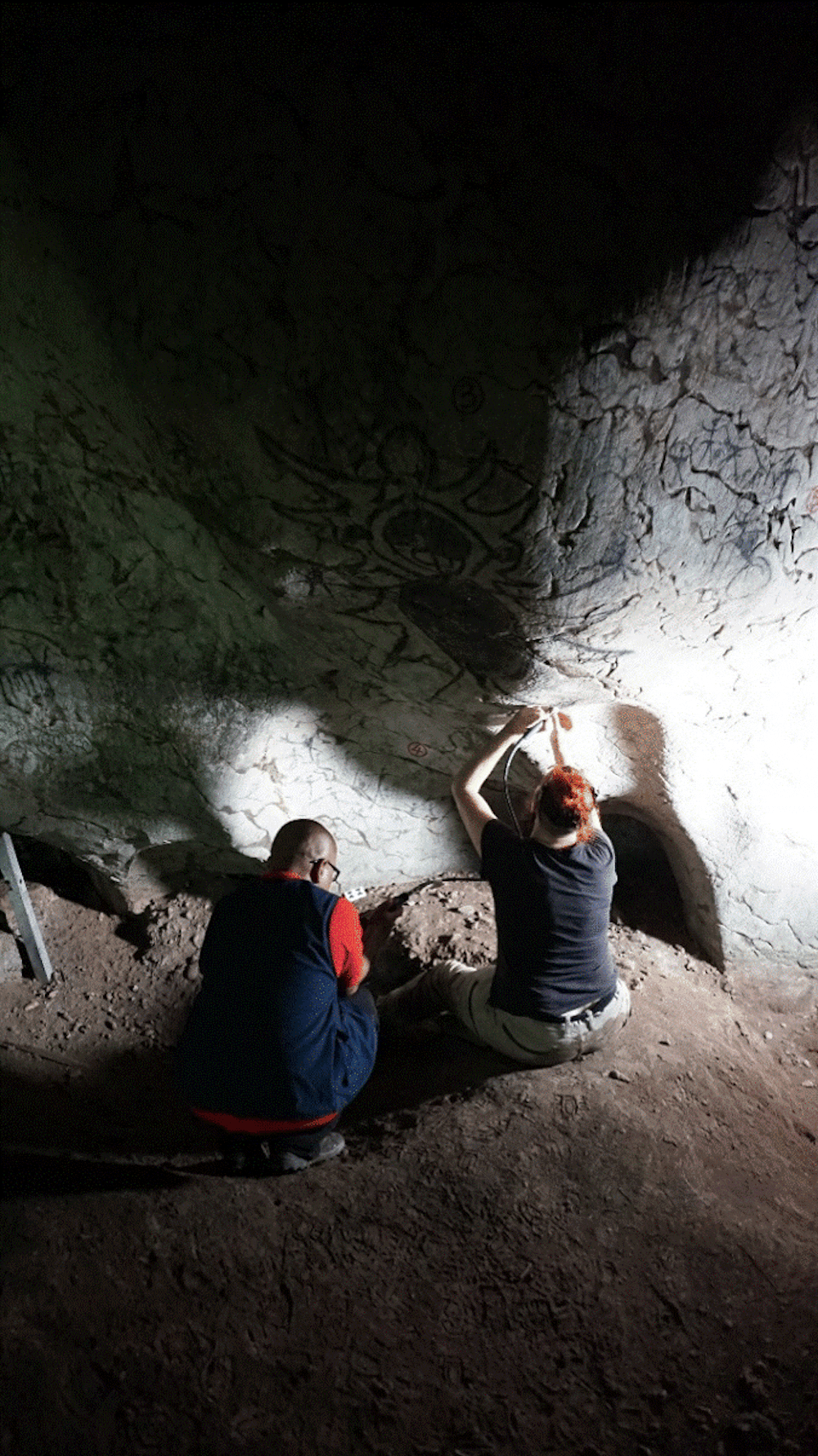
Bidayuh descendant Mohammad Sherman Sauffi William (Sarawak Museum Department) and Jillian Huntley harvesting a sample from the rock art. Paul S.C. Taçon, CC BY-ND
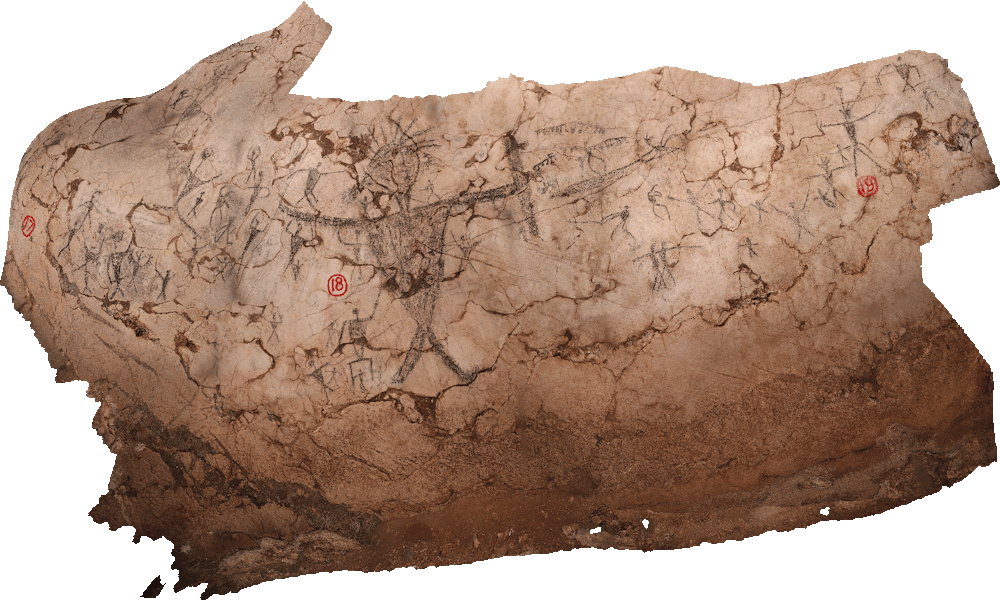
In another image we studied, large human figures are shown holding distinctive weapons such as a Pandat – the war sword of Land Dayaks, including the Bidayuh. Pandat were used exclusively for fighting and protection, never in agriculture or handicrafts, suggesting the drawing relates to conflict.
We have dated this figure to between 1790 and 1830. This was a period of increasing conflict between the Bidayuh and Iban (Indigenous peoples from the coast, also known as Sea Dayaks) and Brunei Malay rulers.
The Pandat in this rock art was used exclusively for fighting and protection, suggesting the drawing relates to conflict. Andrea Jalandoni, CC BY-ND
During this period many Indigenous Sarawakians moved into the upland interior, including the Gua Sireh area, to escape persecution.
Brunei rulers were known to not only bully and enslave people but also allowed expeditions of Ibans to attack the Bidayuh. The Ibans were said to keep the heads of the people they slaughtered and handed over the “slaves” they captured to the Brunei authority.
An example from Bidayuh oral histories of the cave being used as a refuge during territorial violence comes from 1855. The British diplomat Spenser St John was shown a skeleton in Gua Sireh. A local tribesman said he had shot this man years earlier, before the rule of James Brooke, which began in 1839.
The shooting resulted from a skirmish with a very harsh Malay chief who had demanded the Bidayuh hand over their children. They refused and retreated to Gua Sireh where they held off a force of 300 armed men.
Suffering some losses (two Bidayuh were shot, and seven were taken prisoner and enslaved), most of the tribe escaped through the far side of the cave complex, saving their children.
Oral histories combined with the figures holding weapons of warfare contextualise the ages we now have for the rock art.
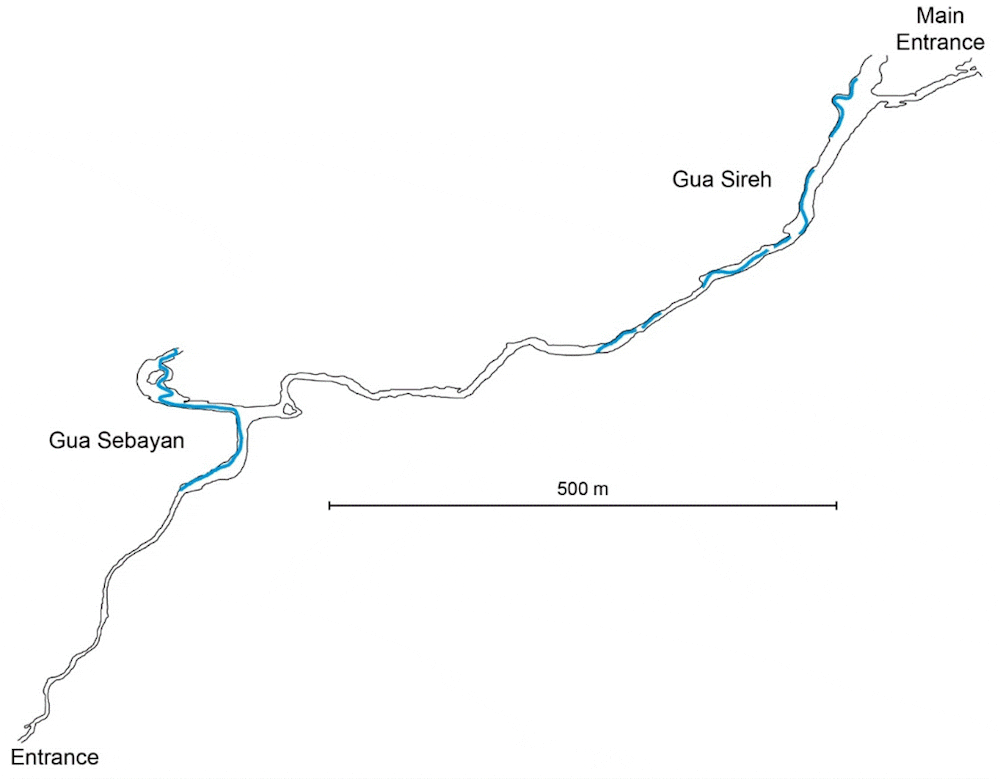
Plan of the Gua Sireh cave system showing passage through Gunung Nambi (limestone hill) via the connecting passage between Gua Sireh and Gua Sebayan. Blue indicates water. CC BY-ND
The direct dates we have produced demonstrate distinct periods of drawing can be identified.
The ubiquity of black drawings across the region and their probable links to the migrations of Austronesian and Malay peoples opens exciting possibilities for further understanding the complexities of rock art production in Island South-East Asia.
This article was coauthored with Mohammad Sherman Sauffi William from the Sarawak Museum Department.
Most passengers believe saying hello has a positive impact on their bus driver, but less than a quarter bother to do so, according to research in the UK.
People were more likely to acknowledge the driver on buses which had signs encouraging them to, a pilot project by the University of Sussex, Transport for London (TfL) and social connection enterprise Neighbourly Lab found.
A small survey of 77 drivers suggested a greeting from a passenger was meaningful to them, the researchers said..
The Y chromosome is a never-ending source of fascination (particularly to men) because it bears genes that determine maleness and make sperm. It’s also small and seriously weird; it carries few genes and is full of junk DNA that makes it horrendous to sequence.
However, new “long-read” sequencing techniques have finally provided a reliable sequence from one end of the Y to the other. The paper describing this Herculean effort has been published in Nature.
The findings provide a solid base to explore how genes for sex and sperm work, how the Y chromosome evolved, and whether – as predicted – it will disappear in a few million years.
Making baby boys
We have known for about 60 years that specialized chromosomes determine birth sex in humans and other mammals. Females have a pair of X chromosomes, whereas males have a single X and a much smaller Y chromosome.
The Y chromosome is male-determining because it bears a gene called SRY, which directs the development of a ridge of cells into a testis in the embryo. The embryonic testes make male hormones, and these hormones direct the development of male features in a baby boy.
Without a Y chromosome and a SRY gene, the same ridge of cells develops into an ovary in XX embryos. Female hormones then direct the development of female features in the baby girl.
A DNA junkyard
The Y chromosome is very different from X and the 22 other chromosomes of the human genome. It is smaller and bears few genes (only 27 compared to about 1,000 on the X).
These include SRY, a few genes required to make sperm, and several genes that seem to be critical for life – many of which have partners on the X.
Many Y genes (including the sperm genes RBMY and DAZ) are present in multiple copies. Some occur in weird loops in which the sequence is inverted and genetic accidents that duplicate or delete genes are common.
The Y also has a lot of DNA sequences that don’t seem to contribute to traits. This “junk DNA” is comprised of highly repetitive sequences that derive from bits and pieces of old viruses, dead genes and very simple runs of a few bases repeated over and over.
This last DNA class occupies big chunks of the Y that literally glow in the dark; you can see it down the microscope because it preferentially binds fluorescent dyes.
Why the Y is weird
Why is the Y like this? Blame evolution.
We have a lot of evidence that 150 million years ago the X and Y were just a pair of ordinary chromosomes (they still are in birds and platypuses). There were two copies – one from each parent – as there are for all chromosomes.
Then SRY evolved (from an ancient gene with another function) on one of these two chromosomes, defining a new proto-Y. This proto-Y was forever confined to a testis, by definition, and subject to a barrage of mutations as a result of a lot of cell division and little repair.
The proto-Y degenerated fast, losing about 10 active genes per million years, reducing the number from its original 1,000 to just 27. A small “pseudoautosomal” region at one end retains its original form and is identical to its erstwhile partner, the X.
There has been great debate about whether this degradation continues, because at this rate the whole human Y would disappear in a few million years (as it already has in some rodents).
Sequencing Y was a nightmare
The first draft of the human genome was completed in 1999. Since then, scientists have managed to sequence all the ordinary chromosomes, including the X, with just a few gaps.
They’ve done this using short-read sequencing, which involves chopping the DNA into little bits of a hundred or so bases and reassembling them like a jigsaw.
But it’s only recently that new technology has allowed sequencing of bases along individual long DNA molecules, producing long-reads of thousands of bases. These longer reads are easier to distinguish and can therefore be assembled more easily, handling the confusing repetitions and loops of the Y chromosome.
The Y is the last human chromosome to have been sequenced end-to-end, or T2T (telomere-to-telomere). Even with long-read technology, assembling the DNA bits was often ambiguous, and researchers had to make several attempts at difficult regions – particularly the highly repetitive region.
So what’s new on the Y?
Spoiler alert – the Y turns out to be just as weird as we expected from decades of gene mapping and the previous sequencing.
A few new genes have been discovered, but these are extra copies of genes that were already known to exist in multiple copies. The border of the pseudoautosomal region (which is shared with the X) has been pushed a bit further toward the tip of the Y chromosome.
We now know the structure of the centromere (a region of the chromosome that pulls copies apart when the cell divides), and have a complete readout of the complex mixture of repetitive sequences in the fluorescent end of the Y.
But perhaps the most important outcome is how useful the findings will be for scientists all over the world.
Some groups will now examine the details of Y genes. They will look for sequences that might control how SRY and the sperm genes are expressed, and to see whether genes that have X partners have retained the same functions or evolved new ones.
Others will closely examine the repeated sequences to determine where and how they originated, and why they were amplified. Many groups will also analyse the Y chromosomes of men from different corners of the world to detect signs of degeneration, or recent evolution of function.
Top science publisher Springer Nature said it has withdrawn a study that presented misleading conclusions on climate change impacts after an investigation prompted by an AFP inquiry.
AFP reported in September 2022 on concerns over the peer-reviewed study by four Italian scientists that appeared earlier that year in the European Physical Journal Plus, published by Springer Nature.
The study had drawn positive attention from climate-sceptic media.
The paper, titled "A critical assessment of extreme events trends in times of global warming", purported to review data on possible changes in the frequency or intensity of rainfall, cyclones, tornadoes, droughts and other extreme weather events.
Several climate scientists contacted by AFP said the study manipulated data, cherry picked facts and ignored others that would contradict their assertions, prompting the publisher to launch an internal review.
"The Editors and publishers concluded that they no longer had confidence in the results and conclusions of the article," Springer Nature told AFP in an email late Wednesday.
The journal's editors published an online note stating that the paper was retracted due to concerns over "the selection of the data, the analysis and the resulting conclusions".
- Peer-review standards -
It said the paper had been freshly reviewed by experts and the authors invited to submit an addendum in response to the criticisms.
But a review found this "not suitable for publication and that the conclusions of the article were not supported by available evidence or data provided by the authors".
Springer Nature said in its email that the investigation was conducted by its Research Integrity Group in line with guidelines of the Committee on Publication Ethics (COPE).
The paper's authors were identified in order as Gianluca Alimonti, a physicist at a nuclear physics institute; Luigi Mariani, an agricultural meteorologist, and physicists Franco Prodi and Renato Angelo Ricci.
The latter two were named as signatories of the World Climate Declaration, a text that repeated various debunked claims about climate change, an AFP fact check article found.
Their study was "not published in a climate journal," Stefan Rahmstorf, Head of Earth Systems at the Potsdam Institute for Climate Impact Research, told AFP at the time.
"This is a common avenue taken by 'climate sceptics' in order to avoid peer review by real experts in the field."
Recent studies have indicated that climate misinformation has flourished online as governments push reforms to curb use of the fossil fuels that cause planet-warming carbon emissions.
A further investigation published by AFP in April 2023 showed that sceptics opposed to the scientific consensus on human-caused climate change had got other misleading studies published in peer-reviewed journals.
Experts pointed to widespread concerns about peer-review standards in the lucrative academic publishing industry.
Retraction Watch, a blog that tracks withdrawals of academic papers, counted 5,000 such cases in 2022 -- about a tenth of a percent of the total number of studies published, its co-founder Ivan Oransky told AFP.
Global warming is driving leafy tropical canopies close to temperatures where they can no longer transform sunlight and CO2 into energy, threatening total collapse if the thermometer keeps climbing, according to a study Thursday.
A tiny percentage of upper canopy leaves have already crossed that threshold, reaching temperatures so high -- above 47 degrees Celsius -- as to prevent photosynthesis, the study published in Nature reported.
Currently, some leaves exceed such critical temperatures only 0.01 percent of the time, but impacts could quickly scale up because leaves warm faster than air, the researchers said.
"You heat the air by two to three degrees and the actual upper temperature of these leaves goes up by eight degrees," lead author Christopher Doughty of Northern Arizona University told journalists.
If tropical forest's average surface temperature warms 4C above current levels -- widely considered a worst-case scenario -- "we're predicting possible total leaf death," he said.
The new research suggests that leaf death could become a new factor in the predicted "tipping point" whereby tropical forests transition due to climate change and deforestation into savannah-like landscapes.
If air temperatures increase unabated by 0.03 C per year, the study projected, mass mortality among the canopies could happen in a little more than a century.
Doughty and his team used data from the NASA ECOSTRESS satellite -- designed to measure plant temperatures -- validated with ground observations, based in part on sensors attached to individual leaves.
- Increased tree death -
There remain uncertainties as to how high leaf temperatures might impact the forest as a whole, the scientists cautioned.
"Believe it or not, we don't know terribly much about why trees die," said co-author Gregory Goldsmith of Chapman University.
It doesn't take a scientist to know that when a tree loses its roots it dies, he said.
But the interactions and feedbacks between heat and drought -- and water and temperature -- on overall tree health aren't as clear.
Total leaf death might not necessarily mean total tree death.
The critical temperature at which leaves turn brown and die might also differ by species, depending on the size and thickness of their leaves and the breadth of their canopy.
But there are already concerning signs. In the Amazon, where temperatures are higher than in other tropical forests, the rate at which trees are dying has increased in recent decades.
"The Amazon is currently experiencing higher levels of mortality than Central Africa and that could possibly be due to the high temperatures we've seen there," said Doughty.
Increased fragmentation of the forests from deforestation has also been shown to make the remaining forest areas warmer.
Tropical biomes contain 45 percent of the Earth's forests, and play an outsized role in absorbing human-caused carbon pollution.
They also harbour half or more of the world's plant biodiversity, with at least 40,000 different tree species, according to the Intergovernmental Panel on Climate Change (IPCC).
The fact that a few leaves are overheating at current temperatures is a "canary in the coal mine," said senior author Joshua Fisher of Chapman University.
"You want to be able to detect something happening before it's widespread," he said.
"The fact that we can do that now gives us that ability to actually do something as a collective society."
Scientists not involved in the study said it should serve as a warning that nature's capacity to adapt to climate change has limits.
"It is true that trees and other kinds of vegetation can soak up emissions and provide cooling," commented Leslie Mabon, a lecturer in environmental systems at The Open University.
"However, this study illustrates that without concerted action by humans to reduce emissions and limit global heating at the same time as protecting and enhancing nature, some functions of nature may start to break down at higher temperatures."
Washington (AFP) - In 1997, a lone wolf crossed an ice bridge that briefly connected Canada with the remote Isle Royale, which lies off the coast of Michigan in Lake Superior and is renowned for its rich biodiversity. His arrival revived the flagging fortunes of the wider wolf population, which had been hit by disease and inbreeding, and triggered cascading effects that improved the health of the overall forest ecosystem, a study in Science Advances showed Wednesday. "Issues like inbreeding and low genetic diversity are an important concern for scientists," first author Sarah Hoy, an ecologist...