ORLANDO, Fla. — The National Hurricane Center continues to keep an eye on a system in the Atlantic with a small chance to develop into a tropical depression or storm as it approaches the Florida coast, but is also eyeing two more systems in the Atlantic.
In its 8 p.m. Eastern time Tuesday tropical outlook, the NHC said the weak trough of low pressure was located a few hundred miles southwest of Bermuda, but is expected to migrate toward the U.S. in the coming week.
Sixty-five years ago, in 1958, several government programs that had been pursuing spaceflight combined to form NASA. At the time, I was only 3 years old.
I’ve now been a professor of physics and astronomy for nearly 30 years, and I realize that, like countless others who came of age in the 1960s and ‘70s, NASA’s missions have had a profound effect on my life and career path. From John Glenn’s first flight into orbit to the Hubble telescope, the agency’s legacy has inspired generations of scientists.
First flight into orbit
The date was Feb. 20, 1962. My first grade teacher, Ms. Ochs, told the class that we would be doing something different on that day. She went to the blackboard and wrote in large block letters “John Glenn” and “NASA.”
She asked if any of us knew what those words meant. None of us did, so she grabbed a globe, and using a pen with a plastic cap, she demonstrated that John Glenn, an astronaut, would soon be launched on a rocket – the pen – from Florida. When the rocket got high enough, Glenn in the Mercury capsule – the cap – would separate from the rocket and go into orbit around the Earth. She demonstrated this by moving the pen cap around the globe.
My class then sat and listened to the historic launch of Friendship 7 carrying Glenn, which was the first U.S. mission to send a man into orbit around the Earth.
During the Gemini mission, two spacecrafts attempted the first-ever space rendezvous. This image, taken in the Gemini 6 craft, shows the Gemini 7 craft just 43 feet away. NASA
There would be three more missions in the one-manned Mercury program, culminating in Gordon Cooper’s Faith 7 mission, which completed 22 Earth orbits. The program proved that NASA could put a manned spacecraft in orbit and bring it back safely to Earth. Next, NASA was ready to move on to a more maneuverable two-person spacecraft.
A two-person spacecraft
In 1965, NASA planned to launch the two-person Gemini spacecraft, and I moved on to the fifth grade where my teacher, Mrs. Wein, was also a space enthusiast. In December, NASA launched the joint missions of Gemini 6 and 7, and Mrs. Wein gave me permission to stay home from school to watch the TV coverage.
This was the first time that two piloted spacecraft performed what is called a rendezvous maneuver, where they meet up in orbit. Orbital maneuvers like this require very precise calculations and a spacecraft in which astronauts can make path changes in orbit – which is what the Gemini capsule was designed to do.
A lunar orbit rendezvous occurs when a smaller lunar lander breaks off a main spacecraft while in orbit to land on or circle the Moon before returning to the main craft. NASA, CC BY-ND
The Gemini 6A and 7 spacecrafts practiced a rendezvous maneuver in Earth’s orbit. At the time, I didn’t understand the importance of this mission, until Mrs. Wein directed me to the “S” volume of the World Book Encyclopedia. There, under “Spaceflight,” was a full-page diagram of the lunar orbit rendezvous plan that a NASA engineer, John Houbolt, had developed to get the astronauts to the Moon and back.
The central feature of the lunar orbit rendezvous was that two spacecraft, the Apollo Command Module and the Lunar Excursion Module, would rendezvous in orbit around the Moon using the same technique the Gemini 6 and 7 missions had demonstrated. The technology of this maneuver, used in Apollo missions, would later help land Neil Armstrong on the Moon.
On to the Moon
‘Earthrise,’ captured by the Apollo 8 mission, was the first look at Earth from afar. NASA
In December 1968, when I was in eighth grade, I watched the Apollo 8 mission orbit the Earth on TV. It was the first time that anyone, whether U.S. astronaut or Soviet cosmonaut, had left low Earth orbit. This mission gave us “Earthrise”, the first look at our home planet as seen from afar.
The Apollo 11 Moon landing happened in July 1969. I will never forget sitting in my living room as Armstrong stepped off the Lunar Excursion Module onto the lunar surface. With Armstrong’s steps, the aspirations of a lost president, thousands of NASA scientists and engineers and millions of public followers were fulfilled.
CBS News anchor Walter Cronkite captured the wonder of the moment when he slowly removed his glasses, rubbed his hands together and exclaimed, ‘boy.’
In December 1972, when I was a senior in high school, Gene Cernan became the last person to walk on the Moon during the Apollo 17 mission. Like many of us who witnessed the Apollo missions, I listened to Cernan’s final words from the Moon, where he challenged young people to continue what NASA had begun.
Inspired by Cernan’s words, I went on to earn degrees in aerospace engineering and worked on both the reentry of the Skylab Space Station and the early mission planning for the Magellan spacecraft that visited Venus.
At this point, I made a career change – I returned to school to study physics and ultimately ended up in theoretical astrophysics.
After Apollo
NASA has had a profound influence in the sciences. For one, the ability to guide unmanned robotic spacecraft anywhere in the solar system was a byproduct of the technologies necessary for the manned Apollo missions. Using this technology, NASA has sent probes to all of the planets – and some non-planets – in the solar system, revolutionizing scientists’ knowledge of our cosmic backyard.
Perhaps the most ambitious of these is the Mars Perseverance Rover, which looks for chemical evidence of past or present life on Mars. It also collects and leaves samples for a potential return mission sometime in the 2030s.
In terms of pure astronomy, NASA’s space-based observatories span the electromagnetic spectrum. The Hubble Space Telescope and its newly launched cousin, the James Webb Space Telescope, have allowed astronomers to get large telescopes above Earth’s optically hazy atmosphere. With these instruments, we can see almost to the beginning of time, since looking deeper into space also means looking back in time.
The James Webb Space Telescope is revolutionizing our view of the cosmos – there has not been an equal revolution in observational astronomy since Galileo first pointed a telescope at the heavens in 1609.
What will the future hold for NASA? It’s hard to say.
Recently, private enterprise has driven advances in both launch vehicles and satellite design, although NASA will likely continue to have a leading role, not only in the spaceflight but the scientific research as well.
I hope that today there are elementary teachers like Ms. Ochs and Mrs. Wein who will nurture the wonder and excitement of spaceflight in their students. But they won’t have to just listen on the radio. They can watch livestreams, like those of launches of SpaceX’s Falcon Heavy in 2018 and NASA’s Artemis I in November 2022.
NASA’s first 65 years have been an amazing record of accomplishments. When the students I teach today near my age, I wonder what amazing things – about which we can only dream – they will look back on.
As a veterinary science researcher, equine surgeon and sports medicine and rehabilitation specialist, I’ve seen firsthand the similarities between horses and humans.
Both horses and people with endocrine disorders like Type 2 diabetes can suffer multiple types of musculoskeletal disorders. For example, horses with pituitary pars intermedia dysfunction – similar to Cushing’s disease in people – suffer from tendon and ligament degeneration. Horses can also experience muscle loss, which can cause joint instability. That, and the chronic low-grade inflammation associated with endocrine disorders, can contribute to osteoarthritis.
There’s a principle in medicine called One Health, which says that animals, humans and the environment are inextricably connected – for one to be healthy, all must be healthy. It also means that we can learn a lot about our own health by studying the health of animals, and vice versa, including the many parallels in endocrine disorders between humans and horses.
Human and horse endocrine systems
Your endocrine system produces hormones that support many of your body’s basic functions, including growth and development, metabolism, sleep and more. Your hormones also play a role in the health of your bones, tendons and ligaments. Some endocrine disorders change how your body produces and releases hormones and can lead to osteoporosis, arthritis, ligamentinjuryand other orthopedic diseases.
Like people, obese horses with endocrine disorders often develop low-grade inflammation. Inflammation is a normal response to injuries and sickness. But chronic, low-grade inflammation can have long-term negative effects on the body. For example, low-grade inflammation is associated with metabolic osteoarthritis in people, and my laboratory is studying this possible link in horses.
Because of the similarities between people and horses, research on diagnostics and treatments for metabolic conditions could provide health benefits to both species.
For example, a class of drug called glucagonlike peptide-1 agonists, which includes such brands as Trulicity (dulaglutide) and Ozempic (semaglutide), is commonly used to treat metabolic syndrome and Type II diabetes in people. This class of medication is also effective in treating these conditions in horses, similarly slowing down how quickly food empties the stomach and blunting glucose release into the bloodstream.
Another class of drugs called sodium-glucose cotransporter protein-2 inhibitors, which include such treatments as Jardiance (empagliflozin) and Farxiga (dapagliflozin), are used to treat Type 2 diabetes in people and a similar condition in horses. These drugs alter the kidneys’ ability to absorb sugar from urine such that the body eliminates some of the glucose it would normally absorb. This greatly reduces blood insulin spikes, which can help prevent obesity, metabolic syndrome and cardiovascular disease in both horses and people.
Some dietary supplements, such as resveratrol, especially when used in combination with an amino acid called leucine, also help with weight loss, mobility and insulin sensitivity in people and horses. Lowering blood insulin concentrations can also prevent horses from developing laminitis, a disease that inflames tissues in hooves that can necessitate euthanasia because of incurable pain.
I find one of the most exciting avenues of research in both animals and people to be the expansion of precision medicine. Instead of the standard one-size-fits-all protocol, precision medicine uses information from a person’s genes, environment and medical history to create a customized treatment plan. For example, precision medicine is often applied in oncology when doctors gather genetic information about the patient’s tumor to inform which treatments might work best for them.
In horses, precision medicine currently focuses on DNA-based diagnostic tests to inform exercise regimens, treatment and breeding decisions. Recent work with horses also suggests that measuring the heritability of certain metabolic traits could be used to screen for metabolic syndrome in the future.
Within precision medicine, doctors aim to get a full-picture view of an individual and their metabolic health by using multiomic analysis. Multiomics entails looking at multiple “omics” – or information from a range of biological disciplines, such as epigenomics, lipidomics, genomics and transcriptomics – to better treat an individual patient.
The more researchers learn from individual patients, including horses, the better doctors will be able to treat every patient. My lab and others use multiomic analysis to generate data that may one day help us identify more effective and safer therapies for horses and – likely – people with metabolic conditions.
Human-induced climate change has played an "absolutely overwhelming" role in the extreme heatwaves that have swept across North America, Europe and China this month, according to an assessment by scientists published on Tuesday.
Throughout July, extreme weather has caused havoc across the planet, with temperatures breaking records in China, the United States and southern Europe, sparking forest fires, water shortages and a rise in heat-related hospital admissions.
Over the weekend, thousands of tourists were evacuated from the Greek island of Rhodes to escape wildfires caused by a record-breaking heatwave.
Without human-induced climate change, the events this month would have been "extremely rare", according to a study by World Weather Attribution, a global team of scientists that examines the role played by climate change in extreme weather.
"European and North American temperatures would have been virtually impossible without the effects of climate change," said Izidine Pinto of the Royal Netherlands Meteorological Institute, one of the study's authors, during a briefing with journalists. "In China it was around 50 times more likely to happen compared to the past."
The World Weather Attribution team estimated that rising greenhouse gas concentrations made the European heatwave 2.5 Celsius (4.5 Fahrenheit) hotter than it would otherwise have been. They also drove up the North American heatwave by 2C and the one in China by 1C.
As well as directly impacting human health, the heat has caused large-scale crop damage and livestock losses, the scientists said, with U.S. corn and soybean crops, Mexican cattle, southern European olives as well as Chinese cotton all severely affected.
El Nino probably contributed to the additional heat in some regions, but rising greenhouse gases were the major factor, the scientists said, and heatwaves will become increasingly likely if emissions are not slashed.
They estimated that prolonged periods of extreme heat were likely to hit every two to five years if average global temperatures rise 2C above pre-industrial levels. Average temperatures are currently estimated to have risen more than 1.1C.
"The events we have looked at are not rare in today's climate," said Friederike Otto, a scientist with the Grantham Institute for Climate Change in London, speaking at the briefing. "It's not surprising from a climatological point of view, that these events are happening at the same time."
"As long as we keep burning fossil fuels we will see more and more of these extremes," she said. "I don't think there's any stronger evidence that any science has ever presented for a scientific question."
Paris (AFP) - Blistering heat that has baked swathes of North America and Europe this month would have been "virtually impossible" without human-caused climate change, researchers said Tuesday, as intense temperatures spark health alerts and stoke ferocious wildfires. With tens of million people affected in the northern hemisphere and July on track to be the hottest month globally since records began, experts warn that worse is to come unless we reduce planet-heating emissions. Severe heatwaves have gripped southern Europe, parts of the United States, Mexico and China this month, with tempera...
New research published in Frontiers in Psychology has found that individuals harboring a conspiracy mindset tend to demonstrate higher hesitancy towards vaccinating children against COVID-19 and measles, mumps, and rubella (MMR). The study also highlighted these individuals’ frequent reliance on politically conservative media sources, which further affirms their beliefs, contributing to a significant challenge in overcoming vaccine resistance among adults responsible for child vaccinations. The researchers conducted this study to understand the role of a conspiracy mindset in shaping people’s ...
With the Tokyo Electric Power Company planning to begin a release of 1.3 million tons of treated wastewater from the former Fukushima Daiichi nuclear power plant in Japan next month, reports of radioactive fish in the area have raised alarm in recent years—and new reporting on Sunday revealed that the problem is far from mitigated, prompting questions about how dangerous the company's plan will be for the public.
The plant operator, known as TEPCO, analyzed a black rockfish in May that was found to contain levels of radioactive cesium that were 180 times over Japan's regulatory limit, The Guardianreported.
The fish was caught near drainage outlets at the plant, where three nuclear reactors melted down in March 2011 during a tsunami.
Rainwater from the areas surrounding the reactors flows into the area where the fish was caught.
The high level of cesium—which, depending on the level of exposure, can cause nausea, vomiting, diarrhea, bleeding, coma, and death in people who eat contaminated food—was discovered as TEPCO prepares to begin the discharge of treated wastewater which has been used to cool fuel from the melted reactors. The wastewater has mixed with rainwater and groundwater since the tsunami.
TEPCO has acknowledged that fish near the drainage outlets have been unsafe for consumption, as the concentration of cesium in seabed sediment in the area has measured more than 100,000 becquerels per kilogram. The maximum legal level is 100 becquerels per kilogram.
"Since contaminated water flowed into the Fukushima Daiichi nuclear power station port immediately after the accident, TEPCO has periodically removed fish from inside the port since 2012," an official for the company told The Guardian.
A fish was detected to have high levels of radiation near Fukushima in January 2022, with authorities positing that the fish had escaped from the drainage outlet. Shipments of black rockfish caught off the coast of Fukushima prefecture were promptly suspended and have not been resumed.
More than 40 fish with cesium levels over the legal limit were found in the plant's port between May 2022 and May 2023, and 90% came from the inner breakwater where water flows from the area around the melted reactors.
The Nuclear Regulation Authority in Japan and the United Nations' International Atomic Energy Agency (IAEA) have both given their approval of TEPCO's plan to release the wastewater into the Pacific Ocean, which it says it needs to do to secure space for decommissioning the plant. The discharge process, using an Advanced Liquid Processing System (ALPS), would take decades to complete.
While the IAEA said earlier this month the plan will have a "negligible radiological impact to people and the environment," Paul Dorfman of Ireland's Radiological Protection Advisory Committee said Monday that reports like the one about the contaminated rockfish are likely "far from over."
"Believing [and] pretending some things are not harmful because it is convenient is literally killing the planet," said American University sociologist Celine-Marie Pascale, comparing the ecological and climate crisis to authorities' insistence that the water discharge is safe. "Corporate interests triumph at global expense once again."
Officials in Hong Kong have said they will ban food imports from 10 prefectures in Japan if the release moves forward in August, and some Chinese wholesalers have stopped accepting seafood imports from the country.
In addition to concerns about cesium, TEPCO has admitted that the ALPS it plans to use may not eliminate isotopes including ruthenium, cobalt, strontium, and plutonium. The system is also not able to remove tritium, the radioactive isotope of hydrogen.
Masanobu Sakamoto, president of JF Zengyoren, Japan Fisheries Cooperatives, said in June that the group "cannot support the government's stance that an ocean release is the only solution."
A vast area at the bottom of the Pacific Ocean earmarked for controversial deep sea mineral mining is home to thousands of species unknown to science and more complex than previously understood, according to several new studies.
Miners are eyeing an abyssal plain stretching between Hawaii and Mexico, known as the Clarion-Clipperton Zone (CCZ), for the rock-like "nodules" scattered across the seafloor that contain minerals used in clean energy technologies like electric car batteries.
The lightless ocean deep was once considered a virtual underwater desert, but as mining interest has grown scientists have scoured the region exploring its biodiversity, with much of the data over the last decade coming from commercially-funded expeditions.
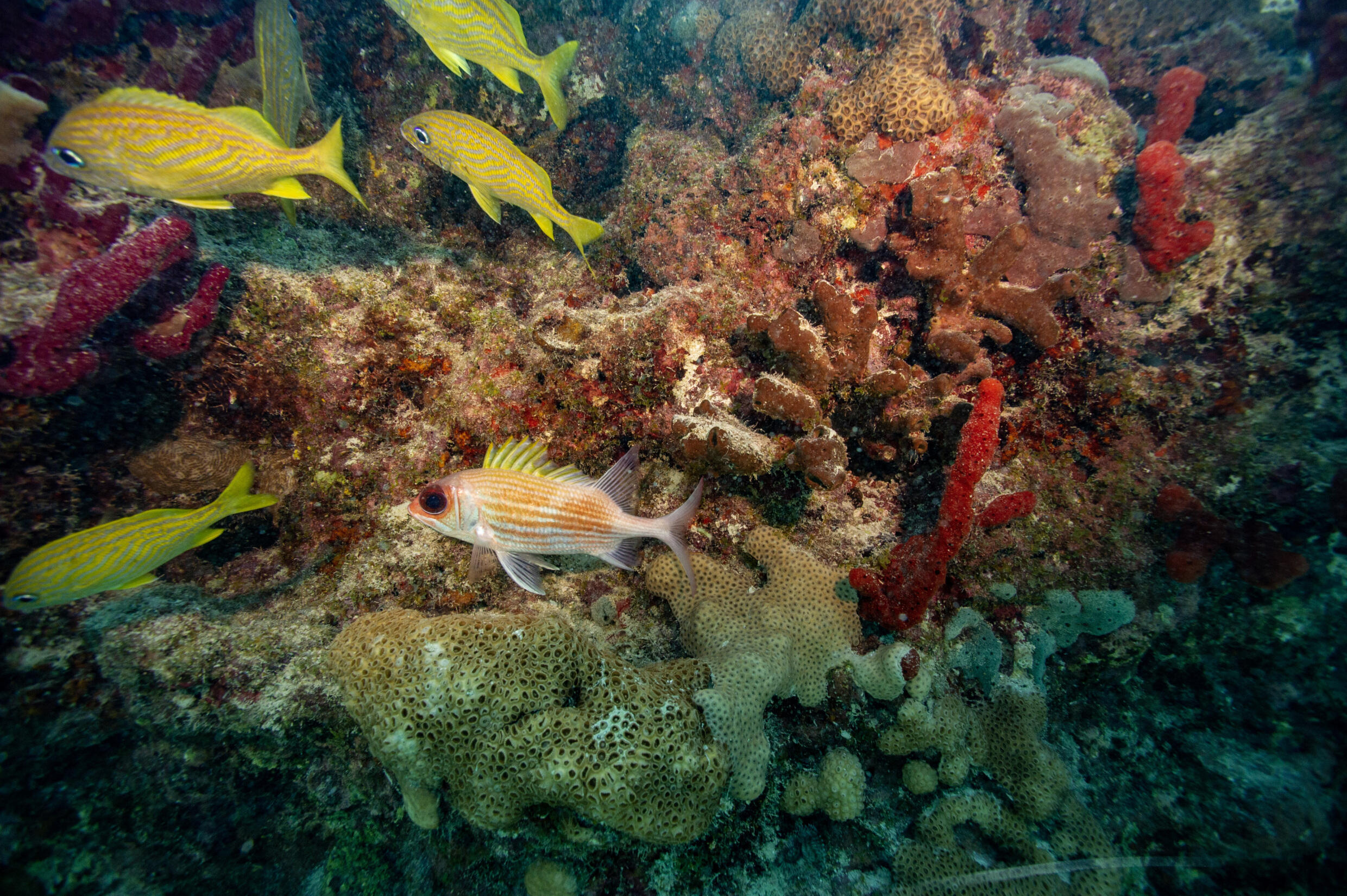
And the more they look the more they have found, from a giant sea cucumber dubbed the "gummy squirrel" and a shrimp with a set of elongated bristly legs, to the many different tiny worms, crustaceans and mollusks living in the mud.
That has intensified concerns about controversial proposals to mine the deep sea, with the International Seabed Authority on Friday agreeing a two-year roadmap for the adoption of deep sea mining regulations, despite conservationists' calls for a moratorium.
Abyssal plains over three kilometres underwater cover more than half of the planet, but we still know surprisingly little about them.
They are the "last frontier", said marine biologist Erik Simon-Lledo, who led research published Monday in the journal Nature Ecology and Evolution that mapped the distribution of animals in the CCZ and found a more complex set of communities than previously thought.
"Every time we do a new dive we see something new," said Simon-Lledo, of Britain's National Oceanography Centre.
Campaigners say this biodiversity is the true treasure of the deep sea and warn that mining would pose a major threat by churning up huge plumes of previously-undisturbed sediment.
The nodules themselves are also a unique habitat for specialised creatures.
"With the science as it is at the present day, there is no circumstance under which we would support mining of the seabed," said Sophie Benbow of the NGO Fauna and Flora.
- 'Mind-bogglingly vast' -
The Clarion-Clipperton zone has both its age and its size to thank for the unique animals discovered there, scientists say.
The region is "mind-bogglingly vast", said Adrian Glover, of Britain's Natural History Museum, a co-author both on the study with Simon-Lledo and on the first full stocktake of species in the region published in Current Biology in May.
That study found that more than 90 percent of species recorded in the CCZ -- some 5,000 species -- are new to science.
The region, which was considered to be essentially barren before an increase in exploration in the 1970s, is now thought to have a slightly higher diversity than the Indian Ocean, said Glover.
He said sediment sampling devices from the region might only capture 20 specimens each time -- compared to maybe 20,000 in a similar sample in the Antarctic -- but that in the CCZ you have to go much further to find the same creature twice.
Scientists are now also able to use autonomous underwater vehicles to survey the seabed.
These are what helped Simon-Lledo and his colleagues find that corals and brittlestars are common in shallower eastern CCZ regions, but virtually absent in deeper areas, where you see more sea cucumbers, glass sponges and soft-bodied anemones.
He said any future mining regulations would have to take into account that the spread of animals across the area is "more complex than we thought".
- 'Serious harm' -
The nodules likely started as a shard of hard surface -- a shark tooth or a fish ear bone -- that settled on the seabed and slowly grew by attracting minerals that naturally occur in the water at extremely low concentrations, Glover said.
Each one is likely millions of years in the making.
The area is also "food poor", meaning fewer dead organisms drift down to the depths to eventually become part of the seafloor mud. Glover said parts of the CCZ add just a centimetre of sediment per thousand years.
Unlike the North Sea, formed from the last ice age that ended 20,000 years ago, the CCZ is ancient.
"The abyssal plain of the Pacific Ocean has been like that for tens of millions of years -- a cold dark abyssal plain with low sedimentation rates and life there," Glover said.
Because of this, the environment impacted by any mining would be unlikely to recover in human timescales.
"You are basically writing that ecosystem off for probably centuries, maybe thousands of years, because the rate of recovery is so slow," said Michael Norton, Environment Programme Director, the European Academies' Science Advisory Council.
"It's difficult to argue that that is not serious harm."
Plankton are not just a diabolical mastermind on a Nickelodeon show about a sponge who lives under the sea. Lake Tahoe is filled with them — the good kind. Tahoe native zooplankton are making a comeback in the more than 21-mile long lake, helping it look the clearest it has in 40 years. A comeback because until now, the microorganism’s population significantly decreased after it’s primary predator, the Mysis shrimp, was on the rise, according to previous Sacramento Bee reporting. Here’s how zooplankton help make Lake Tahoe sparkle, and why they are important to the ecosystem: —What are zooplan...
A new social experiment discovered that conflict within a group makes people more likely to support dominant leaders. Highly dominant individuals, who tend to punish others, are endorsed as leaders when the group faces significant conflict, but not when conflict is low. The study was published inAdaptive Human Behavior and Physiology. Throughout history, tough times have seen strong dominant leaders rise to power. For instance, in the ancient Roman Republic, emergency situations allowed the appointment of temporary dictators. Wars, occupations, and other threats to nations have often led to do...
Around 2,000 penguins have appeared dead on the coast of eastern Uruguay in the last 10 days, and the cause, which does not appear to be avian influenza, remains a mystery, authorities said.
The Magellanic penguins, mostly juveniles, died in the Atlantic Ocean and were carried by currents to Uruguayan shores, said Carmen Leizagoyen, head of the Environment Ministry's department of fauna.
"This is mortality in the water. Ninety percent are young specimens that arrive without fat reserves and with empty stomachs," she said, and stressed that all samples taken have tested negative for avian influenza.
Magellanic penguins nest in southern Argentina. In the southern hemisphere winter, they migrate north in search of food and warmer waters, even reaching the coast of the Brazilian state of Espirito Santo.
"It is normal for some percentage to die, but not these numbers," Leizagoyen said, recalling that a similar die-off occurred last year in Brazil, for undetermined reasons.
Hector Caymaris, director of the Laguna de Rocha protected area, told AFP that he counted more than 500 dead penguins along six miles (10 kilometers) of Atlantic coast.
Environmental advocates attribute the increase in Magellanic penguin deaths to overfishing and illegal fishing.
"From the 1990s and 2000s we began to see animals with a lack of food. The resource is overexploited," Richard Tesore, of the NGO SOS Marine Wildlife Rescue, told AFP.
A subtropical cyclone in the Atlantic, which hit southeastern Brazil in mid-July, probably caused the weakest animals to die from the inclement weather, he added.
In addition to penguins, Tesore said he has recently found dead petrels, albatrosses, seagulls, sea turtles and sea lions on the beaches of Maldonado, a department east of the capital Montevideo.
Amid the fields of northern Germany a vast expanse of bulrushes has been planted to form one of Europe's largest reclaimed marshes.
Just four years ago, the 10-hectare (25-acre) plot close to the town of Malchin was a simple field.
Like 98 percent of Germany's historic wetlands, the area slowly dried up over centuries as its peat was harvested and the soil cultivated for grain or keeping livestock.
Now, the land has been rewetted and planted with rushes that rise up to two meters (seven feet) high.
With rubber boots that go up to her knees and a GPS navigation device in hand, biologist Meline Brendel wades through the marshes' stagnant waters.
"Marshes cover three percent of the Earth's surface and trap twice as much CO2 as all forests," says Brendel.
Left alone, such bogs are massive sinks for carbon locked into the peat and prevented from escaping as gas by the water that covers the ground.
Once dry, however, the earth releases the stored carbon when it comes into contact with oxygen.
"In this region, marshes therefore emit more CO2 than all forms of transport put together," says the scientist.
Over a year, one hectare of drained marshland produces as much CO2 as a car traveling 145,000 kilometers (90,000 miles), according to the Greifswald Mire Centre.
- Wetland habitat -
In Germany, current and former wetlands cover some five percent of the country's land area -- although the overwhelming majority has been drained.
To keep these emissions in check, the government-financed Paludi-PROGRESS project funded the rewetting of the former marshland.
The land was criss-crossed with trenches, flooded and planted with bulrushes.
Today, the area is habitat to a multitude of birds, fish, insects, spiders and amphibians. The bulrushes are cut each year and used for household insulation, among other practical applications.
Her eyes glued to the GPS, Brendel navigates her way through the wet maze, sinking a spike into the peat as she goes to measure the level of the water.
"The problem is that projects like ours are still just pilots. The plants cannot yet be used on an industrial scale" as material for roofing or insulation, she says.
The German government, which aims to make Europe's top economy carbon neutral by 2045, last year launched a four-billion-euro ($4.5 billion), four-year plan of action to "improve the general state of ecosystems" in the country.
Half of the program's funds will go toward protecting marshes.
A new law encouraging such efforts within the EU was recently adopted by the European Parliament. However, the programs have run into opposition from farmers.
- Cows and carbon -
For Brendel, the point is not to "force the rewetting of fields on farmers", but to convince them of its importance for the climate and the possibility to make a living from cultivating wetland.
The 28-year-old scientist concedes that farming marshes is currently "not recognized as agriculture and farmers therefore don't have access to organic farming subsidies".
"We need to make it more accessible and less bureaucratic to turn drained land back into marshes and to share what we have learned."
Twenty years ago, Bavarian farmer Lorenz Kratzer opted for an intermediate solution: keeping livestock on marshland that is slightly less wet than normal and giving his animals plenty of land to roam.
On a hot summer's day in Freising in southern Germany, 20 or so of his cows seek the shade of the trees and bushes growing on his marshland used for grazing.
As the soil dries out due to climate change, the 64-year-old says it "would be a very good thing... to let the marshes return to nature, to flood them again".
"The creation of pastures goes along well with this. You can see that the grass is growing better," he said.
Kratzer sells his organic meat locally, showing that it's possible to combine agriculture and marshland protection.
Back in Malchin, across the way from the reclaimed marsh, a herd of cows grazes peacefully in a field.
"You can't see it but carbon is escaping from the ground" dried to make pastures for livestock, says Brendel, who dreams of a world where "there are no more dry marshes".
A new study suggests that OpenAI’s GPT-3 can both inform and disinform more effectively than real people on social media. The research, published in Science Advances, also highlights the challenges of identifying synthetic (AI-generated) information, as GPT-3 can mimic human writing so well that people have difficulty telling the difference. The study was motivated by the increasing attention and interest in AI text generators, particularly after the release of OpenAI’s GPT-3 in 2020. GPT-3 is a cutting-edge AI language model that can produce highly credible and realistic texts based on user p...