Baby boys babble more than girls, according to a scientific paper out Wednesday that upends a common belief that females hold a language advantage over males early on in life.
The findings, published in iScience after the largest ever study on the subject, came as a surprise even to the paper's authors.
They say it might be the result of an important sex difference that emerged during our species' evolution.
A team led by D. Kimbrough Oller of the University of Memphis, Tennessee used an algorithm to trawl through a data set of more than 450,000 hours of non-stop audio from 5,899 infants, recorded using an iPod sized device over two years.
"This is the biggest sample for any study ever conducted on language development, as far as we know," Oller said in a statement.
While young babies don't talk, they produce pre-speech vocalizations -- squeals, growls, raspberries, and later word-like sounds such as "ba" and "ga" -- collectively called "protophones" that eventually give way to real words and sentences.
The idea that girls acquire language faster than boys has long held sway in scientific circles, and with it the assumption that baby girls vocalize more than baby boys.
However, the results showed that boys made 10 percent more utterances in the first year of life, before the girls caught up and made seven percent more sounds by the second year.
Evolutionary theory
The differences occurred despite the fact that adult care-givers spoke more to girls than to boys across both years.
One theory for the finding was that male infants were more vocal because they were more active in general. But the data did not support this, since higher male vocalizations gave way to females around the 16 month mark, but higher physical activity did not.
Instead, the team suggests their findings might fit an evolutionary theory which holds that infants make sounds in order to signal their wellbeing to their caregivers, who in turn invest more energy and attention in them.
Boys have higher mortality rates than girls in their first year of life, according to a broad body of research, and so it may follow that more vocal baby boys in the distant past were more likely to survive and pass on their genes.
But by the second year of life, death rates have dropped dramatically for both sexes, and "the pressure on special fitness signaling is lower for both boys and girls," said Oller.
Next, Oller plans more research on how caregivers respond to baby talk.
"We anticipate that caregivers will show discernible reactions of interest and of being charmed by the speech-like sounds, indicators that fitness-signaling by the baby elicits real feelings of fondness and willingness to invest in the well-being of infants," he said.
One of the most common stereotypes about the human past is that men did the hunting while women did the gathering. That gendered division of labor, the story goes, would have provided the meat and plant foods people needed to survive.
That characterization of our time as a species exclusively reliant on wild foods – before people started domesticating plants and animals more than 10,000 years ago – matches the pattern anthropologists observed among hunter-gatherers during the 19th and early 20th centuries. Virtually all of the large-game hunting they documented was performed by men.
Stone Folsom points, which date to between 11,000 and 10,000 years ago, are associated with the prehistoric hunting of bison. UMMAA 27673, 39802, 30442 and 37737, Courtesy of the University of Michigan Museum of Anthropological Archaeology
It’s an open question whether these ethnographic accounts of labor are truly representative of recent hunter-gatherers’ subsistence behaviors. Regardless, they definitely fueled assumptions that a gendered division of labor arose early in our species’ evolution. Current employment statistics do little to disrupt that thinking; in a recent analysis, just 13% of hunters, fishers and trappers in the U.S. were women.
First, I want to note that this article uses “women” to describe people biologically equipped to experience pregnancy, while recognizing that not all people who identify as women are so equipped, and not all people so equipped identify as women.
I am using this definition here because reproduction is at the heart of many hypotheses about when and why subsistence labor became a gendered activity. As the thinking goes, women gathered because it was a low-risk way to provide dependent children with a reliable stream of nutrients. Men hunted either to round out the household diet or to use difficult-to-acquire meat as a way to attract potential mates.
One of the things that has come to trouble me about attempts to test related hypotheses using archaeological data – some of my own attempts included – is that they assume plants and animals are mutually exclusive food categories. Everything rests on the idea that plants and animals differ completely in how risky they are to obtain, their nutrient profiles and their abundance on a landscape.
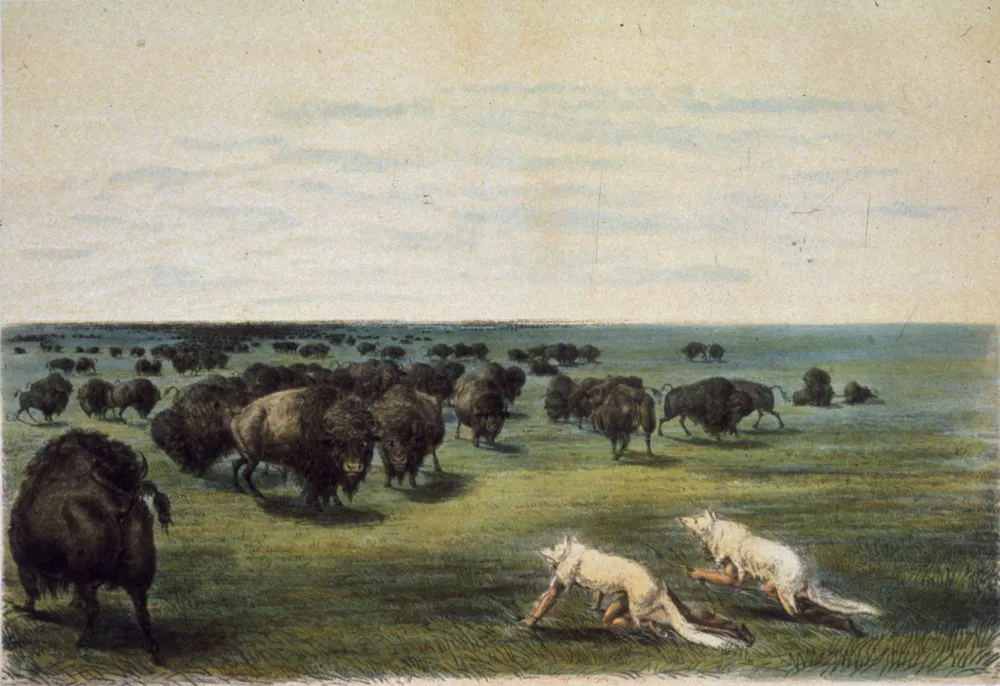
It is true that highly mobile large-game species such as bison, caribou and guanaco (a deer-sized South American herbivore) were sometimes concentrated in places or seasons where plants edible to humans were scarce. But what if people could get the plant portion of their diets from the animals themselves?
The plant material undergoing digestion in the stomachs and intestines of large ruminant herbivores is a not-so-appetizing substance called digesta. This partially digested matter is edible to humans and rich in carbohydrates, which are pretty much absent from animal tissues.
Conversely, animal tissues are rich in protein and, in some seasons, fats – nutrients unavailable in many plants or that occur in such small amounts that a person would need to eat impractically large quantities to meet daily nutritional requirements from plants alone.
If past peoples ate digesta, a big herbivore with a full belly would, in essence, be one-stop shopping for total nutrition.
Killing a bison could provide a source of both protein and carbs, if you consider the digesta. UMMAA 83209 a and b, Courtesy of the University of Michigan Museum of Anthropological Archaeology
To explore the potential and implications of digesta as a source of carbohydrates, I recently compared institutional dietary guidelines to person-days of nutrition per animal using a 1,000-pound (450-kilogram) bison as a model. First I compiled available estimates for protein in a bison’s own tissues and for carbohydrates in digesta. Using that data, I found that a group of 25 adults could meet the U.S. Department of Agriculture’s recommended daily averages for protein and carbohydrates for three full days eating only bison meat and digesta from one animal.
Among past peoples, consuming digesta would have relaxed the demand for fresh plant foods, perhaps changing the dynamics of subsistence labor.
Recalibrating the risk if everyone hunts
One of the risks typically associated with large-game hunting is that of failure. According to the evolutionary hypotheses around gendered division of labor, when risk of hunting failure is high – that is, the likelihood of bagging an animal on any given hunting trip is low – women should choose more reliable resources to provision children, even if it means long hours of gathering. The cost of failure is simply too high to do otherwise.
However, there is evidence to suggest that large game was much more abundant in North America, for example, before the 19th- and 20th-century ethnographers observed foraging behaviors. If high-yield resources like bison could have been acquired with low risk, and the animals’ digesta was also consumed, women may have been more likely to participate in hunting. Under those circumstances, hunting could have provided total nutrition, eliminating the need to obtain protein and carbohydrates from separate sources that might have been widely spread across a landscape.
And, statistically speaking, women’s participation in hunting would also have helped reduce the risk of failure. My models show that, if all 25 of the people in a hypothetical group participated in the hunt, rather than just the men, and all agreed to share when successful, each hunter would have had to be successful only about five times a year for the group to subsist entirely on bison and digesta. Of course, real life is more complicated than the model suggests, but the exercise illustrates potential benefits of both digesta and female hunting.
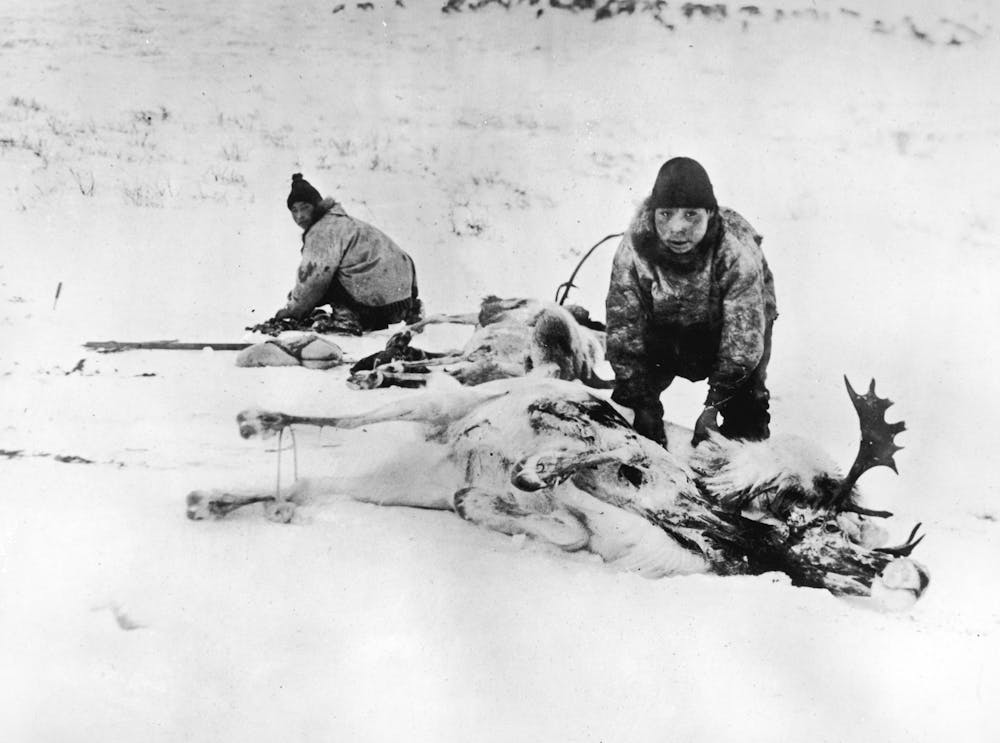
Ethnographically documented foragers did routinely eat digesta, especially where herbivores were plentiful but plants edible to humans were scarce, as in the Arctic, where prey’s stomach contents was an important source of carbohydrates.
I believe eating digesta may have been a more common practice in the past, but direct evidence is frustratingly hard to come by. In at least one instance, plant species present in the mineralized plaque of a Neanderthal individual’s teeth point to digesta as a source of nutrients. To systematically study past digesta consumption and its knock-on effects, including female hunting, researchers will need to draw on multiple lines of archaeological evidence and insights gained from models like the ones I developed.
Raven Garvey, Associate Professor of Anthropology; Curator of High Latitude and Western North American Archaeology, Museum of Anthropological Archaeology; Faculty Affiliate, Research Center for Group Dynamics, University of Michigan
New research on old bones has shed light on pterosaur fossils from the early Cretaceous period of Australia, which took place roughly 107 million years ago.
The bones were discovered in Victoria in the late 1980s at a fossil site called Dinosaur Cove, a few hours’ drive west of Melbourne.
The Dinosaur Cove fossils are the geologically oldest pterosaur remains we have from the Lower Cretaceous of Australia.
These bones belonged to two separate individuals, because there’s a relative size difference between the two.
One specimen is a partial sacrum (the fused vertebrae from between the pelvic bones), a relative rarity in the pterosaur fossil record. The other is a comparatively small fourth metacarpal (part of the wing finger) – it is the first evidence of a juvenile pterosaur found in Australia.
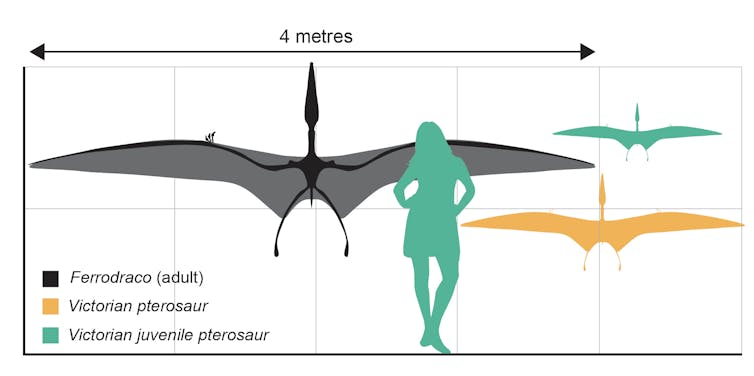
Although we couldn’t pinpoint exactly which species in the pterosaur family these bones came from, the partial sacrum belonged to an individual with a wingspan estimated to exceed two meters. By contrast, the juvenile pterosaur had a wingspan just over one meter.
Wingspan estimates of Australian pterosaurs, including Ferrodraco lentoni, an adult from the Upper Cretaceous of Queensland, compared with the newly described Victorian pterosaurs from the Lower Cretaceous. Author provided
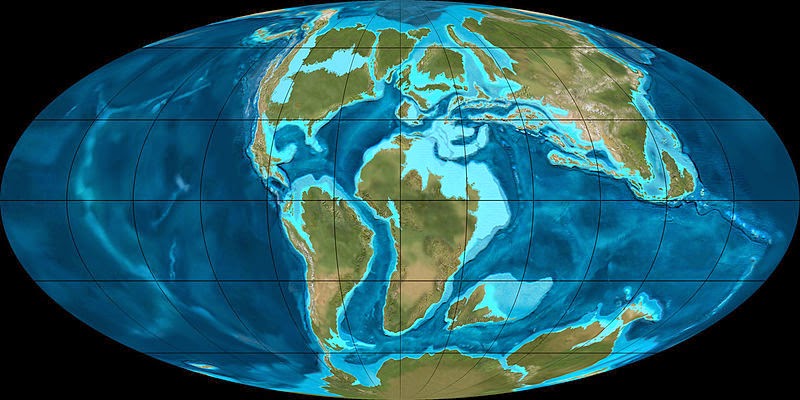
In the early Cretaceous, approximately 110–107 million years ago, Victoria was virtually unrecognizable. The Bass Strait was a narrow valley occupied by fast-flowing rivers. Conifers and ginkgoes grew here instead of eucalypts and grasses, and dinosaurs reigned.
For more than 30 years, it has been clear to scientists that flying reptiles called pterosaurs soared through the Victorian Cretaceous skies, above the heads of the dinosaurs. Until recently, however, they have remained a mystery.
Treasure at Dinosaur Cove
Large-scale excavations at Dinosaur Cove began in 1984, and for more than 40 years, a team of volunteers called Dinosaur Dreaming have excavated fossil sites along several other sites scattered across the Victorian coast.
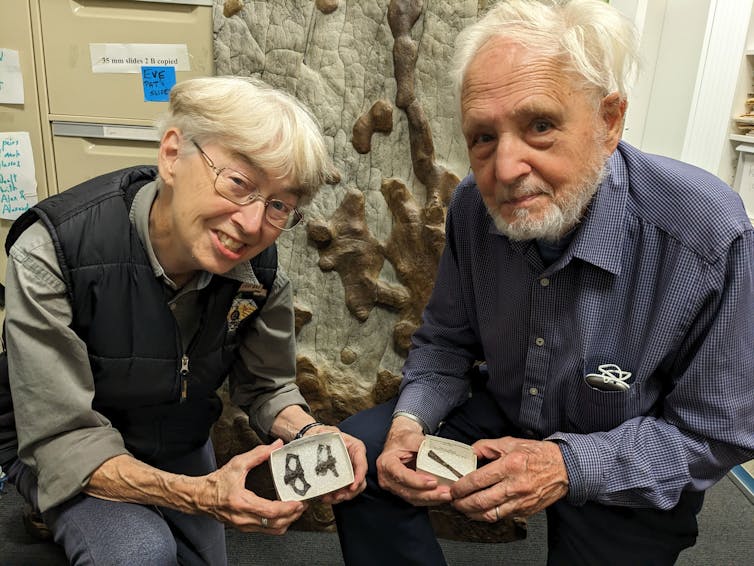
Tom Rich and Pat Vickers-Rich, co-authors of our newly published paper, led the excavations that yielded not just the newly described pterosaurs, but myriad other discoveries as well.
Co-authors Pat Vickers-Rich and Tom Rich holding the pterosaur specimens we described. Tim Ziegler, Author provided
The work at this rich fossil site has resulted in thousands of dinosaur bones and other fossils. These include fossil fish (bony fish and lungfish), skeletal remains from ornithopods, megaraptoran theropods, aquatic plesiosaurs and prehistoric mammals. There was also Australia’s only elaphrosaurine theropod: a lightly-built dinosaur with a small head, long neck, relatively short front limbs, long hind limbs and a long tail.
But among the rarest vertebrate fossils from Dinosaur Cove are those from pterosaurs.
Australia’s pterosaur record
The majority of Australia’s pterosaur fossils have been found in central-western Queensland. Indeed, the first pterosaurs reported from the continent were isolated remains from the Eromanga Basin, described in 1980.
Other pterosaur fossils from Australia include isolated remains from the Cretaceous of Western Australia, and opalized pterosaur teeth from the mid-Cretaceous of Lightning Ridge in New South Wales.
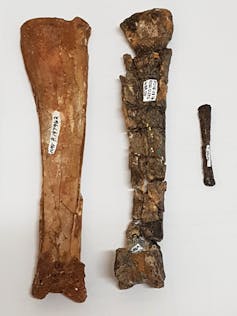
Three pterosaur wing bones from three individuals. Left: right metacarpal from the Toolebuc Formation was discovered at Slashers Creek Station, east of Boulia, Queensland. Middle: Left metacarpal from Ferrodraco lentoni from the Winton Formation, discovered northeast of Winton, Queensland. Right: a left metacarpal from a juvenile pterosaur from Dinosaur Cove, Victoria. Author provided
We don’t know which species the Victorian pterosaurs belong to. However, the comparatively small fourth metacarpal – a bone from the wing – is the first unequivocal evidence of a juvenile pterosaur from Australia.
Pterosaurs at high latitudes
Few pterosaur remains have been reported from fossil sites that were at high latitudes during the Age of Reptiles – the Mesozoic Era.
The only reports of high-latitude pterosaurs in the northern hemisphere are of isolated footprints.
During the Cretaceous, Australia was farther south than it is today. In fact, Victoria was within the polar circle during much of the Cretaceous. Southeast Australia was not frozen over at this time, but there were weeks or months of continuous darkness during the winter. Despite these harsh polar conditions, life found a way to survive and thrive.
This prompts a few questions: were pterosaurs permanent residents in southeast Australia? Or did they migrate south during summer and head north for the winter?
From a young age, pterosaurs were adept fliers, their bones already able to withstand the stresses of both launch and flight. However, subtle variations in the shape of the bones imply that hatchlings differed from their adult counterparts in terms of speed and maneuvrability.
Until we discover pterosaur eggs or embryonic individuals at sites that were at high latitudes at the time, we won’t be able to confirm if pterosaurs were year-round residents or migratory.
Despite the rarity of pterosaurs in the fossil record, it is only a matter of time before we find more complete pterosaur material from Dinosaur Cove and other Cretaceous sites from coastal Victoria. Then, we can finally uncover the identity of these ancient, enigmatic winged reptiles.
A woman in her 20s called Mae who spoke with the Guardian recounted how incredibly stressful it is to have your facial expressions monitored and cataloged in ways that will be used to evaluate your performance.
"Tracking doesn’t allow for thinking time or stepping away and coming back to work – it’s very intense," she explained.
What's more, she says that the technology has hurt her productivity and she has found she actually gets more work done when she's not being "constantly watched."
Of course, this actually requires her to do more work in secret after hours just to keep up with what she needs to get done.
Another worker who spoke with The Guardian, who goes by the name of Carlos, revealed that he's being surveilled minute by minute at his job and revealed to the publication that "I have found myself having to explain the reasons for a longer toilet break."
Henry Parkes, a senior economist at the Institute for Public Policy Research, tells The Guardian that "this technology can just be used to exert power over employees in a way that wasn’t possible before," while adding that " it’s dehumanizing and not how people are able to operate all day."
However, a worker who goes by the name of Adam tells The Guardian that he was able to get his boss to back off intensive tracking as soon as he reported it to his union.
"They are now aware that the watchers are being watched," he told the publication.
Officials and climate experts in Nova Scotia, Canada on Tuesday pointed to numerous climate-related factors that have contributed to the wildfires that are raging in the province this week, forcing the evacuation of more than 16,000 people and destroying roughly 200 homes and other structures.
The Tantallon fire in the Halifax area and the Barrington Lake fire in the southwestern county of Shelburne have burned through a combined 25,000 acres in the Maritime province, which, as one firefighter told the Canadian newspaper SaltWire, has historically been far less likely to experience such blazes than landlocked western provinces.
"This the worst fire I've ever been on," volunteer firefighter Capt. Brett Tetanish toldSaltWire. "I've been on other large fires in Nova Scotia, Porters Lake, we lost structures there, but you don't see fires like this in Nova Scotia. You see these in Alberta."
Tetanish described a "surreal" scene as he drove toward the Tantallon fire on Sunday evening.
"We're driving on Hammonds Plains Road with fire on both sides of the road, structures on fire, cars abandoned and burnt in the middle of the road," he toldSaltWire.
Other witnesses, including a filmmaker, posted videos on social media of "apocalyptic scenes" showing fires destroying homes and huge plumes of smoke rendering highways nearly invisible to drivers.
"I almost died," said the filmmaker. "The fire is spreading, it's very serious. We couldn't see anything."
Halfway through 2023, Nova Scotia has already experienced more wildfires than it did in all of 2022, according to the National Observer.
Karen McKendry, a wilderness outreach coordinator at the Ecology Action Center in Nova Scotia's capital, Halifax, told the Observer the province has experienced hotter dryer weather than normal this spring, making it easier for fires to spread.
"People haven't always, on a national scale, been thinking about Nova Scotia and wildfires," McKendry said. "What dominates the consciousness, rightly so in Canada, is what's happening out West. But with a warming climate and some drier seasons, this is going to become more common in Nova Scotia. So more fires, more widespread fires, more destructive fires from a human perspective as well."
The province's Department of Natural Resources and Renewables (DNRR) also warned last Friday that the wildfires were taking hold in the region less than a year after Hurricane Fiona downed what Premier Tim Houston called a "significant" number of trees across Nova Scotia.
"Fires in areas where Hurricane Fiona downed trees have the potential to move faster and burn more intensely, making them potentially more difficult to contain and control," said the DNRR. "At this time, needles, twigs, leaves, etc., support fire ignition and spread. With high winds, the spread can be rapid and intense."
Scientists last year linked warming oceans, fueled by the continued extraction of fossil fuels and emissions of planet-heating greenhouse gases, to Fiona's destruction in Eastern Canada.
Canadian Prime Minister Justin Trudeau warned Monday that the situation in Nova Scotia is "incredibly serious," prompting Saman Tabasinejad, acting executive director of Progress Toronto, to point to Trudeau's support for fossil fuel projects like the Trans Mountain Pipeline.
"This would be a great time to end fossil fuel subsidies and invest in a Green New Deal!" Tabasinejad said on Twitter.
More than 200 crews have been sent by government agencies from across the province, and Nova Scotia officials said Tuesday that both the Tantallon and Barrington Lake fires were still "out of control" two days after they began and were "rapidly moving."
Halifax Fire and the DNRR are investigating the cause of the fires.
McKendry pointed out that a number of anti-conservation activities may be linked to increased wildfires.
Roads being built "deep into our forests" have allowed more people opportunities to accidentally set fires, while the government has been "emptying our urban areas of wetlands," making it easier for blazes to spread widely.
"Do not delude yourself into thinking this is a one-off," journalist John Vaillant toldSaltWire on Monday. "The world is more flammable than it has ever been."
The scale of plastic pollution is growing, relentlessly. The world is producing twice as much plastic waste as two decades ago, reaching 353 million tonnes in 2019, according to OECD figures.
The vast majority goes into landfills, gets incinerated or is “mismanaged”, meaning left as litter or not correctly disposed of. Just 9 percent of plastic waste is recycled.
Ramping up plastic recycling might seem like a logical way to transform waste into a resource. But recent studies suggest that recycling plastic poses its own environmental and health risks, including the high levels of microplastics and harmful toxins produced by the recycling process that can be dangerous for people, animals and the environment.
Microplastics
“We found pretty scary amounts, to be honest,” said plastics scientist Erina Brown, lead author of a research paper into the microplastic run-off produced by recycling centers, published in May 2023.
The UK recycling centre at which Brown based her studies used large amounts of water (common practice in the recycling industry) to sort, shred and separate plastics before they were compounded and turned into pellets for resale.
Her research tested the rate of microplastics – plastic particles up to 5mm in size – released into the water through the process.
“There were 75 billion particles per metre cubed in the wash water,” she said. “About 6 percent of all the plastics that were coming into the facility were then being released into the water as microplastics, even with the filtration [system].”
Scientists are still researching the possible risks of microplastics on human health. They are thought to carry disease-causing organisms that act as a vector for diseases in the environment – where many plastic particles produced by recycling are likely to end up.
Water used in recycling centers around the world often passes through sewage treatment facilities, which “are just not designed to filter this size of microplastic”, Brown says.
Microplastics caught in sewage sludge are often inadvertently applied to fields as fertilizer, while those that remain in the treated water enter local streams and end up even farther afield – a study released in March showed microplastics from European rivers had spread to Arctic seas.
More than two-thirds of UN member states agreed in March last year to develop a legally binding agreement on plastic pollution by 2024, and the second round of meetings to draw up the treaty began on Monday in Paris and will run through Friday.
UN Environment Programme (UNEP), which is hosting the talks, released a roadmap to reduce plastic waste by 80 percent by 2040.
But some environmental groups have said the three key areas of action outlined – reusing, recycling and reorientation towards alternative materials – are a concession to the global plastics and petrochemicals industry as they downplay the need to reduce use of plastic altogether.
Recycled plastics pose greater risk
Microplastic release is not the only flaw in the system. Recycling plastics means working with unregulated toxic chemicals.
Plastics are made with as many as 13,000 chemicals, according to a UN report this month, and 3,200 of those have “hazardous properties” that could affect human health and the environment. Many more have never been assessed and may also be toxic, according to a report from Greenpeace released last week.
In addition, “only a very, very small portion of those chemicals are regulated globally”, said Therese Karlsson, science and technical adviser at the International Pollutants Elimination Network (IPEN). “Since there's no transparency [in the market], there's no way for people to know which plastics contain toxic chemicals and which don't.”
The risk these chemicals pose increases among recycled plastics, as products with unknown compositions are heated and mixed together.
“The outcome is a completely unknown product that is reintroduced onto the market,” Karlsson said.
Greenpeace’s report also detailed increased health risks for recycling centre workers exposed to toxic chemicals, including long-term health conditions such as cancer and harm to reproductive systems.
It also found higher levels of toxic chemicals in recycled plastic than in their virgin counterparts, including kitchen utensils, children’s toys and food packaging.
The spread does not end there. “We've done studies on eggs that are close to places that recycle plastics and found that these chemicals are making their way into the food chain,” Karlsson said.
“Plastics can act as carriers of these chemicals even to really remote places.”
Soaring plastic production
The share of plastic waste that is recycled globally is expected to rise to 17 percent by 2060, according to figures from the OECD. But recycling more will not address a major issue: after being recycled once or twice, most plastics come to a dead end.
“There’s a myth with plastic recycling that if the quality is good enough the plastics can be recycled back into plastic bottles,” says Natalie Fée, the founder of City to Sea, a UK-based environmental charity.
“But as it goes through the system, it becomes lower- and lower-grade plastic. It's down-cycled into things like drain pipes or sometimes fleece clothing. But those items can't be recycled afterwards.”
It is therefore difficult to make the case that recycled plastic is a sustainable material, said Graham Forbes, Global Plastics Campaign leader at Greenpeace USA, in a statement this week.
“Plastics have no place in a circular economy. It’s clear that the only real solution to ending plastic pollution is to massively reduce plastic production.”
And it is impossible for increased recycling to keep pace with the amount of plastic waste being produced – which is expected to almost triple by 2060.
“There's no way that we can recycle our way out of this,” added Karlsson. “Not as it works today. Because today, plastic recycling is not working.”
This is something she hopes the treaty under discussion in Paris this week will address.
Coming into the talks in Paris, a 55-nation coalition called for restrictions on some hazardous chemicals and bans on problematic plastics products that are hard to recycle and often end up in nature.
Karlsson is attending the talks, and she sees reason for hope. “The plastics treaty is an incredible opportunity to protect human health and the environment from plastic pollution. Doing that would mean phasing out toxic chemicals from plastics, ensuring transparency across the plastic life cycle and also decreasing plastic production.”
The condition often only hits the headlines after violent attacks by sufferers, such as a schizophrenic patient who stabbed a nurse to death last week in the French city of Reims.
But French psychiatrist Sonia Dollfus emphasised that such cases of violence by people with schizophrenia are "extremely rare".
"All the work done over the years trying to de-stigmatise this disease -- it is swept away in 24 hours," Dollfus told AFP.
Around one in every 300 people worldwide are affected by schizophrenia, according to the World Health Organization.
It causes a wide range of distressing delusional disorders, which vary in intensity between patients but often hugely disrupts their lives.
At least five percent of schizophrenia patients are estimated to die by suicide.
The condition is usually treated with a combination of anti-psychotic drugs, social support for reintegration, and psychological therapy.
Scottish psychiatrist Robin Murray, who has spent decades researching schizophrenia, told AFP that when it came to medication, "treatment has not changed dramatically" over the last 20 or 30 years.
He added that psychological therapy had improved in that time.
But unlike numerous other mental disorders -- particularly neurotic conditions -- taking serious drugs remains the cornerstone in treating schizophrenia.
Innovation
For drugs, there has been a "blank period since the 2010s, when pharmaceutical laboratories really withdrew from psychiatry," Dollfus said.
But there has been some innovation recently, she added.
One development have been apps that can track patients' progress, ensure timely follow-up sessions and contact psychiatrists if necessary.
Another is a new treatment approved by the US Food and Drug Administration last month.
The treatment, developed by the Israeli pharmaceutical firm Teva and France's MedinCell, involves the drug risperidone which has long been used for schizophrenia.
It has traditionally been prescribed as a daily pill, but the new treatment is administered via injection, allowing the drug to be gradually released in the body over several weeks.
This makes it impossible for patients to miss a daily pill.
Interruptions to medication, often brought about by the psychosis the illness causes, are a common problem in treating schizophrenia.
For example, the attacker in Reims had been off his medication, according to several sources.
'Really promising'
This new way of administering an old medication is not the kind of revolution that a new drug would represent. But progress may soon be made in that area.
Dollfus said that some drugs currently being investigated are "really interesting" because they work in a different way than those of the past.
Traditionally, anti-psychotic drugs used to treat schizophrenia aim to block the action of dopamine, a molecule that acts as a chemical messenger in the brain.
However, dopamine seems to play a complex role in schizophrenia -- some patients can have excessive levels in some respects and insufficient levels in others.
Traditional anti-psychotic drugs, which tend to work well at stopping certain symptoms such as hallucinations, do not help in other areas, such as the loss of willpower or struggles with language and speech.
Recent research has focused on finding other molecules which regulate rather than block dopamine, while also acting on other areas thought to be involved in schizophrenia.
These treatments, such as one that targets a protein called TAAR1, are still some way away from being available to patients.
But the TAAR1 drug has had positive results from the most advanced stage of trials, known as phase 3.
"This is a really promising avenue," Dollfus said.
It marked the latest space milestone for China, as it looks to catch up with the United States and Russia.
Here is a look at the Chinese space program, and where it is headed:
Mao's vow
Soon after the Soviet Union launched Sputnik in 1957, Chinese leader Mao Zedong pronounced: "We too will make satellites."
It took more than a decade, but in 1970, China launched its first satellite on a Long March rocket.
Human spaceflight took decades longer, with Yang Liwei becoming the first Chinese "taikonaut" in 2003.
As the launch approached, concerns over the viability of the mission caused Beijing to cancel a live television broadcast at the last minute.
But it went smoothly, with Yang orbiting the Earth 14 times during a 21-hour flight.
Space station and 'Jade Rabbit'
Following in the footsteps of the United States and Russia, China started planning for a space station of its own in Earth orbit.
The Tiangong-1 lab was launched in 2011.
In 2013, the second Chinese woman in space, Wang Yaping, gave a video class from that craft to children across the country.
Tiangong-1 was also used for medical experiments and, most importantly, tests intended to prepare for the construction of a space station.
That was followed by the "Jade Rabbit" lunar rover in 2013, which initially appeared to be a dud when it turned dormant and stopped sending signals back to Earth.
It made a dramatic recovery, however, ultimately surveying the Moon's surface for 31 months -- well beyond its expected lifespan.
In 2016, China launched its second orbital lab, the Tiangong-2. Astronauts who visited the station have run experiments on growing rice and other plants in space.
'Space dream'
Under President Xi Jinping, plans for China's "space dream" have been put into overdrive.
It is looking to finally catch up with the United States and Russia after years of belatedly matching their milestones.
Besides a space station, China is planning to build a base on the Moon, reiterating this week its goal to land humans on the Moon by 2030.
The lunar plans were dealt a setback in 2017 when the powerful Long March-5 Y2 rocket failed to launch on a mission to put communication satellites into orbit.
That forced the postponement of the Chang'e-5 launch, originally scheduled to collect Moon samples in the second half of 2017.
Another robot, the Chang'e-4, landed on the far side of the Moon in January 2019 -- a historic first.
Chang'e-5 eventually landed on the Moon in 2020, raising a Chinese flag on the lunar surface and returning to Earth the first lunar samples in four decades.
And in 2021, its Tianwen-1 mission successfully landed a rover on the surface of Mars.
Palace in the sky
The final module of space station Tiangong -- which means "heavenly palace" -- successfully docked with the core structure last year.
It carries several pieces of cutting-edge science equipment, state news agency Xinhua reported, including "the world's first space-based cold atomic clock system".
Tiangong is expected to remain in low Earth orbit at an altitude between 400 and 450 kilometers (250 and 280 miles) for at least 10 years -- realising China's ambition to maintain a long-term human presence in space.
It will be constantly crewed by rotating teams of three astronauts, who will conduct scientific experiments and help test new technologies.
After Tuesday's launch, the next mission to Tiangong, the Shenzhou-17, is expected in October.
In the not too distant future, California’s coastline and its iconic beaches could be washed away, leaving only cliffs behind.
A new U.S. Geological Survey study found from 25% to 70% of California’s beaches could erode by 2100 due to rising sea levels caused by global temperature increases and greenhouse gas emissions. Substantial management efforts like dune restoration are necessary to maintain the beaches and prevent catastrophic erosion, the authors of the study said.
The state of peril facing the Earth is so serious that on current trends life the Earth will soon be incapable of supporting human life, according to two climate scientists speaking at the inaugural Innovation Zero Congress in London. Professors Johan Rockstrom, director of the Potsdam Institute for Climate Impact Research, and Sir David King, founder and chair at Cambridge’s Centre for Climate Repair, said that failing to limit the global temperature to 1.5C above pre-industrial levels is likely to trigger tipping points, destroying rainforests and marine life while making vast areas around t...
Health practitioners are increasingly concerned that because race is a social construct, and the biological mechanisms of how race affects clinical outcomes are often unknown, including race in predictive algorithms for clinical decision-making may worsen inequities.
For example, to calculate an estimate of kidney function called the estimated glomerular filtration rate, or eGFR, health care providers use an algorithm based on age, biological sex, race (Black or non-Black) and serum creatinine, a waste product the kidneys release into the blood. A higher eGFR value means better kidney health. These eGFR predictions are used to allocate kidney transplants in the U.S.
Based on this algorithm, which was trained on actual GFR values from patients, a Black patient would be assigned a higher eGFR than a non-Black patient of the same age, sex and serum creatinine level. This implies that some Black patients would be considered to have healthier kidneys than otherwise similar non-Black patients and less likely to be assigned a kidney transplant.
Biased clinical algorithms can lead to inaccurate diagnoses and delayed treatment.
In 2021, however, researchers found that excluding race in the original eGFR equations could lead to larger discrepancies between estimated and actual GFR values for both Black and non-Black patients. They also found adding an additional biomarker called cystatin C can improve predictions. However, even with this biomarker, excluding race from the algorithm still led to elevated discrepanies across races.
I am a health economist and statistician who studies how unobserved factors in data can result in biases that lead to inefficiencies, inequities and disparities in health care. My recently published research suggests that excluding race from certain diagnostic algorithms could worsen health inequities.
Different approaches to fairness
Researchers use different economic frameworks to understand how society allocates resources. Two key frameworks are utilitarianism and equality of opportunity.
A purely utilitarian outlook seeks to identify what features would get the most out of a positive outcome or reduce the harm from a negative one, ignoring who possesses those features. This approach allocates resources to those with the most opportunities to generate positive outcomes or mitigate negative ones.
A utilitarian approach would always include race and ethnicity to improve the prediction power and accuracy of algorithms, regardless of whether it’s fair. For example, utilitarian policies would aim to maximize overall survival among people seeking organ transplants. They would allocate organs to those who would survive the longest from transplantation, even if those who may not survive the longest due to circumstances outside their control and need the organs most would die sooner without the transplant.
Although utilitarian approaches do not take fairness into account, an approach that does would ask two questions: How do we define fairness? Are there conditions when maximizing an algorithm’s prediction power and accuracy would not conflict with fairness?
To answer these questions, I apply the equality of opportunity framework, which aims to allocate resources in a way that allows everyone the same chance of obtaining similar outcomes, without being disadvantaged by circumstances outside of their control. Researchers have used this framework in many contexts, such as political science, economics and law. The U.S. Supreme Court has also applied equality of opportunity in several landmark rulings in education.
There are two fundamental principles in equality of opportunity.
First, inequality of outcomes is unethical if it results from differences in circumstances that are outside of an individual’s own control, such as the income of a child’s parents, exposure to systemic racism or living in violent and unsafe environments. This can be remedied by compensating individuals with disadvantaged circumstances in a way that allows them the same opportunity to obtain certain health outcomes as those who are not disadvantaged by their circumstances.
Second, inequality of outcomes for people in similar circumstances that result from differences in individual effort, such as practicing health-promoting behaviors like diet and exercise, is not unethical, and policymakers can reward those achieving better outcomes through such behaviors. However, differences in individual effort that occur because of circumstances, such as living in an area with limited access to healthy food, are not addressed under equality of opportunity. Keeping all circumstances the same, any differences in effort between individuals should be due to preferences, free will and perceived benefits and costs. This is called accountable effort. So, two individuals with the same circumstances should be rewarded according to their accountable efforts, and society should accept the resulting differences in outcomes.
Equality of opportunity implies that if algorithms were to be used for clinical decision-making, then it is necessary to understand what causes variation in the predictions they make.
If variation in predictions results from differences in circumstances or biological conditions but not from individual accountable effort, then it is appropriate to use the algorithm for compensation, such as allocating kidneys so everyone has an equal opportunity to live the same length of life, but not for reward, such as allocating kidneys to those who would live the longest with the kidneys.
In contrast, if variation in predictions results from differences in individual accountable effort but not from their circumstances, then it is appropriate to use the algorithm for reward but not compensation.
Evaluating clinical algorithms for fairness
To hold machine learning and other artificial intelligence algorithms accountable to a standard of equity, I applied the principles of equality of opportunity to
evaluate whether race should be included in clinical algorithms. I ran simulations under both ideal data conditions, where all data on a person’s circumstances is available, and real data conditions, where some data on a person’s circumstances is missing.
As a social construct, race is often a proxy for nonbiological circumstances.
I evaluated two categories of algorithms.
The first, diagnostic algorithms, makes predictions based on outcomes that have already occurred at the time of decision-making. For example, diagnostic algorithms are used to predict the presence of gallstones in patients with abdominal pain or urinary tract infections, or to detect breast cancer using radiologic imaging.
The second, prognostic algorithms, predicts future outcomes that have not yet occurred at the time of decision-making. For example, prognostic algorithms are used to predict whether a patient will live if they do or do not obtain a kidney transplant.
I found that, under an equality of opportunity approach, diagnostic models that do not take race into account would increase systemic inequities and discrimination. I found similar results for prognostic models intended to compensate for individual circumstances. For example, excluding race from algorithms that predict the future survival of patients with kidney failure would fail to identify those with underlying circumstances that make them more vulnerable.
Including race in prognostic models intended to reward individual efforts can also increase disparities. For example, including race in algorithms that predict how much longer a person would live after a kidney transplant may fail to account for individual circumstances that could limit how much longer they live.
Unanswered questions and future work
Better biomarkers may one day be able to better predict health outcomes than race and ethnicity. Until then, including race in certain clinical algorithms could help reduce disparities.
Although my study uses an equality of opportunity framework to measure how race and ethnicity affect the results of prediction algorithms, researchers don’t know whether other ways to approach fairness would lead to different recommendations. How to choose between different approaches to fairness also remains to be seen. Moreover, there are questions about how multiracial groups should be coded in health databases and algorithms.
My colleagues and I are exploring many of these unanswered questions to reduce algorithmic discrimination. We believe our work will readily extend to other areas outside of health, including education, crime and labor markets.
Can a computer learn from the past and anticipate what will happen next, like a human? You might not be surprised to hear that some cutting-edge AI models could achieve this feat, but what about a computer that looks a little different – more like a tank of water?
We have built a small proof-of-concept computer that uses running water instead of a traditional logical circuitry processor, and forecasts future events via an approach called “reservoir computing”.
In benchmark tests, our analogue computer did well at remembering input data and forecasting future events – and in some cases it even did better than a high-performance digital computer.
So how does it work?
Throwing stones in the pond
Imagine two kids, Alice and Bob, playing at the edge of a pond. Bob throws big and small stones into water one at a time, seemingly at random.
Big and small stones create water waves of different size. Alice watches the water waves created by the stones and learns to anticipate what the waves will do next – and from that, she can have an idea of which stone Bob will throw next.
Bob throws rocks into the pond, while Alice watches the waves and tries to predict what’s coming next.Yaroslav Maksymov, Author provided
Reservoir computers copy the reasoning process taking place in Alice’s brain. They can learn from past inputs to predict the future events.
Although reservoir computers were first proposed using neural networks – computer programs loosely based on the structure of neurons in the brain – they can also be built with simple physical systems.
Reservoir computers are analogue computers. An analogue computer represents data continuously, as opposed to digital computers which represent data as abruptly changing binary “zero” and “one” states.
Representing data in a continuous way enables analogue computers to model certain natural events – ones that occur in a kind of unpredictable sequence called a “chaotic time series” – better than a digital computer.
How to make predictions
To understand how we can use a reservoir computer to make predictions, imagine you have a record of daily rainfall for the past year and a bucket full of water near you. The bucket will be our “computational reservoir”.
We input the daily rainfall record to the bucket by means of stone. For a day of light rain, we throw a small stone; for a day of heavy rain, a big stone. For a day of no rain, we throw no rock.
Each stone creates waves, which then slosh around the bucket and interact with waves created by other stones.
At the end of this process, the state of the water in the bucket gives us a prediction. If the interactions between waves create large new waves, we can say our reservoir computer predicts heavy rains. But if they are small then we should expect only light rain.
It is also possible that the waves will cancel one another, forming a still water surface. In that case we should not expect any rain.
The reservoir makes a weather forecast because the waves in the bucket and rainfall patterns evolve over time following the same laws of physics.
The “bucket of water” reservoir computer has its limits. For one thing, the waves are short-lived. To forecast complex processes such as climate change and population growth, we need a reservoir with more durable waves.
One option is “solitons”. These are self-reinforcing waves that keep their shape and move for long distances.
Our reservoir computer used solitary waves like those seen in drinking fountains. Ivan Maksymov, Author provided
For our reservoir computer, we used compact soliton-like waves. You often see such waves in a bathroom sink or a drinking fountain.
In our computer, a thin layer of water flows over a slightly inclined metal plate. A small electric pump changes the speed of the flow and creates solitary waves.
We added a fluorescent material to make the water glow under ultraviolet light, to precisely measure the size of the waves.
The pump plays the role of falling stones in the game played by Alice and Bob, but the solitary waves correspond to the waves on the water surface. Solitary waves move much faster and live longer than water waves in a bucket, which lets our computer process data at a higher speed.
So, how does it perform?
We tested our computer’s ability to remember past inputs and to make forecasts for a benchmark set of chaotic and random data. Our computer not only executed all tasks exceptionally well but also outperformed a high-performance digital computer tasked with the same problem.
With my colleague Andrey Pototsky, we also created a mathematical model that enabled us to better understand the physical properties of the solitary waves.
Next, we plan to miniaturize our computer as a microfluidic processor. Water waves should be able to do computations inside a chip that operates similarly to the silicon chips used in every smartphone.
In the future, our computer may be able to produce reliable long-term forecasts in areas such as climate change, bushfires and financial markets – with much lower cost and wider availability than current supercomputers.
Our computer is also naturally immune to cyber attacks because it does not use digital data.
Our vision is that a soliton-based microfluidic reservoir computer will bring data science and machine learning to rural and remote communities worldwide. But for now, our research work continues.
It is a simulation to see how the lungs of the world will endure global warming.
The AmazonFACE project, co-financed by Brazil and the United Kingdom, is "an open-air laboratory that will allow us to understand how the rainforest will behave in future climate change scenarios," says Carlos Quesada, one of the project coordinators.
Quesada stands at the foot of a soaring metal tower that protrudes through the rainforest canopy at a site 50 miles (80 kilometers) north of Manaus in northwest Brazil.
Sixteen other towers arranged in a circle around it will "pump" CO2 into the ring, replicating levels that may happen with global warming.
"How will the rainforest react to the rising temperature, the reduction in water availability, in a world with more carbon in the atmosphere?" asks Quesada, a researcher at an Amazon research institute that is part of the Brazilian Ministry of Science and Technology.
'Window to the future'
The technology known as FACE (Free Air CO2 Enrichment) has already been used to study the impact on forests in Australia, the United States and the United Kingdom, but never in a tropical rainforest.
By 2024, there will be six "carbon rings" pumping CO2 -- one of the causes of global warming -- at a concentration 40 percent to 50 percent higher than today.
Over a decade, researchers will analyze the processes occurring in leaves, roots, soil, water and nutrient cycles.
"We will have more accurate projections on how the Amazon rainforest can help combat climate change with its ability to absorb carbon from the atmosphere. Also, it will help us understand how the rainforest will be impacted by these changes," says David Lapola, a researcher at the University of Campinas, who coordinates the project with Quesada.
The carbon increase in the atmosphere may lead to creation of grassy plains, or savanna, where Amazon rainforest once flourished, with vegetation better adapted to higher temperatures and longer droughts.
But CO2 could also "fertilize" the forest and make it temporarily more resistant to these changes.
"This is a positive scenario, at least for a short time, a period for us to get to zero emission policies, to keep temperature increases to only 1.5 degrees Centigrade," Quesada says.
The project "is a window to the future. You open the window and look at what might be happening 30 years ahead," he says.
The UN's Intergovernmental Panel on Climate Change (IPCC) urged ambitious action to counter global warming again this year.
According to its latest March report, global warming will surpass 1.5 degrees Celsius in the decades after 2030, leading to irreversible loss of ecosystems.
Coinciding with global warming is the impact of human-caused deforestation in the Amazon.
A landmark 2018 study by scientists Thomas Lovejoy and Carlos Nobre found that the Amazon is hurtling toward a tipping point where savannas begin to replace rainforest.
They said that would happen with deforestation of 20 to 25 percent of Amazon territory. Currently, deforestation stands at 15 percent.
UK-Brazil cooperation
AmazonFACE, coordinated by University of Campinas and the Brazilian Ministry of Science, has the support of the Foreign Office and the British Meteorological Service (MET office).
British Foreign Secretary James Cleverly visited the facilities this week and announced a new contribution of 2 million pounds (US$2.4 million) to the project, which since 2021 has already received 7.3 million pounds from the United Kingdom.
Brazil, for its part, has invested 32 million reais (US$6.4 million).