Flags of Germany, the European Union and the G7 Summit fly in front of the press center. The G7 summit is scheduled to take place at Schloss Elmau from 26 June till 28, 2022. Karl-Josef Hildenbrand/dpa
Before the start of the G7 summit in the Bavarian Alps, scientists have demanded more money for action on climate change from the participating countries.
More money is needed than the $100 billion that industrialized countries have pledged to countries particularly affected by global warming, Axel Berger of the German Institute for Development and Sustainability said in the Alpine resort of Garmisch-Partenkirchen near the summit venue on Saturday.
The seven leading industrialized countries and other guests will meet in the Elmau palace luxury hotel from Sunday. As Germany holds the G7 presidency, Chancellor Olaf Scholz is hosting.
Scholz said in a video message released on Saturday that he would propose the establishment of a "climate club" to enable states pursuing a switch from fossil fuels to work together.
But Berger demanded that the "climate club" also address the problems of developing countries and promote energy transition partnerships.
It must also tackle social concerns, demanded macroeconomist Dennis Snower, president of the Global Solutions Initiative, a network of think tanks.
Multilateralism is under pressure, said Snower. Nevertheless, it remains important for solving problems that have to be addressed at the global level. Russia and its supporters could not be completely excluded from all forums, he said.
Snower and Berger were speaking at a press conference of the think tank network Think7, which is providing scientific expertise to the German G7 presidency.
The group also recommends new methods to measure prosperity more comprehensively than just with gross domestic product. Environmental, educational and social policies should also be included.
Digital companies also need a uniform legal framework that gives users back control over their data, the group says.
Without the ability to feel pain, life is more dangerous. To avoid injury, pain tells us to use a hammer more gently, wait for the soup to cool or put on gloves in a snowball fight. Those with rare inherited disorders that leave them without the ability to feel pain are unable to protect themselves from environmental threats, leading to broken bones, damaged skin, infections and ultimately a shorter life span.
In these contexts, pain is much more than a sensation: It is a protective call to action. But pain that is too intense or long-lasting can be debilitating. So how does modern medicine soften the call?
As a neurobiologist and an anesthesiologist who study pain, this is a question we and other researchers have tried to answer. Science’s understanding of how the body senses tissue damage and perceives it as pain has progressed tremendously over the past several years. It has become clear that there are multiple pathways that signal tissue damage to the brain and sound the pain alarm bell.
Interestingly, while the brain uses different pain signaling pathways depending on the type of damage, there is also redundancy to these pathways. Even more intriguing, these neural pathways morph and amplify signals in the case of chronic pain and pain caused by conditions affecting nerves themselves, even though the protective function of pain is no longer needed.
Painkillers work by tackling different parts of these pathways. Not every painkiller works for every type of pain, however. Because of the multitude and redundancy of pain pathways, a perfect painkiller is elusive. But in the meantime, understanding how existing painkillers work helps medical providers and patients use them for the best results.
Anti-inflammatory painkillers
A bruise, sprain or broken bone from an injury all lead to tissue inflammation, an immune response that can lead to swelling and redness as the body tries to heal. Specialized nerve cells in the area of the injury called nociceptors sense the inflammatory chemicals the body produces and send pain signals to the brain.
Common over-the-counter anti-inflammatory painkillers work by decreasing inflammation in the injured area. These are particularly useful for musculoskeletal injuries or other pain problems caused by inflammation such as arthritis.
Nonsteroidal anti-inflammatories like ibuprofen (Advil, Motrin), naproxen (Aleve) and aspirin do this by blocking an enzyme called COX that plays a key role in a biochemical cascade that produces inflammatory chemicals. Blocking the cascade decreases the amount of inflammatory chemicals, and thereby reduces the pain signals sent to the brain. While acetaminophen (Tylenol), also known as paracetamol, doesn’t reduce inflammation as NSAIDs do, it also inhibits COX enzymes and has similar pain-reducing effects.
Prescription anti-inflammatory painkillers include other COX inhibitors, corticosteroids and, more recently, drugs that target and inactivate the inflammatory chemicals themselves.
Aspirin and ibuprofen work by blocking the COX enzymes that play a key role in pain-causing processes.
Because inflammatory chemicals are involved in other important physiological functions beyond just sounding the pain alarm, medications that block them will have side effects and potential health risks, including irritating the stomach lining and affecting kidney function. Over-the-counter medications are generally safe if the directions on the bottle are followed strictly.
Corticosteroids like prednisone block the inflammatory cascade early on in the process, which is probably why they are so potent in reducing inflammation. However, because all the chemicals in the cascade are present in nearly every organ system, long-term use of steroids can pose many health risks that need to be discussed with a physician before starting a treatment plan.
Topical medications
Many topical medications target nociceptors, the specialized nerves that detect tissue damage. Local anesthetics, like lidocaine, prevent these nerves from sending electrical signals to the brain.
The protein sensors on the tips of other sensory neurons in the skin are also targets for topical painkillers. Activating these proteins can elicit particular sensations that can lessen the pain by reducing the activity of the damage-sensing nerves, like the cooling sensation of menthol or the burning sensation of capsaicin.
Certain topical ointments, like menthol and capsaicin, can crowd out pain signals with different sensations.
Because these topical medications work on the tiny nerves in the skin, they are best used for pain directly affecting the skin. For example, a shingles infection can damage the nerves in the skin, causing them to become overactive and send persistent pain signals to the brain. Silencing those nerves with topical lidocaine or an overwhelming dose of capsaicin can reduce these pain signals.
Nerve injury medications
Nerve injuries, most commonly from arthritis and diabetes, can cause the pain-sensing part of the nervous system to become overactive. These injuries sound the pain alarm even in the absence of tissue damage. The best painkillers in these conditions are those that dampen that alarm.
Antiepileptic drugs, such as gabapentin (Neurontin), suppress the pain-sensing system by blocking electrical signaling in the nerves. However, gabapentin can also reduce nerve activity in other parts of the nervous system, potentially leading to sleepiness and confusion.
Antidepressants, such as duloxetine and nortriptyline, are thought to work by increasing certain neurotransmitters in the spinal cord and brain involved in regulating pain pathways. But they may also alter chemical signaling in the gastrointestinal tract, leading to an upset stomach.
All these medications are prescribed by doctors.
Opioids
Opioids are chemicals found or derived from the opium poppy. One of the earliest opioids, morphine, was purified in the 1800s. Since then, medical use of opioids has expanded to include many natural and synthetic derivatives of morphine with varying potency and duration. Some common examples include codeine, tramadol, hydrocodone, oxycodone, buprenorphine and fentanyl.
Opioids decrease pain by activating the body’s endorphin system. Endorphins are a type of opioid your body naturally produces that decreases incoming signals of injury and produces feelings of euphoria – the so-called “runner’s high.” Opioids simulate the effects of endorphins by acting on similar targets in the body.
While opioids can provide strong pain relief, they are not meant for long-term use because they are addictive.
Although opioids can decrease some types of acute pain, such as after surgery, musculoskeletal injuries like a broken leg or cancer pain, they are often ineffective for neuropathic injuries and chronic pain.
Because the body uses opioid receptors in other organ systems like the gastrointestinal tract and the lungs, side effects and risks include constipation and potentially fatal suppression of breathing. Prolonged use of opioids may also lead to tolerance, where more drug is required to get the same painkilling effect. This is why opioids can be addictive and are not intended for long-term use. All opioids are controlled substances and are carefully prescribed by doctors because of these side effects and risks.
Cannabinoids
Although cannabis has received a lot of attention for its potential medical uses, there isn’t sufficient evidence available to conclude that it can effectively treat pain. Since the use of cannabis is illegal at the federal level in the U.S., high-quality clinical research funded by the federal government has been lacking.
Researchers do know that the body naturally produces endocannabinoids, a form of the chemicals in cannabis, to decrease pain perception. Cannabinoids may also reduce inflammation. Given the lack of strong clinical evidence, physicians typically don’t recommend them over FDA-approved medications.
Matching pain to drug
While sounding the pain alarm is important for survival, dampening the klaxon when it’s too loud or unhelpful is sometimes necessary.
No existing medication can perfectly treat pain. Matching specific types of pain to drugs that target specific pathways can improve pain relief, but even then, medications can fail to work even for people with the same condition. More research that deepens the medical field’s understanding of the pain pathways and targets in the body can help lead to more effective treatments and improved pain management.
When you read a sentence like this one, your past experience tells you that it’s written by a thinking, feeling human. And, in this case, there is indeed a human typing these words: [Hi, there!] But these days, some sentences that appear remarkably humanlike are actually generated by artificial intelligence systems trained on massive amounts of human text.
People are so accustomed to assuming that fluent language comes from a thinking, feeling human that evidence to the contrary can be difficult to wrap your head around. How are people likely to navigate this relatively uncharted territory? Because of a persistent tendency to associate fluent expression with fluent thought, it is natural – but potentially misleading – to think that if an AI model can express itself fluently, that means it thinks and feels just like humans do.
Thus, it is perhaps unsurprising that a former Google engineer recently claimed that Google’s AI system LaMDA has a sense of self because it can eloquently generate text about its purported feelings. This event and the subsequent media coverage led to a number of rightly skeptical articles and posts about the claim that computational models of human language are sentient, meaning capable of thinking and feeling and experiencing.
The question of what it would mean for an AI model to be sentient is complicated (see, for instance, our colleague’s take), and our goal here is not to settle it. But as languageresearchers, we can use our work in cognitive science and linguistics to explain why it is all too easy for humans to fall into the cognitive trap of thinking that an entity that can use language fluently is sentient, conscious or intelligent.
Using AI to generate humanlike language
Text generated by models like Google’s LaMDA can be hard to distinguish from text written by humans. This impressive achievement is a result of a decadeslong program to build models that generate grammatical, meaningful language.
The first computer system to engage people in dialogue was psychotherapy software called Eliza, built more than half a century ago.
Early versions dating back to at least the 1950s, known as n-gram models, simply counted up occurrences of specific phrases and used them to guess what words were likely to occur in particular contexts. For instance, it’s easy to know that “peanut butter and jelly” is a more likely phrase than “peanut butter and pineapples.” If you have enough English text, you will see the phrase “peanut butter and jelly” again and again but might never see the phrase “peanut butter and pineapples.”
Today’s models, sets of data and rules that approximate human language, differ from these early attempts in several important ways. First, they are trained on essentially the entire internet. Second, they can learn relationships between words that are far apart, not just words that are neighbors. Third, they are tuned by a huge number of internal “knobs” – so many that it is hard for even the engineers who design them to understand why they generate one sequence of words rather than another.
The models’ task, however, remains the same as in the 1950s: determine which word is likely to come next. Today, they are so good at this task that almost all sentences they generate seem fluid and grammatical.
Peanut butter and pineapples?
We asked a large language model, GPT-3, to complete the sentence “Peanut butter and pineapples___”. It said: “Peanut butter and pineapples are a great combination. The sweet and savory flavors of peanut butter and pineapple complement each other perfectly.” If a person said this, one might infer that they had tried peanut butter and pineapple together, formed an opinion and shared it with the reader.
But how did GPT-3 come up with this paragraph? By generating a word that fit the context we provided. And then another one. And then another one. The model never saw, touched or tasted pineapples – it just processed all the texts on the internet that mention them. And yet reading this paragraph can lead the human mind – even that of a Google engineer – to imagine GPT-3 as an intelligent being that can reason about peanut butter and pineapple dishes.
Large AI language models can engage in fluent conversation. However, they have no overall message to communicate, so their phrases often follow common literary tropes, extracted from the texts they were trained on. For instance, if prompted with the topic “the nature of love,” the model might generate sentences about believing that love conquers all. The human brain primes the viewer to interpret these words as the model’s opinion on the topic, but they are simply a plausible sequence of words.
The human brain is hardwired to infer intentions behind words. Every time you engage in conversation, your mind automatically constructs a mental model of your conversation partner. You then use the words they say to fill in the model with that person’s goals, feelings and beliefs.
The process of jumping from words to the mental model is seamless, getting triggered every time you receive a fully fledged sentence. This cognitive process saves you a lot of time and effort in everyday life, greatly facilitating your social interactions.
However, in the case of AI systems, it misfires – building a mental model out of thin air.
A little more probing can reveal the severity of this misfire. Consider the following prompt: “Peanut butter and feathers taste great together because___”. GPT-3 continued: “Peanut butter and feathers taste great together because they both have a nutty flavor. Peanut butter is also smooth and creamy, which helps to offset the feather’s texture.”
The text in this case is as fluent as our example with pineapples, but this time the model is saying something decidedly less sensible. One begins to suspect that GPT-3 has never actually tried peanut butter and feathers.
Ascribing intelligence to machines, denying it to humans
A sad irony is that the same cognitive bias that makes people ascribe humanity to GPT-3 can cause them to treat actual humans in inhumane ways. Sociocultural linguistics – the study of language in its social and cultural context – shows that assuming an overly tight link between fluent expression and fluent thinking can lead to bias against people who speak differently.
These biases are deeply harmful, often lead to racist and sexist assumptions, and have been shown again and again to be unfounded.
Fluent language alone does not imply humanity
Will AI ever become sentient? This question requires deep consideration, and indeed philosophers have pondered it for decades. What researchers have determined, however, is that you cannot simply trust a language model when it tells you how it feels. Words can be misleading, and it is all too easy to mistake fluent speech for fluent thought.
Ever wondered about the secret to a long life? Perhaps understanding the lifespans of other animals with backbones (or “vertebrates”) might help us unlock this mystery.
You’ve probably heard turtles live a long (and slow) life. At 190 years, Jonathan the Seychelles giant tortoise might be the oldest land animal alive. But why do some animals live longer than others?
Research published today by myself and colleagues in the journal Science investigates the various factors that may affect longevity (lifespan) and ageing in reptiles and amphibians.
We used long-term data from 77 different species of reptiles and amphibians – all cold-blooded animals. Our work is a collaboration between more than 100 scientists with up to 60 years of data on animals that were caught, marked, released and re-caught.
These data were then compared to existing information on warm-blooded animals, and several different ideas about ageing emerged.
What factors might be important?
Cold-blooded or warm-blooded
One popular line of thought we investigated is the idea that cold-blooded animals such as frogs, salamanders and reptiles live longer because they age more slowly.
These animals have to rely on external temperatures to help regulate their body temperature. As a result they have slower “metabolisms” (the rate at which they convert what they eat and drink into energy).
Animals that are small and warm-blooded, such as mice, age quickly since they have faster metabolisms – and turtles age slowly since they have slower metabolisms. By this logic, cold-blooded animals should have lower metabolisms than similar-sized warm-blooded ones.
However, we found cold-blooded animals don’t age more slowly than similar-sized warm-blooded ones. In fact, the variation in ageing in the reptiles and amphibians we looked at was much greater than previously predicted. So the reasons vertebrates age are more complex than this idea sets out.
Environmental temperature
Another related theory is that environmental temperature itself could be a driver for longevity. For instance, animals in colder areas might be processing food more slowly and have periods of inactivity, such as with hibernation – leading to an overall increase in lifespan.
Under this scenario, both cold and warm-blooded animals in colder areas would live longer than animals in warmer areas.
We found this was true for reptiles as a group, but not for amphibians. Importantly, this finding has implications for the effects of global warming, which might lead to reptiles ageing faster in permanently warmer environments.
The Viviparous lizard (Zootoca vivipara) is one of the cold-blooded species we studied.Shutterstock
Protection
One suggestion is that animals with certain types of protections, such as protruding spines, armor, venom or shells, also don’t age as fast and therefore live longer.
A lot of energy is put into producing these protections, which can allow animals to live longer by making them less vulnerable to predation. However, could it be the very fact of having these protections allows animals to age more slowly?
Our work found this to be true. It seems having such protections does lead to animals living longer. This is especially true for turtles, which have hard shell protection and incredibly long lifespans.
We’ll need to conduct more research to figure out why just having protections is linked to a longer life.
One species of crocodile studied, Crocodylus johnsoni, has a powerful armoured body with protruding scales that protect it from predation. Shutterstock
Reproduction
Finally, it has been posited that perhaps longevity is linked to how late into life an animal reproduces.
If they can keep reproducing later into life, then natural selection would drive this ability, generation to generation, allowing these animals to live longer than those that reproduce early and can’t continue to do so.
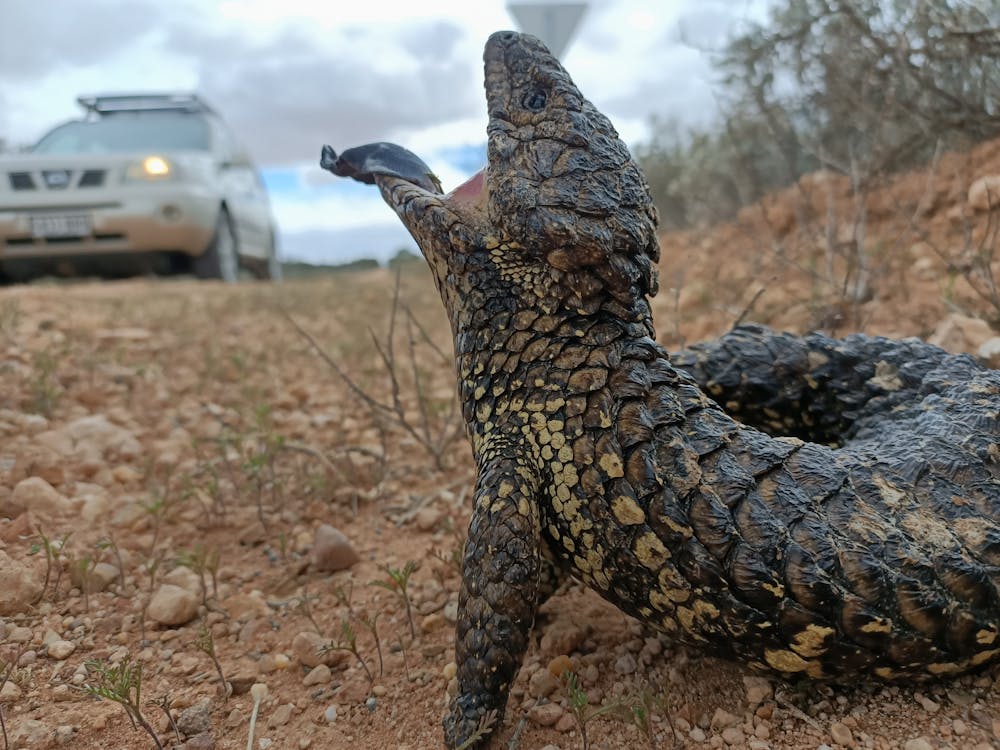
Indeed, we found animals that start producing offspring at a later age do seem to live longer lives. Sleepy lizards (or shinglebacks) are a great example. They don’t reproduce until they’re about five years old, and live until they’re close to 50!
The challenge in understanding ageing
To understand ageing, we need a lot of data on the same animals. That’s simply because if we want to know how long a species lives, we have to keep catching the same individuals over and over, across large spans of time.
This is “longitudinal” research. Luckily, it’s exactly what some scientists have committed themselves to. It’s also what my team is doing with sleepy lizards, Tiliqua rugosa. These lizards have been studied continuously at Bundey Bore station in the Mid North of South Australia since 1982.
The sleepy lizard is one of the species used in the longevity study. As far as we know, this species lives up to 50 years.(Mike Gardner)
Here, more than 13,000 lizards have been caught over 40 years of study. Some have been caught up to 60 times! But given the 45-year longevity of these lizards, we’ve been studying them for a shorter time than some of them live. By keeping the survey work going we might find they live even longer.
Some animals’ chance of dying isn’t linked to age
Another interesting part of this research was finding, for a range of animals, that their chance of dying is just as small when they’re quite old compared to when they’re young. This “negligible ageing” is found in at least one species across each of frogs, salamanders, lizards, crocodiles and, of course, in tortoises like Jonathon.
We’re not quite sure why this is. The next challenge is to find out – perhaps by analysing species genomes. Knowing some animals have negligible ageing means we can target these species for future investigations.
Understanding what drives long life in other animals might lead to different biomedical targets to study humans too. We might not live to Jonathan the tortoise’s age, but we could theoretically use this knowledge to develop therapies that help stop some of the ageing process in us.
For now, healthy eating and exercising remain surer ways to a longer life.
You can see it with the naked eye and pick it up with a pair of tweezers -- not bad for a single bacteria.
Scientists say they have discovered the world's largest variety in the mangroves of Guadeloupe -- and it puts its peers to shame.
At up to two centimeters (three-quarters of an inch), "Thiomargarita magnifica" is not only around 5,000 times bigger than most bacteria -- it boasts a more complex structure, according to a study published in the journal Science on Thursday.
The discovery "shakes up a lot of knowledge" in microbiology, Olivier Gros, professor of biology at the University of the Antilles and co-author of the study, told AFP.
In his laboratory in the Caribbean island group city of Pointe-a-Pitre, he marvelled at a test tube containing strands that look like white eyelashes.
"At first I thought it was anything but a bacterium because something two centimeters (in size) just couldn't be one", he said.
The researcher first spotted the strange filaments in a patch of sulphur-rich mangrove sediment in 2009.
Techniques including electronic microscopy revealed it was a bacterial organism, but there was no guarantee it was a single cell.
'As tall as Mount Everest'
Molecular biologist Silvina Gonzalez-Rizzo, from the same laboratory, found it belonged to the Thiomargarita family, a bacterial genus known to use sulphides to grow. And a researcher in Paris suggested they were indeed dealing with just one cell.
But a first attempt at publication in a scientific journal a few years later was aborted.
"We were told: 'This is interesting, but we lack the information to believe you'," Gros said, adding that they needed stronger images to provide proof.
Then a young researcher, Jean-Marie Volland, managed to study the bacterium with the Lawrence Berkeley National Laboratory, run by the University of California.
With financial backing and access to some of the best tools in the field, Volland and his colleagues began building up a picture of the colossal bacteria.
It was clearly enormous by bacterial standards -- scaled up to human proportions, it would be like meeting someone "as tall as Mount Everest", Volland said.
Specialist 3D microscope images finally made it possible to prove that the entire filament was indeed a single cell.
But they also helped Volland make a "completely unexpected" discovery.
Normally, a bacterium's DNA floats freely in the cell. But in the giant species, it is compacted in small structures surrounded by a membrane, he explained.
This DNA compartmentalization is "normally a feature of human, animal and plant cells, complex organisms... but not bacteria," Volland said.
Future research will have to determine if these characteristics are unique to Thiomargarita magnifica, or if they can be found in other species of bacteria, Gros said.
Scientists have discovered the secret to eternal youth: be born a turtle.
Two studies published in the journal Science on Thursday revealed scant evidence of aging among certain cold-blooded species, challenging a theory of evolution which holds that senescence, or gradual physical deterioration over time, is an inescapable fate.
Although there have been eye-catching individual reports -- such as that of Jonathan the Seychelles tortoise who turns 190 this year -- these were considered anecdotal and the issue had not been studied systematically, Penn State wildlife ecologist David Miller, a senior author of one of the papers, told AFP.
Researchers have "done a lot more comparative, really comprehensive work with birds and animals in the wild," he said, "but a lot of what we knew about amphibians and reptiles were from a species here, a species there."
For their paper, Miller and colleagues collected data from long-term field studies comprising 107 populations of 77 species in the wild, including turtles, amphibians, snakes, crocodilians and tortoises.
These all used a technique called "mark-recapture" in which a certain number of individuals are caught and tagged, then researchers follow them over the years to see if they find them again, deriving mortality estimates based on probabilities.
They also collected data on how many years the animals lived after achieving sexual maturity, and used statistical methods to produce aging rates, as well as longevity -- the age at which 95 percent of the population is dead.
"We found examples of negligible aging," explained biologist and lead investigator Beth Reinke of Northeastern Illinois University.
Though they had expected this to be true of turtles, it was also found in one species of each of the cold-blooded groups, including in frogs and toads and crocodilians.
"Negligible aging or senescence does not mean that they're immortal," she added. What it means is that there is a chance of dying, but it does not increase with age.
By contrast, among adult females in the US, the risk of dying in a year is about one in 2,500 at age 10, versus one in 24 at age 80.
The study was funded by the US National Institutes of Health which is interested in learning more about aging in ectotherms, or cold-blooded species, and applying them to humans, who are warm blooded.
It's not metabolism
Scientists have long held ectotherms — because they require external temperatures to regulate their body temperatures and therefore have lower metabolisms —- age more slowly than endotherms, which internally generate their own heat and have higher metabolisms.
This relationship holds true within mammals. For example mice have a far higher metabolic rate than humans and much shorter life expectancy.
Surprisingly, however, the new study found metabolic rate was not the major driver it was previously thought.
"Though there were ectotherms that age slower and live longer than endotherms, there were also ectotherms that age faster and live shorter lives," after controlling for factors such as body size.
The study also threw up intriguing clues that could provide avenues for future research. For example, when the team looked directly at average temperatures of a species, as opposed to metabolic rate, they found that warmer reptiles age faster, while the opposite was true of amphibians.
One theory that did prove true: those animals with protective physical traits, such as turtle shells, or chemical traits like the toxins certain frogs and salamanders can emit, lived longer and aged slower compared to those without.
"A shell is important for aging and what it does is it makes a turtle really hard to eat," said Miller.
"What that does is it allows animals to live longer and for evolution to work to reduce aging so that if they do avoid getting eaten, they still function well."
A second study by a team at the University of Southern Denmark and other institutions applied similar methods to 52 turtle and tortoise species in zoo populations, finding 75 percent showed negligible aging.
"If some species truly escape aging, and mechanistic studies may reveal how they do it, human health and longevity could benefit," wrote scientists Steven Austad and Caleb Finch in a commentary about the studies.
They did note, however, that even if some species don't have increasing mortality over the years, they do exhibit infirmities linked to age.
Jonathan the tortoise "is now blind, has lost his olfactory sense, and must be fed by hand," they said, proving the ravages of time come for all.
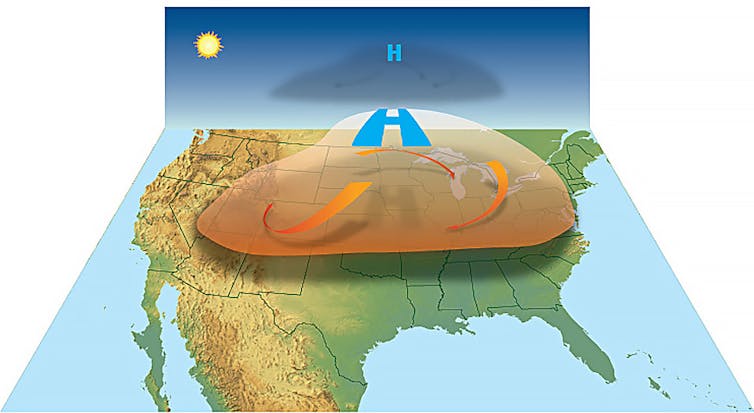
A heat dome occurs when a persistent region of high pressure traps heat over an area. The heat dome can stretch over several states and linger for days to weeks, leaving the people, crops and animals below to suffer through stagnant, hot air that can feel like an oven.
Typically, heat domes are tied to the behavior of the jet stream, a band of fast winds high in the atmosphere that generally runs west to east.
Normally, the jet stream has a wavelike pattern, meandering north and then south and then north again. When these meanders in the jet stream become bigger, they move slower and can become stationary. That’s when heat domes can occur.
When the jet stream swings far to the north, air piles up and sinks. The air warms as it sinks, and the sinking air also keeps skies clear since it lowers humidity. That allows the sun to create hotter and hotter conditions near the ground.
If the air near the ground passes over mountains and descends, it can warm even more. This downslope warming played a large role in the extremely hot temperatures in the Pacific Northwest during a heat dome event in 2021, when Washington set a state record with 120 degrees Fahrenheit (49 Celsius), and temperatures reached 121 F in British Columbia in Canada, surpassing the previous Canadian record by 8 degrees F (4 C).
Heat domes involve high-pressure areas that trap and heat up the air below.
Heat domes normally persist for several days in any one location, but they can last longer. They can also move, influencing neighboring areas over a week or two. The heat dome involved in the June 2022 U.S. heat wave crept eastward over time.
On rare occasions, the heat dome can be more persistent. That happened in the southern Plains in 1980, when as many as 10,000 people died during weeks of high summer heat. It also happened over much of the United States during the Dust Bowl years of the 1930s.
A heat dome can have serious impacts on people, because the stagnant weather pattern that allows it to exist usually results in weak winds and an increase in humidity. Both factors make the heat feel worse – and become more dangerous – because the human body is not cooled as much by sweating.
The heat index, a combination of heat and humidity, is often used to convey this danger by indicating what the temperature will feel like to most people. The high humidity also reduces the amount of cooling at night. Warm nights can leave people without air conditioners unable to cool off, which increases the risk of heat illnesses and deaths. With global warming, temperatures are already higher, too.
For many people who go vegan, one of the hardest things to give up is cheese. Fortunately, thanks to the increasing popularity of veganism, food manufacturers have begun producing a greater variety of vegan cheeses – with some success in replicating everything people love most about cheese, including its texture and taste. However, not all vegan cheeses are equal – and many have little nutritional value.
People who buy vegan cheese may expect it to be as nutritious as dairy cheese. But because many manufacturers are focused on making the cheese taste, look and even melt like dairy cheese, this is rarely the case. The main ingredients in many vegan cheeses are starch and vegetable oils – usually coconut oil, or sometimes palm oil.
Starch and oil may give vegan cheeses their texture, but they are of little nutritional value. For instance, when we eat starch, it is broken down in our gut into sugar. Over time, too much starch could potentially lead to weight gain or diseases such as type 2 diabetes and heart disease.
The vegetable oils in vegan cheese are even worse. Coconut oil is composed almost entirely of saturated fats. Some types of saturated fat raise blood levels of “bad” LDL cholesterol, which can increase the risk of heart disease.
This is the case with lauric acid, the main type of saturated fat in coconut oil. Despite some claims online that coconut is healthy, lauric acid significantly increases the levels of LDL cholesterol. It also increases the risk of coronary heart disease. Because of the high levels of coconut oil in some vegan cheeses, even a modest-sized portion (30g) is around a third of a person’s total recommended daily allowance for saturated fat.
Palm oil, found in some vegan cheeses, fares little better as an alternative ingredient. About half of the fat in palm oil is saturated fat – mostly a type of saturated fat called palmitic acid. Like lauric acid, this also increases the risk of coronary heart disease. And although some manufacturers claim to use “sustainable” palm oil, it’s uncertain how sustainable these products actually are.
While dairy cheeses are also high in saturated fat, there’s good evidence that consuming them is not linked to an increased risk of cardiovascular disease. It’s unclear why this is the case, but it may be that the saturated fats in dairy cheese are not absorbed by the body as much as those in other foods, such as meat or coconut oil.
Nutritional content
Many people might also expect vegan cheese, like dairy cheese, to be a good source of protein. But vegan cheeses consisting of vegetable oils and starch have little to no protein.
The amounts and types of vitamins and minerals that vegan cheeses contain also vary significantly, as it’s up to the manufacturer to add these during production. As a result, unlike dairy cheese, most vegan cheeses contain little or no calcium. They also often lack other important micronutrients found in dairy cheese, such as iodine, vitamin B12 and vitamin D.
While the occasional slice of vegan cheese is unlikely to do any harm, relying on it as a replacement for dairy could have costs to your health. In one clinical study, people who replaced animal-based dairy and eggs with vegan alternatives for 12 weeks had poorer bone health at the end of the study, compared with those who ate animal-based dairy and eggs. This was probably due to lower vitamin D and calcium intake. However, more studies like this are needed to better establish the long-term health consequences for vegans who don’t consume dairy.
It’s not quite all bad news, though. Some vegan cheeses may be healthier than others depending on their ingredients – for instance, those that use cashew nuts. These products usually have higher levels of protein and lower levels of sodium and saturated fat than other types of vegan cheese. However, they may also be more expensive than those other types.
Of course, there are many reasons why a person may want to adopt a vegan diet – including for environmental reasons or to improve their health. But while numerous studies have found that vegan diets can be healthy, this is typically only true for people whose diets are high in natural foods such as fruit, vegetables, nuts and pulses.
As such, it’s important for vegans to watch the number of ultra-processed food alternatives they eat (such as vegan cheese) as these could have many of the same negative health effects (such as heart disease and cancer) that ultra-processed foods have for non-vegans.
This means checking the contents of vegan cheese products (and other vegan alternatives) carefully to minimise the number of harmful ingredients, such as saturated fats, that vegans regularly consume. Vegans should also focus on getting essential micronutrients such as vitamin B12, calcium and vitamin D from vitamin supplements or whole foods.
There are more chickens than any other species of bird on the planet. With three chickens for every human being, they are a food staple for millions of people around the world. But new research shows chickens were domesticated only relatively recently and were once revered.
The question of where chickens come from and how humans have interacted with them over time has eluded us for decades, until now. For many people it is difficult to think of chickens as anything other than food. But two new studies are changing our understanding of human-chicken relationships.
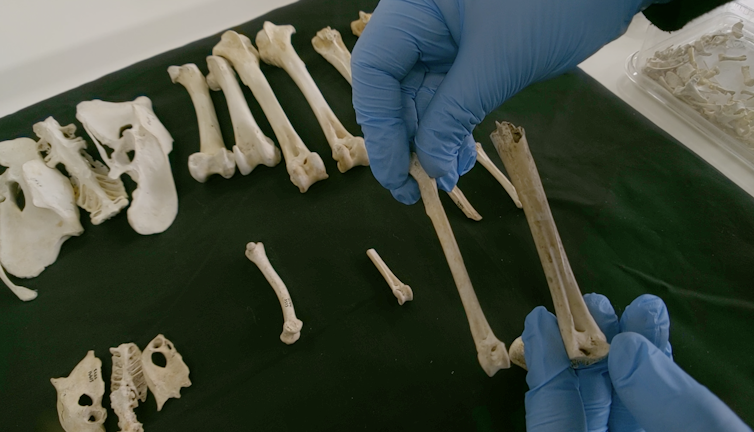
Ancient and modern samples Photo credit.
Jonathan Rees/ Cardiff University, Author provided
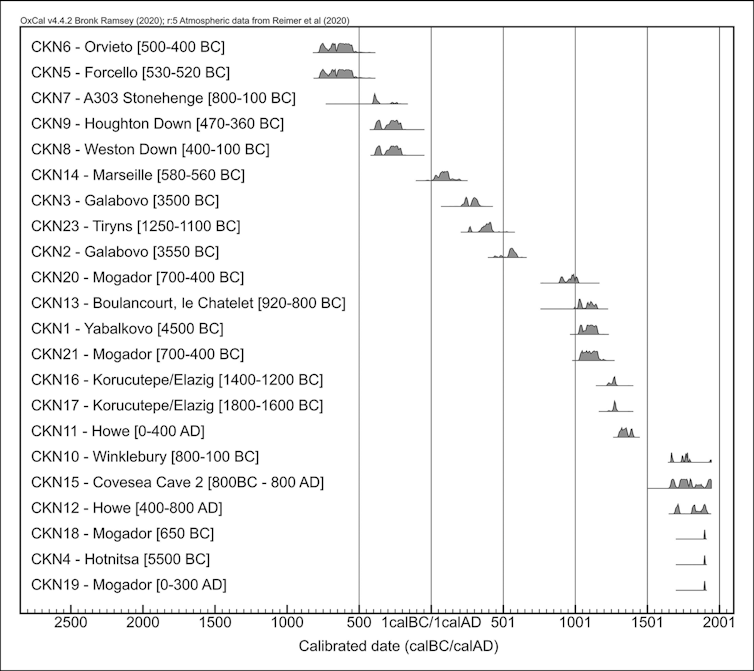
One of our new studies radiocarbon dated bones from 23 of the earliest proposed chickens in Europe and northwest Africa, to test their age. By confirming which chickens are actually ancient we get a clearer insight into when they arrived in these areas and how people interacted with them. Only five specimens corresponded with the dates that archaeologists had previously assigned to them. The other 18 were much more recent than previously thought, sometimes by thousands of years.
Earlier hypotheses, which based their dates on contextual clues such as where these bones had been located and what other artefacts they were found with, suggested that chickens were present in Europe up to 7,000 years ago. But our results show they were not introduced until around 800 BC (2,800 years ago). This reveals that chickens are a rather recent arrival to Europe, compared to domestic cattle, pigs and sheep which reached Britain around 6,000 years ago. The new dating also suggests that in many locations there was a time-lag of several hundred years from when chickens were first introduced to an area, to them really being thought of as food.
Calibrated radiocarbon results for each specimen, with previous proposed dates in brackets.
Many of the early chickens identified by our radiocarbon dating are complete or almost complete skeletons. In Britain none of the most ancient skeletons show evidence they were butchered for human consumption. They were often older animals, buried alone in pits. One specimen even had a well-healed leg fracture, indicating human care. She was also still able to lay eggs: she had a substance called medullary bone inside her skeleton which is formed during egg production.
These clues suggest that rather than being considered a source of food, these early arrivals to northern Europe were more likely regarded as special exotica, especially given their small population size at the time.
Iron Age hen skeleton from Weston Down, England.
Julia Best and Grace Clark
In some locations shortly after chickens were introduced, we find them buried with humans. A new survey of British Late Iron Age and Roman burials that contained chickens indicates these burial rites were often gendered: males were buried with cockerels and females with hens. Chickens may have been included in human graves as “psychopomps”, whose role it was to lead human souls to the afterlife. Such a role would have been in keeping with their association with Mercury (the Roman god of communication and travel). Large quantities of cockerels were sacrificed to Mercury at temples such as Uley, Gloucestershire. In other cases, the chickens in graves were a food offering. This is a practice that became more common in Britain through the Roman period.
It is clear that human-chicken relationships were complex and about more than just food for quite some time, even after they started to venture onto the dinner table.
So where did these special birds first come from?
From the jungle to the fields
Recent DNA analyses confirmed chickens were domesticated from a subspecies of red jungle fowl called Gallus gallus spadiceus which lived in south or south-east Asia. This would imply chickens were domesticated within this broad region.
Before now, there were three main hypotheses on location and timing. The first places domestication around 4,000 years ago in the Indus Valley. The second argues it happened in south-east Asia well over 8,000 years ago. The third sees their origins in northern China 10,000 years ago.
But these theories fail to take into account crucial factors. These include: dating uncertainties, skeletal similarities between chickens and other local wild species, and the broader cultural and environmental context.
In the second new study our team reassessed the identification of the species, the domestic status and the dating of the most ancient reported chicken bones from more than 600 archaeological sites across 89 countries, in four continents. We found all three hypotheses are wrong. The oldest bones now confidently assigned to domestic chickens come from the Neolithic site of Ban Non Wat in central Thailand, and date to around 3,500 years ago – much later than previously thought.
A rooster retracing the footsteps of its ancestor the red jungle fowl.
Nikolas Noonan/ Unsplash.com, Author provided
While uncertainty remains about why chickens were domesticated, one thing appears to have drawn chickens and people together: rice. The introduction of dry rice farming in central Thailand coincides with the date of the oldest chicken remains. This suggests the new type of farming may have been a catalyst for the domestication process.
The clearing of the jungle for cereal cultivation would have created a comfortable environment for the red jungle fowl. Simultaneously, the newly grown rice, along with millet, would have drawn the wild jungle fowl into close contact with humans, sparking the domestication process, after which their chicken descendants were dispersed across the world with human societies.
Deepfakes are video, audio and image content generated by artificial intelligence. This technology can produce false images, videos or sounds of a person, place or event that appear authentic.
In 2018, there were approximately 14,698 deepfake videos circulating online. Since then, the number has soared through the popularity of deepfake apps like DeepFaceLab, Zao, FaceApp and Wombo.
However, the malicious and unethical use of deepfakes can harm people. According to research by cybersecurity firm Trend Micro, the “rise of deepfakes raises concern: It inevitably moves from creating fake celebrity pornographic videos to manipulating company employees and procedures.”
Increased vulnerabilities
Our research found that organizations are increasingly vulnerable to this technology and the costs of this type of fraud can be high. We focused on two public case studies using deepfakes that targeted CEOs and, to date, have estimated losses amounting to US$243,000 and US$35 million respectively.
The first case of fraud occurred at a British energy firm in March 2019. The chief executive officer received an urgent call from his boss, the chief executive of the firm’s German parent company, asking him to transfer funds to a Hungarian supplier within an hour. The fraud was presumably carried out using a commercial voice-generating software.
The second case was identified in Hong Kong. In January 2020, a branch manager received a call from someone whose voice sounded like that of the director of the company. In addition to the call, the branch manager received several emails that he believed were from the director. The phone call and the emails concerned the acquisition of another company. The fraudster used deep voice technology to simulate the director’s voice.
In both cases, the firms were targeted for payment fraud using deepfake technology to mimic individuals’ voices. The earlier case was less convincing than the second, as it only used voice phishing.
Forensic accountants and fraud examiners — who investigate allegations of fraud — continue to see a rise in deepfake fraud schemes.
One type of deepfake fraud schemes is known as synthetic identity fraud, where a fraudster can create a new identity and target financial institutions. For instance, deepfakes enable fraudsters to open bank accounts under false identities. They use these fabricated identities to develop a trust relationship with the financial institution in order to defraud them afterwards. These fraudulent identities can also be used in money laundering.
Websites and applications that provide access to deepfake technologies have made identity fraud easier; This Person Does Not Exist, for example, uses AI to generate random faces. Neil Dubord, chief of the police department in Delta, B.C., wrote that “synthetic identity fraud is reportedly the fastest-growing type of financial crime, costing online lenders more than $6 billion annually.”
Forensic accounting helps trace the impacts of fraud.
(Shutterstock)
Large datasets
Deepfakes can enhance traditional fraud schemes, like payment fraud, email hacking or money laundering. Cybercriminals can use deepfakes to access valuable assets and data. More specifically, they can use deepfakes to gain unauthorized access to large databases of personal information.
Combined with social media platforms like Facebook, deepfakes could damage the reputation of an employee, trigger decreases in share values and undermine confidence in a company.
Forensic accountants and fraud investigator need to recognize red flags related to deepfakes and develop anti-fraud mechanisms to prevent these schemes and reduce the associated loss. They should also be able to evaluate and quantify the loss due to a deepfake attack.
In our case studies, deepfakes used the voices of senior management to instruct employees to transfer money. The success of these schemes relied on employees being unaware of the associated red flags. These may include secrecy (the employee is requested to not disclose the request to others) or urgency (the employee is needed to take immediate action).
Al Jazeera investigates the growing threat of deepfakes.
Curbing deepfakes
Some simple strategies can be deployed to combat the malicious use of deepfakes:
Encourage open communication: speaking and consulting with colleagues and others about anything that appears suspicious are effective tools to prevent fraud schemes.
Learn how to assess authenticity: for example, ending a suspicious call and calling back the number to assess the person’s authenticity.
Pause without reacting quickly to unusual requests.
Keep up-to-date with new technologies that helps detect deepfakes.
Enhance certain controls and assessment to verify client identity in financial institutions, such as Know Your Customer.
Provide employee training and education on deepfake frauds.
Cybercriminals may use deepfakes to make their schemes appear more realistic and trustworthy. These increasingly sophisticated schemes have harmful financial and other consequences for people and organizations.
Fraud examiners, cybersecurity experts, authorities and forensic accountants may need to fight fire with fire, and employ AI-based techniques to counter and detect fictitious media.
French paleontologist Yves Coppens, credited with the co-discovery of the famous fossil find known as "Lucy", died on Wednesday aged 87 after a long illness, his publisher said.
"France has lost one of its great men," publisher Odile Jacob tweeted, adding that beyond his science skills, Coppens had also been "a talented writer, storyteller and non-fiction author".
He was, with Maurice Taieb and Donald Johanson, part of the team that found the most complete remnants of an Australopithecus afarensis ever discovered, in 1974 in Hadar, Ethiopia.
The team nicknamed the 3.2- million-year-old female hominid "Lucy" after the Beatles song "Lucy in the Sky with Diamonds" which they listened to while labelling the fossils.
Based on the large part of Lucy they found, 40 percent of her skeleton, the scientists were able to determine her height (one metre, 3.5 feet) and show that she was muscular and able to climb trees as well as walk upright.
Coppens, who was born in Britanny and was the son of a nuclear physicist father, co-signed six hominid discoveries over his career.
"At six or seven years old I already wanted to become an archaeologist," Coppens told AFP in 2016. "All my holiday time was spent at digs," he added.
Coppens was admitted to France's prestigious CNRS scientific centre in 1956 when he was still only 22.
He began traveling to Africa from the 1960s, starting with Algeria and Chad.
His first major discovery came in 1967, a 2.6-million-year-old fossil in the Omo valley in Ethiopia.
Then in 1974 came the international expedition in Ethiopia's Afar triangle that was to make Coppens, his friend and fellow Frenchman Taieb and Donald Johanson, an American, world famous for the discovery of Lucy.
Coppens often referred to himself as one of Lucy's "daddies" ("papas" in French).
For a long time after the find, which comprised 52 bone fragments, scientists believed that she was a direct ancestor of humanity.
But this claim is no longer widely believed, and Coppens as well as other paleontologists came instead to view Lucy as a distant cousin of mankind.
Later Coppens ran digs in Mauritania, the Philippines, Indonesia, Siberia, China and Mongolia.
Back home, he became director of the Musee de l'Homme (Museum of Mankind) in Paris, was given the paleontology chair in the prestigious College de France, and joined France's Academy of Science.
He also won several prizes, served as an advisor on environmental questions to the French government, and wrote several books and more than a million scientific articles.
Besides the discovery of Lucy, Coppens once told AFP, he was particularly proud to have "made an irrefutable link between the emergence of man and climate change".
As forests gave place to savannas, man stopped climbing trees, began to walk upright and needed to develop brain power to keep carnivores at bay, he said.
Another approach popular among some politicians to increase school safety is so-called school hardening. Hardening encompasses a wide range of physical defenses, such as surveillance cameras, metal detectors, door-locking systems, arming teachers and even armed guards. In the weeks following the Uvalde shooting, support for arming teachers and employing police officers in schools has been renewed by leaders from both political parties.
The Uvalde shooting, like every school shooting, raises questions and concerns for parents and community members about how schools might be able to deter a prospective shooter from attacking. Sadly, my research and the research of others finds that there is no way that schools can become so secure as to prevent gun violence.
Addressing the threats
As a professor researching school safety and child trauma, I study how environments help or hinder healthy growth and development. School is an important environment to consider since kids spend more than six hours at school each day with their peers and teachers.
Researchers like me use the term school climate to describe the attitudes, beliefs, values and expectations that hold together school life, and the extent to which members of the community endorse them. While physical security features affect students’ perceptions of school safety, school climate and the actions of teachers and staff also factor into feelings of safety.
School security is big business
School security has become a major industry in the United States. Each year, more than $2.7 billion are spent on hardening schools.
But there is currently no conclusive evidence that any of these measures prevent school shootings. In some cases, attackers have shot out windows to enter the building or triggered fire alarms to cause the school’s occupants to exit. Schools’ attempts to make students safer don’t actually do that, and cost schools money that could help increase staff and better equip classrooms for learning.
Another complicated response is lockdown drills. While some research suggests they can be effective at preventing school violence and preparing students to respond to a range of emergency scenarios, other research suggests these drills may confuse children and increase fear and anxiety.
Using evidence to protect schools
Complicating the notion of hardening access to school buildings is the fact that about half of school shootings are carried out by people within the school community – students, alumni, staff or family members – who would likely be allowed into the school and permitted to pass through various security checks.
Increasing school-based mental health services is a proven way to increase school safety and promote a positive school climate, and includes teaching students conflict management and emotional coping skills. Research suggests that these efforts support the well-being of students, thereby increasing school safety. These services can also help school communities deal with trauma in the aftermath of violence.
Schools cannot be hardened enough to prevent gun violence. Schools can, however, become more physically and psychologically safe so students can learn and thrive.