The space agency on Thursday announced a new study that will recruit leading scientists to examine unidentified aerial phenomena -- a subject that has long fascinated the public and recently gained high-level attention from Congress.
The project will begin early this fall and last around nine months, focusing on identifying available data, how to gather more data in future, and how NASA can analyze the findings to try to move the needle on scientific understanding.
"Over the decades, NASA has answered the call to tackle some of the most perplexing mysteries we know of, and this is no different," Daniel Evans, the NASA scientist responsible for coordinating the study, told reporters on a call.
While NASA probes and rovers scour the solar system for the fossils of ancient microbes, and its astronomers look for so-called "technosignatures" on distant planets for signs of intelligent civilizations, this is the first time the agency will investigate unexplained phenomena in Earth's skies.
With its access to a broad range of scientific tools, NASA is well placed not just to demystify UFOs and deepen scientific understanding, but also to find ways to mitigate the phenomena, a key part of its mission to ensure the safety of aircraft, said the agency's chief scientist, Thomas Zurbuchen.
The announcement comes as the field of UFO study, once a poorly-regarded research backwater, is gaining more mainstream traction.
Last month, Congress held a public hearing into UFOs, while a US intelligence report last year cataloged 144 sightings that it said could not be explained. It did not rule out alien origin.
NASA's study will be independent of the Pentagon's Airborne Object Identification and Management Synchronization Group, but the space agency "has coordinated widely across the government regarding how to apply the tools of science," it said in a statement.
A paucity in the number of UFO observations make it difficult at present for the scientific community to draw conclusions.
Therefore, said astrophysicist David Spergel, who will lead the research, the first task of the group would be identifying the extent of data out there from sources including civilians, government, nonprofits and companies.
Another overarching goal of NASA is to deepen credibility in this field of study.
"There is a great deal of stigma associated with UAP among our naval aviators and aviation community," said Evans.
"One of the things we tangentially hope to do as part of this study, simply by talking about it in the open, is to help to remove some of the stigma associated with it, and that will yield obviously, increased access to data, more reports, more sightings."
A mirror on the James Webb Space Telescope was struck by a micrometeoroid last month but is expected to continue to function normally, NASA said Thursday.
"After initial assessments, the team found the telescope is still performing at a level that exceeds all mission requirements despite a marginally detectable effect in the data," the US space agency said.
"Webb's beginning-of-life performance is still well above expectations, and the observatory is fully capable of performing the science it was designed to achieve," it added.
One of the space observatory's primary mirror segments suffered an impact from a micrometeoroid, which tend to be smaller than a grain of sand, between May 23 and 25.
The telescope, which is expected to cost NASA nearly $10 billion, is among the most expensive scientific platforms ever built, comparable to its predecessor Hubble, and the Large Hadron Collider at CERN.
Webb's mission includes the study of distant planets, known as exoplanets, to determine their origin, evolution and habitability, and it is expected to produce "spectacular color images" of the cosmos in mid-July.
The telescope has spent the past few months aligning its instruments in preparation for the big reveal.
NASA said micrometeoroid strikes are an "unavoidable aspect of operating any spacecraft" and "were anticipated when building and testing the mirror."
"This most recent impact was larger than was modeled, and beyond what the team could have tested on the ground," it said.
Lee Feinberg, Webb optical telescope element manager at NASA Goddard, said that "with Webb's mirrors exposed to space, we expected that occasional micrometeoroid impacts would gracefully degrade telescope performance over time.
"Since launch, we have had four smaller measurable micrometeoroid strikes that were consistent with expectations," Feinberg said.
NASA said that to protect Webb, flight teams can turn the optics away from known meteor showers.
It said the May micrometeoroid strike was not the result of a meteor shower but an "unavoidable chance event."
A new documentary titled "Dr. Delirium and The Edgewood Experiments" walks through the American military's 20-year experiments on people using psychedelic drugs like PCP and LSD along with other chemicals like sarin, VX and teargas.
Dr. James Ketchum, the documentary's main subject, died in 2019, leaving behind two decades of research where he experimented on young soldiers. Videos of those experiments are part of the documentary, The Guardian revealed after viewing archival footage.
Soldiers exposed to the drugs exhibited behavior consistent with hallucinogenic drugs. However, some of the other substances led to temporary blindness, and some of the soldiers tried to physically harm themselves.
One of the concoctions used by Dr. Ketchum was quinuclidinyl benzilate (BZ), which incapacitates the user. It blocks biological responses, quickens the heart rate to abnormal levels, and overheats the user. It's only recently that researchers are discovering the lingering effects the drugs had after the fact. There were such tight restrictions on what happened at the Edgewood Arsenal, a classified army facility in Maryland.
The film is now streaming on Discovery+ and it features interviews with veterans who survived the experiments at the facility, which gave them "psychological scars."
“From their point of view, they weren’t properly informed of the experiments that they were signing up for,” said director and executive producer Nick Brigden. “They were told that they were going to be testing army equipment. There was no mention of drugs. But once they got into Edgewood, from what I’ve heard from these vets, they were threatened with court martials if they didn’t participate.”
Prior to Ketchum, however, soldiers were being drugged without warning and without any real safety precautions. So, when he came in and began doing his experiments on the men, there were standards instituted that weren't there before. Still, however, some good practices didn't fully ensure that the men wouldn't be psychologically damaged at the time.
"Ketchum also remained steadfast that his work aimed to save lives at a time when scientists and soldiers were under pressure from an assumed cold war threat; the belief that the Soviets had already advanced their chemical weapons capabilities," the report explained.
Ketchum thought what he was doing was essential, because it was part of "national security," said Brigden.
“It’s a lot of gray areas here,” he explained, “I think the military needed to know the potential these drugs had on our troops. Were there any antidotes that they could find? As Ketchum would say, Edgewood started off as a defensive research program. But with any kind of chemical weapon program, you have to have an offensive side to it to have a defensive.”
The goal was to be able to fight a war in which people were not shot or exploded but instead incapacitated using chemical warfare.
See the trailer for the documentary below:
Dr. Delirium and the Edgewood Experiments | Official Trailer | discovery+
www.youtube.com
“Jurassic World: Dominion” is hyperbolic Hollywood entertainment at its best, with an action-packed storyline that refuses to let reality get in the way of a good story. Yet just like its predecessors, it offers an underlying cautionary tale of technological hubris that’s very real.
As I discuss in my book “Films from the Future,”
Stephen Spielberg’s 1993 “Jurassic Park,” based on Michael Crichton’s 1990 novel, didn’t shy away from grappling with the dangers of unfettered entrepreneurship and irresponsible innovation. Scientists at the time were getting closer to being able to manipulate DNA in the real world, and both book and movie captured emerging concerns that playing God with nature’s genetic code could lead to devastating consequences. This was famously captured by one of the movie’s protagonists, Dr. Ian Malcolm, played by Jeff Goldblum, as he declared, “Your scientists were so preoccupied with whether they could, they didn’t stop to think if they should.”
In the latest iteration of the “Jurassic Park” franchise, society is coming to terms with the consequences of innovations that were, at best, ill-conceived. A litany of “coulds” over “shoulds” has led to a future in which resurrected and redesigned dinosaurs roam free, and humanity’s dominance as a species is under threat.
At the heart of these films are questions that are more relevant than ever: Have researchers learned the lesson of “Jurassic Park” and sufficiently closed the gap between “could” and “should”? Or will the science and technology of DNA manipulation continue to outpace any consensus on how to use them ethically and responsibly?
Imagine a world where dinosaurs and humans coexist.
(Re)designing the genome
The first draft of the human genome was published to great fanfare in 2001, setting the stage for scientists to read, redesign and even rewrite complex genetic sequences.
However, existing technologies were time-consuming and expensive, placing genetic manipulation out of reach for many researchers. The first draft of the human genome cost an estimated US$300 million, and subsequent whole-genome sequences just under $100 million – a prohibitive amount for all but the most well-funded research groups. As existing technologies were refined and new ones came online, however, smaller labs – and even students and “DIY bio” hobbyists – could experiment more freely with reading and writing genetic code.
You can manipulate DNA in the comfort of your own home-based DIY bio lab.
In 2005, bioengineer Drew Endy proposed that it should be possible to work with DNA the same way that engineers work with electronic components. Much as electronics designers are less concerned with the physics of semiconductors than they are with the components that rely on them, Endy argued that it should be possible to create standardized DNA-based parts called “biobricks” that scientists could use without needing to be experts in their underlying biology.
Endy’s and others’ work was foundational to the emerging field of synthetic biology, which applies engineering and design principles to genetic manipulation.
Scientists, engineers and even artists began to approach DNA as a biological code that could be digitized, manipulated and redesigned in cyberspace in much the same way as digital photos or videos are. This in turn opened the door to reprogramming plants, microorganisms and fungi to produce pharmaceutical drugs and other useful substances. Modified yeast, for example, produces the meaty taste of vegetarian Impossible Burgers.
Despite increasing interest in gene editing, the biggest barrier to the imagination and vision of the early pioneers of synthetic biology was still the speed and cost of editing technologies.
Then CRISPR changed everything.
The CRISPR revolution
In 2020, scientists Jennifer Doudna and Emanuelle Charpentier won the Nobel Prize in chemistry for their work on a revolutionary new gene-editing technology that allows researchers to precisely snip out and replace DNA sequences within genes: CRISPR.
CRISPR was quick, cheap and relatively easy to use. And it unleashed the imagination of DNA coders.
More than any previous advance in genetic engineering, CRISPR enabled techniques from digital coding and systems engineering to be applied to biology. This cross-fertilization of ideas and methods led to breakthroughs ranging from using DNA to store computer data to creating 3D “DNA origami” structures.
Gene drives use CRISPR to directly insert a piece of genetic code into an organism’s genome and ensure that specific traits are inherited by all subsequent generations. Scientists are currently experimenting with this technology to control disease-carrying mosquitoes.
Gene drives have the potential to alter the genetic makeup of an entire species.
Advances in gene editing have also made it easier to genetically alter the behavior of individual cells. This is at the heart of biomanufacturing technologies that reengineer simple organisms to produce useful substances ranging from aviation fuel to food additives.
It’s also at the center of controversies surrounding genetically engineered viruses.
Since the beginning of the pandemic, there have been rumors that the virus that causes COVID-19 resulted from genetic experiments gone wrong. While these rumors remain unsubstantiated, they’ve renewed debate around the ethics of gain-of-function research.
Modifying the genetic makeup of organisms and pathogens has both risks and benefits.
Gain-of-function research uses DNA editing techniques to alter how organisms function, including increasing the ability of viruses to cause disease. Scientists do this to predict and prepare for potential mutations of existing viruses that increase their ability to cause harm. However, such research also raises the possibility of a dangerously enhanced virus’s being released outside the lab, either accidentally or intentionally.
At the same time, scientists’ increasing mastery over biological source code is what has allowed them to rapidly develop the Pfizer-BioNTech and Moderna mRNA vaccines to combat COVID-19. By precisely engineering the genetic code that instructs cells to produce harmless versions of viral proteins, vaccines are able to prime the immune system to respond when it encounters the actual virus.
Responsible biological source code manipulation
Prescient as Michael Crichton was, it’s unlikely that he could have envisioned just how far scientists’ abilities to engineer biology have advanced over the past three decades. Bringing back extinct species, while an active area of research, remains fiendishly difficult. However, in many ways, our technologies are substantially further along than those in “Jurassic Park” and the subsequent films.
But how have we done on the responsibility front?
Fortunately, consideration of the social and ethical side of gene editing has gone hand in hand with the science’s development. In 1975, scientists agreed on approaches to ensure that emerging recombinant DNA research would be carried out safely. From the get-go, the ethical, legal and social dimensions of the science were hard-wired into the Human Genome Project. DIY bio communities have been at the forefront of safe and responsible gene-editing research. And social responsibility is integral to synthetic biology competitions.
DNA was never destiny.
Yet as gene editing becomes increasingly powerful and accessible, a community of well-meaning scientists and engineers is unlikely to be sufficient. While the “Jurassic Park” movies take dramatic license in their portrayal of the future, they do get one thing right: Even with good intentions, bad things happen when you mix powerful technologies with scientists who haven’t been trained to think through the consequences of their actions – and haven’t thought to ask experts who have.
Maybe this is the abiding message of “Jurassic World: Dominion” – that despite incredible advances in genetic design and engineering, things can and will go wrong if we don’t embrace the development and use of the technology in socially responsible ways.
The good news is that we still have time to close the gap between “could” and “should” in how scientists redesign and reengineer genetic code. But as “Jurassic World: Dominion” reminds moviegoers, the future is often closer than it might appear.
A giant crocodile-faced dinosaur discovered on the Isle of Wight by one of Britain's best fossil hunters was probably the largest predator ever to stalk Europe, scientists said on Thursday.
Most of the bones of the two-legged spinosaurid were found by the late local collector Nick Chase, who dedicated his life to combing the beaches of the island on England's southern coast for dinosaur remains.
Researchers at the University of Southampton then used the few bones available to identify what they have called the "White Rock spinosaurid", they said in a study published in the journal PeerJ.
"This was a huge animal, exceeding 10 meters (33 feet) in length and judging from some of the dimensions, probably represents the largest predatory dinosaur ever found in Europe," said Chris Barker, a PhD student who led the study.
While admitting it would be better to have more bones, Barker told AFP the "numbers don't lie -- it is bigger than the biggest known specimen" previously found in Europe.
Thomas Richard Holtz, a vertebrate paleontologist from the University of Maryland not involved in study, agreed that the new find "does seem to be larger" than a huge predator whose fossilized remains were discovered in Portugal.
Why the long face?
The White Rock spinosaurid -- which the researchers hope to formally name as a new species -- is from the Early Cretaceous period and is estimated to be around 125 million years old.
Barker said that makes it the youngest spinosaurid found in Britain, two or three million years younger than the well-known Baryonyx.
Spinosaurids are known for their elongated heads. Rather than having the boxy skull of a Tyrannosaurus rex, their faces look more like that of a crocodile.
A leading theory to explain this trait is that they hunted on water as well as land.
"They're kind of like storks and herons, wading in and snatching fish from the surface," Barker said.
The White Rock spinosaurid was discovered in a lagoonal coastal environment where few dinosaur fossils are normally found.
"It helps start to paint a picture of what animals were living in the time, which is a very poorly known part of English palaeontological heritage," Barker added.
The team had already discovered two new spinosaurid species on the Isle of Wight, including the Ceratosuchops inferodios -- dubbed the "hell heron".
"This new animal bolsters our previous argument -- published last year -- that spinosaurid dinosaurs originated and diversified in western Europe before becoming more widespread," study co-author Darren Naish said.
Collector's 'uncanny ability'
The palaeontologists paid tribute to Chase, who always donated whatever bones he found to museums.
"Most of these amazing fossils were found by Nick Chase, one of Britain's most skilled dinosaur hunters, who sadly died just before the Covid epidemic," said study co-author Jeremy Lockwood, a PhD student at the University of Portsmouth.
Barker said Chase's "uncanny ability" to find bones showed that "it's not just professional palaeontologists who are making impacts in the discipline".
The discovery "highlights the fact that collectors have a big role to play in modern palaeontology and their generosity helps move science forwards", he added.
And if there any aspiring fossil hunters hoping to pick up where Chase left off, the palaeontologists would welcome more White Rock spinosaurid bones.
"We hope that a passerby might pick up some bits and donate them," Barker said.
Whenever I teach about memory in my child development class at Rutgers University, I open by asking my students to recall their very first memories. Some students talk about their first day of pre-K; others talk about a time when they got hurt or upset; some cite the day their younger sibling was born.
Despite vast differences in the details, these memories do have a couple of things in common: They’re all autobiographical, or memories of significant experiences in a person’s life, and they typically didn’t happen before the age of 2 or 3. In fact, most people can’t remember events from the first few years of their lives – a phenomenon researchers have dubbed infantile amnesia. But why can’t we remember the things that happened to us when we were infants? Does memory start to work only at a certain age?
Here’s what researchers know about babies and memory.
Infants can form memories
Despite the fact that people can’t remember much before the age of 2 or 3, research suggests that infants can form memories – just not the kinds of memories you tell about yourself. Within the first few days of life, infants can recall their own mother’s face and distinguish it from the face of a stranger. A few months later, infants can demonstrate that they remember lots of familiar faces by smiling most at the ones they see most often.
In fact, there are lots of different kinds of memories besides those that are autobiographical. There are semantic memories, or memories of facts, like the names for different varieties of apples, or the capital of your home state. There are also procedural memories, or memories for how to perform an action, like opening your front door or driving a car.
Research from psychologist Carolyn Rovee-Collier’s lab in the 1980s and 1990s famously showed that infants can form some of these other kinds of memories from an early age. Of course, infants can’t exactly tell you what they remember. So the key to Rovee-Collier’s research was devising a task that was sensitive to babies’ rapidly changing bodies and abilities in order to assess their memories over a long period.
In the version for 2- to 6-month-old infants, researchers place an infant in a crib with a mobile hanging overhead. They measure how much the baby kicks to get an idea of their natural propensity to move their legs. Next, they tie a string from the baby’s leg to the end of the mobile, so that whenever the baby kicks, the mobile moves. As you might imagine, infants quickly learn that they’re in control – they like seeing the mobile move and so they kick more than before the string was attached to their leg, showing they’ve learned that kicking makes the mobile move.
The version for 6- to 18-month-old infants is similar. But instead of lying in a crib – which this age group just won’t do for very long – the infant sits on their parent’s lap with their hands on a lever that will eventually make a train move around a track. At first, the lever doesn’t work, and the experimenters measure how much a baby naturally presses down. Next, they turn the lever on. Now every time the infant presses on it, the train will move around its track. Infants again learn the game quickly, and press on the lever significantly more when it makes the train move.
What does this have to do with memory? The cleverest part of this research is that after training infants on one of these tasks for a couple of days, Rovee-Collier later tested whether they remembered it. When infants came back into the lab, researchers simply showed them the mobile or train and measured if they still kicked and pressed the lever.
Using this method, Rovee-Collier and colleagues found that at 6 months, if infants are trained for one minute, they can remember an event a day later. The older infants were, the longer they remembered. She also found that you can get infants to remember events for longer by training them for longer periods of time, and by giving them reminders – for example, by showing them the mobile moving very briefly on its own.
Why not autobiographical memories?
If infants can form memories in their first few months, why don’t people remember things from that earliest stage of life? It still isn’t clear whether people experience infantile amnesia because we can’t form autobiographical memories, or whether we just have no way to retrieve them. No one knows for sure what’s going on, but scientists have a few guesses.
A lot of development needs to happen for him to remember an exciting experience.
One is that autobiographical memories require you to have some sense of self. You need to be able to think about your behavior with respect to how it relates to others. Researchers have tested this ability in the past using a mirror recognition task called the rouge test. It involves marking a baby’s nose with a spot of red lipstick or blush – or “rouge” as they said in the 1970s when the task was created.
Then researchers place the infant in front of a mirror. Infants younger than 18 months just smile at the cute baby in the reflection, not showing any evidence that they recognize themselves or the red mark on their face. Between 18 and 24 months, toddlers touch their own nose, even looking embarrassed, suggesting that they connect the red dot in the mirror with their own face – they have some sense of self.
Another possible explanation for infantile amnesia is that because infants don’t have language until later in the second year of life, they can’t form narratives about their own lives that they can later recall.
Scientists will continue to investigate how each of these factors might contribute to why you can’t remember much, if anything, about your life before the age of 2.
It’s a nutritional food source, an alternative to plastic, has medicinal properties and can help limit global warming: Marine algae might just be the next weapon in the fight against climate change.
This article was originally published on February 8, 2022, during the One Ocean Summit in the northern French town of Brest. FRANCE 24 is republishing it on Wednesday, June 8, 2022, on the occasion of World Oceans Day.
From February 9 to 11, the French town of Brest hosted the One Ocean Summit, the first international summit dedicated to protecting the world’s oceans. Scientists, activists, business leaders and heads of state met in the Breton town to discuss how to protect marine ecosystems and promote sustainability.
Philippe Potin, a marine biologist and researcher at the French National Centre for Scientific Research, and Vincent Doumeizel, a senior advisor and food expert for the United Nations Global Compact, spoke to FRANCE 24 about what’s at stake at the summit.
There’s one point on which they are unanimous. “We have to invest in marine algae!” they say.
“Often, when we talk about algae, it conjures up this negative image of piles of green or brown slime washed up on beaches in Brittany or the Caribbean. It’s a real shame,” says Potin. “When seaweed ends up on beaches, it’s because it’s been dragged up from the seabed by pollution or industrial activity. It’s not the problem, it’s a consequence.”
"The reality is that these plants play a vital role for our planet,” Potin continues. Seaweed is to marine environments what forests are to the land. “They’re also the lungs of the planet. Thanks to their photosynthesizing, they absorb CO2 and emit oxygen,” he explains. “Alone, they are responsible for half of all of Earth’s renewal of oxygen. They are hugely helpful for the climate.”
"They are also indispensable to ocean life because they help to create habitats for thousands of different types of fish and shellfish. There’s then a knock-on effect, because it’s in part thanks to algae that we have such a variety of fishing stock on the coasts.”
In total, some 10,000 species of algae visible to the naked eye grow across the planet – from sea lettuce in Brittany to Tasmanian kelp and wakame in Japan.
‘The world’s most under-used resource’
On top of the role seaweed plays for the climate and biodiversity, it can also be useful across a number of other sectors, like food, industry and even medicine.
“It’s one of the world’s most under-used resources,” says Doumeizel. “Our planet is made up of 70 percent water and yet the seas and oceans only account for three percent of our food supply. It’s absurd.”
He goes on, “We know that one of the biggest challenges we face this century is that we have reached our limit on land in terms of the food industry. We’re running out of land and intensive agriculture is particularly damaging for the planet … It’s clearly time to think of new ways of doing things.”
So could seaweed be the magic answer to these problems? It’s already a daily foodstuff in Asia and is recommended by dietitians, who say it’s packed full of fibre, protein and vitamins and is low in fat. According to a study carried out by Wageningen University and Research in the Netherlands, devoting just two percent of the world’s oceans to farming algae could produce enough protein to fulfil the needs of everyone on the planet.
It’s not just humans who stand to benefit. “We can also use it to feed animals, particularly cattle. It would help to improve their immune system,” says Doumeizel. In the agricultural sector, a number of French villages – mostly in Brittany – already use seaweed as fertilizer.
Seaweed is already starting to leave its mark in the medical sector, predominantly in antifungal creams or anti-inflammatory products. Fucales, a type of brown algae, are known for being able to ease heartburn. Recently, researchers registered a patent for a cream and a gel to treat acne made from a type of microalgae.
In the industrial sector, Europe already counts several companies using seaweed to manufacture biodegradable packaging as an alternative to plastic. "Other companies are planning on using it to make clothing. In the Netherlands, a start-up is even looking into producing sanitary products made from seaweed,” says Doumeizel.
One place where it’s actually hard to use algae is in the energy sector. Potin tells FRANCE 24, “For a while we thought about using seaweed to make a biofuel, but the sheer quantity needed to do it is just too much.”
Rest of the world trailing behind Asia
"In reality, none of this is anything new. Algae has been consumed for hundreds of years. Prehistoric people ate it, as well as indigenous people all over the world,” explains Doumeizel. “The practice simply disappeared almost everywhere during the Roman and Greek period, apart from in Asia.”
Nowadays, Asia is a pioneer in algaculture – the farming of algae – and is responsible for 99 percent of global production. In 2015, China was the world’s leading producer, with 13 million tonnes collected, followed by Indonesia with 9 million tonnes.
In Europe, France and Norway are the biggest producers in a sector that’s still in its infancy. According to a report by the European Commission on the ‘Blue Economy’, only 32 percent of algae in Europe comes from algae farms. The remaining 68 percent comes from wild farming, or harvesting the plants directly from their natural environment. “We’re still at the hunter-gatherer stage!” says Doumeizel wryly.
The global market is rapidly growing, however. According to the Food and Agriculture Organization of the United Nations, production tripled between 2000 and 2018. The report notes that algae accounts for the fastest-growing food sector in the world.
Finding a balance between farming and sustainability
Potin and Doumeizel are calling to accelerate research in algaculture. “Beyond its economic potential, it’s even more important because lots of alga species are disappearing, due to ocean heating and climate change,” explains Potin, drawing on the example of a forest of seaweed off the coast of California that has declined by 80 percent in the last few years. “Developing algaculture would allow us to restore ecosystems.”
Daily newsletterReceive essential international news every morning
“But of course, this has to be done carefully and with a lot of thought,” he adds. “We mustn’t damage our oceans even further by doing anything we can to grow algae.” In Asia, algaculture has already come up against limitations. Just as with intensive agriculture, algaculture is often blamed for taking up too much space. The use of fertilizer for accelerating production is also very common. “And often it’s monocultures that are grown, which effectively wipe out other species,” Potin notes with regret.
There’s an added challenge for algae farming in Europe. “Amongst the thousands of species of algae that exist, we are only able to farm about 10, and mostly Asian species. We have to do more research on European species. We want to avoid importing exotic algae that could disrupt ecosystems here,” emphasizes Potin.
Potin and Doumeizel are part of the team behind the Safe Seaweed Coalition, a new organization managed by the United Nations, the French National Centre for Scientific Research and the Lloyd’s Register Foundation. Its aim is to bring together businesses, scientists and farmers to set up international legislation for the seaweed industry.
At the One Ocean Summit, Doumeizel will be pushing algae’s many virtues in talks with Barbara Pompili, France’s minister of ecological transition. “France has huge potential. Brittany has a seaweed zone that’s unique in the world,” he says. “The government has to take advantage of it.”
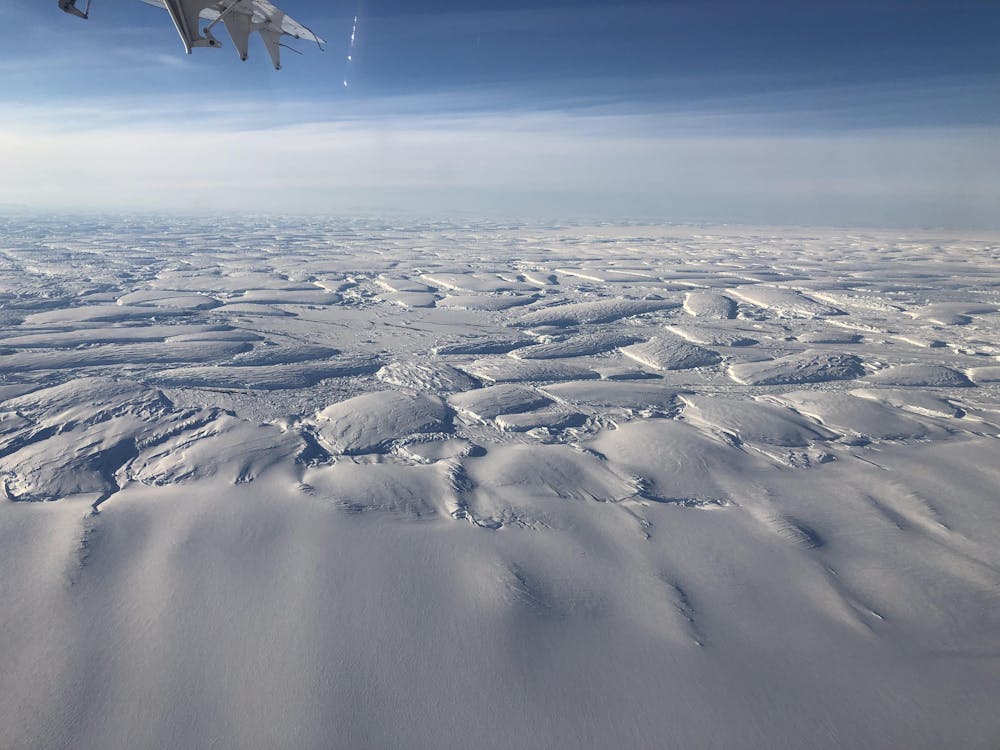
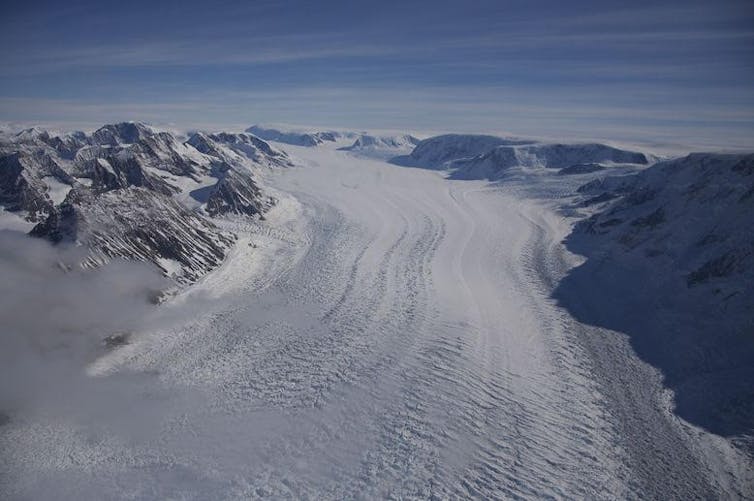
Flying over Antarctica, it’s hard to see what all the fuss is about. Like a gigantic wedding cake, the frosting of snow on top of the world’s largest ice sheet looks smooth and unblemished, beautiful and perfectly white. Little swirls of snow dunes cover the surface.
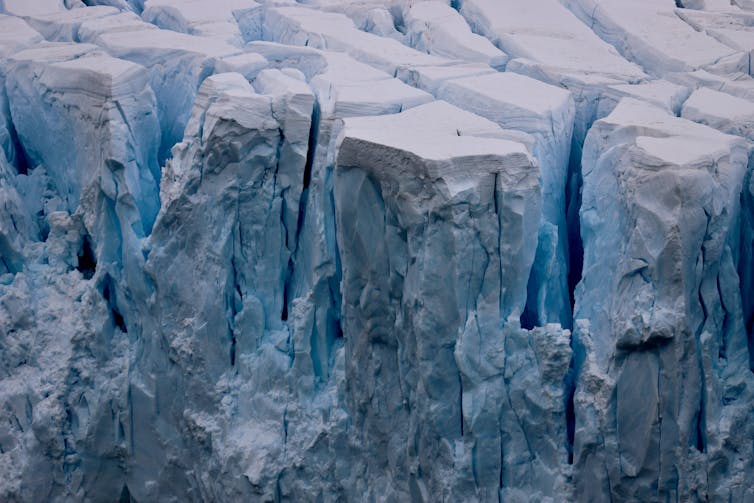
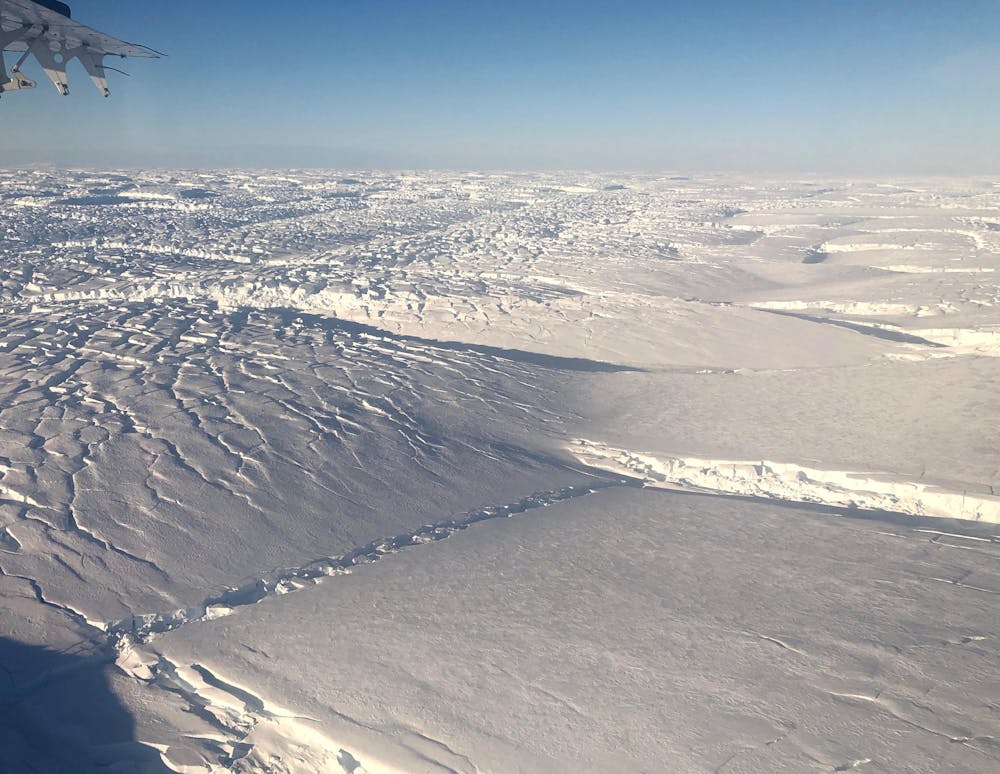
But as you approach the edge of the ice sheet, a sense of tremendous underlying power emerges. Cracks appear in the surface, sometimes organized like a washboard, and sometimes a complete chaos of spires and ridges, revealing the pale blue crystalline heart of the ice below.
As the plane flies lower, the scale of these breaks steadily grows. These are not just cracks, but canyons large enough to swallow a jetliner, or spires the size of monuments. Cliffs and tears, rips in the white blanket emerge, indicating a force that can toss city blocks of ice around like so many wrecked cars in a pileup. It’s a twisted, torn, wrenched landscape. A sense of movement also emerges, in a way that no ice-free part of the Earth can convey – the entire landscape is in motion, and seemingly not very happy about it.
Broken ice where Thwaites Glacier heads out to sea.(Ted Scambos)
Antarctica is a continent comprising several large islands, one of them the size of Australia, all buried under a 10,000-foot-thick layer of ice. The ice holds enough fresh water to raise sea level by nearly 200 feet.
Its glaciers have always been in motion, but beneath the ice, changes are taking place that are having profound effects on the future of the ice sheet – and on the future of coastal communities around the world.
Breaking, thinning, melting, collapsing
Antarctica is where I work. As a polar scientist I’ve visited most areas of the ice sheet in more than 20 trips to the continent, bringing sensors and weather stations, trekking across glaciers, or measuring the speed, thickness and structure of the ice.
Currently, I’m the U.S. coordinating scientist for a major international research effort on Antarctica’s riskiest glacier – more on that in a moment. I have gingerly crossed crevasses, trodden carefully on hard blue windswept ice, and driven for days over the most monotonous landscape you can imagine.
For most of the past few centuries, the ice sheet has been stable, as far as polar science can tell. Our ability to track how much ice flows out each year, and how much snow falls on top, extends back just a handful of decades, but what we see is an ice sheet that was nearly in balance as recently as the 1980s.
Early on, changes in the ice happened slowly. Icebergs would break away, but the ice was replaced by new outflow. Total snowfall had not changed much in centuries – this we knew from looking at ice cores – and in general the flow of ice and the elevation of the ice sheet seemed so constant that a main goal of early ice research in Antarctica was finding a place, any place, that had changed dramatically.
Ice breaks off the front of a glacier in Antarctica.
But now, as the surrounding air and ocean warm, areas of the Antarctic ice sheet that had been stable for thousands of years are breaking, thinning, melting, or in some cases collapsing in a heap. As these edges of the ice react, they send a powerful reminder: If even a small part of the ice sheet were to completely crumble into the sea, the impact for the world’s coasts would be severe.
Like many geoscientists, I think about how the Earth looks below the part that we can see. For Antarctica, that means thinking about the landscape below the ice. What does the buried continent look like – and how does that rocky basement shape the future of the ice in a warming world?
In East Antarctica, the part closer to Australia, the continent is rugged and furrowed, with several small mountain ranges. Some of these have alpine valleys, cut by the very first glaciers that formed on Antarctica 30 million years ago, when its climate resembled Alberta’s or Patagonia’s. Most of East Antarctica’s bedrock sits above sea level. This is where the city-size Conger ice shelf collapsed amid an unusually intense heat wave in March 2022.
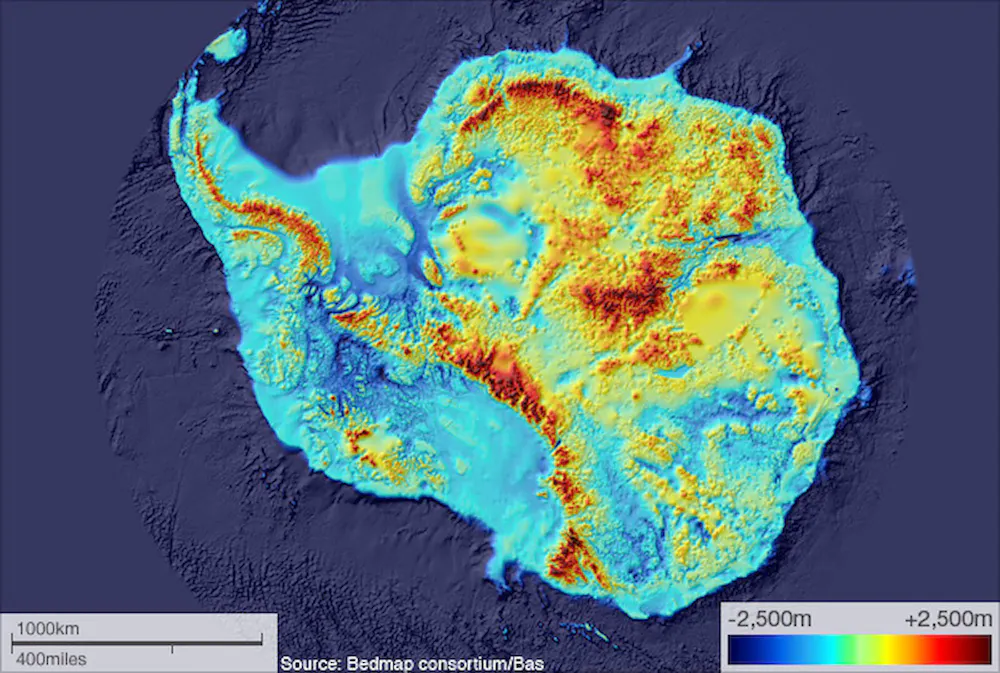
Below the ice, recent studies have mapped Antarctica’s bedrock and show much of the west side is below sea level.(Bedmap2;) Fretwell 2013
In West Antarctica the bedrock is far different, with parts that are far deeper. This area was once the ocean bottom, a region where the continent was stretched and broken into smaller blocks with deep seabed between. Large islands made of volcanic mountain ranges are linked together by the thick blanket of ice. But the ice here is warmer, and moving faster.
The realization that the West Antarctic ice sheet was gone in the past is the cause of great concern in the global warming era.
Early stages of a large-scale retreat
Toward the coast of West Antarctica is a large area of ice called Thwaites Glacier. This is the widest glacier on earth, at 70 miles across, draining an area nearly as large as Idaho.
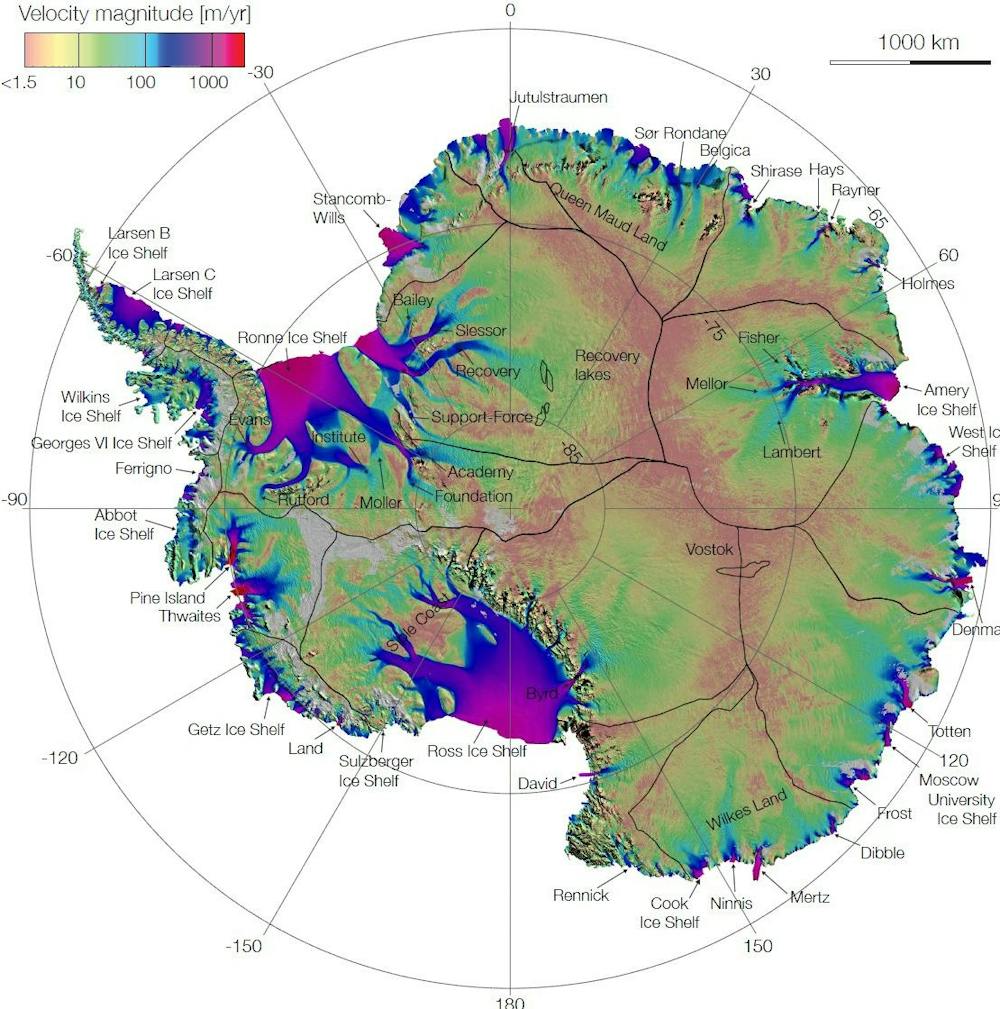
Satellite data tell us that it is in the early stages of a large-scale retreat. The height of the surface has been dropping by up to 3 feet each year. Huge cracks have formed at the coast, and many large icebergs have been set adrift. The glacier is flowing at over a mile per year, and this speed has nearly doubled in the past three decades.
Two decades of satellite data show the fastest ice loss in the vicinity of the Thwaites Glacier. NASA.
From above, fractures are evident in the Thwaites Glacier.(Ted Scambos)
Some of the first measurements of the ice depth, using radio echo-sounding, showed that the center of West Antarctica had bedrock up to a mile and a half below sea level. The coastal area was shallower, with a few mountains and some higher ground; but a wide gap between the mountains lay near the coast. This is where Thwaites Glacier meets the sea.
This pattern, with deeper ice piled high near the center of an ice sheet, and shallower but still low bedrock near the coast, is a recipe for disaster – albeit a very slow-moving disaster.
Ice flows under its own weight – something we learned in high school earth science, but give it a thought now. With very tall and very deep ice near Antarctica’s center, a tremendous potential for faster flow exists. By being shallower near the edges, the flow is held back – grinding on the bedrock as it tries to leave, and having a shorter column of ice at the coast squeezing it outward.
An Antarctic glacier flows toward the sea.(Erin Pettit)
How warmer water is undermining the glacier.
If the ice were to step back far enough, the retreating front would go from “thin” ice – still nearly 3,000 feet thick – to thicker ice toward the center of the continent. At the retreating edge, the ice would flow faster, because the ice is thicker now. By flowing faster, the glacier pulls down the ice behind it, allowing it to float, causing more retreat. This is what’s known as a positive feedback loop – retreat leading to thicker ice at the front of the glacier, making for faster flow, leading to more retreat.
Warming water: The assault from below
But how would this retreat begin? Until recently, Thwaites had not changed a lot since it was first mapped in the 1940s. Early on, scientists thought a retreat would be a result of warmer air and surface melting. But the cause of the changes at Thwaites seen in satellite data is not so easy to spot from the surface.
Beneath the ice, however, at the point where the ice sheet first lifts off the continent and begins to jut out over the ocean as a floating ice shelf, the cause of the retreat becomes evident. Here, ocean water well above the melting point is eroding the base of the ice, erasing it as an ice cube would disappear bobbing in a glass of water.
Warming water is reaching under the ice shelf and eroding it from below.(Scambos et al 2017)
Water that is capable of melting as much as 50 to 100 feet of ice every year meets the edge of the ice sheet here. This erosion lets the ice flow faster, pushing against the floating ice shelf.
The ice shelf is one of the restraining forces holding the ice sheet back. But pressure from the land ice is slowly breaking this ice plate. Like a board splintering under too much weight, it is developing huge cracks. When it gives way – and mapping of the fractures and speed of flow suggests this is just a few years away – it will be another step that allows the ice to flow faster, feeding the feedback loop.
Up to 10 feet of sea level rise
Looking back at the ice-covered continent from our camp this year, it is a sobering view. A huge glacier, flowing toward the coast, and stretching from horizon to horizon, rises up to the middle of the West Antarctic Ice Sheet. There is a palpable feeling that the ice is bearing down on the coast.
Ice is still ice – it doesn’t move that fast no matter what is driving it; but this giant area called West Antarctica could soon begin a multicentury decline that would add up to 10 feet to sea level. In the process, the rate of sea level rise would increase severalfold, posing large challenges for people with a stake in coastal cities. Which is pretty much all of us.
New findings were published in the New England Journal of Medicine on Sunday that found all rectal cancer patients given a certain pill were cancer-free.
The New York Times reported the findings, noting that the sample size was incredibly small, with just 18 people but the results were unbelievable.
“I believe this is the first time this has happened in the history of cancer,” said Dr. Luis A. Diaz Jr. of Memorial Sloan Kettering Cancer Center.
The project was paid for by GlaxoSmithKline, which crafted the new drug and it's unclear when the next trial will be with a larger group. For the 18, however, each has gone into remission. It's the first time Dr. Diaz has ever seen it in his entire professional career.
Dr. Alan P. Venook, studying colorectal cancer at the University of California, San Francisco, joined the study. He confirmed the results, saying he was certain it was the first time ever. Total remission in every patient is "unheard-of."
No one thought that the pill would do something like it, particularly the patients who assumed that they'd face radiation, chemo and surgery along with colostomy bags.
“There were a lot of happy tears,” said co-author and oncologist Dr. Andrea Cercek.
"On average, one in five patients have some sort of adverse reaction to drugs like the one the patients took, dostarlimab, known as checkpoint inhibitors. The medication was given every three weeks for six months and cost about $11,000 per dose. It unmasks cancer cells, allowing the immune system to identify and destroy them," the report explained.
There were few reactions that prevented the patient from taking the drug.
Dr. Venook said that the findings mean “either they did not treat enough patients or, somehow, these cancers are just plain different.”
While a warp drive almost certainly isn't a thing that will ever exist, there's no law of physics that says interstellar travel isn't possible. Perhaps that is one reason why the sci-fi idea isn't out of the realm of possibility, and why some scientists aren't afraid to seriously contemplate how such a thing might work.
Astronomers and astrophysicists have generally searched for extraterrestrial life by looking for biosignatures — such as water, oxygen or chlorophyll — on other planets. But interestingly, Romanovskaya proposes that interstellar travel might be happening via free-floating planets, not spaceships, like we see in the movies.
"Some extraterrestrial civilizations may migrate from their home planetary systems to other planetary systems," Romanovskaya writes. "They would most likely encounter serious or insurmountable technical problems when using spacecraft to transport large populations over interstellar distances."
"With little starlight reaching free-floating planets, extraterrestrials could use controlled nuclear fusion as the source of energy, and they could inhabit subsurface habitats and oceans of the free-floating planets to be protected from space radiation."
Essentially, Romanovskaya thinks that aliens could be "cosmic hitchhikers" by taking advantage of various flyby events via free-floating planets. Unlike Earth, free-floating planets are not gravitationally bound to their stars like Earth, hence making them more mobile. A study published in the journal Nature Astronomy found at least 70 nomad exoplanets in our galaxy, suggesting that they're not as rare as scientists previously thought. It's possible that these planets have liquid oceans under thick layers and some could even host simple life forms.
Want more health and science stories in your inbox? Subscribe to Salon's weekly newsletter The Vulgar Scientist.
"Some advanced civilizations may send their populations or technologies to other stars during flyby events, some advanced civilizations may build stellar engines and some advanced civilizations may use free-floating planets as interstellar transportation to relocate their populations to other planetary systems," Romanovskaya wrote. "Various methods of interstellar migration and interstellar colonization may contribute to propagation of advanced extraterrestrial civilizations in the Galaxy, and each method of interstellar migration can produce a set of observable technosignatures."
OK, but how exactly would alien civilizations use these planets to travel through the galaxy?
"With little starlight reaching free-floating planets, extraterrestrials could use controlled nuclear fusion as the source of energy, and they could inhabit subsurface habitats and oceans of the free-floating planets to be protected from space radiation," Romanovskaya said. "That would also prepare them for colonization of oceans in planetary systems."
Not everyone in the astrophysics world agrees that hitching a ride on lost planets is a viable method of interstellar transit. Avi Loeb, the former chair of the astronomy department at Harvard University, told Salon that he saw "no obvious benefit to using a free floating planet instead of a spacecraft." Loeb has previously argued that a rare interstellar object, called 'Oumuamua, bore almost all of the traits one might expect of an interstellar alien probe when it whizzed through our solar system in 2017.
"The only reason Earth is comfortable for 'life as we know it' is because it is warmed by the Sun," Loeb said. "But a free floating planet is not attached to a star, and its surface would naturally be frozen."
Moreover, Loeb said a free-floating planet's large mass would make it more difficult to navigate to a desired destination.
"It is much easier to design a small spacecraft that offers the ideal habitat, engine and navigation system," Loeb said. "It is far better to own a car than to hitchhike."
I’ve always been an indecisive person. What to wear, which menu item to pick, when to do house chores; always thinking through scenarios, before committing to even the most trivial of choices.
If this sounds like you, you’re certainly not unusual: many people struggle with these issues. Our new research may not be able to help you choose which restaurant to go to, but it might reassure you. Decisive people may be more confident in the choices they make but they are no better at making decisions than the rest of us.
The starting point for my recent study into the differences between decisive and indecisive people was finding a reliable way of distinguishing between participants. My team used the Action Control Scale, a yes or no questionnaire about everyday choices and behaviours. For example, whether you get bored quickly after learning a new game.
This scale can reveal whether a person is action or state-oriented. Action-oriented people focus on action. They are more decisive, flexible and likely to implement their intentions in the face of adversity.
State-oriented people focus on their emotional state. They are indecisive, often struggle to commit to their choices and abandon their commitments more frequently.
We surveyed a cohort of 723 participants, from whom we chose the 60 most action-oriented and the 60 most state-oriented to take part in the main experiments. The participants went through a set of cognitive tasks, with low-risk choices. For example we tested their simple perception (whether a cloud of dots is moving to the left or right) and preference (which of the two snacks would you rather eat).
evidence-processing speed (how fast you can acquire new information);
decision caution (how much you need to know to commit to a choice);
initial bias (how much the choice is influenced by some prior knowledge);
metacognitive sensitivity (how accurately you can judge the correctness of your choice);
metacognitive bias (how confident you are about your decision).
What we found
The only difference in the two groups, across all of the experiments, was that action-oriented people were more confident in their choices. There were no differences in accuracy, speed, cautiousness, bias or sensitivity. The action-oriented group was more confident, despite not being in any way better, faster or more accurate.
Certainly it can seem excessive, and sometimes debilitating, when you can’t even decide what to have for lunch. Indecisiveness can hinder our ability to pursue our goals. For example, exercise becomes difficult if each morning we second-guess ourselves and deliberate staying in bed.
But our research suggests that indecisive people are in no way worse at making choices. We can process evidence as fast and harness prior knowledge just as effectively as decisive people (and careful consideration can pay dividends when making life-changing choices, like choosing a university or buying a house – even if, as a millennial, this is only an issue in theory).
Being less or more confident of the choice that has been made cannot affect the outcome. It can however influence future ones. State-oriented people are less confident of whether the choice is right, which makes pursuing our goals a much greater challenge.
It is easy to see how this can relate to things such as preparing for an exam, exercising or learning a new skill. If you have low confidence that you are making meaningful progress, it can discourage regular practice. The reasons for this confidence gap are yet to be properly explained. But some research suggests a link with how people regulate their emotions. This confidence gap might be the reason why some people succeed where others do not.
Bed bugs are back with a vengeance. After an absence of around 70 years, thanks to effective pesticides such as DDT, they’ve been popping up in fancy hotels, spas, department stores, subway trains, movie theaters – and, of course, people’s homes.
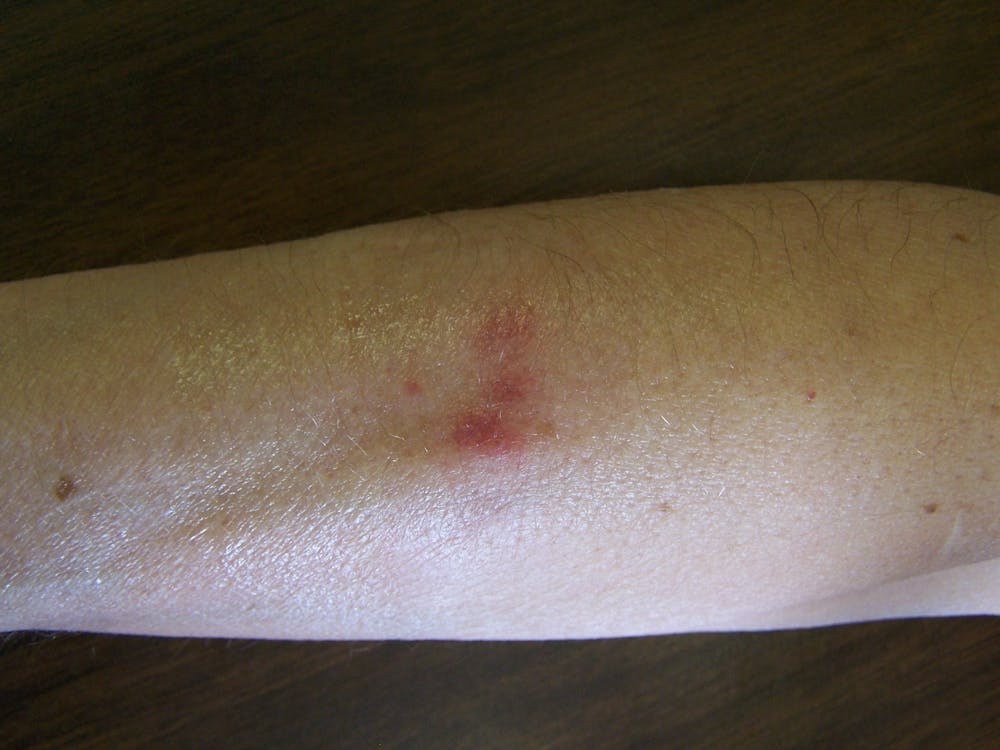
I’m a public health entomologist. In the course of my work, I’ve studied these little bloodsuckers, even letting bed bugs feast on my own appendages in the name of science. No one likes dealing with bed bugs – and there are ways to minimize your chances of needing to.
Colorized scanning electron microscopic image reveals the underside of a bed bug, including the proboscis (purple) and two eyes (red).
The common bed bug, Cimex lectularius, has been a parasite of humans for thousands of years. Historically, these tiny bloodsuckers were common in human dwellings worldwide, giving the old saying “sleep tight, don’t let the bed bugs bite” real meaning. They had nearly disappeared in developing countries until the mid-1990s, when they began making a comeback because of restriction or loss of certain pesticides, changes in pest control practices and increased international travel. In many areas around the world, they are now a major urban pest.
A bed bug extends its beaklike proboscis to feed on human blood.
Jerome Goddard
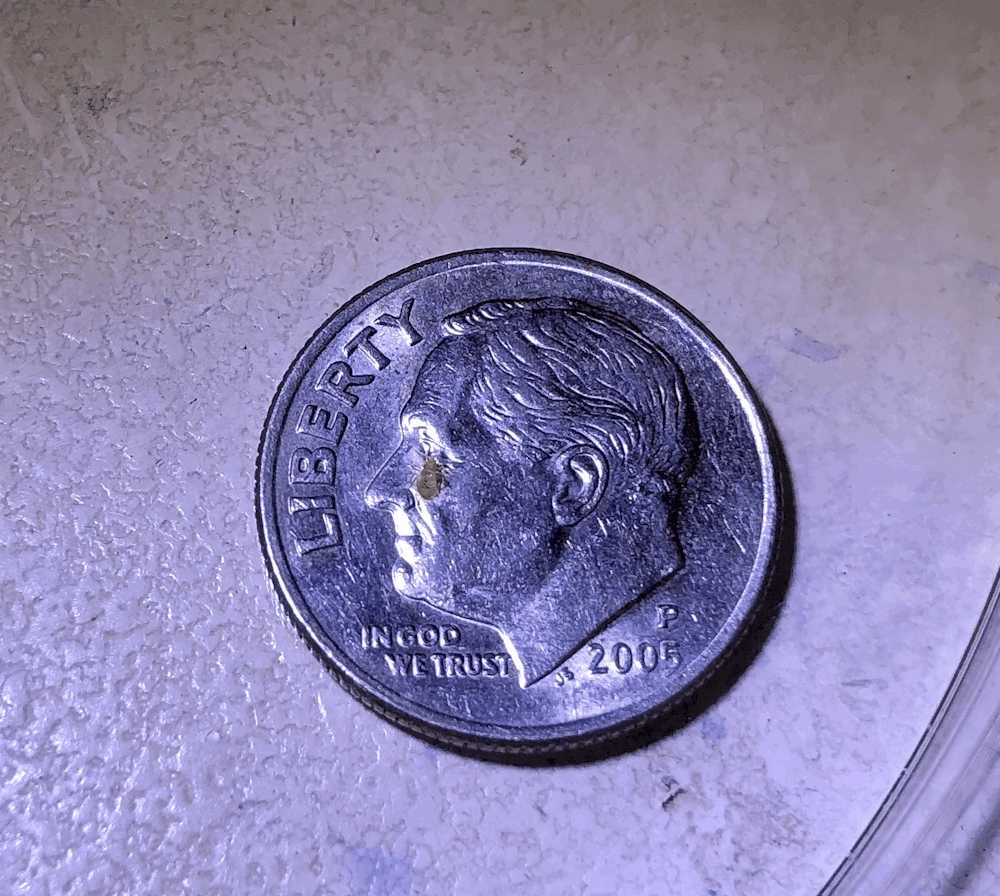
Adult bed bugs are less than a quarter-inch long (about 5 mm), oval-shaped and flattened, resembling unfed ticks or small cockroaches. Tucked backward underneath their head they have a long proboscis – a tubular mouthpart they can extend to take a blood meal. A bed bug needs only between three and 10 minutes to consume up to six times its weight in blood in a single meal.
A yellowish-white first-stage bed bug nymph is tiny.
Jerome Goddard
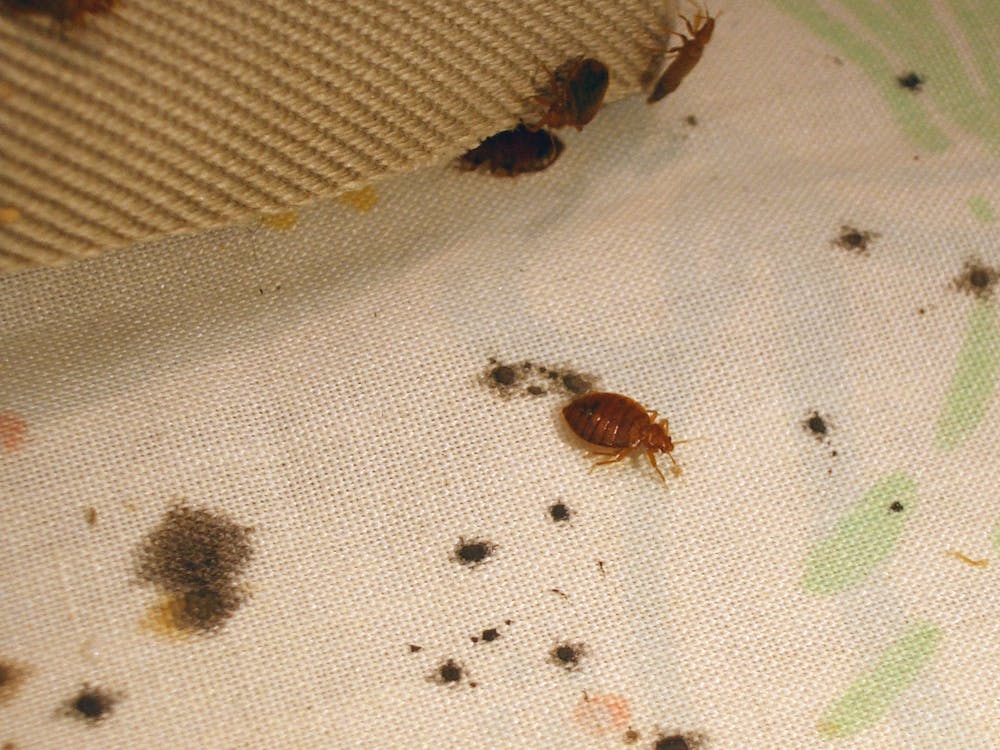
Adults are reddish brown, while the babies are extremely tiny and yellowish-white in color. They hide in cracks and crevices, generally within a few feet of a bed, coming out only to feed on an unsuspecting host. Then they run back to their hiding places, where they mate and lay eggs.
Houses can become infested with thousands of the little bloodthirsty pests in the mattress and box spring, where they leave telltale black fecal spots. In severe infestations there may be thick feces, hundreds of shed skins and eggs several millimeters thick.
“To be honest, until you go through [an infestation], you have no idea just how horrifying it really is. It is just natural for you to become paranoid; you lose sleep, you end up dreaming and thinking about bed bugs – they just consume every fiber of your being.”
My colleague and I analyzed 135 internet posts concerning bed bug infestations. The majority, 81% of the posts, reported three or more behaviors commonly associated with post-traumatic stress disorder – reactions like reexperiencing the event through intrusive memories and nightmares, startle responses and hypervigilance. Six posts detailed intense and repeated cleanings of homes or offices. Five posts reported persistent avoidance of people, activities and places that might lead to transmission of insects or arouse recollections of the original encounter. And five posts detailed suicidal thoughts or attempts. There are other anecdotal reports of suicides or drug overdoses by people struggling with bed bugs.
You can check for the telltale marks of a bed bug infestation on a bed’s mattress and box spring.
Not every hotel room has bed bugs, but some do. Simple precautions can help protect you and your belongings from infestation.
Leave all unnecessary items in your vehicle, such as extra clothing, gear and equipment. When first entering your hotel room, place luggage in the bathroom until you have had a chance to inspect the place. Pull back sheets and check the mattress and box spring for live bed bugs or black fecal spots. If any bugs or suspicious signs of infestation are found, go to the front desk and request another room. Because bed bugs don’t usually travel far on their own, other nonadjacent rooms may be perfectly clean of the parasites.
Keeping bed bugs out of houses and apartments can be difficult, especially if you travel a lot. After traveling, unpack luggage outside or in the garage, and wash all clothing from the luggage in hot water and dry on high heat if possible. A dryer is a great tool in the fight against bed bugs. Bed bugs can also hitch a ride into your home on used furniture or items purchased at secondhand stores or garage sales. Be sure to disinfect – more precisely “dis-insect” – those kinds of items. It’s a good idea to never purchase used mattresses or beds, no matter how good a bargain.
What can you do if you are forced to confront these bloodsuckers? A bed bug infestation found in a hotel room should immediately be reported to management. If you find bed bugs in your home, or in secondhand purchases, it’s best not to try to spray them yourself with over-the-counter pesticides. My recommendation is to contact a competent pest exterminator, who will treat the space with pesticides, use complex heat systems or both to kill the bugs.
Try not to panic. Keep in mind that bed bugs are only insects. They’re not magic. Believe me, they can be killed and eliminated from a dwelling.
The mere thought of barbecue’s smokey scents and intoxicating flavors is enough to get most mouths watering. Summer is here, and that means it is barbecue season for many people in the U.S.
I am a chemist who studies compounds found in nature, and I am also a lover of food – including barbecue. Cooking on a grill may seem simple, but there is a lot of chemistry that sets barbecue apart from other cooking methods and results in such a delicious experience.
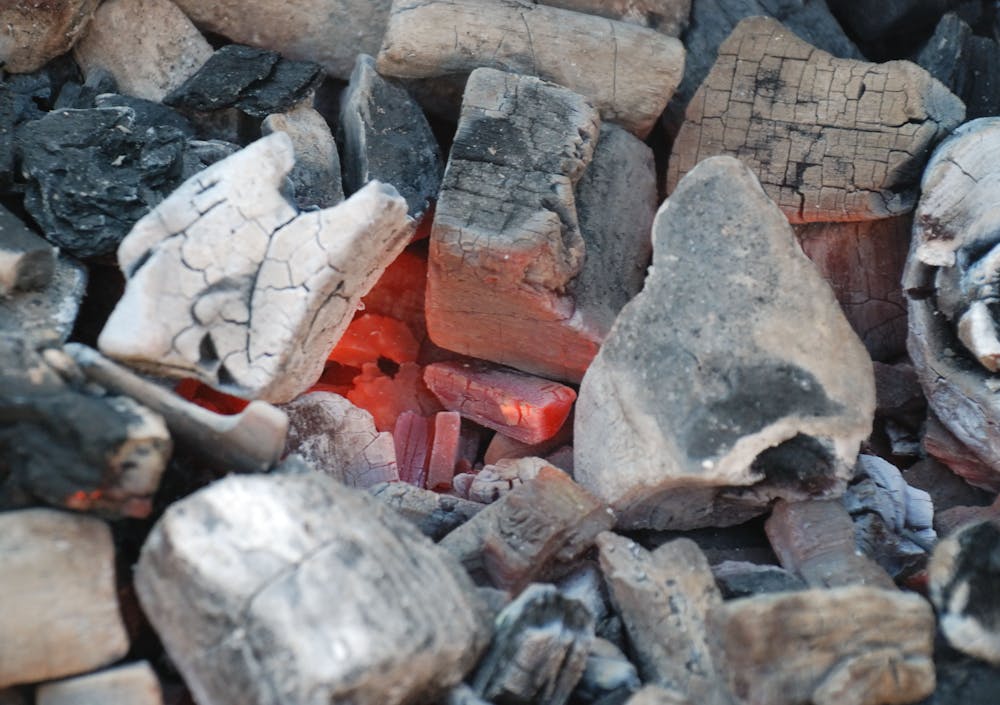
Cooking over an open flame – whether from gas, wood or charcoal – allows you to use both radiant and conductive heat to cook food.
First, it is important to define barbecue because the term can mean different things in different cultures or geographic locations. At its most basic, barbecue is the cooking of food over an open flame. What sets barbecue apart from other cooking methods is how heat reaches the food.
On a barbecue, the hot grill grates heat the food via direct contact through a process known as conduction. The food also warms and cooks by absorbing radiation directly from the flames below. The mix of heating methods allows you to sear the parts of the food touching the grill while simultaneously cooking the parts that aren’t touching the griddle – like the sides and top – through radiating heat. The resulting range of temperatures creates a complex mixture of flavors and aromas. When cooking on a stovetop, there is much less radiation and most of the cooking is done where the food is in direct contact with the pan.
When barbecuing, you can either put the food directly above the flames – what is called direct heat – or farther away on indirect heat. The direct cooking method subjects the food to very high temperatures, as the grilling surface can be anywhere from 500 to 700 degrees Fahrenheit (260 to 371 Celsius). The indirect cooking method places the heat source to the side of the food or far below, exposing the food to temperatures around 200 to 300 F (93 to 149 C).
Cooking is the process of using high temperatures to drive chemical reactions that change food at a molecular level. When you cook meat at higher temperatures – like over direct heat on a barbecue – the first thing to happen is that water near the meat’s surface boils off. Once the surface is dry, the heat causes the proteins and sugars on the outside of the meat to undergo a reaction called the Maillard Reaction. This reaction produces a complex mixture of molecules that make food taste more savory or “meaty” and adds depth to scents and flavors. The reaction and the flavors it produces are influenced by many variables, including temperature and acidity as well as the ingredients within any sauces, rubs or marinades.
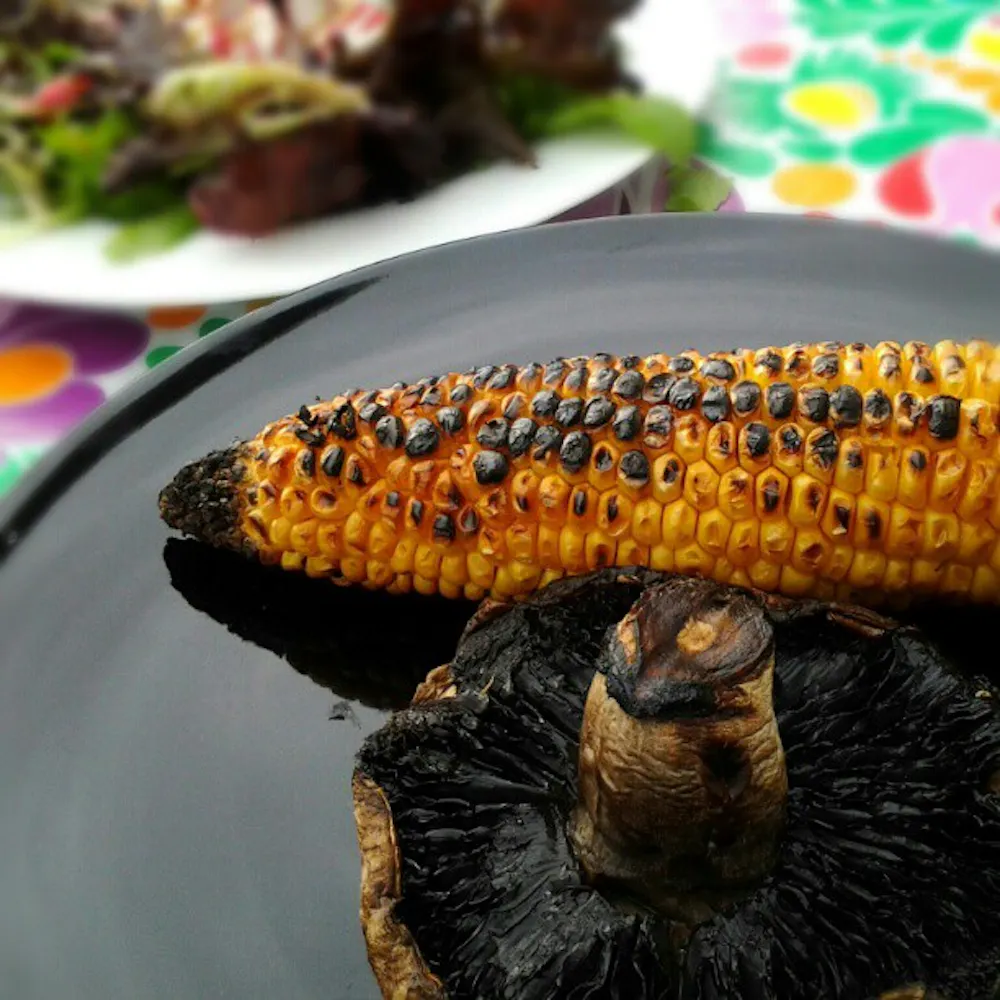
A similar process occurs with vegetables. Barbecuing allows the water to evaporate or drip down without getting trapped by a pan. This keeps the vegetables from becoming soggy and promotes caramelization reactions. These reactions turn carbohydrates and sugars into smaller compounds like maltol – which has a toasty flavor – and furan – which tastes nutty, meaty and caramel-like.
It’s much easier to control the level of charring on food when cooking on a barbecue.
Another hallmark of barbecued food is the unique char it develops. When foods are exposed to heat for prolonged periods of time, non-carbon atoms in the food break down, leaving behind the crispy, black carbon. This is the process of burning or charring.
Almost no one likes a completely burnt piece of meat, but little splashes of crispy char flavor can add such depth to foods. Cooking over the direct heat of a barbecue allows you to add just the amount of char to match your taste.
Unfortunately for those who like a little extra crisp, some of the chemicals in charred meat – molecules called heterocyclic amines and polycyclic aromatic hydrocarbons – are known carcinogens. Though the dangers are far lower than smoking cigarettes, for example, limiting the amount of charring on meats can help reduce the risk of developing cancer.
Smoke gives barbecued foods much of their unique flavor.
The final quintessential barbecue flavor is smokiness. Cooking over wood or charcoal involves a lot of smoke. Even on a gas grill, melting fats will drip onto the heat source and produce smoke. As smoke swirls around the barbecue, the food will absorb its flavors.
Smoke is made up of gases, water vapor and small solid particles from the fuel. Burning wood breaks down molecules called lignans, and these turn into smaller organic molecules – including syringol and guaiacol – that are mainly responsible for the quintessential smokey flavor.
When smoke comes in contact with food, the components of the smoke can get absorbed. Food is particularly good at taking on smokey flavors because it contains both fats and water. Each binds to different types of molecules. In chemistry terms, fats are non-polar – meaning they have a weak electric charge – and easily grab other non-polar molecules. Water is polar – meaning it has areas of positive charge and an area of negative charge similar to a magnet – and is good at binding to other polar molecules. Some foods are better at absorbing smokey flavors than others, depending on their composition. One way to use chemistry to make food more smokey is to periodically spray it with water during the barbecuing process.
Smoke can contain hundreds of possible carcinogens depending on what you are burning. Only a small amount of research has been done on whether grilled foods absorb enough smoke to pose a significant risk to health. But researchers know that inhaling smoke is strongly correlated with cancer.
While the idea of barbecuing your favorite dish may evoke the feeling of simple pleasures, the science behind it is quite complex. The next time you enjoy the smoky goodness of food from a grill, you will hopefully appreciate the diverse nature of the compounds and reactions that helped produce it.


















.jpg#/media/File:Barbecue_corn_and_mushroom_(7872340508).jpg)
.jpg#/media/File:Harry_Knight_2017-05-28_(Unsplash).jpg)