Top Stories Daily Listen Now
RawStory

Science

Did NASA find Hell? Scientists brace for first glimpse of world that constantly burns

Mankind’s first look at conditions on a “super-Earth” 50 light years away is expected in coming weeks via the James Webb Space Telescope, and NASA is bracing to see the stuff of nightmares. The planet, called 55 Cancri e, orbits so close to “its Sun-like star” that surface conditions could literally be like the Hell of biblical description: a dimension in a constant state of burning. Data show 55 Cancri e is less than 1.5 million miles from its star — 1/25 the distance super hot Mercury is from our sun, NASA says. “With surface temperatures far above the melting point of typical rock-forming m...

Spotted lanternflies are hatching again. But how far do they spread each year?

PHILADELPHIA -- Black-and-white spotted lanternfly nymphs about a quarter-inch long are starting to hatch in the region, hopping across decks, patios, and trees before they morph over the summer into flying Technicolor adults. If you haven’t seen them in your yard yet, it could only be a matter of time. The invasive pests are turning out to be pretty mobile, either through hopping, flying, or hitching rides, according to a recent study in which Pennsylvania served as ground zero. One of the more unknown aspects of the spotted lanternfly has been how nimble it’s been since being discovered in t...

How a cheap component could help kill off combustion cars

By Nick Carey and Christina Amann LONDON/BERLIN (Reuters) - The humble wire harness, a cheap component that bundles cables together, has become an unlikely scourge of the auto industry. Some predict it could hasten the downfall of combustion cars. Supplies of the auto part were choked by the war in Ukraine, which is home to a significant chunk of the world's production, with wire harnesses made there fitted in hundreds of thousands of new vehicles every year. These low-tech and low-margin parts - made from wire, plastic and rubber with lots of low-cost manual labour - may not command the kudos...

Genetic mutations can be benign or cancerous – a new method to differentiate between them could lead to better treatments

Most of the roughly 40 trillion cells of your body have nearly identical copies of your genome – the DNA inherited from your parents, containing instructions for everything from converting food to energy to fighting off infections. Healthy cells become cancerous through harmful mutations in the genome. If a cell’s genome is damaged by ultraviolet light, for example, it can result in mutations that tell the cell to grow uncontrollably and form a tumor.

Identifying the genetic changes that cause healthy cells to become malignant can help doctors select therapies that specifically target the tumor. For example, about 25% of breast cancers are HER2-positive, meaning the cells in this type of tumor have mutations that cause them to produce more of a protein called HER2 that helps them grow. Treatments that specifically target HER2 have dramatically increased survival rates for this type of breast cancer.

Keep reading... Show less

Nasal COVID-19 vaccines help the body prepare for infection right where it starts – in your nose and throat

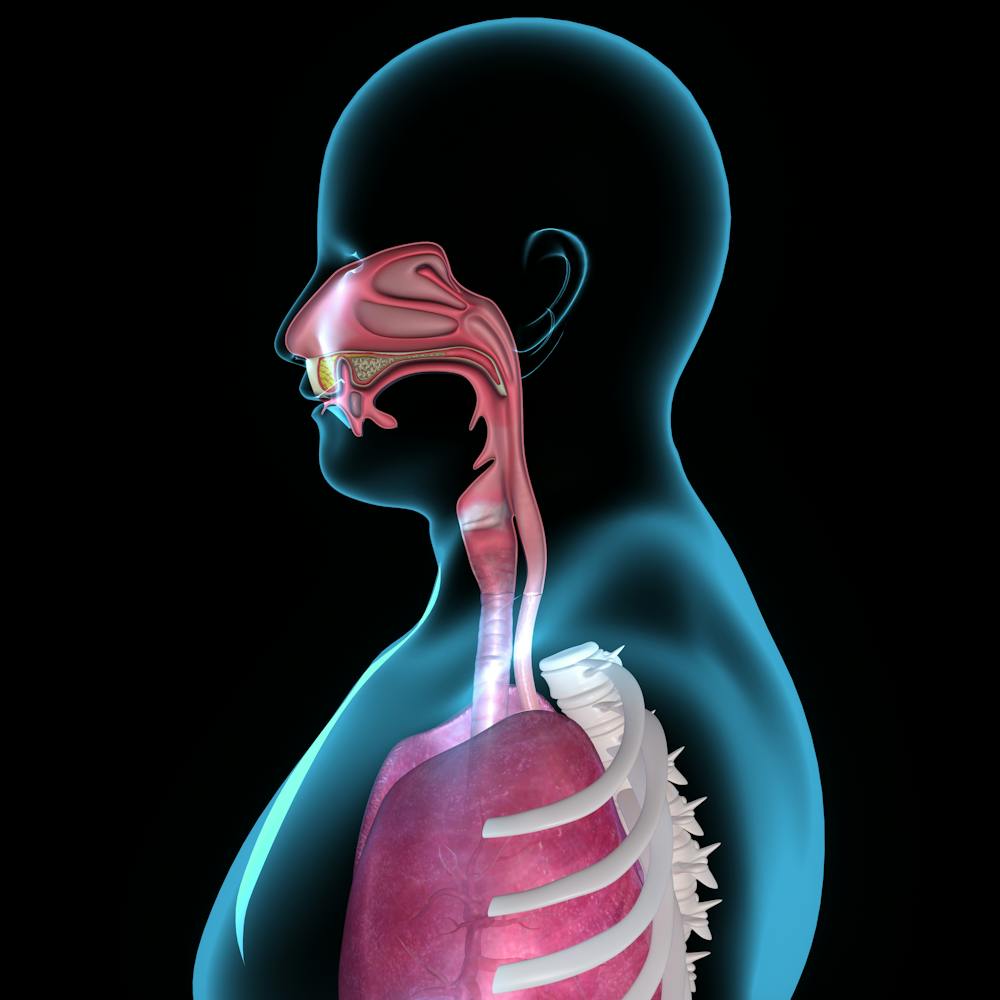
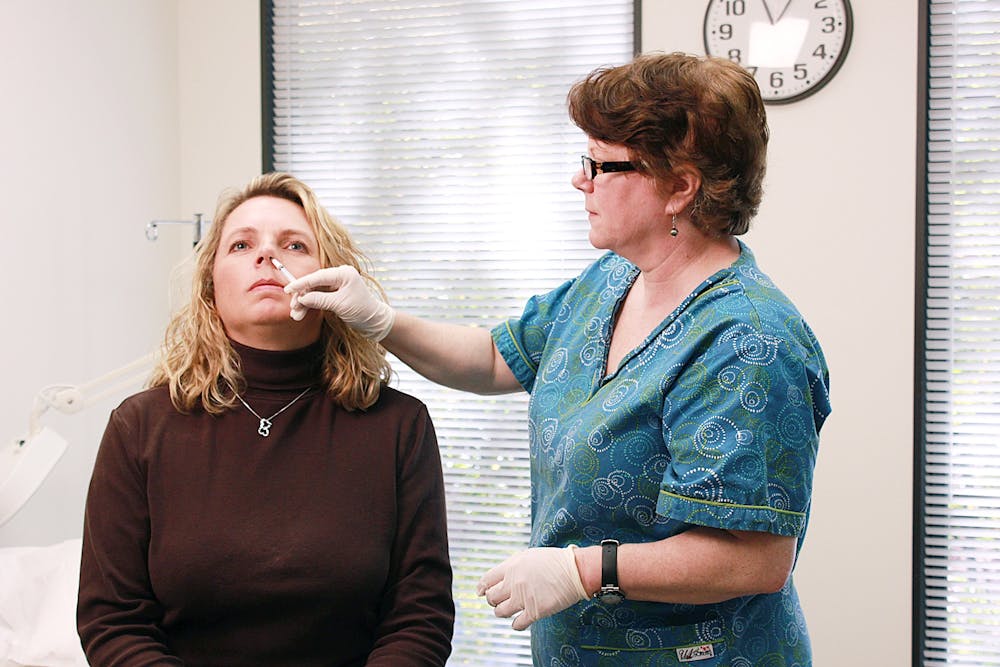
Imagine inhaling just a few drops of liquid or mist to get protected from COVID-19. That is the idea behind nasal COVID-19 vaccines, and they have been getting a lot of attention recently as a spray or liquid. These nasal vaccines would be based on the same technology as normal vaccines given by injection. But as Mayuresh Abhyankar, a University of Virginia researcher who studies infectious diseases and works on nasal vaccines, explains, vaccinating someone right where the coronavirus is likely to start its attack comes with many immunological benefits.

1. What are nasal vaccines?

Nasal vaccines are administered, as the name suggests, through the nose. More accurately called intranasal vaccines, these vaccines are liquids that can be given as a spray or through a dropper or syringe. The most common nasal vaccine is FluMist, a nasal spray that uses inactivated flu virus to protect against influenza. An intranasal vaccine could be a weakened live virus similar to FluMist, a nucleic acid vaccine like mRNA coronavirus vaccines or a protein vaccine like Hepatitis B vaccines or the CorbeVax coronavirus vaccine.

Keep reading... Show less

NASA to discuss status of final test needed for Artemis I moon mission

NASA will hold a media teleconference at 12 p.m. EDT on Friday, May 27, to discuss the status of the next wet dress rehearsal test of the agency’s Space Launch System (SLS) rocket and Orion spacecraft at the agency’s Kennedy Space Center in Florida ahead of the uncrewed Artemis I lunar mission. The rehearsal is the final test needed before launch and calls for NASA to test the system including operations to load propellant into the rocket’s tanks, conduct a full launch countdown, demonstrate the ability to recycle the countdown clock, and also drain the tanks to give them an opportunity to pra...

Scientists are studying whether Cold War-era photos of the night sky contain clues of alien life

On a single photographic plate from April 12, 1950, nine dots of light appear in a row in the night sky. To an uninformed eye, they appear unremarkable, perhaps nothing more than technical errors. Yet this particular photographic plate was produced as part of a larger project to photograph the night sky from California's Palomar Observatory Sky Survey. When lights appear and then disappear without explanation, they are known as transients, and astronomers seek explanations.

This is especially true as UFO sightings have become both more frequent and more effectively documented. Indeed, a group of scientists is arguing that the nine lights of these plates — which were taken seven years before the Soviet Union launched the first man-made satellite into space — could be evidence of extraterrestrial life. (Emphasis on could: there is nothing definitive that says these are alien craft.)

Keep reading... Show less

Abbott developing test for monkeypox

By Leroy Leo

(Reuters) -Abbott Laboratories said on Thursday it is actively developing a test for monkeypox, as the disease spreads in various countries.

Keep reading... Show less

Yorkicystis, the 500 million-year-old relative of starfish that lost its skeleton

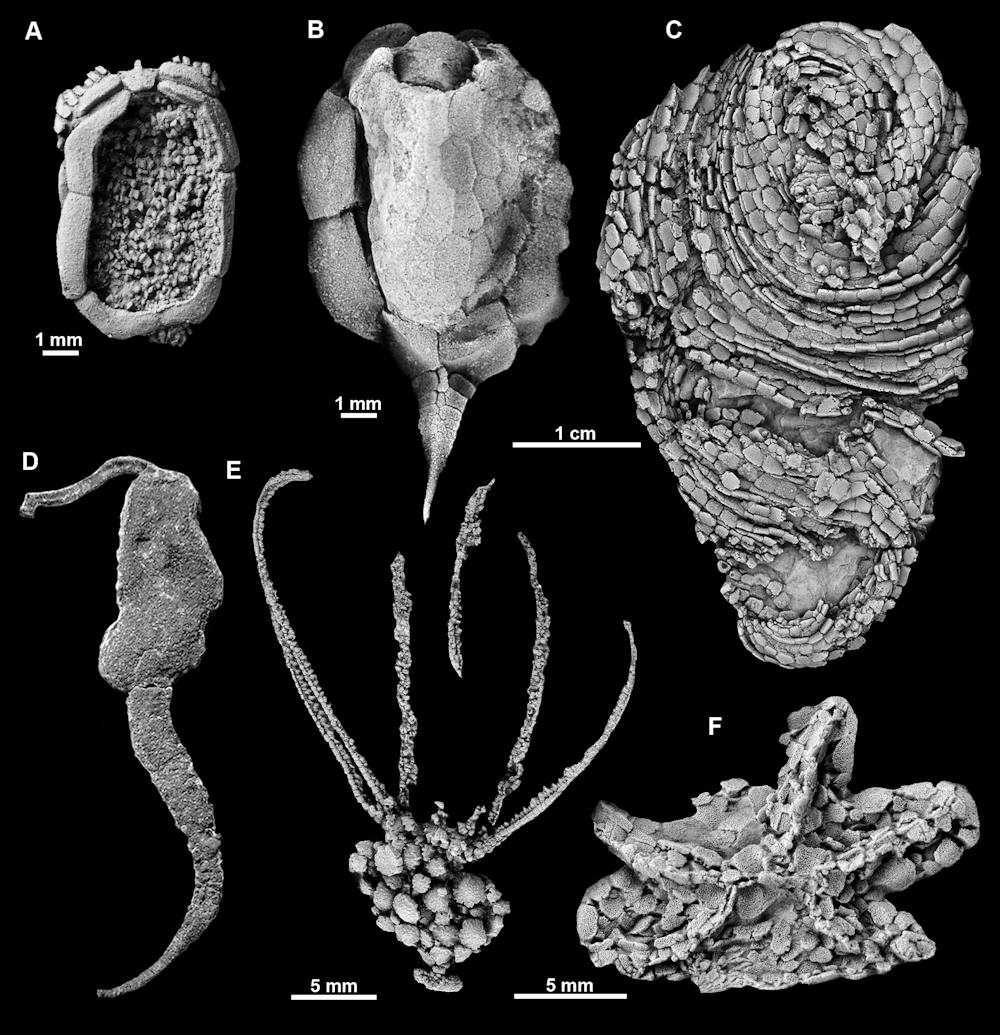
After four years of digging for fossils in a churchyard in York, Pennsylvania, amateur paleontologist Chris Haefner made an intriguing find. “I knew it was worth keeping,” he said. He posted his discovery on Facebook.

I spotted his post, and realized it was a major discovery: I study fossil invertebrates at the Spanish Research Council. When I contacted Haefner, he agreed to donate the fossil to London’s Natural History Museum.

Keep reading... Show less

How the scientific equivalent of impressionist paintings can make you feel data

A group of artists shook the world in the 1860s by painting what they saw, thought and felt. They became known as the impressionists and they weren’t interested in recreating perfect visual appearances like hundreds of artists before them.

Instead, painters like Claude Monet strove for a new way of representing the world in order to keep it alive and real. They did this by creating an “impression” of how a person, landscape or object appeared to them at a certain moment in time. In doing so, they captured all aspects of their changing societies and transformed the very nature of the way people think of and engage with art.

Keep reading... Show less

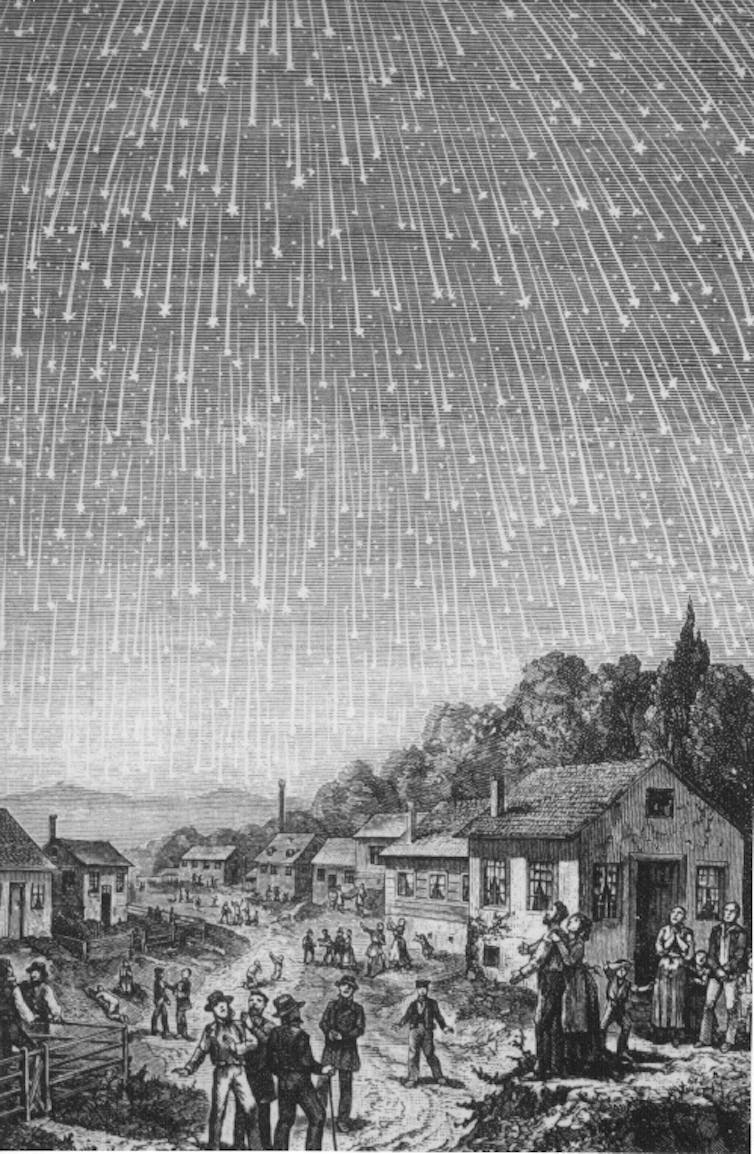
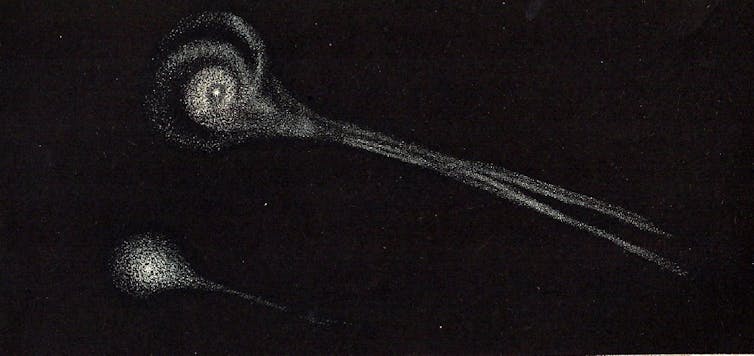
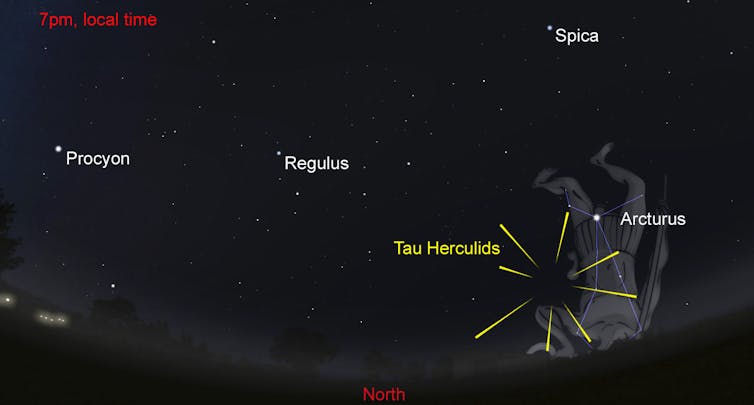
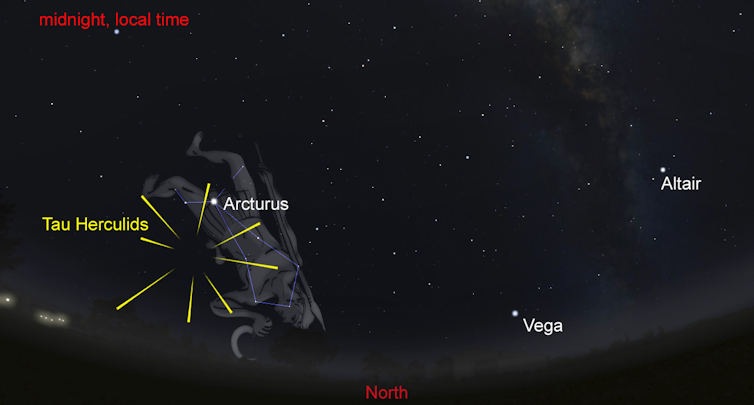
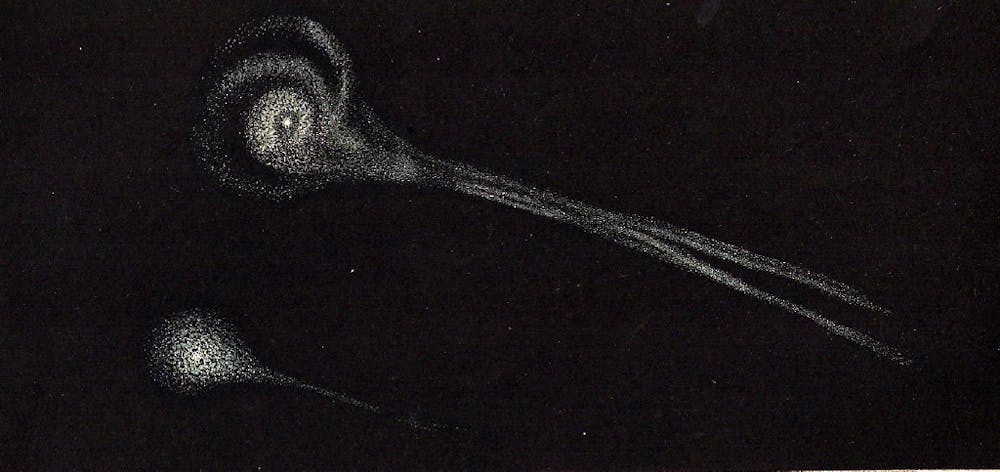
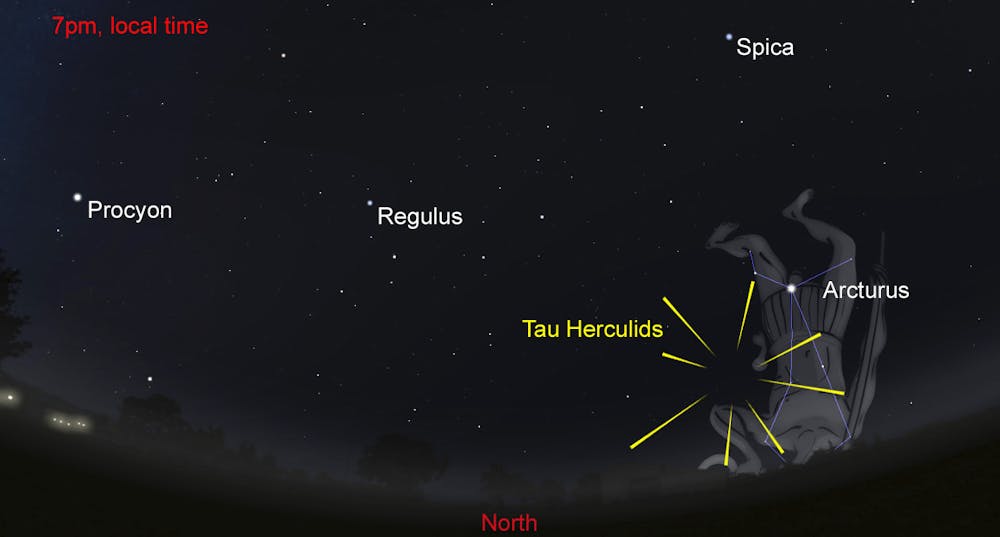
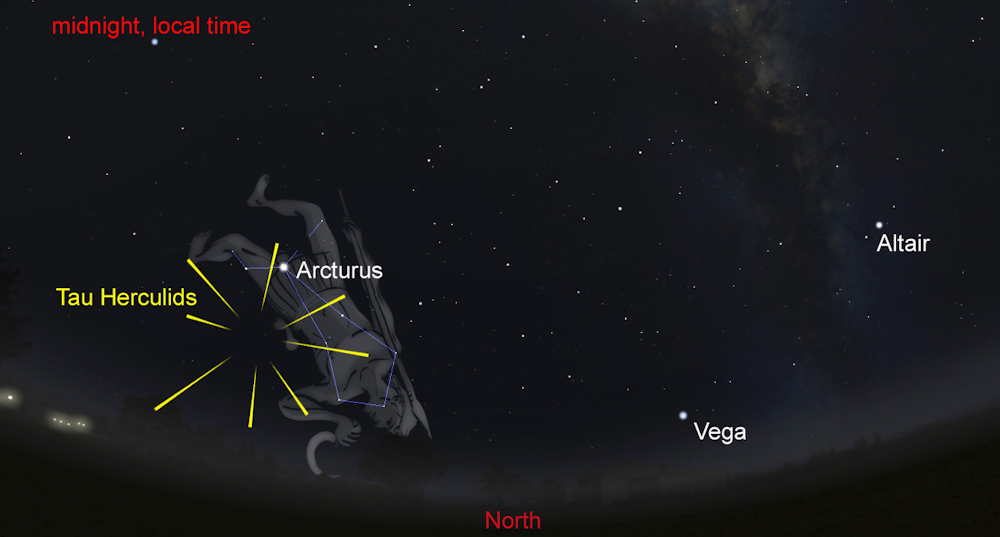
Fragments of a dying comet might put on a spectacular show next week – or pass by without a trace

As Earth orbits the Sun, it ploughs through dust and debris left behind by comets and asteroids. That debris gives birth to meteor showers – which can be one of nature’s most amazing spectacles.

Most meteor showers are predictable, recurring annually when the Earth traverses a particular trail of debris.

Keep reading... Show less

Impending demise of Roe v. Wade puts a spotlight on a major privacy risk: Your phone reveals more about you than you think

If people want to travel incognito to an abortion clinic, according to well-meaning advice, they need to plan their trip the way a CIA operative might – and get a burner phone. As a cybersecurity and privacy researcher, I know that wouldn’t be good enough to guarantee privacy.

Using a maps app to plan a route, sending terms to a search engine and chatting online are ways that people actively share their personal data. But mobile devices share far more data than just what their users say or type. They share information with the network about whom people contacted, when they did so, how long the communication lasted and what type of device was used. The devices must do so in order to connect a phone call or send an email.

Keep reading... Show less

How plate tectonics, mountains and deep-sea sediments have maintained Earth’s ‘Goldilocks’ climate

For hundreds of millions of years, Earth’s climate has warmed and cooled with natural fluctuations in the level of carbon dioxide (CO₂) in the atmosphere. Over the past century, humans have pushed CO₂ levels to their highest in 2 million years – overtaking natural emissions – mostly by burning fossil fuels, causing ongoing global warming that may make parts of the globe uninhabitable.

What can be done? As Earth scientists, we look to how natural processes have recycled carbon from atmosphere to Earth and back in the past to find possible answers to this question.

Our new research published in Nature, shows how tectonic plates, volcanoes, eroding mountains and seabed sediment have controlled Earth’s climate in the geological past. Harnessing these processes may play a part in maintaining the “Goldilocks” climate our planet has enjoyed.

From hothouse to ice age

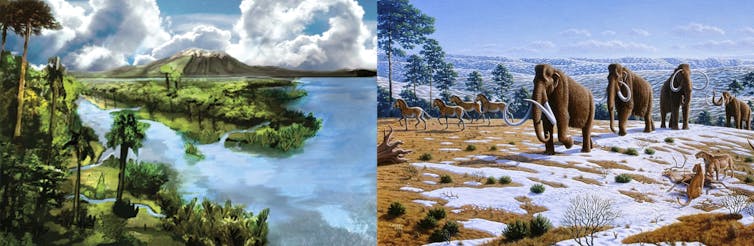
Hothouse and icehouse climates have existed in the geological past. The Cretaceous hothouse (which lasted from roughly 145 million to 66 million years ago) had atmospheric CO₂ levels above 1,000 parts per million, compared with around 420 today, and temperatures up to 10℃ higher than today.

But Earth’s climate began to cool around 50 million years ago during the Cenozoic Era, culminating in an icehouse climate in which temperatures dropped to roughly 7℃ cooler than today.

What kickstarted this dramatic change in global climate?

The Earth evolved from a hothouse climate in the Cretaceous Period (left) to an icehouse climate in the following Cenozoic Era (right), leading to inland ice sheets.

F. Guillén and M. Antón / Wikimedia commons

Our suspicion was that Earth’s tectonic plates were the culprit. To better understand how tectonic plates store, move and emit carbon, we built a computer model of the tectonic “carbon conveyor belt”.

The carbon conveyor belt

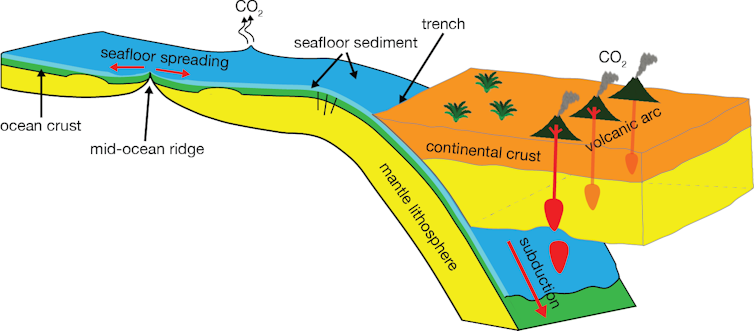
Tectonic processes release carbon into the atmosphere at mid-ocean ridges - where two plates are moving away from each other - allowing magma to rise to the surface and create new ocean crust.

At the same time, at ocean trenches - where two plates converge - plates are pulled down and recycled back into the deep Earth. On their way down they carry carbon back into the Earth’s interior, but also release some CO₂ via volcanic activity.

The Earth’s tectonic carbon conveyor belt shifts massive amounts of carbon between the deep Earth and the surface, from mid-ocean ridges to subduction zones, where oceanic plates carrying deep-sea sediments are recycled back into the Earth’s interior. The processes involved play a pivotal role in Earth’s climate and habitability.

Author provided

Our model shows that the Cretaceous hothouse climate was caused by very fast-moving tectonic plates, which dramatically increased CO₂ emissions from mid-ocean ridges.

In the transition to the Cenozoic icehouse climate tectonic plate movement slowed down and volcanic CO₂ emissions began to fall. But to our surprise, we discovered a more complex mechanism hidden in the conveyor belt system involving mountain building, continental erosion and burial of the remains of miscroscopic organisms on the seafloor.

The hidden cooling effect of slowing tectonic plates in the Cenozoic

Tectonic plates slow down due to collisions, which in turn leads to mountain building, such as the Himalayas and the Alps formed over the last 50 million years. This should have reduced volcanic CO₂ emissions but instead our carbon conveyor belt model revealed increased emissions.

We tracked their source to carbon-rich deep-sea sediments being pushed downwards to feed volcanoes, increasing CO₂ emissions and cancelling out the effect of slowing plates.

This video shows plate motions, carbon storage within tectonic plates and carbon degassing along mid-ocean ridges and subduction zones through time. Our carbon model shows these processes alone cannot explain global cooling in the Cenozoic Era. The effects of rock erosion, not shown here, played a key role. Arrows indicate plate motion speed.

So what exactly was the mechanism responsible for the drop in atmospheric CO₂?

The answer lies in the mountains that were responsible for slowing down the plates in the first place and in carbon storage in the deep sea.

As soon as mountains form, they start being eroded. Rainwater containing CO₂ reacts with a range of mountain rocks, breaking them down. Rivers carry the dissolved minerals into the sea. Marine organisms then use the dissolved products to build their shells, which ultimately become a part of carbon-rich marine sediments.

As new mountain chains formed, more rocks were eroded, speeding up this process. Massive amounts of CO₂ were stored away, and the planet cooled, even though some of these sediments were subducted with their carbon degassing via arc volcanoes.

Photographs showing white cliffs rising from the sea.

The limestone of the White Cliffs of Dover is an example of carbon-rich marine sediment, composed of the remains of tiny calcium carbonate skeletons of marine plankton.

I Giel / Wikimedia, CC BY

Rock weathering as a possible carbon dioxide removal technology

The Intergovernmental Panel on Climate Change (IPCC) says large-scale deployment of carbon dioxide removal methods is “unavoidable” if the world is to reach net-zero greenhouse gas emissions.

The weathering of igneous rocks, especially rocks like basalt containing a mineral called olivine, is very efficient in reducing atmospheric CO₂. Spreading olivine on beaches could absorb up to a trillion tonnes of CO₂ from the atmosphere, according to some estimates.

The speed of current human-induced warming is such that reducing our carbon emissions very quickly is essential to avoid catastrophic global warming. But geological processes, with some human help, may also have their role in maintaining Earth’s “Goldilocks” climate.

Keep reading... Show less