Top Stories Daily Listen Now
RawStory

Science

Endangered pangolins get fresh chance in South African clinic

The hospital room is air-cooled to feel like a pangolin's burrow. The patient, Lumbi, is syringe-fed with a protein-packed smoothie, given a daily dose of medicine and has his vital signs checked.

Lumbi is being treated for a blood parasite after he was rescued from traffickers during a police sting in South Africa's northern Limpopo province late last year.

Keep reading... Show less

Space balloon company offers first look at luxury cabins

A new entrant in the space tourism market promises customers views of the Earth's curvature from the comfort of a luxury cabin, lifted to the upper atmosphere with a giant balloon.

Space Perspective on Tuesday revealed illustrations of its swish cabins, which it hopes to start launching from the Kennedy Space Center in Florida from late 2024. More than 600 tickets have so far been sold, at $125,000 each.

Keep reading... Show less

Robots are learning to think like humans. Can they meet Amazon's demands for speed?

In a lab at the University of Washington, robots are playing air hockey. Or they're solving Rubik's Cubes, mastering chess or painting the next Mona Lisa with a single laser beam. As the robots play, the researchers who built them are learning more about how they work, how they think and where they have room to grow, said Xu Chen, one of those researchers and an associate professor of mechanical engineering at UW. "From a robot's viewpoint, artificial intelligence is getting more and more mature," Chen said, referring to the software and algorithms that help a robot take in its surroundings an...

STDs like syphilis, gonorrhea increased amid COVID in 2020

While the world was contending with the onset of the coronavirus pandemic, sexually transmitted diseases were causing their own brand of stateside chaos, according to the Centers for Disease Control and Prevention. The agency in a news release Tuesday released new data showing that despite the decrease in reported sexually transmitted diseases early in 2020, “most resurged by the end of that year” in the U.S., with reports of gonorrhea, syphilis and congenital syphilis exceeding those of the prior year. Meanwhile, reports of chlamydia decreased by 13%. Reports of gonorrhea increased by 10% in ...

Archaeological site along the Nile opens a window on the Nubian civilization that flourished in ancient Sudan

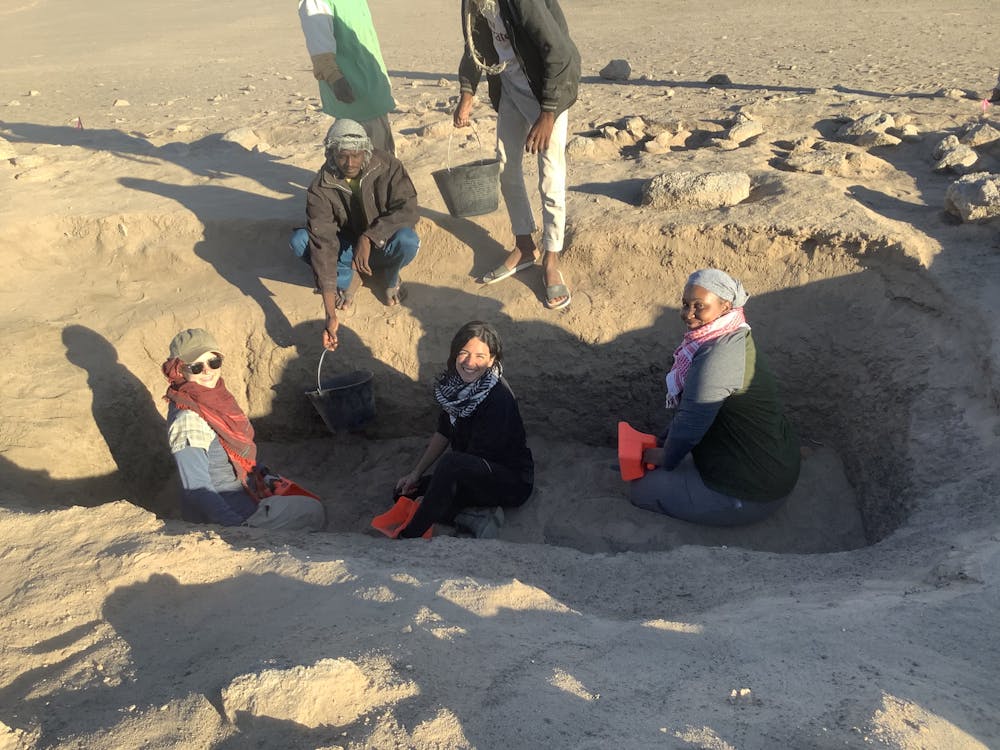
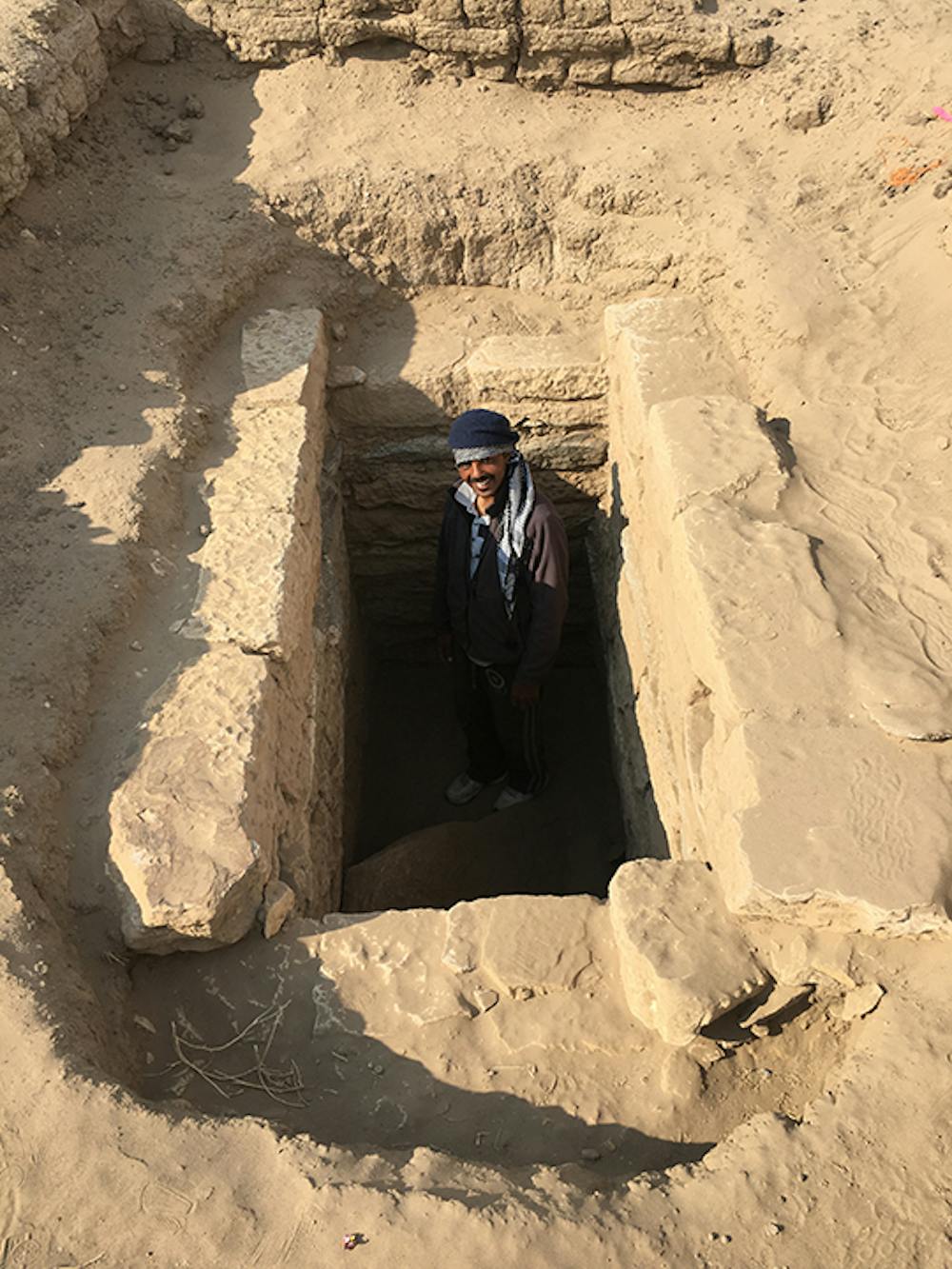
Circular mounds of rocks dot the desert landscape at the archaeological site of Tombos in northern Sudan. They reveal tumuli – the underground burial tombs used at least as far back as 2500 B.C. by ancient inhabitants who called this region Kush or Nubia. As a bioarchaeologist who excavates and analyzes human skeletal remains along with their related grave goods, I’ve been working at Tombos for more than 20 years.

Discussions about ancient history in Africa are dominated by the rise of Egypt. But there were several societies that rose to great power in the Nile River Valley since the middle of the third millennium B.C., including this often overshadowed neighbor to Egypt’s south. Even though ancient Kush rivaled and, at times, conquered Egypt, there’s been a relative lack of modern attention paid to this civilization. Early 20th century research expanded scholars’ understandings of ancient Kush, but the interpretations had colonial and racist biases that often obscured this civilization’s strengths and achievements.

Keep reading... Show less

Your digital footprints are more than a privacy risk – they could help hackers infiltrate computer networks

When you use the internet, you leave behind a trail of data, a set of digital footprints. These include your social media activities, web browsing behavior, health information, travel patterns, location maps, information about your mobile device use, photos, audio and video. This data is collected, collated, stored and analyzed by various organizations, from the big social media companies to app makers to data brokers. As you might imagine, your digital footprints put your privacy at risk, but they also affect cybersecurity.

As a cybersecurity researcher, I track the threat posed by digital footprints on cybersecurity. Hackers are able to use personal information gathered online to suss out answers to security challenge questions like “in what city did you meet your spouse?” or to hone phishing attacks by posing as a colleague or work associate. When phishing attacks are successful, they give the attackers access to networks and systems the victims are authorized to use.

Following footprints to better bait

Phishing attacks have doubled from early 2020. The success of phishing attacks depends on how authentic the contents of messages appear to the recipient. All phishing attacks require certain information about the targeted people, and this information can be obtained from their digital footprints.

Keep reading... Show less

Most distant star to date spotted – but how much further back in time could we see?

The Hubble Space Telescope has observed the most distant star ever seen – Earendel, meaning morning star. Even though Earendel is 50 times the mass of the Sun, and millions of times brighter, we would not normally be able to see it. We can see it due to an alignment of the star with a large galaxy cluster in front of it whose gravity bends the light from the star to make it brighter and more focused – essentially creating a lens.

Astronomers see into the deep past when we view distant objects. Light travels at a constant speed (3x10⁸ metres per second) so the further away an object is, the longer it takes for the light to reach us. By the time the light reaches us from very distant stars, the light we are looking at can be billions of years old. So we are looking at events that happened in the past.

When we observe the star’s light, we are looking at light that was emitted from the star 12.9 billion years ago – we call this the lookback time. That is just 900 million years after the Big Bang. But because the universe has also expanded rapidly in the time it took this light to reach us, Earendel is now 28 billion light years away from us.

Keep reading... Show less

How dogs, cats and horses help improve human wellbeing

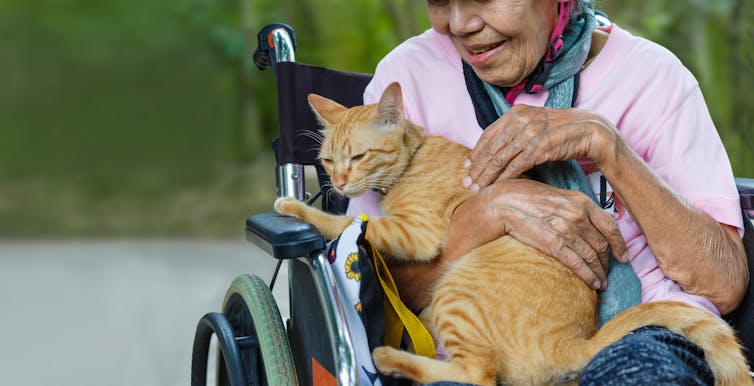
We’ve all heard of the psychotherapy couch, and the dynamic between a client and their human therapist. But perhaps less well known is the increasingly popular pet therapy. And no, that’s not therapy for your pet – it’s the relatively new phenomenon of therapy for humans, which involves animals.

These animal assisted interventions (AAIs) – which also include a trained human professional – are proving beneficial to people of all ages, leading to significant reductions in physiological responses to stress – such as heart rate – and associated emotions, such as anxiety.

It’s a longstanding and widely accepted fact that people of all ages can benefit from partnerships with animals as pets. From the joy of the human-animal bond, to companionship and improved mental health, there is no doubt that cats, dogs and other pets enhance our lives immeasurably.

Keep reading... Show less

How shops use psychology to influence your buying decisions

You might think that you only buy what you need, when you need it. But whether you are shopping for food, clothes or gadgets, the retailers are using the power of psychological persuasion to influence your decisions – and help you part with your cash.

If you think back, I’ll bet there’s a good chance that you can remember walking into a grocery store only to find the layout of the shop has been changed. Perhaps the toilet paper was no longer where you expected it to be, or you struggled to find the tomato ketchup.

Why do shops like to move everything around? Well, it’s actually a simple answer. Changing the location of items in a store means that we, the customers, are exposed to different items as we wander around searching for the things we need or want. This ploy can often significantly increase unplanned spending, as we add additional items to our baskets – often on impulse – while spending more time in the shop.

Keep reading... Show less

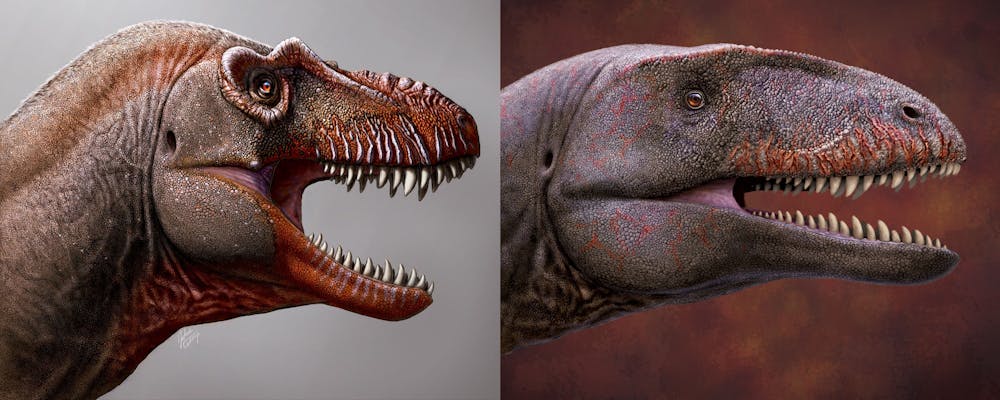
The discovery of two giant dinosaur species solves the mystery of missing apex predators in North America and Asia


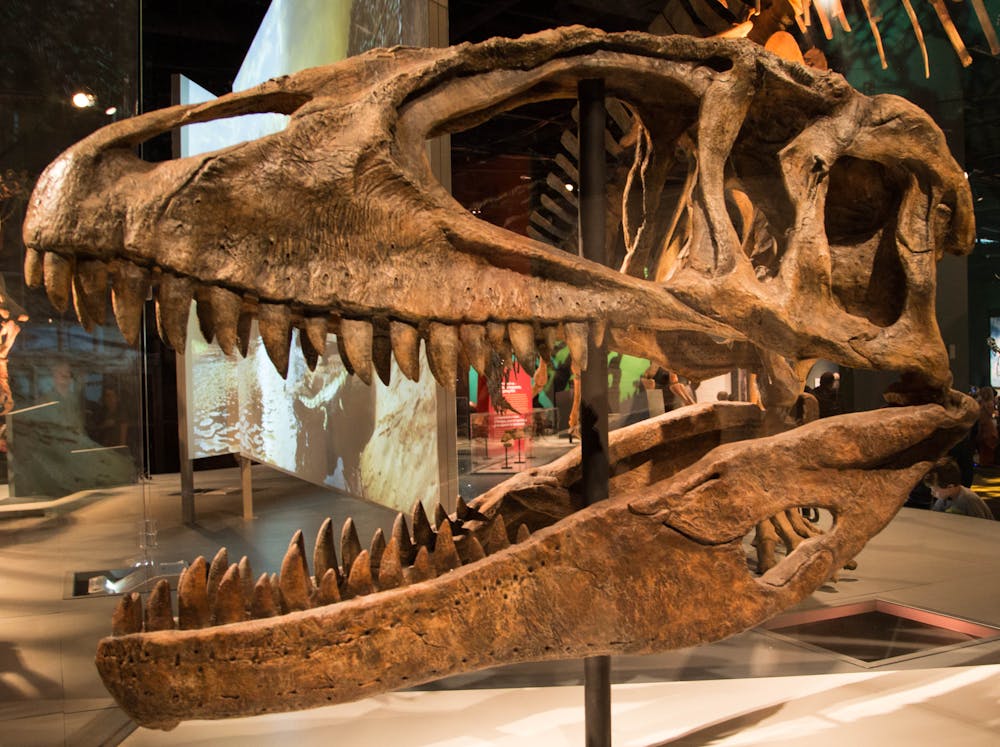
The top predator of the Jurassic and Cretaceous landscapes was usually a species of meat-eating dinosaur. These predators walked on two legs, had powerful jaws lined with sharp teeth and included species from groups known as tyrannosaurs, spinosaurs and carcharodontosaurs.

Tyrannosaurus rex, the goat-eating, jeep-chasing tyrannosaur from the movie Jurassic Park, was the apex predator of North America just before dinosaurs went extinct at the end of the Cretaceous Period. Although iconic, T. rex was only one species of many large, meat-eating dinosaurs that dominated various ecosystems at different times over the 130 million years of dinosaur reign.

Keep reading... Show less

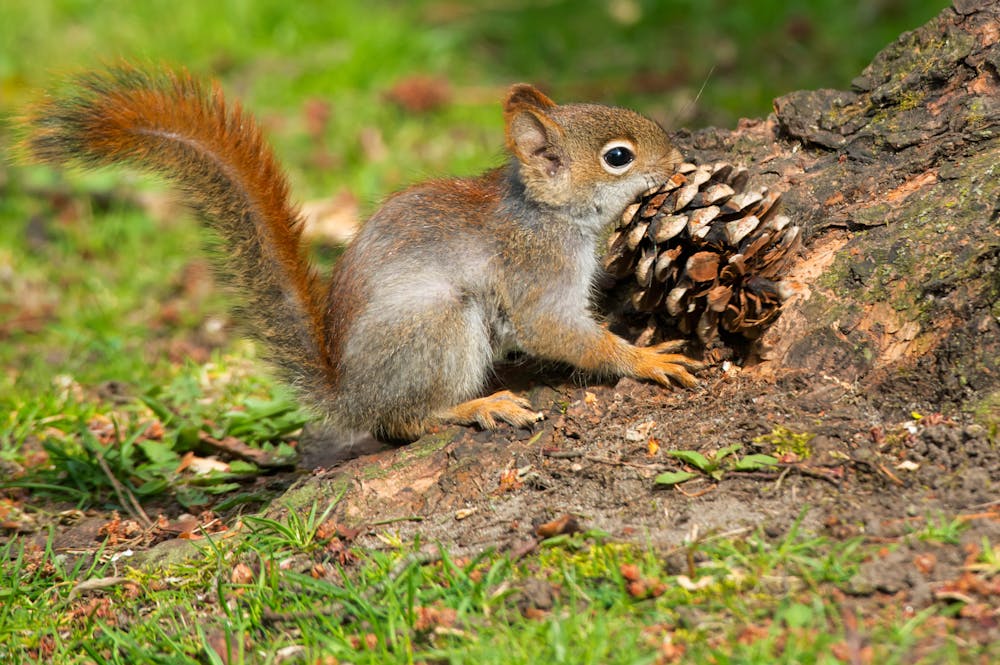
Allow me to introduce myself: Squirrels use rattle calls to identify themselves

As a scientist who studies squirrel behaviour, one of the most common questions I am asked is: “How do I get them out of my yard?”

It’s not as easy being a squirrel as you might think. They live a relatively solitary life guarding hard-won food stores to survive the tough winters here in Canada. The behaviour that my students and I are most interested in is how these squirrels use sounds, or what we refer to as vocal communication, to help them make it through this tough life.

Solitary creatures

The North American red squirrel lives a somewhat solitary life. They spend most of their days in a 50-100 metre territory foraging for pine cones and other food sources like berries and mushrooms.

Keep reading... Show less

WHO tracking ‘a few dozen’ cases of two new COVID-19 variants

The World Health Organization is keeping an eye on two new strains of COVID-19 that have popped up around the world. WHO scientists are looking into the BA.4 and BA.5 strains, subvariants of omicron, because of their “additional mutations that need to be further studied to understand their impact on immune escape potential,” the organization said Monday. Last week, the UK Health Security Agency said BA.4 had been traced in South Africa, Scotland, England, Botswana and Denmark between Jan. 10 to March 30. All BA.5 cases have been reported in South Africa; of those, all were in people between th...

Climate change is ravaging Anza-Borrego Desert State Park, warn scientists. What can be done?

SAN DIEGO — Under a crescent moon, a Baja California treefrog wades among rushes and water hyacinth in San Felipe Creek — a wetland along the western edge of Anza-Borrego Desert State Park that researchers fear could be rapidly shrinking as the climate changes. Upstream, environmental scientist Samantha Birdsong is on the hunt for such native amphibians, whose abundance indicates the health of the ecosystem. “There’s one, right in the aquatic plants,” Birdsong says excitedly, the tiny creature’s eyes shining in the glow of her headlamp. She quickly records its location on her phone, a chorus o...