Battle of the planet: Space tourism versus the climate
If you've got millions to spare and want to make space travel history, then now is your chance to book a flight to the International Space Station (ISS) - and perhaps even a spacewalk, too.
That's something no private individual has ever done before, according to Tom Shelley, who heads the US company Space Adventures, which specializes in space tourism.
He sells the trip together with Russia. It is expensive, so not many people can afford it, he told dpa in Moscow.
The flight to the ISS with the Russian space agency Roscosmos costs the equivalent of up to $56 million. The spacewalk tour planned for 2023 or 2024 is likely to cost even more.
Although the collaboration between Russian and Western space companies and officials has become increasingly questioned amid Moscow's invasion of Ukraine, space tourism appears here to stay.
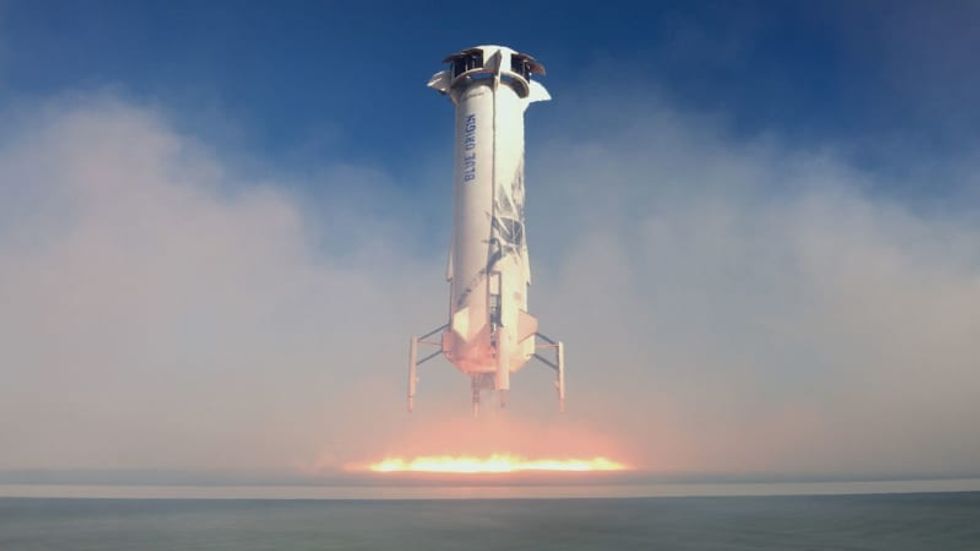
These brief, multi-million-dollar trips have already been making big headlines thanks to the travels of two billionaires in 2021. The first, British entrepreneur Richard Branson, blasted off into space in summer, followed shortly afterwards by Amazon founder Jeff Bezos.
Bezos dispatched two more flights with a total of 10 passengers, including actor William Shatner, known to many as Captain Kirk from "Starship Enterprise."
Bezos plans further brief trips into space in 2022 and has said demand for the tickets is very high. Branson is also said to be planning to offer flights.
Then there's Tesla's Elon Musk, another billionaire with his own space company, who sent tourists into space in 2021 as well.
His four passengers - none of whom were trained astronauts - spent several days in space, orbiting the Earth several times on board a Crew Dragon.
Meanwhile company Axiom Space wants to bring tourists to the ISS in 2022, working with US space agency NASA in the first cooperation of its kind.
Roscosmos meanwhile has just flown Japanese billionaire Yusaku Maezawa and his assistant Yozo Hirano to the ISS.
All this space travel might suggest there's practically a traffic jam but although tourism has picked up considerably, there is no sign yet of a space boom.
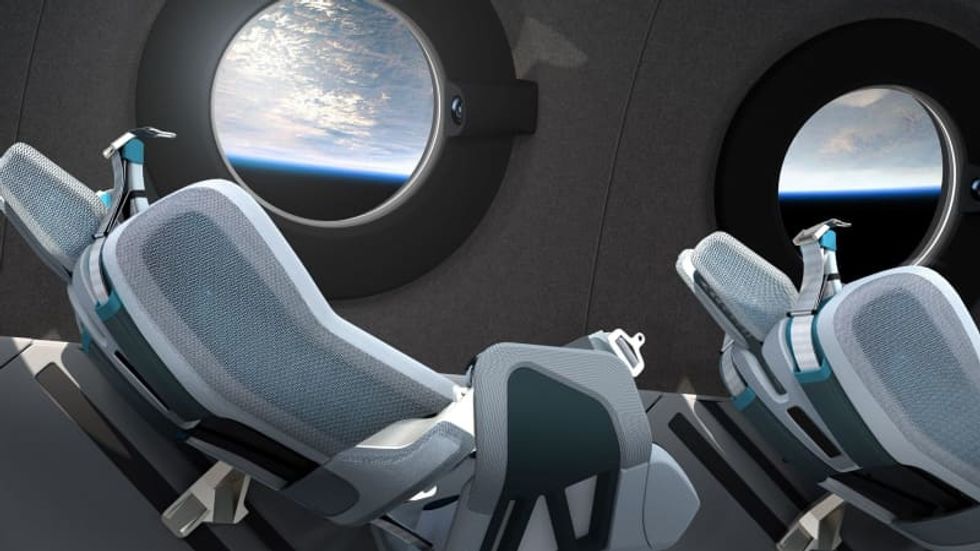
Not only are prices far out of reach but the space ships and ISS are also small. Only nine private individuals have made it to the ISS since 2001.
After NASA stopped passenger flights to the ISS, only Russian Soyuz rockets have flown there, from 2011 to 2020.
Private space ships flown on NASA's behalf have been heading there for the past 18 months, which could be further boost space tourism.
Russia, meanwhile, is converting space ships so that they can be piloted by just one trained cosmonaut, creating space for two tourists in the Soyuz.
Last autumn, Russia also tested an extra-short training programme for tourists. The fate of this collaboration is, however, to be determined by geopolitical factors, and whether Russian President Vladimir Putin continues his offensive in Ukraine.
But given the interest among deep-pocketed space fans, the business appears to be solid. Beyond money, what space travellers really need is time.
"Considering that there is a small percentage of people who can afford an orbital spaceflight and many of those people have obligations in their lives, like running a company, it can be difficult to make a commitment of their time for training," says Shelley.
Health, too, is a prerequisite. "Our clients are always in good general health, but we have worked over the years to lower the health requirements for our clients to launch to space," Shelley says.
You don't have to be perfect, he hastens to add. "As long as we know the health risks are, they can be managed by our medical staff. There is no age limit to participate our clients just need to be in overall good general health."
He notes that so far, limited data is available about how the bodies of older people, for example, cope in a zero-gravity environment.
Such data could be interesting, for example for flights to Mars.
But many have slammed space tourism, particularly for its impact on the environment. It's been dismissed as a business for the wealthy, enjoyed by the wealthy. Critics say it is largely driven forward without any of the scientific research that could serve to benefit broader humanity and with scant consideration for the climate.
Activists point to the immense quantities of fuel needed for rocket launches and the masses of material and logistics required. They calculate that the per capita climate balance for space tourists is catastrophic.
Meanwhile astronauts and cosmonauts from national space agencies dismiss space tourists who call themselves astronauts while only spending a couple of minutes marvelling at what they see.
The rising number of space tourists led the US Federal Aviation Administration (FAA) to axe a programme giving everyone who had been in space a coveted wing brooch.
"The Astronaut Wings program, created in 2004, served its original purpose to bring additional attention to this exciting endeavour," said FAA chief Wayne Monteith.
Nowadays, anyone who heads into space is just added to a list of names published online.