One of the world’s most storied shipwrecks, Ernest Shackleton’s Endurance, has been discovered off the coast of Antarctica more than a century after its sinking, explorers announced on Wednesday. Endurance was discovered at a depth of 3 008 metres (9 869 feet) in the Weddell Sea, about four miles from where it was slowly crushed by pack ice in 1915. *“We are overwhelmed by our good fortune in having located and captured images of Endurance,”* said Mensun Bound, the expedition’s director of exploration. *ound at last, Ernest Shackleton’s Endurance. Photos: Falklands Maritime Heritage Trust* On ...
Think of the last time you were at a birthday party and the obligatory rendition of “Happy Birthday” began. If you’re like most people, you probably joined in without a second thought. Would you be surprised to know that the version of
“Happy Birthday” you’re used to singing might be different every time?
The musical key that “Happy Birthday” is sung in often depends on the note that the person who starts the song chooses to sing first. This starting point determines the key for the rest of the song. We’re still able to recognize the song because the intervals — the differences in pitch between notes — remain the same and the notes just shift up or down depending on where that starting point is.
How is it that most people can perform this complex musical task even in the absence of any formal musical training? Even though you may not realize it, you actually have a lot more musical knowledge than you might think.
Pattern recognition
Where does this knowledge of music come from? You get it from your everyday life without realizing it thanks to a process called statistical learning. This concept suggests that we learn about our environment through passive exposure and that we constantly use this knowledge to interpret the world around us. Statistical learning is how we learn to recognize patterns and can be used to explain complex learning processes like language acquisition. Significantly, this process is almost entirely subconscious — we learn just by being exposed to new information.
In the case of music, we have no shortage of experience to draw from. We hear music constantly, whether intentionally or as a bystander. Riding in a car, standing in an elevator, sitting in a waiting room — we can’t help but be exposed to music. And we gain something from this passive exposure: We become familiar with the patterns and regularities of the music of our culture and we develop an implicit knowledge of music.
These results might seem surprising at first, but they are backed by large-scale studies as well. While many people might claim to be tone deaf, some research estimates that the rate of congenital amusia — a condition in which a person is unable to recognize or process musical information — is less than two per cent in the general population.
Our expectations are also responsible for generating musical pleasure and the desire to move when listening to music, and have been used as a tool by artists and composers for centuries to elicit stronger emotions.
So although you might not be aware of it, you’re a walking music processing machine. And next time you find yourself singing “Happy Birthday,” you can sing a bit more confidently with your hidden music expertise in mind.
PHILADELPHIA — The 11-year-old cat had been vomiting and lethargic for several days, and showed little interest in food. When the pet was examined at the University of Pennsylvania's Ryan Veterinary Hospital in September, her owner mentioned a possible clue to the symptoms: Someone in the household had COVID-19. The animal's nasal swab turned up negative. A fecal sample, on the other hand, told the tale. The shorthair feline was infected with the delta variant. Scientists have now found the coronavirus in 29 kinds of animals, a list that has been steadily growing almost since the start of the ...
Mating season in the animal kingdom can be dramatic, and sometimes violent. As an example, take deer clashing their antlers during the rut – nostrils flaring, hooves hammering the ground, grass flying everywhere, and that eerie silence before the thunderous collision. The winning buck gets access to the harem, while the loser must find other females to fight for.
Birds also need to compete for their mates, which often involves fiercely defending a territory. But most birds don’t sport impressive weapons; we know them better for their colors, dances and songs. As evolutionary biologists primarily interested in birds and weapons, respectively, we couldn’t help but wonder: Why do most birds lack their own version of antlers? The answer, which we present in a recent study, likely lies in a trade-off between flying and fighting.
It’s all about weight
For anything that flies, whether it’s a bird or an airplane (or even Superman), flight demands more energy – in the form of burned fat or fuel – than moving on the ground or in the water. And the amount of energy required increases with weight.
How stark is this trade-off? Several years ago, United Airlines started printing its inflight magazine on lighter paper to reduce the weight of a typical flight by about 11 pounds, or 0.01% of an airplane’s empty weight. Through this tiny decrease, the company cut its annual fuel use by 170,000 gallons, saving US$290,000 yearly.
Arctic terns fly more than 40,000 miles each year, the longest migration in the animal kingdom. Their long, pointed wings – in scientific terms, a high hand-wing index – and forked tails make them fast, maneuverable flyers.
If you fly a lot, like an airline that operates 4,500 daily flights or a swift that flies 10 months out of every year, every reduced ounce counts. And consequences are harsher for the swift. Animals can’t buy energy in the form of fuel – they have to find food and consume it, which itself requires energy.
On the other hand, if you are a rooster that only barely flies, you might be able to afford a bit of extra weight in the form of a weapon.
In other words, given the cost of flying, it makes sense that birds should be able to afford weapons only if they don’t depend too much on flight. This trade-off is supported by mathematical flight models and measurements of the cost of flight in real birds, which show that carrying avian weapons such as leg or wing spurs in flight costs more “fuel” the more a bird flies and the lighter the rest of its body is.
Avian spurs
To be sure, some birds do have weapons specialized for fighting – just not very many species. And the weapons that birds do carry aren’t as big, heavy or flashy as in other animals. Rooster spurs, a classic example, are about as antlerlike as bird weapons get.
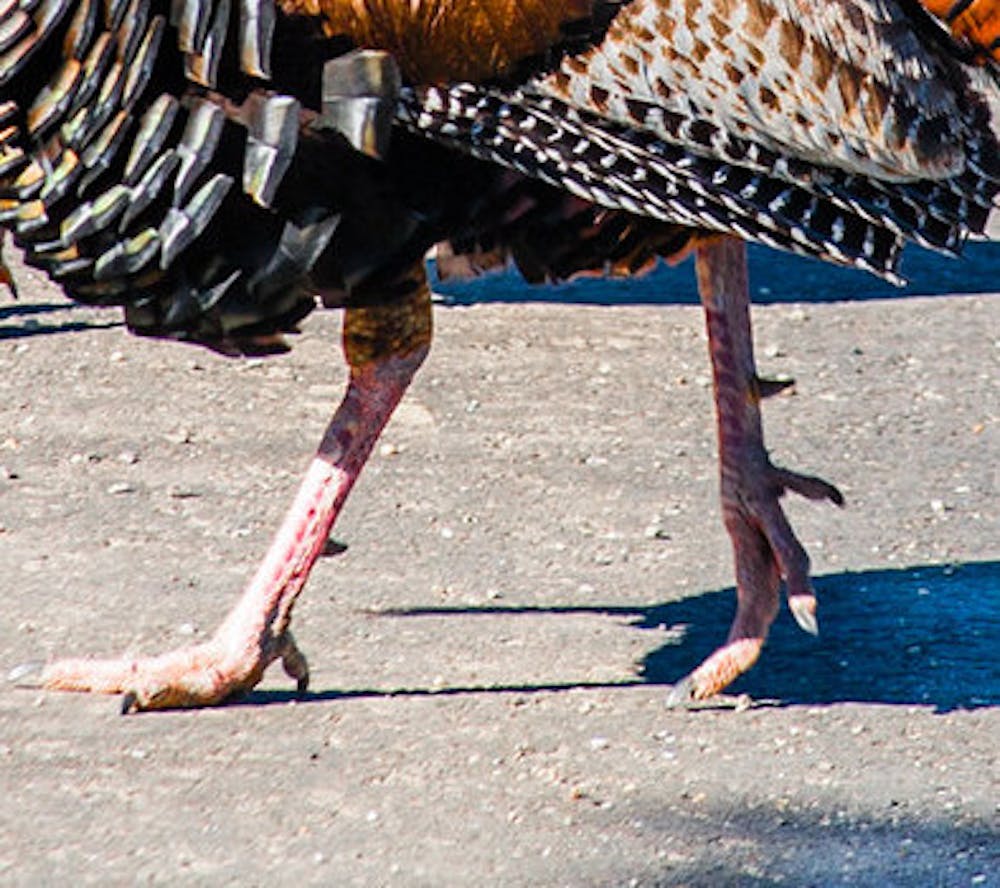
About 170 species – less than 2% of all existing avian species – possess spurs on their legs or wings. Spurred legs are only found on landfowl – birds that mostly feed on the ground – including turkeys, pheasants, peacocks and many of their relatives.
Two roosters fight for territory in Kauai, Hawaii, using their leg spurs to strike each other.
Wing spurs are less common and more dispersed across bird species. Examples include lapwings, jacanas, sheathbills and some ducks, geese and doves. Wing spurs are typically located on the bird’s wrists and vary in form from blunt knobs to sharp spikes.
For the purpose of testing the fight-or-flight idea, it’s good news that some species carry weapons. This allows us to analyze our expectation that spurs should be found more often in species that depend less on flight than on those that fly frequently.
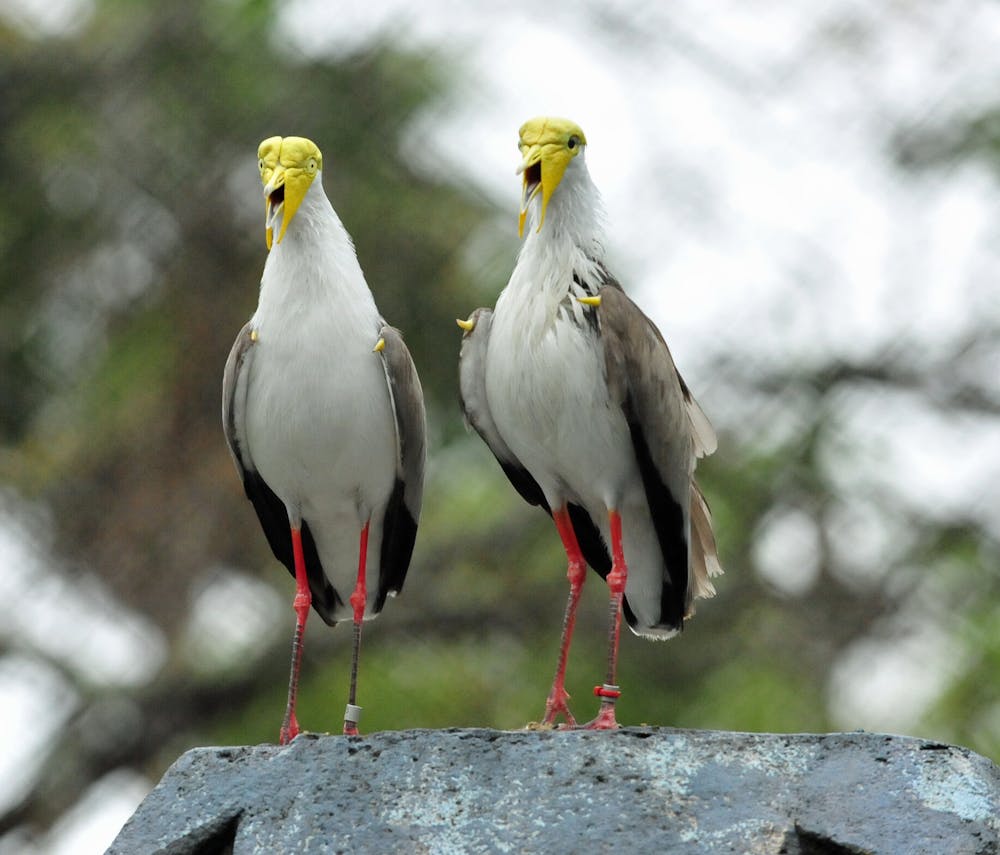
Masked lapwings have yellow spurs on the carpal joints of their wings.
Luckily, we were able to draw on a global data set of the hand-wing index – a metric of wing shape that scientists use to quantify how well various bird species are adapted for flight and hence, presumably, how much they depend on it. This information was recently made available for every living bird species.
Our findings showed clear connections across bird species between the presence of spurs and flight behavior. On average, species that depend more on flight have fewer or no spurs. Among species that do have spurs, longer spurs tend to appear in larger-sized species.
Using evolutionary models, we also looked back at the historical process that led to this current fight-or-flight situation. We found that species that depended more on flight were more likely to lose spurs over time than species that flew only occasionally. In other words, the absence of spurs on most birds today is likely the result of species that were frequent flyers losing spurs, not occasional flyers gaining them.
Many bird species rely on some combination of plumage, songs and dances to attract mates rather than fighting.
[Over 150,000 readers rely on The Conversation’s newsletters to understand the world.Sign up today.]
We shouldn’t expect these cases to be the rule, though. That’s because claws and bills are essential for other tasks like foraging, feeding, thermoregulating, preening and anchoring. In contrast, spurs’ and antlers’ only function is to fight. Using claws and bills in combat can mean compromising other essential functions. For example, in 2017, Chinese engineers designed a titanium alloy bill for a captive crane that broke its bill during a fight and consequently lost the ability to feed without human help.
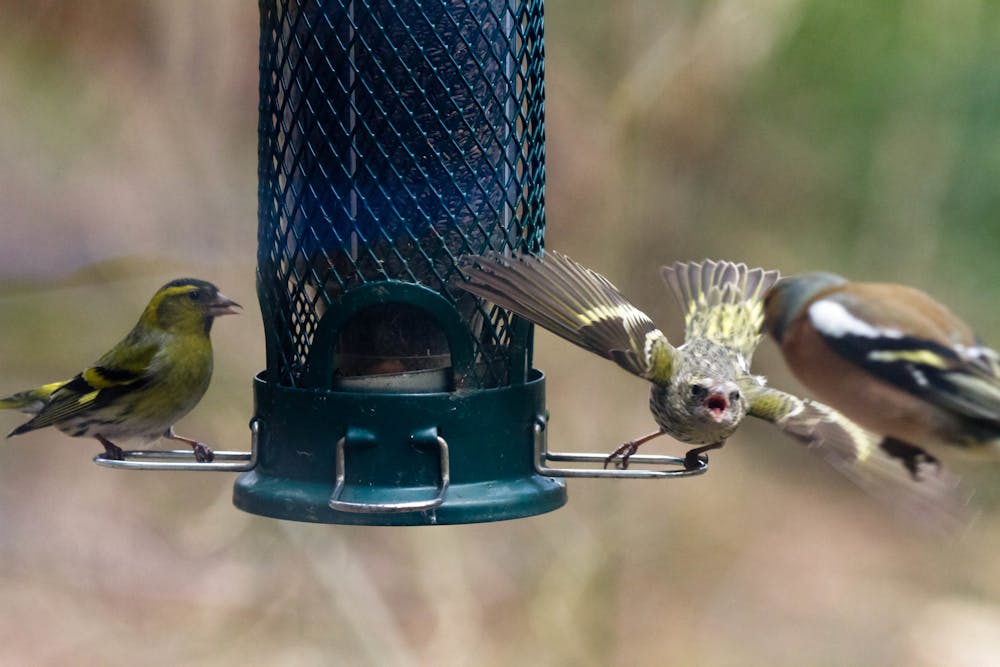
Competition for space at feeders doesn’t usually involve actual combat.
If most birds can neither bear spurs because they compromise flight nor risk features such as their bills because they are essential for other tasks, the solution may be to avoid physical combat as much as possible. Indeed, many birds defend territories primarily by singing or showing off ornaments. Flight preventing the evolution of weapons may thus help explain the striking colors, dances and songs that we find across birds.
The next time you’re outdoors and hear two birds screaming their lungs out at each other instead of fighting, remember that peace might be the only option evolution gave them.
This article has been updated to clarify that deer have antlers, not horns.
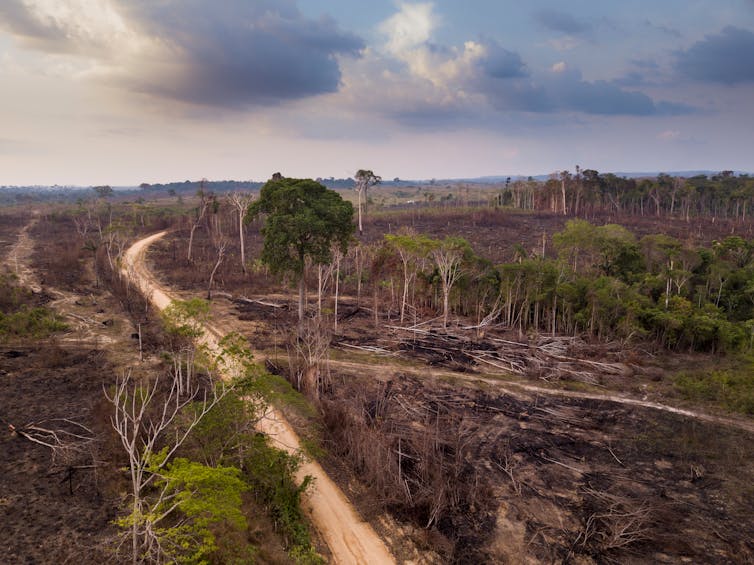
Sprawling 5.5 million square kilometres, the Amazon rainforest is the largest of its kind and home to about one in ten of all known species. To date, at least 40,000 plants, 2,200 fish, 1,200 birds, 400 mammals, 400 amphibians, and 375 reptiles have been scientifically classified in the region, not to mention nearly 2.5 million insect species.
The Amazon has existed as a dense and humid rainforest teeming with life for at least 55 million years. But in a new paper, scientists claim that over 75% of the ecosystem has been losing resilience since the early 2000s due to climate change. This process appears to be most prominent in areas that are closer to human activity, as well as in those receiving less rainfall.
The resilience of an ecosystem – its capacity to maintain usual processes like the regrowth of vegetation following drought – is a notoriously difficult concept for scientists to measure. In this paper, the authors analysed satellite images of remote areas of rainforest across the Amazon from 1991 to 2016. Using a measurement called vegetation optical depth, they suggested that forest biomass (the total weight of organisms in a given area) is taking longer to recover in these places as stresses mount.
This, they argue, suggests that longer dry seasons and drier conditions caused by climate change are undermining the rainforest’s ability to recover from successive droughts. The authors note, for example, that drought-sensitive tree species are being replaced with drought-resistant ones at a much slower rate compared with rapid changes in the regional climate.
This could mean that the Amazon is approaching a tipping point which, if passed, would lead to the collapse of the rainforest into a dry grassland or savanna.
Does this new research present a credible warning? Here’s what the evidence tells us.
Critical slowing down
As an ecosystem becomes less resilient, it is less capable of springing back from droughts and other sources of stress. This is known as “critical slowing down”.
If stresses continue, it becomes more likely that the ecosystem will reach a point where it abruptly changes to a new state. In other words, critical slowing down can act as an early warning signal of impending collapse.
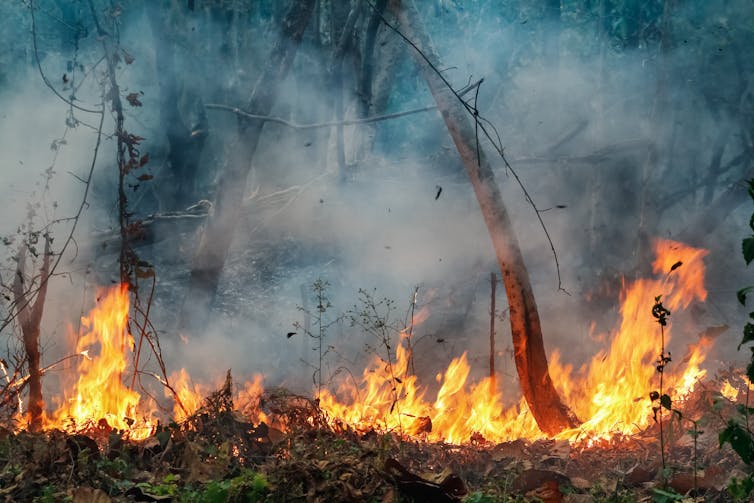
Prolonged droughts have made tracts of the Amazon more vulnerable to fires.
The satellite data used by the authors is perhaps a better measure of the water content of trees within the Amazon, rather than their biomass. Instead of losing trees, the patches of rainforest the authors studied could simply be drying out as dry seasons expand and droughts proliferate, which is what scientists have documented in the Amazon in recent decades.
However, research on rainforest plots reported elsewhere support the new study’s claim that biomass in the rainforest is taking longer to recover from stress. Trees are dying more often and growing back slower, contributing to an overall reduction in total biomass in the Amazon, according to measurements taken over the same period.
The fate of the Amazon
The new paper presents further evidence that the vegetation of the Amazon is changing. These changes may indicate that the rainforest is losing resilience or perhaps that seasons are becoming increasingly dry with more frequent droughts.
It is not possible to identify from these results when a critical transition might come about, or whether one is already underway. The question of whether the Amazon is reaching a tipping point which could flip it into another state remains unanswered.
This paper studied the impact of climate change on the rainforest in the form of longer and drier droughts. But scientists know that road-building and expanding farmland are also severe sources of stress. If the critical threshold beyond which the Amazon risks collapse has not yet been crossed, the combined effects of these may mean it occurs sooner than you might expect by looking at one stress in isolation. Once the transition has started, it may take only a few decades for the Amazon reach a new state.
The new research underlines the need to reverse global greenhouse emissions, reduce local pressure on the rainforest and conserve habitats to counteract the effects of a drier climate. Otherwise, we may be the last generation privileged enough to share a planet with these ecosystems.
The coronavirus pandemic is now stretching into its third year, a grim milestone that calls for another look at the human toll of covid-19, and the unsteady progress in containing it. The charts below tell various aspects of the story, from the deadly force of the disease and its disparate impact to the signs of political polarization and the United States’ struggle to marshal an effective response. Covid rocketed up the list of leading killers in the U.S. like nothing in recent memory. The closest analogue was HIV and AIDS, which ranked among the top 10 causes of death from 1990 to 1996. But ...
Chad Hardee knows many people who went through what he went through aren’t alive to talk about it. Hardee spent nearly six months hospitalized with COVID-19. He suffered two strokes, COVID-induced pneumonia, a medically induced coma and several months wiped from his memory. More than a year after his initial infection, he’s still not back to the person he was before the coronavirus. That’s the case for many so-called COVID-19 long-haulers in Horry County, South Carolina, and across the country. Hardee’s lung capacity is still only at 38%. Michelle Ford can’t taste or smell her food. Robert Bel...
Aside from saving human lives in the immediate moment, the other fundamental reason that public health officials were pushing mass vaccination to slow the spread of COVID-19 is because the more hosts in which a virus resides, the more likely the virus is to eventually mutate into something more virulent. Obviously, that has happened at least twice so far with SARS-CoV-2: first with the ultra-contagious delta variant, and then later with the even more contagious omicron variant.
Currently, the number of human hosts in the U.S. is waning as the omicron wave falls from its peak. If we are lucky, that may imply that this wave of infections is over, and while the coronavirus will continue to circulate (and mutate) as it becomes endemic, it would have fewer hosts in which to do so.
Ominously, the infection trend may now be going the other way. A recent Canadian study raises the possibility that deer — one of the most ubiquitous large mammals in North America — may have infected humans with COVID-19, the disease caused by SARS-CoV-2. That would imply the virus circulated for a while in deer, reproducing and occasionally mutating on its way, before jumping back into people.
The new study provides evidence that deer may have infected humans, although it is not definitively proven. Conducted by more than two dozen scientists across Ontario and posted on the database bioRxiv (it has not yet been peer reviewed), the study included 300 samples from white-tailed deer in Canada during the final months of 2021. Seventeen of those deer tested positive for SARS-CoV-2, all of them from southwestern Ontario. The scientists discovered that this same strain of SARS-CoV-2, which is highly divergent from other known strains, was also highly similar to a SARS-CoV-2 virus that had infected a human. (It was also closely related to a strain found among humans in Michigan in late 2020.) While the scientists cannot confirm that the virus had been transmitted to the human by a deer, they know that the human lived in the same geographic area as deer and had been in close contact with deer during the same time when the infected samples were collected.
Want more health and science stories in your inbox? Subscribe to Salon's weekly newsletter The Vulgar Scientist.
That said, the sample size is very small and no one has definitively proved that the deer gave the virus to the human. There is also no evidence that the person with the mutant SARS-CoV-2 virus passed it on to anyone else, and initial experiments suggests the new virus would not be able to evade antibodies. In other words, if it did spread among people, individuals who are vaccinated would likely be safe.
Finally, because the deer-based SARS-CoV-2 virus is such an unknown, there is no reason to believe yet that it presents any kind of increased risk to humans. The bigger concern is that, because viruses can evolve in animals, there is the possibility that it could turn into something more dangerous.
"The virus is evolving in deer and diverging in deer away from what we are clearly seeing evolving in humans," Samira Mubareka, a virologist at Sunnybrook Research Institute and the University of Toronto and an author of the new paper, told The New York Times. After fully sequencing the genomes from five of the infected deer, the scientists discovered many mutations that had not been previously documented. They also found 76 mutations that set the new version of SARS-CoV-2 from the original version of the virus. Some of those mutations had been previously discovered in other infected animals like mink.
Shortly before this study was published, a separate group of scientists announced that Pennsylvania deer may have continued to be infected with the Alpha variant even after it disappeared in humans — and that it evolved within them as they continued to spread it. This further reinforces the concern about deer incubating SARS-CoV-2 viruses.
The SARS-CoV-2 virus is believed to have originated in in a horseshoe bat. At some point, the virus is thought to have been transmitted to another animal through one or many "spillover events," and then eventually found its way to a human host. Bats are notorious for serving as hosts to dangerous coronaviruses because their immune systems are unusually aggressive. This means that viruses which live in bats need to evolve and replicate more quickly in order to survive.
"The bottom line is that bats are potentially special when it comes to hosting viruses," Mike Boots, a disease ecologist and UC Berkeley professor of integrative biology, told Science Daily in 2020. "It is not random that a lot of these viruses are coming from bats. Bats are not even that closely related to us, so we would not expect them to host many human viruses. But this work demonstrates how bat immune systems could drive the virulence that overcomes this."
If you have ever been close with a dog, the chances are that you have wondered what your canine companion might be thinking. As time goes on and your relationship grows — whether as a primary owner, a family member or an occasional visitor — you will probably ask yourself if the dog remembers you. Like our human friends and family, we would like to think that, even if we are not in the room, dogs still think about us.
Scientists agree dogs are intelligent, emotional and capable of forming lasting relationships with humans. While there is robust debate about the extent to which this is true, animals like Bunny the "talking" sheepadoodle are able to communicate in such a sophisticated manner that they will even discuss their dreams.
The bad news is that, just like humans, dogs can develop degenerative nerve diseases which damage their minds. One illness in particular has a direct analogue in dogs: Alzheimer's disease. Dogs, sadly, can develop a similar condition — and tragically, that might mean that your dog could suffer some of the same sad Alzheimer's-like conditions, such as forgetting its close family, in its final days.
"Canine Cognitive Dysfunction [CCD] mirrors two key components of Alzheimer's disease in humans," Dr. Silvan Urfer of the Dog Aging Project and the University of Washington told Salon by email. It comes down to a pair of amino acids that will suddenly accumulate in your brain: Amyloid-beta 42 and hyperphosphorylated Tau (pTau). "While there are likely a few differences regarding the details of pTau pathology in particular, it is fair to say that CCD is the dog analog of Alzheimer's Disease," Urfer noted.
Dr. Elizabeth Head, a professor in the Department of Pathology & Laboratory Medicine at the University of California, Irvine, told Salon in writing that in addition to developing these beta-amyloid plaques — one of the hallmark features of Alzheimer disease — the dogs also suffer like humans, in that neurons die. The synapses, or connections between neurons, are lost, and these are observed in humans who as they age suffer from cognitive decline.
"From a psychological perspective dogs may show signs of disrupted sleep patterns (e.g. up pacing at night), more vocalizing, [being unable to] remember how to signal to go out and may have trouble recognizing family members," Head explained. "This can lead to more anxiety. From a physical perspective, there may be more episodes of incontinence but oftentimes other physical problems are ruled out with the CCD diagnosis (e.g. deafness, blindness, systemic illness)."
Indeed, the similarities between CCD and human dementia are so striking that researchers believe man's best friend could actually help him find a cure for the debilitating ailment. There is a nationwide study known as The Dog Aging Project — which was launched by Cornell University, the University of Washington and the University of Arizona and funded by the National Institute on Aging — which exists precisely because scientists are intrigued by those similarities. They believe that learning more about how to help dogs with the condition can, in the process, provide research data that helps fight human diseases related to senescence.
"What we're trying to do is find a better understanding of the disease in dogs and translate those findings to humans," Dr. Marta Castelhano, director of the Cornell Veterinary Biobank and one of the involved scientists, told Cornell News at the time.
Until a cure for CCD exists, the sad reality is that dogs and humans alike who experience cognitive decline will be left to manage their symptoms to the best of their ability. When speaking with Salon, Urfer stressed that he is "not providing veterinary advice on individual dogs, as there is no vet-patient-client relationship here." People who are concerned about their dogs should consult a veterinarian. What we do know for sure, however, is that causal treatments do not exist for CCD. All we know is that there are certain physical characteristics that make dogs more or less likely to be at risk.
"We know that bigger dogs have a lower risk of developing CCD than small dogs, and there is also some evidence that intact males have a lower CCD risk than neutered males, and that existing CCD progresses faster in neutered than in intact males," Urfer explained. "This is interesting in that it also mirrors findings from human medicine that taller people are less likely to get Alzheimer's disease, and that men who undergo anti-androgen treatment for prostate cancer have an increased Alzheimer's disease risk."
If your dog is healthy now, then the best thing to do is make sure they stay healthy. That can prevent CCD from developing. It is the exact same as the approach for homo sapiens.
"The best approach is always prevention – ensure good physical health (e.g. keep up with dentals), exercise, lots of social and cognitive enrichment, and a good diet, manage co-occuring conditions (e.g. obesity) – just like for people!" Head told Salon.
Research published in the journal Depression & Anxiety provides evidence that neurocognitive abnormalities are related to difficulties in social connection among people with posttraumatic stress disorder. The findings suggest that those with PTSD are more likely to struggle with managing multiple pieces of social information. Approximately 7% of the population will have PTSD at some point in their lives, according to the National Institute of Mental Health. The disorder is characterized by persistent and intrusive memories of traumatic events, disrupted sleep, and other symptoms. PTSD has also...
Behind some of the most fascinating scientific discoveries and innovations are women whose names might not be familiar but whose stories are worth knowing.
Of course, there are far too many to all fit on one list.
But here are five profiles from The Conversation’s archive that highlight the brilliance, grit and unique perspectives of five women who worked in geosciences, math, ornithology, pharmacology and physics during the 20th century.
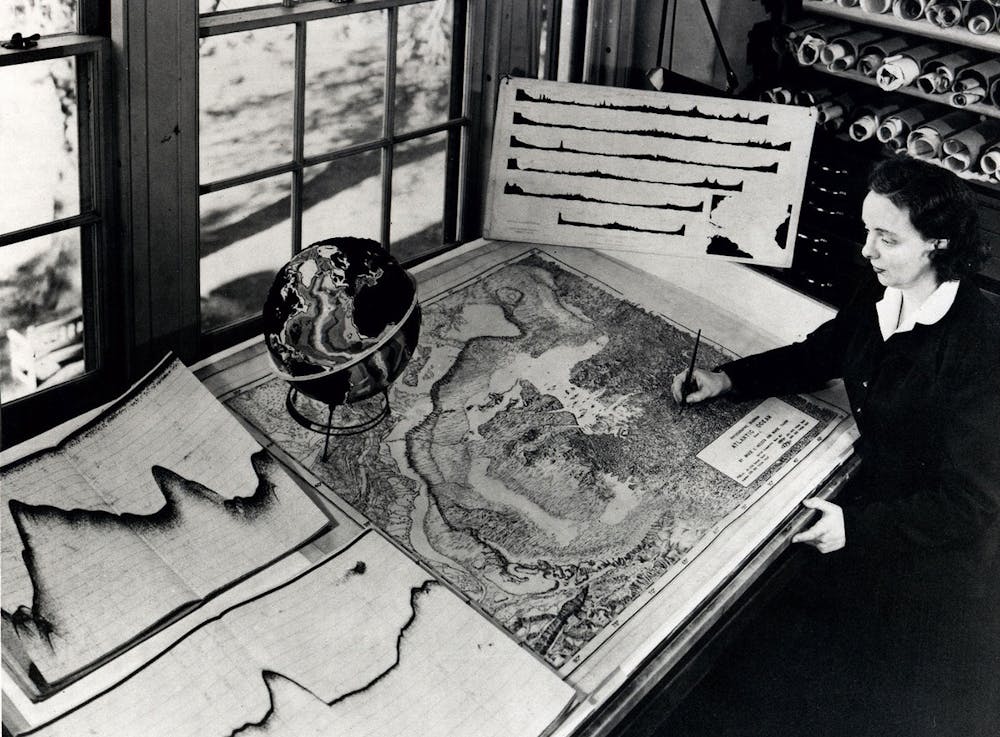
Marie Tharp with an undersea map at her desk. Rolled sonar profiles of the ocean floor are on the shelf behind her.
As late as the 1950s, wrote Wesleyan University geoscientist Suzanne OConnell, “many scientists assumed the seabed was featureless.”
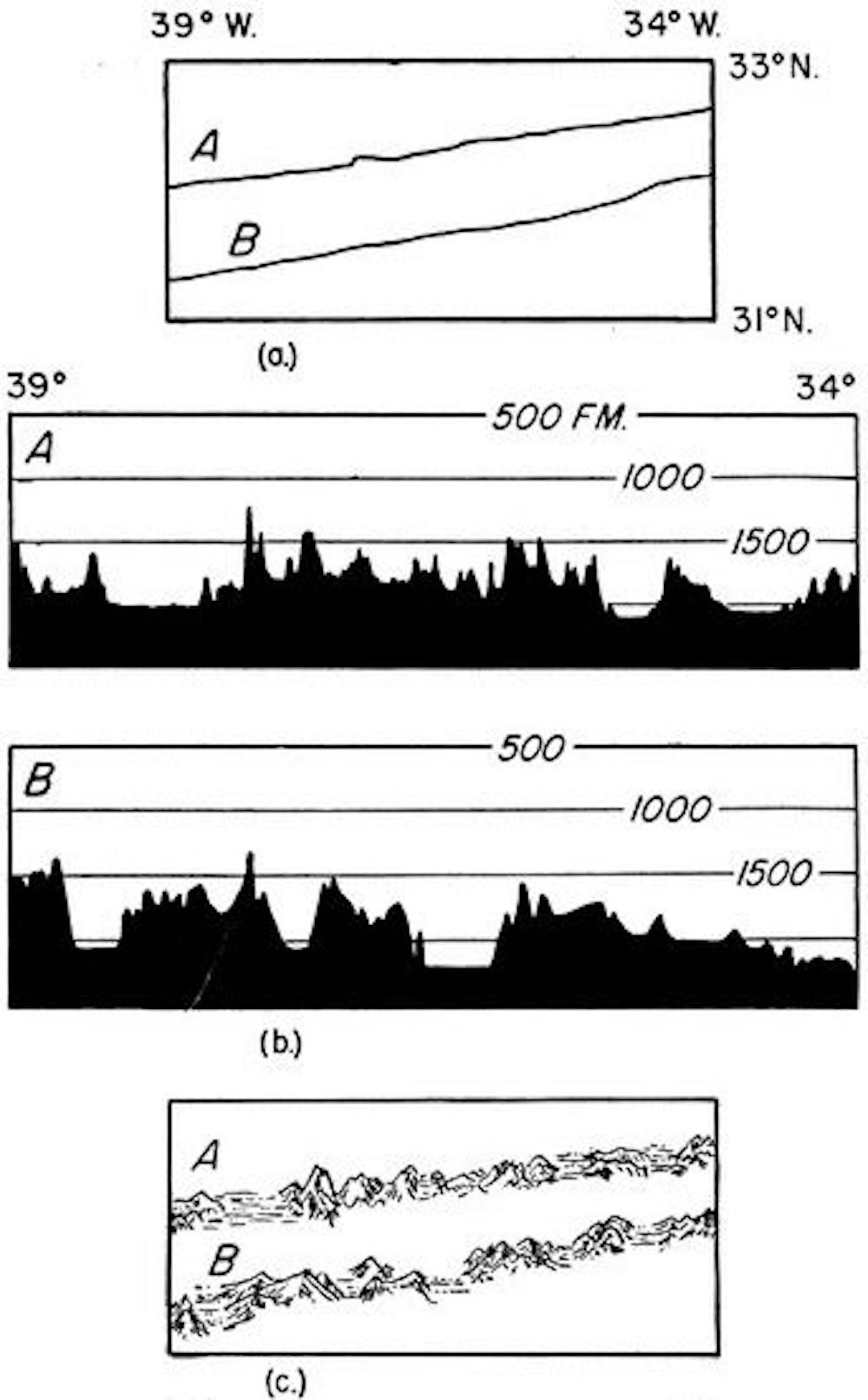
An illustration of Marie Tharp’s mapping process. (a) Shows the position of two ship tracks (A, B) moving across the surface. (b) Plots depth recordings as profiles. (c) Sketches features shown on the profiles.
Enter Marie Tharp. In 1957, she and her research partner started publishing detailed hand-drawn maps of the ocean floor, complete with rugged mountains, valleys and deep trenches.
Tharp was a geologist and oceanographer. Aboard research ships, she would carefully record the depth of the ocean, point by point, using sonar. One of her innovations was to translate this data into topographical sketches of what the seafloor looked like.
Her discovery of a rift valley in the North Atlantic shook the world of geology – her supervisor on the ship dismissed her idea as “girl talk,” and Jacques Cousteau was determined to prove her wrong. But she was right, and her insight was a key contribution to plate tectonic theory. That’s part of why, OConnell writes, “I believe Tharp should be as famous as Jane Goodall or Neil Armstrong.”
2. Sympathetic observation of bird behavior
Margaret Morse Nice was a field biologist who got into the minds of her study subjects to garner new insights into animal behavior. Most famously she observed song sparrows in the 1920s and ‘30s.
Rochester Institute of Technology professor of science, technology and society Kristoffer Whitney recounted what Nice called her “phenomenological method,” acknowledging the obvious “affection and anthropomorphism” you can see in her descriptions.
“When I first studied the Song Sparrows,” Nice wrote, “I had looked upon Song Sparrow 4M as a truculent, meddlesome neighbor; but … I discovered him to be a delightful bird, spirited, an accomplished songster and a devoted father.”
Despite earning no advanced degrees and being considered an amateur, Nice promoted innovations like the “use of colored leg bands to distinguish individual birds,” gained the respect of her better-known peers and enjoyed a long, successful career.
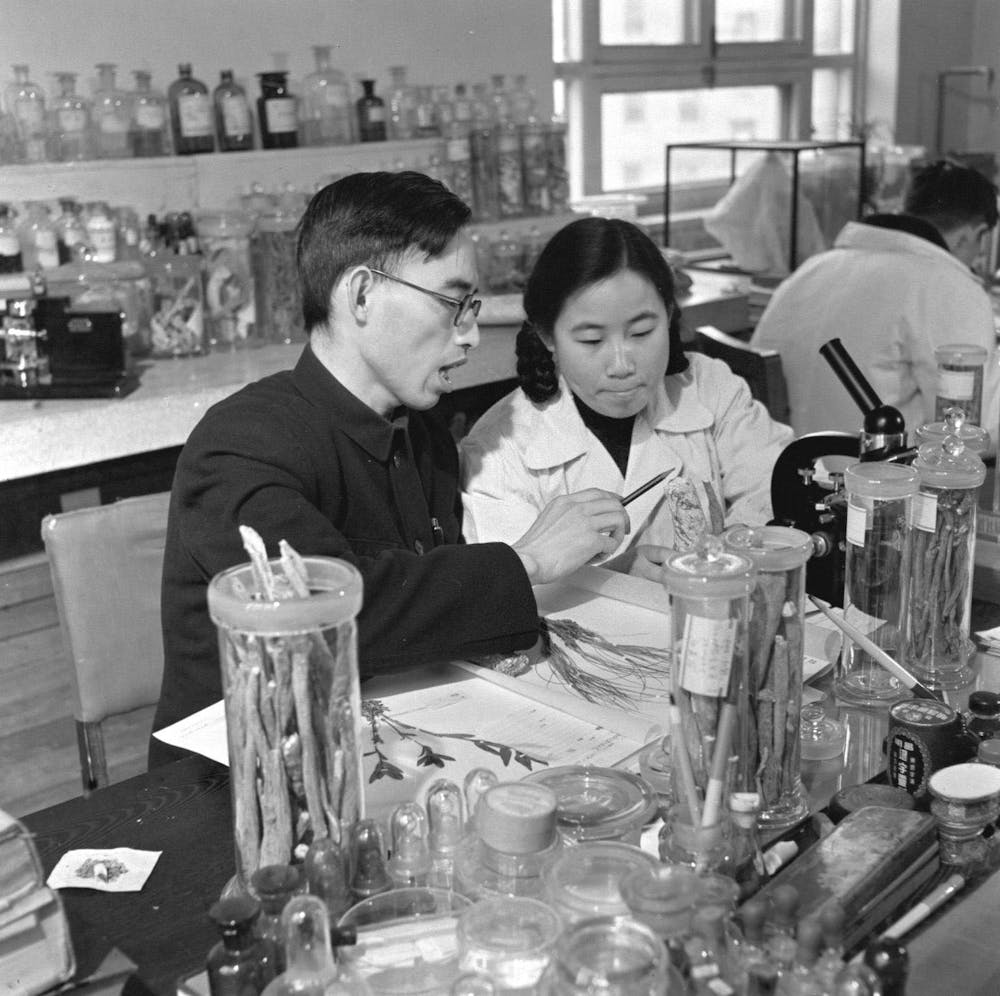
At the height of China’s Cultural Revolution, a young scientist named Tu Youyou headed a covert operation called Project 523 under military supervision. One of her team’s goals was to identify and systematically test substances used in traditional Chinese medicine in an effort to vanquish chloroquine-resistant malaria.
Tu followed a hunch about how to extract an antimalarial compound from the qinghao or artemisia plant. By 1971, her team had successfully “obtained a nontoxic and neutral extract that was called qinghaosu or artemisinin.” In 2015, she was honored with a Nobel Prize.
4. A mathematician who wouldn’t be diverted
Not everyone gets called a “creative mathematical genius” by Albert Einstein. But Emmy Noether did.
All the while, she conducted her own research in theoretical physics, contributing to Einstein’s theory of relativity. Her most revolutionary work was in ring theory and is still pondered by mathematicians today.
Noether died less than two years after emigrating to the U.S. to escape the Nazis.
5. Testing nuclear theories one by one
A 2021 U.S. postage stamp featuring Chien-Shiung Wu.
While sometimes called the “Chinese Marie Curie” in her home country, nuclear physicist Chien-Shiung Wu is less well-known in the U.S., where she did the bulk of her work. Rutgers University-Newark physicist Xuejian Wu considered Chien-Shiung Wu (no relation) “an icon” who inspired his own career path.
As a grad student, Wu traveled by steamship to California in 1936, where she fell in love with atomic nuclei research at UC Berkeley, home of a brand new cyclotron. She worked on the Manhattan Project during World War II.
Among her many accomplishments, Wu’s careful experimental work discovered what’s called parity nonconservation – that is, that a physical process and its mirror reflection are not necessarily identical. Her colleagues who focused on the theoretical side of this breakthrough won the 1957 Nobel Prize in physics, but Wu was overlooked.
Editor’s note: This story is a roundup of articles from The Conversation’s archives.
The macaques of Japan’s Koshima Island are a clever bunch. Well known for performing some remarkably complex tasks, such as washing sweet potatoes and filtering wheat from sand in the seawater, they’ve even been spotted catching live octopuses from the sea.
During continuous observations the macaques’ unique skills were seen rapidly spreading through the population and provided some of the first evidence of local habits in animals.
I recently visited the Primate Research Institute at Kyoto University to study the teeth remains of macaques who had died naturally on Koshima Island, one of the longest running primatological field sites in the world.
It was part of a project to create a database of tooth wear and dental disease in wild primates – but I very quickly noticed something extremely unexpected. All the deceased macaques had identical – and very unusual – tooth wear for a primate. And not only that, it seemed remarkably similar to the tooth wear commonly found in hominin (humans and our closely related ancestors) fossil samples. I knew I had to investigate further.
Through collaborations with local primatologists, and experts in studying microscopic features on tooth surfaces, we studied the tooth remains of 32 individuals in more detail, recording the overall tooth wear, fractures and pathologies. This allowed us to directly compare the features on the tooth’s surface with published examples in hominin fossils.
Surprising toothy similarities
“Toothpick” grooves on back teeth and large vertical scratches on front teeth are thought to be unique to hominins, and most likely caused by distinctive tool use. The markings are used as evidence for the earliest forms of cultural habits identified during human evolution.
But as my colleagues and I found these same types of unusual tooth wear in the preserved teeth of the deceased wild Koshima macaques, we set out to try to explain the similarities using a combination of extensive literature and ongoing field observations.
In fossil hominin samples, the large scratches on front teeth are typically considered to be caused by a type of behaviour called “stuff and cut” in which an item, such as an animal hide, is held between the front teeth and a stone tool used to slice portions off.
Accidental contact of the stone tool with the outside of the front teeth causes the marks, and it’s suggested that by studying the orientation and concentration of scratches in different areas of these teeth, insight into right or left handedness can be gleaned.
Similarly, because “toothpick” grooves commonly form between back teeth, and long thin parallel scratches are often found within these grooves, it has long been considered that these grooves must be caused by a tool being placed into the gap between teeth and repeatedly moved back and forward to remove food debris or alleviate discomfort (hence the name toothpick grooves).
But there is no evidence for these types of tool use in Koshima Island macaques, or indeed any behaviour that could be considered habitual tool use. Instead this wear is likely caused by eating shellfish and accidentally chewing and consuming sand. The macaques were frequently observed picking up food from sandy beaches – and despite their attempts to wash the sand off, some does still get chewed as there is sand in their faeces.
Shellfish are also regularly eaten, and the macaques use their front teeth to both dislodge them from rocks and to scoop out the contents. These behaviours likely cause this extreme wear, due to the sand, hard shells and rock coming directly into contact with different tooth surfaces on a regular basis.
It is easy to imagine how large parallel scratches could form when biting down on foods covered in sand, or when attempting to dislodge and consume shellfish with no tools.
Why the root grooves and markings within the grooves should form on back teeth when sand or grit is chewed needs further research, but is probably due to small hard particles passing over these surfaces during the mastication cycle and during swallowing.
Implications for human evolution
So, it seems that normal chewing and food processing can cause these sorts of wear patterns without the need to infer complex and habitual tool use.
And as there are even more dental similarities between fossil hominin samples and this macaque group at the microscopic level – as well as high rates of tooth chipping, extreme overall tooth wear and the bevelled appearance of front teeth – it has to be considered that there is a common cause that is nothing to do with tool use at all.
Of course, it is the case that humans have been using tools for a long time, evident by the substantial number of stone tools found throughout human evolution. But this does not mean that they were responsible for the unusual wear found on hominin teeth.
In fact, there is growing evidence for grit mastication, and marine molluscs are also thought to have been consumed. If the fossil hominin tooth wear is caused by eating behaviour, then studying their tooth wear in more depth may give vital insight into dietary and behaviour changes during human evolution. And studying living primates today could continue to offer crucial clues that have been overlooked in the past.
The first time I reached past the sheer horror of the concept of death and wondered what the experience of dying may be like, I was about 15. I had just discovered gruesome aspects of the French revolution and how heads were neatly cut off the body by a Guillotine.
Words I remember to this day were the last of Georges Danton on April 5, 1794, who allegedly said to his executioner: “Show my head to the people, it is worth seeing.” Years later, having become a cognitive neuroscientist, I started wondering to what extent a brain suddenly separated from the body could still perceive its environment and perhaps think.
Danton wanted his head to be shown, but could he see or hear the people? Was he conscious, even for a brief moment? How did his brain shut down?
On June 14, 2021, I was violently reminded of these questions. I set off to Marseille, France, having been summoned to Avignon by my mother because my brother was in a critical state, a few days after being suddenly diagnosed with terminal lung cancer. But when I landed, I was told my brother had passed away four hours ago. An hour later, I found him perfectly still and beautiful, his head slightly turned to the side as if he was in a deep state of sleep. Only he was not breathing anymore and he was cold to the touch.
No matter how much I refused to believe it on that day, and during the several months that followed, my brother’s extraordinarily bright and creative mind had gone, vaporised, only to remain palpable in the artworks he left behind. Yet, in the last moment I was given to spend with his lifeless body in a hospital room, I felt the urge to speak to him.
And I did, despite 25 years of studying the human brain and knowing perfectly well that about six minutes after the heart stops, and the blood supply to the brain is interrupted, the brain essentially dies. Then, deterioration reaches a point of no return and core consciousness – our ability to feel that we are here and now, and to recognise that thoughts we have are own own – is lost. Could there be anything of my beloved brother’s mind left to hear my voice and generate thoughts, five hours after he had passed away?
Some scientific experiments
Experiments have been conducted in an attempt to better understand reports from people who have had a near death experience. Such an event has been associated with out-of-body experiences, a sense profound bliss, a calling, a seeing of a light shining above, but also profound bursts of anxiety or complete emptiness and silence. One key limitation of studies looking into such experiences is that they focus too much of the nature of the experiences themselves and often overlook the context preceding them.
Some people, having undergone anaesthesia while in good shape or having been involved in a sudden accident leading to instant loss of consciousness have little ground to experience deep anxiety as their brain commences to shut down. On the contrary, someone who has a protracted history of a serious illness might be more likely to get a rough ride.
It isn’t easy to get permissions to study what actually goes on in the brain during our last moments of life. But a recent paper examined electrical brain activity in an 87-year-old man who had suffered a head injury in a fall, as he passed away following a series of epileptic seizures and cardiac arrest. While this was the first publication of such data collected during the transition from life to death, the paper is highly speculative when it comes to possible “experiences of the mind” that accompany the transition to death.
The researchers discovered that some brain waves, called alpha and gamma, changed pattern even after blood had stopped flowing to the brain. “Given that cross-coupling between alpha and gamma activity is involved in cognitive processes and memory recall in healthy subjects, it is intriguing to speculate that such activity could support a last ‘recall of life’ that may take place in the near-death state,” they write.
However, such coupling is not uncommon in the healthy brain – and does not necessarily mean that life is flashing before our eyes. What’s more, the study did not answer my basic question: how long does it take after the cessation of oxygen supply to the brain for the essential neural activity to disappear? The study only reported on brain activity recorded over a period of about 15 minutes, including a few minutes after death.
In rats, experiments have established that after a few seconds, consciousness is lost. And after 40 seconds, the great majority of neural activity has disappeared. Some studies have also shown that this brain shutdown is accompanied by a release of serotonin, a chemical associated with arousal and feelings of happiness.
But what about us? If humans can be resuscitated after six, seven, eight or even ten minutes in extreme cases, it could theoretically be hours before their brain shuts down completely.
I have come across a number of theories trying to explain why life would be flashing before someone’s eyes as the brain prepares to die. Maybe it is a completely artificial effect associated with the sudden surge of neural activity as the brain begins to shut down. Maybe it is a last resort, defence mechanism of the body trying to overcome imminent death. Or maybe it is a deeply rooted, genetically programmed reflex, keeping our mind “busy” as clearly the most distressing event of our entire life unfolds.
My hypothesis is somewhat different. Maybe our most essential existential drive is to understand the meaning of our own existence. If so, then, seeing one’s life flashing before one’s eye might be our ultimate attempt – however desperate – to find an answer, necessarily fast-tracked because we are running out of time.
And whether or not we succeed or get the illusion that we did, this must result in absolute mental bliss. I hope that future research in the field, with longer measurements of neural activity after death, perhaps even brain imaging, will provide support for this idea – whether it lasts minutes or hours, for the sake of my brother, and that of all of us.