Top Stories Daily Listen Now
RawStory

Science

Political polarization is affecting mental health, and patients want therapists who share their views

As a psychiatrist, I’ve never talked so much about politics with my patients as I have in the past two years.

It was surprising, though, when the conversations started to shift from more abstract concepts to concrete questions about my personal views on politically charged topics. Patients began to ask about my views on COVID-19 controversies, Donald Trump’s mental health, freedom of speech, the Black Lives Matter movement and neutral pronouns.

Keep reading... Show less

Solar storms can destroy satellites with ease – a space weather expert explains the science

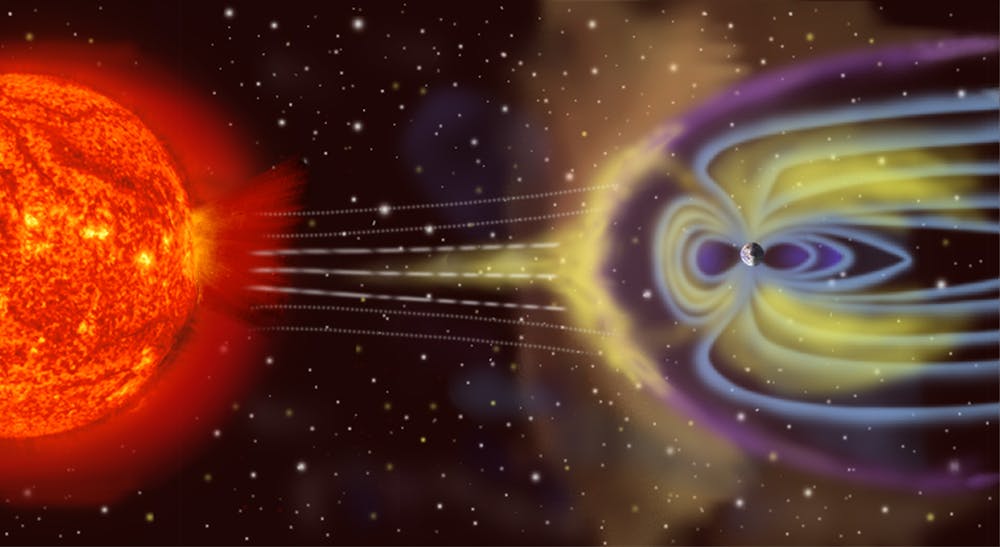
On Feb. 4, 2022, SpaceX launched 49 satellites as part of Elon Musk’s Starlink internet project, most of which burned up in the atmosphere days later. The cause of this more than US$50 million failure was a geomagnetic storm caused by the Sun.

Geomagnetic storms occur when space weather hits and interacts with the Earth. Space weather is caused by fluctuations within the Sun that blast electrons, protons and other particles into space. I study the hazards space weather poses to space-based assets and how scientists can improve the models and prediction of space weather to protect against these hazards.

When space weather reaches Earth, it triggers many complicated processes that can cause a lot of trouble for anything in orbit. And engineers like me are working to better understand these risks and defend satellites against them.

Keep reading... Show less

How warfare and nuclear power are a volatile combination


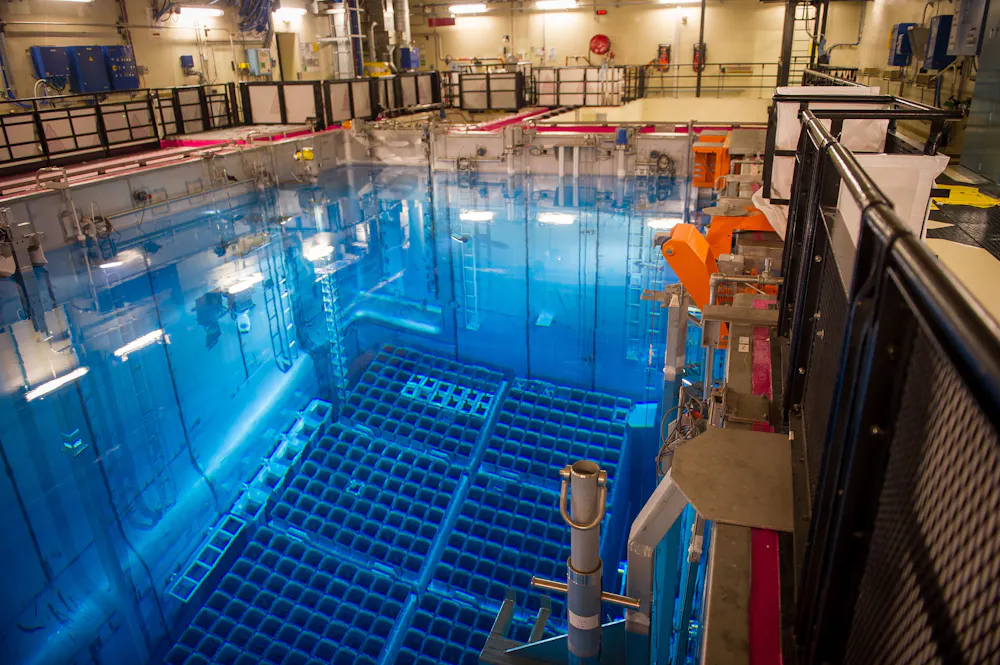
The Conversation asked Najmedin Meshkati, a professor and nuclear safety expert at the University of Southern California, to explain the risks of warfare taking place in and around nuclear power plants.

How safe was the Zaporizhzhia power plant before the Russian attack?

The facility at Zaporizhzhia is the largest nuclear plant in Europe, and one of the largest in the world. It has six pressurized water reactors, which use water to both sustain the fission reaction and cool the reactor. These differ from the reaktor bolshoy moshchnosty kanalny reactors at Chernobyl, which used graphite instead of water to sustain the fission reaction. RBMK reactors are not seen as very safe, and there are only eight remaining in use in the world, all in Russia.

Keep reading... Show less

Animals have evolved to avoid overexploiting their resources – can humans do the same?

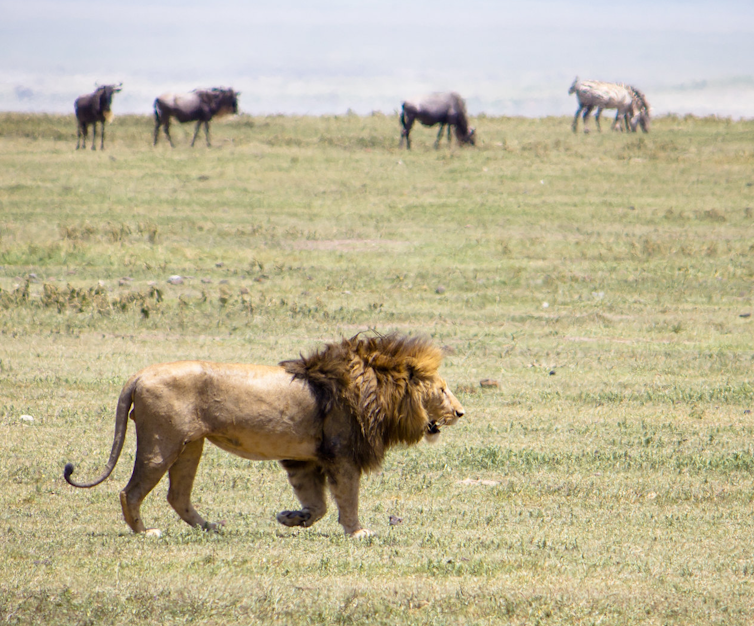
People have been trying to understand how predators and prey are able to stay balanced within our planet’s ecosystems for at least 2,400 years. The Greek author Herodotus even raised the question in his historical treatise “Histories”, written around 430 BC.

And when Charles Darwin published in 1859 his revolutionary theory of evolution in “On the Origin of Species”, this raised an even more difficult question: why do predators not evolve to become so aggressive that they eat all their prey and then go extinct themselves?

Keep reading... Show less

Future evolution: from looks to brains and personality, how will humans change in the next 10,000 years?

READER QUESTION: If humans don’t die out in a climate apocalypse or asteroid impact in the next 10,000 years, are we likely to evolve further into a more advanced species than what we are at the moment? Harry Bonas, 57, Nigeria

Humanity is the unlikely result of 4 billion years of evolution.

From self-replicating molecules in Archean seas, to eyeless fish in the Cambrian deep, to mammals scurrying from dinosaurs in the dark, and then, finally, improbably, ourselves – evolution shaped us.

Organisms reproduced imperfectly. Mistakes made when copying genes sometimes made them better fit to their environments, so those genes tended to get passed on. More reproduction followed, and more mistakes, the process repeating over billions of generations. Finally, Homo sapiens appeared. But we aren’t the end of that story. Evolution won’t stop with us, and we might even be evolving faster than ever.

Keep reading... Show less

‘An ever-ticking clock’: we made a ‘time crystal’ inside a quantum computer

You probably know what a crystal is. We’ve all seen one, held one in our hands, and even tasted one on our tongue (for instance sodium chloride crystals, also known as “salt”).

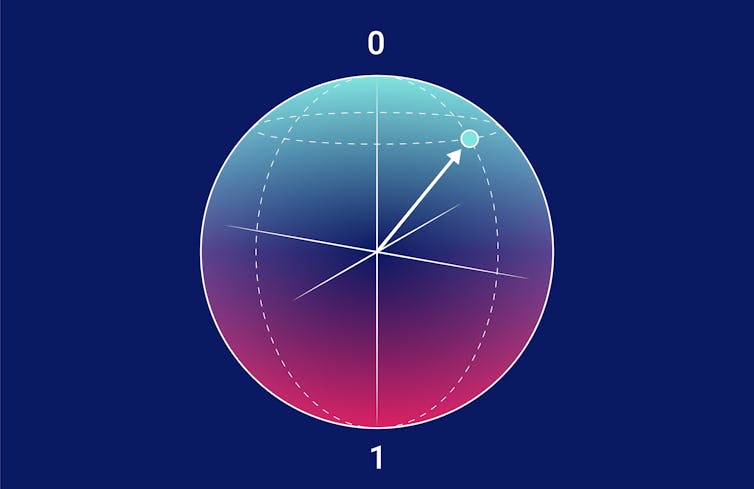
But what on earth is a “time crystal”, if not a sci-fi gadget in the latest Marvel movie? Why do we need a quantum computer to make one? And what is a quantum computer anyway?

Keep reading... Show less

What are thermobaric weapons? And why should they be banned?

Russian forces in Ukraine may have used thermobaric weapons and cluster bombs, according to reports from the Ukraine government and human rights groups.

If true, this represents an escalation in brutality that should alarm us all.

While cluster munitions are banned by international convention, thermobaric munitions – also known as fuel-air explosive devices, or “vacuum bombs” – are not explicitly prohibited for use against military targets.

Keep reading... Show less

New calf joins endangered southern resident orcas; 2 other pregnancies lost

A new calf was born to J pod of the southern resident orcas, Center for Whale Research director Ken Balcomb confirmed Tuesday morning. But the birth to orca mother J37 is tempered with news of the loss of two other pregnancies in southern resident families. The endangered whales' population is now 74. Scientists John Durban and Holly Fearnbach, of the marine mammal research and rescue nonprofit SR3, reported that routine, noninvasive monitoring of the orcas by drone photography determined two of the three expecting orcas had lost their calves. J19 and J36 appear to have decreased significantly...

The hacker group Anonymous has waged a cyberwar against Russia. How effective could they actually be?

A spate of cyber attacks has affected Ukraine’s digital systems since Russia’s invasion began. It soon became clear Russia’s “boots on the ground” approach would be supplemented by a parallel cyber offensive.

Last week Ukraine called on its citizens to take to their keyboards and defend the country against Russia’s cyber threat. At the same time, a campaign was underway among the hacktivist collective Anonymous, calling on its global army of cyber warriors to target Russia.

Who is Anonymous?

Anonymous is a global activist community that has been operating since at least 2008. It brings a potential for significant cyber disruption in the context of Russia’s invasion of Ukraine.

Keep reading... Show less

Organized crime has infiltrated online dating with sophisticated ‘pig-butchering’ scams

While we have been focused on the COVID-19 pandemic, vaccine mandates and related protests for much of the past two years, a wave of financial fraud has spread rapidly across Canada and around the world.

While not a deadly respiratory virus, this new approach to scamming has affected thousands of individuals globally, with victims defrauded of a record US$14 billion in 2021. The Canadian Anti-Fraud Centre reported nearly $100 million stolen from victims in Canada alone in 2020 and 2021.

Emotional manipulation

The pig-butchering, or “sha zhu pan,” scam is a highly sophisticated form of romance and cryptocurrency investment scam. Scammers — mainly working for Chinese organized crime gangs — pose as attractive professionals or entrepreneurs looking for true love. They use dating apps, including Tinder, Grindr and Hinge, as well as social media platforms like Facebook and Instagram to match with their potential victims. The scammers target single women and men, LGBTQ+ and those over 50 years old, as well as new immigrants as their potential victims.

Keep reading... Show less

Scientists analyzing DNA from ancient and modern humans to create a ‘family tree of everyone’

Did you know that it’s now possible to sequence all of your DNA for about the cost of a smartphone? This will reveal your unique genetic makeup, and can be used to work out the similarities and differences between yourself and other people around the world at a genetic level.

But how can you make sense of this information, and what does your genetic variation tell you?

In our research group at Oxford University’s Big Data Institute, we think the key to understanding this is held in our ancestry, and in particular in the genetic genealogy that relates us all. This describes how you and everyone else have inherited different parts of your genome from different ancestors. If we could learn this genealogy and decipher where and when they lived, we could uncover all of the history written in our genes – how our ancestors moved around the world and the evolutionary processes that created us all.

Keep reading... Show less

Are sharks gathering to mate off North Carolina? Mission launched to prove it’s true

A shark hunt that could make history is being staged off North Carolina, as a team of scientists set out to prove this is the coastline where great white sharks gather annually to mate in the Western Atlantic. To accomplish the seemingly impossible task, the nonprofit OCEARCH intends to capture as many sharks as possible over 20 days and run tests on them. The expedition starts March 4 and will continue through March 24. “In order to confirm this region as a white shark mating site, blood samples will be collected to measure reproductive hormone levels,” OCEARCH said in a release. “In addition...

Drinking water can be a dangerous cocktail for people in flood areas

Parts of south east Queensland and northern NSW have been experiencing what has been called a “rain bomb”. Despite the heavy falls, south eastern Queenslanders in Brisbane, Logan, Ipswich, Moreton Bay and the Lockyer Valley have been asked to conserve drinking water.

Water authorities explained extreme weather and heavy rain forced the closure of two SEQ drinking water treatment plants (Mt Crosby and North Pine Water Treatment Plants) early on Sunday morning. North Pine has since restarted and the Gold Coast Desalination plant is supplementing supply.

Keep reading... Show less