Top Stories Daily Listen Now
RawStory

Science

Why do we love the great outdoors? New research shows part of the answer is in our genes

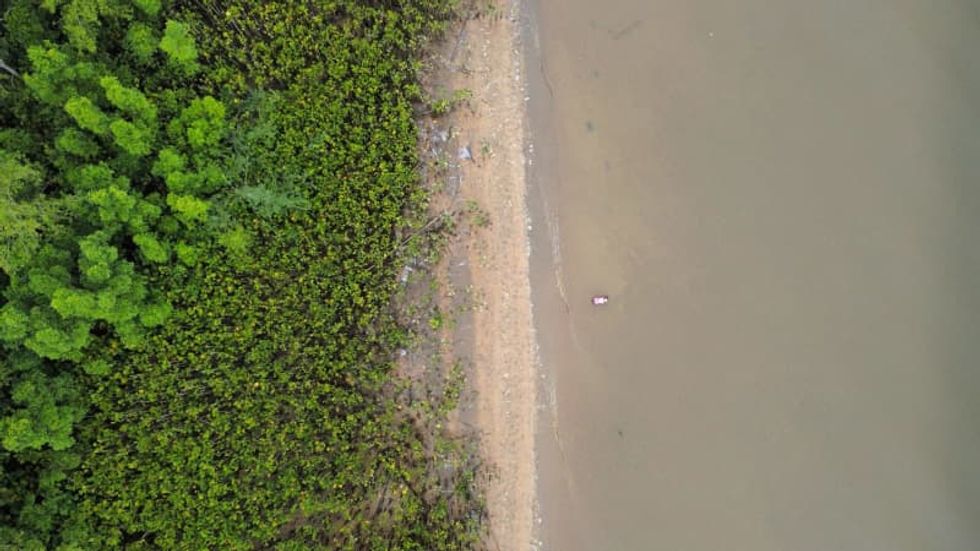
Do you love spending time in nature? Or are you a city slicker, happier in the concrete jungle than the great outdoors? Back in 1986, the US biologist EO Wilson proposed that humans have an innate connection with the natural world, an idea known as biophilia.

Almost every aspect of our lives depends on nature, from food and shelter to fuel and clothing. Yet some of us are much more “into” spending time in nature than others.

Keep reading... Show less

‘Hocus pocus’ or sound science? Can brain mapping save Nikolas Cruz from death row?

MIAMI — Over a decade ago, a “brain-mapping” technology known as QEEG was first used in a Florida death penalty case, helping keep a convicted Miami killer off death row by swaying jurors that brain damage had left him prone to violence. In the years since, brain mapping remains very much a legal gray area, inconsistently accepted in a small number of death penalty cases across the state. In some, prosecutors fought it as junk science and judges agreed to block results. In others, prosecutors raised no objections to the tests. The questions surrounding brain mapping will soon be on trial again...

Archaeologists discover gladiatorial arena in Switzerland

By Tobias Carroll

Traditionally, Switzerland is known for its longstanding practice of neutrality and its reputation for peace. But if you dig deeply enough into its history, you’re likely to find a bit more conflict below the surface. And by “dig deeply,” we’re speaking very literally. In the town of Kaiseraugst, work was underway to build a boat house on the Rhine River. Archaeologists were on the site monitoring it for signs of anything unexpected when — lo and behold — they found exactly that. According to an article at Smithsonian Magazine, the archaeologists found evidence that the same ...

Fish on acid? Microdosing zebrafish with LSD shows its potential benefits for humans

Microdosing — regularly ingesting small amounts of a psychedelic substance — has gone mainstream.

Believed to increase productivity, spark creativity or improve open-mindedness, the microdosing of psychedelic drugs is gaining popularity with both academic researchers and those interested in experimenting.

Keep reading... Show less

Deforestation in the Brazilian Amazon at record high

A man fishes on the banks of the Limoeiro River. Around 360 square kilometres of rainforest in the Brazilian Amazon were lost to deforestation in January alone. Dieh Sacramento/dpa

Around 360 square kilometres of rainforest in the Brazilian Amazon were lost to deforestation in January alone.

This is the highest amount recorded for January since 2015, the National Institute for Space Research (Inpe) said Wednesday, citing provisional figures.

Keep reading... Show less

Ancient human tracks on South Africa’s west coast: 3 reasons they are an exciting find

It’s been 27 years since geologist David Roberts identified some of the oldest footprints of our species ever discovered. The trackway of three footprints was found on the surface of a cemented sand dune (called an aeolianite) near Langebaan on South Africa’s west coast. The tracks were later dated to 117,000 years and were attributed to Homo sapiens; they became popularly known as “Eve’s footprints”.

They were airlifted to Cape Town, where they are housed in the Iziko South Africa Museum. A replica is on exhibit at the Geelbek Visitor Centre in the West Coast National Park. There has been international debate since then about whether or not “Eve’s footprints” really were human tracks, due to their relatively poor level of preservation.

Keep reading... Show less

The science of weather forecasting: what it takes and why it’s so hard to get right

Weather forecasting is an important science. Accurate forecasting can help to save lives and minimise property damage. It’s also crucial for agriculture, allowing farmers to track when it’s best to plant or helping them protect their crops.

And it will only become more vital in the coming years. Severe weather events are becoming more frequent and more intense because of climate change and variability.

Keep reading... Show less

Did male and female dinosaurs differ? A new statistical technique is helping answer the question

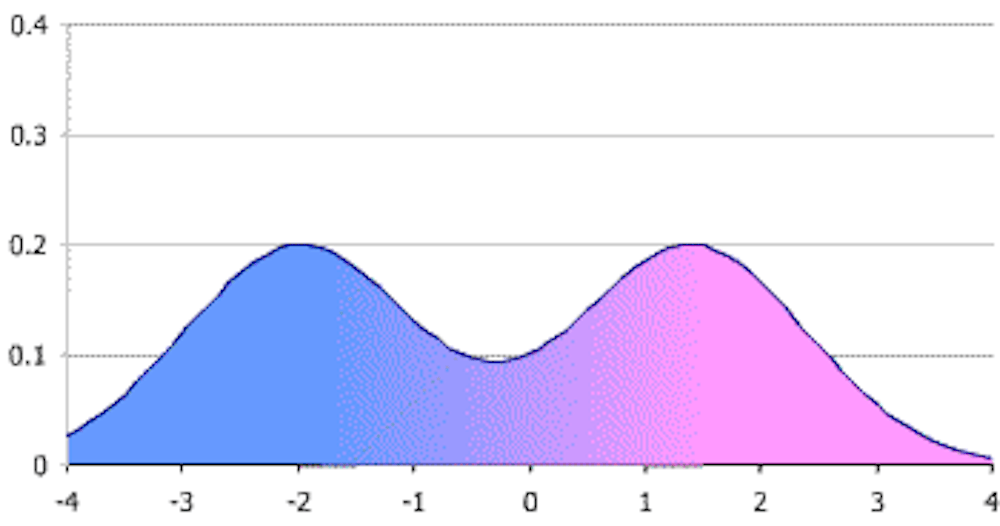
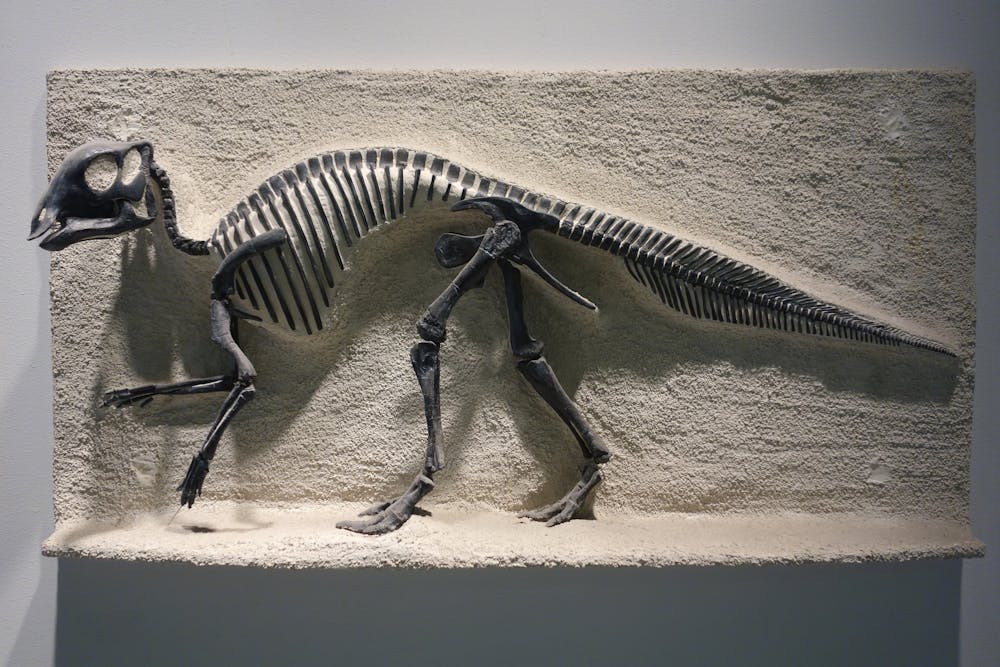
In most animal species, males and females differ. This is true for people and other mammals, as well as many species of birds, fish and reptiles. But what about dinosaurs? In 2015, I proposed that variation found in the iconic back plates of stegosaur dinosaurs was due to sex differences.

I was surprised by how strongly some of my colleagues disagreed, arguing that differences between sexes, called sexual dimorphism, did not exist in dinosaurs.

Keep reading... Show less

Safe havens for coral reefs will be almost non-existent at 1.5°C of global warming – new study

Coral reefs have long been regarded as one of the earliest and most significant ecological casualties of global warming. In new research published in the journal PLOS Climate, we found that the future of these tropical ecosystems – thought to harbour more species than any other – is probably worse than anticipated.

Climate change is causing more frequent marine heatwaves worldwide. Corals have adapted to live in a specific temperature range, so when ocean temperatures are too hot for a prolonged period, corals can bleach – losing the colourful algae that live within their tissue and nourish them via photosynthesis – and may eventually die.

Across the tropics, mass bleaching and die-offs have gone from being rare to a somewhat regular occurrence as the climate has warmed. More frequent heatwaves mean that the time corals have to recover is getting shorter.

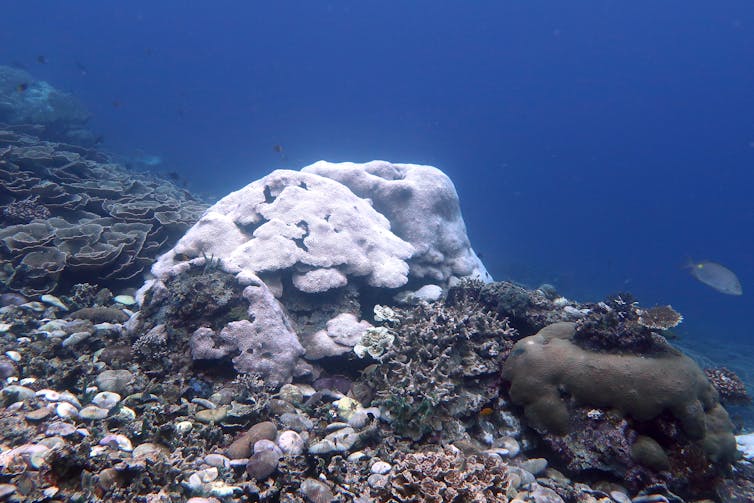
A boulder coral on a reef that has bleached white.

Bleached corals are more vulnerable to disease and starvation.

Maria Beger, Author provided

In a 2018 report, the Intergovernmental Panel on Climate Change predicted that 1.5°C of global warming would cause between 70 and 90% of the world’s coral reefs to disappear. Now, with models capable of examining temperature differences between coral reefs one kilometre apart, our team found that at 1.5°C of warming, which the world is predicted to reach in the early 2030s without drastic action to limit greenhouse gas emissions, 99% of the world’s reefs will experience heatwaves that are too frequent for them to recover.

That would spell catastrophe for the thousands of species that depend on coral reefs, as well as the roughly one billion people whose livelihoods and food supply benefits from coral reef biodiversity.

Thermal refugia

The thermal stress of a heatwave can affect corals over a huge geographic area, like the entire northern Great Barrier Reef or archipelagos like the Maldives. A marine heatwave in 2015-16 caused widespread bleaching in each of the Pacific, Atlantic and Indian Oceans.

Corals are small polyp-like animals that form colonies of thousands by secreting a calcium carbonate skeleton that builds a reef. Corals grow slowly, so their recovery following bleaching and die-offs can take a long time and can be hampered by pollution and overfishing. Some species grow faster and are more capable of recovering quicker.

Scientists hope that local conditions on some reef tracts will ensure suitable temperatures for corals in the future, even when surrounding areas warm. These conditions may be possible due to upwelling, where cooler water is brought to the surface, or strong ocean currents. Reef managers can prioritise these so-called refugia, which offer corals a greater chance of survival.

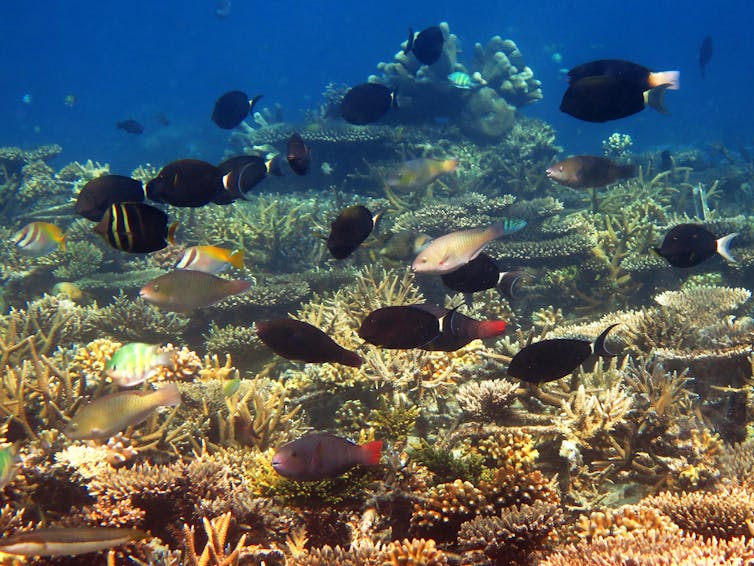
A sunlit coral reef populated by lots of tropical fish.

Healthy reefs can support a vast array of life.

Maarten De Brauwer, Author provided

Finding these refugia is difficult, though, as they are likely to be small and the resolution of climate projections that model changes in ocean temperatures over time tend to be too coarse. Our team increased the resolution of climate model projections by downscaling them with historical data from satellite observations to find out where refugia are likely to persist in the future.

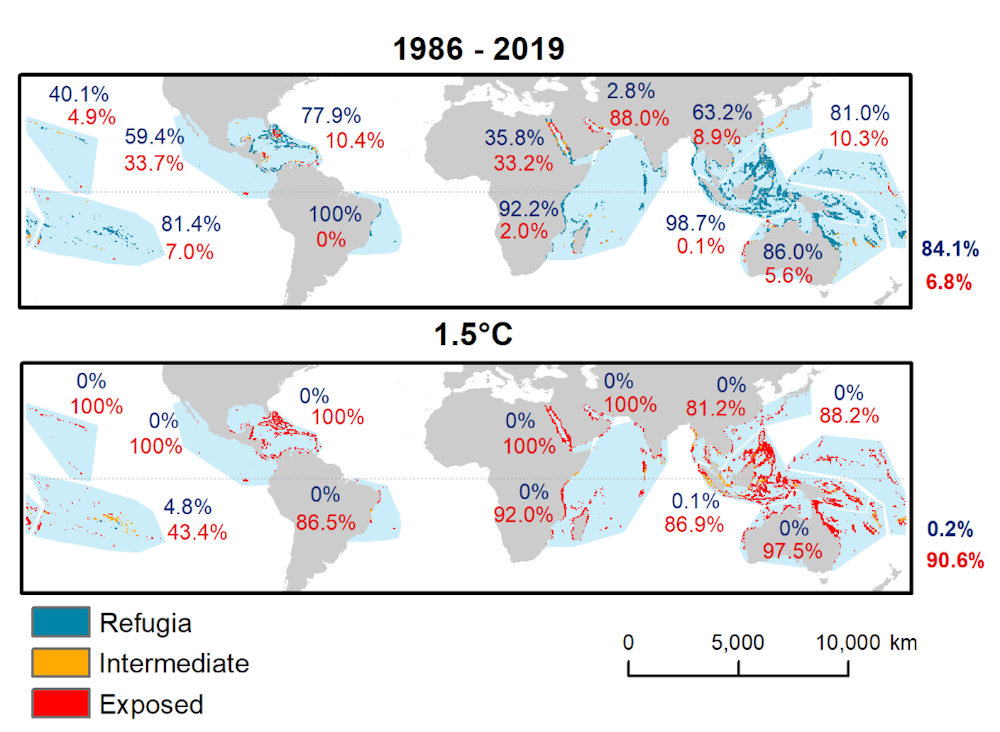
We found that, from 1986 to 2019, 84% of the world’s reefs offered sufficient thermal refuge. This meant corals had enough time to recover in between bleaching events. With 1.5°C of global warming above pre-industrial levels, only 0.2% of these refugia remain. At 2°C of warming, safe havens from heat for coral reefs will no longer exist.

Two world maps comparing coral reef refugia 1986-2019 versus at 1.5°C.

Most of the world’s reef refugia disappear at 1.5°C.

Dixon et al. (2022)/PLOS Climate, Author provided

Preliminary findings from another study (yet to complete the peer-review process) would seem to confirm the catastrophic effects of 1.5°C of global warming on coral reefs. This research was carried out independently by scientists in the US using a different method but the same climate models and spatial resolutions.

The future of coral reefs

Global warming of 1.5°C is the lower limit that world leaders aspired to maintain when they signed the Paris agreement in 2015. This target is moving further out of reach. For coral reefs, there is no safe limit to global warming. Given the rate at which the global average temperature is increasing, marine heatwaves are likely to become so frequent that most of the world’s coral reefs will experience intolerable heat stress regularly. Most reefs have already experienced at least one such event this decade.

Not all regions are stressed at the same time as heatwaves are not global, nor do all corals bleach. Some coral species are more capable of coping with extreme temperatures than others due to their growth form or the type of algae within their tissue. Still, the magnitude and frequency of heatwaves predicted in this study will probably affect even resistant coral species, suggesting the world will lose most of its reef biodiversity. Coral reefs of the future are likely to look very different to the colourful and diverse ecosystems we know today.

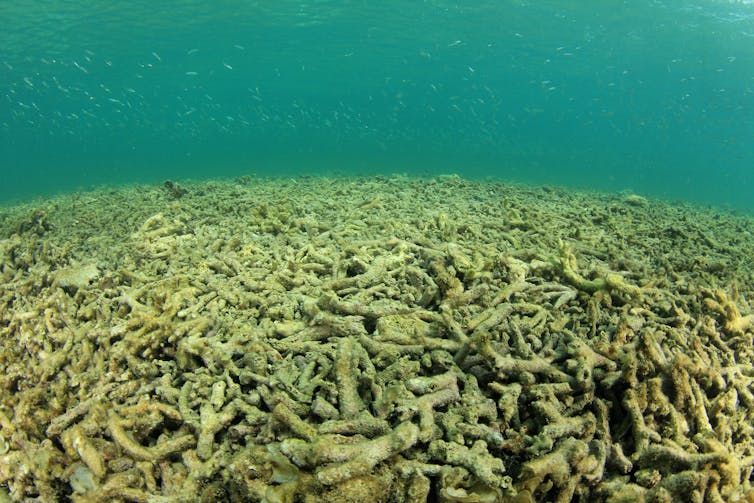
An underwater field of coral rubble smothered in algae.

A dead coral reef.

Rich Carey/Shutterstock

Climate change is already degrading coral reefs globally. Now we know that protecting the last remaining temperature refuges will not work on its own. Slashing greenhouse gas emissions this decade is the best hope for saving what remains.

Keep reading... Show less

Humans vs AI: here’s who’s better at making money in financial markets

Artificial Intelligence (AI) has now closely matched or even surpassed humans in what were previously considered unattainable areas. These include chess, arcade games, Go, self-driving cars, protein folding and much more. This rapid technological progress has also had a huge impact on the financial services industry. More and more CEOs in the sector declare (explicitly or implicitly) that they run “technology companies with a banking license”.

There is also a rapid emergence and growth of the financial technology industry (FinTech), where technology startups increasingly challenge established financial institutions in areas such as retail banking, pensions or personal investments. As such, AI often appears in behind-the-scenes processes such as cybersecurity, anti-money laundering, know-your-client checks or chatbots.

Keep reading... Show less

Gut microbes help hibernating ground squirrels emerge strong and healthy in spring

Ground squirrels spend the end of summer gorging on food, preparing for hibernation. They need to store a lot of energy as fat, which becomes their primary fuel source underground in their hibernation burrows all winter long.

While hibernating, ground squirrels enter a state called torpor. Their metabolism drops to as low as just 1% of summer levels and their body temperature can plummet to close to freezing. Torpor greatly reduces how much energy the animal needs to stay alive until springtime.

Keep reading... Show less

This object in space flashed brilliantly for 3 months, then disappeared. Astronomers are intrigued

“Holy sharks, Batman, it’s periodic!”

I exclaimed on Slack.

It was the first lockdown of 2021 in Perth, and we were all working from home. And when astronomers look for something to distract themselves from looming existential dread, there’s nothing better than a new cosmic mystery.

Keep reading... Show less

770-km US megaflash sets new lightning record

A single flash of lightning in the United States nearly two years ago cut across the sky for nearly 770 kilometers, setting a new world record, the United Nations said Tuesday.

The new record for the longest detected megaflash, measured in the southern US on April 29, 2020, stretched a full 768 kilometers, or 477.2 miles, across Mississippi, Louisiana and Texas.

Keep reading... Show less