Top Stories Daily Listen Now
RawStory

Science

Cicely was young, Black and enslaved – her death during an epidemic in 1714 has lessons that resonate in today’s pandemic
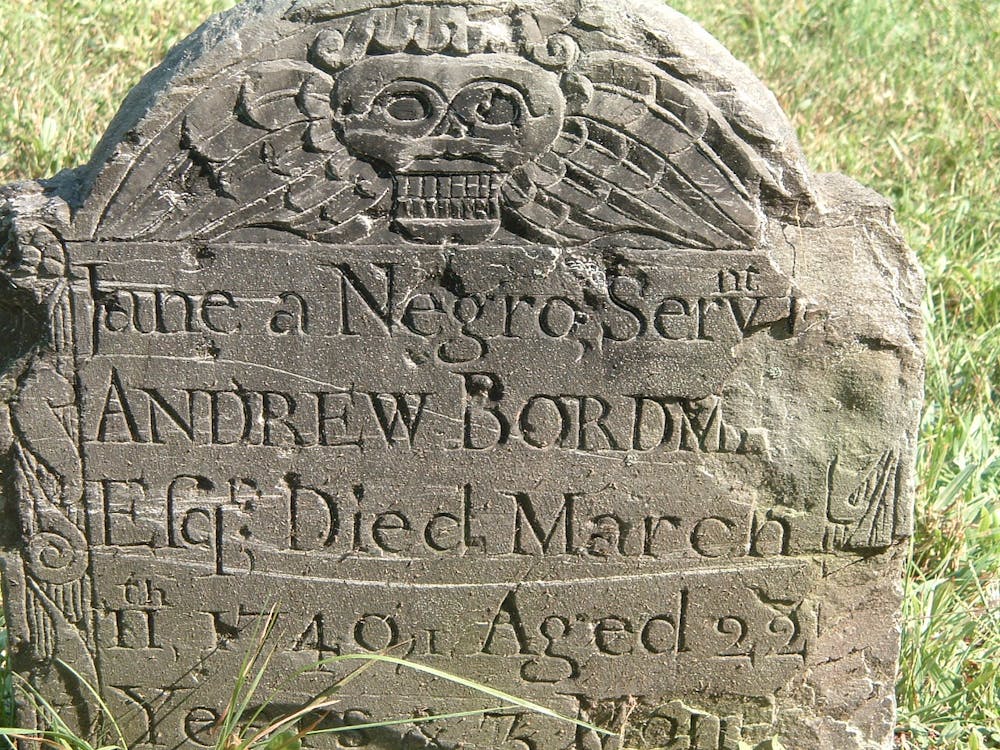
What I believe to be the oldest surviving gravestone for a Black person in the Americas memorializes an enslaved teenager named Cicely.

Cicely’s body is interred across from Harvard’s Johnston Gate in Cambridge, Massachusetts. She died in 1714 during a measles epidemic brought to the college by a student after the summer recess of 1713. Another tombstone in the same burial ground remembers Jane, an enslaved woman who died in 1741 during an outbreak of diphtheria, or “throat distemper.”

Keep reading... Show less

Can delta-8 THC provide some of the benefits of pot – with less paranoia and anxiety?

Over the past year, you may have seen something called delta-8 THC or “delta 8” appear in convenience stores and pharmacies alongside CBD gummies, oils and lotions.

Delta-8 THC is a hemp-derived compound that’s closely related to delta-9 THC – what’s commonly called THC and is the psychoactive component of cannabis that’s responsible for the high that users feel.

Keep reading... Show less

Morning Joe rains hell on Spotify for 'stupid' plan to protect Joe Rogan

Reacting to a statement from Spotify that they will begin to add a “content advisory” notice to virus-related content in response to the backlash against Joe Rogan's misinformation-laden podcasts, MSNBC's Joe Scarborough lashed out at the platform calling their handling of the controversy "stupid."

With legendary artists like Neil Young and Joni Mitchell pulling their music from the platform for allowing the popular podcaster to spew falsehoods endangering the public's health -- and fans canceling their accounts -- Spotify's CEO Daniel Ek issued a public letter stating, "We know we have a critical role to play in supporting creator expression while balancing it with the safety of our users. In that role, it is important to me that we don’t take on the position of being content censor while also making sure that there are rules in place and consequences for those who violate them.”

Keep reading... Show less

The rubber ducks that changed our understanding of the world's oceans

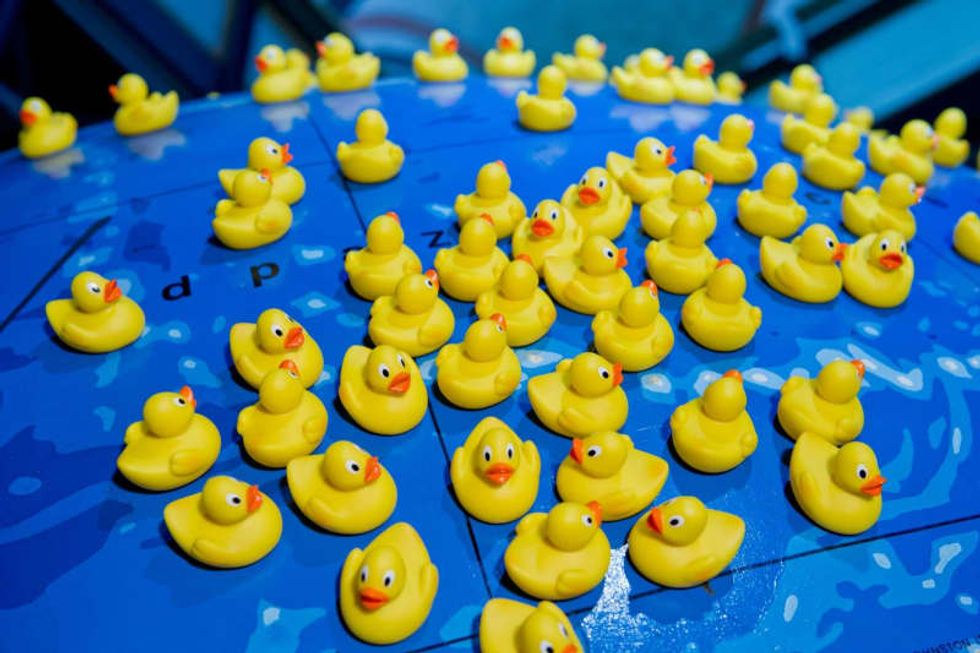
Thousands of rubber bath toys were released in the North Pacific in a container accident some 30 years ago. They helped provide valuable data for oceanographers. picture alliance/dpa/Symbolbild

Some 30 years ago, a container toppled off a ship into the North Pacific. Such an accident in itself isn't that remarkable as they are quite common. But this one would help provide valuable insights into the oceans.

The container, with its 29,000 rubber ducks, turtles, beavers and frogs, was originally heading from Hong Kong to the US. Instead, when a storm struck, the contents were released into the seas in January 1992.

Keep reading... Show less

An exquisitely preserved egg reveals what birds have inherited from dinosaurs

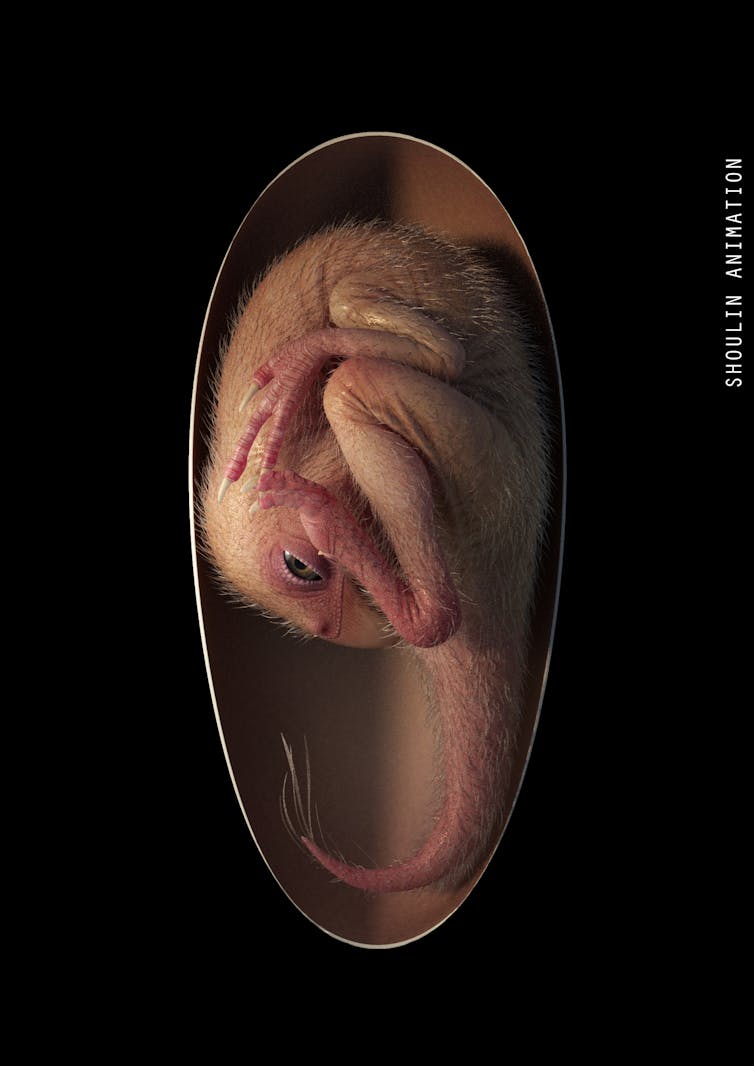
Oviraptorosaurs are a group of birdlike dinosaurs that were part of the ancestral dinosaur lineage that later gave rise to birds. Oviraptorosaurs walked on two legs, had a powerful toothless beak and were covered in feathers.

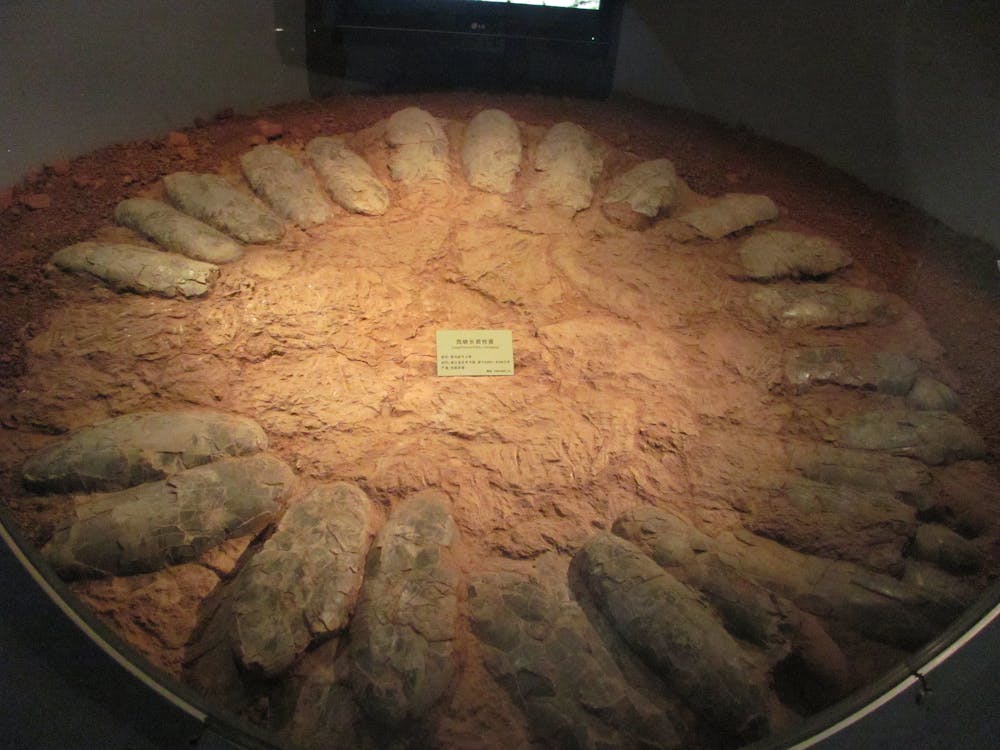
One of the first known species, Oviraptor philoceratops, was discovered in the 1920s when a skeleton was uncovered alongside a nest of eggs in Cretaceous rocks of Mongolia’s Gobi Desert. Paleontologists at the time assumed that the animal had died while attempting to raid the nest of another dinosaur — the name means “egg thief.”

It wasn’t until the mid-1990s, thanks to another discovery, that it was realized that the Oviraptor had actually been preserved in the act of tending to its own eggs. Since then, several important discoveries of oviraptorosaur eggs and nests have helped paleontologists reconstruct the reproductive and nesting habits of these unusual and birdlike dinosaurs.

Keep reading... Show less

The best word to start the game Wordle -- according to a language researcher

If you’ve been on any social media platform in the past two weeks, you’ve probably seen a grid of green, yellow and black squares. This is the latest pandemic phenomenon called Wordle – a free online game that gives users a new word puzzle each day. It was created by Josh Wardle for his crossword-loving partner. As of January 10, the game has 2.7 million players.

In Wordle, players have six tries to guess a target five-letter word. Every time they make a guess, they are told which letters in their guess are in the word and in the correct position (green), and which letters are in it but in a different position (yellow). It’s sort of like the boardgame Mastermind but with a key difference. In Mastermind, all six colours were equally likely to appear in the target. In Wordle, because guesses and targets all have to be real words, some letters are more likely to appear, making some guesses better than others.

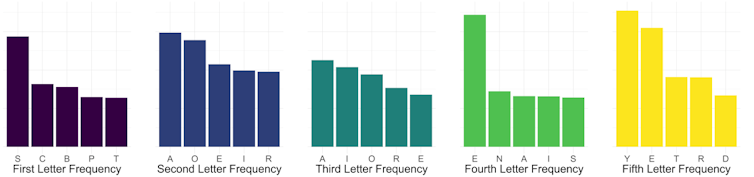
This leads to a question that I’ve seen people discussing at length online: what is the best first word to guess?

Keep reading... Show less

Among Winter Olympic cities, Tahoe will soon be too warm to host Games

SAN JOSE, Calif. — Towering Squaw Peak has groomed generations of America’s most elite winter Olympians, from racer Tamara McKinney and freestylist Jonny Mosely to six members of this year’s Alpine Team USA. But Lake Tahoe’s snow will be too patchy and too wet to host future Winter Olympic Games, according to a new analysis, dashing hopes of repeating the 1960 honor that built the region into a powerhouse of winter sports. Because of climate change, the resort — formerly Squaw Valley but now named Palisades Tahoe — is no longer a dependable site for the Games, with the risk of scant and soggy ...

Nature or nurture? Twin study sheds light on the development of callous-unemotional traits in adolescents

Parenting practices appear to act as a pathway between parental psychopathy and callous-unemotional traits in adolescents, according to a new study published in Research on Child and Adolescent Psychopathology that examined hundreds of twins. The findings provide evidence that callous-unemotional traits among youth are not entirely attributable to genetic risk factors. Callous-unemotional traits include characteristics such as limited guilt, reduced empathic concern, and reduced displays of appropriate emotion. Callous-unemotional traits have been associated with the development of more seriou...

Right-wing anti-vaxxer's sting operation gets Colorado clinic shut down

A Littleton, Colorado school was forced to announce that it wouldn't let kids get vaccinated after a right-wing campaign sabotaged the school clinic, reported the Daily Beast.

A viral Twitter campaign from anti-vaccine activists staging their own sting operation ended with the clinic because one person was angry. Gregg McGough's son filed a video of himself trying to get a vaccine at the school clinic with a fake parent note. McGough told the Colorado Sun that his goal was to have the clinic shut down. The son then was lying to the vaccine workers with another student giving a fake name and birth date.

Keep reading... Show less

How to be a god: we might one day create virtual worlds with characters as intelligent as ourselves

Most research into the ethics of Artificial Intelligence (AI) concerns its use for weaponry, transport or profiling. Although the dangers presented by an autonomous, racist tank cannot be understated, there is another aspect to all this. What about our responsibilities to the AIs we create?

Massively-multiplayer online role-playing games (such as World of Warcraft) are pocket realities populated chiefly by non-player characters. At the moment, these characters are not particularly smart, but give it 50 years and they will be.

Sorry? 50 years won’t be enough? Take 500. Take 5,000,000. We have the rest of eternity to achieve this.

You want planet-sized computers? You can have them. You want computers made from human brain tissue? You can have them. Eventually, I believe we will have virtual worlds containing characters as smart as we are – if not smarter – and in full possession of free will. What will our responsibilities towards these beings be? We will after all be the literal gods of the realities in which they dwell, controlling the physics of their worlds. We can do anything we like to them.

So knowing all that…should we?

Ethical difficulties of free will

As I’ve explored in my recent book, whenever “should” is involved, ethics steps in and takes over – even for video games. The first question to ask is whether our game characters of the future are worthy of being considered as moral entities or are simply bits in a database. If the latter, we needn’t trouble our consciences with them any more than we would characters in a word processor.

The question is actually moot, though. If we create our characters to be free-thinking beings, then we must treat them as if they are such – regardless of how they might appear to an external observer.

That being the case, then, can we switch our virtual worlds off? Doing so could be condemning billions of intelligent creatures to non-existence. Would it nevertheless be OK if we saved a copy of their world at the moment we ended it? Does the theoretical possibility that we may switch their world back on exactly as it was mean we’re not actually murdering them? What if we don’t have the original game software?

Can we legitimately cause these characters suffering? We ourselves implement the very concept, so this isn’t so much a question about whether it’s OK to torment them as it is about whether tormenting them is even a thing. In modern societies, the default position is that it’s immoral to make free-thinking individuals suffer unless either they agree to it or it’s to save them (or someone else) from something worse. We can’t ask our characters to consent to be born into a world of suffering – they won’t exist when we create the game.

So, what about the “something worse” alternative? If you possess free will, you must be sapient, so must therefore be a moral being yourself. That means you must have developed morals, so it must be possible for bad things to happen to you. Otherwise, you couldn’t have reflected on what’s right or wrong to develop your morals. Put another way, unless bad things happen, there’s no free will. Removing free will from a being is tantamount to destroying the being it was previously, therefore yes, we do have to allow suffering or the concept of sapient character is an oxymoron.

Keep reading... Show less

Revenge: the neuroscience of why it feels good in the moment, but may be a bad idea in the long run

dThe UK prime minister, Boris Johnson, is fighting to stay in power after it emerged that he attended several parties during the country’s strict lockdowns in 2020 and 2021. His former adviser Dominic Cummings, who was sacked by Johnson in 2020, has been accused of being the mastermind behind a number of carefully orchestrated leaks about the gatherings – amounting to a pretty spectacular case of revenge.

Most of us have dreamt about revenge at some point in our lives, and perhaps even achieved it. But is it ultimately a good idea – will it make us wiser and happier in the long term?

Keep reading... Show less

How we discovered a rare giant millipede fossil on a beach – and why it matters

Ever stumbled upon a huge fossil on your holiday? That’s what happened to me and two friends in January 2018, on a beach in Howick in the north of England, while on a geological road-trip across England and Wales. It was pure fluke, but it turned out that we had discovered the 326 million-year-old remains of a millipede-like animal of huge proportions.

Our research suggests that the living creature would have been around 50cm in width and 2.5 metres in length – about as long as an alligator – so we could safely conclude that we had found a fossil of an Arthropleura, the largest invertebrate to have ever lived.

Keep reading... Show less

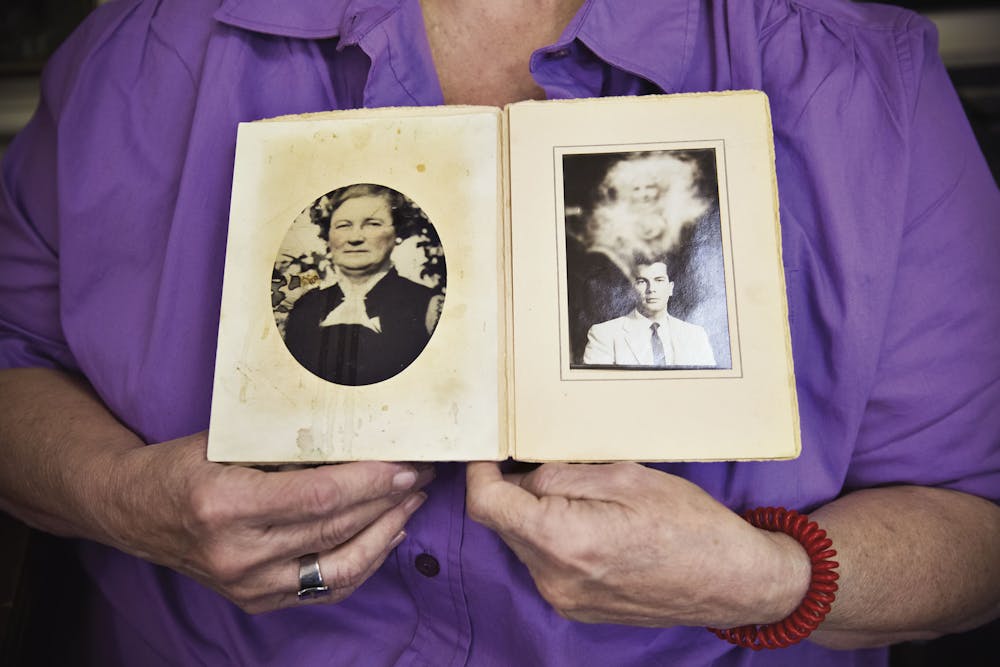
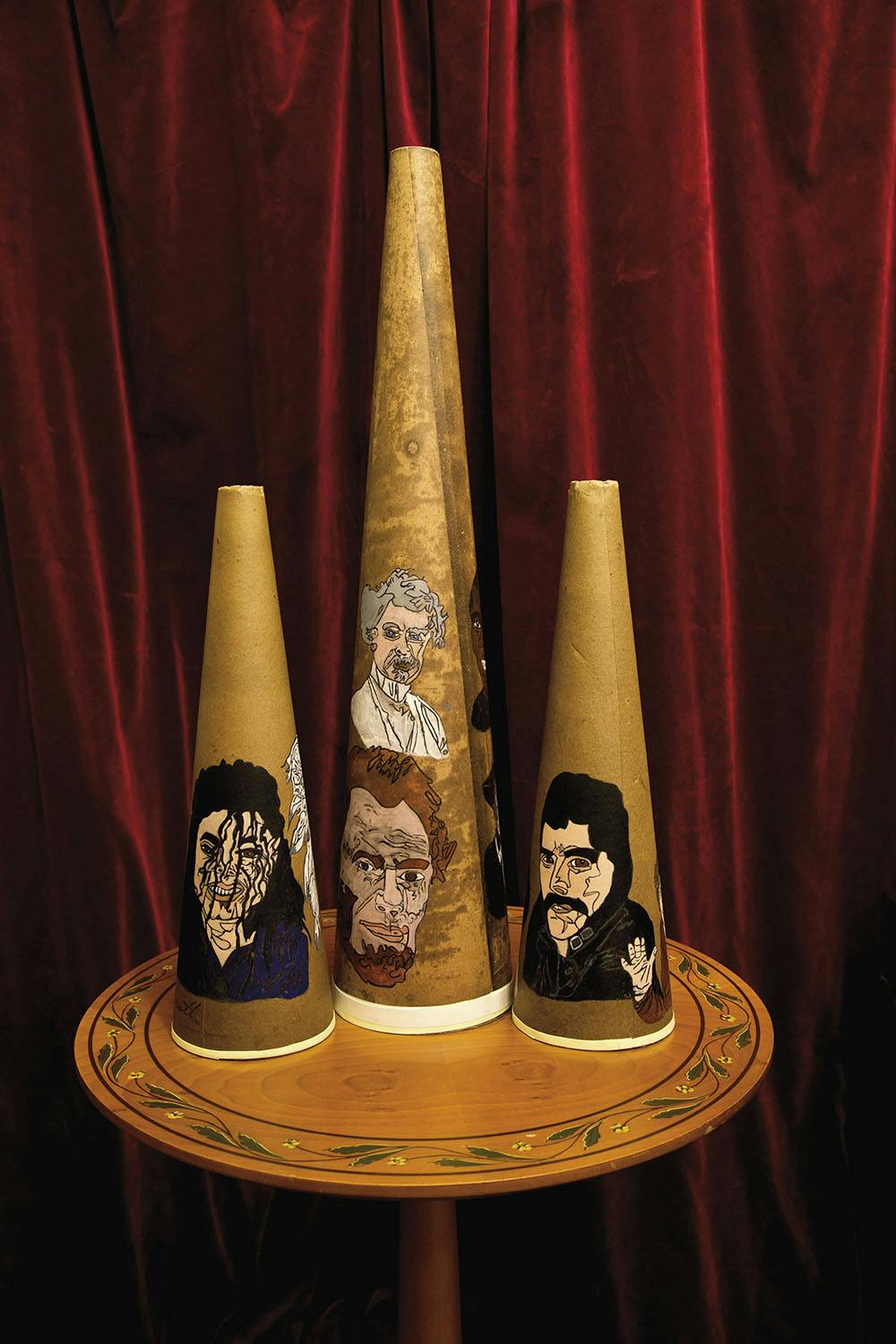
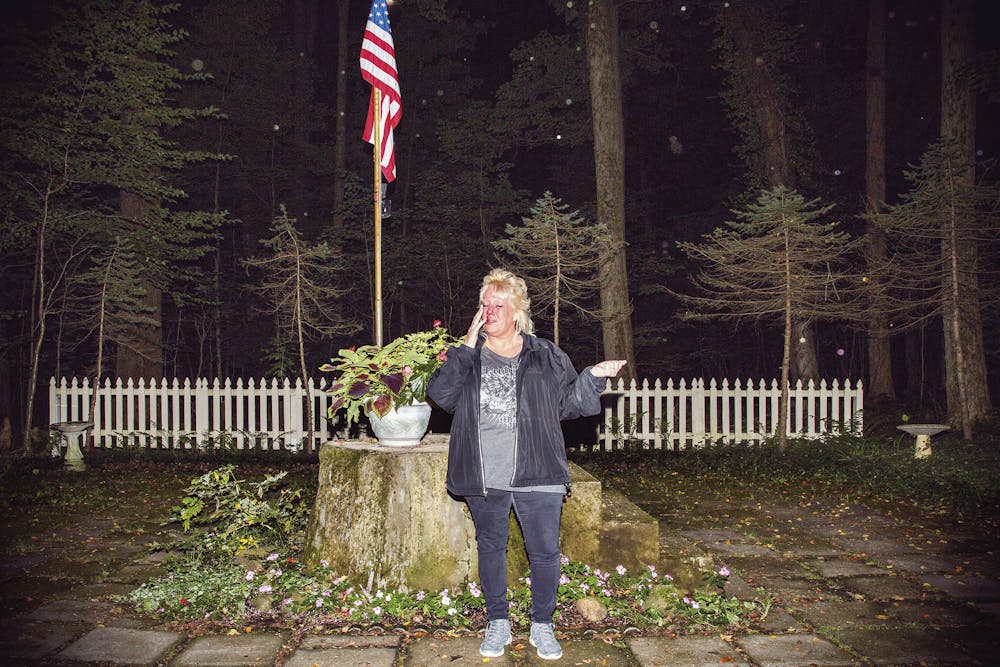
As spiritualism’s popularity grows, photographer Shannon Taggart takes viewers inside the world of séances, mediums and orbs

The word séance conjures images of darkened rooms, entranced mediums, strange occurrences and spirit voices. For many contemporary audiences, these visions might seem like something out of the past, or perhaps a movie, rather than a living belief system.

For the past 20 years, American photographer Shannon Taggart has explored modern spiritualism, a religion whose adherents believe in communication with the dead.

Keep reading... Show less