A computer program can identify breast cancer from routine scans with greater accuracy than human experts, researchers said in what they hoped could prove a breakthrough in the fight against the global killer.
Breast cancer is one of the most common cancers in women, with more than two million new diagnoses last year alone.
Regular screening is vital in detecting the earliest signs of the disease in patients who show no obvious symptoms.
In Britain, women over 50 are advised to get a mammogram every three years, the results of which are analyzed by two independent experts.
But interpreting the scans leaves room for error, and a small percentage of all mammograms either return a false positive -- misdiagnosing a healthy patient as having cancer -- or false negative -- missing the disease as it spreads.
Now researchers at Google Health have trained an artificial intelligence model to detect cancer in breast scans from thousands of women in Britain and the United States.
The images had already been reviewed by doctors in real life but unlike in a clinical setting, the machine had no patient history to inform its diagnoses.
The team found that their AI model could predict breast cancer from the scans with a similar accuracy level to expert radiographers.
Further, the AI showed a reduction in the proportion of cases where cancer was incorrectly identified -- 5.7 percent in the US and 1.2 percent in Britain, respectively.
It also reduced the percentage of missed diagnoses by 9.4 percent among US patients and by 2.7 percent in Britain.
"The earlier you identify a breast cancer the better it is for the patient," Dominic King, UK lead at Google Health, told AFP.
"We think about this technology in a way that supports and enables an expert, or a patient ultimately, to get the best outcome from whatever diagnostics they've had."
- Computer 'second opinion' -
In Britain all mammograms are reviewed by two radiologists, a necessary but labour-intensive process.
The team at Google Health also conducted experiments comparing the computer's decision with that of the first human scan reader.
If the two diagnoses agreed, the case was marked as resolved. Only with discordant outcomes was the machine then asked to compare with the second reader's decision.
The study by King and his team, published in Nature, showed that using AI to verify the first human expert reviewer's diagnosis could save up to 88 percent of the workload for the second clinician.
"Find me a country where you can find a nurse or doctor that isn't busy," said King.
"There's the opportunity for this technology to support the existing excellent service of the (human) reviewers."
Ken Young, a doctor who manages mammogram collection for Cancer Research UK, contributed to the study.
He said it was unique for its use of real-life diagnosis scenarios from nearly 30,000 scans.
"We have a sample that is representative of all the women that might come through breast screening," he said.
"It includes easy cases, difficult cases and everything in between."
The team said further research was needed but they hoped that the technology could one day act as a "second opinion" for cancer diagnoses.
For three decades, paleontologists the world over have been split over a provocative finding: did a dwarf species of Tyrannosaurus rex really once exist?
In 1988, paleontologist Robert Bakker and his colleagues at the Cleveland (Ohio) Museum of Natural History reclassified a specimen first discovered in 1942 and displayed at the museum.
It was, they said, the first known member of a small new species they baptized as the Nanotyrannus.
Then, in 2001, another team discovered the nearly complete skeleton of a small Tyrannosaurus near the town of Ekalaka in Montana, in the rich and intensively studied fossil formation known as Hell Creek.
They named the creature -- barely bigger than a draft horse -- Jane and soon classified it as a juvenile Tyrannosaurus rex.
But a minority of specialists continued to insist that it was part of the newly classified Nanotyrannus species. They pointed to the morphology of its skull and bones, which they said differed from T-rex adults.
- Answers in the bones -
In a study published Wednesday in the journal Science Advances, researchers led by Holly Woodward of Oklahoma State University performed a microscopic analysis on samples from the interior of Jane's tibia and femur bones, as well as from a less complete set of bones from an animal dubbed Petey.
This technique, known as paleohistology, confirmed that the two were immature individuals -- not adults, the scientists said.
By extension, the study's authors said, the existence of the Nanotyrannus seems very unlikely.
"The really cool thing about fossil bones is that a whole bone fossilizes even down to the microscopic size," Woodward told AFP.
"We can infer growth rate, age (and) maturity level."
The researchers took extremely fine slices from the bone samples -- so thin that light could pass through them -- and then studied them under powerful microscopes.
The size of the blood vessel openings revealed that the two dinosaurs were still in a phase of rapid growth at the time of death. Had they been adults, this vascularization would have been less prominent.
- Only a half-dozen specimens -
The team was also able to count the growth rings in each animal's bones, much as one can do to determine the age of a tree: 13 years for Jane, and 15 for Petey.
The study adds to scientists' still limited knowledge of the 20-year period between a dinosaur's hatching and its adulthood.
Jane, who weighed only one ton, died before reaching the phase of exponentially rapid growth that normally would have brought her to an adult weight of just under 10 tons.
"Everyone loves T-rex, but we don't really know much about how it grew up," Woodward said. "It's probably the most famous dinosaur in the world, and we mostly just have really large skeletons of it."
That is partly due to the obsession of collectors and the public with finding and displaying the most enormous T-rex skeletons possible -- unearthed sometimes to the detriment of smaller specimens.
Unfortunately, Woodward said, only five to seven fossils of young T-rex dinosaurs are known to exist in the world, and some of those are
When a person's immune system is impaired by a genetic disease, a bone-marrow transplant can be a powerful therapeutic tool, but with a major downside: during the first few months the recipient's defenses against viruses are severely weakened. The slightest infection can lead to a hospital trip.
A still-experimental type of treatment known as T-cell therapy aims to assist during this vulnerable period -- the months during which the body is rebuilding its natural defenses. After two decades of clinical trials, the technology has been refined, and is being used to treat more and more patients, many of them children.
A boy named Johan is one of them.
Today he is a mischievous, smiling toddler with a thick shock of light-brown hair, who never tires, playfully tormenting the family's puppy, Henry.
There is no sign of the three-year-long medical and emotional roller-coaster ride he and his family, who live in an affluent Washington suburb, have been on.
The first traumatic surprise came with the results of a pregnancy test: Johan was not planned.
"That was a huge shock. I cried," said his mother, 39-year-old Maren Chamorro.
- Risky procedure -
She had known since childhood that she carried a gene that can be fatal in a child's first 10 years, chronic granulomatous disease (CGD).
Her brother died of it at the age of seven. The inexorable laws of genetics meant that Maren had a one in four chance of transmitting it to her child.
For their first children, she and her husband Ricardo had chosen in-vitro fertilization, allowing the embryos to be genetically tested before implantation.
Their twins Thomas and Joanna were born -- both disease-free -- seven and a half years ago.
But in Johan's case, a post-birth genetic test quickly confirmed the worst: he had CGD.
After conferring with experts at Children's National Hospital in Washington, the couple took one of the most important decisions of their lives: Johan would receive a bone-marrow transplant, a risky procedure but one that would give him a chance of a cure.
"Obviously, the fact that Maren had lost a sibling at a young age from the disease played a big role," Ricardo confided.
Bone marrow, the spongy tissue inside bones, serves as the body's "factory" for the production of blood cells -- both red and white.
- His brother's immune system -
Johan's white blood cells were incapable of fighting off bacteria and fungal infections. A simple bacterial infection, of negligible concern in a healthy child, could spread out of control in his young body.
Luckily, Johan's brother Thomas, six years old at the time, was a perfect match. In April 2018, doctors first "cleansed" Johan's marrow using chemotherapy. They then took a small amount of marrow from Thomas's hip bones using a long, thin needle.
From that sample they extracted "supercells," as Thomas calls them -- stem cells, which they reinjected into Johan's veins. Those cells would eventually settle in his bone marrow -- and begin producing normal white blood cells.
The second step was preventive cell therapy, under an experimental program led by immunologist Michael Keller at Children's National Hospital.
The part of the immune system that protects against bacteria can be rebuilt in only a matter of weeks; but for viruses, the natural process takes at least three months.
- Hurdles remain -
From Thomas's blood, doctors extracted specialized white blood cells -- T-cells -- that had already encountered six viruses.
Keller grew them for 10 days in an incubator, creating an army of hundreds of millions of those specialized T-cells. The result: a fluffy white substance contained in a small glass vial.
Those T-cells were then injected into Johan's veins, immediately conferring protection against the six viruses.
"He has his brother's immune system," said Keller, an assistant professor at Children's National.
Johan's mother confirmed as much: today, when Thomas and Johan catch a cold, they have the same symptoms, and for nearly the same amount of time.
"I think it's pretty cool to have immunity from your big brother," Maren Chamorro said.
This therapeutic approach -- boosting the body's immune system using cells from a donor or one's own genetically modified cells -- is known as immunotherapy.
Its main use so far has been against cancer, but Keller hopes it will soon become available against viruses for patients, like Johan, who suffer from depressed immune systems.
The chief obstacles to that happening are the complexity of the process and the costs, which can run to many thousands of dollars. These factors currently restrict the procedure to some 30 medical centers in the United States.
For Johan, a year and a half after his bone marrow transplant, everything points to a complete success.
"It's neat to see him processing things, and especially play outside in the mud," his mother said.
"You know, what a gift!"
Her only concern now is the same as any mother would have -- that when her son does fall ill, others in the family might catch the same bug.
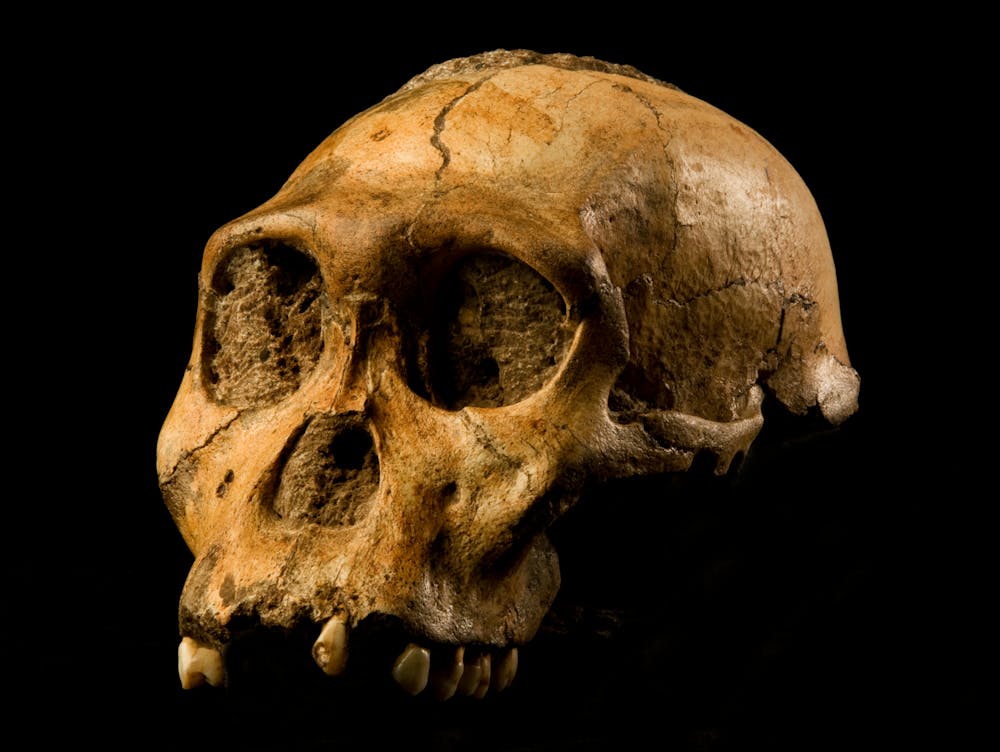
In 1924, a 3-year-old child’s skull found in South Africa forever changed how people think about human origins.
The Taung Child, our first encounter with an ancient group of proto-humans or hominins called australopithecines, was a turning point in the study of human evolution. This discovery shifted the focus of human origins research from Europe and Asia onto Africa, setting the stage for the last century of research on the continent and into its “Cradles of Humankind.”
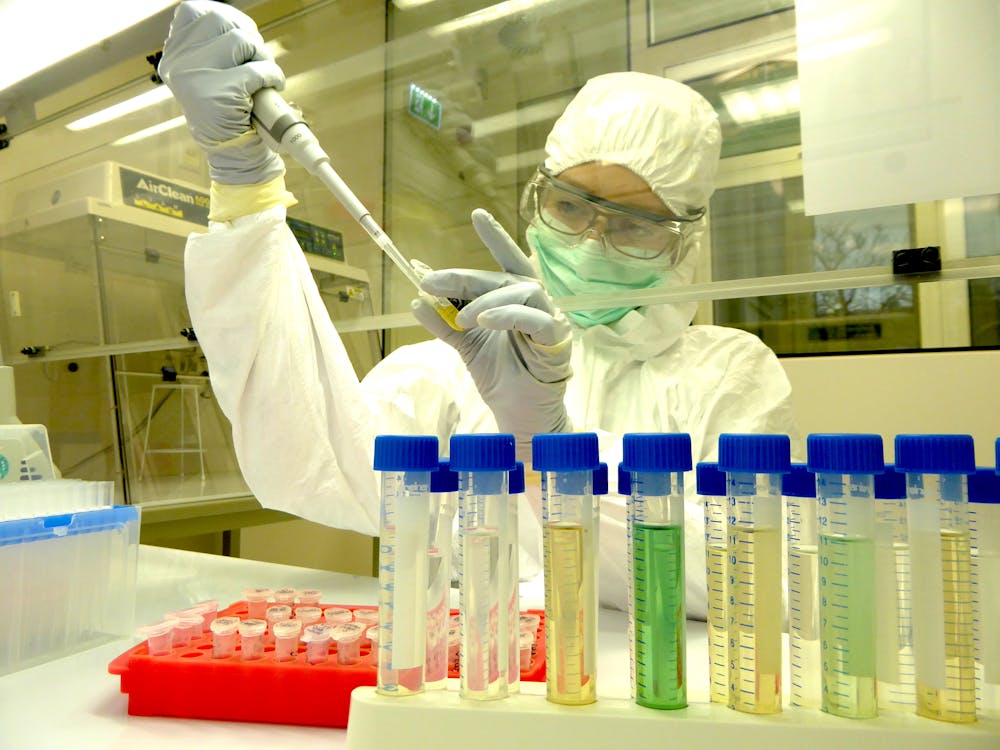
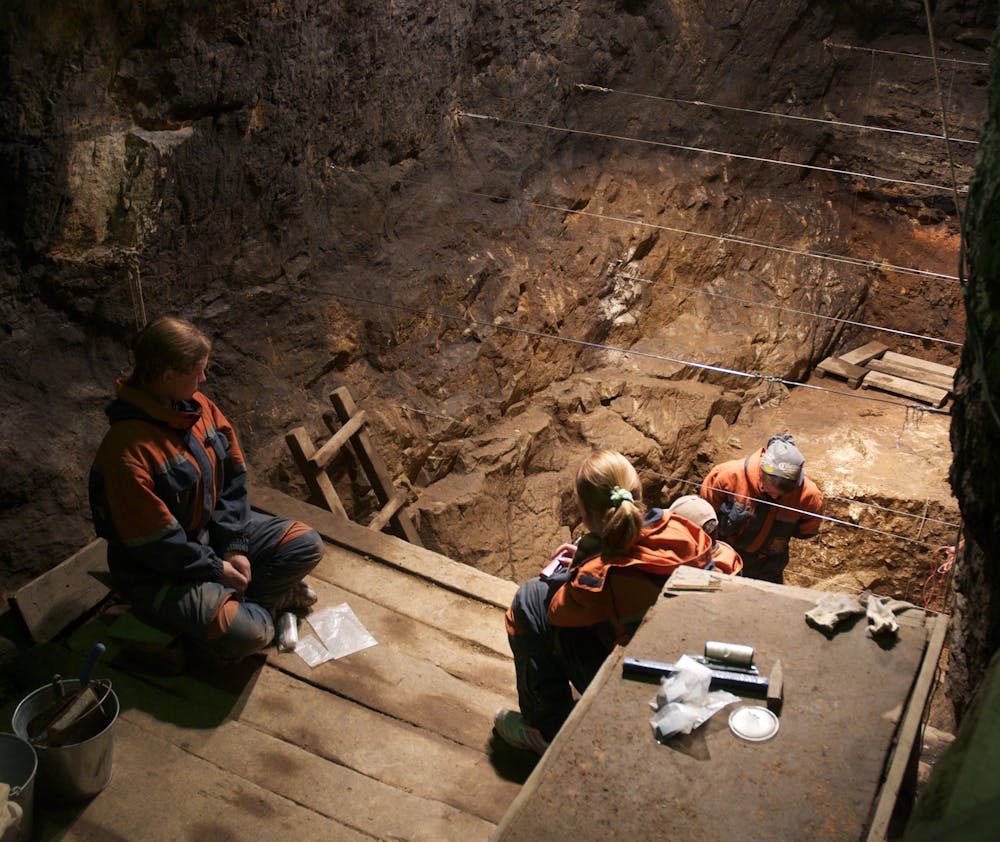
Few people back then would’ve been able to predict what scientists know about evolution today, and now the pace of discovery is faster than ever. Even since the turn of the 21st century, human origins textbooks have been rewritten over and over again. Just 20 years ago, no one could have imagined what scientists know two decades later about humanity’s deep past, let alone how much knowledge could be extracted from a thimble of dirt, a scrape of dental plaque or satellites in space.
The applications go far beyond humans. Paleogenomics is yielding surprising discoveries about plants and animals from ancient seeds and skeletons hidden in the backrooms of museums.
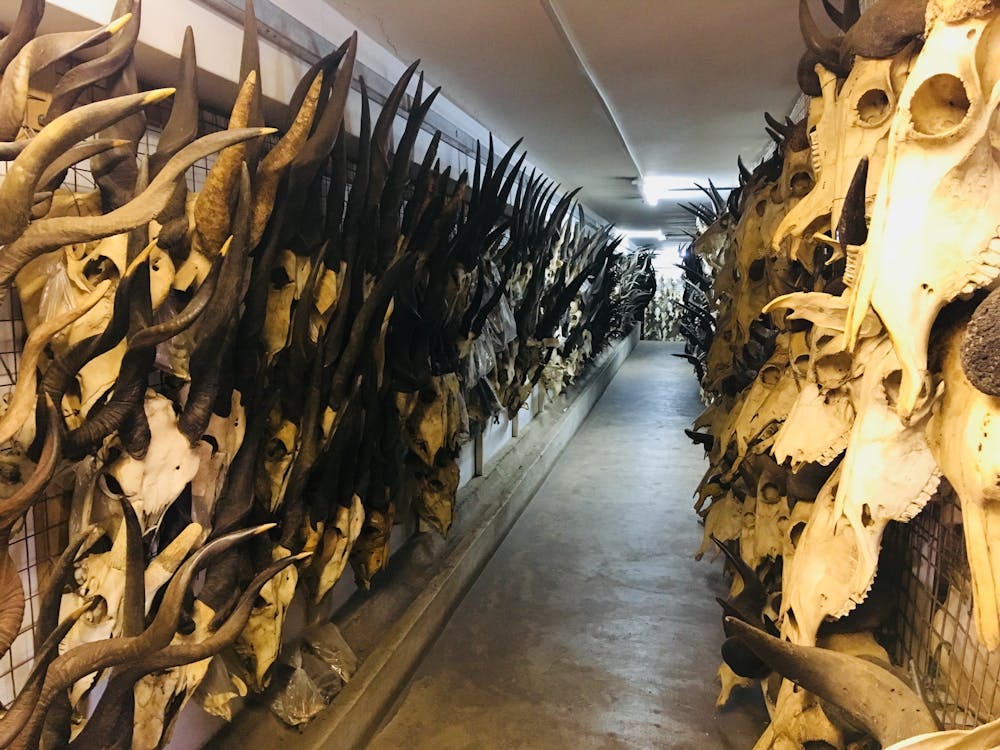
Natural history museums hold a wealth of information, some of which can only be tapped through new biomolecular methods. Scientists analyze modern and fossil animal skeletons to ask questions about the past using ancient proteins.
Mary Prendergast at National Museums of Kenya, CC BY-ND
Biomolecules are making the invisible visible
DNA is not the only molecule revolutionizing studies of the past.
Scientists unexpectedly found lazurite pigment in calcified plaque clinging to a 11th- to 12th-century woman’s tooth, challenging the assumption that male monks were the primary makers of medieval manuscripts.
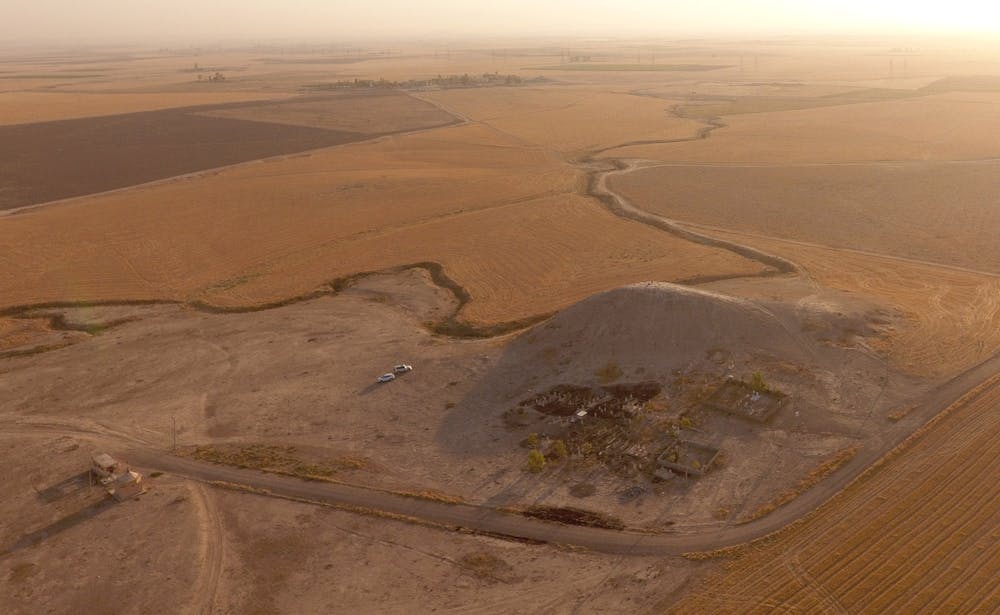
Archaeologists increasingly use technology to understand how sites fit into their environment and to document sites at risk. Here, a drone captured a tell (a mound indicating build-up of ancient settlements) in the Kurdistan Region of Iraq.
Originally developed for space applications, scientists now use LIDAR – a remote sensing technique that uses lasers to measure distance – to map 3D surfaces and visualize landscapes here on Earth. As a result, ancient cities are emerging from dense vegetation in places like Mexico, Cambodia and South Africa.
Geophysical survey methods enable archaeologists to detect buried features without digging large holes, maximizing knowledge while minimizing destruction.
These advances bring researchers together in exciting new ways. Over 140 new Nazca Lines, ancient images carved into a Peruvian desert, were discovered using artificial intelligence to sift through drone and satellite imagery. With the wealth of high-resolution satellite imagery online, teams are also turning to crowdsourcing to find new archaeological sites.
Although new partnerships among archaeologists and scientific specialists are not always tension-free, there is growing consensus that studying the past means reaching across fields.
As new methods enable profound insight into humanity’s shared history, a challenge is to ensure that these insights are relevant and beneficial in the present and future.
Yet in so doing, archaeologists are providing empirical support for climate change and revealing how ancient peoples coped with challenging environments.
Archaeologists today are contributing their methods, data and perspectives toward a vision for a less damaged, more just planet. While it’s difficult to predict exactly what the next century holds in terms of archaeological discoveries, a new focus on “usable pasts” points in a positive direction.
In the spring of 2012, when I was living near the coastal village of Sechelt, on British Columbia’s picturesque Sunshine Coast, I began hearing a humming sound, which I thought were float planes.
The noise usually started later at night, between 10 and 11 p.m. My first clue that something unusual was happening came with the realization that the sound didn’t fade away, like plane noises typically do. And the slightest ambient noise – exhaling audibly, even turning my head quickly – caused it to momentarily stop. One night after the sound started I stepped outside the house. Nothing.
I was the only person in the house who could hear it; my family said they didn’t know what I was talking about.
Naturally, I assumed something in the house was the culprit, and I searched for the source in vain. I even ended up cutting the power to the entire house. The sound got louder.
While I couldn’t hear the sound outdoors, I could still hear it in my car at night with the windows closed and the ignition off. I drove for miles in every direction, and it was still there in the background when I stopped the car. I was able to rule out obvious sources: industrial activity, marine traffic, electric substations and highway noise.
When I searched on the internet for “unusual low-frequency humming noise,” I soon realized that others had conducted the same search. I was part of the small fraction of people who can hear what is called the “Worldwide Hum” or, simply, the “Hum.”
The questions motivating me and thousands of others were the same: “What’s causing this? Can it be stopped?”
One geoscientist’s theory
The classic description of the Hum is that it sounds like a truck engine idling. For some, it’s a distant rumbling or droning noise. It can start and stop suddenly or wax and wane over time. For others, the Hum is loud, relentless and life-altering.
I eventually came across one of the few serious papers on the topic. It was written in 2004 by geoscientist David Deming (who’s also a Hum hearer).
Deming began by describing the standard history: The Hum was first documented in the late 1960s, around Bristol, England. It first appeared in the United States in the late 1980s, in Taos, New Mexico.
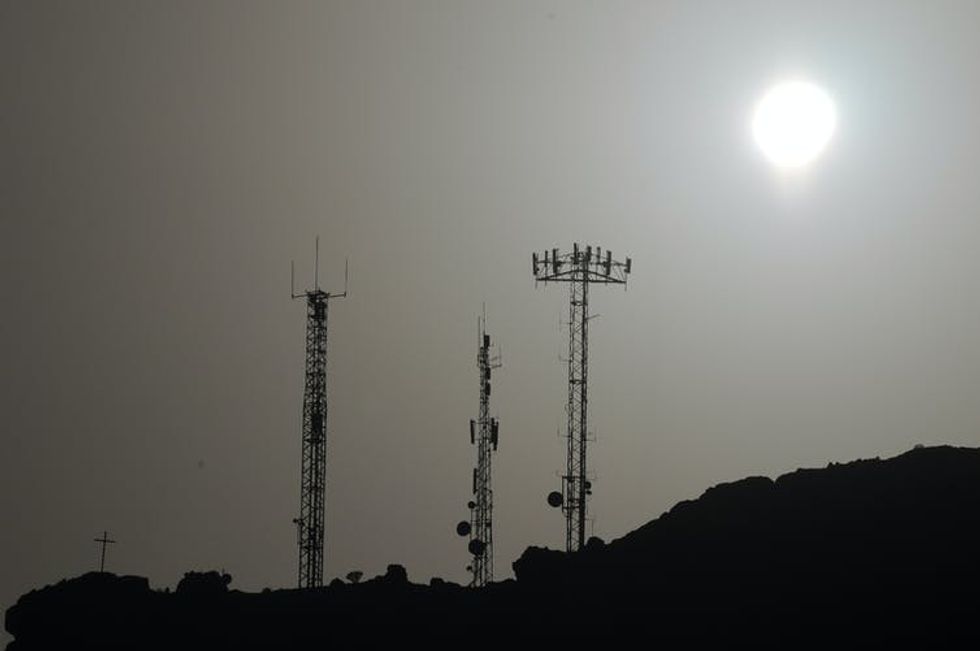
He then examined the competing hypotheses for the source of the Hum. Many have pointed to the electric grid or cellphone towers. But this theory is dismissed on two grounds: cellphones didn’t exist in the 1960s, and the frequency emitted by both cell towers and the electric grid can be easily blocked by metal enclosures.
He wondered whether mass hysteria was to blame, a psychological phenomenon in which rumor and “collective delusions” lead to the appearance of physical ailments for which there’s no medical explanation. The fact that so many people have researched the Hum on their own, using a search engine – rather than hearing about it from some other person – moves the conversation away from delusion and hysteria spread by word of mouth.
Some have dismissed cellphone towers as a potential source.
Deming looked at the High Frequency Active Auroral Research Program (HAARP), an isolated military compound in Alaska that uses radio waves to study outer space and for testing advanced communication techniques – and a favorite focus of conspiracy theorists, who have accused the facility of acts ranging from mind control to weather control. He studied the possibility of otoacoustic emissions, which are naturally occurring sounds caused by the vibration of hair cells in the ear.
Deming eventually fingered Very Low Frequency (VLF) radio waves (between 3 kHz and 30 kHz) as the most likely culprit. The world’s military powers use massive land-based and airborne transmitters on these frequencies in order to communicate with submerged submarines. Radio waves at these frequencies can penetrate up to a solid inch of aluminum.
In the paper, Deming proposes a simple and elegant experiment for testing this hypothesis. Hum hearers randomly enter three identical-looking boxes. The first box blocks VLF radio signals, the second box is an anechoic (soundproof) chamber and the third box is the control.
He left the experiment for others to pursue, and while there are some practical difficulties with the design, Deming’s overall concept has motivated the experiments I am currently conducting.
A disciplined inquiry begins
A plethora of pseudoscience and wild conspiracy theories has the potential to drown out the serious work in this area. I’ve encountered seemingly serious people who have argued that the Hum is caused by tunneling under the earth, the electronic targeting of specific individuals, aliens and mating fish.
Given the need for disciplined inquiry into the phenomenon, in late 2012 I started The World Hum Map and Database Project. The database gathers, documents and maps detailed and anonymous information from people who can hear the Hum. It provides raw data for research in a strictly moderated and serious forum for research and commentary, while providing a sense of community for people whose lives have been negatively affected by the Hum.
Most people have some experience with how disruptive some types of noises can be, which is why there are often noise ordinances in many cities and towns, especially at night. There are many sufferers who dread the nighttime because of how loud and relentless the Hum can be. The Hum database is replete with descriptions of desperate people who have been tormented by the noise for years. The phrase “driving me crazy” is all too common. (I feel fortunate that, in my case, the Hum is more of a curiosity than it is an irritant.)
The project also aims to validate and normalize the phenomenon by discussing it alongside other widely reported auditory phenomena, such as tinnitus, a relatively common medical condition that causes people to hear high-pitched squealing tones. Those who experience tinnitus and also the Hum report the two as being completely different in character.
The latest update of the Hum Map, from June 6, presents roughly 10,000 map and data points, and we’ve already made some notable findings.
For example, we’ve found that the mean and median age of Hum hearers is 40.5 years, and 55 percent of hearers are men. This goes against the widely repeated theory that the Hum mainly affects middle-aged and older women.
Interestingly, there are eight times as many ambidextrous people among hearers as there are in the general population. As more data are collected from Hum hearers, I hope that specialists in demographics and inferential statistics will be able to generate more detailed results.
The goals of the research
The historical record of the Hum is crucial, because if the current version as narrated by Deming is correct, many theories can immediately be ruled out. After all, cellphones and HAARP didn’t exist until decades after the Worldwide Hum was first documented in England in the late 1960s. I currently have a researcher digging into the Times of London digital archive to search for mentions of the Hum going back to the 18th and 19th centuries. If convincing examples are found, then the direction of my research will shift dramatically because all modern technologies could be ruled out.
In my view, there are currently four hypotheses for the source of the world Hum that survive the most superficial scrutiny.
The first hypothesis – argued by Deming and the one I’m currently pursuing – is that the Hum is rooted in Very Low Frequency (VLF) radio transmissions. It’s increasingly accepted now that the human body will sometimes experience electromagnetic (EM) energy and interpret it in a way that creates sounds. This was established for high-frequency EM energy by the American neuroscientist Alan Frey in his infamous “microwave hearing” experiments, which showed that certain radio frequencies can actually be heard as sounds.
Today, there are biophysical models that predict and explain the impact VLF EM energy has on living tissue. I have designed and built a VLF radio blocking box that should be able to test whether VLF radio frequencies are a prerequisite for generating the Hum.
The second hypothesis is that the Hum is the grand accumulation of low-frequency sound and human-generated infrasound (sounds with audio frequencies below roughly 20 Hz and which can be felt more than they can be heard). This includes everything from highway noise to all manner of industrial activity.
The third is that the Hum is a terrestrial or geological phenomenon that generates low-frequency sounds or perceptions of those sounds. For example, there is a well-documented history of animals predicting earthquakes and taking action to save themselves. From an evolutionary perspective, there may be survival value in having members of a population highly sensitive to some types of vibrations. When it comes to the Hum, some humans may have a similar physiological mechanism in place.
The fourth is that the Hum is an internally generated phenomenon, perhaps rooted in a particular anatomical variation, genetic predisposition or the result of toxicity and medication.
The Hum is now the subject of serious media coverage and, increasingly, scientific scrutiny. The overall goal of my project and the people who contribute to it is to find the source of the Hum and, if possible, stop it.
If the Hum is man-made, then my task is to raise public awareness and advocate turning away from the technologies that are causing it. If the source is exogenous and natural, there’s the possibility that there may be no escape from it, apart from masking it with background sounds.
Of course there is the remote possibility that one of the more exotic explanations will prove to be correct. But, as in all science, it seems best to start with what we know and is plausible, as opposed to what we don’t know and is implausible.
In the most extreme regions of the universe, galaxies are being killed. Their star formation is being shut down and astronomers want to know why.
The first ever Canadian-led large project on one of the world’s leading telescopes is hoping to do just that. The new program, called the Virgo Environment Traced in Carbon Monoxide survey (VERTICO), is investigating, in brilliant detail, how galaxies are killed by their environment.
Commissioned in 2013 at a cost of US$1.4 billion, ALMA is an array of connected radio dishes at an altitude of 5,000 metres in the Atacama Desert of northern Chile. It is an international partnership between Europe, the United States, Canada, Japan, South Korea, Taiwan and Chile. The largest ground-based astronomical project in existence, ALMA is the most advanced millimetre wavelength telescope ever built and ideal for studying the clouds of dense cold gas from which new stars form, which cannot be seen using visible light.
Large ALMA research programs such as VERTICO are designed to address strategic scientific issues that will lead to a major advance or breakthrough in the field.
Galaxy clusters
Where galaxies live in the universe and how they interact with their surroundings (the intergalactic medium that surrounds them) and each other are major influences on their ability to form stars. But precisely how this so-called environment dictates the life and death of galaxies remains a mystery.
Galaxy clusters are the most massive and most extreme environments in the universe, containing many hundreds or even thousands of galaxies. Where you have mass, you also have gravity and the huge gravitational forces present in clusters accelerates galaxies to great speeds, often thousands of kilometres-per-second, and superheats the plasma in between galaxies to temperatures so high that it glows with X-ray light.
In the dense, inhospitable interiors of these clusters, galaxies interact strongly with their surroundings and with each other. It is these interactions that can kill off — or quench — their star formation.
Understanding which quenching mechanisms shut off star formation and how they do it is main the focus of the VERTICO collaboration’s research.
The life cycle of galaxies
As galaxies fall through clusters, the intergalactic plasma can rapidly remove their gas in a violent process called ram pressure stripping. When you remove the fuel for star formation, you effectively kill the galaxy, turning it into a dead object in which no new stars are formed.
In addition, the high temperature of clusters can stop hot gas cooling and condensing onto galaxies. In this case, the gas in the galaxy isn’t actively removed by the environment but is consumed as it forms stars. This process leads to a slow, inexorable shut down in star formation known, somewhat morbidly, as starvation or strangulation.
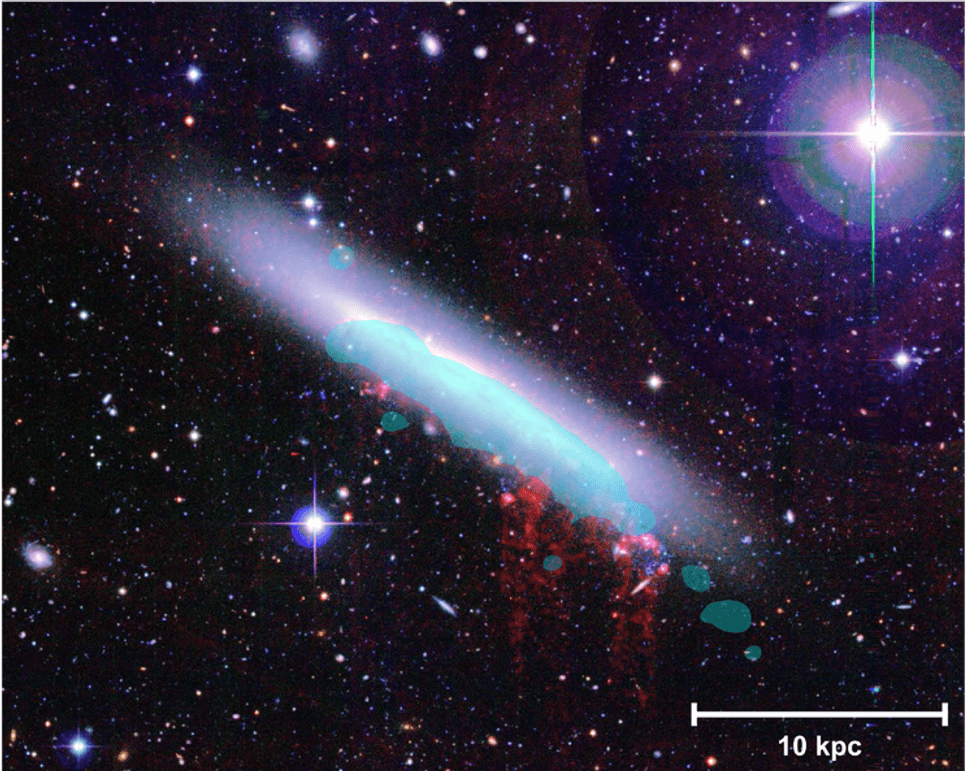
An image of spiral galaxy NGC 4330 in the Virgo Cluster. Ram pressure stripped hot gas is shown in red and a blue overlay shows star-forming gas.
While these processes vary considerably, each leaves a unique, identifiable imprint on the galaxy’s star-forming gas. Piecing these imprints together to form a picture of how clusters drive changes in galaxies is a major focus of the VERTICO collaboration. Building on decades of work to provide insight into how environment drives galaxy evolution, we aim to add a critical new piece of the puzzle.
An ideal case study
The Virgo Cluster is an ideal location for such a detailed study of environment. It is our nearest massive galaxy cluster and is in the process of forming, which means that we can get a snapshot of galaxies in different stages of their life cycles. This allows us to build up a detailed picture of how star formation is shut off in cluster galaxies.
Galaxies in the Virgo cluster have been observed at almost every wavelength in the electromagnetic spectrum (for example, radio, optical and ultra-violet light), but observations of star-forming gas (made at millimetre wavelengths) with the required sensitivity and resolution do not exist yet. As one of the largest galaxy surveys on ALMA to date, VERTICO will provide high resolution maps of molecular hydrogen gas — the raw fuel for star formation — for 51 galaxies.
With ALMA data for this large sample of galaxies, it will be possible to reveal exactly which quenching mechanisms, ram pressure stripping or starvation, are killing galaxies in extreme environments and how.
By mapping the star-forming gas in galaxies that are the smoking gun examples of environment-driven quenching, VERTICO will advance our current understanding of how galaxies evolve in the densest regions of the Universe.
A Chinese court on Monday sentenced the doctor who claimed to be behind the world's first gene-edited babies to three years in prison for illegal medical practice, state media reported.
He Jiankui, who shocked the scientific community last year by announcing the birth of twins whose genes had allegedly been altered to confer immunity to HIV, was also fined three million yuan ($430,000), Xinhua news agency said.
He was sentenced by a court in Shenzhen for "illegally carrying out the human embryo gene-editing intended for reproduction", Xinhua said.
Two of his fellow researchers were also sentenced. Zhang Renli was handed a two-year jail term and fined one million yuan while Qin Jinzhou was given 18 months, suspended for two years, and fined 500,000 yuan.
The trio had not obtained qualifications to work as doctors and had knowingly violated China's regulations and ethical principles, according to the court verdict, Xinhua said.
They had acted "in the pursuit of personal fame and gain" and seriously "disrupted medical order", it said.
Xinhua said a third gene-edited baby was born as a result of He's experiments, which had not previously been confirmed.
He announced in November last year that the world's first gene-edited babies -- twin girls -- had been born that same month after he altered their DNA to prevent them from contracting HIV by deleting a certain gene under a technique known as CRISPR.
The claim shocked scientists worldwide, raising questions about bioethics and putting a spotlight on China's lax oversight of scientific research.
Amid the outcry, He was placed under police investigation, the government ordered a halt to his research work and he was fired by his Chinese university.
Gene-editing for reproductive purposes is illegal in most countries. China's health ministry issued regulations in 2003 prohibiting gene-editing of human embryos, though the procedure is allowed for "non-reproductive purposes".
He's gene editing meant to immunise the twins against HIV may have failed in its purpose and created unintended mutations, scientists said earlier this month after the original research was published for the first time.
He claimed a medical breakthrough that could "control the HIV epidemic", but it was not clear whether he had even been successful in immunising the babies against the virus because the team did not reproduce the gene mutation that confers this resistance, scientists told the MIT Technology Review.
While the team targeted the right gene, they did not replicate the "Delta 32" variation required, instead creating novel edits whose effects are not clear.
Moreover, CRISPR remains an imperfect tool because it can lead to unwanted or "off-target" edits, making its use in humans hugely controversial.
Thousands of tourists risked being stranded in Australia's south east Monday, as a new heatwave left firefighters across the country bracing for another round of potentially catastrophic bushfire.
Hundreds of blazes are burning across Australia, which is experiencing a devastating summer bushfire season fuelled by a prolonged drought and climate change.
More than 30,000 people were told to evacuate Victoria state's popular East Gippsland region Sunday amid fears soaring temperatures and gusting winds would stoke three large blazes, cutting off the last major road still open.
Victoria Emergency Management commissioner Andrew Crisp said residents and holidaymakers still in the area faced being stranded as it was now "too late to leave", with his agency warning it was "not possible" to provide aid to all visitors in the area.
Neighbouring South Australia is experiencing "catastrophic" fire conditions in some areas as temperatures reach above 40 degrees Celsius (104 degrees Fahrenheit) and storms bring damaging winds.
The Country Fire Service's Brenton Eden said it would be a "very dangerous" day for people in the state, with lightning already sparking a number of blazes.
"Winds are gusting and unfortunately this is a dry lightning front that is going to move rapidly across South Australia," he told national broadcaster ABC.
Conditions are also expected to deteriorate over the next two days in worst-hit New South Wales, where 100 fires were burning Monday morning including more than 40 uncontained.
This season's bushfires have killed 10 people, destroyed more than 1,000 homes and scorched more than three million hectares (7.4 million acres) -- an area bigger than Belgium.
Sydney and other major cities have been shrouded in toxic bushfire smoke haze for weeks, forcing children to play indoors and causing professional sporting events to be cancelled.
The crisis has focused attention on climate change -- which scientists say is creating a longer and more intense bushfire season -- and sparked street protests calling for immediate action to tackle global warming.
While conservative Prime Minister Scott Morrison belatedly acknowledged a link between the fires and climate change, he has continued his staunch support of Australia's lucrative coal mining industry and ruled out further action to reduce emissions.
A petition to cancel Sydney's famous New Year's Eve fireworks and use the money to fight bushfires ringing the city has topped 270,000 signatures, but officials say the show will go on.
Sydney has spent Aus$6.5 million ($4.5 million) on this year's fireworks display -- funds that the Change.org petition argues would be better spent on supporting volunteer firefighters and farmers suffering through a brutal drought.
Christianity is on the way out, according to surveys Americans who identify as Christian have dropped by 12 percent in the last decade, and those who identify as having no religion have increased 9 percent.
The Daily Beast cited multiple researchers who have examined the evolution of religion and the turn toward science. Christian fundamentalism is adding to the problem as some sects devolve back to the 1600s when science and religion were mutually exclusive.
"Those who have remained faithful are more fundamentalist than ever," said the Beast. "Moderate Protestantism has declined, while conservative evangelical religion has increased as a percentage of America’s religious, with immediate political consequences: Donald Trump would not be president had conservative evangelicals and Catholics not rallied to his side, despite his many personal transgressions and evident lack of faith."
Science, by contrast, has provided answers for those who hear "voices of the Devil" or who say they literally hear "the voice of God." As neurology advances, doctors can pinpoint the source of delusion and use medication to aid in mental and emotional healing. Still, the well-known Bible stories persist in culture, which Pascal Boyer explained in his 1994 book is due to their simplicity.
"Religious stories, in another irony, have survived human history’s version of natural selection. They are the ones that have stuck around, and they’ve done so not because of their truth or value, but because they are the kinds of stories that human brains understand, and want to repeat," The Beast paraphrased.
Robert McCauley argued in his 2011 book that religion is “cognitively natural” and reflects how humans think after millions of years of evolution. The brain processes things “fast, (mostly) unconscious, automatic, effortless, intuitive thought." It makes sense for the early years of human life when those who couldn't think fast were often killed by larger animals.
"Science, McCauley shows, is actually very unnatural and counterintuitive. For example, we 'naturally' look for agents who take actions in the world; we look for quasi-people, not impersonal forces. But science has shown that impersonal forces—the laws of physics and natural selection, for example— actually are responsible for most of the world around us," explained The Beast.
Essentially, the big questions humans have always asked like, "where did we come from?" and "are we alone?" are also questions our brains want to find easy explanations to.
For fundamentalists, whose brains are not accustomed to thinking critically, rational arguments don't make a dent with entrenched belief systems. McCauley explains, “people are rarely argued out of beliefs that they were not argued into in the first place.”
When confronted with evidence that conflicts their worldviews, fundamentalists blame the sciences.
The Beast went on to cite Antony Alumkal’s 2017 book, Paranoid Science: The Christian Right’s War on Reality, which explains how conservative Christians not only don't trust science, they then create conspiracy theories about scientists to justify their beliefs.
"Alumkal’s examples are familiar: climate denial, intelligent design, 'gay conversion therapy,' and opposition to stem cell research. In each case, drawing on Richard Hofstadter’s classic The Paranoid Style in American Politics, Alumkal shows how rather than simply state that their faith disagrees with the scientific evidence, Christian Right figures have created a fake scientific discourse to compete with the real one, which they allege to be a conspiracy," the report explained.
The example they used was the evangelical group, the "Cornwall Alliance," which takes a large portion of its funds from oil companies and oil executives. Naturally, the group doesn't believe that climate change is real. It's akin to a corrupt politician taking funds from an industry lobbyist and voting to support that industry. The main difference, however, is that religion uses God to justify their corruption and emotionally manipulate followers to believe the same.
Cornwall has resorted to creating conspiracy theories about the 97 percent of climate scientists who believe in the science.
The Beast compared it to atheists, whose militantism isn't exactly comparable to fundamentalist Christianity. Atheists don't burn people at the stake for being a witch, put scientists under house arrest for believing the Earth is round or perform exercises to remove demons. There are atheist activists like Sam Harris, Richard Dawkins and the late Christopher Hitchens, The Beast recalled. they want to rid the world of religion, but most non-believers just want to be left alone. None are taking up a flaming sword to crusade against religious leaders.
According to Jerome Baggett’s 2019 book, The Varieties of Nonreligious Experience: Atheism in American Culture, Atheists have positive values based on the goodness of humanity. The value integrity, "open-mindedness, and the importance of progress."
Read more about the conflicting beliefs and the ways right-wing fundamentalist Christianity is pushing people away from religion at The Daily Beast.
The Mars 2020 rover, which sets off for the Red Planet next year, will not only search for traces of ancient life, but pave the way for future human missions, NASA scientists said Friday as they unveiled the vehicle.
The rover has been constructed in a large, sterile room at the Jet Propulsion Laboratory in Pasadena, near Los Angeles, where its driving equipment was given its first successful test last week.
Shown to invited journalists on Friday, it is scheduled to leave Earth in July 2020 from Florida's Cape Canaveral, becoming the fifth US rover to land on Mars seven months later in February.
"It's designed to seek the signs of life, so we're carrying a number of different instruments that will help us understand the geological and chemical context on the surface of Mars," deputy mission leader Matt Wallace told AFP.
AFP / Robyn Beck Approximately the size of a car, the Mars 2020 rover is equipped with six wheels like its predecessor Curiosity, allowing it to traverse rocky terrain
Among the devices on board the rover are 23 cameras, two "ears" that will allow it to listen to Martian winds, and lasers used for chemical analysis.
Approximately the size of a car, the rover is equipped with six wheels like its predecessor Curiosity, allowing it to traverse rocky terrain.
Speed is not a priority for the vehicle, which only has to cover around 200 yards per Martian day -- approximately the same as a day on Earth.
Fueled by a miniature nuclear reactor, Mars 2020 has seven-foot-long articulated arms and a drill to crack open rock samples in locations scientists identify as potentially suitable for life.
- Ancient life -
"What we're looking for is ancient microbial life -- we're talking about billions of years ago on Mars, when the planet was much more Earth-like," said Wallace.
Back then, the Red Planet had warm surface water, a thicker atmosphere and a magnetic force around it, he explained.
AFP / Robyn Beck NASA engineers and technicians reposition the Mars 2020 spacecraft descent stage equipment, which will be used to land the rover on the Red Planet
"And so it was much more conducive to the types of simple single cell life that evolved here on Earth at that time," Wallace said.
Once collected, the samples will be hermetically sealed in tubes by the rover.
The tubes will then be discarded on the planet's surface, where they will lie until a future mission can transport them back to Earth.
"We are hoping to move fairly quickly. We'd like to see the next mission launched in 2026, which will get to Mars and pick up the samples, put them into a rocket and propel that sample into orbit around Mars," said Wallace.
"The sample would then rendezvous with an orbiter and the orbiter would bring the sample back to the Earth."
Samples should reach Earth "in the course of a decade or so," he added.
- Human mission -
To maximize its chance of unearthing traces of ancient life, Mars 2020 will land in a long dried-up delta called Jezero.
The site, selected after years of scientific debate, is a crater that was once a 500-yard-deep lake.
AFP / Robyn Beck The Mars 2020 rover will remain active for at least one Martian year -- around two years on Earth
It was formerly connected to a network of rivers that flowed some 3.5 to 3.9 billion years ago.
The crater measures just under 30 miles across, and experts hope it may have preserved ancient organic molecules.
The Mars 2020 mission also carries hopes for an even more ambitious target -- a human mission to Mars.
"I think of it, really, as the first human precursor mission to Mars," said Wallace.
Equipment on board "will allow us to make oxygen" that could one day be used both for humans to breathe, and to fuel the departure from Mars "for the return trip."
The ambitions come as a new space race hots up, with Beijing increasingly vying to threaten US dominance.
China on Friday launched one of the world's most powerful rockets in a major step forward for its own planned mission to Mars next year.
NASA's Mars 2020 will remain active for at least one Martian year, which is around two years on Earth.
But Martian rovers have frequently exceeded their intended lifespans -- its predecessor Curiosity landed on Mars in 2012 and is still trundling around the planet's Mount Sharp region.
By 2020 we were expecting jetpacks, hoverboards, flying cars and interplanetary travel. But what might actually happen in the next decade is discovering life on other planets.
A Daily Beast report quoted comments from astronomer Seth Shostak at SETI (the Search for Extra-terrestrial Intelligence), predicted that Earth would make contact with another world before 2030.
In 1977, Voyager 1 and 2 were launched into space in different directions, packed with music, documents, and spoken greetings in 55 languages. Voyager 1 has left our solar system and by 2025, it will cease transmitting data as its power supply finally dies.
More recently, in April 2018, NASA launched the Transiting Exoplanet Survey Satellite (TESS), a telescope designed to search for planets in different solar systems. Thus far, several different planets have been found like a warm Jupiter-type planet, a super-hot Earth and exo-Neptune. In the first month after TESS's launch, NASA discovered eight planets and the experience and tactics will only get better, discovering more and more places where life could exist.
Then there's NASA’s new James Webb telescope, the “world’s premier space science observatory,” which should be in operation by 2021. Another telescope, the ESA’s Remote-Sensing Infrared Exoplanet Large-Survey telescope will hopefully be launched in 2028 if everything stays on track.
There are so many different ways that the Earth is searching for other life that it's merely a numbers game at this point. There are so many options, and the technology of detection is growing so rapidly that the chances are growing with it.
“The universe, we could conclude, is teeming with life,” Shostak told The Daily Beast.
Life on other planets doesn't exactly mean "little green men" featured in old-school Hollywood films or the almond-eyed grey creatures in "The X-Files." Life could be anything from microbes, advanced sea creatures, and other kinds of life that we've never even thought of.
Shostak isn't the only one to anticipate finding alien life. As the late Carl Sagen once explained it, there are "billions and billions" of solar systems in the universe and if fewer than 10 percent of those have some form of life, that still means an absurd amount of possibilities.
“Why should we be the only ones?” asked astronomer Martin Dominik from the University of St. Andrews in Scotland.
From the alien perspective, if they are looking into space the same way the Earth is, they could see our planets, but they may not be able to detect that there is human civilization thriving.
“If we transmitted with all of our power possible, you’d never hear it because the sun would overwhelm it [with] the radio signals that it makes,” the Beast quoted former NASA astronaut Terry Virts, explained on the science podcast Oh No Ross and Carrie.
President Donald Trump's speech in Florida over the weekend provides evidence that he is suffering from cognitive decline, according to a psychiatric expert.
Seth Davin Norrholm, an associate professor of psychiatry and behavioral sciences at Emory University School of Medicine, said Monday that the president's recent rant about Christmas included at least three signs of mental problems.
"So if anybody wants to be a nice conservative, talk show host is not a bad living, I would say. But I have to say, he's a very unique guy and he's a great man and he's been a great friend. So thank you to Rush. Thank you," Trump said.
"And let me begin by wishing you a beautif -- look, do you remember this? Do you remember this? Remember, they were trying to take Christmas out of Christmas. Do you remember? They didn't want to let you say Merry Christmas," Trump continued.
"You'd go around, you'd see department stores that have everything red, snow, beautiful, ribbons, bows. Everything was there. But they wouldn't say Merry Christmas. They're all saying Merry Christmas again. You remember?"
Norrholm has previously called for the president to receive a thorough neuropsychiatric evaluation, saying that "Trump’s communicative abilities appear to be deteriorating."
"While we have no doubt that behaviors exhibited by Trump are similar to symptoms observed in persons suffering from dementia, we are concerned that while no specific diagnosis can be definitively ruled out, the public behaviors displayed by Trump may be explicable by multiple individual or combined issues other than (albeit possibly including) a degenerative neurocognitive disorder," he wrote in September along with psychiatrist David M. Reiss.
This year, I was on the judging panel for the Royal Statistical Society’s International Statistic of the Decade.
Much like Oxford English Dictionary’s “Word of the Year” competition, the international statistic is meant to capture the zeitgeist of this decade. The judging panel accepted nominations from the statistical community and the public at large for a statistic that shines a light on the decade’s most pressing issues.
On Dec. 23, we announced the winner: the 8.4 million soccer fields of land deforested in the Amazon over the past decade. That’s 24,000 square miles, or about 10.3 million American football fields.
This calculation by the committee is based on deforestation monitoring results from Brazil’s National Institute for Space Research, as well as FIFA’s regulations on soccer pitch dimensions.
Calculating the cost
There are a number of reasons why this deforestation matters – financial, environmental and social.
During the droughts, in Sao Paulo state, some farmers say they lost over one-third of their crops due to the water shortage. The government promised the coffee industry almost US$300 million to help with their losses.
Finally, as a November 2018 study shows, the Amazon could generate over $8 billion each year if just left alone, from sustainable industries including nut farming and rubber, as well as the environmental effects.
Financial gain?
Some might argue that there has been a financial gain from deforestation and that it really isn’t a bad thing. Brazil’s president, Jair Bolsonaro, went so far as to say that saving the Amazon is an impediment to economic growth and that “where there is indigenous land, there is wealth underneath it.”
In an effort to be just as thoughtful in that sense, let’s take a look. Assume each acre of rainforest converted into farmland is worth about $1,000, which is about what U.S. farmers have paid to buy productive farmland in Brazil. Then, over the past decade, that farmland amounts to about $1 billion.
The deforested land mainly contributes to cattle raising for slaughter and sale. There are a little over 200 million cattle in Brazil. Assuming the two cows per acre, the extra land means a gain of about $20 billion for Brazil.
Chump change compared to the economic loss from deforestation. The farmers, commercial interest groups and others looking for cheap land all have a clear vested interest in deforestation going ahead, but any possible short-term gain is clearly outweighed by long-term loss.
Rebounding
Right now, every minute, over three football fields of Amazon rainforest are being lost.
What if someone wanted to replant the lost rainforest? Many charity organizations are raising money to do just that.
At the cost of over $2,000 per acre – and that is the cheapest I could find – it isn’t cheap, totaling over $30 billion to replace what the Amazon lost this decade.
Still, the studies that I’ve seen and my calculations suggest that trillions have been lost due to deforestation over the past decade alone.









 AFP / Robyn Beck
  AFP / Robyn Beck
  AFP / Robyn Beck