New evidence suggests that both a meteoriteand massive volcano eruptions workedtogethertowipeout the dinosaurs. An apocalyptic impact dinosaurs.ruled the planet for over a hundred million years ...
Scientists have succeeded for the first time in growing human eggs in a laboratory from the earliest stages in ovarian tissue all the way to full maturity - a scientific step that had previously been taken in mice.
Publishing their result in the journal Molecular Human Reproduction on Friday, scientists from Britain and the United States said it could one day help in developing regenerative medicine therapies and new infertility treatments.
In previous studies, scientists had developed mouse eggs in a laboratory to the stage where they produced live offspring, and had also matured human eggs from a relatively late stage of development.
This latest work, by scientists at two research hospitals in Edinburgh and the Center for Human Reproduction in New York, is the first time human eggs have been developed outside the human body from their earliest stage to full maturity.
"Being able to fully develop human eggs in the lab could widen the scope of available fertility treatments. We are now working on optimizing the conditions that support egg development in this way and studying how healthy they are," said Evelyn Telfer, who co-led the work.
Independent experts not directly involved in this work praised it as important, but also cautioned that there is much more to do before lab-grown human eggs could be safely be made ready for fertilization with sperm.
"This early data suggests this may well be feasible in the future," said Ali Abbara, a senior clinical lecturer in Endocrinology at Imperial College London.
"(But) the technology remains at an early stage, and much more work is needed to make sure that the technique is safe and optimized before we ascertain whether these eggs remain normal during the process, and can be fertilized to form embryos that could lead to healthy babies."
Darren Griffin, a genetics professor at Kent University in the UK, said the work was "an impressive technical achievement".
If success and safety rates were improved, he said, it could in future help cancer patients wishing to preserve their fertility while undergoing chemotherapy treatment, improve fertility treatments, and deepen scientific understanding of the biology of the earliest stages of human life.
Chuck Hurley, vice president and chief council of the evangelical group The Family Leader, on Thursday stunned lawmakers in Iowa when he asked them if they wish they had been aborted.
At a state Senate Judiciary subcommittee hearing on Thursday, lawmakers discussed Senate Study Bill 3143, which would ban most abortions by making it a felony for doctors to terminate pregnancies if a fetal heartbeat can be detected.
The committee heard testimony from people who both oppose and support the bill. But Hurley was the only guest who drew audible gasps from the committee.
"We are commanded to love our neighbors as ourself," Hurley explained. "That includes... every woman who has had difficult decisions to make."
"There's one truth that we can't argue away: that baby is a baby," he continued. "I just want to ask, not a rhetorical question, an actual question. Is there anybody in this room -- let me preface it by saying you're rule makers, the Golden Rule is to treat others the way you want to be treated."
"Is there anybody in this room who honest to God wishes that they had been aborted?" Hurley asked.
With that, the room erupted into groans and verbal objections.
"That's what we're talking about," Hurley stated. "Because we know that's a baby in the womb, you are advancing legislation to protect those babies. Because none of us held up our hands. It's true. That's the greatest rule of all."
Israeli archaeologists on Thursday unveiled what they called a "rare and beautiful" Roman mosaic floor excavated in the ancient Mediterranean port city of Caesarea.
A statement from the Israel Antiquities Authority (IAA) said the piece, from the 2nd or 3rd century AD, measures more than 3.5 by 8 metres (11 by 26 feet).
"We uncovered a mosaic floor of a Roman building from 1,800 years ago," Uzi Ad, one of the directors of the dig, said at the site.
"It is a high-quality and colourful mosaic with three figures," he said.
It depicts three prosperous-looking males wearing togas, one facing the viewer and the other two in profile.
"We can find similar mosaics only in Cyprus and northern Syria," Ad said.
"In Israel we have never before found the same quality."
The IAA says the "rare and beautiful" mosaic floor was part of what may have been a public structure or a grand private home.
"If the mosaic was part of a mansion, the figures may have been the owners," the statement said. "If this was a public building, they might have represented the donors of the mosaic or members of the city council."
Caesarea, 50 kilometres (30 miles) north of Tel Aviv, was established some 2,030 years ago by Roman-appointed King Herod the Great, who ruled what was then Judea.
It was a major city from Roman times through to the Crusader era.
Today, the ruins are a popular tourist destination where concerts are still held in the remains of an ancient Roman theatre.
Bats are the longest-lived mammals relative to body size, and a species called the greater mouse-eared bat lives especially long. Researchers now have unlocked some of this bat's longevity secrets, with hints for fighting the effects of aging in people.
Scientists said on Wednesday that unlike in people and most other animals, in this bat species the structures called telomeres located at the end of chromosomes, thread-like strands inside a cell's nucleus that carry genes determining heredity, do not shorten with age.
Only 19 mammal species are longer-lived than humans relative to body size. Eighteen of them are bats, some living more than four decades. The other is a weird African rodent called a naked mole rat.
The researchers identified two genes in the greater mouse-eared bat that may be responsible for its unique longevity adaptation. These mechanisms could be the focus of future studies on aging, with an eye toward extending healthy lifespans in people, the researchers said.
Telomeres are protective caps at the ends of chromosomes that shorten each time a cell divides. This drives the natural aging process, leading to a breakdown of cells that over time can drive tissue deterioration and eventually death.
"Studying exceptionally long-living mammals that have naturally evolved mechanisms to fight aging is an alternative way to identify the molecular basis of extended 'health spans,'" said biologist Emma Teeling of University College Dublin in Ireland, one of the study leaders. "Bats are an exciting new model species that will enable us to identify new molecular mechanisms that drive healthy aging."
The researchers studied 493 individual bats from four species: the greater mouse-eared bat and Bechstein's bat, both members of the bat genus called Myotis; the greater horseshoe bat; and the common bent-wing bat. Of these, the greater mouse-eared bat had the longest lifespan, about 37 years.
The greater mouse-eared bat and the closely related Bechstein's bat had telomeres that did not shorten with age, suggesting that Myotis bats share this characteristic. Another Myotis bat, Brandt's bat, holds the bat longevity record of 41 years.
Based on body size, the greater mouse-eared bat would be predicted to have a maximum lifespan of four years. Its range spans from Western Europe into the Middle East. It preys on large, ground-dwelling creatures like beetles, crickets and spiders.
The research was published in the journal Science Advances.
(Reporting by Will Dunham; Editing by Sandra Maler)
SpaceX has now launched the most powerful spacecraft since the Apollo era – the Falcon Heavy rocket – setting the bar for future space launches. The most important thing about this reusable spacecraft is that it can carry a payload equivalent to sending five double-decker London buses into space – which will be invaluable for future manned space exploration or in sending bigger satellites into orbit.
Falcon Heavy essentially comprises three previously tested rockets strapped together to create one giant spacecraft. The launch drew massive international audiences – but while it was an amazing event to witness, there are some important potential drawbacks that must be considered as we assess the impact of this mission on space exploration.
But let’s start by looking at some of the many positives. Falcon Heavy is capable of taking 68 tonnes of equipment into orbit close to the Earth. The current closest competitor is the Delta IV heavy which has a payload equivalent of 29 tonnes. So Falcon Heavy represents a big step forward in delivering ever larger satellites or manned missions out to explore our solar system. For the purposes of colonising Mars or the moon, this is a welcome and necessary development.
The launch itself, the views from the payload and the landing of the booster rockets can only be described as stunning. The chosen payload was a Tesla Roadster vehicle belonging to Space X founder and CEO Elon Musk – with a dummy named “Starman” sitting in the driver’s seat along with plenty of cameras.
This sort of launch spectacle gives a much needed public engagement boost to the space industry that has not been seen since the time of the space race in the 1960s. As a side effect this camera feed from the payload also provided yet another proof that the Earth is not flat – a subject about which Musk has previously been vocal.
The fact that this is a fully reusable rocket is also an exciting development. While vehicles such as the Space Shuttle have been reusable, their launch vehicles have not. That means their launches resulted in a lot of rocket boosters and main fuel tanks either burning up in the atmosphere or sitting on the bottom of the ocean (some are recovered).
This recovery massively reduces the launch cost for both exploration and scientific discovery. The Falcon Heavy has been promoted as providing a cost of roughly US$1,300 per kg of payload, while the space shuttle cost approximately US$60,000 per kg. The impact this price drop has for innovative new space products and research is groundbreaking. The rocket boosters on this test flight had a controlled and breathtakingly simultaneous landing onto the launch pad.
Environmental impact
So what could possibly be wrong with this groundbreaking test flight? While visually appealing, cheaper and a major technological advancement, what about the environmental impact? The rocket is reusable, which means cutting down the resources required for the metal body of the rocket. However, the mass of most rockets are more than 95% fuel. Building bigger rockets with bigger payloads means more fuel is used for each launch. The current fuel for Falcon Heavy is RP-1 (a refined kerosene) and liquid oxygen, which creates a lot of carbon dioxide when burnt.
The amount of kerosene in three Falcon 9 rockets is roughly 440 tonnes and RP-1 has a 34% carbon content. This amount of carbon is a drop in the ocean compared to global industrial emissions as a whole, but if the SpaceX’s plan for a rocket launch every two weeks comes to fruition, this amount of carbon (approximately 4,000 tonnes per year) will rapidly become a bigger problem.
Space hazards
The car test payload is also something of an issue. The vehicle has been scheduled to head towards Mars, but what has not been made clear is what is going to happen to it afterwards. Every modern space mission is required to think about clearing up after itself. In the cases of planetary or lunar satellites this inevitably results in either a controlled burn-up in the atmosphere, or a direct impact with the body they orbit.
Space debris is rapidly becoming one of the biggest problems we face – there are more than 150m objects that need tracking to ensure as few collisions with working spacecraft as possible. The result of any impact or degradation of the car near Mars could start creating debris at the red planet, meaning that the pollution of another planet has already begun.
However, current reports suggest that the rocket may have overshot its trajectory, meaning the vehicle will head towards the asteroid belt rather than Mars. This is probably going to mean a collision is inevitable. The scattering of tiny fragments of an electric vehicle is pollution at the minimum – and a safety hazard for future missions at worst. Where these fragments end up will be hard to predict – and hence troublesome for future satellite launches to Mars, Saturn or Jupiter. The debris could be drawn by the gravity of Mars, asteroids or even swept away with the solar wind.
What is also unclear is whether the car was built in a perfect clean room. If not there is the risk that bacteria from Earth may spread through the solar system after a collision. This would be extremely serious, given that we are currently planning to search for life on neighbouring bodies such as Mars and Jupiter’s moon Europa. If microorganisms were found there we may never know whether they actually came from Earth in the first place.
Of course, these issues don’t affect my sense of excitement and wonder at watching the amazing launch. The potential advantages of this large-scale rocket are incredible, but private space firms must also be aware that the potential negative impacts (both in space and on Earth) are just as large.
The Great Bambino’s treatment came at a major turning point in medicine. George Herman Ruth was sick. It had all started with a deep, searing pain behind his left eye. Now, he could hardly swallow. And the pain seemed to be seeping down his body, like an invisible weight tugging at his hips and legs.
The first modern Briton had dark skin and blue eyes, London scientists said on Wednesday, following groundbreaking DNA analysis of the remains of a man who lived 10,000 years ago. Known as "Cheddar Man" after the area in southwest England where his skeleton was discovered in a cave in 1903, the ancient man has been brought to life through the first ever full DNA analysis of his remains.
The world's most powerful rocket, SpaceX's Falcon Heavy, blasted off Tuesday on its highly anticipated maiden test flight, carrying CEO Elon Musk's cherry red Tesla roadster to an orbit near Mars.
Screams and cheers erupted at Cape Canaveral, Florida as the massive rocket fired its 27 engines and rumbled into the blue sky over the same NASA launchpad that served as a base for the US missions to Moon four decades ago.
"Wow, did you guys see that? That was awesome," said SpaceX commentator Lauren Lyons as applause thundered through mission control.
Loaded with Musk's red Tesla and a mannequin in a spacesuit, the monster rocket's test voyage has captured the world's imagination.
About two minutes into the flight, the two side boosters peeled away and made their way back toward Earth for an upright landing.
Both rockets landed side by side in unison on launchpads, live video images showed.
"And the Falcons have landed," Lyons said.
The third, center booster was to attempt a landing on an ocean platform.
SpaceX counted down Tuesday to the first ever launch of the world's most powerful rocket in operation, the Falcon Heavy, which could someday carry supplies to the Moon or even Mars.
Loaded with CEO Elon Musk's red Tesla roadster, a mannequin in a spacesuit, and a playlist consisting of David Bowie's "Space Oddity," the monster rocket's maiden voyage has captured the world's imagination.
Will it sail into deep space, sending an Earth-made car into a distant orbit around the Sun? Or will it explode on the launchpad?
Musk himself has put the odds of success or failure at no better than 50-50.
"It is guaranteed to be exciting, one way or another," the quirky 46-year-old South African-born space visionary and wealthy businessman told reporters ahead of the launch.
"I would consider it a win if it just clears the pad and doesn't blow the pad to smithereens," he added.
"I mean, that's four million pounds of TNT equivalent."
The two-hour launch window was initially set to begin at 1:30 pm (1830 GMT), but the earliest liftoff opportunity was postponed to 2:20 pm due to winds.
If successful, the launch could catch the eye of the US space agency NASA as a way to fast-track its plans to reach the Moon again for the first time since 1972.
And even if it fails, experts say the launch will be a win for the California-based company, which is fast becoming a leader in the global space industry.
- Falcon Heavy specs -
When the Falcon Heavy lifts off from the same NASA launchpad that was the base for the Apollo-era Moon missions of the 1960s and 1970s, it will be "the most powerful operational rocket in the world by a factor of two," SpaceX said.
That means it can carry twice the payload of United Launch Alliance's Delta IV Heavy, at a far lower cost -- about $90 million per launch compared to $350 million for its competitor.
But the Falcon Heavy is not the most powerful rocket ever -- just the biggest in operation today.
The Saturn V rocket that propelled astronauts to the Moon could deliver more payload to orbit. The Soviet-era Energia, which flew twice in 1987 and 1988, was also more powerful.
The Falcon Heavy is essentially three smaller, Falcon 9 rockets strapped together, adding up to a total of 27 engines.
The 230-foot (70-meter) tall rocket is designed to carry nearly 141,000 pounds (64 metric tonnes) into orbit -- more than the mass of a fully loaded 737 jetliner.
It was initially designed to restore the possibility of sending humans to the Moon or Mars, but those plans have shifted and now the Falcon Heavy is being considered mainly as a potential equipment carrier to these deep space destinations, Musk said Monday.
Instead, another rocket and spaceship combination being developed by SpaceX, nicknamed BFR -- alternately known as "Big Fucking Rocket," or "Big Falcon Rocket" -- would be the vehicle eventually certified for travellers.
Musk confessed that he was experiencing none of his usual pre-launch jitters, but was feeling "giddy" ahead of the lift-off.
It’s easy to be apathetic about rising global temperatures, but difficult when you imagine your own future backyard. July 2090 is gonna be a scorcher. NOAA There are lots of terrible things about climate change.
Year after year, southern states consistently rank among the worst in the U.S. for health and wellness.
This is not a new trend. The rankings have changed little over the last quarter century. What’s causing residents of Mississippi, Alabama and Louisiana and other southern states to live such short lives, while experiencing higher rates of cancer, diabetes and heart disease?
As a researcher who’s worked on state health promotion in Hawaii and Texas, it’s clear to me that there are a variety of factors behind people’s poor health in southern states – and none will be an easy fix.
Premature deaths
People in southern states die earlier from a variety of chronic conditions than people in the rest of the U.S. Infectious diseases including whooping cough, salmonella and chlamydia are high across the south, particularly in Louisiana and the Carolinas.
According to America’s Health Rankings, an annual report by the nonprofit United Health Foundation, someone living in Kentucky is 55 percent more likely to die from cancer than a person living in Utah. A resident of Mississippi is 85 percent more likely to die of cardiovascular disease than someone living in Minnesota. If you live in West Virginia, you are more than twice as likely to have diabetes as someone living in Colorado.
Overall, premature death occurs almost twice as often in many of the southern states compared to Minnesota and California.
A July study found a 20-year difference in life expectancy by county, with most of the counties with lower life expectancy located in the Southeast. The life expectancy gap is also growing year to year.
Unhealthy lifestyles
Health behaviors also contribute quite strongly to the development of chronic diseases.
People living in many areas in the south are twice as likely to be smokers and be sedentary than people living in Utah. Every southern state except Florida has an adult obesity rate higher than 30 percent. This lack of fitness has led to the highest rates of injury in the Army basic training across the region.
Poor lifestyle behaviors don’t explain everything, though. For example, West Virginia and Kentucky have very high rates of drug overdose deaths related to the opioid epidemic. However, rates in many southern states – including Mississippi, Georgia and Arkansas – are lower than the rest of the country.
What is causing these poor health outcomes? As a public health researcher, I look to the physical and social conditions in which people live, including education levels, access to health care, air and water quality, housing, culture and many other factors. These can be the root causes of health and illness.
All of these states are relatively poor, with Kentucky, Alabama, West Virginia, Arkansas and Mississippi having the lowest household median incomes in the county. However, this doesn’t tell the whole story. Idaho, for example, is ranked 40th in household income and 14th in health.
Education is often viewed as an important indicator of health – but Alabama, Kentucky, Tennessee and Missouri are all in the top 10 for high school graduation rates.
Air pollution – which is linked to heart attacks, bronchitis and asthma – falls somewhere in the middle for most southern states. Violent crime tends to be higher, with the exception of Mississippi.
Of the 26 states have comprehensive statewide indoor air smoking bans, none are in the South.
According to Walkscore, a site that calculates the walkability of cities, nine of the least walkable cities in the U.S. are in the South. Only one, Miami, is in the top 10.
Limited access to care
It can be hard to find a health care provider in the South. Georgia, Alabama, Arkansas and Mississippi all fall in the bottom 10 for the number of primary care physicians per capita. Mental health providers and dentists are also in short supply across the South. In fact, Alabama only has 85 mental health care providers per 100,000 people. Compare that to 547 per 100,000 in Massachusetts.
Lack of routine health care can lead to an increase in preventable hospitalizations. For instance, a diabetic who is routinely seen by a physician can avoid more serious complications that lead to hospitalizations. Infant mortality and low birth weight babies are prevalent across the region.
Funding for public health differs across the region, with West Virginia providing more per capita than any other state and Missouri spending a fifth of that. The uninsured population is also a mix, with Kentucky and West Virginia having low rates and Mississippi, Florida, Georgia and Oklahoma having some of the highest.
Regional strategies
In the end, the data is clear: Americans living in the southern United States live shorter, sicker lives. The region needs a comprehensive strategy to improve health.
One of our initial ideas is to leverage the mass gatherings around football games to promote positive health activities. The largely rural makeup of these states along with attendance at football games exceeding 78,000 people per game provides a unique southern strategy to change health in these states.
However, no single intervention will change several decades of poor health.
In 2017, the University of Wisconsin-Madison was ranked by the Princeton Review as the top party school in the United States, but it’s also the focus of my recent true crime title, Mad City.
That’s because in the wake of the so-called Summer of Love in 1967 — from the late 1960s through to the mid-70s — the university was a much different kind of place.
It was a period when anti-Vietnam War protests and inevitable counter-protests supplemented draft-card burnings. Sit-ins meant to waylay political visits and right-of-centre speakers were all at high tide.
The UW campus at the time was the epicentre of a particularly vitriolic brand of hyper-partisan tribalism as members of the Chicago Seven, and the more violent Weather Underground, were assembling in what was a progressive island in an ocean of old-fashioned — and often intolerant — dairyland social conservatism.
A homegrown group, known as the New Year’s Gang, was allowed to fester and escalate unchecked. It went so far as to use an improvised car bomb to destroy the campus physics building to protest its use as a U.S. Army think tank.
The blast killed a researcher in no way affiliated with any military work, and permanently maimed three students and staff members.
The four men responsible for the bombing were rightly branded as terrorists and immediately placed on the FBI’s most wanted list. Three members were ultimately arrested and the fourth was never seen or heard from again.
Serial killers came calling
But amid the hunt for the New Year’s Gang, as the university was teetering on a precipice of turmoil and rioting for the sake of rioting became a weekly occurrence, others showed up when no one was looking.
They all came with a plan.
Beginning in 1967 with an odious medical resident named Niels Bjorn Jorgensen — who, I hypothesize in the book for the first time, had already murdered at least five people, including his own brother — UW-Madison emerged as a select destination for at least three serial killers.
They posed as students, job applicants and innocuous passers-through.
During the next 15 years, seven women were murdered on or immediately adjacent to the UW-Madison campus in increasingly heinous ways. An eighth was later killed while leaving the campus in Stevens Point in the fall of 1984.
It’s a record for consecutive sex slayings within a single university system that no one wants to advertise — not then and certainly not now.
But the reality is that from freshman Christine Rothschild, strangled on campus the day before final exams in the spring of ’67, to senior Donna Mraz, slashed and stabbed to death while walking past the varsity stadium in the summer of ’82, opportunistic killers saw an embroiled campus.
And they surmised that the white noise of activism and political agitation was sure to obfuscate their presence.
They guessed right.
‘Place-specific crimes’
Gateway crimes, from peeping and prowling to stalking lecture halls and dorm rooms, all went unrecognized and were allowed to escalate amid a larger culture war where the campus police — and even the encompassing Madison city police — were effectively told to stand down and disengage. Again, a familiar refrain today.
In criminology, we refer to episodes like the 15-year UW phenomenon — from 1967 to 1982 — as place-specific crime. It’s a concept, still only in its adolescence, that finally recognizes that violent offenders are more strategic and logistically oriented than previously thought.
The concept describes how they proactively and discriminately select cities, and even places within those cities such as polarized college campuses, to carry out and just as quickly bury their crimes within a bigger haystack of mayhem, angst and misguided aggression.
It explains how and why specific physical environments not only impart some ritual or symbolic significance for the killers, but also how they exploit police apathy and public disenfranchisement in those same select locales.
It is, after all, how and why Gordon Cummings, the so-called Blackout Ripper, used six days of night in London during the 1942 Nazi bombing raids to rape and murder four women.
It’s how and why, as we’ve confirmed at the Murder Accountability Project, nearly 15 per cent of all unsolved stranglings committed in the United States between 2003 and 2015 have occurred in the same 12-mile stretch in Chicago.
They’re murders committed for the most part by a single killer and occurring at the rate of two a year, but buried strategically among an average of 700 other murders annually. The killer — I call him the Millennium Strangler — knows precisely what he’s doing. He set up shop in Chicago for a reason. It’s murder-by-numbers, by design.
(Murder Accountability Project)
When I wrote Mad City as a visiting scholar at Vanderbilt University in the winter of 2016, it was an otherwise untold story of how divisive campus politics and university administrators, addled by gelatinous vertebrae, enabled the murders of students, staff and local Madison residents by psychopaths hiding in plain sight.
I felt I might be dredging up a dark chapter in history that few would want to revisit.
But within only a matter of months, and following a surreal and tragicomic presidential election, I found it was Madison of 1967 all over again — everywhere in America, no less, as protests erupted in the streets and on college campuses, often violently.
It was no longer a story of the past. It had very quickly become a diagnosis of the present. It was the real and unvarnished State of the Union.
‘A bill will come’
Parables about those who fail to learn from history aside, once the political dust settles, a tally will need to be taken of the terrible toll of current partisan turmoil.
Place-specific crime is a real thing; campus crime, especially campus murder, is equally real. A bill will come due.
We know that motivated predators, as they have before, may well be using these very distractions to install themselves in undetected fashion at universities across the country. The best indication of future behaviour is, of course, prior behaviour. Violent crime ebbs and flows in cycles — including serial crime.
At the Murder Accountability Project, we will track and report on the campuses that, like UW-Madison, yield the highest death toll when all is said and done.
It will likely come as little surprise that the most politically divisive campuses, replete with partisan rhetoric and where entrusted administrators suffer from decision paralysis — just as UW-Madison once did — may eventually be revealed for the hunting grounds they are.
The term “safe space” is a misnomer. Try as one may, no spaces, much less a university campus, can ever be truly hermetically sealed. The more effort it takes to engineer these spaces, as it turns out, the greater the real danger.
Whether it’s 1967 or 2018, campus predators will always know as much.




 Of course, these issues don’t affect my sense of excitement and wonder at watching the amazing launch. The potential advantages of this large-scale rocket are incredible, but private space firms must also be aware that the potential negative impacts (both in space and on Earth) are just as large.
 However, no single intervention will change several decades of poor health.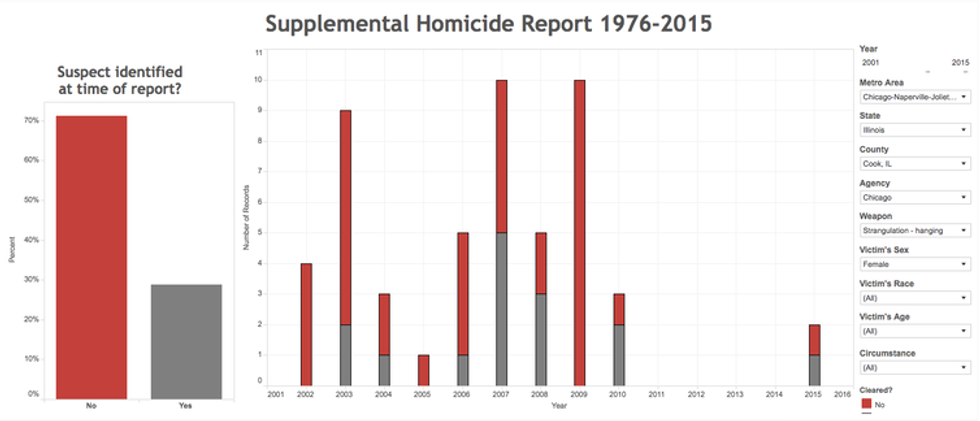
 Whether it’s 1967 or 2018, campus predators will always know as much.