The micro coils make mind-controlled prosthetics easier to use Seung Woo Lee The micro coil, which is implanted into the cortex of the brain, compared to a penny. Research on brain implants has exploded in recent years. With the right mechanisms, they have the potential to help people with everything from paralysis and Parkinson’s disease to…
On Nov. 30 the FDA approved a Phase III clinical trial to confirm the effectiveness of treating post-traumatic stress disorder (PTSD) with MDMA, also known as Ecstasy.
This news appeared in headlines throughout the world, as it represents an important – yet somewhat unorthodox – advance in PTSD treatment.
However, the media have largely been referring to Ecstasy – the street name for this drug – as the treatment in this trial, rather than MDMA (3,4-methylenedioxymethamphetamine). This can lead to misunderstanding, as recreational Ecstasy use is a highly stigmatized behavior. Using this terminology may further misconceptions about the study drug and its uses.
While Ecstasy is in fact a common street name for MDMA, what we call Ecstasy has changed dramatically since it became a prevalent recreational drug. Ecstasy now has a very different meaning – socially and pharmacologically.
It is understandable why the media have referred to this drug as Ecstasy rather than MDMA. Not only has much of the public at least heard of Ecstasy (and would not recognize MDMA), but this also increases shock value and readership.
But referring to a therapeutic drug by its street name (such as Ecstasy) is misleading – especially since MDMA is known to be among the most popular illicit drugs used at nightclubs and dance festivals. This leads some to assume that street drugs are being promoted and provided to patients, perhaps in a reckless manner.
About 80-85 percent of high school seniors and young adults disapprove of someone even trying Ecstasy once or twice. But stigmatizing attitudes tend to be much harsher than mere disapproval.
I investigated stigma toward Ecstasy users, and among young adults (age 18-25) who reported no lifetime use of the drug, many reported strong negative feelings toward those who use Ecstasy.
“Ecstasy” is in fact often used to refer to MDMA, but a lot of Ecstasy in the U.S. often contains little to no MDMA. While many assume the term Ecstasy means or at least implies MDMA, others believe (or know) that Ecstasy tends to be an adulterated drug when purchased “on the street.”
Pharmacological misunderstanding: A brief history of drug purity
When Ecstasy boomed in popularity in the early 1980s, it tended to consist of pure MDMA, or sometimes its chemical sister MDA (3,4-methylenedioxyamphetamine). But after MDMA became illegal in the U.S. in 1985, purity began to decrease.
Throughout the 1990s and 2000s, drugs such as cocaine, ketamine and methamphetamine were common adulterants in Ecstasy.
As a party drug, many people didn’t know or even care that ecstasy was supposed to be MDMA, but others specifically sought pure MDMA, rather than adulterated products. Demand grew. While pills said to be pure MDMA were certainly marketed and sold throughout the 1990s, more expensive Ecstasy in powder form (sold in capsules) slowly grew in demand. Within a few years this exploded into what we know now as “Molly.”
Molly is commonly marketed as being pure MDMA. But in recent years we have found that Molly is often the furthest thing from pure MDMA. Synthetic cathinones, also known as “bath salts,” appear to be the most common adulterants or outright replacements.
Ecstasy-related deaths
Deaths related to Ecstasy use appear to have increased in recent years, but many of these deaths appear to have been largely dependent on environmental conditions. MDMA can raise blood pressure and interfere with regulation of body temperature, which can certainly make it dangerous, especially in large doses and to those with preexisting conditions.
Hours of dancing and high heat can contribute to risks. In this photo: people at a Spring Break Europe party in Rovinj in 2012.
Antonio Bronic/Reuters
But what we often fail to consider is that Ecstasy-related deaths have tended to occur after hours of dancing – often in very hot conditions (such as crowded nightclubs or at festivals in 85 degree Fahrenheit or higher temperature), without adequate rest or proper hydration, or both.
Would these deaths have occurred without Ecstasy? Probably not. But most of these outcomes were very much dependent on extreme environmental conditions.
Many deaths in the U.S. related to Ecstasy or Molly use have also involved co-use of drugs such as alcohol, or unintentional use of “bath salts” or other adulterants, or a combination. In Europe, however, deaths have been increasing due to use of very high-potency pills (over 200 mg).
Extreme environmental conditions, adulterants, use of high-potency Ecstasy products, and ignorance about drug effects are all potential recipes for disaster when Ecstasy is used, especially when harm reduction techniques are not applied.
Is it really appropriate, then, to compare the therapeutic use of MDMA in this study to individuals using illegal, adulterated, or high-potency ecstasy, and dancing for hours in the heat?
The researchers are using pure MDMA, and in low doses. The drug is also used under medical supervision in a safe office, and patients receive medical clearance before entering the trial.
Misconceptions continue
MDMA is by no means a new drug, but misconceptions have continued for decades. MDMA was discovered over a century ago, and the drug’s effects have been researched and documented for decades.
Knowledge about the drug’s potential therapeutic value is nothing new, either. We have known this since the 1970s, but have largely lacked the formal research supporting its efficacy. The drug was administered by thousands of therapists in the early 1980s before it hit the nightclub scene and was made illegal in 1985. Many therapists and advocates fought to keep MDMA legal when it was banned, and some of these fighters – primarily Rick Doblin and the Multidisciplinary Association for Psychedelic Studies (MAPS), have continued to fight for decades, to gain approval for clinical trials of MDMA to be conducted.
It’s easy to view MDMA as just a dangerous party drug, but it was used for therapeutic purposes way before it exploded into nightlife. All our lives we’ve been taught illicit drugs are bad, but so few of us know the history of these drugs prior to their criminalization. We also tend to focus on the negative publicized effects, and many individuals still believe misinformation such that MDMA use puts holes in the brain, drains spinal fluid, or causes Parkinson’s disease.
Amphetamine can be drugs of abuse, but can also treat ADHD under the name Adderall.
We also often forget to consider that these same stigmatized drugs may also have important medical value. For example, amphetamine has been a drug of abuse since the 1930s, but it is efficacious in treating ADHD under the trade name Adderall. And despite increasing abuse of opioids in the U.S., these pills are still highly efficacious in treating pain. Like opioids and amphetamine, MDMA appears to have its place in medicine.
As drugs like MDMA and psilocybin move back into the spotlight as having therapeutic value, we must understand that while we may see various drugs as having “bad” uses, this doesn’t mean they are “bad” substances. Some of these drugs appear to be very useful in medical or therapeutic contexts.
Some 99 million years ago, a juvenile dinosaur got its feathery tail stuck in tree resin, a death trap for the small creature. But its misfortune is now giving scientists unique insight into feathered dinosaurs that prospered during the Cretaceous Period.
Researchers said on Thursday a chunk of amber - fossilized resin - spotted by a Chinese scientist in a market in Myitkyina, Myanmar, last year contained 1.4 inches (36 mm) of the tail of the dinosaur, complete with bones, flesh, skin and feathers. The dinosaur itself was no more than 6 inches (15 cm) long, about the size of a sparrow.
"This is the first of its kind," said paleontologist Ryan McKellar of the Royal Saskatchewan Museum in Canada, one of the researchers involved in the study published in the journal Current Biology. "I'm blown away."
The scientists suspect the tail belonged to a type of two-legged, bird-like dinosaur called a maniraptoran, one of several groups of dinosaurs that possessed feathers. Birds, which first appeared about 150 million years ago during the Jurassic Period, evolved from small, feathered dinosaurs.
The researchers used sophisticated scanning and microscopic observations to study the tail. They determined it boasted a chestnut-brown upper surface, with a pale or white underside, a pattern known as countershading.
"We're seeing feathers still attached to the tail, and we can see how they attach, the shapes that they have down to the micrometer scale, and things like pigment patterns within the feathers," McKellar said.
The tail consisted of eight vertebrae, soft tissue and feathers exquisitely preserved in three dimensions.
McKellar said getting its tail stuck in resin "would have been a game-ender for that particular animal. They don't drop their tails like some lizards."
The tail's anatomy enabled the scientists to rule out that it belonged to a bird because it was long and flexible and lacked a pygostyle, fused vertebrae that in birds support the tail feathers.
The discovery also sheds light on the evolution of feathers. The ones trapped in the amber were more primitive than those of birds, lacking much of the central shaft seen in bird feathers.
Amber has long been a boon to paleontologists. Numerous creatures have been found entombed in amber, including insects, lizards, amphibians, mammals and birds, as well as plants including flowers.
(Reporting by Will Dunham; Editing by Peter Cooney)
Scientists examining the jawbone of a saber-toothed, mammal-like beast that prowled Tanzania 255 million years ago have come across a remarkable fossil rarity: one of the oldest-known tumors.
University of Washington researchers on Thursday described a benign tumor composed of miniature tooth-like structures they found embedded next to the root of the creature's enlarged canine tooth while studying an unrelated aspect of the jaw.
The animal was a member of an extinct group of four-legged carnivores called gorgonopsians that mixed mammal-like and reptile-like traits. They reached up to 10 feet (3 meters) long and appeared early in the evolutionary lineage that led to mammals. The jawbone came from one of the smaller gorgonopsian species.
Gorgonopsians were among the top predators of their time, thriving from about 270 million to 252 million years ago when they were wiped out during Earth's worst mass extinction at the end of the Permian Period. Their demise came roughly 20 million years before the first dinosaurs.
When the researchers sliced into the mandible fossil from Tanzania's Ruhuhu Valley, they found a benign dental tumor called a compound odontoma that grows within the gums or other jaw soft tissues. When people get one, surgery is sometimes used to remove it.
"There was no indication that there was a tumor in this jaw. It looked normal before we cut it open. It was pure luck that we found the tumor," University of Washington paleobiologist Megan Whitney said.
Until now, this type of tumor was known only in mammals, including some Ice Age fossils tens of thousands of years old. The new discovery shows such a tumor existed in mammal ancestors that lived tens of millions of years before the first mammals appeared.
Tumors, malignant and benign, typically involve soft tissue, and rarely fossilize.
"Ancient tumors generally need to affect hard parts such as bones and teeth in order to be preserved in the fossil record," University of Washington paleobiologist Christian Sidor added.
This tumor included hard enamel and dentin.
Few tumor fossils are older. A 300-million-year-old fish was found with a tumor and a 350-million-year-old armored fish has an apparent tumor that some dispute.
"Fossils allow us to understand the evolution of diseases in deep time and have the potential to provide clues as to the causes of diseases that afflict humans," Whitney said.
The research appears in the Journal of the American Medical Association Oncology.
(Reporting by Will Dunham; Editing by Peter Cooney)
WASHINGTON - Some of President Obama's top science staffers called it "the Columbo question." The president had a habit, just like television's favorite detective, of making one last inquiry of his aides when being briefed on science issues. A question that "goes right to the heart of the matter," said his chief science adviser, Dr. John…
The first images from the pentultimate phase of the mission NASA/JPL-Caltech/Space Science Institute Stormy weather Cassini snapped this closeup of the storm at Saturn's north pole with its wide-angle camera. Each pixel of the image represents an area 14 miles wide. The photo also reveals the edges of the enormous hexagon-shaped jet stream wrapped around the…
A whole new kind of ‘breaking up’ around the holidays NASA/John Sonntag A rare ice crack not formed by that squirrel from the Ice Age movies An iceberg the size of Delaware is starting to break away from Antarctica. It began with a small crack, but has now grown 70 miles long and more than 300…
Zapping your nerves to jumpstart the blood clotting process Pixabay Scientists are using the body's nervous system to stop bleeding anywhere in the body. For centuries, if a doctor wanted to stop a bleeding wound, he would use the tourniquet method: Tightly wrap a piece of cloth around the area, which would essentially cut off blood…
Things haven't gone according to plan. NASA/JPL-Caltech/SwRI/MSSS Jupiter as seen by NASA's Juno spacecraft Captured August 27, 2016. There was much excitement when the Juno spacecraft successfully arrived at Jupiter in July after a five-year journey through the solar system. A perfect engine firing placed the solar-powered spacecraft into just the right orbit around the gas…
You probably don’t think clams are the most exciting animals on the planet. But anyone who dismisses these marine bivalve molluscs surely cannot be aware of just how important they actually are. Without knowing it, they have taught us so much about the world we live in – and how it used to be.
Our research team has spent the past two decades examining the chemical composition of the longest-lived animal that doesn’t live in a colony known to science – the ocean quahog clam – to find out how the climate of the North Atlantic ocean has changed in relation to the atmosphere.
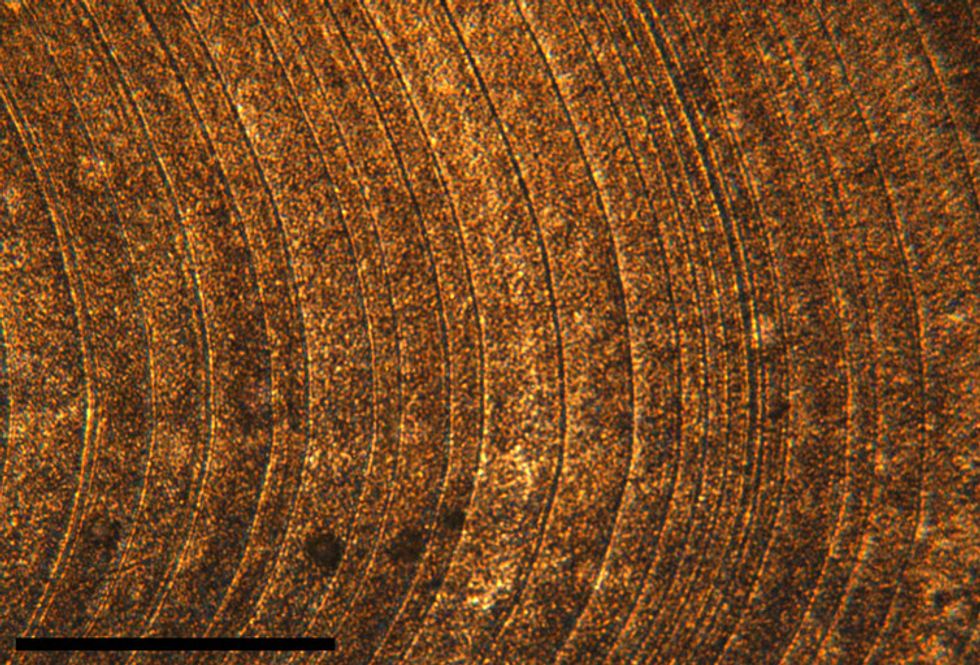
This quahog can live for more than 500 years – and, as it does, it lays down growth rings in its shell. As with trees, the growth rings are at wider increments when conditions are more favourable and narrower when less so. By comparing these shell rings we were able to date each of them and find out what the temperature and salinity (or density) of the seawater was at the time of its growth. Any clams that lived at the same time had the same pattern of lines on their shells. So by comparing many of them together, we managed to extend the record backwards beyond the lifespan of just one individual, to around 1,000 years.
Using this information, we have discovered how the ocean environment that these clams live in has changed. And we now have the first precisely dated, annually resolved, record of North Atlantic ocean variability covering the entire last millennium, allowing scientists to examine the timing of past changes in the marine environment relative to those in the atmosphere.
Clamming up
Perhaps one of the most profound aspects of our research is the finding that human-driven climate change, resulting in an overall warming of surface air temperatures, has led to a reversal in the long-term natural coupling of the marine and atmospheric climate systems.
Evidence from the shells shows that over the modern industrial period (AD 1800-2000) changes in marine climate lagged behind the atmosphere. Surface air temperatures responded much faster to human-induced climate changes than the North Atlantic did. Though we cannot speculate on what this will mean for the future, this new information will play an important role in reducing uncertainty in predictions of future climate variability.
Though the shells of quahogs typically only grow up to 13cm in length, this finding from the study of the chemistry in their rings is astounding. Until now, there has been no direct evidence that variability in the North Atlantic during the past 1,000 years drove changes in the atmospheric climate, or if the oceans were merely responding to changes in the atmosphere. Our understanding of ocean variability timing in the North Atlantic, and the mechanisms behind it, were relatively poorly known until this study – and direct observations were limited to the 20th century.
Back to the past
Looking further back in time, the oxygen isotopes record developed from the clam shells shows marked changes in the climate over the past 1,000 or so years. During the last millennium, volcanic eruptions, the power of the sun (solar irradiance) and human industrial activity all played a significant role in driving the conditions in the North Atlantic.
Growth lines on the shell of an ocean quahog. The black line represents 0.3mm.
Author provided
In addition, our research found that the North Atlantic probably played an important role in the switch from the relatively warm conditions of the medieval climate anomaly (from about AD 1000 to 1400) into the cooler conditions of the “Little Ice Age” from about AD 1450 to 1850).
The most intriguing result from this period came from comparing the clam shell rings with ice cores and tree rings. While the shells allowed us to uncover marine variability, the ice and tree trunks have previously shown scientists what the atmospheric surface air temperature was like during different time periods in the northern hemisphere and Greenland.
By comparing the shells with ice and trees, we found that over the pre-industrial portion of the last millennium (between the years 1000 and 1800) changes in marine climate preceded changes in northern hemisphere surface air temperatures.
Between 1000 and 1800, changes in the North Atlantic – brought about by solar irradiance, gases being expelled into the atmosphere from volcanoes and changes in air circulation – were fed back into the atmosphere. This influenced the temperature of the atmosphere then, and means that the North Atlantic ocean was playing an active role in influencing atmospheric air temperatures.
This continues to play a pivotal role in future climate variability, albeit now with a backdrop of long-term warming driven by greenhouse gases.
This clam may indeed be small fry, but what we have learned about the ocean climate from quahog clam shells has drastically changed our view of the world’s atmosphere.
The spacecraft nailed its first unpowered glide since a fatal accident in 2014 Virgin Galactic VSS Unity Descending Above, the sky. Below, the Mojave. Virgin Galactic is working its way back to space. The private spaceflight company, built by billionaire Richard Branson, is premised on an odd sort of lux populism: tourist trips to outer space…
In us, on us and all around us. Microbes image via www.shutterstock.com. Most of us considered microbes little more than nasty germs before science recently began turning our view of the microbial world on its head. A “microbe” is a bacterium and any other organism too small to see with the naked eye. After decades of…
Gut Check looks at health claims made by studies, newsmakers, or conventional wisdom. We ask: Should you believe this? The claim: Delivery by caesarean section alters a baby's microbiome in a way that increases the risk of becoming obese and developing asthma or other allergies. Tell me more: The explosion of research on the microbiome -…