Lola Gayle, STEAM Register Earlier this year, two California astronomers announced they had discovered evidence for a new distant giant planet in the solar system, which that nicknamed "Planet Nine." Since that time, the scientific community has been buzzing with hot debates on both sides. Where did this planet come from, how did it form, and…
The largest analysis yet has found Ebola virus particles present in semen as long as 565 days after recovery from an infection, highlighting the potential role of sex in sparking another outbreak, researchers reported on Tuesday.
The study, published in the Lancet Global Affairs, involved 429 men seen between July 2015 and May 2016 who were part of the Liberian government's Men's Health Screening Program (MHSP), the first national semen testing program for Ebola virus.
Of the participants, 38 men tested positive during the study period. Within this group, 24 men, or nearly two thirds, had semen samples that tested positive for Ebola fragments a year after recovering from disease. Ebola tended to linger longer in men over age 40, the researchers said.
In one case, Ebola was detected at least 565 days after a man recovered from his illness.
"Before this outbreak, scientists believed that Ebola virus could be found in semen for three months after recovery. With this study, we now know that virus may persist for a year or longer,” said Dr. Moses Soka, coordinator of the Ebola Virus Disease Survivor Clinical Care at the Liberian Ministry of Health, who worked on the study.
As part of Liberia's monitoring program, male survivors aged 15 and older can enroll for monthly tests of their semen. Participants also get counseling on safe sex and condoms at each visit.
"This program provides important insights into how long Ebola remains in semen, a key component to preventing flare-ups of the disease and protecting survivors and their loved ones," Dr. Thomas Frieden, director of the U.S. Centers for Disease Control and Prevention, which is collaborating with the ministry. Other partners include the World Health Organization, and the Academic Consortium Combating Ebola in Liberia.
Semen samples in the study were tested for genetic fragments known as the viral RNA, but the tests could not tell if the virus was capable of spreading disease.
Sexual contact with an Ebola survivor in March 2015 resulted in the infection and eventual death of a woman from Monrovia, even after Liberia had been declared free of Ebola. Tests of the man's semen showed the presence of Ebola virus 199 days after he first became ill.
The World Health Organization advises that all male Ebola survivors should be tested three months after the onset of symptoms and then monthly until they know they have no risk of passing on the virus.
(Reporting by Julie Steenhuysen; Editing by Leslie Adler)
A new study revealed the lengths people will go to to take needed antibiotics without a prescription -- in some cases taking them from their pets, CNN reported.
The study, which surveyed 400 respondents in Houston, tracked how they acquired the medications, with 24 percent saying they bought their antibiotics outside the country, 20 percent citing friends or relatives as their source, 12 percent saying they conserved their antibiotics from prior prescriptions. CNN noted that four percent of respondents voluntarily stated that they used drugs that were originally prescribed to animals, a response that was not among the options listed on the survey.
The respondents reportedly came from diverse social backgrounds, in response to past reports focusing on Latino immigrants' antibiotic use.
"The problem of non-prescription use is not confined to Latino communities," the study's abstract read. "Community antimicrobial stewardship must include a focus on non-prescription antibiotics."
Forty percent of respondents said that they were able to buy antibiotics in the US without a prescription.
"We thought that was some other country's problems, not ours," said another one of the study's authors, Larissa Grigoryan. "That was an additional surprise."
Twenty-five percent of the people surveyed said they planned to take antibiotics without a doctor's approval "at some time in the future." Another 5 percent said they had already done so within the past year.
Conservative radio host Neal Larson quit writing his column for an Idaho newspaper after he made news for being called out by Neil deGrasse Tyson over a major factual error, the Daily Kos reported.
"The instant it was picked up nationally, I was checkmated," Larson wrote in his final column for the Twin Falls Times-News. "I had no recourse, no comparable media platform at my disposal. It was as terrible and as helpless as you can imagine. Even more disappointing, a few people that I honestly thought were friends, shared online my unfortunate story with glee."
Larson ran afoul of the astrophysicist and Cosmos host last week when he accused deGrasse Tyson of insulting a 9-year-old girl on Twitter.
Unfortunately for Larson, his premise was based on a story in the satirical website Clickhole. Even worse, deGrasse Tyson commented on the article and thoroughly debunked his column.
"You abrogated your journalistic integrity by not verifying what you read in somebody else’s article, before using it as a foundational pillar in yours," deGrasse Tyson wrote.
Larson acknowledged the error in his final op-ed, adding that he apologized to deGrasse Tyson for his mistake. But he also complained about the amount of attention his failed attack received.
"For those in the national spotlight, this is probably old hat, but I wasn’t equipped to handle the influx, logistically or emotionally," Larson wrote. "If anyone had sent a kind word or more gentle and constructive criticism, I apologize because I probably missed it in the onslaught of hate."
However, Larson will continue broadcasting his radio show. Daily Kos pointed out that he has used it to argue, among other things, that Donald Trump is suited for the presidency because of his "alpha-male" personality, and that the choice of mascot for Washington D.C.'s NFL team is better than "a screaming Black Lives Matter activist, or a finger-snapping drag queen."
It’s literally epoch-defining news. A group of experts tasked with considering the question of whether we have officially entered the Anthropocene – the geological age characterised by humans' influence on the planet – has delivered its answer: yes.
The British-led Working Group on the Anthropocene (WGA) told a geology conference in Cape Town that, in its considered opinion, the Anthropocene epoch began in 1950 – the start of the era of nuclear bomb tests, disposable plastics and the human population boom.
The Anthropocene has fast become an academic buzzword and has achieved a degree of public visibility in recent years. But the more the term is used, the more confusion reigns, at least for those not versed in the niceties of the underpinning science.
Roughly translated, the Anthropocene means the “age of humans”. Geologists examine layers of rock called “strata”, which tell a story of changes to the functioning of Earth’s surface and near-surface processes, be these oceanic, biological, terrestrial, riverine, atmospheric, tectonic or chemical.
Earth’s history, spiralling towards the present. (USGS/Wikimedia Commons)
The chart features a hierarchy of terms like “system” and “stage”; generally, the suffix “-cene” refers to a geologically brief stretch of time and sits at the bottom of the hierarchy. We have spent the past 11,500 years or so living in the so-called Holocene epoch, the interglacial period during which Homo sapiens has flourished.
If the Holocene has now truly given way to the Anthropocene, it’s because a single species – us – has significantly altered the character of the entire hydrosphere, cryosphere, biosphere, lithosphere and atmosphere.
The end of an era?
Making this call is not straightforward, because the Anthropocene proposition is being investigated in different areas of science, using different methods and criteria for assessing the evidence. Despite its geological ring, the term Anthropocene was coined not by a geologist, but by the Nobel Prize-winning atmospheric chemist Paul Crutzen in 2000.
Comparing these changes to those occurring during the Holocene, they concluded that we humans have made an indelible mark on our one and only home. We have altered the Earth system qualitatively, in ways that call into question our very survival over the coming few centuries.
Crutzen’s group talks of the post-1950 period as the “Great Acceleration”, when a range of factors – from human population numbers, to disposable plastics, to nitrogen fertiliser – began to increase exponentially. But their benchmark for identifying this as a significant change has nothing to do with geological stratigraphy. Instead, they ask whether the present period is qualitatively different to the situation during the Holocene.
Rocking out
Meanwhile, a small group of geologists has been investigating the stratigraphic evidence for the Anthropocene. A few years ago a subcommission of the ICS set up the Anthropocene working group, which has now suggested that human activity has left an indelible mark on the stratigraphic record.
The major problem with this approach is that any signal is not yet captured in rock. Humans have not been around long enough for any planet-wide impacts to be evident in Earth’s geology itself. This means that any evidence for a Holocene-Anthropocene boundary would necessarily be found in less permanent media like ice sheets, soil layers or ocean sediments.
The ICS has always considered evidence for boundaries that pertain to the past, usually the deep past. The WGA is thus working against convention by looking for present-day stratigraphic markers that might demonstrate humans’ planetary impact. Only in thousands of years' time might future geologists (if there are any) confirm that these markers are geologically significant.
In the meantime, the group must be content to identify specific calendar years when significant human impacts have been evident. For example, one is 1945, when the Trinity atomic device was detonated in New Mexico. This and subsequent bomb tests have left global markers of radioactivity that ought still to be evident in 10,000 years.
Alternatively, geographers Simon Lewis and Mark Maslin have suggested that 1610 might be a better candidate for a crucial human-induced step change. That was the year when atmospheric carbon dioxide dipped markedly, suggesting a human fingerprint linked to the New World colonists' impact on indigenous American agriculture, although this idea is contested.
Decision time
The fact that the WGA has picked a more recent date, 1950, suggests that it agrees with the idea of defining the Great Acceleration of the latter half of the 20th century as the moment we stepped into the Anthropocene.
It’s not a decision that is taken lightly. The ICS is extremely scrupulous about amending the International Chronostratigraphic Chart. The WGA’s suggestion will face a rigorous evaluation before it can be scientifically accepted by the commission. It may be many years before it is formally ratified.
Elsewhere, the term is fast becoming a widely used description of how people now relate to our planet, rather like the Iron Age or the Renaissance. These words describe real changes in history and enjoy widespread use in academia and beyond, without the need for rigorously defined “boundary markers” to delimit them from prior periods.
Does any of this really matter? Should we care that the jury is still out in geology, while other scientists feel confident that humans are altering the entire Earth system?
Writing on The Conversation, geologist James Scourse suggests not. He feels that the geological debate is “manufactured” and that humans' impact on Earth is sufficiently well recognised that we have no need of a new term to describe it.
Clearly, many scientists beg to differ. A key reason, arguably, is the failure of virtually every society on the planet to acknowledge the sheer magnitude of the human impact on Earth. Only last year did we finally negotiate a truly global treaty to confront climate change.
In this light, the Anthropocene allows scientists to assemble a set of large-scale human impacts under one graphic conceptual banner. Its scientific status therefore matters a great deal if people worldwide are at long last to wake up to the environmental effects of their collective actions.
Gaining traction
But the scientific credibility of the Anthropocene proposition is likely to be called into question the more that scientists use the term informally or otherwise. Here the recent history of climate science in the public domain is instructive.
Even more than the concept of global warming, the Anthropocene is provocative because it implies that our current way of life, especially in wealthy parts of the world, is utterly unsustainable. Large companies who make profits from environmental despoliation – oil multinationals, chemical companies, car makers and countless others – have much to lose if the concept becomes linked with political agendas devoted to things like degrowth and decarbonisation. When one considers the organised attacks on climate science in the United States and elsewhere, it seems likely that Anthropocene science will be challenged on ostensibly scientific grounds by non-scientists who dislike its implications.
Sadly, such attacks are likely to succeed. In geology, the AWG’s unconventional proclamation potentially leaves any ICS definition open to challenge. If accepted, it also means that all indicators of the Holocene would now have to be referred to as things of the past, despite evidence that the transition to a human-shaped world is not quite complete in some places.
Some climate contrarians still refuse to accept that researchers can truly distinguish a human signature in the climate. Similarly, scientists who address themselves to the Anthropocene will doubtless face questions about how much these changes to the planet are really beyond the range of natural variability.
If “Anthropocene sceptics” gain the same momentum as climate deniers have enjoyed, they will sow seeds of confusion into what ought to be a mature public debate about how humans can transform their relationship with the Earth. But we can resist this confusion by recognising that we don’t need the ICS’s imprimatur to appreciate that we are indeed waving goodbye to Earth as we have known it throughout human civilisation.
We can also recognise that Earth system science is not as precise as nuclear physics or geometry. This lack of precision does not mean that the Anthropocene is pure scientific speculation. It means that science knows enough to sound the alarm, without knowing all the details about the unfolding emergency.
The Anthropocene deserves to become part of our lexicon – a way we understand who we are, what we’re doing and what our responsibilities are as a species – so long as we remember that not all humans are equal contributors to our planetary maladies, with many being victims.
Almost everyone enjoys a bank holiday. A three-day weekend means more time to spend with family and friends, to go out and explore the world, and to relax from the pressures of working life. Imagine if, rather than a few times a year, we had a three-day weekend every week. This isn’t just a nice idea. Beyond the possibilities for leisure, three-day weekends might also be one of the easiest steps we could take to radically reduce our environmental impact – and future-proof our economy.
A reduction in working hours generally correlates with marked reductions in energy consumption, as economists David Rosnick and Mark Weisbrot have argued. In fact, if Americans simply followed European levels of working hours, for example, they would see an estimated 20% reduction in energy use – and hence in carbon emissions.
With a four-day week, huge amounts of commuting to and from work could be avoided, as well as the energy outputs from running workplaces. At a point when we need to massively cut back our carbon outputs, instituting a three-day weekend could be the simplest and most elegant way to make our economy more environmentally friendly.
It’s happened before. For example, in 2007 the US state of Utah redefined the working week for state employees, with extended hours on Monday to Thursday meaning it could eliminate Fridays entirely. In its first ten months, the move saved the state at least US$1.8m (£1.36m) in energy costs. Fewer working days meant less office lighting, less air conditioning and less time spent running computers and other equipment – all without even reducing the total number of hours worked.
For one day a week, thousands of commuters were able to stay at home. If the reductions in their greenhouse gas emissions from travel were included, the state estimated a saving of more than 12,000 tons of CO2 each year.
Utah abandoned the experiment in 2011 after residents complained they were unable to access services on Fridays. It seems this sort of change has to be accompanied by a shift in our expectations so that Friday becomes a “third weekend” rather than simply a weekday without work. What Utah does show is that, replicated across an entire country, a four day week would see substantial progress towards an economy that does less damage to the environment.
Yet there would be other benefits too. Working less would improve the elusive “work/life balance”, and help to restore our mental health and physical well-being. It would also give us more time to spend on social activities, to care for children and the elderly, and to engage with our communities. Experiments with reduced working hours at select workplaces in Sweden in 2015 reduced sickness and even increased productivity.
Directing gains in economic efficiency towards increased free time and reduced energy consumption, rather than making more stuff, could create a better and more environmentally safe world.
No commuting on Fridays would lead to an immediate reduction in emissions.Alex Segre / shutterstockAn obvious objection might be: “How could we afford this?” But there are serious economic and technological reasons for why governments, political parties, think tanks and social movements should all start to think about advocating for the implementation of three-day weekends.
As anthropologist David Graeber has recently contended, many of us work jobs that, at least partially, seem pointless. Indeed, economists have long been aware of the redundant hours contained in many working days, with employees effectively under-utilised in their workplaces, yet unable to leave due to the persistent issue of “presenteeism” – where workers are valued by managers for hours logged in the office rather than productivity. Rather than work longer hours for little productive benefit, we could embrace a shorter working week and help save our planet and our own well-being.
Looking more into the long-term, a new wave of workplace automation featuring advanced robotics and machine learning systems is predicted to replace 47% of current jobs in the US in coming decades, and 54% in Europe. In these circumstances, where there will be significantly less work available, instituting policies such as three-day weekends becomes essential to make life liveable under these changed economic conditions.
As Nick Srnicek and I have argued in our book Inventing the Future, automation will soon offer us the prospect of a very different world of work. More automation would make many production processes more efficient, using less energy and less human labour until, eventually, we are largely freed from work.
The key to capturing the benefits of automation without drastic social dislocation depends in part on developing policies which work to share the gains. This means a reduced working week thanks to an extended weekend, together with a universal basic income.
None of this will happen overnight. But, if you’re in the UK and are lucky enough to have Monday off, don’t forget that extra day at home or in the park is not only fun but will help fight climate change.
Being in business calls for a determined if not ruthless mindset, the ability to be confident and in control, and to be forceful, calculating, and a meticulous planner. Attributes that few possess. But there is one category of person that has them in abundance – the psychopath.
Researcher Robert Hare estimates 1% of the general population fits the profile, though the percentage of CEOs might be four times that figure.
Oxford University psychologist Kevin Dutton surveyed 5,400 people across a wide range of professions. He compiled a list of the top 10 jobs ranking highest for psychopathy. Top of the list? CEO, followed by lawyer, media personality, salesperson and surgeon.
While psychopathic individuals are more likely than other people to commit crimes, most of them manage to live successful lives, their psychopathic personality helping them along the way.
The problem is, it’s the psychopathic boss who makes the culture and sets the tone for the way some organisations go about their business.
Does the boss like to operate ethically, or do they skate around in the grey zone between ethical and legal? Or worse, do they like to step over the line into illegality if the risks are low and the benefits outweigh the legal liability?
Those that work for such a boss can sometimes get caught in the trap, so set on not upsetting the boss, they develop a case of “ethical blindness”. These workers are not usually conscious of being unethical, it is simply that management has created an environment in which ethics are not much considered, allowing otherwise decent people to become established in that behaviour.
Put an otherwise good person in a toxic environment, perhaps one created by a psychopathic boss, and that person will find it very difficult to resist the slide into ethical blindness and harmful behaviour.
What to watch for
Psychologist Phillip Zimbardo, best known for his Stanford Prison Experiment, came up with a set of social processes that “expedite evil”. Reading them is a reminder for how we are all perched at the top of our own slippery slope:
Mindlessly taking the first small step. Its easy when there is something to be gained and little to lose. Its the “thin edge of the wedge” that creates forward momentum. In business, you might be expected to cut a few corners as an acceptable part of getting the job done. As time goes by, the practice moves beyond “is this the right thing to do” to “can I get away with it?”, a transition that is easily made in a culture of ethical blindness.
Dehumanisation of others. When tribal “us and them” thinking leads people to see outsiders as sub-human. The blood-soaked history of warfare shows the destructive potential of this thinking. When a boss tells everyone that this is war, that we must “smash the competition”, or “bury them” they are creating a hostile environment in which survival is linked to killing the enemy.
De-individuation of self (anonymity). People who mask their identity are more likely to behave in anti-social ways because anonymity gives permission to behave badly. If a worker is an anonymous cog in a machine-like organisation, they feel less than human themselves, and so less governed by human decency.
Diffusion of personal responsibility. Become swept up in the mob mentality (eg. lynch-mob), and you are capable of almost anything. Thousands of usually law-abiding Londoners became looters and arsonists during the 2011 riots because “everyone else was doing it”. A workplace with “the end justifies the means” culture makes it easy for people to do what everyone else is doing.
Blind obedience to authority. When an authority figure like the boss orders you to do something it is difficult to refuse, particularly if not complying carries serious consequences. In the past, such disobedience could be fatal.
Uncritical conformity to group norms. Norms exert a powerful influence over our behaviour, particularly if disobedience or being a nonconformist will get you fired from the organisation. In the evolutionary past, social exclusion was tantamount to death so our instincts are to conform.
Passive tolerance of evil through inaction or indifference. As Edmund Burke noted, “The only thing necessary for the triumph of evil is for good men to do nothing”. You don’t need to be a perpetrator, it’s enough to simply stand passively by.
Bottom-up leadership
You can still establish yourself as an ethical person in your own sphere of influence provided the boss is not diabolical. This is a form of bottom-up leadership that sets a good example for others to follow.
When enough spheres of influence overlap, the culture changes. In the end, your best option may be to look for another job and exit gracefully. But don’t underestimate the power of collective action to create an ethical workplace.
It has been two years since Gilead Sciences Inc. rolled out its $1,000-a-pill hepatitis C drug Sovaldi, priced at $84,000 for a course of treatment and met with disbelief from patients, insurers and health care professionals. After an 18-month investigation the Senate Finance Committee concluded prices did not reflect Gilead’s development costs and that the drug maker cared about "revenue" not "affordability and accessibility.” The committee also found that Sovaldi and a related pill, Harvoni, cost taxpayers $5 billion in 2014.
It’s been one year since Valeant Pharmaceuticals International Inc. hiked the price of a once-daily form of Wellbutrin, a 30-year-old antidepressant, to $1,400 a month despite the existence of a $30 generic and refused to lower prices on the millions hospitals pay for its life-saving heart medicines.
And it has been only a few months since a smirking Martin Shkreli, former Turing Pharmaceuticals CEO, gave a figurative finger to Congress by refusing questions about why his company raised the price of the life-saving drug Daraprim, crucial for AIDS patients, from $13.50 a tablet to $750 per tablet.
Now, in the latest extortion pricing from Big Pharma, the Pharma company Mylan has jacked the price of its EpiPen, an emergency allergy treatment that saves lives, to $600 up from the $100 it only recently cost. Even as patients, health providers and former Mylan spokesperson Sarah Jessica Parker expressed outrage, the Pharma company announced it would supply financial assistance for poorer people.
“Financial assistance” for low-income patients is a PR ruse that Pharma uses to dodge the accusation that it is killing people who cannot afford its drugs. It is a bald-faced example of “cost shifting” in which taxpayers and people with private health insurance involuntarily cover Mylan’s “generosity”—and the drug giant still gets its obscene, extortion pricing. When drug prices begin to cost four digits a month—think Abilify or Humira—Pharma always rolls out its we-have-a-heart price assistance and coupon ruse.
Who Is Mylan?
Mylan has grown from a generic drug company that saved people money from brand-name drugs to an aggressive specialty drug company and serial company acquirer, acquiring eight companies including Merck KGaA over the years. Employing 30,000 and selling drugs in more than 150 countries, Mylan is a drug giant. But like many Pharma companies it does not think it should have to pay U.S. taxes just because it lives on them, hugely financed by Medicare, Medicaid, TRICARE, the VA and other government health plans. In 2015, Mylan enacted a “tax inversion” by merging with a company in the Netherlands and establishing its corporate headquarters abroad.
There is an irony to Mylan’s growth and desire to dodge U.S. taxes. Its CEO, Heather Bresch, is the daughter of Sen. Joe Manchin III (D-W.Va.) who is among many federal lawmakers against the overseas tax dodges. Ethical questions have swirled about Bresch herself as well as the company’s persistence in manufacturing drugs for lethal injections when other Pharma companies have stopped.
It is no secret that Pharma began charging four and even five digits a month for its drugs at the exact moment its pricy billion-dollar blockbuster drugs like Lipitor went off patent and it was in danger of no longer being a Wall Street darling. At the center of the extreme-priced drugs are “biologics”—liquids such as Humira and Enbrel that are not just costly but are not as easily duplicated by generic drugs as pills, allowing more profits. Just as noteworthy are the new Hep C drugs mentioned above; a new injectable biologic that lowers cholesterol called Praluent that Pharma hopes will replace statin profits and costs $14,600 a year; and a new anti-osteoporosis drug, Radius, to cash in on the lucrative bone market. Radius will compete with the bone drug Forteo, say industry watchers, a drug that costs $3,100 for a four-week supply and whose price manufacturer Lilly has raised twice per year by 9 to 15 percent in recent years.
Pharma PR Campaign Targets Lawmakers
With Congress looking at the price of Hep C drugs like Sovaldi and Harvoni, calling Martin Shkreli to testify, looking at Pharma companies trying to flee taxes by incorporating abroad and no doubt soon to look at EpiPen prices, Pharma has launched a charm offensive to lawmakers. Don’t cut us off, says the “Hopes to Cures” campaign launched by Pharma’s lobbying group PhRMA.
Running mostly in Washington D.C., to reach lawmakers, the campaign is designed to defend Pharma’s new extreme prices through showing patients whose lives were saved or lengthened by Pharma medicines. Launched in 2014, industry group PhRMA plans to add a "massive" amount of money to the tearjerker campaign as it anticipates political battles over drug prices. Already this year PhRMA has spent $11.7 million lobbying lawmakers.
Parading sick patients in front of the FDA and state officials to see the "good” the high drug prices are doing is a time-tested tactic of Pharma. Co-opted patients (sometimes called astroturf because they are not really grassroots) “appear before public and consumer panels, contact lawmakers, and provide media outlets a human face to attach to a cause,” writes Melissa Healy of the Los Angeles Times, “when insurers balk at reimbursing patients for new prescription medications.”
The Hopes to Cures campaign continues the manipulative tradition. Like “Ask Your Doctor” ads, the soft focus videos in the campaign are full of rainbows, puppies and Mr. and Mrs. Front Porch whose lives are improved by Big Pharma. Except that it is hooey.
By focusing on drugs that treat thyroid cancer or HIV/AIDS, the vignettes of patients deliberately imply Pharma’s high-priced drugs are all life saving and that price regulation would threaten the patients’ lives by jeopardizing “research.” Yet according to sources including the national watchdog group Public Citizen, Pharma’s actual research is one-fifth of what it claims, and taxpayers kick in a big portion of it.
Nowhere in the PhRMA charm offensive to lawmakers are actual costs mentioned like the 12 cancer drugs that cost above $100,000 a year, though many do not clearly even extend life. Instead the videos talk about rare diseases and rare cancers that presumably would not be cured if lawmakers curtail Big Pharma profits. Also, nowhere in the campaign does Pharma admit that it sells a lot more thyroid, cholesterol, ADHD and acid reflux drugs than life-saving cancer drugs. PhRMA’s Hope to Cures campaign even claims high-priced meds help the economy by creating jobs, like for “sheet metal workers.” Riiiiight.
But of course the EpiPen as well as Daraprim, the drug desperately needed by AIDS patients whose price Martin Shkreli’s Turing Pharmaceuticals gouged, do save lives. That is why Pharma’s extortion pricing—pricing not on what a drug costs but what people’s lives are “worth”—is evil.
STEAM Register Staff When the science fiction film Fantastic Voyage opened in theaters on August 24, 1966, one critic hailed it as "an entertaining, enlightening excursion through inner space-the body of a man." Now, exactly 50 years later, science is upstaging fiction with nanorobotic agents specially designed to travel through the human body to hunt down…
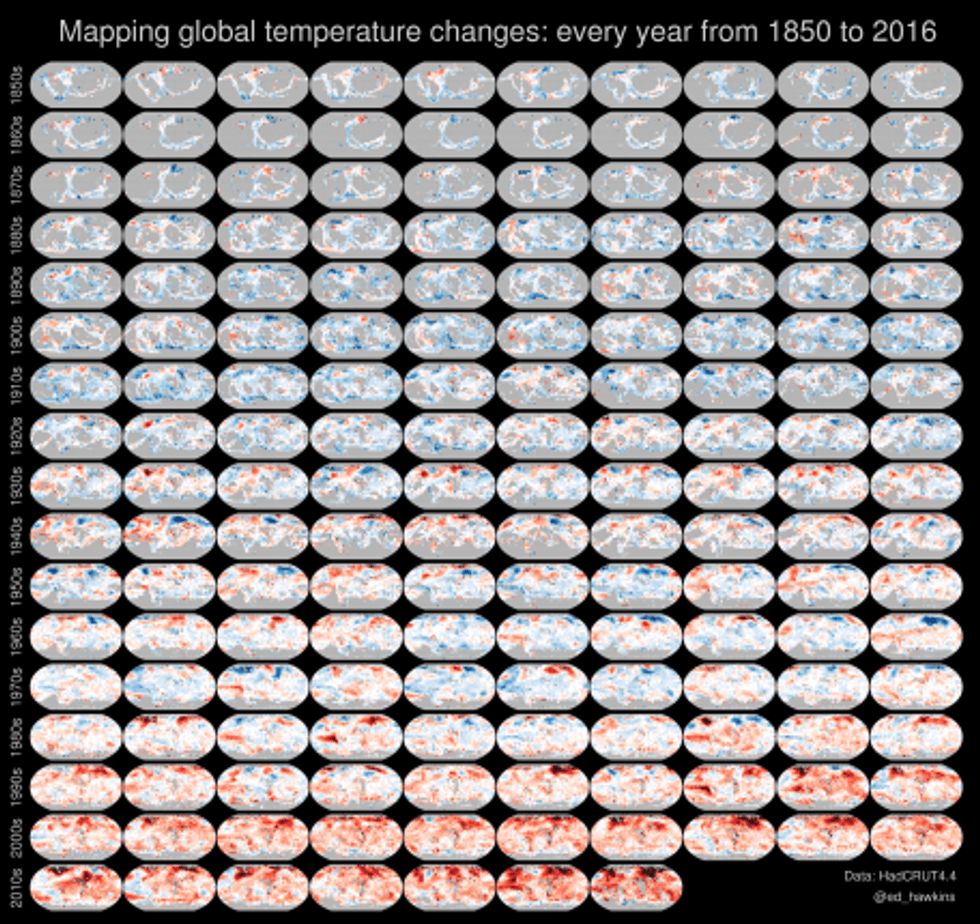
Scientists are getting better at producing visualizations that make climate change, a pretty heady topic, simple enough to take in at a glance. This image charts global temperature changes each year since 1850, using the period from 1961 to 1990 as a baseline. The color scale ranges from dark blue (-2.5 degrees C) to dark red (+2.5 degrees C).
It was created by climate scientist Ed Hawkins, the same person who brought us the popular hypnotic GIF of global temperatures spiraling out of control.
NASA's Juno space probe on Saturday was set to pass the closest it will get to the planet Jupiter during the main phase of its planned mission to the gas giant, the US space agency's officials said.
Juno was to swing within some 2,600 miles (4,200 kilometers) of the solar system's largest planet, the closest any spacecraft has passed, traveling at 130,000 miles per hour (208,000 kilometers per hour) at around 5:51 am (12:51 GMT).
It was the first time Juno’s eight scientific instruments and its camera were switched on, marking the science mission's start, officials said in a statement on NASA's website.
"This is our first opportunity to really take a close-up look at the king of our solar system and begin to figure out how he works," said Scott Bolton, Juno's principal investigator from the Southwest Research Institute in San Antonio, Texas.
Juno first swept close to Jupiter when it entered orbit around the planet early last month after a nearly five-year voyage to help study the solar system's origins.
However, all the probe's instruments were turned off not to interfere with its positioning as it entered the 53.5-day orbit.
Juno will now be probing Jupiter's many layers to measure their composition, magnetic field and other properties. Scientists hope to learn the source of the planet's fierce winds and whether Jupiter is made entirely of gas or has a solid core.
They also expect to learn more about the planet's great red spot, a huge storm that has raged for thousands of years.
Saturday's flyby was Juno's first chance to take pictures of Jupiter's mysterious poles.
"No other spacecraft has ever orbited Jupiter this closely, or over the poles in this fashion," said Steve Levin, Juno project scientist from NASA's Jet Propulsion Laboratory in Pasadena, California.
NASA says it will release images from the flyby late next week.
Although data from the probe is expected to reach Earth in several days, results from scientists' analysis will take longer.
"This is our first opportunity and there are bound to be surprises," Levin said. "We need to take our time to make sure our conclusions are correct."
Juno is set to make 35 more close passes by Jupiter during its main mission, scheduled to end in February 2018, when the probe will self-destruct by diving into the planet's atmosphere.
A new study, whose results were presented at the annual meeting of the American Psychological Association in Denver, Colorado, has shown that when individuals think about death, their support for Donald Trump increases, regardless of their party affiliation and whether or not they have an overall negative attitude towards Trump. These findings imply that the recent terror attacks in San Bernardino and Orlando, which undoubtedly aroused existential anxiety, may have played an essential role in Trump’s mind-boggling ascent from Reality TV to Republican nominee. The motivation for the study was based on an influential theory from social psychology called Terror Management Theory (TMT).
According to TMT, humans have a unique awareness of their own mortality. While all animals are biologically programmed to survive and reproduce, humans are capable of abstract thought and have the ability to reflect. These higher cognitive processes allow us recognize that death is not only inevitable, but can occur at any time for reasons that cannot be controlled or predicted in advance. This awareness of mortality has the potential to create existential terror and anxiety that can be debilitating.
To manage this profound terror, TMT says humans create cultural worldviews — like religions, political ideologies, and national identities — that instill life with meaning and value, which distracts from and eases the fear of death. Cultural worldviews also diminish death anxiety by offering paths to immortality. While religions offer a road to literal immortality through the concept of an afterlife where conscious existence persists, political ideologies and national identities offer paths to symbolic immortality. Symbolic immortality refers to being part of something larger that will outlive the physical self, and people strive to achieve this through leaving a legacy, having children, or doing something that will get one remembered by society long after death.
TMT predicts that when thoughts about death are triggered, people will do all they can to preserve and strengthen their cultural worldviews, since it is those worldviews that act as a death anxiety-buffer. This means clinging to those worldviews more strongly, as well as defending those who share those worldviews and aggressively opposing those who do not.
When it is applied to politics, TMT says that when an event conjures of thoughts about death, people will tend to strengthen support for policies and political leaders that will preserve cultural worldviews. As a result, reminders of death might increase a person’s support for policies that keep immigrants — who are seen as worldview-threatening others — out of the country.
In fact, past studies have shown that when individuals are given writing exercises designed to conjure up thoughts about death, their support for nationalism and right wing politicians increases. As such, any attempts to explain the 2016 U.S. presidential race or predict outcomes should take TMT into account.
TMT predicts that support for Donald Trump should increase when mortality is made salient, and that’s what Sheldon Solomon — who helped develop Terror Management Theory in the early 1980s — and colleagues have found.
152 students at the College of Staten Island were divided into two groups. The experimental group was given a series of exercises designed to trigger thoughts about mortality, such as, “Please briefly describe the emotions that the thought of your own death arouses in you” and “Jot down, as specifically as you can, what you think will happen to you as you physically die and once you are physically dead.” The control group was given similar exercises that related to pain and not death.
Later, all participants were given a series of questions designed to assess their support for Donald Trump and willingness to vote for him in the upcoming election. The results show that the group who wrote about death showed increased support for Trump compared to the control group, regardless of their political leanings. These findings support Terror Management Theory’s prediction that thoughts about mortality shift voters to the right politically, and cause people to favor patriotic leaders with nationalist, xenophobic messages.
These results have serious real world implications. Events like terror attacks remind us of our mortality and heighten existential terror and anxiety. In light of these findings, it is likely that Donald Trump’s political ascent, which has baffled many experts, can be at least partly attributed to the increase in terrorism the world has witnessed in the last year.
But the explanatory power of TMT does not stop there. The theory also predicts that although Trump is trailing Hillary Clinton in almost all national polls at the moment, more terror attacks on U.S. soil between now and voting day could tip the scales in favor of a Trump presidency. Those who think that this is outside the realm of real possibility should remember Brexit, which was also likely a consequence of the mass psychological effect created by existential terror.
So what can we do to decrease the chances of Trump becoming president? We can try to stay calm, cool, and collected, even in the face of increased terrorism, as studies have shown that death anxiety can suppress our rational thought processes and cloud judgment.
Years of number crunching that had seemed to corroborate the climate benefits of American biofuels were starkly challenged in a science journal on Thursday, with a team of scientists using a new approach to conclude that the climate would be better off without them.
Based largely on comparisons of tailpipe pollution and crop growth linked to biofuels, University of Michigan Energy Institute scientists estimated that powering an American vehicle with ethanol made from corn would have caused more carbon pollution than using gasoline during the eight years studied.
Most gasoline sold in the U.S. contains some ethanol, and the findings, published in Climatic Change, were controversial. They rejected years of work by other scientists who have relied on a more traditional approach to judging climate impacts from bioenergy — an approach called life-cycle analysis.
Following the hottest month on record globally, and with temperatures nearly 2°F warmer and tides more half a foot higher than they were in the 1800s, the implications of biofuels causing more harm to the climate than good would be sweeping.
“I’m bluntly telling the life-cycle analysis community, ‘Your method is inappropriate,’” said professor John DeCicco, who led the work. “I evaluated to what extent have we increased the rate at which the carbon dioxide is being removed from the atmosphere?”
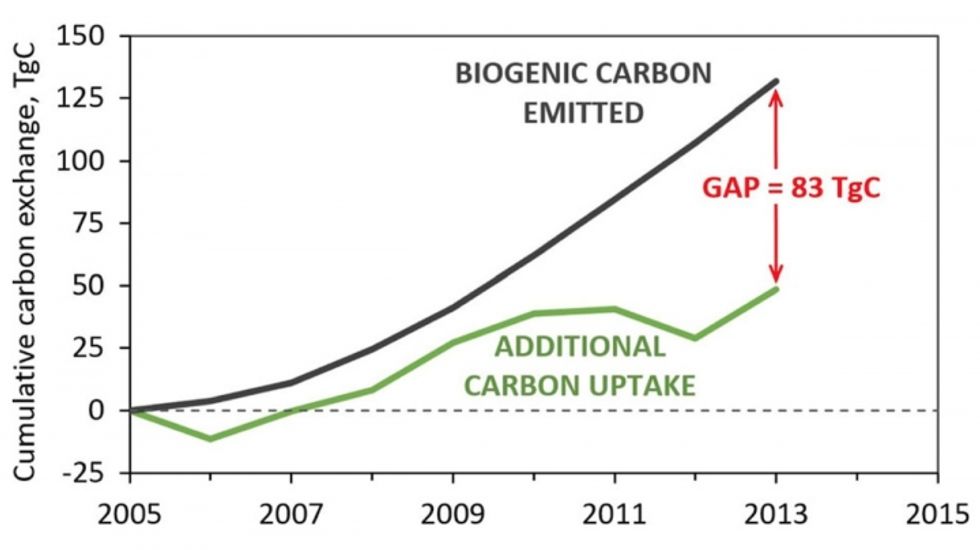
Lifecycle analyses assume that all carbon pollution from biofuels is eventually absorbed by growing crops. DeCicco’s analysis found that energy crops were responsible for additional plant growth that absorbed just 37 percent of biofuel pollution from 2005 to 2013, leaving most of it in the atmosphere, where it traps heat.
“The question, ‘How does the overall greenhouse gas emission impact of corn ethanol compare to that of gasoline?’ does not have a scientific answer,” DeCicco said. “What I can say definitively is that, whatever the magnitude of the emissions impact is, it is unambiguously worse than petroleum gasoline.”
The findings were criticized by scientists whose work is directly challenged by them.
Argonne National Laboratory scientist Michael Wang, who has led lifecycle analyses that found climate benefits from different biofuels, called the research “highly questionable” for a range of technical reasons, including its focus on growth by American crops instead of the global network of farms.
Driven by federal and Californian policies that promote biofuels to slow global warming, the use of ethanol, biodiesel and similar products more than trebled nationwide during the years studied, providing 6 percent of Americans’ fuel by 2013. Federal data shows gasoline sold in the U.S. last year contained about 10 percent corn ethanol.
Thursday’s paper provided fresh fuel for a heated debate among opposing groups of scientists over bioenergy’s climate impacts. Some are certain it’s a helper in the fight against climate change. Others are convinced it’s a threat.
“In the long run, there’s no question that biofuels displacing petroleum is a benefit,” said Daniel Schrag, a geology professor at Harvard who advises the EPA on bioenergy climate impacts. His views sharply oppose those of DeCicco. “It’s just a question of how long you have to wait.”
Eight years of pollution from biofuels compared with extra carbon absorption by energy crops. Michigan scientists found 37 percent of the pollution remained in the atmosphere — 83 teragrams. (Credit: DeCicco et al., Carbon balance effects of U.S. biofuel production and use, Climatic Change, 2016)
Schrag dismissed Thursday’s findings, saying there’s no reason to develop a new approach to measuring biofuels’ impacts. He said the proposed new approach fails because it doesn’t account for the years it can take for bioenergy to benefit the climate.
Analyses by scientists who have studied the life-cycle impacts of growing corn and other crops to produce ethanol have generally concluded biofuels can create between 10 percent to 50 percent less carbon dioxide pollution than gasoline.
Those estimates have been based on the notion that although bioenergy releases an initial blast of carbon dioxide pollution, the benefits of it accrue over time, as crops, trees and grass grow and suck that carbon dioxide back into their roots, flowers and leaves.
Such benefits are more conceptual than scientific, turning scientific debates at the EPA and elsewhere over how to calculate them into seemingly intractable policy quagmires.
“What timescale should we look at?,” Schrag said. “Some of the fundamental questions about timescale are not scientific questions. They are societal questions.”
The University of Michigan scientists dispensed with the timescale-based approach altogether, eliminating the need for policy decisions about which timeframes should be used. Instead, their research provided an overview of eight years of overall climate impacts of America’s multibillion-dollar biofuel sector.
The findings from the new approach were welcomed by Timothy Searchinger, a Princeton researcher who has been a vocal critic of bioenergy. He has been speaking out for years about the shortcomings of traditional approaches used to measure its climate impacts.
Searchinger said the approach developed in Michigan provides an “additional calculation” to help overcome the flawed assumption that climate pollution released when bioenergy burns does not matter.
Although European officials have warned of the limitations of the use of lifecycle analyses in assessing the climate impacts of bioenergy, the EPA has been steadfast for more than five years in its attempts to create a new regulatory framework that would continue to embrace the approach.
“The U.S. is not coming close to offsetting the carbon released by burning biofuels through additional crop growth,” Searchinger said.