More than half the world's primates, including apes, lemurs and monkeys, are facing extinction, international experts warned Tuesday, as they called for urgent action to protect mankind's closest living relatives.
The population crunch is the result of large-scale habitat destruction -- particularly the burning and clearing of tropical forests -- as well as the hunting of primates for food and the illegal wildlife trade.
Species long-known to be at risk, including the Sumatran orangutan, have been joined on the most endangered list for the first time by the Philippine tarsier and the Lavasoa Mountains dwarf lemur from Madagascar, scientists meeting in Singapore said.
"This research highlights the extent of the danger facing many of the world's primates," leading primatologist Christoph Schwitzer, director of conservation at Bristol Zoological Society in Britain, said in a statement.
"We hope it will focus people's attention on these lesser known primate species, some of which most people will probably have never heard of."
This includes the Lavasoa Mountains dwarf lemur -- a species only discovered two years ago -- and the Roloway monkey from Ghana and Ivory Coast, which experts say "are on the very verge of extinction".
There are 703 species and sub-species of primates in the world.
Madagascar and Vietnam are home to large numbers of highly threatened primate species, the statement said.
In Africa, the red colobus monkeys was under "particular threat", as were some of South America's howler monkeys and spider monkeys, it added.
"All of these species are relatively large and conspicuous, making them prime targets for bushmeat hunting," the statement said.
Russell Mittermeier, chair of the Species Survival Commission of the International Union for Conservation of Nature (IUCN), said he hoped the report would encourage governments to commit to "desperately needed biodiversity conservation measures".
Mittermeier said ahead of next month's global climate conference in Paris, there was growing evidence some primate species might play key roles in dispersing tropical forest tree seeds, which in turn "have a critically important role in mitigating climate change".
Here is the list of the world's top 25 most endangered primates for 2014-2016 and their estimated numbers remaining in the wild.
The list is compiled by the IUCN, Bristol Zoological Society, International Primatological Society and Conservation International and is updated every two years:
Lavasoa Mountains dwarf lemur -- unknown
Lake Alaotra bamboo lemur -- about 2,500-5,000
Red ruffed lemur -- unknown
Northern sportive lemur -- around 50
Perrier's sifaka -- 1,700-2,600
Rondo dwarf galago -- unknown but remaining habitat is just 100 square kilometres (40 square miles)
Roloway monkey -- unknown but thought to be on the very verge of extinction
Preuss' red colobus monkey -- unknown
Tana River red colobus monkey -- 1,000 and declining
Grauer's gorilla -- 2,000-10,000
Philippine tarsier -- unknown
Javan slow loris -- unknown
Pig-tailed langur -- 3,300
Cat Ba langur (golden headed langur) -- 60
Delacour's langur -- 234-275
Tonkin snub-nosed monkey -- less than 250
Kashmir grey langur -- unknown
Western purple-faced langur -- unknown
Hainan gibbon -- 25
Sumatran orangutan -- 6,600
Ka'apor capuchin -- unknown
San Martin titi monkey -- unknown
Northern brown howler monkey -- less than 250 mature animals
What do you do when you are left with half a chip in your hand after dipping? Admit it, you’ve wondered whether it’s OK to double dip the chip.
Maybe you’re the sort who dips their chip only once. Maybe you look around the room before loading your half-eaten chip with a bit more dip, hoping that no one will notice.
If you’ve seen that classic episode of Seinfeld, “The Implant,” where George Costanza double-dips a chip at wake, maybe you’ve wondered if double-dipping is really like “putting your whole mouth right in the dip!”
‘You doubled-dipped the chip.’
But is it, really? Can the bacteria in your mouth make it onto the chip then into the dip? Is this habit simply bad manners, or are you actively contaminating communal snacks with your particular germs?
This question intrigued our undergraduate research team at Clemson University, so we designed a series of experiments to find out just what happens when you double-dip. Testing to see if there is bacterial transfer seems straightforward, but there are more subtle questions to be answered. How does the acidity of the dip affect bacteria, and do different dips affect the outcome? Members of the no-double-dipping enforcement squad, prepare to have your worst, most repulsive suspicions confirmed.
Start with a cracker
Presumably some of your mouth’s bacteria transfer to a food when you take a bite. But the question of the day is whether that happens, and if so, how much bacteria makes it from mouth to dip. Students started by comparing bitten versus unbitten crackers, measuring how much bacteria could transfer from the cracker to a cup of water.
We found about 1,000 more bacteria per milliliter of water when crackers were bitten before dipping than solutions where unbitten crackers were dipped.
In a second experiment, students tested bitten and unbitten crackers in water solutions with pH levels typical of food dips (pH levels of 4, 5 and 6, which are all toward the more acidic end of the pH scale). They tested for bacteria right after the bitten and unbitten crackers were dipped, then measured the solutions again two hours later. More acidic solutions tended to lower the bacterial numbers over time.
The time had come to turn our attention to real food.
But what about the dip?
We compared three kinds of dip: salsa, chocolate and cheese dips, which happen to differ in pH and thickness (viscosity). Again, we tested bacterial populations in the dips after already-bitten crackers were dipped, and after dipping with unbitten crackers. We also tested the dips two hours after dipping to see how bacterial populations were growing.
We tested All Natural Tostitos Chunky Hot Salsa (pH 4), Genuine Chocolate Flavor Hershey’s Syrup (pH 5.3) and Fritos Mild Cheddar Flavor Cheese Dip (pH 6.0).
So, how dirty is your dip? We found that in the absence of double-dipping, our foods had no detectable bacteria present. Once subjected to double-dipping, the salsa took on about five times more bacteria (1,000 bacteria/ml of dip) from the bitten chip when compared to chocolate and cheese dips (150-200 bacteria/ml of dip). But two hours after double-dipping, the salsa bacterial numbers dropped to about the same levels as the chocolate and cheese.
After two hours, levels of bacteria in the salsa were similar to levels in the cheese and chocolate dips.
Paul Dawson, Author provided
We can explain these phenomena using some basic food science. Chocolate and cheese dips are both pretty thick. Salsa isn’t as thick. The lower viscosity means that more of the dip touching the bitten cracker falls back into the dipping bowl rather than sticking to the cracker. And as it drops back into the communal container, it brings with it bacteria from the mouth of the double-dipper.
Salsa is also more acidic. After two hours, the acidity of the salsa had killed some of the bacteria (most bacteria don’t like acid). So it’s a combination of viscosity and acidity that will determine how much bacteria gets into the dip from double-dipping. As a side note about party hosting: cheese dip will run out faster than salsa since more of the cheese sticks to the cracker or chip on each dip. That could reduce the chances of people double-dipping. And yes, this is something we discovered during the experiment.
Should I freak out about double-dipping?
Double-dipping can transfer bacteria from mouth to dip, but is this something you need to worry about?
Anywhere from hundreds to thousands of different bacterial types and viruses live in the human oral cavity, most of which are harmless. But some aren’t so good. Pneumonic plague, tuberculosis, influenza virus, Legionnaires’ disease and severe acute respiratory syndrome (SARS) are known to spread through saliva, with coughing and sneezing aerosolizing up to 1,000 and 3,600 bacterial cells per minute. These tiny germ-containing droplets from a cough or a sneeze can settle on surfaces such as desks and doorknobs. Germs can be spread when a person touches a contaminated surface and then touches their eyes, nose or mouth.
That’s why the Centers for Disease Control and Prevention strongly recommends covering the mouth and nose when coughing and sneezing to prevent spreading “serious respiratory illnesses like influenza, respiratory syncytial virus (RSV), whooping cough, and severe acute respiratory syndrome (SARS).” With that in mind, there may be a concern over the spread of oral bacteria from person to person thanks to double-dipping. And a person doesn’t have to be sick to pass on germs.
One of the most infamous examples of spreading disease while being asymptomatic is household cook Mary Mallon (Typhoid Mary), who spread typhoid to numerous families in 19th-century New England during food preparation. Science has left unanswered whether she was tasting the food as she went along and, in effect, double-dipping. Typhoid Mary is obviously an extreme example, but your fellow dippers might very well be carrying cold or flu germs and passing them right into the bowl you’re about to dig into.
If you detect double-dippers in the midst of a festive gathering, you might want to steer clear of their favored snack. And if you yourself are sick, do the rest of us a favor and don’t double-dip.
Books voice doubt over whether climate change is real and suggest global warming could be beneficial, researchers say in analysis of four science texts
Textbooks in California public schools are misleading students on climate change, with material that expresses doubt over whether it is real and promotes the view that increasing temperatures may be beneficial, according to a Stanford University study.
An analysis of four key science texts given to sixth-grade students in California showed that the books “framed climate change as uncertain in the scientific community – both about whether it is occurring as well as about its human-causation”.
Researchers studied 2,770 words used in the books, which are given to students as their first introduction to climate science, and found that the widely accepted opinion that the climate is changing and that humans are the main cause wasn’t represented in the books.
Whereas California science textbooks on other subjects list facts, the books focused on climate change use conditional words like “could”, “might” or “may” throughout. Three of the textbooks are called Focus on Earth Science, published separately by Prentice Hall, Glencoe-McGraw-Hill and CPO Science. The fourth is called Earth Science, published by Holt, Rinehart & Winston.
The Prentice Hall book, first published in 2008, states: “Not all scientists agree about the causes of global warming. Some scientists think that the 0.7 Celsius degree rise in global temperatures over the past 120 years may be due in part to natural variations in climate.”
The same book stresses that climate change “could have some positive effects”.
“Farmers in some areas that are now cool could plant two crops a year instead of one,” it reads. “Places that are too cold for farming today could become farmland. However, many effects of global warming are likely to be less positive.”
Meanwhile, Earth Science has a passage that reads: “Until recently, climatic changes were connected only to natural causes. However, studies indicate that human activities may have an influence on climate change.”
The Stanford University study concludes that the language used in the textbooks is likely to promote doubt over the science of climate change and dampen any sense of urgency in dealing with the issue.
“Instead of saying climate change is happening, it’s: ‘Climate change may be happening,’ which isn’t what is generally known and understood,” said KC Busch, of Stanford Graduate School of Education. Busch conducted the work with assistant professor Diego Roman, a linguist at Southern Methodist University in Dallas.
“The inference throughout these books is to create doubt,” Busch said. “Perhaps the textbook companies are making them palatable in a politically charged environment in order to get published. I think they are softening the language. I’m shocked that California has allowed them, to be honest.”
Busch said textbooks shouldn’t be prescriptive works that “scare the wits” out of sixth graders, but should accurately represent the science.
“There is an ideology in these books. They use the same kind of language seen on climate change denier blogs,” she said. “These books should present accurate information and then let students explore the issues further. Saying that ‘if temperatures go up, climate change could occur’ is completely misleading. We don’t want children to be brainwashed; we just need to be clear about what scientists know and what they are uncertain of. We know temperatures are going up, that humans are the main cause that this is causing climate change.”
Busch said that uncertainty over climate science propagated by textbooks only adds to confusion over the issue. Recent research by Yale University found that only 57% of US teenagers understood that global warming was fueled by human activity such as burning fossil fuels. This is, however, still slightly higher than the 50% of US adults who accept the science.
The California State Board of Education produces a list of recommended textbooks that school districts can choose from, though they are not mandatory. The board said on Monday that a new round of textbooks was currently in development and would be introduced in 2018. The four publishing companies did not respond by Monday evening to requests for comment from the Guardian.
Scientists have known for more than a century that certain gases, like carbon dioxide, trap heat. Last year, more than 32bn tons of these greenhouse gases were pumped into the atmosphere by human activity, including power plants, agriculture and transport. These emissions have helped push the world’s average temperature up by around 1C over the past century, fueling sea level rises and extreme weather events.
Representatives from nearly 200 countries will gather in Paris next week for highly anticipated talks on how to reduce emissions and stay within an internationally agreed target of ensuring the world doesn’t breach 2C of warming. Analysis has shown that emissions cuts already announced by emitters – including the US – will still take temperatures to around 2.7C above the pre-industrial average, leading to extreme heatwaves, coastal erosion and food insecurity for many countries.
StarTalk host Neil deGrasse Tyson explained how sex in space can illustrate Newtonian laws of motion in a short video posted by National Geographic.
"You're there in space and you move toward someone and they just sort of bounce off. The movement is sort of preserved -- there's no friction. So if you want to get together [and] stay together, you need something to keep you together during all the normal body movements that would characterize having sex in space. So, yeah, bring a lot of leather belts. Keep things strapped down and you'll be just fine."
At the same time, he said, zero-gravity is not a pre-requisite for being in space; a rotating space station, the astrophysicist explained, can create any fraction of gravity a person wants.
"You can be in space and on that perimeter of 1-G and it is no different than what you'd be doing here on Earth," he said.
Watch deGrasse Tyson tackle the question of sex in space, as posted online, below.
Thanksgiving can be a happy time for the whole family, but the holiday poses special risks to our companion animals. Here are some tips to keep you and your furry friends out of the vet's office this holiday season.
1. Do not feed pets ham, chicken or turkey bones. As tempting as it may be to share some of the bounty with Morrissey the Persian or your pit bull Petunia, bones can be extremely dangerous to your pet. Poultry bones pose special choking hazards to pet animals, who can splinter the bones with their teeth, then get the bone fragments lodged in their throats and digestive tracts.
2. In fact, let's skip the table scraps altogether. The bottom line, really, is that people and pets have very different dietary needs. Human food is loaded with fats and salt that your pet doesn't need. According to Oklahoma City's BluePearl Veterinary Group, one of the most common complaints veterinarians see around the holidays in pancreatitis, which is caused by overconsumption of rich and fatty foods.
"Many foods used in holiday cooking are not safe for animals," said BluePearl's website. "Onions, garlic, chocolate, raisins, grapes, macadamia nuts and raw or undercooked food can create major problems for pets. Make sure friends and family aren’t sneaking treats to your pets."
Also, do not leave pets alone with unattended food.
Cats and dogs should never drink anything but water. Beer, wine, coffee, hot chocolate, caffeinated sodas and anything sweetened with the sugar substitute xylitol can all sicken and even kill your pet. As much as you love Marley the Maine Coon, you don't need to get drunk together. The same goes for all human medications and drugs like marijuana. Just don't.
3. Leave them at home. Sure, it would be fun to take the dogs to Aunt Susan's house for the holiday, they'll have a great time. Except, sometimes they don't. Some dog owners will blast me for saying this because one of the great joys of dogs as companion animals is how much they love going places, whereas cats would mostly rather stay put in their own territory, thank you very much.
However, while your dog(s) may be incredibly well-trained, non-aggressive and easy around other dogs, sadly, not everyone's dogs are like yours. Too many times I have been at gatherings where the large number of people, new physical surroundings, high amounts of stimulation and the presence of other dogs have all combined to end up in a sudden eruption of fighting between overexcited animals.
And given that other people may not have pet-proofed their houses, really, it might be best if Prince Phillip and Queen Anne the Corgis stay home this year.
4. Keep away from children. Much like Republicans, some children are noxious little sticky-faced brutes who have not yet internalized the idea that other creatures feel pain and warrant the same types of care and consideration that they do. If you’re taking your pet somewhere where unruly children are expected, make sure the wee sociopaths have had some kind of training about how not to hurt animals.
5. Watch your doors and windows. As guests arrive and leave and when packages come, pets can easily dart out of a door and run into traffic or tangle with other animals. Guests who are unfamiliar with your house's routines could forget to close a door or randomly open a window to let air into a stuffy room and put your pet into harm's way. As much as possible, make sure guests know what pets you have and whether they are allowed outside.
6. Stay alert. Watch for dropped food items, stray swallow-able objects like pills or ornaments, dangling electrical cords and other potential hazards in your own environment and when traveling with your pet. Make sure all waste containers -- especially kitchen trash cans, which can contain food scraps -- are closed and inaccessible.
Sometimes animals will find foil, plastic or other food storage items with scraps of food stuck to them, which makes them irresistible for licking and chewing. This can lead to accidental ingestion of materials that are harmful to your pet.
Website The Barking Lot has a comprehensive list of dog safety tips for the holidays including a list of safe treats and a list of foods to never, ever feed your dog.
Cat owners should be vigilant for items that can kill your pet if ingested like styrofoam, rubber bands and poinsettia leaves. For an ASPA list of 15 common household hazards for cats, go here.
So, keep your heads up and have a Happy Thanksgiving! Oh, and give your pet a smooch from us.
Scientists maybe celebrating the 100th anniversary of Albert Einstein’s general theory of relativity, but there was also a death in 1915. It was one of the many deaths of simple and intuitive physics that has happened over the past four centuries.
Today the concepts and mathematics of physics are often removed from everyday experience. Consequently, cutting edge physics is largely the domain of professional physicists, with years of university education.
But there are people who hanker for a simpler physics, toiling away on their own cosmologies. Rightly or wrongly, these people are often labelled cranks, but their endeavours tell us much misconceptions of science, its history and what it should be.
I regularly browse open access website arxiv.org to look for the latest astrophysics research. Real astrophysics, that is. But if I want to take a look at what pseudoscientists are up to, I can browse vixra.org. That’s right, “arxiv” backwards. The vixra.org website was founded by “scientists who find they are unable to submit their articles to arXiv.org” because that website’s owners filter material they “consider inappropriate”.
There are more than 1,800 articles on vixra.org discussing relativity and cosmology, and many don’t like relativity at all. Perhaps one reason why cranks particularly dislike relativity is because it is so unlike our everyday experiences.
Einstein predicted that the passage of time is not absolute, and can slow for speeding objects and near very massive bodies such as planets, stars and black holes. Over the past century, this bizarre predication has been measured with planes, satellites, and speeding muons.
But the varying passage of time is nothing like our everyday experience, which isn’t surprising as we don’t swing by black holes on our way to the shops. Everyday experience is often central to cranky ideas, with the most extreme example being flat earthers.
Thus many crank theories postulate that time is absolute, because that matches everyday experience. Of course, these crank theories are overlooking experimental data, or at least most of it.
History and linearity
One of the most curious aspects of pseudoscience is an oddly linear approach to science. To be fair, this can result from an overly literal approach to popular histories of science, which emphasise pioneering work over replication.
A pivotal moment in relativity’s genesis was Albert Michelson and Edward Morley’s demonstration that the speed of light didn’t depend on its direction of travel nor the motion of the Earth.
Of course, since 1887 the Michelson-Morley experiment has been confirmed many times. Modern measurements have a precision orders of magnitude better than the original 1887 Michelson-Morley experiment, but these don’t feature prominently in popular histories of science.
Interestingly many pseudoscientists are fixated on the original Michelson-Morley experiment, and how it could be in error. This fixation assumes science is so linear that the downfall a 19th century experiment will rewrite 21st century physics. This overlooks how key theories are tested (and retested) with a myriad of experiments with greater precision and different methodologies.
Another consequence of the pseudoscientific approach to history is that debunked results from decades past are often used by buttress pseudoscientific ideas. For example, many pseudoscientists claim Dayton Miller detected “aether drift” in the 1930s. But Miller probably underestimated his errors, as far more precise studies in subsequent decades did not confirm his findings.
Unfortunately this linear and selective approach to science isn’t limited to relativity. It turns up in cranky theories ranging from evolution to climate.
Climate scientist Michael E Mann is still dealing with cranky accusations about his seminal 1998 paper on the Earth’s temperature history, despite the fact it has been superseded by more recent studies that achieve comparable results. Indeed, it devoured so much of Mann’s time he has literally written a book about his experience.
What about the maths?
During the birth of physics, one could gain insights with relatively simple (and beautiful) mathematics. My favourite example is Johannes Kepler’s charting of the orbit of Mars via triangulation.
Over subsequent centuries, the mathematics required for new physical insights has become more complex, as illustrated by Newton’s use of calculus and Einstein’s use of tensors. This level of mathematics is rarely in the domain of the enthusiastic but untrained amateur. So what do they do?
One option is to hark back to an earlier era. For example, trying to disprove general relativity by using the assumptions of special relativity or even Newtonian physics (again, despite the experiments to the contrary). Occasionally even numerology makes an appearance.
Another option is arguments by analogy. Analogies are useful when explaining science to a broad audience, but they aren’t the be-all and end-all of science.
In pseudoscience, the analogy is taken to the point of absurdity, with sprawling articles (or blog posts) weighed down with laboured analogies rather than meaningful analyses.
Desiring simplicity but getting complexity
Perhaps the most fascinating aspect of pseudoscientific theories is they hark for simplicity, but really just displace complexity.
Ardents of the most simplistic pseudoscientific theories often project complexity onto the motives of professional scientists. How else can one explain scientists ignoring their brilliant theories? Claims of hoaxes and scams are commonplace. Although, to be honest, even I laughed out loud the first time I saw someone describe dark matter as a “modelling scam”.
Again, this isn’t limited to those who don’t believe in relativity. Simple misunderstandings about photography, lighting and perspective are the launch pad for moon landing conspiracy theories. Naively simple approaches to science can lead to complex conspiracy theories.
Changing intuition
Some have suggested that pseudoscience is becoming more popular and the internet certainly aids the transmission of nonsense. But when I look at history I wonder if pseudoscience will decay.
In the 19th century, Samuel Rowbotham promoted Flat Earthism to large audiences via lectures that combined wit and fierce debating skills. Perhaps in the 19th century a spherical world orbiting a sun millions of kilometres away didn’t seem intuitive.
But today we can fly around the globe, navigate with GPS and Skype friends in different timezones. Today, a spherical Earth is far more intuitive than it once was, and Flat Earthism is the exemplar of absurd beliefs.
Could history repeat with relativity? Already GPS utilises general relativity to achieve its amazing precision. A key plot device in the movie Interstellar was relativistic time dilation.
Perhaps with time, a greater exposure to general relativity will make it more intuitive. And if this happens, a key motivation of crank theories will be diminished.
Will general relativity become more widely understood via popular media, such as the movie Interstellar?
Michael will be on hand for an Author Q&A between 4 and 5pm AEDT on Tuesday, November 24, 2015. Post your questions in the comments section below.
Researchers in China recently found E.coli bacteria that are resistant to the antibiotic colistin, often called the antibiotic of last resort. While experts have been warning that the finding heralds a post-antibiotic era what is concerning healthcare professionals is that the circle of DNA that makes the bacteria resistant to colistin can be passed on to other strains of harmful bacteria.
This circle of DNA, known as MCR-1, was found on a circular structure of DNA known as a plasmid. Plasmids carry “optional extras” for bacteria: genes that are not essential for survival but can provide a benefit. In this case, surviving in the presence of colistin. Some plasmids can be copied and passed on to other bacteria, giving them the optional extras.
The researchers in China believe that the resistant E.coli bacteria – first discovered in pigs and meat products – evolved the ability to withstand colistin as a result of their intensive use in animal-feed.
Evolving resistance
Colistin is largely used to help treat antibiotic resistant infections by making the bacterial cell membrane easier for antibiotics to cross. It can kill bacteria by itself, but it is most often used in conjunction with other antibiotics.
When bacteria, such as E.coli, are constantly exposed to colistin, those that have no defence, die. Those that gain resistance to the antibiotic, through natural mutation of DNA during cell division, survive and pass on those beneficial changes to the next generation. So you end up with a population of organisms all resistant to the antibiotic.
Bacteria that become resistant to colistin can do so in different ways. Colistin could no longer stick to bacteria, the cell membrane could be more resistant or the antibiotic could be ejected back out of the cell by the bacteria.
Some are strengthened, others weakened
In our own research at Nottingham Trent University we have exposed bacteria to the same antibiotic and had resistance occur in some cases, but not in others.
As some disinfectants work in a similar fashion to colistin we wanted to know if exposure to disinfectants at home or in hospitals might lead to resistance to colistin. In the mutants that were generated, some were able to invade human cells better than before, but others lost the ability to invade at all. So I would like to know what other changes have been seen in the bacteria reported by the researchers in China.
I remember, ruefully, that the first colistin resistant bacteria I studied had a much tougher cell membrane, but because of this rigidity, had a tendency to die when I stored them in freezing temperatures. Their rigidity, that was so useful against colistin, meant they effectively shattered at very low temperatures. So the development of resistance to colistin may have affected the bacteria discovered by the team in China in other ways - ways that are more harmful to the bacteria than beneficial.
However, the speed at which the bacteria acquired resistance is the most alarming aspect of this latest finding. A single interaction between a resistant and a non-resistant bacteria can now result in two resistant organisms as the plasmid is copied and passed from one bacterium to another.
Up to now, bacteria that have developed resistance to colistin would have needed to have been exposed to the antibiotic for a long time before a resistant strain evolved. Plasmid-carried resistance is much more rapid. This is not the slow creep of accumulated changes, but the transfer of the entire set of genes required for resistance in one go.
This plasmid transfer of a resistant gene has been seen for some time with many other antibiotics, including those that colistin is used in conjunction with but, until now, not with colistin itself.
Bacteria without borders
Plasmids are “expensive” for a bacteria to carry as they use a lot of energy, so there has to be a driving force killing off the non-plasmid-carrying bacteria so the population passes on this ability generation to generation. The new research) suggests that the use of colistin in farm animals in areas the bacteria were isolated from, is the likely cause, as the bacteria would be constantly exposed to colistin, with only those carrying the plasmid surviving. This is also not the first time that use of antibiotics in farm animals has led to bacteria that could cause antibiotic resistant infections in humans.
Colistin to treat farm animals is rarely used in Europe. However, air travel and bacteria’s notorious disregard for national boundaries means it’s only a matter of time before we see one of these strains arriving here.
I would be interested to see what degree this plasmid is retained within the bacterial population in areas where colistin is not commonly encountered, or whether the genes move into the bacterial chromosome so becoming a standard part of the bacteria, not just an optional extra.
This is a reminder that, when it comes to resistance, it is not just about what antibiotics are prescribed locally, but their use at a global level. Antibiotic resistant infections are a worldwide issue, and the response to them should be at a similar scale.
Egypt said Monday it will conduct more tests this week in search of a hidden chamber in King Tutankhamun's tomb that a British archaeologist believes may be the burial place of Queen Nefertiti.
Archaeologists have never discovered the mummy of the legendary beauty, but renowned British archaeologist Nicholas Reeves said in a recent study that her tomb could be in a secret chamber adjoining Tutankhamun's tomb in the Valley of Kings in Luxor in southern Egypt.
Reeves, who was in Luxor in September to probe his theory, believes one door of Tutankhamun's tomb could conceal the burial place of Nefertiti.
Antiquities Minister Mamduh al-Damati said more tests will be carried out inside Tutankhamun's tomb over three days starting Thursday "to see if there are secret chambers behind its walls".
"The search will involve using radar and infra-red technologies," Damati said, adding that they would cause "no damage" to the tomb.
The findings will be announced at a press conference in Luxor on November 28, he said.
Experts carried out a preliminary scan of the tomb earlier this month using infra-red thermography to map out the temperature of its walls.
Damati said at that time that the analysis showed "differences in the temperatures registered on different parts of the northern wall" of the tomb.
The minister and Reeves differ on whose mummy they expect to find.
According to Reeves, professor of archaeology at the University of Arizona, Tutankhamun, who died unexpectedly, was buried hurriedly in an underground chamber probably not intended for him.
His death would have forced priests to reopen Nefertiti's tomb 10 years after her death because the young pharaoh's own mausoleum had not yet been built.
But Damati believes that such a chamber, if found adjoining Tutankhamun's tomb, may contain Kiya, a wife of the pharaoh Akhenaten.
Damati hopes scanning the walls of Tutankhamun's tomb will reveal "the discovery of the century".
Nefertiti played a major political and religious role in the 14th century BC.
She actively supported her husband Akhenaten -- Tutankhamun's father -- who temporarily converted ancient Egypt to monotheism by imposing the cult of sun god Aton.
Tutankhamun died aged 19 in 1324 BC after just nine years on the throne. His final resting place was discovered by another British Egyptologist, Howard Carter, in 1922.
As the race to adapt to climate change quickens, a South African scientist is leading global research into developing crops that mimic the extraordinary survival skills of "resurrection plants".
Jill Farrant, a professor of molecular and cell biology at the University of Cape Town, hopes that unlocking the genetic codes of drought-tolerant plants could help farmers toiling in increasingly hot and dry conditions.
With more than 130 known varieties in the world, resurrection plants are a unique group of flora that can survive extreme water shortages for years.
During a drought, the plant acts like a seed, becoming so dry it appears dead.
But when the skies finally open and the rain pours down, the shrivelled plant bursts "back to life", turning green and robust in just a few hours.
"I want to cater to the subsistence farmer, the person who wants to make enough food to live," Farrant, 55, told AFP.
"Farmers are becoming more and more dispirited, and droughts are killing them."
Perhaps the most well-known resurrection plant is Myrothamnus flabellifolius, which makes antioxidant chemicals to protect it during dry spells and is used in fashion designer Giorgio Armani's cosmetics line.
- A life passion -
A farmer's daughter, Farrant recalls stumbling across a resurrection plant as a nine-year-old and being amazed at its seemingly immortal properties.
"I wrote in my diary about a plant that had died and came back after the rain," she said.
She returned to the subject professionally in 1994, and has since become the world's leading expert in her field.
Environmentalists fear that more and more of Africa will be reduced to a dust bowl by global warming, with higher temperatures, reduced water supplies and population growth threatening to trigger worsening famines.
Climate change could reduce maize yields across southern Africa by as much as 30 percent by 2030, according to the UN Environment Programme.
Ahead of the United Nations conference in Paris at the end of November, countries are facing growing pressure to keep global warming below two degrees celsius (3.6 degrees Fahrenheit) above pre-Industrial Revolution levels by weaning their carbon-hungry societies off fossil fuels.
But, scientists say it is just as important to adapt to the new reality.
"Soil, cropping systems, farming systems -- they all must have the capacity to recover from a drastic change in climate," said Rattan Lal, professor of soil science at Ohio State University.
"We should make agriculture part of the solution to our issues... the climate change problem is so huge everything should be on the table."
If successful, Farrant will follow in the venerable footsteps of earlier scientists who have saved crops from devastation by exploiting plants with specific strengths.
In the 1970s, US maize was rescued from southern leaf blight disease by incorporating resistant genes found in other varieties of maize.
- Adapt to survive -
Farrant has recently focused her research on teff, a grass native to Ethiopia whose seed has been used as a stable food in the region for centuries.
She hopes to make it more resilient by activating genes she discovered by studying resurrection plants.
"My main aim all along is to make crops that can improve drought tolerance," Farrant told AFP.
"If we get the money, I would say in 10 to 15 years we've got a product."
Experts warn that drought-tolerant crops are not a one-stop solution to the world's climate problems or even a safeguard against hunger.
"Food security doesn't only depend on climate, it depends on markets and trade, prices and access by households to food," said Jim Verdin, a drought scientist with the US Geological Survey based in Boulder, Colorado.
Still, Farrant -- who won a UNESCO Awards for Women in Science in 2012 -- believes her work is a step in the right direction.
If she can harness the power of resurrection plants, farmers themselves may have a better chance of survival.
"If it doesn't rain, it doesn't matter, at least your plants won't die," she said. "The moment they get rain, they're ready to go."
South America's vast Amazon region harbors one of the world's most diverse collection of tree species, but more than half may be at risk for extinction due to ongoing deforestation to clear land for farming, ranching and other purposes, scientists say.
Researchers said on Friday that if recent trends continued, between 36 and 57 percent of the estimated 15,000 Amazonian tree species likely would qualify as threatened with extinction under criteria used by the group that makes such determinations, the International Union for Conservation of Nature.
The study covered roughly 2.1 million square miles (5.5 million square km) spanning Brazil, Peru, Colombia, Venezuela, Ecuador, Bolivia, Guyana, Suriname and French Guiana. The researchers analyzed Amazonian forest surveys and data on current and projected deforestation areas.
"Many of the species that we suggest may be threatened are
used by Amazonian residents on a daily basis, and many others
are crucial to Amazonian economies," conservation ecologist
Nigel Pitman of the Field Museum in Chicago.
These range from wild populations of economically important food crops like the Brazil nut, açaí fruit and heart of palm, to valuable timber species, to several hundred species that Amazonian residents depend upon for fruits, seeds, thatch, medicines, latex and essential oils, Pitman said.
The trees also are important in their ecosystems for erosion control and climate moderation, Pitman said.
"Scientists have been raising the alarm about Amazonian deforestation for several decades, and projections indicate that forest loss will continue for the foreseeable future," said forest ecologist Hans ter Steege of the Naturalis Biodiversity Center in the Netherlands.
"The good news is that over the last 10 years the rate of forest loss in the Amazon has dropped dramatically."
Amazonian forests have been shrinking since the 1950s as people cut and burn areas for farming, ranching and development. Until now, there has been no reliable estimate of how many tree species were threatened with extinction.
"Yes, the threats are daunting, but it's important to remember that more than 85 percent of forests in the greater Amazon are still standing," Pitman said.
The researchers said Amazon parks, reserves and indigenous territories, if managed well, should be able to protect most of the threatened species. Previous research found Amazon forests already have dwindled by about 12 percent and will decline up to another 28 percent by 2050.
The research was published in the journal Science Advances.
(Reporting by Will Dunham; Editing by Sandra Maler)
SpaceX joins Boeing in planning first private manned launches to International Space Station, provisionally set to take place before the end of 2017
Manned commercial space flight took a giant leap forward as NASA signed its first mission orders with California-based private spaceflight company SpaceX to transport astronauts to the International Space Station.
SpaceX joins Boeing, which signed a similar contract with the space agency in May, in planning for the first private manned launches to the station, provisionally scheduled to take place towards the end of 2017. But before they do, both companies will have to pass a stringent certification process for both their hardware and their astronauts, Tabatha Thomson, public affairs officer at NASA, said.
The missions will not take place until NASA verifies the safety of the equipment and crew. The flights, assuming they pass the certification, will take place on Boeing’s CST-100 Starliner and SpaceX’s Crew Dragon spacecraft.
It has not yet been determined what specific missions the astronauts will be doing on the flight. But when SpaceX and Boeing successfully pass their certification tests, Thomson said, it will allow Nasa to to concentrate on “long-duration space flight”.
The cost of contracting out low-orbit manned operations to commercial operations like Boeing and SpaceX is considerably less than what Nasa currently pays the Russian Federal Space Agency for use of their Soyuz vehicle – their only option since the retirement of the space shuttle program in 2011.
SpaceX, which was founded by Tesla owner and PayPal billionaire Elon Musk, already flies unmanned supply missions to the ISS since it was contracted in 2006, using its Falcon launch vehicle.
The company has been experimenting with ways to safely bring its booster rocket down to a seaborne landing pad for future re-use – a spectacularly difficult feat. A test landing in April came tantalizingly close to success.
“The authority to proceed with Dragon’s first operational crew mission is a significant milestone in the Commercial Crew Program and a great source of pride for the entire SpaceX team,” said Gwynne Shotwell, president and chief operating officer of SpaceX, in a statement.
“When Crew Dragon takes Nasa astronauts to the space station in 2017, they will be riding in one of the safest, most reliable spacecraft ever flown. We’re honored to be developing this capability for NASA and our country.”
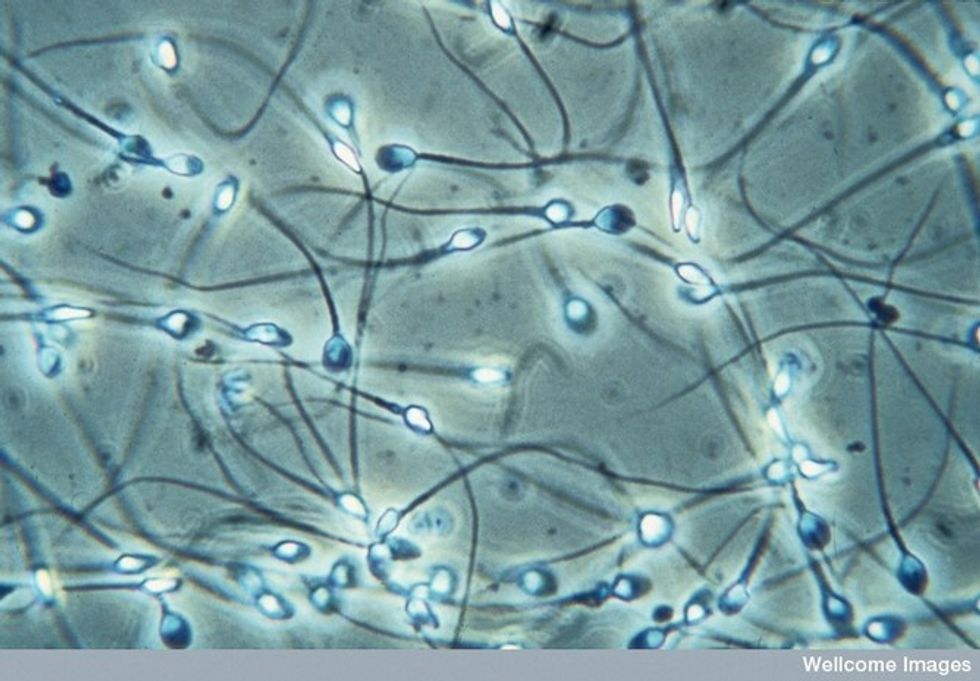
Most people probably think of sperm as the microscopic tadpole-like things wriggling around in human semen. But there is an astonishing amount of diversity in the size, shape and number of sperm produced by male animals. In fact, despite performing the very same function in all animal species (fertilising eggs), sperm are the most diverse cells found among animals.
This diversity is a product of evolution. Every animal’s sperm has evolved to meet the needs of the individual animal that produces it. For example, new research published in Proceedings of the Royal Society B shows that the number and size of sperm produced by a mammal depends on the size of the female reproductive tract. Studying these kinds of adaptations helps us to better understand the incredible diversity we see in sperm across animal species.
Tiny animals can have massive sperm
Sperm length varies by several orders of magnitude across species, from the tiny sperm of the porcupine (0.0003 cm) to the gigantic sperm of the fruit fly (6 cm), which is more than 20 times the length of the fly. The fruit fly’s sperm looks like a wound-up ball of string that unravels once inside the female’s even longer reproductive tract.
The number of sperm produced by different animals also varies enormously. Humans produce approximately 100 million sperm per ejaculate, while rams can produce 100 billion. Groups of sperm can even work together. Sperm in some species are known to team up and form a “train” that swims faster than individual sperm.
Promiscuous females mean more sperm
Much of the variation we see in the size, shape and number of sperm produced by different species is thought to be the product of competition for fertilisation among the sperm of different males. This is a type of sexual selection, only relatively recently described, known as “sperm competition”. In species whose females mate most promiscuously, there is strong pressure on males to invest more heavily in sperm, to ensure that one of their own little soldiers is the one that wins the battle for fertilisation.
This has led to an extraordinary array of different warfare tactics. These species, in general, produce more sperm, as more soldiers on the ground gives you a numerical advantage. It may also be advantageous to produce bigger sperm, which are faster and able to outcompete the sperm of other males in the race to the eggs.
Sperm can also vary depending on the size and shape of the female body. To accommodate this, sperm have to be able to swim far and fast enough, to successfully reach the eggs. In general, bigger sperm swim faster, so males should produce numerous, large sperm. But males only have finite resources to allocate to sperm production and may face trade-offs.
This means that evolutionary pressure to increase sperm size will inevitably lead to a reduction in number, and vice versa. As mentioned, recent research found that among mammals, males of smaller bodied species tend to invest in fewer, larger sperm, while males of larger species tend to invest in more, smaller sperm. This is because the females of larger species have bigger reproductive tracts and so more (but smaller) sperm can spread across the greater space and have more chance of encountering an egg.
Manlier males have lower quality sperm
As sperm can be costly for the body to produce and resources are limited, males can also face trade-offs between producing sperm and other characteristics useful for reproduction. For example, species in which males invest more in big bodies and horns, or deep voices have been shown to produce less sperm.
In humans, men with more attractive voices have been shown to have worse quality sperm. It seems that males are faced with a trade-off between investing in traits that are useful for competing with rivals, or those that increase the chance of fertilising an egg. They can’t have everything.
We can control the amount of sperm we deliver
Amazingly, males seem to be able to control the amount of sperm they produce. There is evidence that males vary the amount of sperm in ejaculates, depending on the quality of the female, or the risk of sperm competition. In humans, men looking at explicit images of two males and one female (“sperm competition images”) have been shown to produce more mobile sperm than those looking at explicit images of three females.
Female animals who mate with more than one partner are also thought to have some control over the sperm that fertilises their eggs. So-called, “cryptic female choice” occurs when females use physical or chemical mechanisms to control each male’s chances of fertilisation. This is well described in a number of animal species, providing a mechanism by which females can bias the outcome of reproduction. For example, in some species, females will mate with several males and then selectively fertilise eggs with only the largest sperm or sperm from males with more compatible immune system genes.
A magnitude 4.7 earthquake struck northern Oklahoma early on Thursday, with reports the temblor was felt in neighboring Kansas.
The U.S. Geological Survey said the 1:42 a.m. quake's epicenter was centered 8 miles (13 km) southwest of Cherokee, Oklahoma. It had a depth of 3.8 miles (6.2 km).
The early morning quake was felt as far away as Wichita, Kansas, about 107 miles (172 km) to the north, according to media reports.
It was unclear if there was any damage or injuries. Kansas Emergency Management could not immediately be reached for comment.
Residents in both Oklahoma and Kansas took to Twitter to report feeling their homes shake.
"Definitely the largest #earthquake I've felt in Kansas. Lasted a while--heard things rattling," one user said.
The area has seen a spike in seismic activity in recent years with Oklahoma geologists documenting strong links between increased seismic activity in the state and the injection into the ground of wastewater from oil and gas production.
(Reporting by Victoria Cavaliere in Los Angeles; Editing by Toby Chopra)