

How do airplanes fly? An aerospace engineer explains the physics of flight

Curious Kids is a series for children of all ages. If you have a question you’d like an expert to answer, send it to curiouskidsus@theconversation.com.


Curious Kids is a series for children of all ages. If you have a question you’d like an expert to answer, send it to curiouskidsus@theconversation.com.
Petrochemical companies like Shell and Exxon Mobil have received nearly $9 billion in state and local tax breaks since 2012 to build or expand 50 plastics manufacturing facilities, according to a report the Environmental Integrity Project, or EIP, released today. Much of that activity occurred along the Gulf Coast of Texas and Louisiana, often alongside marginalized communities. What’s more, 84 percent of the operations released more air pollutants than allowed during the past three years, despite their promises to protect public health and the environment, the nonprofit found.
“Taxpayer subsidies are helping to fund dangerous and often illegal air pollution in communities of color,” Alexandra Shaykevich, EIP’s research manager and a co-author of the report, told Grist. She said the manufacturers should be held accountable for their environmental impact and those public funds redirected to beneficial projects like improving public schools. “If a company is breaking the law” she added, “it shouldn’t get taxpayer money.”
EIP examined 50 of the country’s 108 plastics plants, focusing only on those that have been built or expanded their production capacity since 2012. These facilities make the basic building blocks of all plastic — fossil fuel-derived substances like ethylene and propylene — that can be combined with other chemicals to create common polymers: polyethylene, for example, used in shampoo bottles and milk jugs, or polyvinyl chloride, used in pipes and window frames.
Demand for these substances is expected to surge in the coming years. The world produced 460 million metric tons of plastic in 2023, and the Organization for Economic Cooperation and Development expects that number to reach more than 1.2 billion tons by midcentury if current growth trends continue. Recycling is unlikely to keep pace — to date, less than 10 percent of goods made with plastic has been turned into new products; the rest has been dumped into landfills, littered into the environment, or burned.
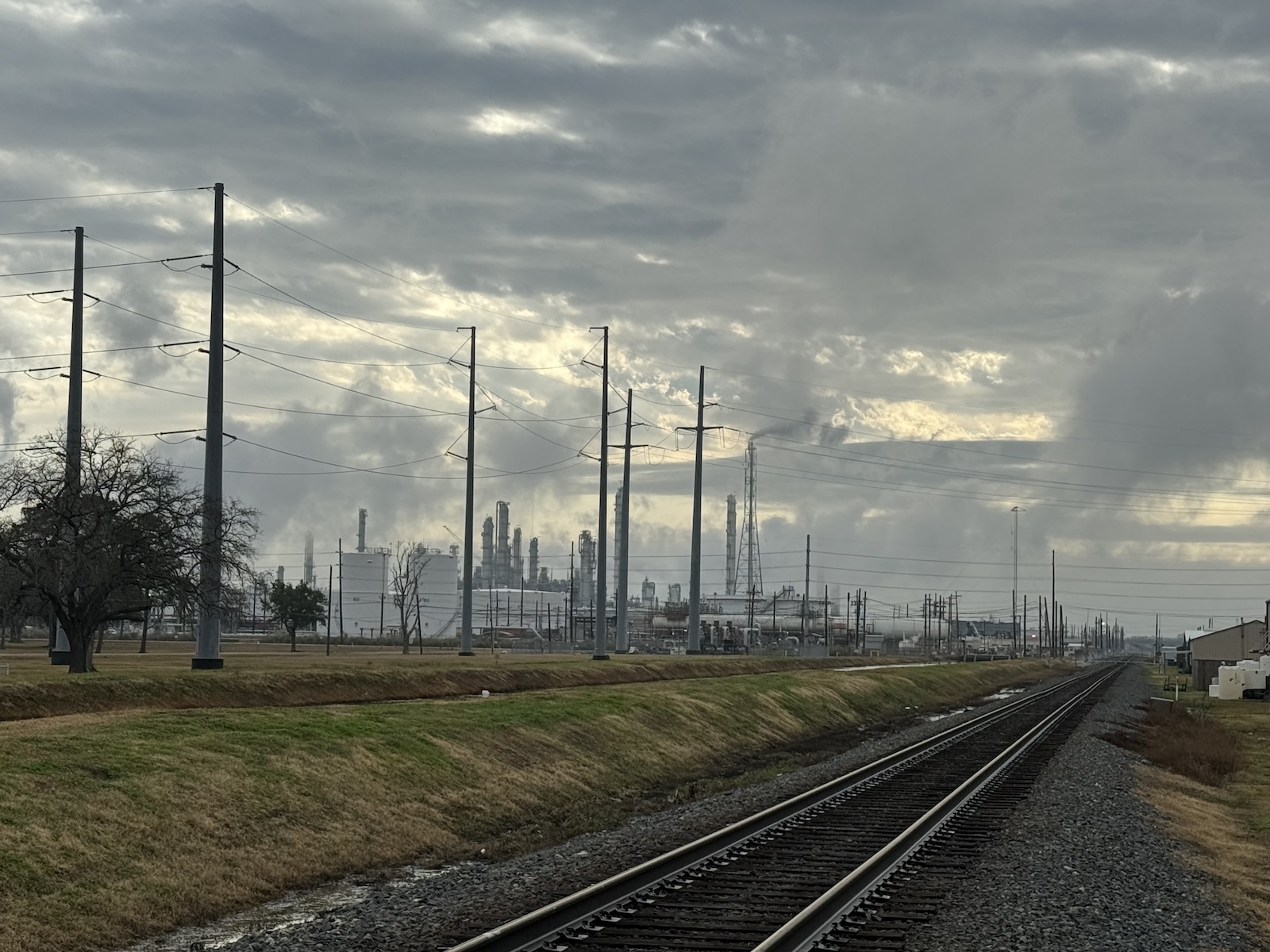 A plastics manufacturing complex next to the railroad tracks near Groves, Texas. Joseph Winters / Grist
So why subsidize making more? In many cases, local and state officials offer tax breaks with the idea that new or expanded manufacturing will foster economic development. For example, a Louisiana program highlighted by EIP exempted manufacturers from 80 to 100 percent of all local taxes for 10 years and favored industrial applicants that promised to create or retain jobs. Since 2013, the program has subsidized a Dow petrochemical facility in Iberville Parish, Louisiana, with at least $230 million in tax breaks. A program in Texas discounted property taxes for petrochemical companies if they employed at least 10 people in rural areas or 25 in other areas.
It’s not clear whether the communities have seen any economic benefits — analyses from environmental groups suggest that new jobs have not materialized, or have come at a huge expense to local taxpayers by siphoning funds from schools, parks, roads, and other infrastructure. According to the nonprofit Together Louisiana, for example, every job the state’s Industrial Tax Exemption Program created cost the public more than half a million dollars. Another report, published last year by the nonprofit Ohio River Valley Institute, found that a Shell-owned plastics plant in Beaver County had virtually no impact on job growth and poverty reduction.
“The truth of the matter is we don’t benefit from these industries. They don’t hire local people. And they don’t pay taxes,” Roishetta Ozane, a resident of southwest Louisiana, told EIP.
What is clear, however, is that inviting new and bigger petrochemical facilities into an area brings significant health and environmental consequences.
As part of their routine operations, the plastic plants EIP analyzed release tens of millions of pounds of ozone-producing nitrogen oxide, respiratory irritants called volatile organic compounds, and carcinogens like benzene and vinyl chloride every year. That’s only the start, because facilities often do not report emissions from equipment failures, chronic leaks, and accidents — all of which are disturbingly common.
Indeed, EIP found evidence of more than 1,200 breakdowns, fires, explosions, and other accidents over the past five years at 94 percent of the facilities it analyzed. These events frequently released more air pollution than allowed under the facilities’ permits — and lax reporting requirements often kept nearby communities from finding out until days or weeks later.
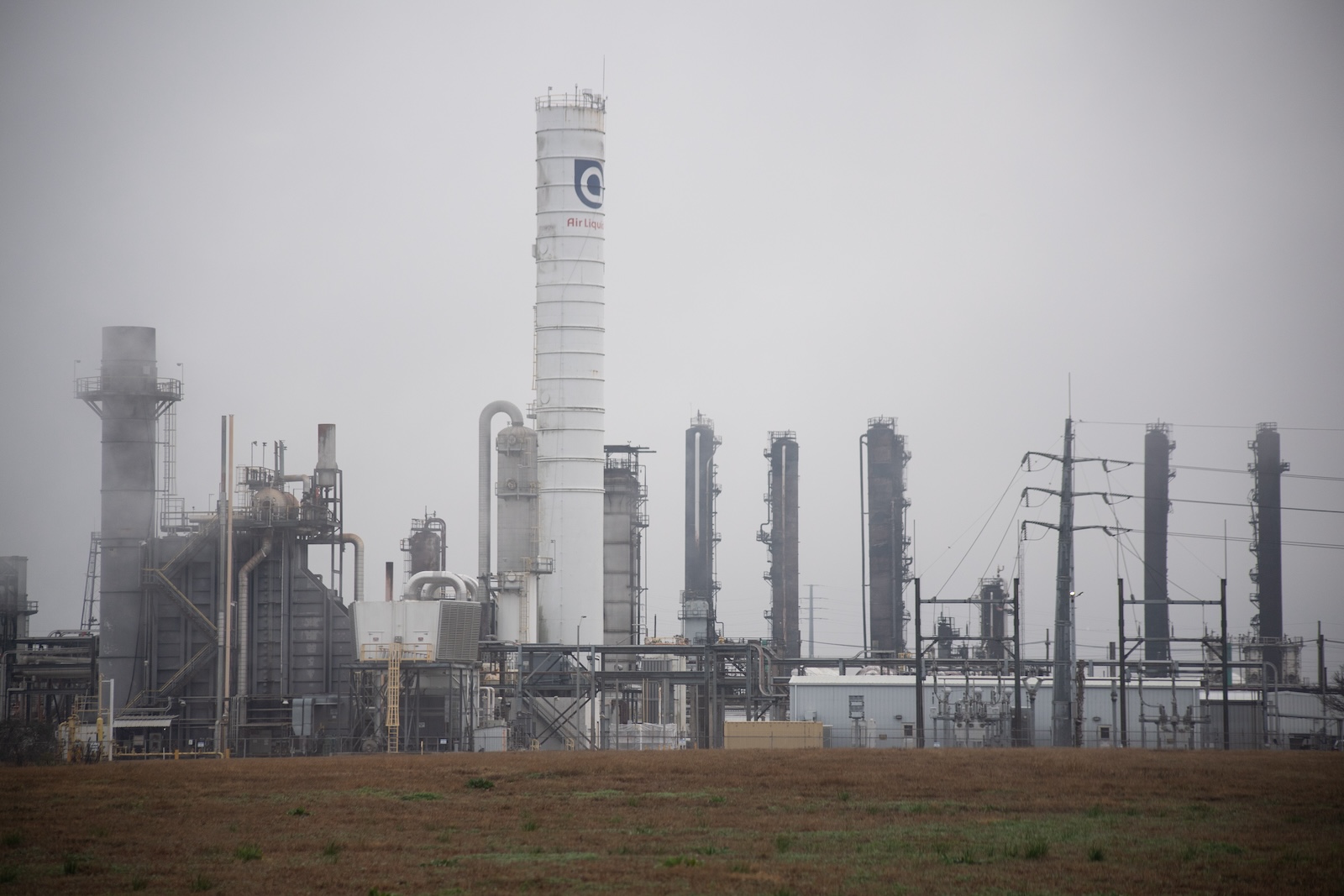 A plastics manufacturing facility near Port Arthur, Texas. Robin Caiola / Beyond Plastics
Rather than heavily fining these facilities, EIP found that regulators often treated them gently — either by issuing warning letters or by granting higher pollution permits. State environmental agencies have since 2012 bumped up those limits for one-third of the 50 plants that EIP analyzed.
“It’s outrageous, and it’s been going on for the 25 years that I’ve been doing this work,” said Anne Rolfes, director of the nonprofit Louisiana Bucket Brigade. “There’s this well-worn path toward petrochemicals in our state, and we’re so deep in those tracks that our elected officials aren’t even trying to drive out of them.”
As EIP notes, the plastics plants in question are often alongside schools, playgrounds, athletic fields, homes, and other public places. They tend to be sited near marginalized communities with underfunded schools and services. Of the nearly 600,000 people living within three miles of the plastic plants analyzed by EIP, more than two-thirds are people of color. Many of these people, like those in the industrialized corridor of southwest Louisiana known as Cancer Alley, face far greater risks of cancer and other diseases than the national average.
The EIP report includes several examples of plastic plants falling short of their promises to be ”a positive influence” and to “meet or exceed all environmental regulations,” as chemical company Indorama put it in a 2016 brochure. Between 2016 and 2022, state and local regulators approved at least $73 million in tax breaks for Indorama to restart a decommissioned plastics plant in southwest Louisiana. Once running, the plant violated its state pollution permit and failed to hire the workers it promised to. Several accidents released tens of thousands of pounds of hazardous emissions and injuries to two employees. The state environmental agency sent Indorama 13 warning letters.
Indorama declined to comment, as did 14 of the 17 other companies Grist contacted. The others — Exxon Mobil, Chevron Phillips Chemical, and Westlake Corporation — would not respond to EIP’s findings but said they strive to protect public health and the environment.
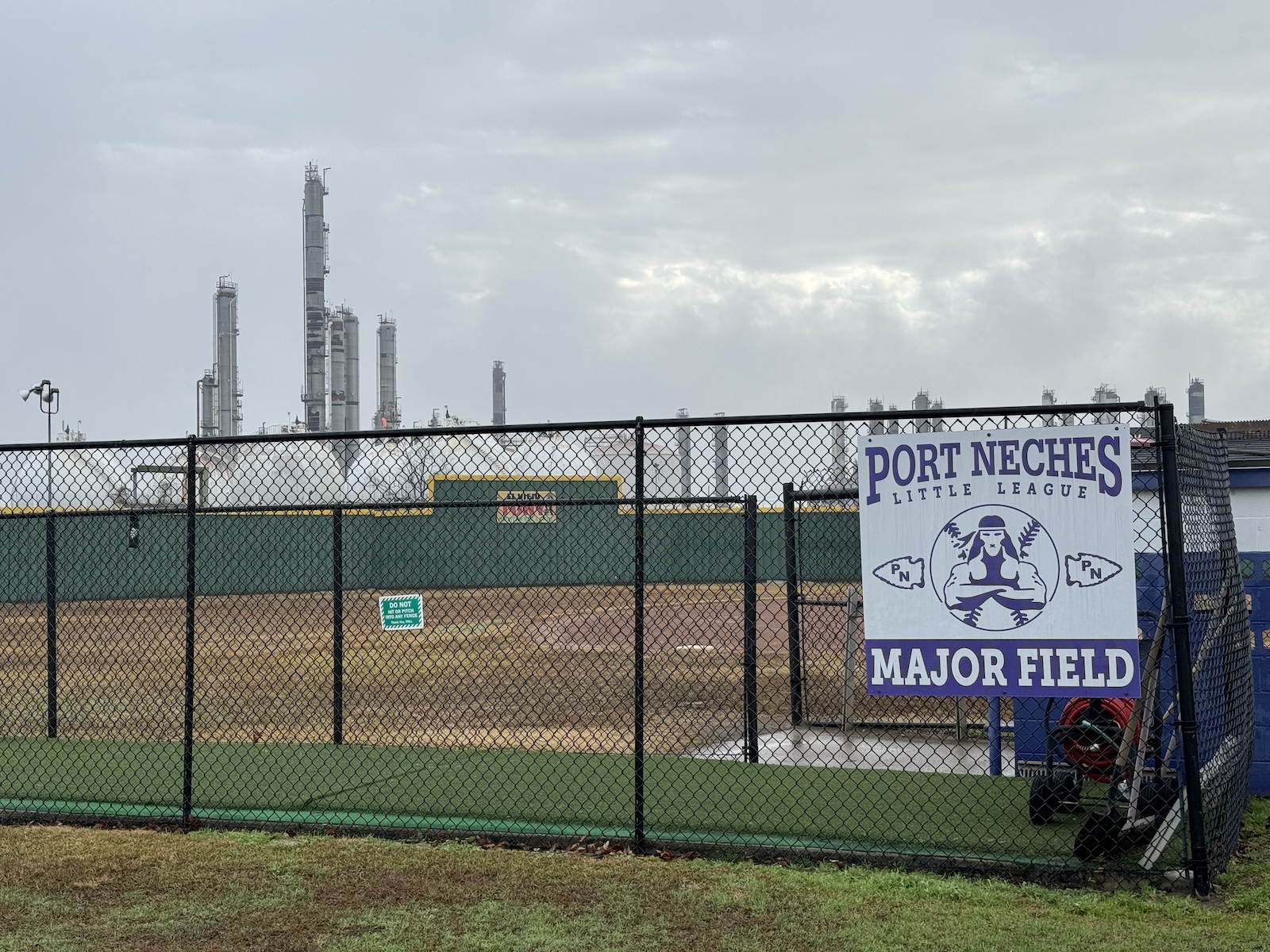 A baseball diamond sits next to a petrochemical facility in Port Neches, Texas. Joseph Winters / Grist
The Louisiana Department of Environmental Quality also did not respond to a request for comment. The Texas Commission on Environmental Quality said it would not comment because it had not yet reviewed the report. A spokesperson for Louisiana’s economic development agency said that “double-counting of some financial data” from its industrial tax exemption program by EIP “suggests a lack of academic rigor and discredits the entire analysis.” The agency did not elaborate on what data it believed was double-counted.
To mitigate pollution from plastics facilities, EIP is calling for stricter air emissions standards and better enforcement of the federal Clean Air Act. Rather than telling communities about “emission events” after they’ve happened, Shaykevich said, pollution data should be shared publicly in real time. “It does folks very little good to be notified two weeks after” an incident, she told Grist.
Some of these reforms could be coming. The federal Environmental Protection Agency is considering rules that would reduce hazardous air pollution from chemical plants, including ethylene oxide, benzene, 1,3-butadiene, and vinyl chloride. Under the proposal, industrial facilities would have to monitor concentrations of these pollutants “at the fenceline,” meaning at their property lines, and the EPA would make the monitoring data available online. Pollution levels above a certain threshold would require facility operators to fix the problem.
The EPA is expected to finalize the rules later this year. EIP estimates they would affect about half of the facilities studied in its report.
EIP is also calling for a dramatic reduction in public funding for plastics manufacturers. While some plastic items — like medical devices or contact lenses — are clearly useful, the organization says subsidies to produce them should be tied to environmental performance. “If companies can’t comply” with their permits, “they should be forced to reimburse taxpayers,” Shaykevich told reporters during a press conference on Thursday.
Other types of plastic production, she added, aren’t worth the trouble they cause. Nonessential, single-use items including bags, bottles, utensils, and packaging make up some 40 percent of plastic production and are virtually impossible to recycle. “We don’t think it’s OK to offer taxpayer support for single-use plastics,” Shaykevich told Grist. Such things, like the money that subsidizes them, are too often just thrown away.