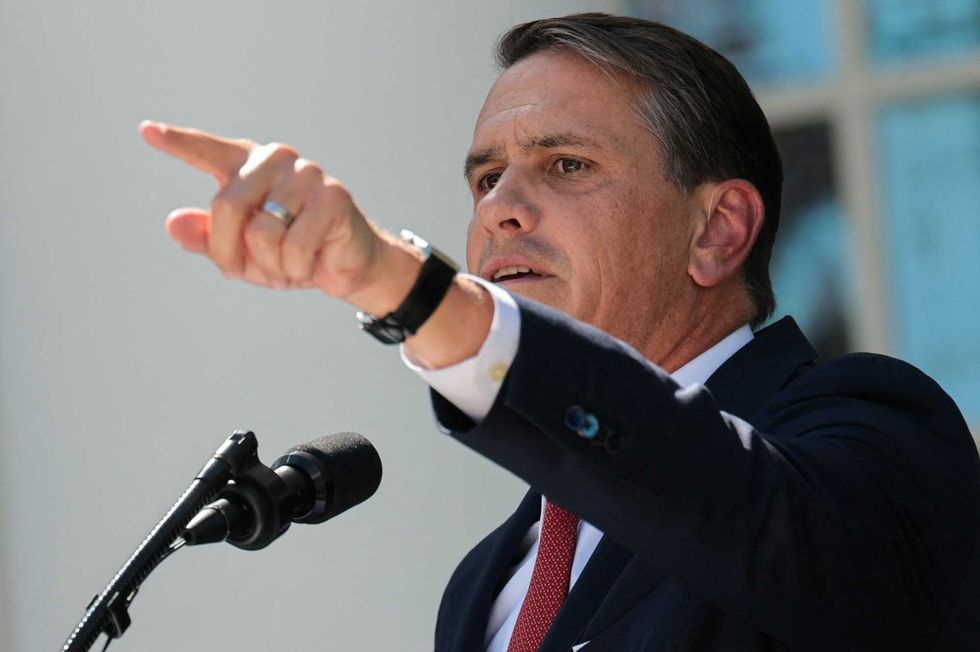
U.S. Attorney General Todd Blanche speaks during a press conference in the Rose Garden at the White House in Washington, D.C., U.S., September 15, 2026. REUTERS/Jonathan Ernst

Democrat Mary Peltola was declared the winner of Alaska’s Senate race Tuesday, giving her party a 56-44 Senate edge — but President Donald Trump’s Justice Department has made clear they’re not finished with the contest.
A criminal grand jury investigation is still underway into whether Peltola staffers or others recruited a spoiler candidate who shares a name with Republican incumbent Sen. Dan S. Sullivan to confuse voters, reported the Washington Post.
Peltola has denied the allegations, and the department is also still appealing a federal judge’s ruling that rejected its unusual bid to hold up certification of the results.
“The priority of investigating a criminal potential fraud doesn’t stop because of the election, no matter who wins or loses,” Attorney General Todd Blanche told reporters last week.
Asked whether the department would drop its cases if Peltola pulled ahead, Blanche stated: “No. That investigation remains where it was, which means I’m not going to talk about it.”
The other Sullivan on the ballot — retired teacher Dan J. Sullivan, who has repeatedly insisted his campaign was legitimate — drew fewer than 5,000 votes, which is less than half of Peltola’s margin of more than 12,000 votes.
Democrats have blasted both the civil suit and the criminal probe as an unprecedented bid to tip the election, and U.S. Attorney Michael J. Heyman made the rare move of announcing the grand jury probe just five days before Election Day, even though such probes are typically kept secret.
Prosecutors sent target letters and document preservation warnings to people suspected of recruiting Dan J. Sullivan, the Post previously reported.
Among the recipients was Marc Elias, the Democratic election lawyer whose firm represented Peltola’s campaign. Elias brushed aside the letters as the department’s latest attempt to target Trump’s political enemies.
In her Nov. 1 ruling tossing the civil case, U.S. District Judge Sharon L. Gleason said the law didn’t give her the power to order that kind of investigation and noted the department never explained how one could work without violating ballot secrecy.
The department appealed to the 9th Circuit, which won’t finish collecting arguments until Jan. 11, well after Peltola is slated to take office. The department hasn’t asked to speed things up.
UCLA election law scholar Richard L. Hasen urged the appeals court not to let the matter linger.
“This Court should send a swift and clear message to the federal government and the country,” Hasen wrote, “that the State of Alaska, and Alaska alone, has the right to certify the winner of its elections.”
Report typos and corrections to corrections@rawstory.com.
For customer support contact support@rawstory.com.