South Carolina's Senate passed legislation Tuesday to remove the Confederate battle flag from the state house, where it has flown for five decades despite being viewed by many as a symbol of slavery.
A bill to banish the flag from the Capitol grounds to a museum easily passed a third and final vote in the Senate by a 36-3 margin and is now headed for debate in the state's House of Representatives.
The legislation, deemed a non-starter only months ago, has garnered strong bipartisan support after the June 17 killings of nine African-American churchgoers during Bible study at Emanuel African Methodist Episcopal church in the port city of Charleston, about two hours south of the state capital Columbia. Photos of the white man charged in the shooting showed him posing with the flag on a website that also carried a racist manifesto.
Support for the flag has evaporated in a wave of sympathy for the victims and their families, who were widely acclaimed for expressing unconditional forgiveness for the shooter at his bond hearing less than 48 hours after the murders.
Several politicians say the shootings opened their eyes to the divisive nature of the flag and what it means to South Carolina's black population.
"The world changed on ... June 17, not only for the victims and their families, but the entire world took notice," said Senator Joel Lourie, a white Democrat.
"Let today be the beginning of a new story about the state of South Carolina ... a story of how we removed a symbol (and) helped heal a nation and a state in their mourning," he said on the Senate floor on Monday.
While most politicians recognize the flag is part of South Carolina's heritage, honoring those who died for the southern Confederacy in the U.S. Civil War, many agree it should not be flown in public places.
The bill may face a stiffer challenge in the House of Representatives but is still expected to pass and could be approved as early as Thursday. South Carolina's Republican governor, Nikki Haley, says she will remove the flag immediately if the law is passed.
The flag was raised atop the State House in 1961 in what critics say was a deliberate slap in the face to the black civil rights movement. It was moved in 2000 to a memorial for the Civil War dead that sits only yards from the entrance to the Capitol.
South Carolina's Senate is poised to pass legislation Tuesday to remove the Confederate battle flag from the state house, where it has flown for five decades despite being viewed by many as a symbol of slavery.
A bill to banish the flag from the Capitol grounds to a museum is headed on Tuesday for a third and final vote in the Senate, which it is considered virtually certain to pass. Then it will be taken up by the House of Representatives and could become law as early as Thursday.
The legislation, deemed a non-starter only months ago, has garnered strong bipartisan support in the wake of the June 17 killings of nine African-American churchgoers during Bible study at Emanuel African Methodist Episcopal church in the port city of Charleston, about two hours south of the state capital Columbia. Photos of the white man charged in the shooting showed him posing with the flag on a website that also carried a racist manifesto.
Support for the flag has evaporated in an emotional wave of sympathy for the victims and their families, who were widely acclaimed for expressing unconditional forgiveness for the shooter at his bond hearing less than 48 hours after the murders.
Several politicians say the shootings opened their eyes to the divisive nature of the flag and what it means to South Carolina's black population.
"The world changed on ... June 17, not only for the victims and their families, but the entire world took notice," said Senator Joel Lourie, a white Democrat.
"Let today be the beginning of a new story about the state of South Carolina ... a story of how we removed a symbol (and) helped heal a nation and a state in their mourning," he said on the Senate floor on Monday.
While most politicians recognize the flag is part of South Carolina's heritage, honoring those who died for the southern Confederacy in the Civil War, many agree it should not be flown in public places.
The bill passed a Senate reading Monday by a 37-3 margin and could be approved as early as Thursday. South Carolina's Republican Governor Nikki Haley says she will remove the flag immediately if the law is passed.
The flag was raised atop the State House in 1961 in what critics say was a deliberate slap in the face to the black civil rights movement. It was moved in 2000 to a memorial for the Civil War dead that sits only yards from the entrance to the state Capitol.
On June 17, in Charleston, South Carolina, it was once again proven that – to some, at least – black lives don’t matter. But this time it wasn’t under color of authority. This time, it was in a church, and at the hands of a person who’s clearly and unambiguously racist.
What’s happened in the wake of the tragedy is as shocking in scope as it is in its swiftness. President Obama used it as an opportunity to remind us of the racism that continues to plague the nation. Further, the suspect’s affinity for the Confederate battle flag led to Governor Nikki Haley’s call for its removal from the State Capitol and on Monday July 6 the South Carolina Senate voted 37 to 3 to do just that. People of all racial hues took to the streets to protest the killings and their basis in racism.
All of this has led some to believe that what’s happening in South Carolina represents an inflection point when it comes to race: an opportunity to hit the “reset button” where racism is concerned in America.
Before we embrace this conclusion lock, stock and barrel, however, we need to take a closer look.
My experience writing on race, social movements and the postwar South suggests that we must look to the past for clues about the likelihood Charleston serving as a game changer.
The role of both domestic and international opinion
Whether we define racial progress in symbolic or substantive ways, history suggests that when whites use violence against blacks, it sometimes backfires, resulting in racial progress.
However, the conditions under which it happens are very specific.
Typically, there are at least two audiences – third parties, if you will – to which forces of change appeal: one domestic, the other international.
The sympathy of the domestic audience (generally non-Southern) has – for much of the past 60 years – resided with the progressive forces as they witnessed scenes in which peaceful black protesters, who simply wished to be treated in accordance with the law of the land, were brutalized by white southerners. Such scenes evoked moral revulsion and emotional shock.
The international audience was no less important.
In the context of the Cold War, during which the United States was engaged in a global ideological struggle with the Soviet Union, race and racism were crucial elements.
To the extent that both superpowers were in a competition for international influence, and the United States often advertised itself as a beacon for freedom and democracy, the continued oppression of 10% of its population rendered such a claim dubious at best.
Further, to the degree that much of the competition for strategic access and alliances, by the 1950s, took place among nations in which people of color were in the majority, Jim Crow – and African diplomats being kicked out of diners – didn’t play too well.
Of course, the Soviets took advantage of every act of violence and repression that took place in the South, denouncing such blatant hypocrisy to worldwide audiences. The violence associated with the Freedom Rides serves as one example of this. “Scenes of bloodshed in Montgomery are,” said Radio Moscow, “the worst examples of savagery…taking place in a country which has the boldness to declare that its way of life is…an example for other people.”
With these caveats in mind, let’s now consider the relationship between violence and racial progress, beginning with the civil rights legislation of 1957 and 1960.
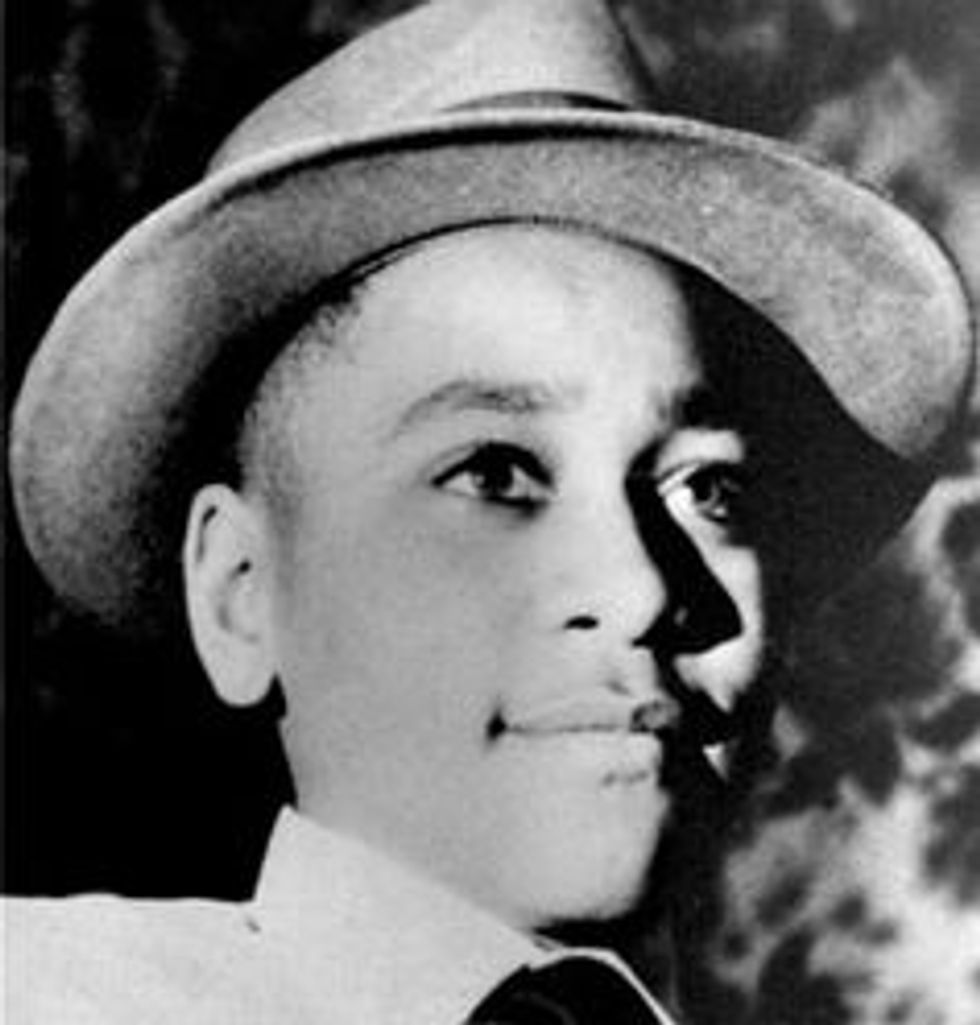
It was close on the heels of the murder of Emmett Till (1955) and the attempt to integrate Central High School in Little Rock, Arkansas (1957) that civil rights bills were ratified with the intention of improving access to voting for black southerners.
Ultimately, however, both fell far short of the stated goal. For instance, as of 1958, only Tennessee could boast that more than 40% of its black eligible voters were actually registered.
What happened?
In the aftermath of Emmett Till’s murder and, especially the white resistance at Little Rock, the Eisenhower Administration was moved to push for civil rights legislation as a means of blunting continuing Soviet assaults on the “American way of life.” As the president himself said, after ordering the deployment of federal troops to protect the new black students at Little Rock’s Central High School:
[I]t would be difficult to exaggerate the harm being done to the prestige and influence, and indeed to the safety, of our nation and the world. Our enemies are gloating over this incident and using it everywhere to misrepresent our whole nation.
On the domestic side, however, the audience was limited to white southerners, because civil rights failed to register on the national agenda in the 1950s. And since southern reactionaries and their representatives weren’t too keen on displacing white supremacy, it is hardly surprising that the civil rights legislation of 1957 and 1960 failed to achieve its goals.
Now go forward four years.
The racial progress achieved with the legislation of 1964 and 1965 also took place in the shadow of the Cold War.
These were the days of the Bay of Pigs and the Cuban Missile Crisis. But the domestic audience also played an important role here – and this time it was nationwide.
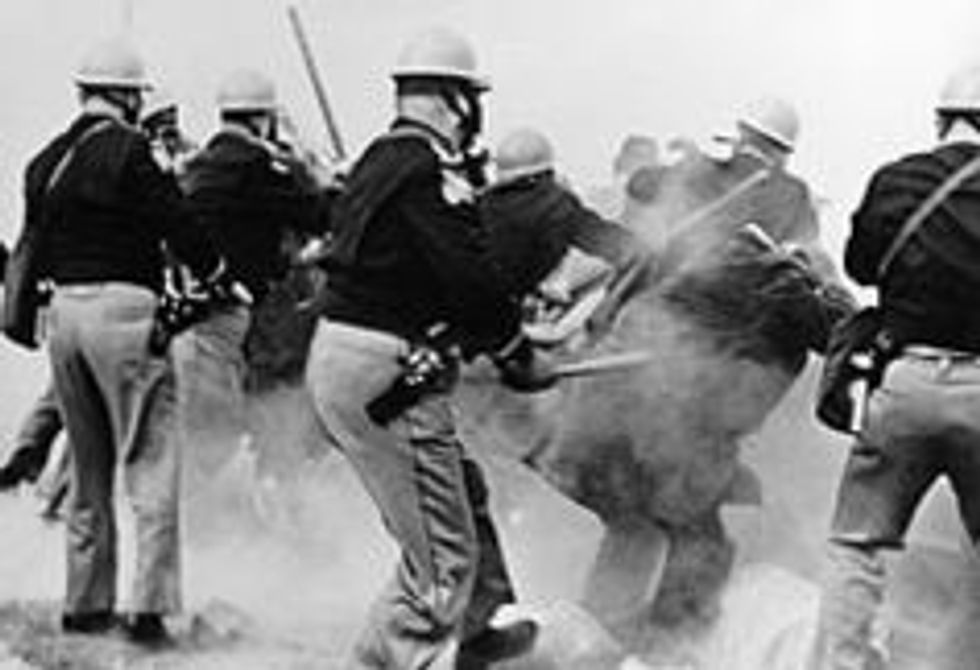
The attacks on Freedom Riders and sit-in participants, the bombing of Sixteenth Street Baptist Church in which four young girls were murdered, the spectacle during which fire hoses and dogs were turned loose on women and children protesters, and the “Bloody Sunday” march from Montgomery to Selma: this violence was extensively covered by the national media with shocking photographs like that of protester Amelia Boynton lying unconscious on the Edmond Pettus Bridge in Selma.
Civil rights catapulted to the top of the American social and political agenda.
Many Americans were outraged at the behavior of many southern whites, law enforcement included. Ultimately, this outrage resulted in legislation that outlawed discrimination on the basis of race (among other factors), segregation, and expedited the implementation of the Brown decision.
Let us now return to the tragedy in Charleston.
Who is watching Charleston?
The domestic audience is certainly paying attention to South Carolina, as any glance at today’s media shows. What’s missing, however, is the international audience. This, in my judgment, is critical.
In the absence of an external existential threat to keep America honest, the impetus for racial progress lies squarely in the domestic sphere.
And this means that change is at the mercy of reactionary conservatives, people who, as my research and that of Matt Barreto into the Tea Party has shown, are fervent, disdainful of compromise and fearful of an existential threat to an American way of life in which mainly white Christians are the chosen group.
As I’ve argued elsewhere, these sentiments can be traced to the Ku Klux Klan of the 1920s, in which the return of the “New Negro” from World War I represented a threat to the existing racial order.
Dylann Roof is an outlier in terms of his actions, but his resentments are more widespread than may be generally acknowledged. Research I conducted in 2010 makes the case that the suspect isn’t the only one who harbors such sentiments; disdain for blacks is quite prevalent among contemporary reactionaries..
When it was discovered that Roof has an affinity for the Confederate battle flag, it further confirmed what many blacks have come to believe: that the Confederate flag represents the continued oppression of blacks.
This, then, is what needs to be kept in mind as we witness South Carolina’s lawmakers debate Governor Haley’s call to remove the flag from the State Capitol.
South Carolina’s Senate debates - now comes the House
Yes, white-on-black violence, as it appears to prick the conscious of sympathetic whites, has resulted in adjustments in the past, and it may do so again.
However, we must remain mindful of the fact that more enduring progress has taken place when domestic sympathy was reinforced by the political pragmatism associated with the presence of an international pressure.
If we’re talking about a global military and ideological threat that has the capacity to threaten the existence of the United States or, at the very least, that claims to be interested in black lives, we’re fresh out of those at the moment: Islamist terrorism fails to meet either criteria.
What is more, as my own research confirms, the reactionary right only continues to grow. Today’s Republican Party has been forced to adopt positions on, say, comprehensive immigration reform that are at odds with the moderate wing of the party.
The fact is that GOP moderates and reactionaries significantly part ways on issues related to race. For instance, only 10% of reactionaries believed coverage of the George Zimmerman trial “raised important issues about race” warranting further discussion, compared to 40% of GOP moderates. In another example, when asked to evaluate the persistence of racial discrimination when it comes to voting in the wake of the 2013 Supreme Courtrollback of voting rights for blacks, 50% of GOP moderates believe this to be true versus 37% of GOP reactionaries.
I for one, remain to be convinced that the popular outrage we see now will result in real change.
South Carolina lawmakers took a major step on Monday toward passing legislation to remove the Confederate battle flag that flies at the state capitol in Columbia and has long been denounced by critics as a symbol of slavery.
A bill to remove the flag from the state grounds passed a crucial second reading by an overwhelming vote of 37-3 after an emotional debate in the state Senate.
It faces a final reading on Tuesday before it is taken up by the lower House of Representatives.
The political discussion comes after numerous elected officials, including Republican Governor Nikki Haley, called for the flag's removal after the June 17 massacre of nine African-American churchgoers at Emanuel African Methodist Episcopal church in Charleston. Politicians and businesses across the southern United States are trying to banish the Confederate flag in response to killings of the church's "Emanuel 9" during Bible study. Photos of the white man charged in the shooting showed him posing with the flag on a website that also carried a racist manifesto.
Among the victims was the church's pastor, Reverend Clementa Pinckney, who was also a state senator, and his senate desk was draped in black.
The flag's defenders argue that it is worthy of recognition as part of South Carolina's heritage, representing the sacrifice of lives on the battlefield during the Civil War. They also worry that bringing down the flag, which has flown for more than 50 years at the capitol, could lead to calls for removing symbols from other monuments and changing street and place names honoring Confederate leaders.
The removal legislation appears to have a good chance of success and could be approved as early as Thursday.
A recent poll by Charleston's Post and Courier newspaper showed both houses of the legislature would reach the two-thirds majority required under state law to move the flag, which was flown by rebelling states in the Civil War.
Several Senators on Monday spoke of being moved and inspired by the Christian forgiveness displayed by relatives of the Emanuel 9 for the shooter, adding that removal of the flag was the proper way to honor them.
"If they could be peacemakers in those dire circumstances ... I determined I can be a peacemaker when it comes to a flag flying on our State House grounds," said Senator Chip Campsen, a Republican who represents Charleston.
At least three senators spoke in favor of keeping the flag flying.
"I do understand that what happened in Charleston got a lot of people's attention," said Republican Senator Lee Bright, who is white. "But I believe we're placing the blame of what one deranged lunatic did on people that hold their southern heritage high and I don't think that's fair."
Democrat Vincent Sheheen, who is white and introduced the bill, asked legislators on Monday to approve it not because of Pinckney's "assassination" but rather because "it's the right thing to do."
Noting that he was mocked by politicians a year ago when he introduced similar legislation, he said the Charleston murders were a reminder that a racist cultural divide still existed in the state.
While some white people might have emotional ties to the Confederate flag, Senator Darrell Jackson, a black Democrat, reminded legislators that the descendants of slaves look at it differently.
"When I see a Confederate soldier, I don't get goosebumps and get all warm and fuzzy," he said. "All I'm saying is you can't force all of us to have the passion that some of you have about certain things."
The Confederate flag was raised atop the State House dome in 1961 as part of centennial commemorations of the Civil War. Critics said that was a direct challenge to civil rights, voting rights and desegregation protests at the time.
In 2000, after the National Association for the Advancement of Colored People announced an economic boycott of South Carolina and protesters marched on the state capital, lawmakers agreed to a compromise, moving the flag to a monument to Confederate war dead on the capitol grounds.
(Editing by David Adams, Cynthia Osterman and Bill Trott)
South Carolina lawmakers were set to begin debate Monday on legislation to remove the Confederate battle flag that flies on the grounds of the state capitol in Columbia.
The debate comes after numerous elected officials, such as Governor Nikki Haley, a Republican, called for the flag's removal in light of the June 17 massacre of nine African-American members of Emanuel African Methodist Episcopal church in Charleston. The shooting took the life of the church's pastor, Reverend Clementa Pinckney, who was also a state Senator. Politicians and businesses are trying to banish the flag, widely viewed as a symbol of slavery, across the country in response to the Bible study killings. Photos of the white man charged in the shooting showed him posing with it on a website that also carried a racist manifesto.
The removal legislation appears to have a good chance of success, and could be approved as early as Thursday.
A recent poll taken by the Post and Courier newspaper showed both houses of the legislature would reach the two-thirds majority required under state law to move the flag, which was flown by rebelling states in the Civil War.
Haley has led the charge for the flag's removal and 29 of the state's 46 senators have also signed onto bipartisan legislation that would transfer it to a military museum.
The state Senate is expected to vote first to take the flag down, followed by a debate in the House of Representatives.
The Confederate flag was raised atop the State House dome in 1961 as part of centennial commemorations of the Civil War. Critics said that was a direct challenge to civil rights, voting rights and desegregation protests at the time.
In 2000, after the National Association for the Advancement of Colored People announced an economic boycott of South Carolina and protestors marched on the state capital, lawmakers agreed to a compromise, moving the flag to a monument to Confederate war dead on the capitol grounds.
The NAACP action, as well as boycotts by sports organizations and protests saying the flag is an offensive symbol of slavery and white supremacy, have continued since then.
South Carolina residents began receiving robocalls on Friday comparing the movement to remove the Confederate flag from statehouse grounds to ISIS.
The state's General Assembly is set to begin debates Monday on removing the flag, which has flown over the statehouse since 1961. Talk of removing it grew heated after a white supremacist gunned down nine African-American churchgoers on June 17, including State Senator Clementa Pinckney.
The message, featuring an eery-sounding and likely digitally-generated voice, was paid for by a group called the Conservative Response Team (CRT). According to their Facebook page, the group dropped 40,000 robocalls. They will continue to do so throughout the July 4th weekend and next week.
"Just like ISIS, Obama's haters want our monuments down, graves dug up and school, roads, towns and counties renamed. They've even taken 'Dukes of Hazzard' off TV," the recording says. "Whats's next? This attack on our values is sick and un-American and it has to stop right here and right now in South Carolina."
According to CRT's Facebook page, they are newly-formed and are a pending 501(c)4 non-profit organization. They did not specify how their robocalls and radio ad campaign are being funded.
They first posted on Friday, with a picture of men in camouflage in a helicopter aiming assault rifles.
"We believe in a scorched earth policy towards the left -- the same policy they have towards us," the group posted.
During Pinckney's memorial, chilling images show the slain civil rights leader's body lying under the flag. Since then, Governor Nikki Haley and other Republican politicians have voiced support for removing the flag, NPR reports.
Listen to the recording, via The State newspaper, here:
State officials confirmed that the Loyal White Knights of the Ku Klux Klan, which calls itself the "largest Klan in America," filed a permit saying they expected between 100 and 200 people to attend the event on the north side of the building, where the Confederate battle flag is currently being flown. If the permit is approved, the event would be held between 3 and 5 p.m. on July 18.
The South Carolina Budget and Control Board approved the application Monday, and spokesman Brian Gaines explained that space to demonstrate was provided at the site when not already reserved.
"This is our state, and they are not welcome," Gov. Nikki Haley said in a statement. Haley called for the flag to be removed from outside the building in the wake of the terrorist attack committed by 21-year-old Dylann Roof earlier this month. Lawmakers will discuss removing the flag on July 6.
While Roof faces nine counts of murder in connection with the attack, the group's leader, Robert Jones, expressed support for him.
"He was heading in the right direction; wrong target," Jones told the Post and Courier. "He should have actually aimed at the African-American gang-bangers, the ones who are selling the drugs to white youth, the ones who are robbing and raping every chance they get."
"If you can't tell, they are trying to wipe us out of the history books," the message reads. "People seem to forget that black people and even the Cherokee Nations fought for the South. Tell this Marxist government they better not dishonor out ancestors graves."
Early Saturday filmmaker and activist Bree Newsome scaled the poll in front of the South Carolina Statehouse and took down the Confederate Flag that continues to fly. But don't worry guys: within the hour, the Flag had been replaced, just in time for an 11AM White Supremacist rally, and Newsome was arrested.
The flag continues to fly despite the calls for its removal, in light of the Charleston shooting, from Republican Gov. Nikki Haley and a group of the state’s top lawmakers. But the the move requires approval by two-thirds majorities in both chambers of the South Carolina Legislature.
In a statement Newsome said, "It's time for a new chapter where we are sincere about dismantling white supremacy and building toward true racial justice and equality."
And yet, the idea that the Confederate Flag represents anything but racism persists. Historian Claire Potter, a professor at the New School, joined me on my new radio show and she spoke about the false dichotomy, which presents the flag as a symbol of (A) racism or (B) heritage. She referred to a New York Times article which read,
... many say it is a symbol of the South’s heritage, culture and military pride and can be displayed without any sense of racism.
Does displaying the flag show historic appreciation, or is it a symbol of a reviled era, that breeds racism and should not be officially approved?
"Is racism and heritage a different thing?" Potter reflected. "And when we call something heritage, is that a way of obfuscating what we're really talking about?" Potter puts this manipulation of history in a larger context: "People use history to take the positions they want to take, to justify what they want to justify. And, of course, there's nothing that's been more abused, really, in American History, than the History of The Civil War, slavery and the Civil Rights Movement."
Listen to my full interview with Claire Potter, who joins comedian Gabe Pacheco and me, on episode two of The Katie Halper Show below. Found out about the time one of the Confederate flags "had too much White," something I didn't think was possible. The episode also has an excerpt from an interview I did with Mariangeles Borghini, the woman who organized the Take Down The Flag South Carolina Facebook Page, petition and rally. You can listen to The Katie Halper Show every Wednesday at 6pm on WBAI.org or 99.5 FM in New York City.
South Carolina will take a step forward in healing the wounds of last week's mass shooting when President Barack Obama arrives on Friday to deliver the eulogy for the pastor of the historic church where the attack took place.
Reverend Clementa Pinckney, a widely admired state senator and pastor of Charleston's Emanuel African Methodist Episcopal Church, was among the nine people who died when a gunman opened fire during Bible study.
The massacre has sparked an intense dialogue across the southern United States over the legacy of slavery and its symbols, centering on the Civil War-era battle flag of the Confederacy.
Addressing the shooting last week, Obama said it raised questions "about a dark part of our history."
Nicknamed "Mother Emanuel," the Gothic Revival-style house of worship is the oldest A.M.E. church in the southeastern United States, and was founded by slaves.
In an unusual step, Obama will be accompanied by both First Lady Michele Obama and Vice President Joe Biden for the funeral in a Charleston college arena. All three knew Pinckney personally.
During his presidency, Obama has spoken at half a dozen memorial services for victims of mass shootings in Texas, Arizona, Colorado and Connecticut.
"I’ve had to make statements like this too many times," a visibly upset Obama said from the White House last week. "Communities like this have had to endure tragedies like this too many times."
Obama repeated previous calls he has made for tougher gun laws, a politically thorny issue in the United States where the constitution guarantees the right to own guns.
"At some point, we as a country will have to reckon with the fact that this type of mass violence does not happen in other advanced countries. It doesn’t happen in other places with this kind of frequency," he said.
Married with two children, Pinckney was a talented orator with a baritone voice and began preaching at 13. A Democrat, at 23 he became the youngest African-American in South Carolina history to be elected to the state legislature.
Several thousand turned out on Thursday evening for Pinckney's wake at Emanuel, the line of mourners stretching for three blocks, including 200 college fraternity brothers, friends, politicians and members of the public, both black and white.
"I cried when I got here," said Katharine Moseley, a Texas bus driver who drove 20 hours from Austin. "I was raised in the A.M.E. church."
Lutheran bishop Mike Rhyne also drove down with his wife and three children from central Pennsylvania to pay tribute to his friend and fellow seminary student. "He was one of the best men I have ever met," he said.
Pinckney's high school friends Kevin Riley, 41, and Lachandra Colbert, 42, traveled from Maryland for the funeral. "We wouldn't miss this. He was our classmate," said Riley. "He was on track to be someone really important," Riley added.
Mourners universally echoed the words of forgiveness by relatives of their slain churchgoers for the white man, Dylann Roof, accused of the murders.
"We are not the ones to judge, we leave that to God," said Maxine Frasier Riley, 65, a retired school guidance counselor.
The Department of Justice has opened a hate crime investigation into the shooting.
Roof posed with the Confederate flag in photos posted online and allegedly made racist remarks to his victims as he opened fire.
In the aftermath of the slayings, South Carolina Governor Nikki Haley and other Republicans have called for the flag's removal from the State House grounds, saying it is divisive.
The controversy has spread across the country, with politicians adding to voices clamoring for the removal of Confederate symbols and names, and major retailers removing merchandise with Confederate images from stores and websites.
Republican presidential contenders face a dilemma when talking about racial issues after last week's racially motivated murders at a South Carolina church, as a new poll shows many Republican primary voters are less likely to see the topic as important.
While more than three-quarters of Americans believe race relations must be addressed in the United States, a smaller majority of only about 65 percent of likely Republican primary voters agree, a new Reuters/Ipsos poll found. (Graphic: https://link.reuters.com/dun94w)
One-third of likely Republican primary voters see race relations as unimportant to some degree, compared to only 9 percent of likely Democratic voters who feel that way.
"There is a tension Republicans are trying to navigate, and they are really stuck between a rock and a hard place," said Ipsos pollster Chris Jackson.
"You have the majority of the public on one side, but the people who are actually going to vote for them in the primaries are less interested in this particular issue and may have different takes or alternate priorities altogether," he said.
The poll, carried out after the murder by a white gunman of nine black members of a Bible study group at a Charleston church, also found Democrats were more trusted to deal with race relations by more than a 2-to-1 margin.
The findings illustrate the Republican Party's challenge in trying to expand its appeal among minorities - crucial if the party is to win the presidency - and could help explain the largely muted response to the Charleston shootings by the party's 2016 presidential contenders.
Around a dozen hopefuls, who must court the white, conservative voters who dominate the party's primaries, largely steered clear of calls to action or policy prescriptions after the shootings, focusing instead on messages of condolence.
Several Republican presidential contenders and other party leaders did join South Carolina state officials earlier this week in calling for removal of the Confederate battle flag from in front of the State House, seat of the legislature, labeling it an act of healing and unity.
EXPANDING REPUBLICAN APPEAL
Republican National Committee spokesman Orlando Watson noted that call was led by Indian-American Governor Nikki Haley and a prominent black Republican, U.S. Senator Tim Scott of South Carolina.
"Republican leaders have stepped up and are working hard to address all voter concerns, including those involving race," he said.
After losing the 2012 presidential election, Republicans had vowed to expand their appeal beyond their shrinking base of white males and reach out to court new supporters among blacks, Hispanics, Asians and the young.
But blacks have for decades been the most loyal Democratic voting bloc, a trend only reinforced by the election of President Barack Obama, the first black in the White House.
When Obama won re-election in 2012, Mitt Romney received 6 percent of the black vote. No Republican presidential contender has won more than 12 percent of black votes since President Gerald Ford's 15 percent in 1976.
The poll found Democratic front-runner Hillary Clinton was considered the presidential contender who was best suited to handle the issue of race relations, with 17 percent of all adults and 32 percent of blacks viewing her that way.
The top-ranked Republican was retired neurosurgeon Ben Carson, the only black Republican in the race. He was seen as best suited by 7 percent of all adults and 6 percent of blacks. Former Florida Governor Jeb Bush was next, with 6 percent of all adults and 1 percent of blacks viewing him as best suited.
Carson and Bush are among 13 candidates who have formally jumped into the race for the Republican presidential nomination in the November 2016 election.
Some respondents to the poll said the issue of race relations simply took a backseat to more heavily debated topics such as unemployment, crime, education and trade.
"I don't know if it's really an election issue, it's a people issue. Our political leaders can't change it," said Alex Jackson, a white Republican who is a student at West Georgia College in Carrolton, Georgia. She rated race relations as "somewhat unimportant."
Mary Wickham, a white Republican in Naperville, Illinois, who also said race relations were "somewhat unimportant", said she did not see it as an issue in her diverse community and she was much more interested in a candidate's views on immigration.
"It's just not a problem here," she said of racial issues. "We pray together, we stay together."
The online poll of 1,402 Americans was taken between June 18 and 22, and has a credibility interval, a measure of accuracy, of 3 percent for all Americans and 6.4 percent for Republican primary voters.
The body of Rev. Clementa Pinckney, the state senator and pastor gunned down with eight others at a historic black church in Charleston last week, was taken on Wednesday to the South Carolina capitol to lie in state inside the rotunda.
Pinckney's casket arrived on a horse-drawn military carriage, passing by the hotly disputed Confederate battle flag flying on the State House grounds in Columbia, the state capital. Eight State Police officers in dress uniform served as pallbearers.
Governor Nikki Haley and other politicians came out onto the State House steps to pay their respects to the 41-year-old Democrat, who had been widely admired for the way he blended politics with his faith.
The pastor-politician and eight other black men and women were shot to death during Bible study at the historic Emanuel African Methodist on June 17. Dylann Roof, a 21-year-old white man, has been arrested and charged with all nine murders, which authorities have said were racially motivated.
Pinckney's funeral will be held in Charleston on Friday where President Barack Obama is due to deliver the eulogy. First lady Michelle Obama and Vice President Joe Biden are also expected to be in attendance.
The Charleston church attack came after months of intense debate over U.S. race relations following the wake of killings of unarmed black men by police officers in Ferguson, Missouri; New York City; Baltimore and elsewhere.
It also ignited a political debate over the Civil War-era flag of the South's pro-slavery Confederacy, with mounting calls for the "Stars and Bars" to be removed from the State House grounds, among other places.
Roof had posed with a Confederate flag in photos posted on a website that also bore a racist manifesto.
The U.S. Justice Department likely will file federal hate crime charges against Roof, the New York Times reported on Wednesday, citing law enforcement officials.
Inside the rotunda, mourners filed by Pinckney's open casket and were greeted by his widow and two young daughters. In a bizarre twist, the casket was next to a statue of 19th-century South Carolina politician John C. Calhoun, a defender of slavery who was the seventh U.S. vice president.
On Tuesday, South Carolina lawmakers voted to open debate on removing the Confederate flag from the State House grounds as protesters gathered outside chanting "Take it down."
Four former South Carolina governors — three Democrats and one Republican — issued a joint statement on Wednesday supporting a call by current Governor Haley, a Republican, and other state politicians to remove the flag.
"We should fly only the United States and South Carolina flags on our State House grounds — flags that represent us all," they said.
One of the governors, Republican David Beasley, famously lost election after pushing for the flag's removal in 1996.
Pinckney, a fourth-generation pastor and talented orator with a baritone voice, chose a religious path early. He began preaching at 13, and at 23 became the youngest African-American in South Carolina history to be elected to the state legislature. He was elected to the Senate at age 27 in 2001.
Pinckney was a passionate advocate of expanding the Medicaid healthcare funding program for the poor and was credited this year with pushing through a police body camera law in the wake of the shooting of an unarmed black man by a police officer in North Charleston in April.
"He was a giant," said state Senator Marlon Kimpson, a Democrat. "He was the moral conscience of the Senate.
"We turned to him oftentimes during a legislative impasse, and he would offer us his guidance but more importantly give us his spiritual and biblical perspective."
(Writing by David Adams; Additional reporting by Emily Stephenson in Washington; Editing by Jonathan Oatis)
When Margaree Mitchum sees the stars and stripes waving atop a flagpole, she feels more than ordinary patriotism.
"I look at a flag differently now,” she said Tuesday at the Valley Forge Flag factory in Lane, South Carolina, where she has worked for 14 years. “When I started to sew, and I saw them flying, it filled my heart because I’d had my hands on them," she said.
Mitchum, 60, is one of more than 100 employees at Valley Forge’s South Carolina factory, located about 65 miles north of Charleston on a rural back road among cotton and corn fields. The production line was running fast this week, as huge raw bolts of red, white and blue nylon were expertly cut, sewn and stitched into hundreds of American flags per day in advance of the July fourth holiday.
Employees, most of them African-American, were nearing the end of the their nine-and-a-half hour shift in a hot, low-ceilinged warehouse, sitting at sewing machines standing at cutting tables, or adding brass grommets to nearly finished flags.
There was little sign of the landmark change that had occurred outside on Tuesday, beyond the listing chain link fence, in boardrooms of some of America's largest flag manufacturers, including Valley Forge.
The Pennsylvania-based flag company was on Tuesday the first major U.S. flag maker to halt production of the Confederate Flag, following the shooting of nine black churchgoers during a bible study in Charleston last week. Annin Flagmakers and Eder Flag, two more of the largest U.S. flag manufacturers, quickly followed suit, as calls grew to stop production of a flag that has been a divisive symbol in America and a reminder of the South's slave-owning past.
"I wish I had stopped doing it a long time ago," said Scott Liberman, chief executive officer of Valley Forge, a company founded by his great grandfather in 1882 to make burlap bags and flags for the military. Liberman started in customer service for Valley Forge in his twenties, back when his father Michael ran the business.
"If it has become offensive to people, I don't want anything to do with it," he said.
Opposition to the flag, which flies outside the state legislature in Columbia, has spiked in recent days, after pictures surfaced of Dylann Roof, the man charged with the church attack, posing beside the flag. South Carolina governor Nikki Haley has called for it to be taken down, and major retail stores have stopped stocking it.
The Confederate flag was not made at the Lane Factory, but for the tight-knit group of workers here, Valley Forge's decision feels like a victory.
"For us, as black people, the Confederate flag shows racism," said Mitchum, office manager at the factory. "Everything has its place and I think it should be taken down."
Mitchum grew up picking cotton for her sharecropper father in South Carolina, a job she can barely bring herself to talk about now that she sits behind a desk with a computer.
Many of the workers here, she said, are related or attend the same church. They are close, bringing in food to share on breaks. And last week’s attack in Charleston hit close to home.
"Everyone here is disturbed,” Mitchum said. “We are praying people, church going people."
Workers at the factory, she said, take pride in what they do. Valley Forge flags have covered coffins of American presidents since John F. Kennedy. And, according to the company website, its flags were flown during the Normandy Beach landings in World War Two.
Now, the workers are proud, too, of their company’s decision to discontinue making a flag many saw as a direct affront to African-Americans.
Mitchum paused when the bell rang for the end of the day’s shift. The walls of her small office shook as workers came and went from the front door down the corridor.
But before leaving for the day, she tried to sum up what the American flag means to her.
"Coming up, I didn't have it good," she said, tears welling up. "When the wind blows, a flag is free, it can go left and right."
(Reporting by Edward McAllister; Editing by Sue Horton)
Some South Carolina legislators are seeking a way to remove flag and a window with a view of it is blocked at the rotunda, site of Pinckney’s visitation
As mourners prepare to view the body of South Carolina senator and pastor Clementa Pinckney lying in state in Columbia, the debate rages over whether the Confederate flag beloved by his alleged killer should be allowed to fly during his wake.
Pinckney was the pastor of the Emanuel AME Church in Charleston where, last Wednesday, he was holding a bible study when he and eight parishioners were shot dead by racist and alleged gunman Dylann Roof.
Pinckney’s open-casket visitation is scheduled for between 1pm and 5pm on Wednesday inside the capitol rotunda. He is believed to be the first black man to lie under the capitol rotunda since at least reconstruction in the 1860s, and the first person to lie there since governor Carroll Cambell in 2005, the Associated Press reported. A horse-drawn caisson will bring Pinckney’s body to the capitol.
Pinckney was well-known in the state, representing Jasper County as a Democrat in the state legislature for 18 years and preaching since the age of 13. He helped build support for legislation to mandate police body-worn cameras as an accountability tool, after a North Charleston police officer fatally shot 50-year-old black South Carolinian Walter Scott , and was described as a “ political spirit lifter ” by observers.
Some state legislators in South Carolina were reportedly looking for a loophole to remove the Confederate flag Wednesday, the Post and Courier reported, though a large black drape has already been placed over a rotunda window with a view of the Confederate flag outside, according to the Associated Press.
The flag, flown during the secession of the south in 1861, is believed by many to be a symbol of the worst of the south’s history of racial oppression. State legislators on Tuesday introduced a bill to debate removing the flag, which requires the agreement of both houses of the state legislature, and Republican governor Nikki Haley , who has called for it to be taken down.
In Alabama, Republican governor Robert Bentley ordered the flag removed from that state’s capitol building Wednesday morning. Legislators in Mississippi have also proposed removing the flag.
Republican South Carolina state representative William Chumley told CNN on Tuesday that his constituents still wanted the Confederate flag flown over the statehouse.
“I think that misuse and miseducation of that flag has probably pushed it to this point,” said Chumley. In the same interview, Chumley pivoted to a common pro-firearm talking point, the so-called “good guys with guns” argument.
“These people sat in there waiting their turn to be shot. That’s sad, and somebody in there with the means of self-defense could have stopped this, and we’d have less funerals than we’re having,” Chumley said. “Why didn’t somebody just do something? I mean, why, you’ve got one skinny person shooting a gun.”
The comments have since been widely condemned. Chumley is also one of three campaign co-chairs in South Carolina for Republican Ted Cruz’s presidential campaign.
Pinckney’s funeral is scheduled for Friday, where president Obama is expected to give the eulogy. First lady Michelle Obama and vice-president Joe Biden are also scheduled to attend.





.jpg)
