




Exclusive: Key conservatives behind S. Dakota’s abortion law appear clueless as to what Planned Parenthood does
The new requirements are part of a bill that cleared the state's legislature yesterday. It would require not only a visit to an anti-abortion group, but also a 72 hour wait before seeing a doctor. About half of states require patients to wait 24 hours, making South Dakota's the longest wait requirement in the nation.
But in conversations with Raw Story, the bill's cosponsor in the S. Dakota Senate, along with one of its chief proponents in private life, both appeared to be confused on the basic truth of what Planned Parenthood is.
In short, both key anti-abortion advocates appear to be operating under deeply flawed assumptions about the nature of womens' health services in the United States.
And now, they're actually writing the laws.
Planning for parenthood
The Planned Parenthood Federation of American (PPFA) is perhaps best known for abortion services, thanks to media campaigns launched by its religious conservative critics.
In actuality, the vast majority of their services have nothing to do with providing abortions.
PPFA, one of the nation's top non-profit organizations, says that in 2009, 96 percent of its activities were dedicated to one of the following: cancer screenings, STD or STI testing, counseling and education, or pregnancy testing and prevention.
Thanks to all of this, the one in five American women who visit a PPFA clinic every year have a much better shot at preventing unwanted pregnancies or catching a life-threatening disease before it becomes critical.
To this effect, PPFA says that each year it plays a role in preventing over 600,000 unwanted pregnancies, and only three percent of their patients request abortion services.
By contrast, figures show PPFA is ten times more likely to be helping prevent an abortion than carrying one out.
The plot to destroy it
Republicans in S. Dakota are just the tip of the spear in a cultural assault on womens' health services being led by social conservatives.
In Ohio recently, one legislator wants to ban abortions after a heartbeat can be detected -- and to further his cause, the statehouse recently heard a fetus "testify" via ultrasound.
In Georgia, Republicans are even seeking to make miscarriages a potential crime, calling for laws that would mandate an investigation into lost pregnancies.
In Texas, Republicans want to require women to get a sonogram before going ahead with the procedure. Other states have even gone so far as to propose legalizing "homicide," so long as it's in defense of the unborn.
And at the federal level, where Republicans control one house of Congress, efforts have been aimed at , even at the expense of shutting down the government. Senate Democrats have refused to vote on a House GOP budget which cuts not only Planned Parenthood but other services like veterans' housing aid, food stamps, health aid for children and environmental protections, thereby setting up the standoff.
In S. Dakota, where the only Planned Parenthood clinics are in Rapid City and Sioux Falls, women come from across the state for basic health needs.
However, newly passed legislation that was headed for their Republican governor's desk could play a key role in bringing that to an end.
Misunderstanding their opposition
Republican state Sen. Al Novstrup (pictured, above) one of the bill's main sponsors, said that he views the legislation not as a fresh set of "restrictions" on abortion, but more as an effort to ensure women are "getting a second opinion."
"It's a fairly simple bill that's ... Currently Planned Parenthood is providing no counseling, no substantial information and basically putting the lady on the table with a surgery gown before she meets a doctor. First time she meets a doctor she's on the table and it's an abortionist. It's not a real informative way of doing business.
"So what we want them to do is sit down and visit with someone for half an hour, then drive back, and if she wants to continue with the process then she's welcome to. It's asking her to get a second opinion."
He added: "It's not a medical second opinion. It's just additional information."
That's a point of contention to many pro-choice activists and even the American Civil Liberties Union, which has expressed concern that some information passed on by the "crisis pregnancy centers" may be outdated or even outright deceptive.
"The South Dakota legislature should be ashamed of this demeaning and destructive law," said Robert Doody, leader of the ACLU's S. Dakota chapter. "It is bad enough that this law inserts a government mandate into a woman’s private medical decision by forcing her to first visit a facility with a blatant agenda. To further require that the woman report the name of her abortion provider to these groups places those who provide badly needed medical services to women in harm’s way."
The group also raised concerns of inaccurate or coercive information being passed on from the "crisis pregnancy centers."
In spite of Novstrup's claims, Planned Parenthood actually provides a multitude of counseling and educational services. In 2009, PPFA volunteers reportedly reached over 1.9 million people with educational materials on reproductive health, pregnancy and dozens of other topics. They were also a key bulwark in the fight against sexually transmitted diseases, carrying out nearly 4 million tests in 2009.
Asked how S. Dakota could ensure accurate information was being passed on to women from pregnancy centers, Novstrup did not seem concerned.
"Well, you know, we don't have to go to a perfect situation. We just have to go to a better situation than we have."
He added that PPFA has a "financial motive to go forward with the abortion," adding that it's a "biased position" to "financially benefit by the decision to go forward."
Reminded that Planned Parenthood is not a for-profit venture, Novstrup countered: "I don't know if you'd call 'em for profit. They're sure taking the money."
PPFA's services are paid for by customers, with costs partially subsidized by taxpayers to keep services affordable. The same services are exponentially more expensive at private hospitals and clinics.
Challenged on the medical efficacy of requiring patients to chat with non-medical personnel, Novstrup seemed taken aback and simply moved on to a different point.
Raw Story asked if he'd support the same course of action for a male patient who needed to have his appendix surgically removed. He did not directly address the question.
'Not to my knowledge'
One of S. Dakota's key activists, Leslee Unruh, played an integral role in persuading lawmakers to support the bill. She's also the founder of The Alpha Center, one of S. Dakota's largest "pregnancy crisis centers" located in Sioux Falls.
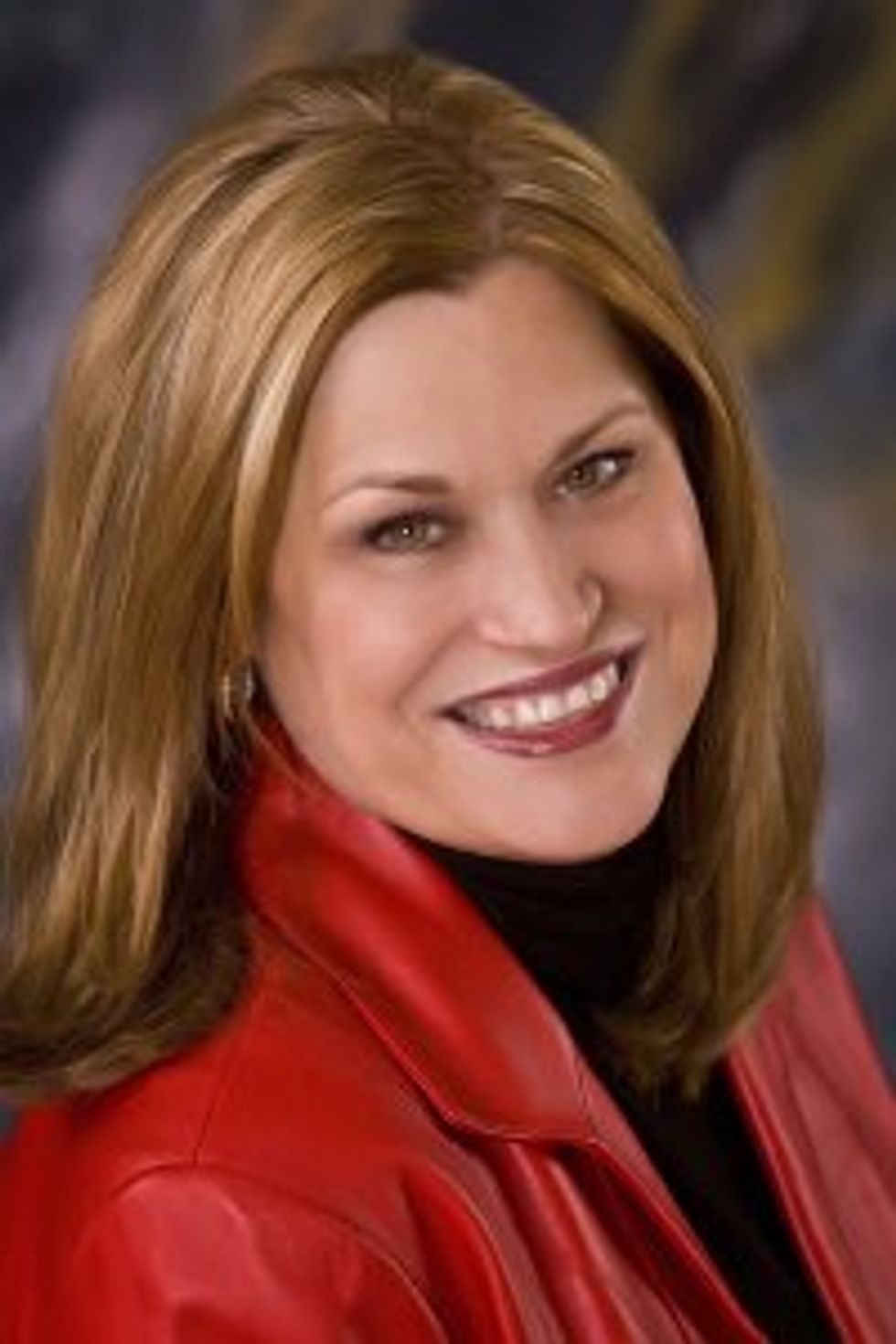 "I’m thrilled for the women who have been coerced into having an abortion that their voices have finally been heard," she told Raw Story in an email exchange.
Unruh added that she'd brought women from The Alpha Center to the state's legislature to testify about abortion recovery.
In spite of her integral experience with the process of birth and S. Dakota's legislative process, like Sen. Novstrup she too appeared misinformed about the range of services offered by Planned Parenthood.
Asked if funding from Title X, which subsidizes contraception and preventative health services provided by Planned Parenthood, helps prevent abortions, she replied: "Not to my knowledge."
She also contradicted Sen. Novstrup, saying that Planned Parenthood is not a for-profit organization.
"But I don't know why," she added.
Unruh also refused to answer a question as to whether funding for womens' health programs, like cancer screenings and monthly checkups, should be cut off.
But ask her if Planned Parenthood should be shuttered and it's an unequivocal yes, seemingly revealing a stark misunderstanding of the organization she's so committed to fighting.
Unruh's Alpha Center was one of at least three S. Dakota "crisis pregnancy centers" expected to see growth in new contacts thanks to the state's legislation.
S. Dakota's Republican governor, Dennis Daugaard, had yet to sign the bill into law, but he calls himself "pro-life."
He is expected to agree with fellow Republicans on the legislation.
 These "personas" were to have detailed, fictionalized backgrounds, to make them believable to outside observers, and a sophisticated identity protection service was to back them up, preventing suspicious readers from uncovering the real person behind the account. They even worked out ways to game geolocating services, so these "personas" could be virtually inserted anywhere in the world, providing ostensibly live commentary on real events, even while the operator was not really present.
 Nevertheless, he said, they would all still don riot gear and "do their job," even if Walker's order were to suppress the protests.
 The main difference is that the Saudi government - an absolute monarchy - relies on its enormous oil wealth to quell potential resistors to its regime.
 This amendment to the 1993 Brady Bill, which first established the national criminal background check system, sought to strengthen the original law by compelling states to submit records of prohibited persons to the federal government’s computerized tracking system, which in turn could be used by any licensed dealer prior to a prospective gun sale.
 “So the trade-off,” Horwitz noted, “was that funding for the states, and the states that accept money, also have to do this relief from disability,” which “made the deal sweeter for [the NRA].”
 After the tragedy at Virginia Tech, the NICS Improvement Amendments Act to the Brady Bill – since it couldn’t change the constitutional finding by the courts and require states to send this information – instead created a system of financial incentives and disincentives to compel the states to act.
 The Obama administration's
  Direct exposure to crude oil can cause a number of health issues for humans, but most of them are short-lived or relative and none of the potential long-term effects are guaranteed.
 Despite declaring safety, even the NOAA's own tests show regular consumption of Gulf seafood will dramatically heighten one's intake of polycyclic aromatic hydrocarbons.