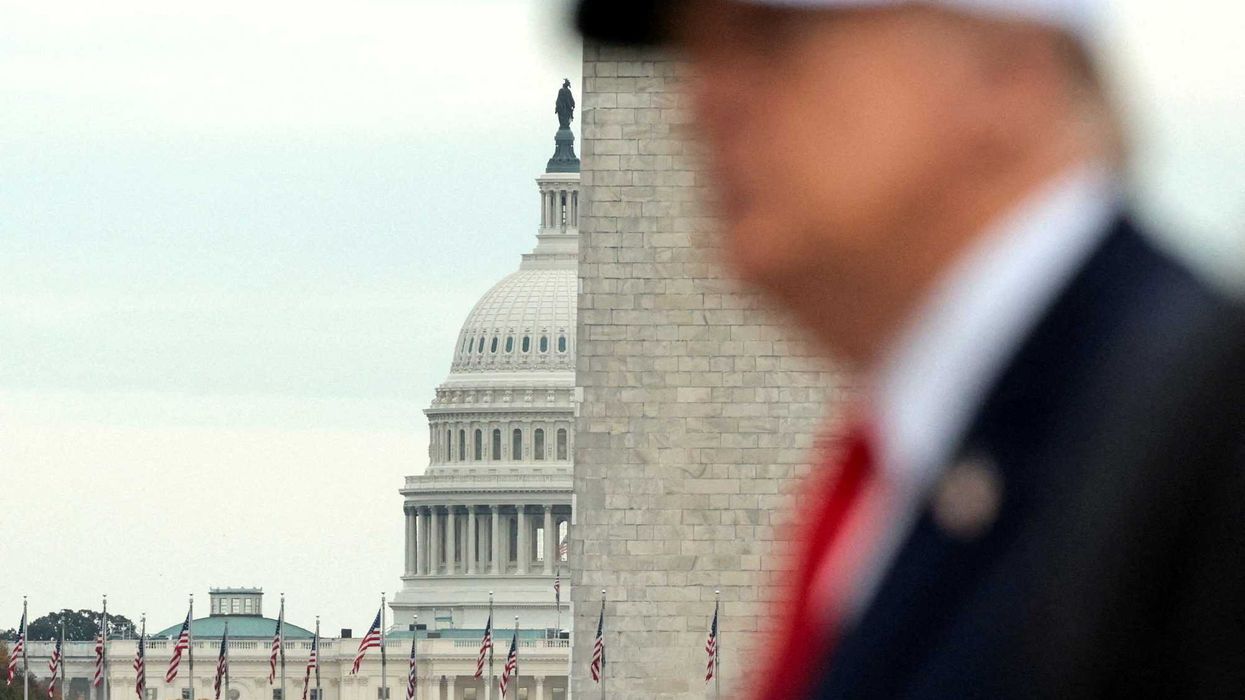
Topeka Kansas, USA, October 6, 2018 President Donald Trump at MAGA rally in support of Kansas Secretary of State Kris Kobach who is the Republican candidate for governor. (Photo credit: mark reinstein / Shutterstock)

The independent news, politics, and culture website Salon.com announced Thursday that it was ceasing publication after 31 years, a decision it said stemmed from the struggle of “business realities” and profound changes in the digital journalism landscape.
“It’s difficult to find the right words for the end of something that has meant so much to so many people,” the outlet said in a public statement. “Salon was never just a website. It was an idea about what journalism could be, born at a moment when the internet was still a largely unexplored frontier.”
After its launch in 1995, Salon became a hub for liberal and progressive readers seeking the latest news and opinion on politics, domestic affairs, civil liberties, arts, and culture.
Word of the publication’s closing prompted an outpouring of reaction from journalists and former readers.
“RIP Salon.com,” declared podcaster Casey Newton. “It was once among the best things on the web, and I learned so much from reading all the great writers there.”
“This is very sad,” said Michael Hiltzik, the Pulitzer Prize-winning columnist for the Los Angeles Times. “I feel like part of my own past—as a reader—is disappearing.”
As the New York Times reports:
Salon was started in 1995 by the journalist David Talbot as a digital magazine covering books, culture and ideas at a time before blogging and online news had taken off. It was financially backed by Apple, Adobe and the now-defunct bookstore chain Borders.
Over the years, it became known for its politically progressive views and expanded to cover politics and tech. It employed a number of well-known journalists, including Glenn Greenwald, Joan Walsh and Michelle Goldberg. Steve Kornacki, the beloved data nerd at NBC News, was at one point Salon’s politics editor, while CNN’s Jake Tapper also worked for the site as a Washington correspondent early in his career.
The publication, which had weathered financial ups and downs over the decades, was sold in August 2019 for $5 million to the entrepreneurs Chris Richmond and Drew Schoentrup. It was then bought in November 2023 by Find.co, a Malta-based company that describes itself online as a “performance marketing ecosystem” for crypto brands, for an undisclosed sum.
The outlet told The Associated Press that it had no immediate plans to take down its online archives, leaving three decades of Salon content available for review.
“Salon was the first media outlet that ever employed me,” wrote Glenn Greenwald, who started his public writing career at Salon, following the news. “They gave me full editorial independence—the right to upload my articles and columns with no editorial interference—and, unlike others, always honored it. I won’t comment on what they became, but David Talbot’s creation was one of the pioneers of what became independent online media. RIP.”
Trevor Timm, executive director of the Freedom of the Press Foundation, also mourned the loss:
While right-wing voices celebrated its demise—“Another one bites the dust,” declared fascist Trump loyalist Laura Loomer with joy—others simply noted that Salon.com, whether or not you embraced its editorial lines or business model over the years, is the latest indication of just how difficult it is to maintain an online publication outlet in the age of corporate media consolidation, rapacious private equity gobbling up news outlets, and the encroachment of artificial intelligence.
“Sad f---ing news,” said television producer Trace Crutchfield. “Salon was born in a time when the internet felt like a frontier, full of possibility that didn’t fit neatly anywhere else. That spirit is pretty much extinct, strangled by crypto whiz kids and private equity asset-catchers determined to strip-mine everything.”
In its announcement, Salon said, “Thirty-one years is a remarkable run, but what matters most is what happened during those years: the journalism, the ideas, the voices, the conversations and the community that grew around them. Salon helped demonstrate what digital journalism could be and could become. We hope that legacy will continue to matter long after today.”
Report typos and corrections to corrections@rawstory.com.
For customer support contact support@rawstory.com.