Top Stories Daily Listen Now
RawStory
RawStory

All posts tagged "marco rubio"

JD Vance 'sold his soul' – and voters are abandoning him for Trump favorite: analyst

Vice President JD Vance's support for a presidential campaign is slipping rapidly, according to a political analyst.

Vance has attempted to consolidate his possible presidential push with a series of appearances at Turning Point USA rallies. But the Vice President is seemingly losing support, and potential voters are abandoning Vance in favor of Secretary of State Marco Rubio.

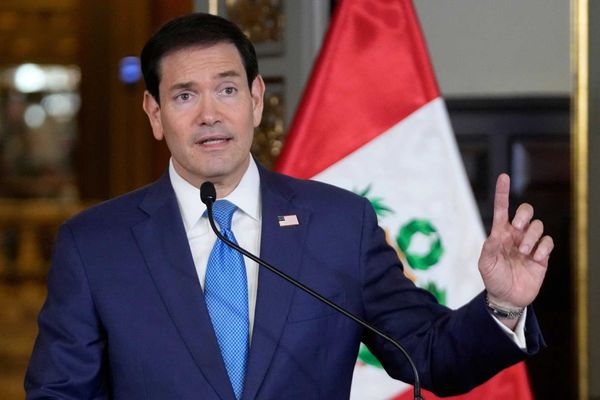
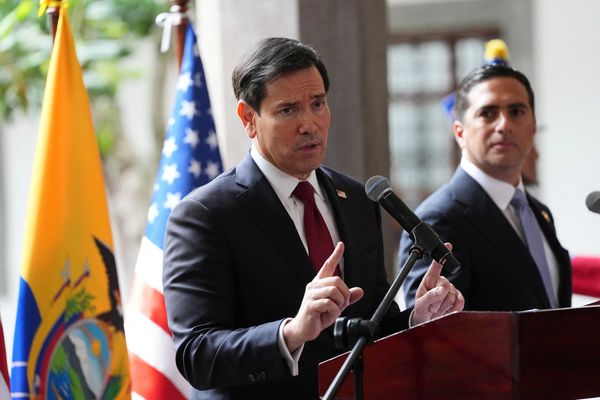
Vance faces a significant erosion of support within MAGA circles as Secretary of State Marco Rubio gains prominence as a potential 2028 presidential successor. Trump voters surveyed in focus groups express a preference for Rubio over Vance, viewing him as the "adult in the room" compared to other cabinet members.

Rubio's multiple government roles—secretary of state, national security adviser, acting USAID administrator, and acting archivist—have created an image of competence and influence. By contrast, Vance's standing has deteriorated sharply. MS NOW analyst Zeeshan Aleem believes voter sentiment is shifting from Vance to Rubio.

Aleem wrote, "It might be that he is more closely identified with Trump and hardcore MAGA ideology, and so Trump’s plunging ratings weigh more on Vance than other administration officials.

"Or, somewhat paradoxically, it might be — as many of Longwell’s quoted focus group participants suggest — that Vance comes across as less sincere rhetorically and seems to have “sold his soul” for proximity to power.

"Sometimes these things boil down to vibe. Even though both Rubio and Vance, like most of their GOP colleagues, have shifted many of their political views during the Trump era, Vance can come across as more try-hard than Rubio, perhaps because of the theatrical zeal with which he speaks, or because the very premise of his relatively short career in national politics was rejecting Trumpism."

Vance previously found himself ditched by MAGA voters, with The Atlantic analyst Sarah Longwell noting the changing tide for Rubio, who appeared to be benefiting from his vast number of titles.

Longwell wrote, "Rubio currently serves as secretary of state and national security adviser, and until recently he served as acting USAID administrator and acting archivist of the United States. Voters see the memes tweaking Rubio for having such a laughable number of important titles and think he must be doing something right."

Jeering memes backfire as MAGA finds new darling: GOP expert

MAGA has found a new darling in a Donald Trump cabinet member as Vice President JD Vance looks to be sidelined, an expert has claimed.

Trump voting members of the public backed Marco Rubio, who seems to be gaining importance in MAGA circles for his multiple roles in government. The Atlantic analyst Sarah Longwell noted the changing tide for Rubio, who appeared to be benefiting from his vast number of titles.

Longwell wrote, "Rubio currently serves as secretary of state and national security adviser, and until recently he served as acting USAID administrator and acting archivist of the United States. Voters see the memes tweaking Rubio for having such a laughable number of important titles and think he must be doing something right.

"Another reason voters seem to like Rubio: They see him as the 'adult in the room.' This is understandable. Looking smart and sober is relatively easy when you’re surrounded by the likes of Pete Hegseth, Kash Patel, and Robert F. Kennedy Jr. Even Trump himself—with his garbled speech and incoherent ramblings—makes his underlings seem more credible by comparison. All of that accrues to Rubio’s benefit."

Trump voters who spoke at a focus group overseen by Longwell suggested that Rubio is seen as a more preferred lead candidate for the Republican Party at the 2028 election than Vance.

Steve from Florida said, “Marco Rubio, my former senator, is doing great as secretary of state. He will be a great president too.” Dave, a two-time Trump voter from West Virginia, added, "He’s wearing multiple hats right now. I think he’s doing a good job in his role. I think he speaks well.

"I’d prefer to see him continue to stay in one of these State Department roles. Or if Trump makes him the new ayatollah or something, maybe he can do that as well."

Those who once thought highly of Vance now believe their support must lie with other candidates. Adam, a two-time Trump voter from California, noted, "I think the well is poisoned. I think that he [Vance] sold his soul in a way, and he’s adopting the divisive, dismissive stance that his boss does, to curry favor, secure his position. So unfortunately, he revealed a part of himself that there’s no returning from."

Sam from Minnesota, a Gen Z Trump 2024 voter, added, "I just don’t like Vance a lot. I think he has flip-flopped on issues. If you look at what he was about in 2018, 2019, or 2020, and you look at what he’s about now, it’s very, very different. I'd love to see Marco Rubio [run in 2028]."

JD Vance might have 'unhinged' Trump removed from office to save himself: ex-GOP insider

JD Vance could quietly shift himself away from Donald Trump over the next few months to preserve his presidential run, a political analyst has suggested.

While Vance has not yet confirmed if he is running to replace the president, analysts believe the Vice President will have a better chance of fronting the Republican Party at the 2028 Election if he separates himself from Trump. Analysis from former Republican presidential campaign creative team member Myra Adams, writing in The Hill, suggested that Vance should start moving away from the president as soon as he can.

Adams wrote, "When assessing Vance’s chances of winning the nomination, a key factor is whether Trump will have endorsed his vice president by this time next year. Such an early thumb on the scale could prevent any serious primary competition, saving donors and the party tens of millions of dollars by avoiding contested primaries in multiple states.

"Alternatively, if Trump adopts the 'see what happens' or 'let the voters decide' approach, it will indicate that Vance is on his own — cue the chaos."

This chaos Adams writes of could prompt Vance to lash out at the president and invoke the 25th Amendment. The series of events that could prompt Vance to do so may already be in motion, Adams suggested.

"If Republicans lose significant power in this year’s midterm elections, the fallout from Iran is still rippling through the economy, and Trump’s job approval stagnates in the 30s or low 40s, Vance might shift into political self-preservation mode and distance himself from his boss," she wrote. "He can then promote his former no-foreign-wars, isolationist stance, criticize Trump’s policies, and sing a 'what I will do differently' song on the campaign trail.

"Could an increasingly unhinged president drive Vance to invoke the 25th Amendment, in which case the president’s Cabinet would vote whether to remove Trump from office without impeachment? If successful, Vance, the incumbent 48th president, would run untethered from Trump, exploding the chaos scorecard.

"That may sound crazy, but remember: At the beginning of June 2024, no one foresaw Kamala Harris becoming the Democrats’ nominee by mid-July."

Vance faces competition for the nomination from Marco Rubio, but the Trump administration's geopolitical stance on both Iran and Cuba could prove troubling, Adams suggests, as the Secretary of State is already trailing Vance by 13% in the RealClear primary poll average.

'Remarkably vague and impulsive': Tapper obliterates Trump's supposed '4-D chess'

CNN anchor Jake Tapper questioned President Donald Trump's ultimate game plan in Iran, calling out the president and his administration for mixed messaging.

Tapper was responding to Secretary of State Marco Rubio's claims about objectives in the war and what the United States had aimed to achieve in its military strikes that first launched on Feb. 28. Now weeks into the war, Americans were unsure what the actual objectives were following confusing communications over what prompted the military action in the Middle East.

"If the mission is just as Secretary Rubio noted, the destruction of the air force and the navy and missiles and missile-making capability, it would seem that the U.S. would be close to accomplishing that," Tapper said. "But according to reports in The Washington Post and The Wall Street Journal, the Trump administration is preparing for more. The Pentagon is preparing for weeks of ground operations in Iran, troops on the ground. President Trump is weighing deploying another 10,000 more ground troops to the Middle East region in general. And they are also considering a complex operation to extract with boots on the ground."

Trump hasn't made clear what his next decision will be — and that has left Americans confused, Tapper explained.

"Again, one can want a denuclearized and democratic Iran and still wonder if President Trump is kind of making some of this up as he goes along," Tapper said. "One can support President Trump and wonder if he's fully aware of how often wars spiral out of control little by little, with unanticipated responses by the enemy requiring increasing commitment."

"President Trump said he would end the Iran war when he, 'feels it in his bones,' when so many lives are on the line. That is a remarkably vague and impulsive metric... Some people believe Trump's constant back and forth is street strategic, four-dimensional chess," Tapper added.


GOP hoping to get a handle on internal crisis at this year's CPAC: 'Can we pull together?'

Republicans are hoping to regroup and rally at this year's Conservative Political Action Conference, although President Donald Trump will be notably absent for the first time since he took over as the party's dominant figure.

CPAC chairman Matt Schlapp is hoping to rein in GOP infighting at this year's event, which will be held in suburban Dallas, and is warning that internal divisions could hurt Republican chances of holding on to their congressional majorities in this fall's midterm elections, reported Reuters.

"If some of the luminaries of MAGA are all at each other's throats in a kind of continued disunity, I think that could be devastating in the midterm elections," Schlapp told Reuters. "The question is: Can we pull together to get the right guys elected and hold on to the majorities? That's one of the intents of this conference."

Trump won't attend for the first time in a decade, but his rise in 2016 has reshaped the tone of "Woodstock for conservatives" into a more personality-driven event, but the list of speakers does not include anyone who's likely to criticize him outright.

"It seems to me that they are engaged in a kind of politics of comfort," said John K. White, professor emeritus at The Catholic University of America. "They're isolating themselves in a way that prevents the party, in a lot ⁠of ways, from moving forward to being a majority party in the country."

Schlapp described this year's theme as "action over words," and the speaker lineup is headlined by administration officials like Health Secretary Robert F. Kennedy Jr., Deputy Attorney General Todd Blanche and Brendan Carr, chairman of the Federal Communications Commission.

Sen. Ted Cruz (R-TX), former Trump adviser and podcaster Steve Bannon and MAGA influencer Nick Shirley will also speak, as well as Poland’s nationalist president, Karol Nawrocki, and Brazilian Senator Flavio Bolsonaro.

CPAC will hold a straw poll Saturday for the 2028 presidential race, and all eyes will be on the growing rivalry between Vice President JD Vance, who was the heavy favorite last year, and Secretary of State Marco Rubio, who has seen his star rise during Trump's military operations around the world.

Rubio reveals what he knew about friend accused of secretly lobbying for Venezuela

Secretary of State Marco Rubio testified Tuesday in a federal criminal case involving his once-roommate and friend, former Rep. David Rivera, saying during cross-examination that he did not know about Rivera's alleged crimes, CBS News reported.

Rivera has been accused of secretly lobbying for the Venezuelan government.

Rubio and Rivera had a close relationship in the past. Both are Cuban American immigrants from Miami, and Rivera was with Rubio when he picked out his wife's engagement ring. Rivera stood by Rubio's side as he pushed his political career forward while they both pursued their political ambitions in the Florida House of Representatives.

"Rubio described a 2017 meeting with Rivera where he said 'insiders in the regime in Venezuela' had convinced former Venezuelan President Nicolas Maduro to step aside, and Rubio said he had no knowledge that Rivera had allegedly been contracted out by a subsidiary of a Venezuelan state oil company to arrange the meeting," according to CBS News.

Rubio described his response to the claims that Maduro was planning to step down.

"I was skeptical that it was true," Rubio said. "Because we've had so many other people" attempt to do the same thing with "double dealers who were constantly making these claims."

Federal prosecutors allege that Rivera and his codefendant Esther Nuhfer sought to influence the first Trump administration to lower political tensions and tone down sanctions on behalf of Maduro and then-Foreign Minister and now interim Venezuelan president Delcy Rodriguez. Rivera and Nuhfer were indicted in 2022 by a grand jury in the Southern District of Florida for failing to register as a foreign agent and money laundering.

"Prosecutors allege that the pair were hired in a $50 million contract in exchange for three months of lobbying work in 2017 on behalf of a U.S.-based subsidiary of a Venezuela state oil company, PDVSA, which operates under the name CITGO," CBS News reported.

The indictment revealed that both Rivera and Nuhfer were accused of trying to lobby Rubio, who was at the time a Miami Republican senator, and Kellyanne Conway, former White House advisor, on behalf of the Venezuelan government's high ranking leaders.

"The attempts to meet Conway were unsuccessful, prosecutors said, but added that the pair did arrange two meetings with Rubio, who is a longtime friend of Rivera's and had been an outspoken critic of the Maduro regime," according to CBS News.

This was the first time in more than 40 years that a current Cabinet member was called as a witness in a federal trial, according to The Washington Post.

Rubio was asked what he knew about the alleged $50 million contract between Rivera, Nuhfera and a Venezuela oil subsidiary.

"I have no such knowledge other than what is in the press and what is in the indictment," Rubio said.

Trump Cabinet members are handing millions in cash gifts to the president: report

President Donald Trump has received millions in donations from his Cabinet members — except for three people, according to a new report Tuesday.

The Swamp, The Daily Beast's Substack, reported that out of Trump's 23 Cabinet members, 20 have offered substantial financial gifts to the president.

"Donald Trump has another good reason to keep praising his Cabinet members as they continue their relentless sucking up through his second term — they are putting their money where their mouths are by lining the president's pockets," according to The Swamp.

One Trump ally — the secretary of education and longtime business mogul — has donated the most.

"An astonishing 20 out of 23 of his Cabinet members have donated big checks to Trump's campaign, The Swamp has discovered. Former WWE wrestling boss Linda McMahon is the biggest donor with $20 million, and Trump’s New York pal Howard Lutnick has given $10 million," the outlet reported. "Perhaps the Cabinet runs on a sliding scale—the less they give, the more they need to grovel."

Citizens for Ethics, a nonpartisan nonprofit government watchdog organization, cited that Trump has received at least $30 million total in donations since 2023, which include political contributions, stock holdings and property visits.

Among the Cabinet members who have donated, these Trump administration officials have either made direct donations or financial gifts via committees they oversee. The known donors, according to Citizens for Ethics, include the following: Vice President JD Vance, Secretary of State Marco Rubio, outgoing Secretary of Homeland Security Kristi Noem, Education Secretary Linda McMahon, Commerce Secretary Howard Lutnick, Treasury Secretary Scott Bessent, Labor Secretary Lori Chavez-DeRemer, Energy Secretary Chris Wright, Agriculture Secretary Brooke Rollins, Director of National Intelligence Tulsi Gabbard, US Trade Rep. Jamieson Greer, Environmental Protection Agency Administrator Lee Zeldin, Small Business Administration Administrator Kelly Loeffler and White House Chief of Staff Susie Wiles.

Defense Secretary Pete Hegseth, Attorney General Pam Bondi and Health Secretary Robert F. Kennedy Jr. were among Trump Cabinet members who were not listed as donors. It's unclear if they have made donations to Trump's political or personal coffers.

'He could cut Vance's head off': Ex-GOP strategist hints at Trump's next big move

Ex-GOP strategist Rick Wilson on Monday predicted what he thinks will be next for President Donald Trump as talks about who will succeed him in 2028 have heightened and questions over whether it will be Vice President JD Vance or Secretary of State Marco Rubio.

Wilson was talking to MS NOW host Katy Tur about the dilemma Vance, who has been vocal about his stance against long wars in the Middle East, was facing. Vance has not publicly said he was opposed to the Iran war; however, reports have surfaced about his views on the conflict as Trump has shifted his messaging to his MAGA coalition about the military strikes.

"I think it's been notable, Rick, that we've seen so little of JD Vance lately," Tur said. "He's got a thing with the president that we might have to dip into at some point during this conversation, but other than that, he has been out of sight."

The last appearance the two apparently made was with the entire Trump administration Cabinet on March 7 at Dover Air Force Base, during the dignified transfer of six slain U.S. Army service members who were killed in Kuwait.

"I don't believe that's a coincidence, Katy," Wilson said. "I think that is a feature, not a bug, of the Vance position right now. He does come from a part of the party or the part of the MAGA movement that is very anti-interventionist. And they built the 'Peace President' illusion around Trump in 2024. And Vance put the bit in his teeth and ran with it. But now he's got a president who has launched a singularly reckless effort in the Persian Gulf that will end up sending American troops to fight and die in a pointless war. And I think Vance is very uncomfortable right now."

Trump has appeared to favor Rubio as his potential successor, according to reports.

"Marco's been getting a lot of praise," Wilson said. "Vance has been, you know, hiding in the tall grass. What goes on today in this presser with Trump could go either way. He could cut Vance's head off right there in public. And I wouldn't, if I was Vance, you know, act without getting a food taster going forward, if Trump really digs in on this war."

Last week, Vance dodged a direct question about how he viewed the military action in the Middle East. Vance was taking questions from reporters following his speech in Rocky Mount, North Carolina, where he campaigned for GOP candidates in a district Republicans were hoping to flip. Associated Press reporter Bill Barrow asked the vice president what advice he gave the president regarding military strikes and the economic fallout, including surging gas prices.

"Did you express any concerns like those you've expressed in the past on the possibility of those extended wars?" Barrow asked.

Vance refused to directly say whether he supports the joint U.S.-Israeli war in Iran.

"We're in the Situation Room, where you can't even take your iPod in there, or your AirPods, I guess what they're called, you can't take your iPhone in there, you can't take anything in there — because it is the most classified space anywhere in the world," Vance said.

"And I sit there with Pete Hegseth, and Gen. Caine, and Marco Rubio, and the entire White House team, and the president and I, and the entire senior team are talking about the options and about what we need to do and how we must best protect the American people," Vance added.

"I hate to disappoint you, but I'm not going to show up here in front of God and everybody else and tell you exactly what I said in that classified room partially because I don't wanna go to prison and partially because I think it's important for the President of the United States to talk to his advisors without those advisors running their mouth to the American media."

Susie Wiles now caught in crosshairs as Rubio forced to testify against longtime pal

Secretary of State Marco Rubio's longtime confidant and colleague has come under fire for his alleged lobbying ties to Venezuela, and the ordeal has now captured both President Donald Trump's closest allies, Rubio and White House Chief of Staff Susie Wiles, in the legal crosshairs.

David Rivera, who has been a friend to Rubio for 20 years, was slated to stand trial in Miami federal court over allegations that he acted as a federal agent for Venezuela and now Rubio, who serves as secretary of state, is scheduled to testify against him as a government witness, according to a report Tuesday from The Lever.

Rivera, a fellow Cuban American immigrant from Miami, was with Rubio when he picked out his wife's engagement ring. He stood by his side as he pushed his political career forward while they both pursued their political ambitions in the Florida House of Representatives.

The case has raised questions about Trump's inner circle and who yields power.

"The blockbuster case hasn’t just ensnared Rubio, a central architect of President Donald Trump’s recent overthrow of the Venezuelan government," The Lever reported. "It provides a rare glimpse into a constellation of powerful figures in Trump’s orbit — including his White House chief of staff — who have profited from shaping U.S. policy on Venezuela, potentially without always disclosing the true nature of their work."

Wiles, who formerly co-led powerful U.S. lobbying group Ballard Partners, has also been mentioned in the case. Rivera's attorneys have suggested that in their client's defense, they "appear ready to suggest that the foreign-agent violations leveled against their client could just as easily be applied to another political operative: Wiles, Trump’s chief of staff. To make their case, Rivera’s lawyers are zeroing in on two businessmen named in the indictment: a wealthy Venezuelan media mogul named Raúl Gorrín and a convicted cocaine trafficker named Hugo Perera."

"The hundreds of pages of Ballard records described by Rivera’s attorneys could shed light on the matter, but the documents may never become public," according to The Lever. "Last month, a federal magistrate judge in Florida’s Southern District Court granted a Justice Department petition allowing Wiles to avoid testifying at Rivera’s trial, thereby permitting related documents to remain under seal."

"But in his ruling, the judge made a surprising admission," according to the outlet.

"To be clear, no one disputes that Ballard Partners registered under FARA and dealt with Gorrín openly,” wrote Magistrate Judge Edwin Torres," The Lever reported. "Torres’ office refused to comment. But if Torres is correct, it would mean that — despite no publicly available record of the filing — Trump’s chief of staff previously worked as a registered foreign agent for a government the U.S. recently moved to overthrow."

Trump's disastrous incompetence exposed with 5 obvious questions he never answered

Minimally competent leaders would have considered at least five obvious questions before launching the nation into war. President Donald Trump considered none of them.

1: What’s the objective?

It’s not surprising that more than half of all Americans oppose Trump’s War. From the outset, his administration has offered numerous and contradictory justifications for it.

February 28: Trump cited 47 years of grievances, a desire to destroy Iran’s missiles, and a message that the Iranian people should “seize the moment” because now was their chance to “be brave, be bold, be heroic, and take back your country.”

But he also said that the attack was a campaign to “eliminate the imminent nuclear threat,” although he had boasted in June that the United States had already accomplished that goal.

The same day, Trump told the Washington Post, “All I want if freedom for the people.”

United Nations Ambassador Mike Walz claimed to the UN Security Council that the US was invoking the right of self-defense in response to Iran’s imminent threat.

But the next day, Pentagon officials told congressional staff members that no intelligence supported the notion that Iran was planning to attack the US first.

March 2: Secretary of Defense Pete Hegseth told the press that the objective was retaliation for decades of Iranian behavior, destruction of their missiles, and providing an opportunity for Iranians to “take advantage of this incredible opportunity.”

But only hours later, Secretary of State Marco Rubio offered a new justification for the war: Israel was going to attack Iran and, if that happened, Iran would then attack US interests in the region. He made it sound as if Israel’s Prime Minister Benjamin Netanyahu had maneuvered Trump into a corner.

The next day, Trump contradicted Rubio, saying: “It was my opinion that they [Iran] were going to attack first. They were going to attack if we didn’t do it.” Rebutting any impression that Netanyahu had manipulated him, Trump added, “If anything, I might have forced Israel’s hand.”

Rubio complained that his earlier remarks had been taken out of context and the operation “had to happen anyway.”

March 6: Trump posted on social media that only “unconditional surrender” would end the war.

2: How long will it last?

March 1: Trump told the New York Times the operation could take “four to five weeks.” He didn’t mention the Pentagon’s concerns that the war could further deplete reserves that military strategists have said are critical for scenarios such as a conflict over Taiwan or Russian incursions into Europe.

March 2: Trump said that the war could go on longer than four to five weeks.

March 4: Hegseth said that the Iran war is “far from over” and has “only just begun.”

March 6: Trump told the New York Post he hadn’t ruled out putting “boots on the ground, if necessary.”

3: Who will lead Iran after its Supreme Leader is killed?

March 1: Trump told the New York Times he had “three very good choices” for who could lead Iran.

March 3: Trump admitted: “Most of the people we had in mind are dead… Now we have another group. They may be dead also, based on reports. So I guess you have a third wave coming. Pretty soon we’re not going to know anybody.” Asked about the worst-case scenario for the war, Trump said, “I guess the worst case would be we do this and somebody takes over who’s as bad as the previous person.”

More than a dozen Middle East countries are now embroiled in Trump’s war, including Israel, Saudi Arabia, UAE, Qatar, Kuwait, Bahrain, Oman, Jordan, Iraq, Syria, Lebanon, and Yemen.

March 5: Trump told Axios, “I have to be involved in the appointment [of Iran Supreme Leader Ayatollah Khamenei’s successor], like with Delcy in Venezuela” — referring to Vice President Delcy Rodriguez, who remained in charge of Nicolás Maduro’s corrupt and repressive regime after the US abducted him. Trump said that Khamenei’s son — then rumored to be a leading candidate as successor — was “unacceptable to me” and “a light weight.”

The same day, he told NBC News, “We have some people who I think would do a good job.”

March 7: The Washington Post reported that a classified National Intelligence Committee study issued prior to the war found that even if the US launched a large-scale assault on Iran, it likely would not oust the Islamic republic’s entrenched military and clerical establishment.

March 9: Iran chose Khamenei’s son, a cleric expected to continue his father’s hardline policies, as the country’s Supreme Leader.

4: How would a war affect the Middle East?

Before US bombs began to fall, thousands of American citizens were in the war zone. But ahead of the strikes, the State Department didn’t issue official alerts advising Americans that the risk of travel in the region had increased.

Yael Lempert, who helped organize the evacuation of Americans in Libya in 2011, observed, “It is stunning there were no orders for authorized departure for nonessential US government employees and family members in almost all the affected diplomatic missions in the region — nor public recommendations to American citizens to depart — until days into the war.”

After attacks and counterattacks closed airspace and airports throughout the region, on Wednesday, March 4 — four days into the war — the State Department finally began evacuations by charter flight. The following day, the New York Times reported:

Until midweek, the State Department had mainly provided stranded travelers with basic information about security conditions and commercial travel options via a telephone hotline and text messages. Before Wednesday, desperate people calling the hotline got an automated message that said the US government could not help get them out of the region.

5: Could the war lead to humanitarian, economic, or geopolitical crises?

Only a week into the war, the UN humanitarian chief warned, “This is a moment of grave, grave peril.”

Iran is a country of 90 million people. US-Israel bombing has already displaced more than 100,000 of them.

Israel’s companion attack on Lebanon has displaced more than 300,000 residents.

More than a dozen countries are now embroiled in Trump’s war, including Israel, Saudi Arabia, UAE, Qatar, Kuwait, Bahrain, Oman, Jordan, Iraq, Syria, Lebanon, and Yemen.

The ripple effects span the globe as oil prices spike and Iran disrupts tanker traffic in the Strait of Hormuz — through which one-fifth of the world’s oil flows. During his state of the union message, Trump boasted that the price of gasoline was down to $2,00 per gallon in some states. Last week, the national average price in the US was $3.41 per gallon.

Ominously, on March 6 the Washington Post reported that Russia is providing intelligence assistance to the Iranian military attacking US targets. But Hegseth is “not concerned about that.”

Asked to rate his Iran war performance on a scale of one to 10, Trump gave himself a “15.”

Introspection rarely accompanies incompetence.

  • Steven J. Harper is an attorney, adjunct professor at Northwestern University Law School, and author of several books, including Crossing Hoffa: A Teamster's Story and The Lawyer Bubble: A Profession in Crisis. He has been a regular columnist for Moyers on Democracy, Dan Rather's News and Guts, and The American Lawyer. Follow him at thelawyerbubble.com.