Download Our App

All posts tagged "Racial Justice"

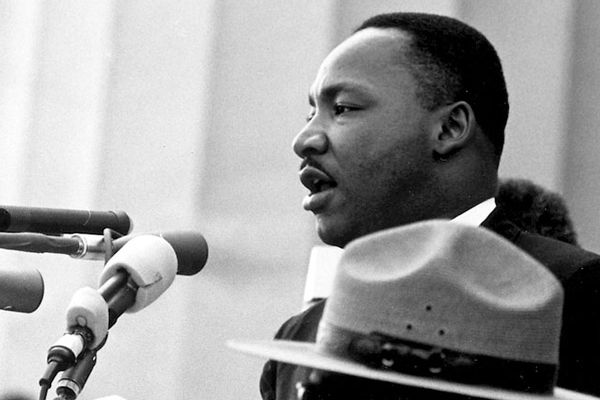
Martin Luther King Jr. on 'the other America'

Martin Luther King Jr. on 'the other America'

Editor’s note: To commemorate Juneteenth, we share excerpts of the Rev. Dr. Martin Luther King Jr.’s speech at Stanford University in April 1967. We hear in this speech many of the themes that would animate King’s career but are too often forgotten: Economic equality and justice, the historical context of white backlash, and optimism as an ethos. The speech has been edited for length.

I’d like to use as a subject from which to speak this afternoon, the other America. And I use this subject because there are literally two Americas. One America is beautiful for our situation. And in a sense, this America is overflowing with the miracle of prosperity and the honey of opportunity. This America is the habitat of millions of people who have food and material necessities for their bodies and culture and education for their minds, and freedom and human dignity for their spirit. In this America, millions of people experience every day the opportunity of having life, liberty and the pursuit of happiness in all of their dimensions. And in this America, millions of young people grow up in the sunlight of opportunity.

But tragically and unfortunately, there is another America. This other America has a daily ugliness about it that constantly transforms the buoyancy of hope into the fatigue of despair. In this America, millions of work-starved men walk the streets daily in search for jobs that do not exist. In this America, millions of people find themselves living in rat-infested, vermin-filled slums. In this America, people are poor by the millions. And they find themselves perishing on a lonely island of poverty, in the midst of a vast ocean of material prosperity. ...
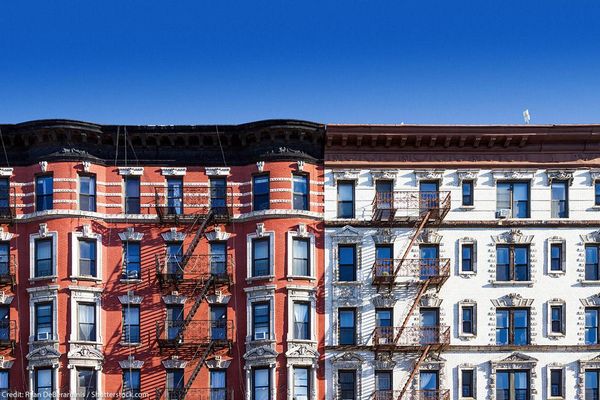

To Address Systemic Racism, We Must Dismantle Housing Discrimination and Segregation

To Address Systemic Racism, We Must Dismantle Housing Discrimination and Segregation

Equal access to housing is a civil right, but systemic racism within our housing institutions has long kept communities of color from accessing fair housing opportunities. The Fair Housing Act with its Affirmatively Furthering Fair Housing provision (AFFH) is a critical piece of legislation that aims to address our country's legacy of systemic racism, by dismantling housing discrimination and segregation. But during Trump's presidency, they came under attack. Now, the Biden administration must work to restore important housing protections to ensure all people have equal access to fair housing.

The Fair Housing Act of 1968 was a key part of Congress' response to a report commissioned by President Johnson to investigate civil unrest in Black and Brown communities between 1965 and 1967. The Kerner Commission's report warned Congress that “America is dividing into two societies, Black and White, separate and unequal." It also named residential segregation, which relegated Black communities to crowded and under-resourced urban areas, as one of the primary manifestations of this inequality. After the assassination of Martin Luther King, Jr. and in response to the report's findings, Congress passed the Fair Housing Act in 1968 in an effort to curtail widespread segregation and discrimination in housing and protect marginalized communities from discrimination when purchasing or renting a home.

Congress also used the Fair Housing Act to charge the Department of Housing and Urban Development (HUD) to use its programs to “affirmatively further" fair housing. With this provision, Congress intended for HUD to take active steps to dismantle housing segregation and to expand access to fair housing opportunities for everyone. While this obligation has been in the Fair Housing Act since 1968, there was no road map for jurisdictions to implement this requirement until HUD adopted the 2015 Affirmatively Furthering Fair Housing regulation (AFFH). This 2015 rule established a community centered process for analyzing patterns and causes of segregation and neighborhood disparities that could serve as the basis for local jurisdictions to establish actionable steps for achieving fair housing goals. ...

Biden Must Make the Current Enhanced Child Tax Credit Permanent

Biden Must Make the Current Enhanced Child Tax Credit Permanent

*This op-ed was originally published in Newsweek

Two children could be born on the same day in Anytown, USA.

Both born to loving families, healthy and at an average weight of seven pounds. However, one child is born into poverty and the other is not. The child born into poverty is more likely to experience toxic stress, suffer from environmental exposure to lead, develop diseases like asthma and experience trauma. ...

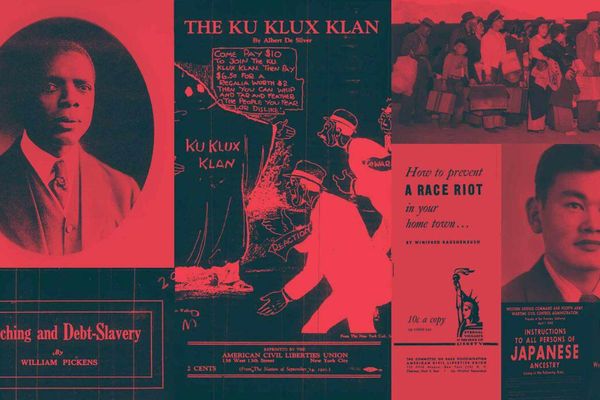
Racial Justice and Civil Liberties: An Inseparable History at the ACLU

Racial Justice and Civil Liberties: An Inseparable History at the ACLU

After World War I, it quickly became clear that the war to make the world “safe for democracy" had not made America safe for equality. Anti-Black race riots ripped through Chicago, New York, Washington D.C., and even Elaine, Arkansas. In October 1919, after Black sharecroppers in Elaine convened a union meeting, newspapers labeled the effort a “Negro uprising." The state mobilized troops and mobs to quell the rebellion. The result was “possibly the bloodiest racial conflict in the history of the United States," concluded the Encyclopedia of Arkansas History & Culture.

The American Civil Liberties Union's origin story is tied inextricably to the xenophobic Palmer Raids, but the lesser-known events in Elaine, Arkansas were also formative. Racial violence was an unavoidable issue for any organization dedicated to the rights and liberties of everyone. Ten years earlier, the NAACP had been established to advance justice in the wake of the Springfield, Illinois race riot. During its first summer, the ACLU denounced the lynching of three Black men in Duluth, Minnesota who had allegedly raped a 17-year-old white girl. ACLU co-director Albert DeSilver wrote to Minnesota's governor volunteering assistance in “the preservation of civil liberty."

Weeks later, Minnesota Gov. Joseph A. A. Burnquist informed DeSilver that several men had been arrested in connection with the lynching. He did not tell DeSilver that none was convicted of anything serious. ...

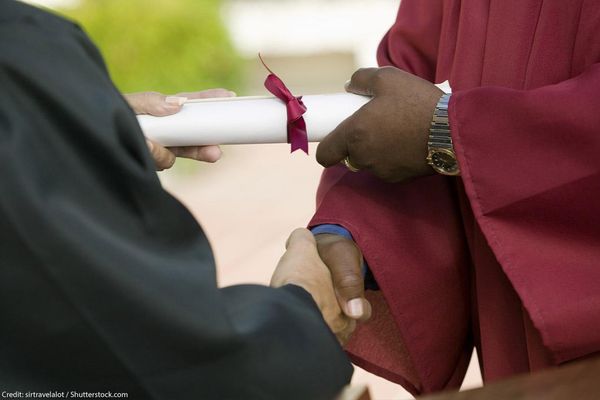
Student Debt is a Racial Justice Issue. Here’s What President Biden Can Do to Help.

Student Debt is a Racial Justice Issue. Here’s What President Biden Can Do to Help.

Student loan debt burdens more than 44 million Americans, and prevents millions from buying homes, starting businesses, saving for retirement, or even starting families. This debt is disproportionately affecting Black families, and Black women in particular.

Higher education has long been held as a critical gateway to getting a job and achieving economic stability and mobility. But because of long-standing systemic racial discrimination, Black families have far less wealth to draw on to pay for college, creating barriers for Black communities to access higher education and build wealth. Black families are more likely to borrow, to borrow more, and to have trouble in repayment. Two decades after taking out their student loans, the median Black borrower still owes 95 percent of their debt, whereas the median white borrower has paid off 94 percent of their debt.

Students of color pursue higher education in a social and economic system built on racist ideologies that is set up to work against them and perpetuate racial wealth and income and achievement gaps. To redress this systemic inequality, the ACLU, Center for Responsible Lending (CRL), and more than 300 other organizations are calling on the Biden-Harris administration and Secretary of Education Miguel Cardona to use their authority under the Higher Education Act to cancel $50,000 of student debt per borrower, and Congress must act as well. ...

The Racial Wealth Gap is a Civil Liberties Issue

The Racial Wealth Gap is a Civil Liberties Issue

As far back as the 1930s, the ACLU affirmed that economic justice was essential to achieving racial justice. In its 1931 Black Justice report, the organization's first on the civil liberties of Black Americans, the ACLU reported that more than 3,555 Negroes had been lynched since 1882, averaging 74 per year or more than one per week. According to the forward, written by Broadus Mitchell of Maryland, Black Justice's purpose was to answer “Why these gross discriminations against the Negro?" Mitchell replied to that crucial question with remarkable clarity: “The Negro has been oppressed because he has a low standard of living and little economic independence. And the other way around, he is economically servile because he has been oppressed."

Whether or not he knew it, Mitchell was making an important constitutional observation: The Constitution's promises of liberty and equality are linked. In 2003, in Lawrence v. Texas, the Supreme Court held that equal protection and “substantive guarantee of liberty are linked in important respects." Subsequently, Justice Kennedy, author of the Lawrence opinion, explained that the government has a “legitimate interest … in ensuring all people have equal opportunity regardless of their race." While we have historically thought of equality in the narrow terms of equal protection and due process, we take Mitchell's forward as a call to consider how our present definition of rights, and actions to defend those rights, are tied to past discrimination, especially economic discrimination.

Though much has changed since the publication of Black Justice, the economic position of Black Americans relative to white Americans remains precarious at best. When President Lincoln signed the Emancipation Proclamation in 1863, former slaves owned 0.5 percent of the nation's wealth. Over 150 years later, the descendants of those slaves own just 1 percent of the nation's total wealth. In other words, even emancipation, civil rights, increases to education, and improved employment have not substantially advanced Black people's democratic participation in our economic system. The power of inherited wealth is in fact so pronounced that economists Darrick Hamilton and Sandy Darity concluded intergenerational transfers “account for more of the racial wealth gap than any other demographic and socioeconomic indicators." ...