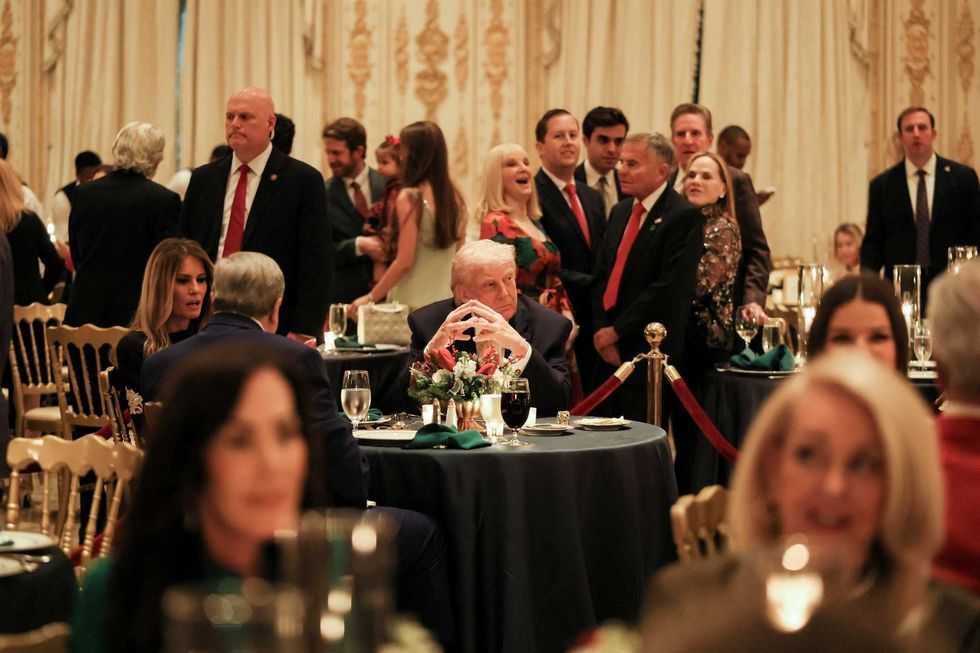
Donald Trump dines at Mar-a-Lago. REUTERS/Jessica Koscielniak

An “astounding” amount of taxpayer dollars has been diverted from American national parks to fund President Donald Trump’s beautification projects in Washington, D.C., journalist Scott MacFarlane revealed Sunday night after obtaining internal U.S. National Park Service records.
“The topline dollar figures are astounding, according to multiple sources inside the US Department of Interior, who requested anonymity because they are not authorized to speak to news media,” MacFarlane wrote in a report published Sunday on his Substack.
“The records show more than $323 million have been made available for upgrades and projects on the White House grounds this year. That’s a dramatic, nearly 5000 percent increase from the $7.5 million spent on White House grounds projects in 2024.”
Previous reporting has revealed that at least $90 million in national park entry fees had been used to pay for Trump’s beautification projects, which include his renovations to the White House. In June, The Atlantic uncovered that more than $1 million had been diverted from funds earmarked for national parks to pay for two White House projects: $689,232 to repave a short pathway with “polished African granite carved in Italy,” and $347,503 to “affix gold frames and plaques mocking [Trump’s] predecessors.”
The latest reporting from MacFarlane reveals the extent of money being diverted from national parks was far greater than previously known.
“The National Park Service is being used as a piggy bank for Trump’s vanity projects,” said Tim Whitehouse, the executive director of Public Employees for Environmental Responsibility, speaking with MacFarlane. “The National Parks Service and the Department of Interior are giving Trump all of the money that he wants.”
The new revelation comes as national parks are facing a backlog of deferred maintenance projects estimated to cost as much as $30 billion, a backlog that has led to struggles such as “traffic jams” exacerbated by “strained resources,” The Guardian previously reported.
Report typos and corrections to corrections@rawstory.com.
For customer support contact support@rawstory.com.