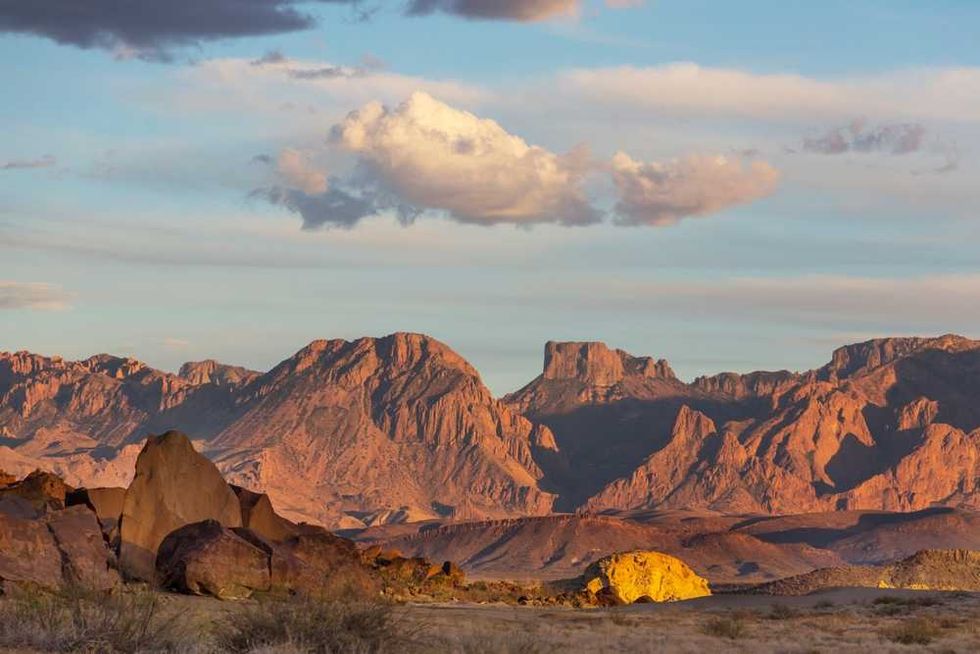
The Supreme Court on Monday cleared the way for the Trump administration to resume border construction in Texas’ Big Bend region, a remote stretch of desert canyons that opponents warn could be scarred for good.
The unsigned order lets the administration keep building barriers, roads and surveillance infrastructure along the Rio Grande while a legal challenge plays out, The New York Times reported. Justice Ketanji Brown Jackson was the lone noted dissenter, CNN reported.
It was the first time the court had weighed in on a major Trump policy since Democrats swept last week’s midterms, and the outcome went the president’s way, the Times noted.
The region includes Big Bend National Park, part of the largest dark sky reserve on Earth. In August, crews leveled more than a mile of ground near Santa Elena Canyon to make way for a road, surveillance gear and 4- to 6-foot vehicle barriers, according to the Times. Steel walls up to 30 feet tall are planned in parts of the wider region, The Associated Press reported.
A coalition of landowners, a river guide, a church preservation group and an environmental organization sued in April, arguing that the administration overstepped by waiving federal environmental laws. A federal judge in El Paso temporarily halted construction in October.
Before the justices, the challengers warned that letting construction resume “would result in the permanent alteration of an irreplaceable landscape.”
Solicitor General D. John Sauer countered that a pause would leave a gap in border defenses that would “act as a dangerous magnet for cartels and other bad actors to exploit.”
The court’s majority found that federal law lets the Homeland Security secretary waive environmental protections, reflecting what it called “a clear preference for expeditious border construction.”
The project has drawn bipartisan opposition in Texas, where residents, including Republicans, have said the plan could take their land. In May, a top border official said the administration had dropped plans for a wall inside the national park after the backlash.
The legal fight continues in lower courts.