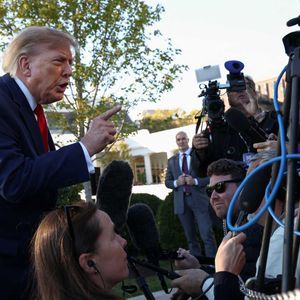
U.S. President Donald Trump makes a fist before boarding his motorcade upon arrival at Dallas-Fort Worth International Airport to attend the Republican National Midterm Convention in Dallas, Texas, U.S., September 9, 2026. REUTERS/Evan Vucci

Nearly 40 current and former election officials from ten states, many of them Republicans, are urging the Supreme Court to block President Trump's new mail-ballot rule before it derails the November midterms, warning the system simply can't be built in time without wrecking the election itself.
The bipartisan group, which includes Republican secretaries of state from Kentucky, North Dakota, South Dakota, Georgia, New Hampshire and Kansas, filed a brief taking no position on whether the rule is legal or good policy. Instead, they argue the timeline alone makes disaster all but guaranteed, regardless of who's right on the merits.
The rule, finalized just weeks ago with an immediate effective date, requires every ballot envelope nationwide to carry new barcodes and design features, forces election offices to enroll voters through a brand-new federal portal that USPS itself admits isn't fully built yet, and mandates that outbound ballots be scanned and verified piece by piece before mailing. It's currently paused in federal court, with Trump officials pushing the Supreme Court to let it move forward.
The officials say that last requirement alone is a logistical impossibility for larger counties.
"Maricopa County, Arizona expects to mail 2.6 million ballot packets on the first day of early voting. At that rate, verifying that single mailing would take roughly 4.9 years," the brief states.
Smaller, rural offices face a different nightmare: many don't even own barcode printers and currently handwrite addresses on envelopes, while some states legally fix envelope design so local officials can't change it even if they wanted to. Meanwhile, the nation's entire election mail system would funnel through just 40 postal design analysts nationwide, tasked with reviewing roughly 8,000 separate election jurisdictions' materials in a matter of weeks.
The brief leans heavily on the Supreme Court's own Purcell doctrine, which warns against last-minute rule changes right before an election because they breed confusion and erode public trust in the results. Notably, the rule's own text assumes a 90-day runway for compliance, a deadline that would have required action back in early August, yet the rule wasn't finalized until weeks later.
The officials frame their plea as nonpartisan, noting a ballot that never reaches a voter doesn't help either party, it just disenfranchises someone who followed the rules. They're asking the Court to simply let the 2026 election proceed under the rules that existed when preparations began, leaving the deeper legal fight over the rule's validity for another day, well before the 2028 election.
Report typos and corrections to corrections@rawstory.com.
For customer support contact support@rawstory.com.