A legal expert zeroes in on the more "twisted" part of President Donald Trump's latest Supreme Court win that seems to have been overlooked.
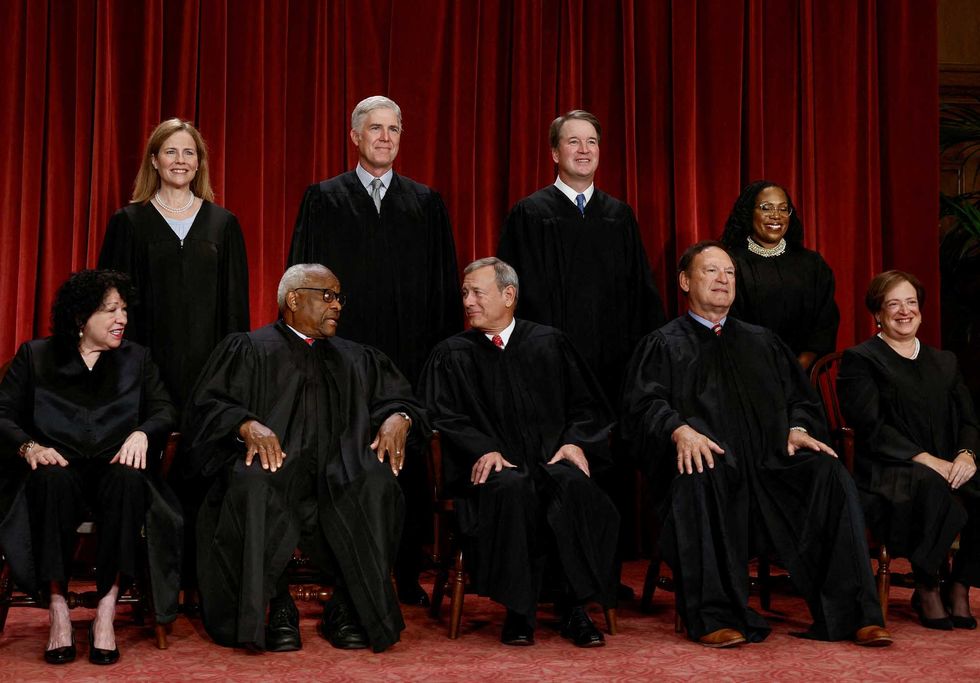
Alexis Romero, an economic justice attorney, wrote in a new op-ed for Slate that the Supreme Court's recent ruling that lifted a lower court's injunction on Trump's mail-in ballot order will create a "tightrope" for states to navigate during the midterms. She noted that one of the liberal Supreme Court Justices picked up on the implications of the order in her dissent.
"There’s a more twisted point that’s worth zeroing in on, and that’s the relationship between Trump’s mail ballot–suppression efforts and the Supreme Court’s horrid election law jurisprudence of the past few years," Romero argued. "Jackson flags this exact relationship in her dissent, as the court’s new ruling Monday “lets another shoe drop in the Kafkaesque nightmare that our precedents have been steadily creating for certain plaintiffs.”
"The nightmare works primarily by manipulating timing," she added. "As state and federal governments began taking increasingly controversial election actions over the past decade, such as gerrymandering or throwing out lawful ballots, voters and civil rights groups have filed more suits. But the Supreme Court has developed two new limitations on how a lower court is able to rule on these election issues. Understanding both these limitations together is key to seeing just how much of a democratic crisis this court is enabling."
What this means for the midterms is yet to be determined, but all things considered, it seems like the order is destined to disrupt the "predictable cadence" Americans expect from their election system.
"It’s the government itself that controls when it releases drafts and final versions of all these rules and regulations," she noted. "The government can therefore strategically delay or speed up parts of the process, as it’s doing here, based on what it needs to argue to the judge in front of it and when. Jackson rightly describes this 'Catch-Me-If-You-Can' approach to legal strategy as what it is: a cynical gotcha game designed to dodge legal accountability for as long as possible. And all in support of an effort to sow chaos before a midterm election that the president believes will rebuke his authority."