Top Stories Daily Listen Now
RawStory

World

Bitter row erupts over Anne Frank betrayal book

It was meant to put one of World War II's greatest mysteries to rest, but instead a new book about young diarist Anne Frank has stirred up ghosts from the past.

A heated debate has erupted over "The Betrayal of Anne Frank" by Canadian author Rosemary Sullivan after it named a Jewish notary as the prime suspect in giving up Anne and her family.

Keep reading... Show less

Another journalist killed in Mexico, the fifth this year

A journalist was shot dead Thursday in Mexico, the fifth such killing this year in a country notoriously dangerous for reporters.

Heber Lopez Vazquez, who ran a news website called Noticias Web in the southern state of Oaxaca, was shot while he was in his car, state prosecutor Arturo Calvo told the TV channel Milenio.

Keep reading... Show less

Sources: NATO planning to beef up troop presence in eastern flank

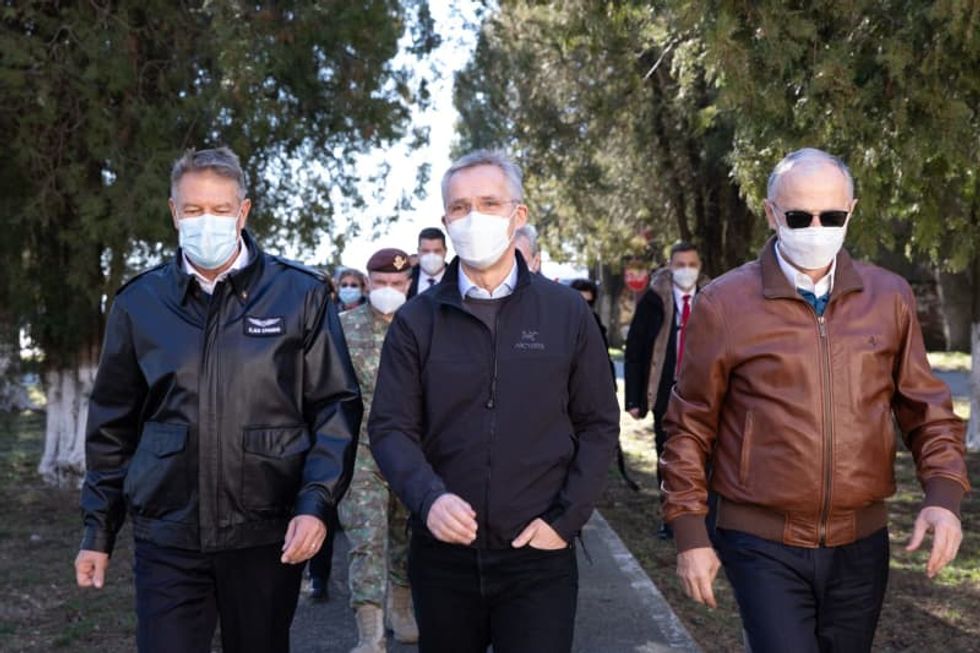
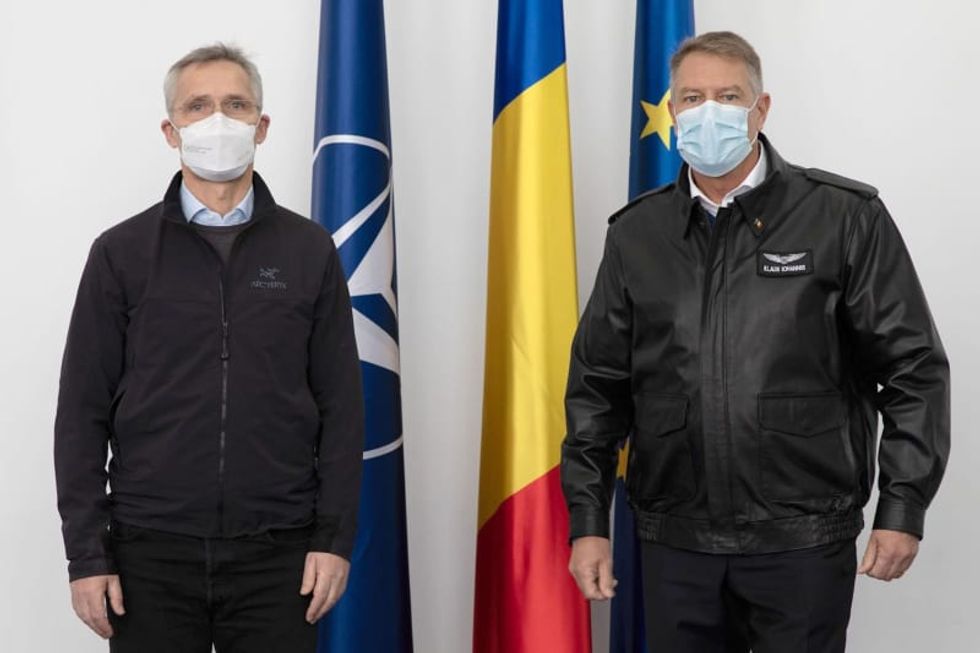
Romanian President Klaus Iohannis (L) receives NATO Secretary General Jens Stoltenberg (C) and NATO Deputy Secretary General Mircea Geoana at the Kogalniceanu Military Base. -/NATO/dpa

NATO is planning to increase its troop presence in its eastern flank close to Ukraine, dpa has learned from sources close to the Western military alliance, despite demands from Moscow to do precisely the opposite.

The 30 alliance members signed off a related proposal this week, dpa learned on Friday, after weeks of discussion.

Keep reading... Show less

Steve Bannon’s ‘sugar daddy’ hit with $134 million in contempt fines: report

One of Steve Bannon's key political allies has been hit with a massive fine for violating multiple court orders.

"The financier famed for bankrolling some of Steve Bannon’s best-known ventures, as well as the far-right strategist’s jet-setting lifestyle, is in deep trouble for steering a $28 million yacht—the same boat where federal agents arrested Bannon in 2020—out of American waters," The Daily Beast reported.

Keep reading... Show less

Iran celebrates 43rd anniversary of Islamic Revolution

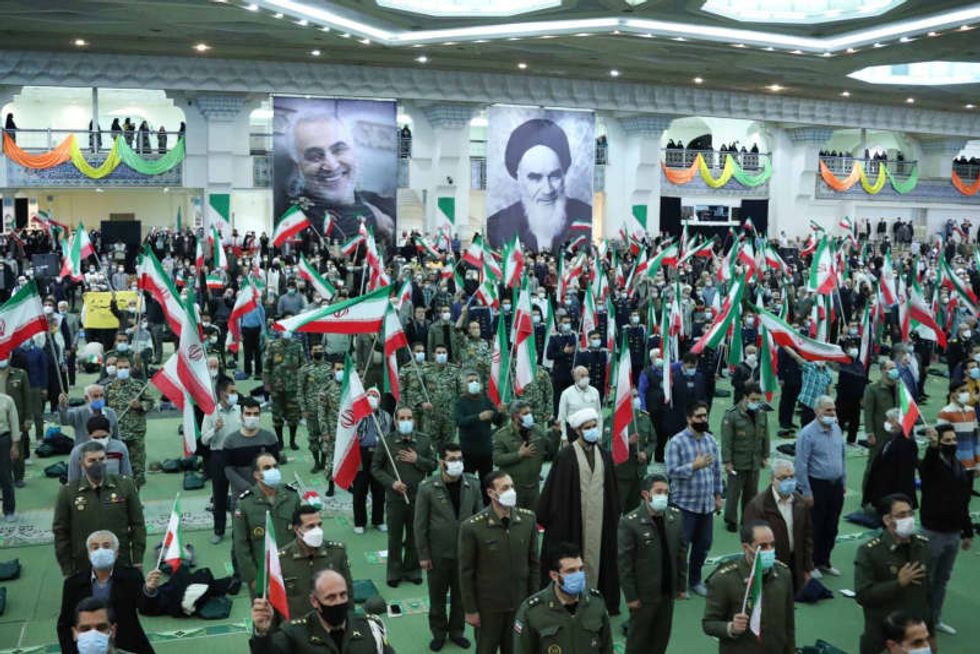
People cheer at the speech of Iranian President Ebrahim Raisi at the Grand Mosalla mosque of Tehran on the occasion of the 43rd anniversary of Islamic Revolution. -/Iranian Presdiency /dpa

Iran was celebrating the 43rd anniversary of its revolution on Friday, with large-scale rallies replaced by smaller car and motorcycle parades because of the coronavirus pandemic.

The events are intended to demonstrate popular support for the 1979 Islamic Revolution.

Keep reading... Show less

Macron refused Russian COVID test in Putin trip over DNA theft fears - sources

By Michel Rose

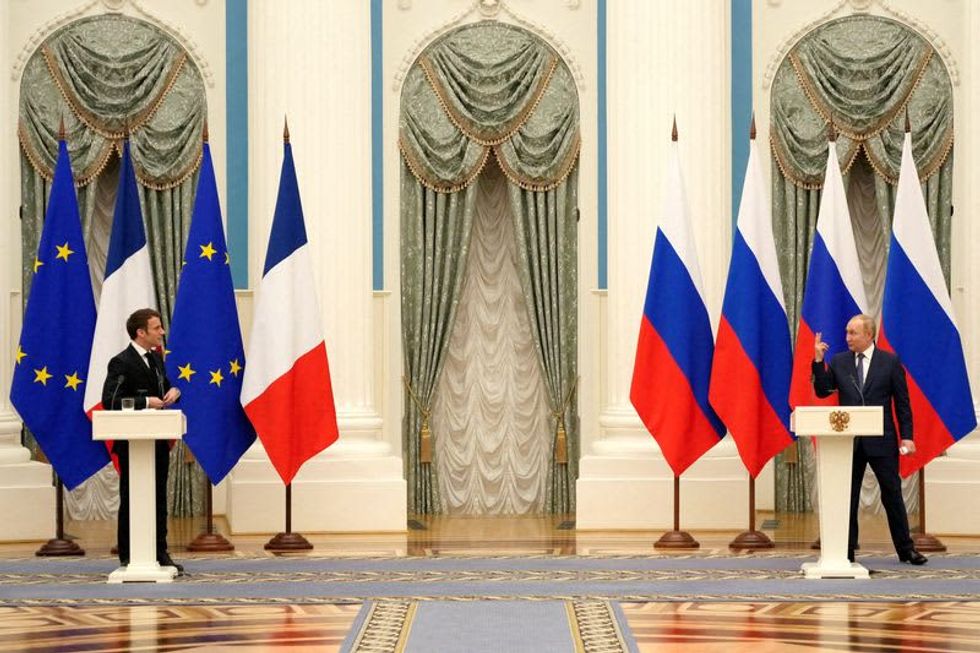
PARIS (Reuters) -French President Emmanuel Macron refused a Kremlin request that he take a Russian COVID-19 test when he arrived to see President Vladimir Putin this week, to prevent Russia getting hold of Macron's DNA, two sources in Macron's entourage told Reuters.

Keep reading... Show less

Macron calls for 14 new reactors in nuclear 'renaissance'

French President Emmanuel Macron called Thursday for a "renaissance" for the country's nuclear industry, saying he wanted up to 14 new reactors to power the country's transition away from fossil fuels.

Acknowledging that France had hesitated on whether to continue investing in its atomic sector after the 2011 Fukushima disaster in Japan, he called for a bold new bet on the technology alongside renewables.

Keep reading... Show less

Belgian museum returns painting looted from Jewish family

A major Belgian arts institution has returned a painting held in its collection for decades to the descendants of a Jewish couple who had the work stolen by the Nazis.

The Royal Museums of Fine Arts on Thursday handed over the painting "Flowers," by German expressionist Lovis Corinth, to a lawyer representing the family, the Belga news agency reported.

Keep reading... Show less

Luc Montagnier, French Nobel laureate who co-discovered HIV, dies at 89

French researcher Luc Montagnier, who has died at 89, shared the Nobel medicine prize for his vital early discoveries on AIDS, but was later dismissed by the scientific community for his increasingly outlandish theories, notably on Covid-19.

Montagnier and Francoise Barre-Sinoussi shared the Nobel in 2008 for their work at the Pasteur Institute in Paris in isolating the human immunodeficiency virus (HIV).

Keep reading... Show less

NATO seeks new chief and women top candidates' list

When outgoing NATO chief Jens Stoltenberg returns home to head Norway's central bank later this year the western alliance will need a new champion, and for the first time she is expected to be a woman.

For seven decades the powerful military coalition has been led by a series of western European men and now many observers expect the 30-strong group to choose a woman -- and perhaps a face from further east.

Keep reading... Show less

Prince Charles tests positive for COVID-19 for a second time

LONDON (Reuters) - Britain's Prince Charles has tested positive for COVID-19, his office said on Thursday, the second time that the heir-to-the-throne has contracted the disease. "This morning The Prince of Wales has tested positive for COVID-19 and is now self-isolating," Clarence House said, adding he had cancelled his planned engagements for Thursday. (Reporting by Michael Holden and William James, Editing by Kylie MacLellan)

Rebuilding post-eruption Tonga: 4 key lessons from Fiji after the devastation of Cyclone Winston

While news from Tonga is still disrupted following the massive undersea eruption and tsunami on January 15, it’s clear the island nation has suffered significant damage to housing stock and infrastructure.

Once initial clean-up work is done, the focus then turns to rebuilding – specifically, how to rebuild in a way that makes that housing and infrastructure stronger, safer and more resilient than before the disaster.

This is where the United Nations’ Sendai Framework for Disaster Risk Reduction comes into the picture. It advocates for:

The substantial reduction of disaster risk and losses in lives, livelihoods and health and in the economic, physical, social, cultural and environmental assets of persons, businesses, communities and countries.

Beyond the framework, however, we have the lessons learned from previous disasters and recovery efforts in the same region – notably what happened in Fiji after Cyclone Winston in 2016. These lessons can be applied to the Tonga rebuild.

Lessons from Cyclone Winston

Winston was a category 5 cyclone, one of the most powerful storms ever recorded in the South Pacfic. When it approached Fiji’s largest and most populated island, Viti Levu, winds reached 230 kilometres per hour, with gusts peaking at 325km/h.

Over 60% of the Fijian population was affected, with around 131,000 people left homeless. The cyclone destroyed, significantly damaged or partially damaged around 30,000 homes, or 22% of households, representing the greatest loss to Fiji’s housing stock from a single event.

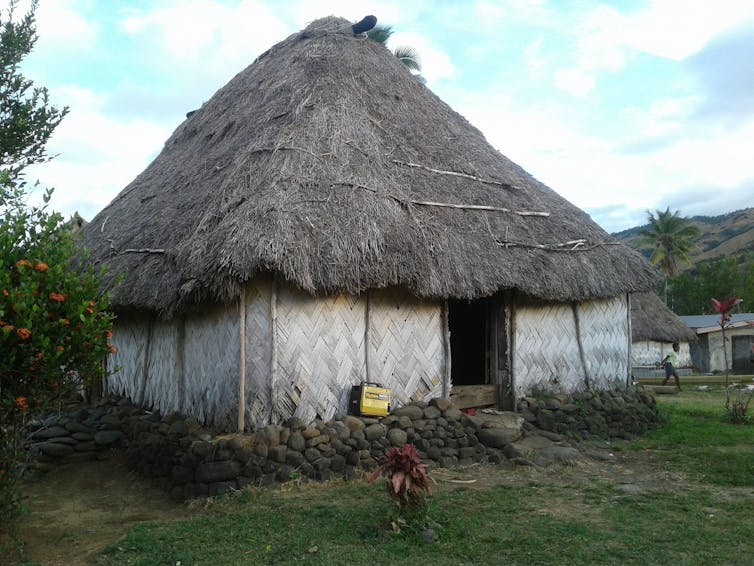
Notably, some models of the traditional Fijian bure survived the cyclone with minor or no damage.

Our research team from New Zealand followed and recorded the housing recovery. What we found could benefit Tonga as it faces reconstruction of so much housing stock.

As in Tonga, power, infrastructure and communication systems in Fiji were extensively damaged. Given that “building back better” involves applying higher structural standards than existed previously, we looked for evidence that Fiji was rebuilding in a more resilient and sustainable way.

Fiji carefully recorded and analysed data, employing systematic reconnaissance surveys and damage assessments to identify building performance, structural vulnerabilities and failure mechanisms, as well as community needs. These assessments were done well, to international standards.

Understandably, Fijians were also aware of the need to reduce risks to housing from future cyclones. After the immediate post-cyclone humanitarian response, housing was their main concern. This became a key focus for government agencies as a way of demonstrating the recovery was under way and that communities were at the heart of the process.

Fijian bure

A traditional bure in Navala village, Viti Levu – some survived the cyclone well.

Author provided

Problems with rebuilding

We studied two main initiatives: a government-funded rebuilding program for houses (the “Help For Homes Initiative”) and the rebuilding programs led by various international and local NGOs.

Help For Homes provided credit for construction materials to people who had lost homes, assuming recipients met certain criteria related to household income, damage and location.

Communities were free to choose the basic type of dwelling, its interior design, external features and materials. Information and instructions about building best practices and standards were provided, but technical or practical support was limited.

Overall, the initiative had mixed reviews. On the one hand, people had autonomy over their future homes; if things went to plan, they liked the outcome. On the other, lack of building skills led to some poor-quality construction, and limited resources (mainly materials) pushed costs up.

A lack of suitable alternative building material also created problems. Material choice, material substitution, resource costs, low community technical expertise and low building standard knowledge are all issues Tonga might also face.

Some homeowners were left without the material they needed, and in some cases with only a partially rebuilt home.

The NGO rebuilding programs, by contrast, usually employed their skilled workers to build and supervise construction activities, often with the help of community labour. But again, reviews were mixed, especially when the communities didn’t have sufficient input into the rebuilding process.

While housing design was largely standardised for quick construction, the NGO houses tended to be technically strong and more resilient to future hazard events.

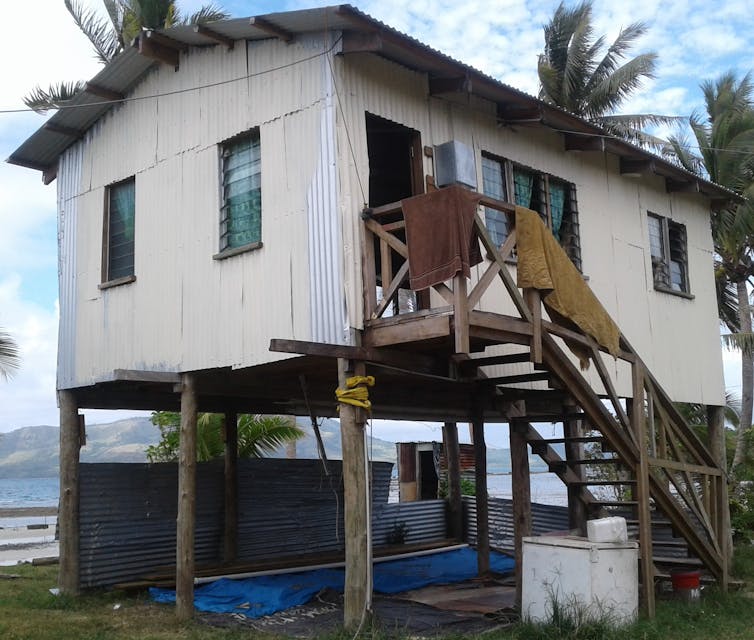
house on elevated foundations

A timber house on elevated foundations, built to the owner’s design without technical support.

Author provided

The best of both worlds

The main lesson was that high levels of community involvement and strong technical support were key to building resilient, future-proofed houses. For Tonga, the Fijian experience offers the opportunity to apply that lesson in four principal ways:

  • ensure the initial assessment process is thorough and up to international standards
  • recognise that housing stock overall needs to improve, and commit to higher construction standards
  • analyse local architecture and building practices for disaster-resistant features
  • combine the best of government-led and NGO building systems to maximise community involvement while ensuring good technical support and building expertise.

Overall, to have the best chance of rebuilding with the resilience to withstand future shocks, Tonga will benefit greatly from a three-way partnership between the government, NGOs and local communities.

As advocated by the authors in their book Resilient Post-Disaster Recovery through Building Back Better, co-ordination of such partnerships should be government-led and include trusted local community leaders and a consortium of NGOs.

Keep reading... Show less

West warns of 'dangerous moment' as Russia holds drills in Belarus

By Robin Emmott, Tom Balmforth and Vladimir Soldatkin

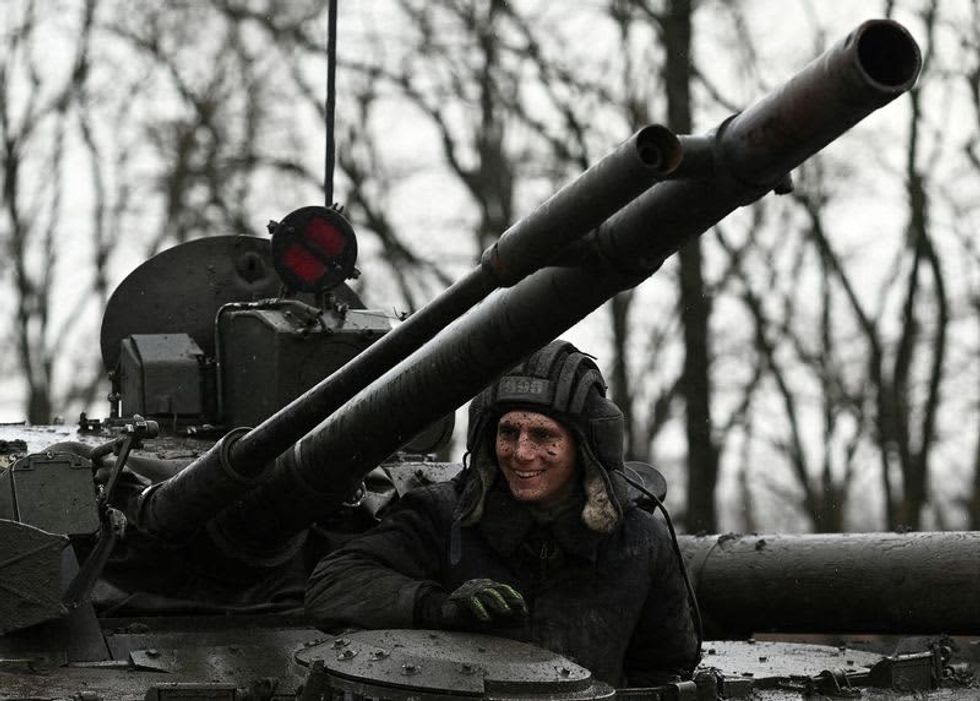
BRUSSELS/MOSCOW (Reuters) - Britain said on Thursday the West could face the "most dangerous moment" in its standoff with Moscow in the next few days, as Russia held military exercises in Belarus and the Black Sea following its troop buildup near Ukraine.

Keep reading... Show less