President Donald Trump attacked foreign carmakers on Friday -- while postponing a tariff increase for six months -- which led Japanese carmaker Toyota to make what could be a veiled threat by pointing out that they are the force behind 475,000 jobs in the United States, one way or another.
According to a report in Bloomberg, "In an unusually strong-worded statement, Japan’s largest automaker said Trump’s proclamation Friday that the U.S. needs to defend itself against foreign cars and components 'sends a message to Toyota that our investments are not welcomed.' The company said it has spent more than $60 billion building operations in the country, including 10 manufacturing plants."
In the statement, Toyota made a pointed reference to how many Toyotas are on the road in the U.S., to say nothing about how the American's depend on the company for jobs -- including in states Trump needs in the 2020 election.
"Toyota has been deeply engrained in the U.S. for over 60 years. Between our R&D centers, 10 manufacturing plants, 1,500-strong dealer network, extensive supply chain and other operations, we directly and indirectly employ over 475,000 in the U.S.," the statement read, adding, "Most every American has a Toyota story and we are very proud of the fact that over 36 million Toyota and Lexus vehicles are still on U.S. roads today. Our operations and employees contribute significantly to the American way of life, the U.S. economy and are not a national security threat. "
As "Game of Thrones" suits up for one last swordfight a phalanx of enraged viewers large enough to flatten the massed armies of Westeros is voicing its displeasure over what they consider a botched ending to the beloved show -- with some even clamoring for a do-over.
Since its first episode eight years ago the HBO show about noble families vying for the Iron Throne has picked up just about every award going on the way to becoming a global ratings smash and a cultural phenomenon.
But its legacy is under threat from an increasingly vocal section of fans furious over what they consider poor writing in the shortened final two seasons, after the script had moved beyond the source novels by American writer George R.R. Martin.
A Change.org petition called "Remake Game of Thrones Season 8 with competent writers" was approaching 850,000 signatures early Friday, ahead of Sunday's finale.
"There's been a lot of negativity about the windup, but I think it's just because people don't want ANY ending," tweeted horror author Stephen King, one of the show's most high-profile fans.
"But you know what they say: All good things..."
One source of discontent is a dramatically sped-up narrative arc that has seen central character Daenerys Targaryen (Emilia Clarke) descend suddenly and incongruously into atrocity-committing madness.
"Turning one of the top two heroes in the game into a villain is something that you have to really set up straight... to have the fan base just go along with it," said entertainment host A. Ron Hubbard on his top-rated "Game of Thrones: The Podcast."
AFP/File / Angela Weiss British actor Isaac Hempstead Wright's character Bran Stark is favorite to be sitting on the Iron Throne when the curtain comes down
"It's just that I don't think they did the job particularly well."
Other fans are equally bewildered by the moral regression of Nikolaj Coster-Waldau's Jaime Lannister -- an unambiguous bad guy back in 2011 whose redemptive arc over seven seasons was one of the most interesting aspects of the show's scrupulous, patient plotting.
"It feels like some of the characters' arcs are false because they're not given enough time to play out," said University of Northern Illinois medieval history professor Valerie Garver, who accused showrunners David Benioff and D.B Weiss of "rushing" the truncated, six-episode final season.
- Millions of sick days -
The effect has been to lower expectations to such an extent that many fans are complaining about a denouement they have yet to even see.
"I'm really disappointed in Next Sunday night's finale of 'Game of Thrones'" joked Brent Spiner, who played android Data in "Star Trek: The Next Generation."
More than 100,000 people voted on the Internet Movie Database to give season eight's penultimate episode 6.1 out of 10, a harsh rating for a show that had never rated lower than 8.1 in previous seasons.
AFP/File / Angela Weiss British actress Sophie Turner, who plays Sansa Stark, and her "Game of Thrones" castmates have won numerous awards over the eight seasons
"This show is just so good and has been so important that even if most people are upset with the ending I think still it will be held up as a show that was pretty extraordinary," said Garver.
And if the social media backlash looks harsh, it is worth remembering that the vast majority of any show's viewers do not immediately take to Twitter with their comments if they liked what they saw.
The proof of this can be found in the "Game of Thrones" audience figures, which hit a record 12.5 million live US viewers for the most recent episode -- with a further six million watching later.
For perspective, one of the show's nearest premium cable rivals, Showtime's "Homeland," managed 1.2 million viewers per episode in 2018 and "The Sopranos," regarded as HBO's greatest show, would pull in 11 million a week at its 2002 peak.
There's little reason to expect anything but phenomenal figures for the feature-length "GoT" finale, with an estimated 10.7 million Americans expected to skip work the following morning to catch up, according to a survey by The Workforce Institute at Kronos.
- 'Ash and brick' -
Back in the fictional continent of Westeros, the biggest mystery of "Game of Thrones" remains: who will be sitting on the Iron Throne as ruler of the Seven Kingdoms when the curtain comes down?
British bookmaker William Hill has 20-year-old Isaac Hempstead Wright's Bran Stark as favorite, closely followed by his fictional sister Sansa, played by Sophie Turner.
AFP/File / PHILIPPE MERLE "A Song of Ice and Fire" author George R.R. Martin has promised two more books to finish the saga
That assumes, of course, that the Iron Throne still exists after Mother of Dragons Daenerys went full "Mad Queen" last week -- torching most of Dubrovnik, the real-life Croatian double for the Westerosi royal seat of King's Landing.
"The Iron Throne is very much gone, as is most of the population in the capital of the Seven Kingdoms," the bookmaker said on its website.
"Is it actually possible for anyone to inherit a mountain of ash and brick?"
A French doctor already under investigation for poisoning seven patients has been charged with poisoning 17 more people at a clinic in eastern France, one of his lawyers said.
Frederic Pechier, 47, now stands charged in 24 cases, nine of which resulted in death, after working as an anaesthesiologist at two private clinics in the eastern French city of Besancon.
If convicted, Pechier could face a life sentence.
Pechier was freed overnight on conditional release, lawyer Randall Schwerdorffer told AFP on Friday.
Public prosecutor Etienne Manteaux had called for the doctor, who faces a life sentence, if convicted, to be held in custody.
"There is a possibility that Dr. Pechier was the author of these poisonings but this hypothesis is nothing but a hypothesis and this long inquiry over two years has shown nothing ... to the extent that in this instance, the presumption of innocence must be stressed," another of his lawyers, Jean-Yves Le Borgne, told reporters on Thursday.
Pechier, first charged in 2017 for two deaths in seven poisoning cases over the previous 10 years, was brought in for questioning this week over 66 more suspicious cardiac arrests during operations on patients otherwise considered low risk.
"Seventeen cases have been retained" involving patients aged 4 to 80, of whom seven died after doctors were unable to revive them, prosecutor Manteaux told a press conference.
Pechier was "the common denominator" in the new cases, which occurred at a time when he was in open conflict with fellow anaesthesiologists at the Saint-Vincent clinic in Besancon, Manteaux said.
"He was most often found close to the operating bloc" when the cases occurred, and made quick diagnoses of the problem and the action to take, "even when nothing allowed anyone to suspect an overdose of potassium or local anaesthesia," he said.
Prosecutors have alleged he may have tampered with his colleagues' anaesthesia pouches to create operating room emergencies where he could then intervene to show off his supposed talents.
Pechier's lawyers have denied the claims and in November they accused police of altering declarations he made during his initial questioning.
During questioning this week, Manteaux said Pechier acknowledged that criminal acts had taken place at Saint-Vincent but that "he was not responsible for these poisonings."
The Trump administration has asked Congress to authorize funds to reimburse the Taliban for its travel expenses — or at least for those the extremist group incurs during peace talks, according to the chairman of a key defense appropriations subcommittee.
Pentagon officials told Congress they have already used taxpayer funds to reimburse the Taliban for expenses like travel, lodging, food and supplies. They have requested more such funding this year, Kevin Spicer, a spokesman for Rep. Peter Visclosky, D-Ind., who chairs the House Appropriations Subcommittee on Defense, told Roll Call.
“The Defense Department requested fiscal 2020 funding to support certain reconciliation activities, including logistic support for members of the Taliban and, in March 2019, they sent a notification letter to the Committee on using fiscal year 2019 funds for similar activities,” Spicer told the outlet.
Spicer said the administration’s request to funnel money to extremist group “would implicate provisions of law concerning material support to terrorists, the Taliban’s ongoing offensive operations against U.S. service members, and their continuing lack of acknowledgement of the government of Afghanistan or the rights of women in Afghan society.”
The subcommittee rejected the administration’s request, passing a $690 billion defense spending bill Wednesday that explicitly banned the Pentagon from using any of the funds to reimburse the Taliban unless the government meets certain conditions. For example, the Taliban has refused to hold talks with U.S. negotiators unless Afghan government officials are excluded and members of Congress have expressed concern about the exclusion of women.
“None of the funds made available by this Act may be used to pay the expenses of any member of the Taliban to participate in any meeting that does not include the participation of members of the Government of Afghanistan or that restricts the participation of women,” the committee’s provision says.
Critics of the move also noted that the Taliban, which still controls roughly half of Afghanistan's territory and remains closely linked to al-Qaida, is not struggling financially despite years of endless war. The group is estimated to earn $800 million per year from Afghanistan’s opium trade and U.S. officials have said drug money funds most of the group’s activities, Roll Call reported.
Steve Ellis, executive vice president of Taxpayers for Common Sense, told the outlet the Trump administration’s request is like “life imitating The Onion.”
“Even if you leave aside that [the Taliban] are still conducting operations against our interests and allies, having to pay for someone to be at the table undercuts our bargaining position and demonstrates their lack of enthusiasm for a deal,” he said. “I’m sure the Taliban would like whatever cash we’re willing to give them, but it’s not like they aren’t able to continue funding their fighting. How about using some of that cash instead of American taxpayer dollars.”
The Trump administration has held six rounds of peace talks with the Taliban in Qatar since last fall, all of which have excluded Afghan government officials. Foreign policy experts have said that the exclusion of the Afghan government, along with early reports emerging from the peace talks, suggest that the Trump administration “seems poised to give away everything America has fought for in Afghanistan since 9/11.”
U.S. Navy pilots and sailors won’t be considered crazy for reporting unidentified flying objects, under new rules meant to encourage them to keep track of what they see. Yet just a few years ago, the Pentagon reportedly shut down another official program that investigated UFO sightings. What has changed? Is the U.S. military finally coming around to the idea that alien spacecraft are visiting our planet?
The answer to that question is almost certainly no. Humans’ misinterpretation of observations of natural phenomena are as old as time and include examples such as manatees being seen as mermaids and driftwood in a Scottish loch being interpreted as a monster. A more recent and relevant example is the strange luminescent structure in the sky caused by a SpaceX rocket launch. In these types of cases, incorrect interpretations occur because people have incomplete information or misunderstand what they’re seeing.
Based on my prior experience as a science advisor to the Air Force, I believe that the Pentagon wants to avoid this type of confusion, so it needs to better understand flying objects that it can’t now identify. During a military mission, whether in peace or in war, if a pilot or soldier can’t identify an object, they have a serious problem: How should they react, without knowing if it is neutral, friendly or threatening? Fortunately, the military can use advanced technologies to try to identify strange things in the sky.
What is this object?
Taking the ‘U’ out of ‘UFO’
“Situational awareness” is the military term for having complete understanding of the environment in which you are operating. A UFO represents a gap in situational awareness. At the moment, when a Navy pilot sees something strange during flight, just about the only thing he or she can do is ask other pilots and air traffic control what they saw in that place at that time. Globally, the number of UFO reportings in a year has peaked at more than 8,000. It’s not known how many the military experiences.
UFOs represent an opportunity for the military to improve its identification processes. At least some of that work could be done in the future by automated systems, and potentially in real time as an incident unfolds. Military vehicles – Humvees, battleships, airplanes and satellites alike – are covered in sensors. It’s not just passive devices like radio receivers, video cameras and infrared imagers, but active systems like radar, sonar and lidar. In addition, a military vehicle is rarely alone – vehicles travel in convoys, sail in fleets and fly in formations. Above them all are satellites watching from overhead.
Military vehicles bristle with antennas, cameras and sensors of all kinds.
Sensors can provide a wealth of information on UFOs including range, speed, heading, shape, size and temperature. With so many sensors and so much data, though, it is a challenge to merge the information into something useful. However, the military is stepping up its work on autonomy and artificial intelligence. One possible use of these new technologies could be to combine them to analyze all the many signals as they come in from sensors, separating any observations that it can’t identify. In those cases, the system could even assign sensors on nearby vehicles or orbiting satellites to collect additional information in real time. Then it could assemble an even more complete picture.
For the moment, though, people will need to weigh in on what all the data reveal. That’s because a key challenge for any successful use of artificial intelligence is building trust or confidence in the system. For example, in a famous experiment by Google scientists, an advanced image recognition algorithm based on artificial intelligence was fooled into wrongly identifying a photo of a panda as a gibbon simply by distorting a small number of the original pixels.
So, until humans understand UFOs better, we won’t be able to teach computers about them. In my view, the Navy’s new approach to reporting UFO encounters is a good first step. This may eventually lead to a comprehensive, fully integrated approach for object identification involving the fusion of data from many sensors through the application of artificial intelligence and autonomy. Only then will there be fewer and fewer UFOs in the sky – because they won’t be unidentified anymore.
And to the surprise of many today, events could have taken a very different turn. The U.S. could potentially even have ended up with a British-style, government-run health care system. Yet, the country went a different route. Instead of expanding, public hospitals have been closing since the 1960s in large numbers. How come?
In my recent academic paper on the subject, I analyzed the creation and closure of public hospitals in California, the state with one of the most extensive public hospitals system in the nation. My findings indicate that when state and federal governments extended health coverage through programs like Medicaid and Medicare, all but the most well-resourced local governments in turn began closing their hospitals.
My findings bear implications for policy debates today. Advocates for any large-scale health reform effort such as Medicare-For-All should be mindful of the eventual unintended side-effects they may trigger.
In a British-style system, government fully owns, operates, and staffs all health care facilities. Because government provides both funding and services, this system can rightfully be described as socialist.
At the other end of the spectrum is a health care system where government fully stays on the sidelines. That is, government provides neither funding nor services. Individuals are thus left to fend for themselves, no matter their health or financial status. Given the ubiquity of government today, a more realistic derivative of this system involves government taking on a certain amount of regulatory function.
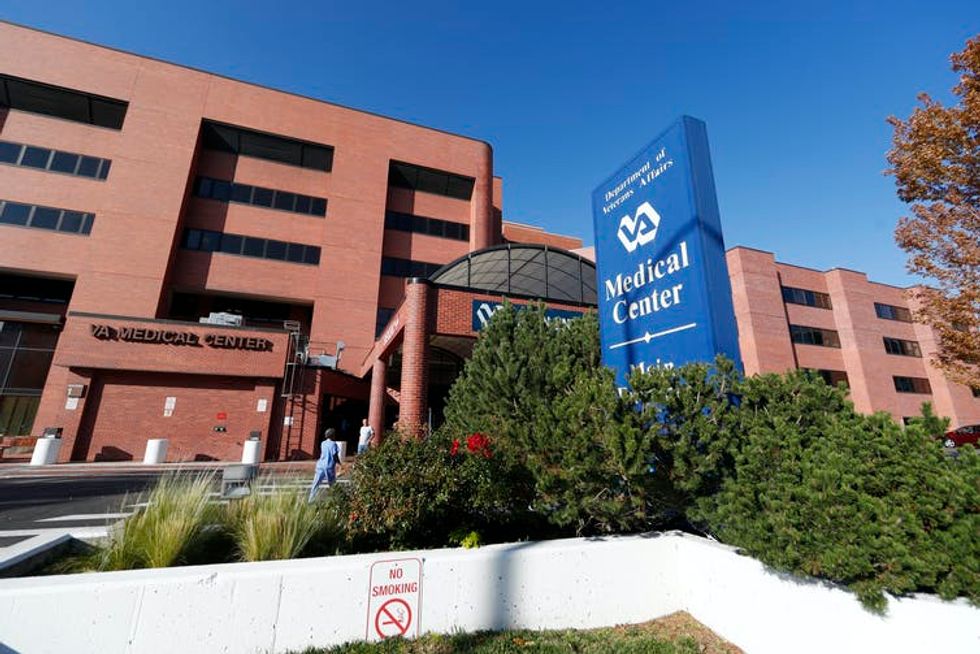
The Veterans Affairs Hospital in Denver Oct. 4, 2017.
The current system in the United States is somewhat of an amalgam of both extremes and everything in between. The Veterans Affairs and other government-run hospitals serve as a bookend on one end, and the individual market where consumers choose health care plans offered by private companies as one on the other.
Yet in the context of the U.S. system, it is important to note that public hospitals have played a role in this system since colonial times. For example, two of country’s most famous hospitals, Philadelphia General Hospital and New York’s Bellevue Hospital, were founded in the 1730s. Even today, public hospitals, run by both state and local governments, serve millions of Americans.
At the same time, federal and state governments have become significantly involved in the health care field. However, most of this involvement revolves around shouldering extensive funding obligations. And virtually all Americans benefits from this involvement in the form of Medicaid, Medicare, and tax deductions for employer-sponsored health insurance. However, only rarely does government directly take on the provision of services.
Notably, while policy details remain vague, Medicare-For-All would likely expand this role by eliminating any non-governmental payer while maintaining the private provision of services.
The unintended consequences of public programs
Grady Memorial Hospital in Atlanta in January, 2014.
As I show in my recent paper, a major contributor to these closures were expansions of public health coverage programs beginning with the New Deal, and culminating in Medicaid and Medicare. The programs removed the onus from local governments to provide for the needy and sick by shifting the responsibility to state and federal governments. Providing care for the poor was no longer a housekeeping function of local governments. Government shifted from a role of locally producing services to one solely financing them.
Developments in California, the state with the most elaborate system of local hospitals by the 1960s, are emblematic for the nation. While the state’s network of county hospitals reached near-universal coverage into the early 1960s, only a dozen or so hospitals remain open today, including Zuckerberg General in San Francisco and Harbor/UCLA Medical Center in Los Angeles.
Ultimately, only well-resourced local governments were able to keep their doors open, and the state’s poorest communities where left out.
We are losing more than buildings
Undoing the nation’s safety net of public hospitals has had crucial implications for the nation’s health.
For one, there are direct implications for the broader health care systems. Public hospitals have disproportionately shouldered key roles that private providers often loathe to take on. These include trauma and burn care, provider education, and access for minorities and populations that are hard to serve like those with HIV or substance abuse problems.
It is also important to remember that replacing local institutions like public hospitals with federal and state programs introduced significant vagaries into the safety net. While a public hospital’s doors are always open, it is relatively simple for Congress and the President to alter eligibility for programs like Medicaid. Medicare-For-All coverage today thus can turn quickly into lack of insurance tomorrow.
Crucially, these developments have also taken questions of health care access off local agendas. With the discussion shifted to the state and federal level, caring for our neighbors has become a more distant concern to be handled down at the state or national capital. Unquestionably, one may be more hesitant cutting access for someone down the street than for some faceless person across the country.
Going forward, all health care reforms including Medicare-For-All should be mindful of potential side effects. Importantly, they should pay attention to the crucial role public hospitals have played in this nation, and ponder the implication of their ongoing demise.
It conjures up the atmosphere of rail travel from a bygone golden age, steaming through Europe experiencing top-notch cuisine and the company of fellow passengers who could be writers or spies.
And who knows, maybe a mysterious murder along the way deep in the night...
The last true Orient Express travelled from Paris to Istanbul in 1977, drawing the curtain on almost a century of taking travellers on the fabled route from western Europe to the shores of the Bosphorus in Turkey.
The train also entered popular culture, playing a central role in celebrated books and movies, not least Agatha Christie's 1930s novel "Murder on the Orient Express" which has inspired several films.
AFP / Christophe ARCHAMBAULT An Orient Express corridor, the kind immortalized by Agatha Christie and other writers
The brand name was acquired by French rail operator SNCF which has now, at huge expense, restored original Orient Express carriages and is mulling re-launching the service.
SNCF is this week exhibiting seven original carriages at Gare de l'Est station in Paris which have been returned to their original splendour after seven years of restoration.
Three are dining cars which were used on the actual Orient Express in its heyday while the four others were used on routes run by the company in the south of France and other European routes.
- Height of luxury -
The cars display the height of luxury with plush armchairs for seats, immaculately varnished wooden tables and art deco fittings.
AFP / Christophe ARCHAMBAULT The grand interior of one of the restored carriages, complete with art deco fittings
SNCF picked up the brand from la Compagnie internationale des wagons-lits (CIWL), after the Orient Express service stopped in 1977, but barely exploited it until it began restoring the carriages from 2011.
"To restore them, we went into our archives to find the original plans or samples of tissues and so forth," said Guillaume de Saint Lager, the executive director of Orient Express.
"We used exceptional experts."
For SNCF chief executive Guillaume Pepy the display at the Gare de l'Est could be the start of a new beginning for the Orient Express.
AFP / Christophe ARCHAMBAULT An onboard triptych created by French glass designer Rene Lalique
"It is clearly a big investment, some 14 million euros ($15.6 million), but it is an investment in railway heritage," said Pepy.
"They are a shop window for the expertise of the SNCF in preserving heritage."
After intense research, the SNCF found historic Orient Express carriages in a siding in Poland close to the border with Belarus and can now boast a set of 16 carriages -- including 9 sleeping cars and four saloons.
- Aim is to run 'all around Europe ' -
SNCF last year sold 50.1 percent in the company holding the rights to the Orient Express brand to French hotel group Accor, which wants to open luxury hotels under the name.
AFP / Christophe ARCHAMBAULT A carriage bearing the coat of arms of the grandly-named Compagnie internationales des wagons-lits et des grands express europeens for whom the Orient Express sleepers and restaurant cars were built
Meanwhile the Venice Simplon-Orient-Express -- a privately owned luxury train first established by an American entrepreneur in the 1980s -- currently plies a route between Calais in northern France, Paris, Verona and Venice in Italy.
An exhibition at Paris' Museum of the Arab World in 2014 on the Orient Express proved a smash hit and encouraged SNCF to restore the carriages.
"Our aim is to have the Orient Express on the rails all around Europe," said Pepy.
But whether a re-launched Orient Express will again steam between Paris and Istanbul remains to be seen.
"We need to look at the state of the carriages and see under what conditions they could travel again and how they could be brought in line with the security specifications that exist in Europe," Pepy said.
"We are doing the technical work now and hope we can have a positive decision this summer," he added.
Vaccination against measles should be mandatory for children before they start school in order to prevent future outbreaks of the resurgent disease, according to new analysis released Friday.
The World Health Organization says cases of measles -- a highly contagious viral infection that causes rashes and fever that can prove fatal -- surged 300 percent in 2018.
While many new cases occurred in countries undergoing unrest or conflict, several developed nations registered significant rises in infections -- a phenomenon experts attribute to creeping "vaccine resistance".
Despite a widely effective, almost universally available vaccine costing pennies, more and more parents are willingly putting their children in harm's way due in part to a fraudulent scientific paper published over 20 years ago that subsequently fed conspiracy theories about plots to spread the disease.
Filippo Trentini and colleagues from the Bruno Kessler Foundation looked at seven rich nations and used computer modelling to examine several different vaccination scenarios between now and 2050.
They found that in nearly all countries surveyed, current immunisation programmes will be insufficient to maintain "safe" levels of immunity among populations.
The WHO says the number of unvaccinated individuals in a given country should not exceed 6-8 percent of the population in order to avoid widespread outbreaks.
AFP / John SAEKI Measles resurgence
"This is a complex phenomenon and it may have various causes depending on the region," Trentini told journalists.
"In high-income countries, for example, it may be attributable to vaccine resistance and to the clustering of unvaccinated people in specific groups of the population."
- Threshold breached -
Under current vaccination programmes, the study found that Britain, the United States, Ireland, Australia and Italy would surpass safe levels of people susceptible to measles by 2050.
Indeed, the models showed that the proportion of unvaccinated people in Italy -- home to several recent outbreaks -- may already be over the 7.5 percent "safety" threshold.
In Britain the unvaccinated rate of 3.7 percent was expected to rise to 8 percent by mid-century under the current national approach.
"It's a very difficult task to forecast future epidemics," said Trentini.
"The results suggest routine programmes with current coverage levels are not enough to maintain the high immunity level required in the next decades."
The authors of the study, published in the journal BMC Medicine, stressed however that mandatory vaccinations of school children -- such as has been implemented in France and Italy in recent years -- would only be effective in conjunction with better public health awareness.
"There are some immunity gaps in Europe among adults," said Piero Poletti, report co-author.
"These countries would certainly benefit from the introduction of vaccinations at school entry on top of current immunisation programmes."
Sonia Saxena, professor of primary care at Imperial College London, welcomed the research but cautioned that mandatory vaccinations might have "unintended consequences".
"It risks disenfranchising parents and carers, as well as risking a rise in unvaccinated children being excluded from school," she said.
"The most important message for parents is that for (the measles vaccine), two doses by age 2 is the thing to remember. If everyone did this they would protect their child and also the whole community from outbreaks of measles," added Saxena, who was not involved in the study.
Taiwan's parliament legalised same-sex marriage on Friday in a landmark first for Asia as the government survived a last-minute attempt by conservatives to pass watered-down legislation.
Lawmakers comfortably passed a bill allowing same-sex couples to form "exclusive permanent unions" and another clause that would let them apply for a "marriage registration" with government agencies.
The vote -- which took place on the International Day Against Homophobia, Transphobia and Biphobia -- is a major victory for the island's LGBT community and it places the island at the vanguard of Asia's burgeoning gay rights movement.
Thousands of gay rights supporters gathered outside parliament despite heavy downpours, waving rainbow flags, flashing victory signs and breaking into cheers as the news filtered out.
In recent months conservatives had mobilised to rid the law of any reference to marriage, instead putting forward rival bills that offered something closer to limited same-sex unions. But those bills struggled to receive enough votes.
Gay rights groups hailed the vote on Friday, saying the ability to apply for a "marriage registration" -- known as Clause Four -- put their community much closer to parity with heterosexual couples.
"The passage of Clause Four ensures that two persons of the same-sex can register their marriage on May 24th and ensure that Taiwan becomes the first country in Asia to legalise same-sex marriage and to successfully open a new page in history," said the Taiwan Alliance to Promote Civil Partnership Rights.
- Court order -
Two years ago Taiwan's top court ruled that not allowing same-sex couples to marry violates the constitution with judges giving the government until May 24 to make the changes or see marriage equality enacted automatically.
The law does not bring full equality with heterosexual couples -- it only allows for biological adoption, for example, and marriages with foreigners are not recognised.
AFP / Sam YEH Gay marriage supporters cheered as it emerged lawmakers had approved much of their demands
But gay rights groups have said they were willing to accept compromises, as long as the new law recognised the concept of marriage, adding they could fight further legal battles over surrogacy and adoption down the line.
"For me the outcome today is not 100 percent perfect, but it's still pretty good for the gay community as it provides legal definition," Elias Tseng, a gay pastor who was among the crowds outside parliament, told AFP.
Victoria Hsu, a gay rights lawyer, said it was crucial that conservatives failed in their bid to delete the reference to marriage registration with lawmakers voting 66-27 in favour of the provision.
"In Taiwan a marriage will take effect when it's registered, so allowing marriage registration is no doubt recognising the marriage itself," she told AFP.
The first marriages are expected to be registered next Friday, the date the court set for their deadline.
- Families divided -
In the last decade, Taiwan has been one of the most progressive societies in Asia when it comes to gay rights, staging the continent's biggest annual gay pride parade.
But the island remains a staunchly conservative place, especially outside urban areas.
Conservative and religious groups were buoyed by a series of referendum wins in November, in which voters comprehensively rejected defining marriage as anything other than a union between a man and a woman, illustrating the limited popular support for change.
AFP / SAM YEH Opponents of gay marriage have held mass rallies
President Tsai Ing-wen hailed the vote as a "big step towards true equality" that "made Taiwan a better country."
Tsai had previously spoken in favour of gay marriage but was later accused of dragging her feet after the court judgement, fearful of a voter backlash.
Taiwan goes to the polls in January and the gay marriage issue could hamper Tsai's chances of re-election.
Opponents were incensed by the vote, saying the inclusion of the "marriage registration" clause ignored the 70 percent of voters who had cast ballots in the referendum wanting to keep marriage limited to a man and a woman.
Tseng Hsien-ying, from the Coalition for the Happiness of Our Next Generation, told local media the vote "trampled on Taiwanese people's expectations that a marriage and a family is formed by a man and a woman, a husband and a wife".
Australia and New Zealand are the only places in the wider Asia-Pacific region to have passed gay marriage laws.
Taiwan is the first place in Asia to do so.
Vietnam decriminalised gay marriage celebrations in 2015, but it stopped short of full legal recognition for same-sex unions.
"We hope this landmark vote will generate waves across Asia and offer a much-needed boost in the struggle for equality for LGBTI people in the region," Annie Huang, from Amnesty International Taiwan, said in a statement.
Boeing said Thursday that it completed its software update on the 737 MAX after two deadly crashes resulted in a global grounding of the aircraft.
The proposed fix, which addresses a problem with a flight handling system thought to be a factor in both crashes, must now win approval from US and international regulators before the planes can return to service.
"With safety as our clear priority, we have completed all of the engineering test flights for the software update and are preparing for the final certification flight," said Chief Executive Dennis Muilenburg said in a statement.
"The accidents have only intensified our commitment to our values, including safety, quality and integrity, because we know lives depend on what we do."
Boeing's announcement sent shares up 2.6 percent to $354.44 in afternoon trading. The halt to the 737 MAX has dented Boeing's revenues and clouded the company's earnings outlook.
Boeing said it has flown 737 MAX with updated software for the Maneuvering Characteristics Augmentation System for more than 360 hours on 207 flights.
Boeing is providing additional information to the Federal Aviation Administration in anticipation of a certification test flight, a key step in winning regulatory approval, the company said.
In both the Lion Air and Ethiopian Airlines crashes, the MCAS pointed the plane sharply downward based on a faulty sensor reading, hindering pilot control after takeoff, according to preliminary crash investigations.
The FAA has called a May 23 meeting of international civil aviation regulators in Texas to discuss the FAA's process for clearing the 737 MAX to resume service.
Acting FAA Administrator Daniel Elwell told a congressional panel on Wednesday that he hopes the gathering builds support for international bodies to approve the 737 MAX soon after the United States gives it the green light.
Top Democrats on Thursday demanded a formal review of a major Kentucky investment by a company controlled by a Russian oligarch linked to Vladimir Putin.
"Democratic lawmakers called on the Trump administration on Thursday to review an investment in Kentucky by a Russian aluminum company that they say has raised concerns about Russian influence on the economy and national security of the United States," The New York Times reports. "The Russian aluminum company, Rusal, announced on Thursday that its board had approved a $200 million investment in a planned aluminum plant in Ashland, Ky., in partnership with Braidy Industries, a private company based there."
Kentucky is represented by Republican Senate Majority Leader Mitch McConnell. The investment announcement came only four months after the Trump administration lifted sanctions on Rusal and EN+, its parent company.
"The sanctions had been imposed last year because the companies were owned and controlled by the influential Russian oligarch Oleg V. Deripaska, a Kremlin ally who the Treasury Department accused of aiding Russia’s “malign activity” around the world," The Times reminded.
Democrats sent a letter demanding a review, that was signed by Oversight Committee Chair Elijah Cummings, Intelligence Committee Chair Adam Schiff and Foreign Affairs Committee Chair Eliot Engel.
“Given that EN+ is a company substantially owned by individuals and entities with close ties to the Russian government, we believe the proposed transaction warrants immediate review by the Committee on Foreign Investment in the United States,” the lawmakers wrote.
I.M. Pei, the preeminent US architect who forged a distinct brand of modern building design with his sharp lines and stark structures, has died, his sons' architecture firm said Thursday. He was 102 years old.
The Chinese-born Pei was the mastermind behind the bold Louvre pyramid in Paris, the landmark 72-story Bank of China tower in Hong Kong and Athens' Museum of Modern Art, works seen as embracing modernity tempered by a grounding in history.
In his adopted home country the United States, Pei became perhaps best known for his landmark East Building at Washington's National Gallery of Art, deftly melding sharp modern angles with the monumental grandeur the US capital is known for.
"Contemporary architects tend to impose modernity on something. There is a certain concern for history but it is not very deep," Pei told The New York Times in a 2008 interview. "I understand that times have changed, we have evolved. But I don't want to forget the beginning."
"A lasting architecture has to have roots."
Born in China in 1917, banker's son Ieoh Ming Pei came to the US at 17 to study architecture, receiving an undergraduate degree in the field from the Massachusetts Institute of Technology in 1940.
He then enrolled in Harvard University's Graduate School of Design, where he received a masters degree in architecture in 1946. He became a naturalized US citizen in 1954.
His revered projects include the Rock and Roll Hall of Fame and Museum in Cleveland, Ohio; the Miho Museum of Shigo, Japan; the Morton Meyerson Symphony Center in Dallas, Texas, and The John F. Kennedy Library in Boston, Massachusetts.
Despite being a confessed Islamic art novice, he was also commissioned to design the Museum of Islamic Art in Doha, Qatar, which opened in 2008.
In 1988, then-French president Francois Mitterrand inducted Pei as a Chevalier in the Legion d'Honneur, later raising him to the rank of Officier when Phase II of the glass-and-stainless steel Grand Louvre pyramid was completed in 1993.
US president George Bush awarded Pei the Medal of Freedom that same year, when he was also elected an Honorary Academician of the Royal Academy of Arts in London.
Former US military intelligence analyst Chelsea Manning was ordered back to jail on Thursday for refusing to testify before a grand jury believed to be investigating WikiLeaks founder Julian Assange.
Andy Stepanian, a spokesman for Manning's legal team, said she had been remanded in custody by Judge Anthony Trenga for contempt of court after again refusing to provide testimony.
Manning, who spent seven years in military prisons for leaking US secrets to WikiLeaks in 2010 and then two more months in an Alexandria, Virginia, jail this year on contempt charges, had said before the hearing that she would again refuse to testify.
"I'm not going to comply with this grand jury," she told journalists outside the Alexandria courthouse before the hearing.
According to The Washington Post, US District Court Judge Trenga sent Manning back to jail.
He ordered a fine of $500 a day if she does not testify within 30 days, raising that to $1,000 a day if she does not testify within 60 days.
The newspaper quoted Manning as saying "the government cannot build a prison bad enough, cannot create a system worse than the idea that I would ever change my principles.
"I would rather starve to death than to change my opinions in this regard," she said. "I mean that quite literally."
The judge, the Post said, responded by telling Manning "There's nothing dishonorable in discharging your responsibility as a US citizen."
Manning has accused the government of seeking to revive her original court martial case, saying prosecutors were unhappy over her 2017 pardon by president Barack Obama.
"The goal here is really to relitigate the court martial," Manning said before the hearing. "They didn't like the outcome -- I got out."
Manning, 31, was called early this year to testify to a grand jury -- a panel investigating major crimes that operates in secrecy -- about her work with Assange and WikiLeaks nine years ago.
She said the government was abusing the grand jury process and refused to testify, saying she had answered all the questions years before anyway.
A judge found her in contempt and on March 8 she was jailed indefinitely.
She was released last week when the grand jury's mandate expired, and was called to testify before a new one on Thursday which she said was seeking answers to the same set of questions.
While she was not at liberty to discuss the specifics of the investigation, she indicated that it also was a probe of Assange and WikiLeaks' actions in 2010.
The US Justice Department has asked Britain to extradite Assange to stand trial in the United States for "conspiracy" for advising Manning on breaking into a restricted US government computer.
Assange, now committed to a British prison for a year and also facing an extradition effort from Sweden, asserts that he is a journalist with the right to publish purloined secrets.
Manning, a transgender woman whom supporters call a whistleblower, said the new grand jury case is meaningless since the Justice Department already unveiled its charges against Assange.
"The case doesn't make sense, it's very bananas," she said.
"Ultimately this is an attempt to place me back into confinement."




 AFP/File / Angela Weiss
  AFP/File / Angela Weiss
  AFP/File / PHILIPPE MERLE


 AFP / Christophe ARCHAMBAULT
  AFP / Christophe ARCHAMBAULT
  AFP / Christophe ARCHAMBAULT
  AFP / Christophe ARCHAMBAULT
  AFP / John SAEKI
  AFP / Sam YEH
  AFP / SAM YEH