A French doctor already under investigation for poisoning seven patients has been charged with poisoning 17 more people at a clinic in eastern France, one of his lawyers said on Thursday.
Frederic Pechier, 47, now stands charged in 24 cases, nine of which resulted in death, after working as an anaesthesiologist at two private clinics in the eastern French city of Besancon, where seven patients, aged 37 to 53, went into cardiac arrest from 2008 to 2017.
If convicted, Pechier could face a life sentence.
A source close to the investigation said he would go before a judge later Thursday to determine whether he should be held in custody, as demanded by prosecutors.
Pechier's lawyer Jean-Yves Le Borgne said the investigation had proved nothing.
"There is a possibility that Dr. Pechier was the author of these poisonings but this hypothesis is nothing but a hypothesis and this long inquiry over two years has shown nothing ... to the extent that in this instance, the presumption of innocence must be stressed," Le Borgne said.
Pechier he was brought in for questioning earlier this week over 66 more suspicious cases of cardiac arrest during operations on patients otherwise considered at low risk of such incidents.
"Seventeen cases have been retained" involving patients aged 4 to 80, of whom seven died after doctors were unable to revive them, local prosecutor Etienne Manteaux told a press conference.
Pechier was "the common denominator" in the new cases, which occurred at a time when he was in open conflict with fellow anaesthesiologists at the Saint-Vincent clinic in Besancon, Manteaux said.
"He was most often found close to the operating bloc" when the cases occurred, and made quick diagnoses of the problem and the action to take, "even when nothing allowed anyone to suspect an overdose of potassium or local anesthesia," he said.
Prosecutors have alleged he may have tampered with his colleagues' anaesthesia pouches to create operating room emergencies where he could then intervene to show off his supposed talents.
Pechier's lawyers have denied the claims and in November they accused police of altering declarations he made during his initial questioning.
During questioning this week, Manteaux said Pechier acknowledged that criminal acts had taken place at Saint-Vincent but that "he was not responsible for these poisonings."
In an interview with CNN that aired Thursday, Steve Gates boasted his nine dealerships in three states with nearly 700 employees. He wants to hire more people and "add rooftops," but Trump's trade war is causing him some fear.
"Scared because the president’s trade fight with China and the world taking a bite out of the automotive industry, slowing sales, crimping growth, creating uncertainty," the report revealed.
He called it "unfair" because he works "so hard" daily but the politicians are dictating his future.
"It just seems wrong," he said.
Gates isn't alone. A firm that tracks job losses found that nearly 20,000 jobs in the automotive sector are now gone and there's an expectation that 25 percent of those jobs are about to go next.
"The U.S. Auto industry hit by tariffs and price increases for over a year now," CNN reported. "First due to steel and aluminum tariffs in March 2018. Then tariffs on Chinese-made car parts in July and again in September last year. Then last week, even higher tariffs imposed again on Chinese auto parts among other materials. Here in Kentucky, it’s not just car production and sales feeling the tariff pinch."
Stories have mostly been about struggling farmers, who were promised a bailout by the Trump administration. It didn't do much to stop the bleeding.
At least one soybean farmer said that he's being forced to take $65,000 out of his own savings to plant a crop this season. Planting is better than not planting because he knows he'll lose money, but he'll lose less money that way. One farmer proclaimed he would never vote for Trump again.
A 2½-year-old Guatemalan boy apprehended at the U.S.-Mexico border died Tuesday night in El Paso after several weeks in the hospital, according to the Guatemalan Consulate and another person with direct knowledge of the case.
The boy, who was not identified, arrived at the border with his mother days after Kevin McAleenan, now the acting homeland security secretary, held a news conference near a crowded holding facility in El Paso on March 27 to warn that a surge of Central Americans was pushing the system to the “breaking point.”
The boy is the fourth migrant child to die since December after being apprehended at the southern border and taken to the hospital. All have been from Guatemala, a Central American nation experiencing severe drought and poverty, and where smugglers have been offering discounted trips to families traveling to the United States.
Record numbers of families from Guatemala and other northern Central American countries are surrendering at the border and seeking asylum, with nearly 100,000 crossing in April, the highest monthly total in a decade. The White House has asked Congress for $4.5 billion in aid and increased enforcement, saying the influx is risking lives, while advocates for immigrants have raised concerns about health and safety conditions in cramped federal holding facilities.
The Washington Post confirmed the death with two sources, including Guatemala’s Consul Tekandi Paniagua, who covers the El Paso area. Another source confirmed the death on the condition of anonymity.
Paniagua said the boy, who had spent three days in federal custody, appeared to have developed a form of pneumonia, but the death remains under investigation. The El Paso medical examiner’s office and the hospital declined to comment.
It is unclear when the boy fell ill. A Customs and Border Protection official familiar with the case, speaking on the condition of anonymity, said the CBP apprehended the boy and his mother April 3 near the Paso Del Norte Bridge.
On April 6, the official said, his mother alerted agents that he was sick. An ambulance took him to Providence Hospital in Horizon City that day, and officials transferred him the next day to Providence Children’s Hospital in El Paso.
On April 8, federal officials formally released the family from Border Protection custody with a “notice to appear” in immigration court.
CBP officials are required to notify Congress of a death in custody within 24 hours, and it was not immediately clear whether officials would do that when The Washington Post inquired about the death because the boy had been released from custody.
Later, an official said they would notify lawmakers.
After two Guatemalan children died in December, Homeland Security officials expanded care for children at the border. They have required health screenings of all children in custody and deployed scores of medics and equipment to the border to quickly triage new arrivals, some arriving in groups of 300 at a time.
Hundreds of people have been taken to the hospital. Some have arrived with preexisting health concerns, including influenza and liver disease.
Two weeks ago, U.S. border agents along the Rio Grande recovered the body of a 10-month-old boy after his family’s raft capsized while crossing the river near Eagle Pass.
On April 30, a 16-year-old unaccompanied minor from the southeastern state of Chiquimula suffered a severe brain infection and died after several days in federal custody. He had been apprehended more than a week earlier and transferred to a Health and Human Services shelter. His was the first known death in HHS custody.
In December, two young Guatemalan children died after being apprehended by CBP. Felipe Gomez Alonzo, 8, died of complications from influenza B infection, and Jakelin Caal, 7, died from a bacterial infection.
Among the worst crowding is in the El Paso sector, where on March 27 agents held almost 3,500 migrants in custody, well above capacity, and some families were held under a bridge.
Paniagua said the consulate has warned families in Guatemala that the trip is risky.
“We have reiterated the message that trips to the United States, in the condition in which the Guatemalan families are undertaking them, is highly dangerous,” Paniagua said in a statement. “We’ve seen four cases in a row of children who have lost their lives in this way.”
With the U.S.-China trade war intensifying, there is a lot of talk about whether tariffs save American jobs – as President Donald Trumpclaims – or destroy them.
On May 14, for example, Trump said his tariffs helped save the U.S. steel industry. Whether or not that’s true, many economists and industry organizations argue trade protectionism is actually hurting workers in a range of other areas, such as the solar power sector, civil aircraft and auto manufacturing.
So is the trade war making Americans better off or worse? Political economists like me have been exploring this question since Trump’s trade war began about a year ago. The answer makes a big difference to the economic welfare of American workers. And, with the 2020 elections soon approaching, it may help determine whether Trump is able to remain in the Oval Office.
The winners
At first glance, the jobs data does look good for Trump’s argument.
The good news for Trump doesn’t stop there. Some of the biggest gainers over the last year are industries like fabricated metals, machinery and electronic instruments, all of which saw gains of 15,000 to almost 30,000 jobs over the past year. All those industries enjoy at least some protection from Trump’s tariffs.
Those numbers seem to support Trump’s rhetoric that tariffs are providing a vital shot in the arm of America’s ailing manufacturing sector. And they may even show why the U.S. economy continues to hum despite economist fears that a trade war would hurt growth.
The losers
Unfortunately, not all industries are enjoying the same success.
Of the 20 major manufacturing categories in the latest Bureau of Labor Statistics data, only six have grown faster during the trade war – which arguably began with the threat of widespread tariff increases in April of 2018 – than in previous years. The rest, which include chemicals, paper and textiles, either didn’t enjoy a boost or lost ground during the period.
And here is one lesson from the trade war. If Trump and his supporters want to claim that tariffs helped accelerate job creation in machinery and metals, then it follows that his policies should share some of the blame for the less encouraging performance of other sectors hurt by retaliation from other countries.
After Trump extended steel tariffs to the European Union, the EU hit America’s textiles industry. Canada targeted some paper products in retaliation for tariffs on steel and softwood lumber. And China, Trump’s primary antagonist, hit chemicals along with a large swath of other industries – with further retaliation on the way.
Beyond jobs
Nonetheless, the simple fact remains: The U.S. economy continues to add more jobs.
But this is only one part of the equation for how tariffs are affecting working Americans and their quality of life. What about wages, which account for 70% of an employee’s average compensation?
There’s less good news for Trump in this data.
The annual growth in seasonally adjusted hourly pay during the trade war averages out to around 3.2% across all private sector U.S. employees.
There are two important things to say about that 3.2%. First, it falls short of pre-Great Recession levels, when wage growth was typically a full point higher. Second, wage growth in manufacturing – the sector Trump has lavished the most attention on – actually lags behind the national average at just 2.3%.
Those wage numbers are good reason to hold our applause for Trump’s tariffs. Protected industries are adding jobs, but wages aren’t living up to expectations.
Looking for good news
The competing job numbers explain why the debate over Trump’s tariffs are full of confusing anecdotes – and why most anyone can find “good news” to support their favorite argument.
Americans have heard United Steel Workers thank Trump for helping bring over 1,000 jobs back to Birmingham, Alabama. They’ve also heard General Motors announce that it lost US$1 billion in 2018, partly because tariffs contributed to rising production costs, and that as many as 14,000 jobs are being cut.
A fuller picture of how well workers are doing requires looking beyond the jobs numbers at how much money they’re actually taking home – and how it’s affecting their living standards.
And none of this says anything about another crucial part of the equation: consumer prices. If the latest data from Goldman Sachs is on the money, things are about to get a whole lot worse for working-class Americans as the price tags attached to products affected by the trade war begin to rocket upward.
This is hardly good news for the average household.
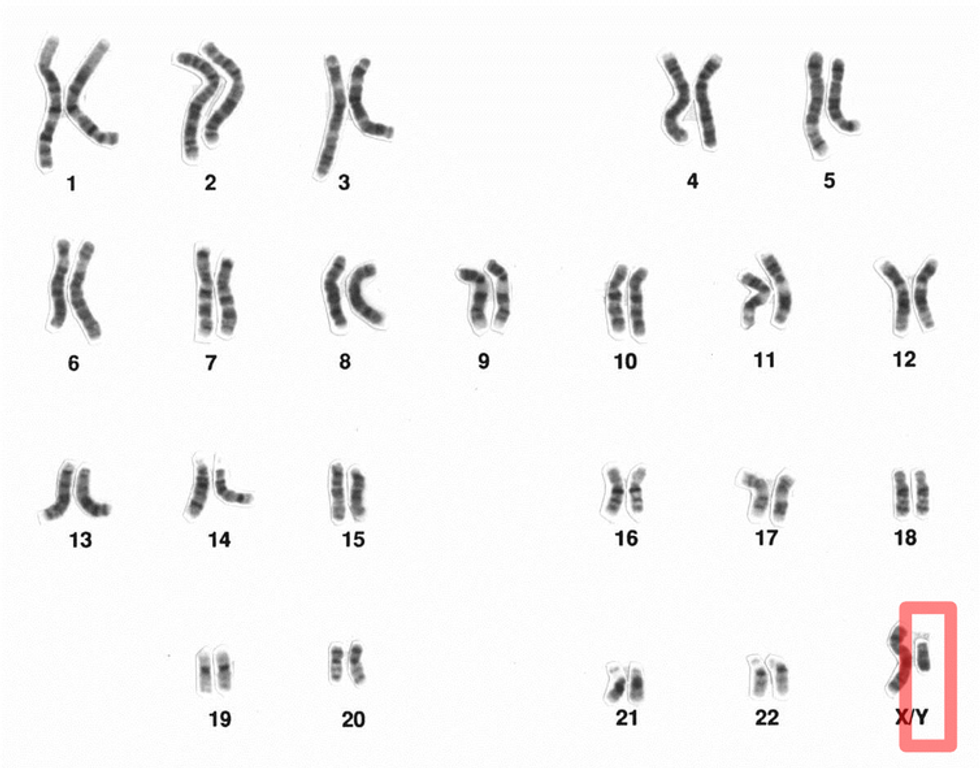
The Y chromosome may be a symbol of masculinity, but it is becoming increasingly clear that it is anything but strong and enduring. Although it carries the “master switch” gene, SRY, that determines whether an embryo will develop as male (XY) or female (XX), it contains very few other genes and is the only chromosome not necessary for life. Women, after all, manage just fine without one.
What’s more, the Y chromosome has degenerated rapidly, leaving females with two perfectly normal X chromosomes, but males with an X and a shrivelled Y. If the same rate of degeneration continues, the Y chromosome has just 4.6m years left before it disappears completely. This may sound like a long time, but it isn’t when you consider that life has existed on Earth for 3.5 billion years.
The Y chromosome hasn’t always been like this. If we rewind the clock to 166m years ago, to the very first mammals, the story was completely different. The early “proto-Y” chromosome was originally the same size as the X chromosome and contained all the same genes. However, Y chromosomes have a fundamental flaw. Unlike all other chromosomes, which we have two copies of in each of our cells, Y chromosomes are only ever present as a single copy, passed from fathers to their sons.
This means that genes on the Y chromosome cannot undergo genetic recombination, the “shuffling” of genes that occurs in each generation which helps to eliminate damaging gene mutations. Deprived of the benefits of recombination, Y chromosomal genes degenerate over time and are eventually lost from the genome.
Chromosome Y in red, next to the much larger X chromosome.
National Human Genome Research Institute
Despite this, recent research has shown that the Y chromosome has developed some pretty convincing mechanisms to “put the brakes on”, slowing the rate of gene loss to a possible standstill.
For example, a recent Danish study, published in PLoS Genetics, sequenced portions of the Y chromosome from 62 different men and found that it is prone to large scale structural rearrangements allowing “gene amplification” – the acquisition of multiple copies of genes that promote healthy sperm function and mitigate gene loss.
The study also showed that the Y chromosome has developed unusual structures called “palindromes” (DNA sequences that read the same forwards as backwards – like the word “kayak”), which protect it from further degradation. They recorded a high rate of “gene conversion events” within the palindromic sequences on the Y chromosome – this is basically a “copy and paste” process that allows damaged genes to be repaired using an undamaged back-up copy as a template.
Looking to other species (Y chromosomes exist in mammals and some other species), a growing body of evidence indicates that Y-chromosome gene amplification is a general principle across the board. These amplified genes play critical roles in sperm production and (at least in rodents) in regulating offspring sex ratio. Writing in Molecular Biology and Evolution recently, researchers give evidence that this increase in gene copy number in mice is a result of natural selection.
On the question of whether the Y chromosome will actually disappear, the scientific community, like the UK at the moment, is currently divided into the “leavers” and the “remainers”. The latter group argues that its defence mechanisms do a great job and have rescued the Y chromosome. But the leavers say that all they are doing is allowing the Y chromosome to cling on by its fingernails, before eventually dropping off the cliff. The debate therefore continues.
A leading proponent of the leave argument, Jenny Graves from La Trobe University in Australia, claims that, if you take a long-term perspective, the Y chromosomes are inevitably doomed – even if they sometimes hold on a bit longer than expected. In a 2016 paper, she points out that Japanese spiny rats and mole voles have lost their Y chromosomes entirely – and argues that the processes of genes being lost or created on the Y chromosome inevitably lead to fertility problems. This in turn can ultimately drive the formation of entirely new species.
The demise of men?
As we argue in a chapter in a new e-book, even if the Y chromosome in humans does disappear, it does not necessarily mean that males themselves are on their way out. Even in the species that have actually lost their Y chromosomes completely, males and females are both still necessary for reproduction.
In these cases, the SRY “master switch” gene that determines genetic maleness has moved to a different chromosome, meaning that these species produce males without needing a Y chromosome. However, the new sex-determining chromosome – the one that SRY moves on to – should then start the process of degeneration all over again due to the same lack of recombination that doomed their previous Y chromosome.
However, the interesting thing about humans is that while the Y chromosome is needed for normal human reproduction, many of the genes it carries are not necessary if you use assisted reproduction techniques. This means that genetic engineering may soon be able to replace the gene function of the Y chromosome, allowing same-sex female couples or infertile men to conceive. However, even if it became possible for everybody to conceive in this way, it seems highly unlikely that fertile humans would just stop reproducing naturally.
Although this is an interesting and hotly debated area of genetic research, there is little need to worry. We don’t even know whether the Y chromosome will disappear at all. And, as we’ve shown, even if it does, we will most likely continue to need men so that normal reproduction can continue.
Indeed, the prospect of a “farm animal” type system where a few “lucky” males are selected to father the majority of our children is certainly not on the horizon. In any event, there will be far more pressing concerns over the next 4.6m years.
One of the issues in media reports about the looting is that no one had a firm grasp of just how much was at stake. The dollar figures amounted to guesswork.
We still don’t know exactly what’s missing. But no one had identified the value, using empirical data and systematic calculations, of the artifacts that were known to exist in these archaeological sites. Until now.
With two Near Eastern archaeologists and two art market researchers on our team, we recently published a paper in the International Journal of Cultural Property that offers the first attempt to quantify the market value of artifacts at the level of a site.
The excavated objects’ total value was larger than we had expected. We found that just a small portion of a site can yield thousands of objects, adding up to millions of dollars.
An archaeological gold mine
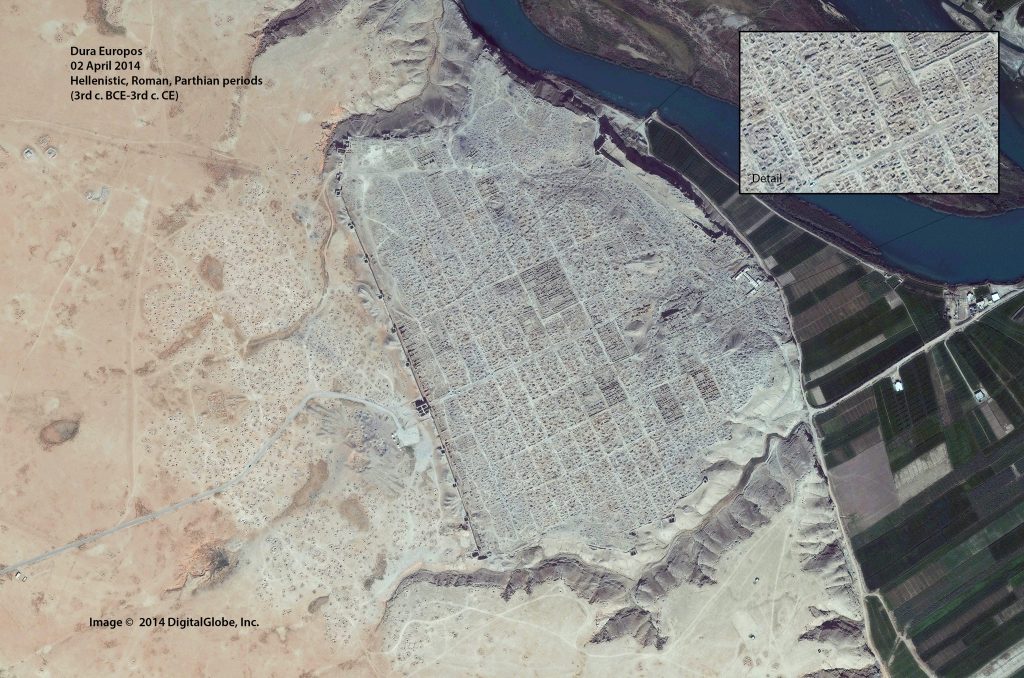
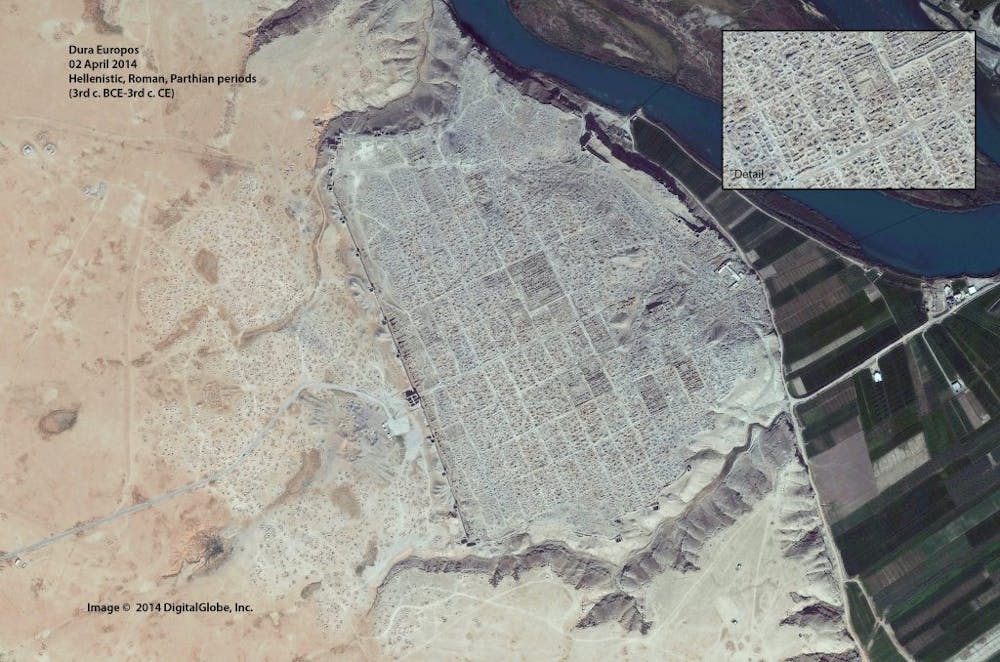
For the study, we examined two sites from different time periods that housed two different types of settlements. The first, Dura Europos, was a Roman garrison town on the Euphrates with a multi-ethnic population. Four years ago, when satellite images revealed that Syria’s archaeological sites were being looted on a massive scale, the shots from Dura Europos showed a Swiss-cheese landscape of pits.
The second town we studied, Tell Bi’a, in northern Syria, was a major Bronze Age capital in the second millennium B.C.
In the early decades of the 20th century, archaeologists excavated roughly 40% of Dura Europos. About 10% of Tell Bi'a was studied in the 1980s and 1990s. Records at these two sites list over 13,000 objects, excluding coins.
Using a machine learning model, we compared archaeological records and sales records of over 40,000 antiquities from auction houses, galleries and dealers to predict what these objects would sell for. The goal was to match objects observed for sale on the art market with similar objects documented in excavation records.
Based on our model, the total estimated value of all artifacts, not including coins, excavated from Dura Europos to date is US$18 million. At Tell Bi’a, the estimate is $4 million. This range is partly explained by the different sizes of the two cities and the area that was excavated. It’s also explained by market interest: Greek and Roman artifacts, which comprise the large majority of objects found at Dura Europos, fetch higher prices at auction than Bronze Age items, which make up the majority of artifacts at Tell Bi’a.
It’s important to keep in mind that these dollar figures represent just slices of two sites. The most comprehensive database of Syrian archaeological sites, assembled by archaeologist Jesse Casana and collaborators at Dartmouth College, has identified roughly 15,000 major sites in the country. Data examined by Casana’s team suggest that 3,000 of those sites experienced some looting from the start of the Syrian Civil War in April 2011 to mid-2015.
A 2014 satellite image of Dura Europos published by the American Schools of Oriental Research. The detail in the top-right shows looting holes.
Not every site has the artifactual density or richness of Dura Europos. But if a small portion of a single site like Tell Bi’a is capable of generating $4 million in sales – and there are 15,000 major sites – it doesn’t take much imagination to see just how much of an archaeological gold mine the country is.
Again, these dollar figures do not tell us what IS – or any other looters – actually pocketed. Our numbers project the total estimated value of recorded artifacts excavated at a particular site to date. In other words, over the past four years, IS had a treasure trove of artifacts at their disposal that they were able to pawn on a whim.
We may never know the full extent of the loss.
What’s getting sold?
What should we do with these estimates?
First, any policy that hopes to tackle archaeological looting needs reliable market estimates that highlight the scope and scale of the issue. Our findings get us closer to a point where everyone’s on the same page.
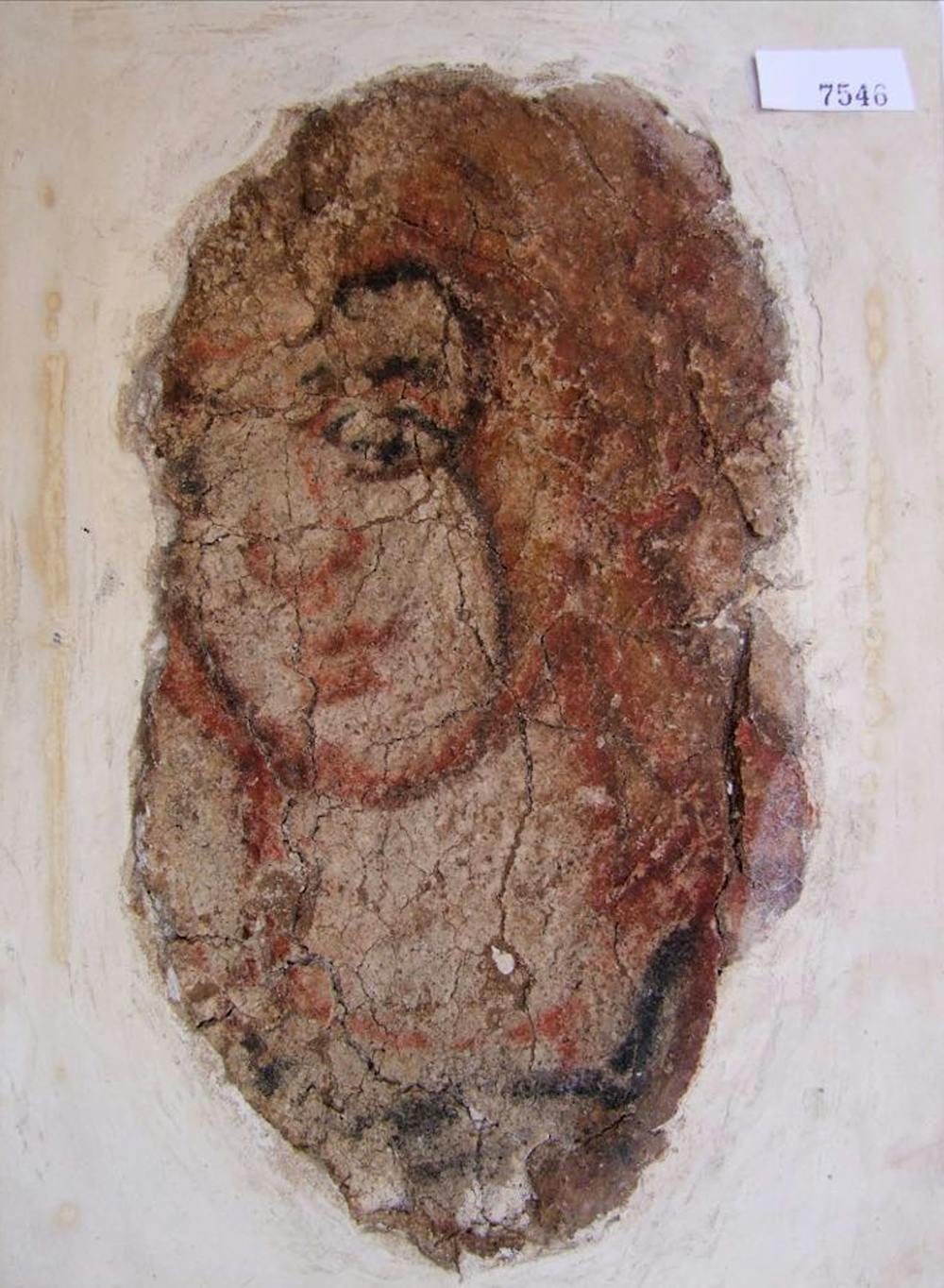
A fragment of a 2nd-century mural discovered in 1992 in the ancient city of Dura Europos. This particular piece was brought to Damascus for safe keeping during the Civil War, but thousands of other artifacts were left vulnerable to looting.
Second, our data show that small objects account for the majority of market share. At Dura Europos, 50% of the total market value was generated by objects under 13 cm long, and at Tell Bi'a by objects under 7 cm long.
These small treasures can pack a big punch on the market. We’re not the first to suggest that such finds have outsize importance in the antiquities trade, and our data indicate that policies to address the black market – at least for Syrian antiquities – should focus on objects that can fit in looters’ pockets.
Our estimates also hint at possible features of the supply chain. Pairing our observations of market sales with existing evidence of farm gate prices – the price paid to looters at the source – we found that looters are paid just a small fraction of what objects would earn at their final destination. While evidence of farm gate prices is limited, it indicates that much of the final price may be going to middlemen or dealers.
Beyond the Islamic State
However this isn’t a story solely about IS. We know that multiple groups participated in archaeological looting during the Syrian war, including the Syrian government’s own army. IS did not invent looting; the group tapped into an existing looting infrastructure and intensified its scale and productivity. Archaeological looting is a global problem, and Syria will continue to be of interest to hobby diggers, renegade excavators and thieves.
Furthermore, archaeological sites aren’t just threatened by looters: Urbanization and climate change pose just as great a danger.
Of course, the legacy of Syrian wartime looting can’t just be measured in dollars. It’s a loss of culture and of historical knowledge. Archaeologists use artifacts to connect people, ideas and customs and track historical change. When an item goes missing, the ability to braid together such a rich history becomes that much harder.
Calculating the market value of an entire ancient city might be helpful for policymakers and scholars. But it doesn’t change what Syrians and Iraqis already know all too well: You can’t put a price on history.
Around 2.2% of the population of England and Wales is now mixed race and 3.3% are from black ethnic groups. During World War II, over 70 years ago, these figures were far lower. And so unsurprisingly, life was difficult for the 2,000 or so mixed race babies who were born in World War II to black American GIs and white British women.
They grew up in predominately white localities and experienced significant racism. I have interviewed 45 of these children (now in their seventies), hailing from all over England. Their story of institutional racism rivals the horrors of the appalling story of the Windrush generation.
Of the 3m US servicemen that passed through Britain in the period 1942-45, approximately 8% were African-American. The GIs were part of a segregated army and they bought their segregation polices with them, designating towns near to American bases “black” or “white” and segregating pubs and dances along colour lines, with dances held for black GIs one evening and whites the next.
Inevitably, relationships formed between the black GIs and local women and some resulted in what the African-American press referred to as “brown babies”. All these children were born illegitimate because the American white commanding officers refused black GIs permission to marry, the rationale being that back in the US, 30 of the then 48 states had anti-miscegenation laws.
The children grew up in predominately white areas – the sites where the GIs had been largely based: south and south-west England, south Wales, East Anglia and Lancashire, where they had little or no black or mixed race role models. Most suffered racism, the stigma of illegitimacy and a confused identity.
Monica, one of the women I interviewed, remembers that there were no other mixed race children in her area at all. “That was the hardest part,” she told me. “People literally would turn around if I walked into a shop and stare, it was horrible … I was made to feel like a complete outcast, like I was contaminated.”
Jennifer, meanwhile, recalls one particular incident:
There was a girl that were very friendly. She told me where she lived and I went to call for her one night. And her mother opened the door. Oh, she went bananas. Oh, she went mad! I thought she were gonna have the door off the hinges. It’s a good job my fingers weren’t in the door, she’d have broke them!
Racist name calling was widespread for these children. Gillian, for example, who grew up in Rugeley, Staffordshire, told me that in addition to “blackie” and “nigger”, when she got to secondary school her peers started to call her “Gillywog”.
The thing that Deborah, born in Somerset in 1945, never got used to was being pointed at in shops. She remembers that children used to ask: “Mummy, why is that girl black?” The hardest thing, she found, “was not knowing why I was different. If you’ve got an identity that includes being black, you should be proud of it”.
Jennifer Brown and her grandmother, who she lived with.
Just under half of these children were put into children’s homes. Few were adopted. Everyone involved in the adoption process appeared to assume that black or mixed-race children were “too hard to place”, an attitude that carried on into at least the 1960s. Of the 45 “brown babies” I spoke to, 21 were put into children’s homes but only four were adopted by non-relatives. Several were adopted by their grandparents, while a few were fostered.
Leon Lomax is the only British “brown baby” I have found who was adopted by his US father. In December 1945, Somerset County Council, who had 45 mixed-race GI babies in their care, approached the Home Office to see if they could get the children adopted by “putative fathers, near relatives or other ‘coloured’ families in the US” (“putative” as there was no DNA testing to establish paternity until the 1960s). But the Home Secretary pointed out that it went against the Adoption Act, which only allowed adoption by British subjects or relatives.
In 1948, the government changed its policy for just over a year (the year of Leon’s adoption), but in 1949 reverted back to the ban, despite hundreds of African Americans keen to adopt the children. It appears that in 1948 the government had become increasingly concerned that they were being seen to be shirking responsibility and of dumping the mixed-race children of British subjects onto the Americans. The Home Office explicitly wanted “to avoid any suggestion that we in this country are trying to get rid of the coloured waifs left behind by the American occupation”.
Yet government’s ambivalence towards the “brown babies” remained. The children were not white and therefore not truly “British”, since Britishness assumed whiteness. In addition, a mixed-race GI baby stood out as a visual marker of the black soldier having indeed, as the comedian Tommy Trinder was well-known for quipping, been “over-paid, over-fed, over-sexed and over-here”.
Whether or not they grew up in a children’s home, nearly all my interviewees knew little or nothing about their fathers. They often did not even know their father’s name.
Over the years, some have found their fathers – such is the wonder of DNA testing and its increasing use in the US. Many are still finding US relatives, although it is rare that a father is still alive. For Sandi, finding her father’s wife and hearing that her father always talked of her was a turning point:
I was like tumbleweed. You know – when you see them cowboy films and the tumbleweed’s just blowing about where the wind takes it. I was like that. And I was aware of it, but I didn’t how to change it. And it’s about roots. It’s your roots that stabilise you.
And when James met his father in 2000, he told me he felt transformed: “Up to that point, I never felt whole. There was a part of me missing. And finding me dad was that part. I felt better and settled.”
The historian David Olusoga refers to the “Windrush myth”: “The widespread misconception that black history began with the coming on that one ship.” The children left behind by the African-American GIs during and after the war are part of this pre-Windrush black British history – a part that has very largely been overlooked. In generously sharing their stories, the children left behind by the African-American GIs during and after the war have shone a light on an important but overlooked aspect of this pre-Windrush black British history.
President Donald Trump on Wednesday pardoned disgraced British media mogul Conrad Black, who served more than three years in prison in the US for fraud and obstruction of justice.
"In 2007, prosecutors alleged that Lord Black had committed several acts of mail fraud and obstruction. The Supreme Court of the United States, however, largely disagreed and overturned almost all charges in his case," the White House said in a statement announcing the pardon.
The statement described Black -- who wrote a book entitled "Donald J. Trump: A President Like No Other" -- as an "entrepreneur and scholar" who "has made tremendous contributions to business, as well as to political and historical thought."
His legal battles began in 2004 when he was accused of siphoning off tens of millions of dollars from the sale of newspapers owned by Hollinger International, his holding company.
Black, a prolific writer and historian in his own right, vehemently maintained his innocence and launched a series of libel lawsuits in Canada to strike back at the detractors he blames for destroying his once vast empire.
But years of legal battles -- which went all the way up to the US Supreme Court -- failed to fully clear his name, although he did manage to greatly reduce his prison time by clearing himself of many of the charges.
Montreal-born Black renounced his Canadian citizenship in 2001 after a spat with then prime minister Jean Chretien, who protested the media owner's peerage to Britain's House of Lords.
At its peak, Black's newspaper group was one of the largest media empires in the world, with revenues in the billions of dollars and global daily circulation in the millions.
As well as The Daily Telegraph in London, the group included the Chicago Sun-Times, Canada's National Post, and the Jerusalem Post.
Trump has used his power of pardon before this and critics say he does it for people who back him or his ideas.
Reports have surfaced that he has considered pardoning people charged or convicted as part of the Russia election meddling probe.
Last year Trump granted a full pardon to Dinesh D'Souza, a conservative author and firebrand.
D'Souza pleaded guilty in 2014 to using fake donors to make political contributions to a Republican Senate campaign and ended up serving eight months in a halfway house in California.
In 2017, Trump pardoned Joe Arpaio, a former sheriff convicted of violating a court order to halt traffic patrols that targeted suspected unauthorized immigrants.
UN Secretary General Antonio Guterres raised concerns Thursday that a concrete dome built last century to contain waste from atomic bomb tests is leaking radioactive material into the Pacific.
Speaking to students in Fiji, Guterres described the structure on Enewetak atoll in the Marshall Islands as "a kind of coffin" and said it was a legacy of Cold War-era nuclear tests in the Pacific
"The Pacific was victimised in the past as we all know," he said, referring to nuclear explosions carried out by the United States and France in the region.
In the Marshalls, numerous islanders were forcibly evacuated from ancestral lands and resettled, while thousands more were exposed to radioactive fallout.
The island nation was ground zero for 67 American nuclear weapons tests from 1946-58 at Bikini and Enewetak atolls, when it was under US administration.
The tests included the 1954 "Bravo" hydrogen bomb, the most powerful ever detonated by the United States, about 1,000 times bigger than the atomic bomb dropped on Hiroshima.
Guterres, who is touring the South Pacific to raise awareness of climate change issues, said Pacific islanders still needed help to deal with the fallout of the nuclear testing.
"The consequences of these have been quite dramatic, in relation to health, in relation to the poisoning of waters in some areas," he said.
"I've just been with the President of the Marshall Islands (Hilda Heine), who is very worried because there is a risk of leaking of radioactive materials that are contained in a kind of coffin in the area."
The "coffin" is a concrete dome, built in the late 1970s on Runit island, part of Enewetak atoll, as a dumping ground for waste from the nuclear tests.
Radioactive soil and ash from the explosions was tipped into a crater and capped with a concrete dome 45 centimetres (18 inches) thick.
However, it was only envisaged as a temporary fix and the bottom of the crater was never lined leading to fears the waste is leaching into the Pacific.
Cracks have also developed in the concrete after decades of exposure and there are concerns it could break apart if hit by a tropical cyclone.
Guterres did not directly address what should be done with the dome but said the Pacific's nuclear history still needed to be addressed.
"A lot needs to be done in relation to the explosions that took place in French Polynesia and the Marshall Islands," he said.
"This is in relation to the health consequences, the impact on communities and other aspects.
"Of course there are questions of compensation and mechanisms to allow these impacts to be minimised."
The owners of Maximum Security have filed a federal lawsuit seeking to have the horse reinstated as winner of the Kentucky Derby, several US media reports said on Wednesday.
Maximum Security was dramatically stripped of victory in the US horse racing showpiece at Churchill Downs on May 4 after stewards ruled he interfered with rival thoroughbreds after veering from the rail on the turn for home.
It was the first time in the 144-year history of the Kentucky Derby that the horse crossing the finish line first was denied victory for hindering a rival.
Country House, a 65-1 longshot that crossed the line 1 3/4 lengths behind Maximum Security was later declared the winner.
Maximum Security's owner Gary West however has strongly condemned the decision, accusing stewards of acting "non-transparently" in their decision to strip his horse of the win.
An appeal against the disqualification was dismissed by the Kentucky Horse Racing Commission last week after the body said there were no grounds for appeal.
That left a court action as the only realistic chance of the result being overturned.
In West's federal lawsuit, filed in the US District Court in Frankfort, Kentucky, late Tuesday, the disqualification was condemned as "bizarre and unconstitutional."
The lawsuit seeks to have the original order of the finish reversed "confirming that Maximum Security is the official winner of the Derby who remains undefeated."
The defendants in the case are listed as chief steward Barbara Borden and every member of the Horse Race Commission.
The Wests said the decision to disqualify Maximum Security breached a state law that says a court may overturn any state agency decision if it is "without support of substantial evidence" or is "arbitrary, capricious or characterized by abuse of discretion."
The case argues that Maximum Security had committed no racing offence, insisting the horse was "entitled as the leading horse to a path on the track of his choosing."
The filing asserts the decision cost bettors on Maximum Security more than $100 million.
A sculpture by American artist Jeff Koons sold on Wednesday for $91.1 million at an auction organized by Christie's in New York -- a record price for a living artist.
"Rabbit", a stainless steel casting of an inflatable rabbit, was the star of the auction house's spring sale and overtook the previous record set by British painter David Hockney's "Portrait of an Artist (Pool with Two Figures)", which sold last November at Christie's for $90.3 million.
It was a return to the top for Koons, 64, whose "Balloon Dog (Orange)" for five years held the record for highest price reached at auction for a living artist after its 2013 sale for $58.4 million.
The selling price of "Rabbit" was only $80 million, but once commissions and fees were added, the final total rose to $91.075 million.
In an unusual turn for an art auction at this price range, the buyer of "Rabbit" was actually in the room during the sale.
Wednesday's milestone came two years after Christie's in New York set the record for most expensive work of art known to have been sold with the sale of Leonardo de Vinci's "Salvator Mundi" for $450 million.
Created by Koons in 1986, "Rabbit" is among the best-known works by the artist, who built a reputation for challenging art world conventions.
He has exhibited his larger-than-life creations worldwide, including a 2008 showing in France's historic Chateau of Versailles that so jarred French traditionalists a small group of them protested outside the event, demanding Koons's works be sent to "Disneyland".
At 41 inches (1.04 meters) in height, "Rabbit" was auctioned from the collection of deceased publishing mogul S.I. Newhouse.
Before his death in 2017, his empire included Conde Nast, which published magazines like Vogue, The New Yorker and Vanity Fair.
Alexander Rotter, chairman of post-war and contemporary art at Christie's, told AFP after the auction "Rabbit" is "the most important piece by Jeff Koons and I want to go even a step further and say the most important sculpture of second half of the 20th century."
"It's the end of sculpture. It's the anti-David as I call it," he said, referring to Michelangelo's masterpiece. "You can't go any further away from David still being figurative and a traditional sculpture."
The sale was a new triumph for the controversial artist, who since his emergence in the 1980s has been the subject of endless conversation over his work's commercial and artistic value.
He's raised eyebrows throughout his career, particularly with paintings and sculptures depicting him having sex with Italian film star Cicciolina, to whom he was married between 1991 and 1994.
Arriving in New York in 1976, Koon has built up a studio that at its height in 2015 employed more than 100 artisans tasked with meeting his exacting standards.
Iran Thursday accused the United States of an "unacceptable" escalation of tensions and said Tehran was showing "maximum restraint" despite Washington's withdrawal from a nuclear deal with world powers.
Tensions were already high after President Donald Trump walked away from the accord a year ago.
But they have been ratcheted up significantly in recent weeks with the US deploying an aircraft carrier strike group and B-52 bombers forced to the Gulf over alleged threats from Iran.
"The escalation by the United States is unacceptable," Iranian Foreign Minister Mohammad Javad Zarif said in Tokyo Thursday where he is holding talks with Japanese officials.
AFP / Gal ROMA Iran's military strength
"We exercise maximum restraint... in spite of the fact that the United States withdrew from JCPOA last May," he added, referring to the agreement on Tehran's nuclear program known as the Joint Comprehensive Plan of Action.
He added that Tehran remains "committed" to the deal, and said continuing assessments showed Iran was in compliance with the multilateral agreement.
Zarif's comments came hours after the US ordered non-emergency staff evacuated from its Baghdad embassy due to an "imminent" threat from Iranian-linked Iraqi militias.
The move added to growing fears that the long-time rivals could be on course for conflict despite both sides stressing they have no desire for war.
AFP / Kazuhiro NOGI Iranian Foreign Minister Mohammad Javad Zarif (C) says Tehran is exercising 'maximum restraint'
Trump, however, predicted Iran would "soon" want to negotiate and denied there was any discord in the White House over moves that critics say could lead to war in the Middle East.
"I'm sure that Iran will want to talk soon," the president tweeted. He also blasted media reports of White House turmoil, saying "there is no infighting whatsoever. Different opinions are expressed and I make a final and decisive decision."
Opponents of Trump say hardliners led by national security advisor John Bolton, who has long advocated toppling the Iranian regime, are pushing the country into war.
- 'Imminent threat' -
Despite international scepticism, the US government has been pointing to increasing threats from Iran, a long-time enemy and also a rival of US allies Israel and Saudi Arabia.
KHAMENEI.IR/AFP / HO Iran's Supreme Leader Ayatollah Ali Khamenei says "there is not going to be any war" with the United States
Senior State Department officials, speaking on condition of anonymity, said the threat came from Iraqi militia "commanded and controlled" by Tehran's Islamic Revolutionary Guard Corps.
"It is directly linked to Iran, multiple threat streams directly linked to Iran," said one official.
"This is an imminent threat to our personnel," said a second official.
"There is no doubt in my mind that under the circumstances, a partial ordered departure (from the embassy) is a reasonable thing to do."
Iran's supreme leader, Ayatollah Ali Khamenei, Tuesday insisted the showdown with the United States was a mere test of resolve.
"This face-off is not military because there is not going to be any war. Neither we nor them (the US) seek war," he said.
US Secretary of State Mike Pompeo echoed that sentiment, saying in Sochi, Russia: "We fundamentally do not seek a war with Iran."
POOL/AFP/File / Pavel Golovkin US Secretary of State Mike Pompeo said Washington does not "seek a war with Iran"
Despite the insistence that neither party wants conflict, world powers have rushed to urge calm and voiced concern over the escalating tensions.
Washington says it has received intelligence on possible attacks by Iranian or Iranian-backed forces, possibly targeting US bases in Iraq or Syria.
But US allies continued to show scepticism over Washington's alarm bells.
Britain's Major General Chris Ghika, a spokesman for Operation Inherent Resolve, the coalition fighting the jihadist Islamic State group, said Tuesday there was no special heightened alert.
After Ghika's comments drew a sharp retort from the US Central Command, Britain's defence ministry said Wednesday they have "long been clear about our concerns over Iran's destabilizing behaviour in the region" -- while still not confirming any new imminent danger.
- Tanker 'attack' -
Some observers speculate Tehran is seeking to retaliate over Washington's decision in April to put Iran's Revolutionary Guards on a terror blacklist -- a move designed to stymie their activities across the Middle East.
Emirati National Media Council/AFP/File / HANDOUT Four tankers anchored off Fujairah were hit by 'sabotage attacks'
But since the first US warning on May 5, the only incident has been a still-mysterious "attack" Monday on tankers anchored off Fujairah, an Emirati port located at the strategically crucial entrance to the Gulf.
One or more vessels incurred light hull damage, but what caused the damage and who was behind it remains unknown.
Separately, a Saudi-led military coalition Thursday carried out strikes against Yemen's rebel-held capital.
The raids came after Yemen's Iran-aligned Huthi rebels claimed responsibility for drone strikes Tuesday which damaged a Saudi oil pipeline.
In the US Congress, Democrats demanded to know why the Trump administration was boosting its Gulf presence and, according to media reports, considering war plans that would involve sending 120,000 US troops to the Middle East if Iran attacks American assets.
"Congress has not authorized war with Iran... If (the administration) were contemplating military action with Iran, it must come to Congress to seek approval," said Senator Bob Menendez, the senior Democrat on the Senate foreign relations panel.
We just ran the first ever pre-registered scientific study on the microdosing of psychedelics and found some very promising results.
We compared people who microdose — that is, who take a psychedelic substance such as LSD (lysergic acid diethylamide) or “magic” mushrooms (psilocybin) in very small quantities — with those who don’t, and found that microdosers had healthier scores on key mental health and well-being measures.
No matter the substance, microdosing implies a dose so low that the individual experiences only subtle changes, not hallucinations. People are not “tripping” on a microdose; they just go about their regular day, whether that means studying at school, going to work or taking care of the kids at home.
Microdosers score higher on ‘wisdom,’ meaning the ability to consider multiple perspectives, be in tune with their emotions and feel a sense of connection.
(Shutterstock)
There has been no published science on whether microdosing works, but despite this, microdosing for self-enhancement and mental health has hit the media.
For example, a 2016 article in Wired magazine described young professionals in San Francisco and Silicon Valley microdosing to enhance their creativity and focus, and to gain a competitive advantage.
No experimental study has evaluated psychedelic microdosing, and neither did we.
Randomized placebo-controlled trials are needed to talk definitively about the effects of microdosing. In the meantime, we investigated the experiences of people who already microdose.
Our survey investigated the relationship between microdosing psychedelics and mental health. We recruited participants online, especially from Reddit’s microdosing community.
We asked our study participants about their microdosing patterns by having them fill in some questionnaires. As firm believers in Open Science, we have openly shared all our materials and you can find them here. Our findings are soon to be published in Psychopharmacology and you can access the preprint here.
They were also more creative and open. If wisdom is tricky, creativity is even more so. In this case, creativity meant finding unusual uses for regular household objects: A brick and a knife. Microdosers came up with more useful, unusual and unique uses for these objects. This is a well-validated measure of divergent thinking, though certainly not the be-all and end-all of creativity.
Microdosing could involve the placebo effect. We need randomized placebo-controlled trials to test its safety and efficacy.
Microdosers endorsed less of these unhealthy beliefs. Likewise, high negative emotionality means a higher likelihood of having a mental health disorder, and microdosers had lower negative emotionality.
An exciting future for clinical science
Our results are promising. As promising as they seem, we don’t know whether microdosing actually caused any of these differences.
Maybe people with better mental health were more likely to experiment with microdosing, or perhaps there is some unknown cause that made people both more likely to microdose and to be creative.
At this point, we simply don’t know what caused the differences between the groups — just that these differences existed. We need to run controlled lab studies to actually find out.
Our preliminary work also shows that people report downsides to microdosing. For example, some people found microdosing increased anxiety and mood-instability; increased aches, pains and gastrointestinal distress were also relatively common.
The most common drawback was that microdosing is illegal. Did we forget to mention that? Yes, psychedelics are totally illegal!
LSD and psilocybin were made illegal in the 1971 UN Convention on Psychotropic Substances and remain so today. The exact laws differ depending on where you live, and using analogue substances can sometimes be a legal grey area but, for the most part, microdosing makes you a criminal.
What we need now are controlled lab experiments — randomized placebo-controlled trials of psychedelic microdosing to test safety and efficacy. Microdosing research, alongside full-dose psychedelics, promises an exciting future for clinical science and the study of human flourishing.












 AFP / Gal ROMA
  AFP / Kazuhiro NOGI
  KHAMENEI.IR/AFP / HO
  POOL/AFP/File / Pavel Golovkin
  Emirati National Media Council/AFP/File / HANDOUT