"I think there's space for Kushner to get in because Kushner is the survivor," Mook said during a panel hosted by MSNBC's David Gura. "He's survived everything."
"Any time you take on him or Ivanka [Trump]," the current House Majority PAC head said, "you lose."
After a shakeup at Homeland Security, reportedly at the behest of Miller in his search for stricter loyalists, reports emerged that the adviser and the president's son-in-law are at odds over their differing immigration policy approaches.
Mook noted that Miller is something of a "Svengali" in the Trump administration for his anti-immigrant policies, whereas Kushner has taken a more behind-the-scenes and bipartisan approach.
He noted, however, that because Trump "loves the chaos" of feuding aides, this reported battle could "just be act 17" of his White House "drama."
Game of Thrones is back. The most-watched show from HBO in nearly half a century is in its home straight after seven years – and the last six episodes will be among the most expensive television ever made. Given the way the world of television is rapidly splintering into audiences self-scheduling their viewing across different platforms, the show’s final episode could be the last global TV mega-event. Watch it or not, you will have heard of it. And it matters.
It matters in terms of representation. This show will be screened in countries where homosexuality is illegal, where women’s sexual choices are controlled and where trans identities are violently subjugated. How GoT reflects sexuality and what lessons are implied is culturally important. As the show moves towards its conclusion, it’s time to ask whether, given that cultural importance, the show has missed an opportunity with its queer storylines.
The story’s creator, George R.R. Martin, acknowledges his general debt to European history for inspiring plots and characters. At a recent fan convention, Martin identified some specific queer icons of the past, citing Alexander the Great, Richard the Lionheart, and Edward II and saying:
If indeed those men were gay it had a significant effect upon history and it has a somewhat significant effect on the events in my book … I wanted to include the full range of humanity, including the full range of sexual preferences and sex is an important part of the books.
Knights and lovers
The first big gay relationship is between Renly Baratheon and Loras Tyrell. Renly is the younger of two brothers of King Robert Baratheon, who sits on the Iron Throne of Westeros as the series opens. After the king’s death, it is Renly’s champion knight Loras – also his lover – who first puts the idea of claiming the throne into Renly’s head.
One of the biggest threads of online debate about the show is the way the television series deviates from the books. Loras’s characterisation is hotly contested. In the books, his sexuality is more ambivalent, his adoration of Renly more ambiguous. HBO has outed the couple, given them sex scenes and created a fully-formed relationship. But they have also made Loras more effeminate, interested only in fine clothing and fripperies. He beds almost any man who crosses his path. There’s nothing wrong in that in itself, but take away the plots that revolve around Loras’s sexuality in the TV show, and the character disappears.
A matter of tastes
There is also plenty of lesbian lust blooming in GoT. Daenerys Targaryen, mother of dragons, is headed throughout the show’s long narrative to Westeros to claim back the Iron Throne that was stolen from her murderous and insane father. But, before any of that begins we see her as as a nervous virgin being instructed in how to please her man by acting out positions and intimate touches with another woman. Bi-curiosity pops out of the screen.
It’s a bi-curiosity that Daenerys shows again five seasons later with the show’s fully-fledged Sapphic lover Yara Greyjoy – a potential ally with a much-needed navy – in a brilliant scene where flirtation and political consummation mingle inextricably.
Yara is such an attractive seductress that Ellaria Sands, another potential ally of Daenerys, also comes to find her hand between Yara’s legs at one point in the political assignations, while she purrs that she’s “developing a taste for it”.
Bisexuality is embodied not just by Ellaria Sands, but also by her male lover Oberyn Martell. When Oberyn is shown a line-up of women in a brothel, he admires each woman’s beauty and character before turning to the young man who is pimping them and demanding to sleep with him. Such a beautiful man as Oberyn is not met with any form of disgusted denial. The pimp/host Olyvar simply replies that he’s “wildly expensive”. Perhaps “gay for pay” exists in Westeros too?
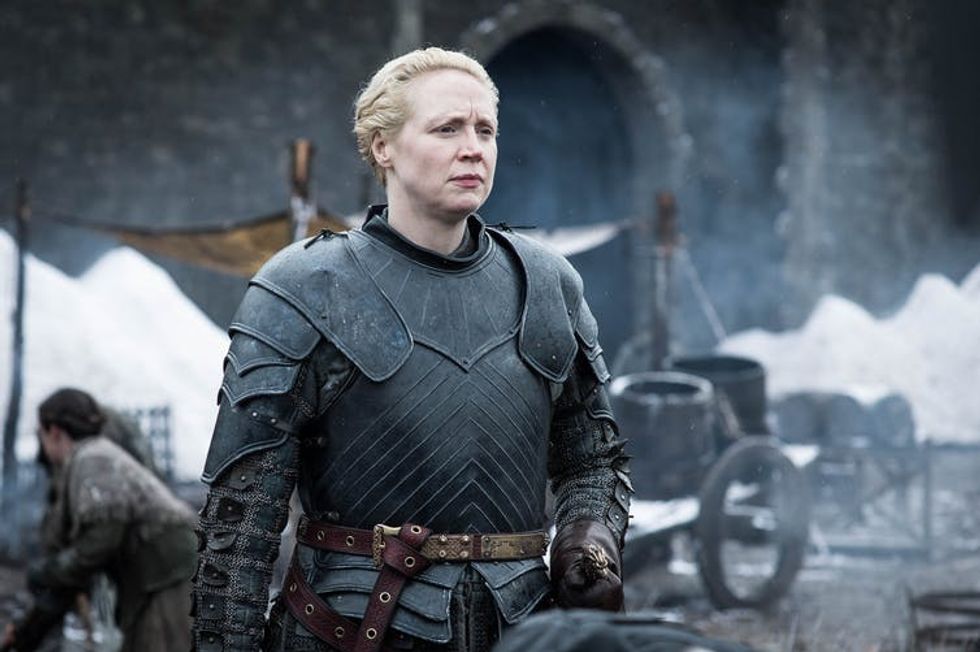
Brienne of Tarth: woman as warrior, defying gender expectations.
HBO/Helen Sloan
All the worlds in GoT contain a basic gender binary. There are women who defy the gender expectations that others attempt to force upon them. Cersei Lannister, Robert Baratheon’s widow, casts off her husband’s name and claims the throne for herself. Daenerys Targaryen co-operates with her brother’s brutal murder to blossom into a leader of global proportions and Brienne of Tarth is perhaps this world’s only honourable knight. But there are no prominent characters who move between genders and no societies in which gender has broken down or moved beyond a binary opposition.
Dangerous liaisons
The show’s famous maxim: “When you play the Game of Thrones, you win or you die”, leads inevitably to a lot of deaths. Part of what makes the show so gripping is that any character, even the central protagonist, can be killed. And these are homophobic times. In most of Westeros, open same-sex desire is impossible.
So, what has happened to our queer cast? Renly Baratheon, dead. Loras Tyrell, dead. Ellaria Sands, chained up with her daughter’s rotting corpse. Oberyn Martell, dead. Yara Greyjoy, imprisoned.
Vitto Russo, the gay film critic, noted a trend in some film representation where the gay man is presented only to meet an unhappy, punishing and often fatal ending. Lesbian characters meet similar fates, or are raped into compliance. US academic John Clum observed the same trend on stage and referred to it as “ritualistic purgation”. A queer character is presented simply to be destroyed, thus reassuring and reaffirming heterosexual orthodoxy.
A lot of heterosexual characters die in GoT. But in world where Brunei has just joined the list of pariah nations that have the death penalty for male homosexuality, a queer character’s murder might reasonably be argued to carry more contemporary weight and resonance. And the list of gay men that the show has killed weighs heavy.
In GoT, we are still waiting for a love that endures, for a fully-formed same-sex relationship that offers more than a prelude to death, for a queer character who enjoys promiscuity and gets away with it, for more expressions of gender fluidity. As we enter the final season it looks like the central heterosexual characters will grab the focus. We can still hope to see some queer characters move centre screen. And, if they do, we want them to live up to the motto of House Crakehall: “None so fierce.”
Britain's high commissioner to India laid a wreath on Saturday at commemorations for the 100th anniversary of the Amritsar massacre, one of the worst atrocities of colonial rule for which London is still to apologise.
The Jallianwala Bagh massacre, as it is known in India, saw British troops fire on thousands of unarmed men, women and children in the northern city of Amritsar on the afternoon of April 13, 1919.
The number of casualties from the event, which galvanised support for independence, is unclear. Colonial-era records put the death toll at 379, but Indian figures put the number closer to 1,000.
Even 100 years on, Britain has still made no official apology and Dominic Asquith, high commissioner, on Saturday followed suit at the Jallianwala Bagh walled garden where bullet marks are still visible.
AFP / NARINDER NANU' You might want to re-write history, as the Queen said, but you can't,' said Dominic Asquith, Britain's high commissioner to India
"You might want to re-write history, as the Queen said, but you can't," Asquith said.
"What you can do, as the Queen said, is to learn the lessons of history. I believe strongly we are. There is no question that we will always remember this. We will never forget what happened here."
In the memorial's guest book Asquith, a descendant of Herbert Asquith, prime minister from 1908-16, called the events "shameful".
"We deeply regret what happened and the suffering caused," he wrote, echoing comments by Prime Minister Theresa May in parliament on Wednesday when she too stopped short of apologising.
Prime Minister Narendra Modi in a tweet called the tragedy "horrific" and that the memory of those killed "inspires us to work even harder to build an India they would be proud of."
Opposition leader Rahul Gandhi was present in Amritsar and on Twitter called the massacre "a day of infamy that stunned the entire world and changed the course of the Indian freedom struggle".
In a visit in 2013 then British prime minister David Cameron described what happened as "deeply shameful" but stopped short of an apology.
In 1997, Queen Elizabeth II laid a wreath at the site but her gaffe-prone husband Prince Philip stole the headlines by reportedly saying that Indian estimates for the death count were "vastly exaggerated".
On Wednesday, May told the House of Commons that the massacre was "a shameful scar on British Indian history".
AFP / NARINDER NANU The chief minister of Punjab state said thousands attended a candlelight march Friday in memory of the victims
"We deeply regret what happened and the suffering caused," May said.
Amarinder Singh, chief minister of Punjab state, said May's words were not enough.
He said "an unequivocal official apology" is needed for the "monumental barbarity".
Singh said thousands attended a candlelight march Friday in memory of the victims ahead of a commemoration ceremony later on Saturday that was attended by the Indian vice-president and hundreds of people.
- High walls -
Around 10,000 unarmed men, women and children had gathered in the Jallianwala Bagh walled public garden in Amritsar on April 13, 1919.
Many were angry about the recent extension of repressive measures and the arrest of two local leaders that had sparked violent protests three days before.
The 13th of April was also a big spring festival, and the crowd -- estimated by some at 20,000 -- included pilgrims visiting the nearby Golden Temple sacred to Sikhs.
AFP / NARINDER NANU The number of casualties from the event, which hardened opposition to colonial rule, is unclear, with colonial-era records showing about 400 deaths, while Indian figures put the number of fatalities in at closer to 1,000
Brigadier General Reginald Edward Harry Dyer arrived with dozens of troops, sealed off the exit and without warning ordered the soldiers to open fire.
Many tried to escape by scaling the high walls surrounding the area. Others jumped into a deep, open well at the site as the troops fired.
One of several eyewitness accounts compiled by two historians and published in the Indian Express newspaper this week described the horror.
"Heaps of dead bodies lay there, some on their backs and some with their faces upturned. A number of them were poor innocent children. I shall never forget the sight," said Ratan Devi, whose husband was killed.
- 'Monstrous' -
Dyer, dubbed "The Butcher of Amritsar", said later the firing was "not to disperse the meeting but to punish the Indians for disobedience".
Indian newspapers this week repeated their calls for an apology for a massacre that Winston Churchill, then secretary of state for war, called "monstrous".
"But even in the centenary year of the massacre, Britain has refused to... take that important step," the Hindustan Times said in an editorial. May's statement was "perhaps qualitatively a notch stronger... but is far from enough."
When the UN crowned Finland the world's happiest nation last month for the second year running, there were still quite a few eyebrows raised. How could this Nordic country, better known for its harsh weather and high suicide rate, be the world's happiest?
Although international comparisons are imperfect due to holes in the data, in 1990 official statistics did indeed indicate that Finland's suicide rate was the second highest in the world, behind Hungary.
But Professor Timo Partonen at Finland's National Institute for Health and Welfare, warns against the temptation to blame the problem on Finland's dark, cold climate, or its bleak, concrete, postwar towns.
"If you are depressed in any place in the world, you bear a similar risk of suicide," Partonen told AFP.
"I think that the social connections and how willing you are to seek help and receive help are the most important things here."
Suicides in Finland have now fallen to less than half of 1990 levels. That is thanks largely to a decade-long public health drive to improve treatment and support for those at risk, as well as to make media reporting of the issue more responsible.
These days it is also much more socially acceptable for Finns, especially men, to open up about their feelings, says Partonen.
"Now it's easier to talk about it if you are depressed for example, and it's easier to get treated and have adequate treatment as well."
According to the World Health Organization, Finland's suicide rate is now 22nd highest in the world, lower than the US and one spot higher than Australia.
Even today however, many Finns still describe themselves as taciturn and prone to melancholy -- and admit to eyeing public displays of joyfulness with suspicion.
- Quietly satisfied -
Finland's residents enjoy a high quality of life, security and public services, with rates of inequality and poverty among the lowest of all OECD countries.
But as the country votes in this weekend's general election, the issue of how to continue funding Finland's cherished welfare state in future appears to be on many voters' minds.
In an EU survey last year, 86 percent of Finns said they were satisfied with their work-life balance, against an EU average of 78 percent.
That leaves more time for a favourite pursuit of many Finns -- going outdoors to enjoy the country's vast forests and thousands of lakes.
"You forget all your daily things that maybe are going on inside your head, and you can just breathe deeply and listen to nature," said Petri Honkala, a physiotherapist of his daily walks and runs in the forest by his house.
Since Finland's success in the UN's world happiness rankings, which compared various social and economic measures in 156 countries, Honkala and seven other Finns have been employed by the country's tourist board as "happiness guides" for foreign visitors.
Later this year he will host guests at his home to share the secrets to Nordic wellbeing -- and a trip to his favourite nearby forest spots will be top of the agenda.
"I have been in my own little business all the time, I haven't been employed, so I haven't had any vacation for example, I don't go to the Canary Islands," Honkala said, as he barbecued sausages over a bonfire in a small forest clearing.
"But that's not the important thing to me, I'd rather come over here."
It is a grey, chilly day when AFP visits Honkala in his picturesque village of Mathildedal, an hour and a half from the capital. The piles of snow still haven't melted away entirely, and green shoots are yet to appear from the frozen ground.
But the cold weather is not a bar to happiness or to enjoying the outdoors, Honkala insists.
"I have no complaints, the only thing is the winter could be a little bit shorter, and the (summer) a little bit longer," he laughs.
The Dalai Lama told his followers on Friday to "feel at ease" as he was discharged from a New Delhi hospital three days after being admitted with a chest infection.
"I received the necessary medical treatments and now feel kind of normal," the 83-year-old told reporters in a video posted on his official Twitter account as he left the medical facility on Friday morning.
"I have recovered very well. So, everyone, please feel at ease! I wish to thank everyone for your sincere concern and prayers for me," he said in the video shot by Voice of America's Tibetan language service, according to accompanying subtitles of his remarks in the clip.
The Tibetan spiritual leader said the cause of his illness had been a "kind of flu... which persisted for a while. After a thorough check-up -- X-rays and other diagnosis -- it was found that there was some lung (infection)."
The Buddhist monk, global celebrity and thorn in China's side was admitted to the Max hospital in the Indian capital on Tuesday.
His personal spokesman Tenzin Taklha told AFP that the Dalai Lama would now spend "several days of rest" in Delhi before returning to Dharamsala, the northern Indian hill station where he has lived in exile for six decades.
In 1959, at the age of 23, he fled the Tibetan capital Lhasa and across the frozen Himalayan border, disguised as a soldier, as Chinese troops poured into the region to crush an uprising.
In India he set up a government-in-exile and launched a campaign to reclaim Tibet that gradually evolved into an appeal for greater autonomy -- the so-called "middle way" approach.
- Simple monk -
The self-described "simple Buddhist monk" has spent decades criss-crossing the globe mixing with monarchs, politicians and Hollywood actors pressing his case.
His status as a global symbol of peace whose message transcends faith has earned comparisons to visionaries like Mahatma Gandhi and Martin Luther King.
But he has also drawn the fury of an increasingly assertive China, branding him a "wolf in a monk's robe" and accusing him of trying to split the nation.
Although still a hugely popular speaker, he has cut back on his global engagements and has not met a world leader since 2016 -- while governments have been wary of extending invitations to him for fear of angering Beijing.
Even India, which gave him asylum in 1959, has turned its back, with Prime Minister Narendra Modi's government reportedly warning officials against attending events featuring him, citing diplomatic sensitivities.
WikiLeaks founder Julian Assange languished Friday in a British jail at the outset of a likely lengthy extradition battle following the dramatic end to his seven-year stay in Ecuador's London embassy.
Within hours of police hauling him out of the embassy on Thursday, the 47-year-old Australian appeared in court for breaching his British bail conditions in 2012 and to face a subsequent US extradition request.
A legal source familiar with the case told AFP that Assange was being held at Belmarsh prison in southeast London.
One of eight "high security" jails in England, it can also hold prisoners "requiring specific management arrangements because of their public and media profile", according to a 2018 inspection report.
Assange was remanded in custody Thursday at a hearing in front of a London judge, who pronounced him guilty of disobeying his bail terms by fleeing to the embassy in June 2012.
He could receive up to a year in prison when sentenced at an as yet undetermined later date.
His separate extradition case on charges of computer hacking is set to be next heard by video-link at Westminster Magistrates' Court on May 2.
However, under British law the United States has until June 12 to submit full extradition papers.
Assange's London lawyer Jennifer Robinson confirmed he would contest the long-feared attempt to try him there.
"He's obviously going to fight extradition and fight it hard," Robinson told BBC radio on Friday, adding she had visited her client in a court cell after the hearing when he thanked supporters and said: "I told you so."
"The bigger question is... why is the United States seeking his extradition over publishing truthful information."
- Extradition 'should be opposed' -
Assange sought asylum at Ecuador's embassy in London's chic Knightsbridge district after a British judge ruled he should be extradited to Sweden to face sexual assault allegations.
Inside the red-brick building he lived a sparse existence in a flat measuring 18 square metres (190 square feet) with just a bed, shower, computer, treadmill and microwave.
Britain spent £13.2 million up to 2015 on policing up to 2015, maintaining a 24-hour guard at the embassy's doors in the first year.
Relations with his Ecuadoran hosts gradually soured and new pro-US President Lenin Moreno on Thursday pulled his asylum and permitted British police to remove Assange.
Prime Minister Theresa May welcomed the arrest as showing "no one is above the law".
But opposition Labour leader Jeremy Corbyn, a leftist stalwart, called for the government to block the extradition.
"The extradition of Julian Assange to the US for exposing evidence of atrocities in Iraq and Afghanistan should be opposed," he said on Twitter.
May's comments prompted a furious reaction on Twitter from Assange's mother, who lives in Australia.
She accused the British prime minister of "trying to divert attention away from her Brexit dog's breakfast by cheering on the thuggish, brutal, unlawful arrest of my courageous, tortured multi-award winning journalist son".
- Years-long extradition cases -
Legal experts said the case could be stuck in British courts for up to two years and, if appealed, potentially go all the way to the European Court of Justice.
"The chances of him winning (against) extradition are low," Ben Keith, a British barrister specialising in the field, told AFP. "We extradite most people to the US."
Critics of the move, including WikiLeaks editor Kristinn Hrafnsson, have warned the US could add more charges once Assange is extradited.
But Keith said once they have filed their formal request within the next 65 days, American officials would be limited to those charges.
"There's specific international extradition law protection that prevents you from charging someone with additional (offences)," he added.
Assange supporters, including fashion designer Vivienne Westwood, rallied outside Westminster Magistrates' Court on Thursday.
Inside the courtrooom, judge Michael Snow described him as a "narcissist" and suggested he could consent to the extradition to "get on with your life".
Previous comparable cases, involving accused hackers Lauri Love and Gary McKinnon, took between five and 10 years but eventually resulted in their extraditions to the US being blocked.
One week ago President Donald Trump made a rare trip to California, to dedicate a plaque that falsely marks the start of construction of his border wall. During that trip the president toured an area near the Southern border, held a roundtable with some with Customs and Border patrol agents, and told the head of the U.S. Customs and Border Protection agency to block asylum-seeking migrants from entering the United States.
Trump, now infamously, and on-camera, told CBP agents to tell migrants – including asylum seekers fleeing violence, rape, drugs, and gangs – "the system is full."
That is illegal.
But as CNN is reporting, "the President also told the commissioner of Customs and Border Protection, Kevin McAleenan, that if he were sent to jail as a result of blocking those migrants from entering the US, the President would grant him a pardon, senior administration officials tell CNN."
That may be illegal.
Attorney and former FBI Special Agent Asha Rangappa weighs in:
So does MSNBC's Joyce Vance and CNN's Jake Tapper:
A career diplomat who was appointed by President George HW Bush to serve as United Nations ambassador warned that Americans are "no longer a predictable partner" due to President Donald Trump's increasing self-interest and "fascination" with "dictatorial autocracy."
"We're getting out of agreements rather than fashioning them," ex-UN ambassador Tom Pickering told journalist Ian Bremmer. "We're no longer trustworthy."
The international diplomatic world's response to the Trump administration is, perhaps, part of "the growing up of the alternative of the liberal progressive order," Pickering said. "And that alternative is very clearly dictatorial autocracy."
Referencing Trump, the former diplomat noted that "dictatorial autocracy is the, perhaps, fascination of a small group of leaders who aspire to it."
Again referencing the current administration, Pickering said that it seems current American leadership is looking at its "own interest instead of your national interest."
"Is it good to have a disheveled world?" he mused. "Is it good to have increasing competition for power? Is it good to have an America where you can't turn and say, 'what's the United States going to do'?"
After World War II and during the Cold War, America's allies could predict and rely on its moves — but that stability is "seemingly now all disappearing," the seasoned diplomat added, noting that allied nations are "having a problem now of 'once burned twice shy.'"
"Americans at one time elected somebody who did all these things... that have not helped promote American leadership in the world," Pickering concluded. "Can we ever trust the US again to stay on track?"
About six months ago I stopped eating meat. I was teaching a graduate course at UCLA that investigated how Italian Renaissance writers conveyed their concepts about the human through writing about the nonhuman – plants, animals, objects, angels, demons, gods and God. As weeks passed, I found myself becoming more and more attuned to the nonhuman entities all around me, more aware of their vibrant lives. Cutting flowers for a short-lived bouquet seemed wrong; chewing on animal flesh became flat out impossible.
Leonardo da Vinci was one of the authors we were studying in the course. Out of the thousands of pages comprising his 25 documented codices, known collectively as his “Notebooks,” we read passages describing the natural world and its inhabitants, and some of his philosophical maxims, fables and riddles. In a striking passage that introduces his “Treatise on Water,” he wrote:
“By the ancients man has been called the world in miniature; and certainly this name is well bestowed, because, inasmuch as man is composed of earth, water, air, and fire, his body resembles that of the earth; and as man has in him bones — the supports and framework of his flesh —, the world has its rocks — the supports of the earth; as man has in him a pool of blood in which the lungs rise and fall in breathing, so the body of the earth has its ocean tide which likewise rises and falls … ”
Unlike many thinkers of his time who anthropomorphized the Earth, Leonardo terramorphized man. But it was not just man that Leonardo saw as a Platonic microcosmic-world-in-miniature. Animals, he wrote, are “the image of the world.” They reflect the Earth, just as we do.
Leonardo’s animals hold their own against human beings.
Leonardo never challenged the Christian belief that human beings were made in the image of God, nor the classical notion that man’s proportions and symmetries (albeit a white, middle-aged, able-bodied, European man) were beautiful and worthy of imitation in architecture and art. But he also never claimed other living beings were less beautiful, soulless, or lacked intelligence.
When comparing animals and humans – which he did often – animals often came out looking better. In one of his notes, Leonardo wrote, “Man has much power of discourse, which for the most part is vain and false; animals have but little, but it is useful and true, and a small truth is better than a great lie.” He often pointed out how much more powerful animals’ senses were, how much faster, stronger, more efficient and capable they were of performing remarkable feats, such as flight.
And animals were not nearly as “bestial” to one another as humans could be. “King of the animals – as thou hast described him – I should rather say king of the beasts,” he wrote. Leonardo lamented how human stomachs have become “a sepulcher for all animals” and how “our life is made by the death of others.”
Leonardo the vegetarian?
This passage, along with other writing about humans as killing machines and their esophagi as animal cemeteries, as well as a few comments by his contemporaries, have led many to believe that Leonardo was a vegetarian.
There is a 1515/6 letter by the Italian explorer Andrea Corsali to Giuliano de’ Medici that – in discussing how the Gujarati of India won’t eat anything with blood or allow hurt to come to any animate thing – says they are “like our Leonardo da Vinci.” Corsali, however, did not know Leonardo well, and the sentence is ambiguous; it could just mean that Leonardo never hurt animals or wanted to see them hurt.
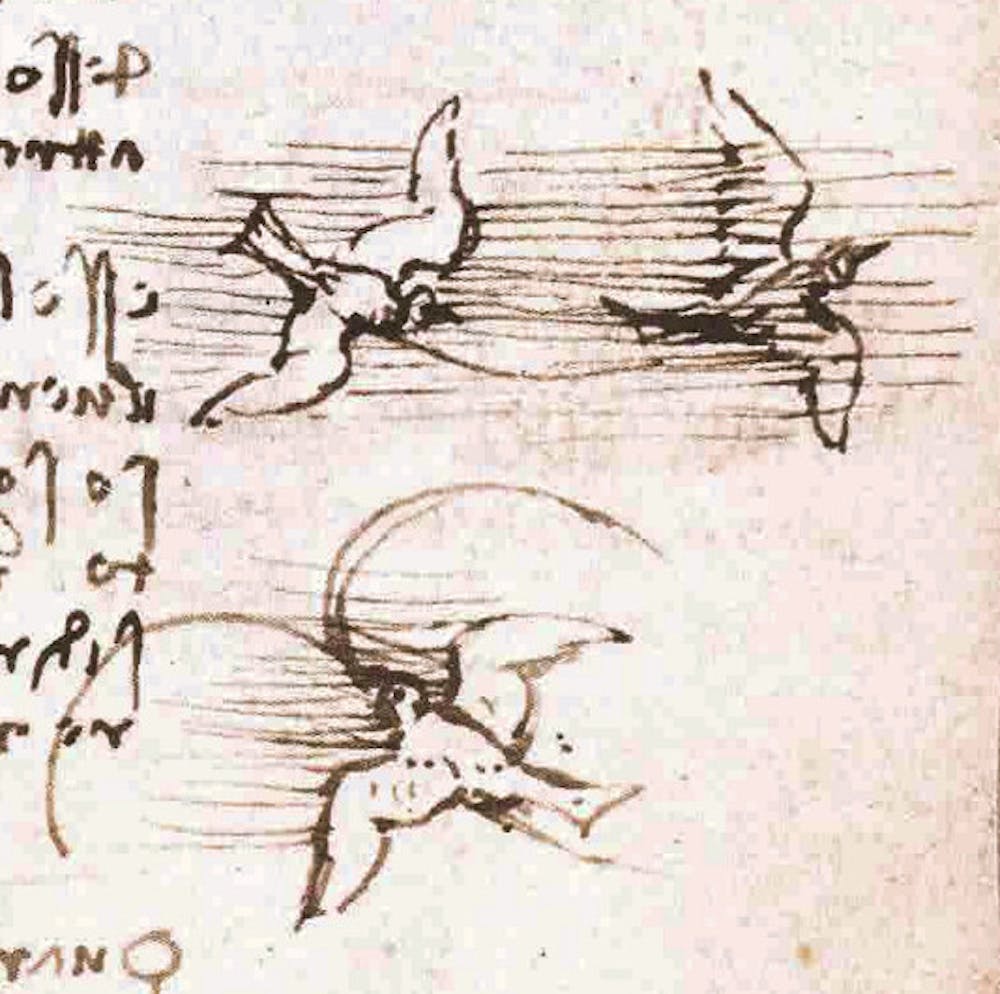
Leonardo was captivated by birds’ power of flight.
Nowhere in his writing, however, did he speak of not eating meat. His grocery lists have meat on them, although it is possible he was purchasing it for members of his household: students, servants, guests, animals.
Whether he ate a totally meat-free diet or not is unclear, but his love for animals is unquestionable. He lived with animals on a farm as a child and they were ever-present in his studio – likely cats and dogs, insects, birds and reptiles (some alive, some deceased). Leonardo studied them, depicted them, wrote about them and built machines – even war machines – inspired by them.
Leonardo’s literary writing – fables, riddles, aphorisms – is filled with animals. While they often serve as Aesopic moral stand-ins for humans, Leonardo also used them differently than other classical, medieval and Renaissance fabulists, contrasting them to humans, celebrating their strengths and wisdom and critiquing how humans treat them.
In his “Prophecy” riddles — which read like predictions of a horrendous apocalyptic future — one encounters legions of cruelty and pain. “I see children of thine given up to slavery to others … paid with the severest suffering, and spend[ing] their whole life benefiting those who ill treat them.” As a riddle, this is not what it seems. He’s writing not of humans, but rather, of donkeys, and how humans repay their services with unkindness and even violence. That said, in an empathic move, Leonardo was also linking humans to donkeys, and pointing to the ever-present fact that humans subject other humans to terrible fates.
And in a particularly chilling prophecy, he described animals so full of evil that they were destroying all life on land and sea: He cries, “O Earth! Why dost thou not open and engulf [these animals] in the fissure of thy vast abyss and caverns, and no longer display in the sight of heaven such a cruel and horrible monster!” The monster, of course, is man.
Although many people assume Leonardo’s Vitruvian Man is an indication of an adherence to the commonly, but not universally, held Renaissance notion that man was the most perfect of beings and “the measure of all things,” his literary and artistic production seem to show that he saw animals as the true “image of the world.” While he included human beings in the group he called “animals,” it was not as preeminent entities, but as one of the world’s infinite, beautiful varieties.
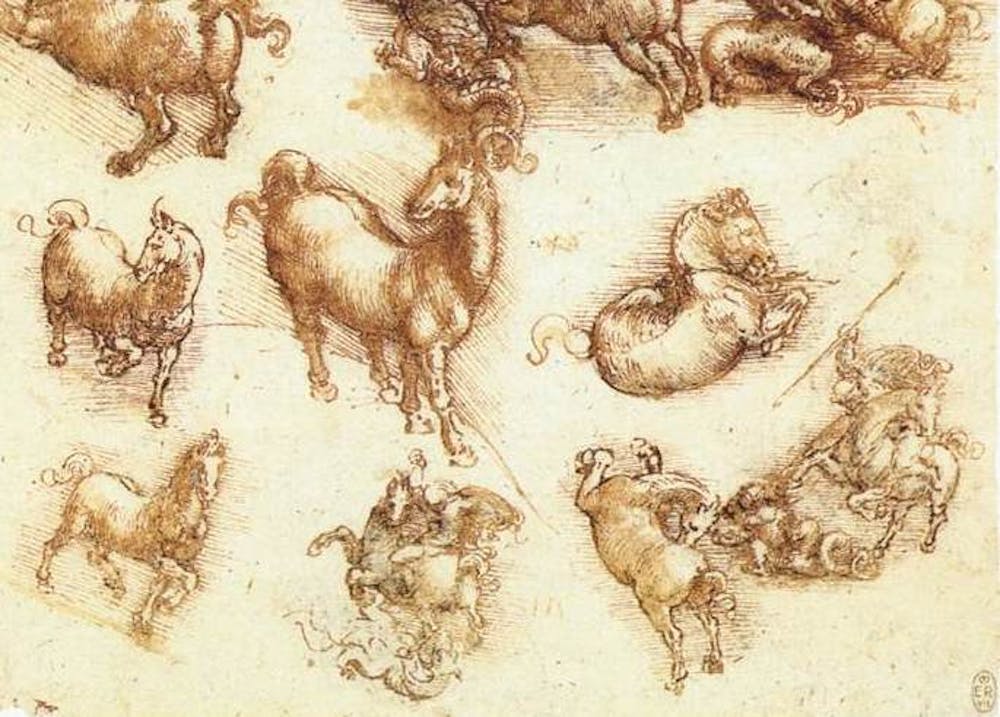
Horses were among the animals Leonardo most frequently sketched.
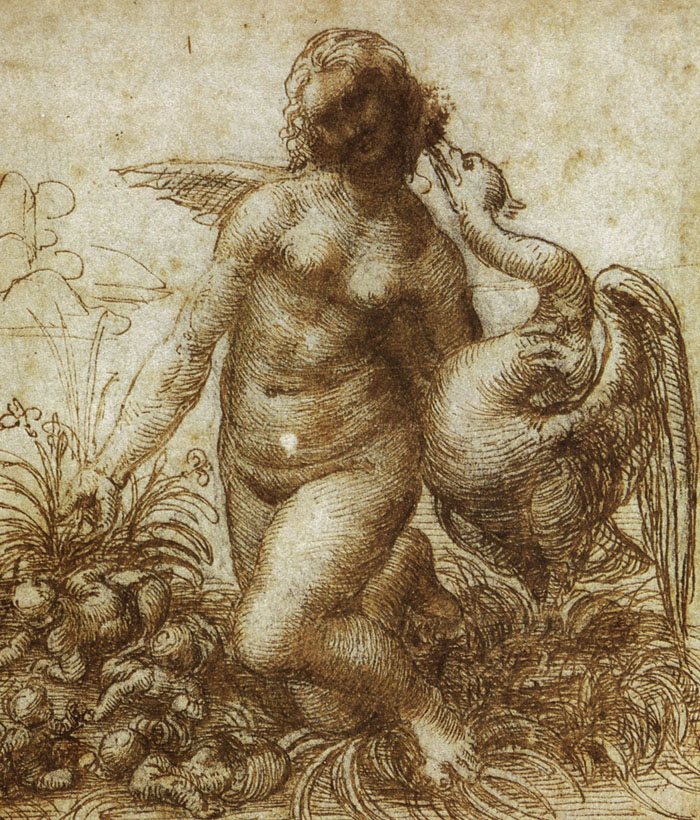
Animals proliferate in Leonardo’s visual art. In his sketches we see horses run, trot, rear up on back legs, fall. Birds, bats and insects extend their wings. Cats stretch, wrestle and lounge. Lions roar. Bears, dogs, crabs, rhinoceroses quietly stand or walk. Beetles and ants bend their appendages.
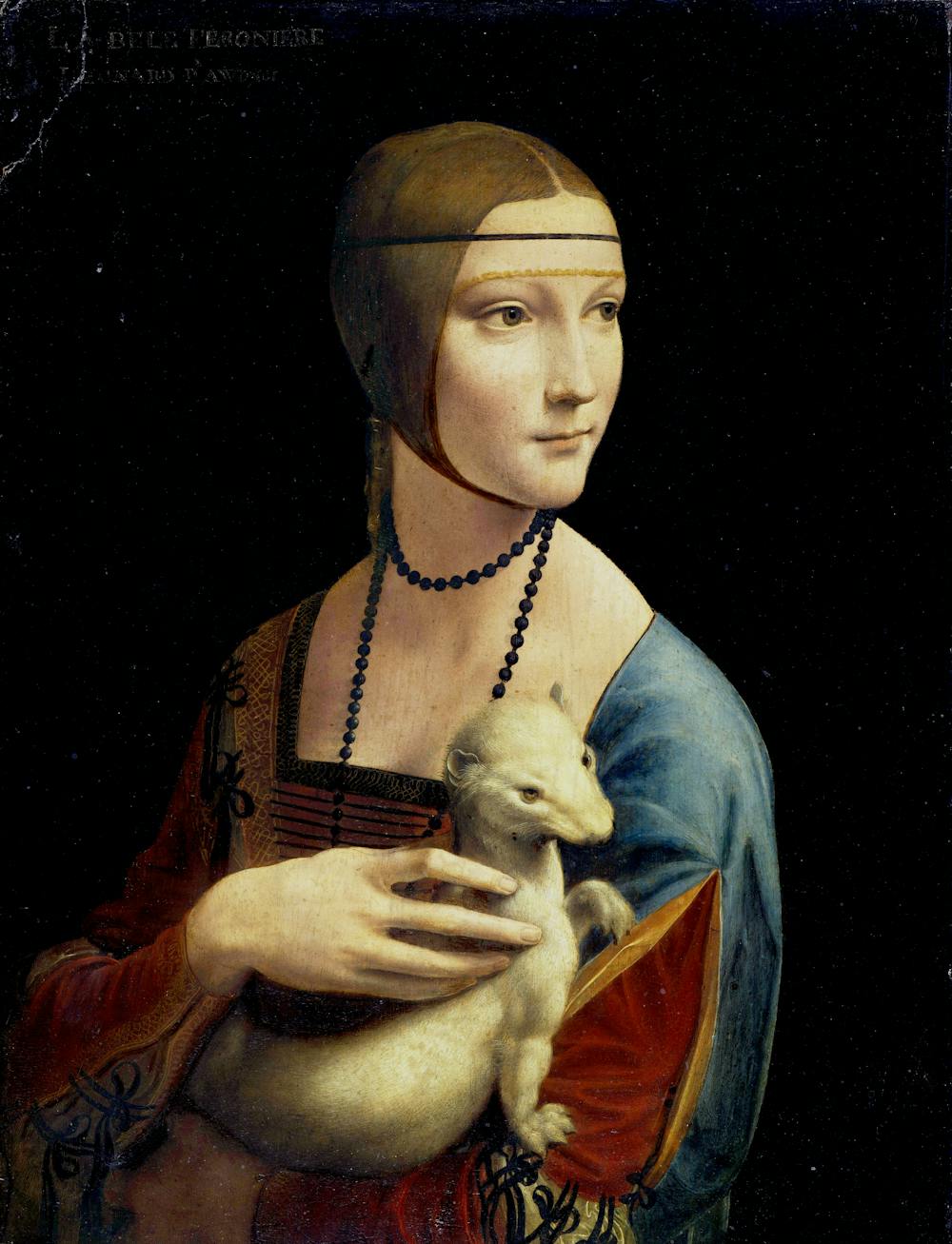
‘The Lady with an Ermine (Portrait of Cecilia Gallerani)’
All these animals are present in his writing, too, joined by an ark-load more: domesticated, wild, local, exotic, mythical (dragons!) and imaginary (sea-monsters!). Leonardo’s depictions of animals emerge not only as forces that teach us about ourselves and challenge our sense of human primacy, but as powerful, creative forces, on their own terms.
Leonardo chipped away at the walls between “us” and “them” by placing all life on a level field, all things as micro-reflections of a macro-whole. And as he envisioned in his terrifying visual and verbal depictions of catastrophic deluges and global disasters, we’re all in this together.
Israel's attempt at a moon landing failed at the last minute on Thursday when the craft suffered an engine failure as it prepared to land and apparently crashed onto the lunar surface.
"We didn't make it, but we definitely tried," project originator and major backer Morris Kahn said in a live videocast from mission control near Tel Aviv.
"I think that the achievement of getting to where we got is really tremendous, I think we can be proud," he said.
During the broadcast, control staff could be heard saying that engines meant to slow the craft's descent and allow a soft landing had failed and contact with it had been lost.
"We are on the moon but not in the way we wanted," one unidentified staffer said.
"We are the seventh country to orbit the moon and the fourth to reach the moon's surface," said another.
Only Russia, the United States and China have made the 384,000-kilometre (239,000-mile) journey and landed safely on the Moon.
"If at first you don't succeed, you try again," said Israeli Prime Minister Benjamin Netanyahu from the control room, where he had been watching along with US Ambassador to Israel David Friedman.
"We reached the moon but we'd like to land more comfortably," he added. "That will be for the next attempt."
The 585-kilogramme (1,290-pound) unmanned spacecraft named Beresheet, which means "Genesis" in Hebrew, resembles a tall, oddly shaped table with round fuel tanks under the top.
Israeli NGO SpaceIL and state-owned Israel Aerospace Industries (IAI), the project's two main partners, have described it as the "world's first spacecraft built in a non-governmental mission".
Khan, a philanthropist and chairman of SpaceIL, put up $40 million of the project's $100 million budget.
Other partners who joined later are from "the private sector, government and academia," according to the IAI website.
Just before the landing attempt Netanyahu said that he was thinking about initiating a national space project.
"I am seriously considering investing in a space programme," he said in the webcast.
"It has national implications for Israel and implications for humanity."
The country's president, Reuven Rivlin, viewed the broadcast with 80 middle school space buffs at his official Jerusalem residence, his office said in a statement.
"We are full of admiration for the wonderful people who brought the spacecraft to the moon," he said after the crash. "True, not as we had hoped, but we will succeed in the end. This is a great achievement that we have not yet completed."
AFP /Israel's first lunar mission
Although the journey is 384,000 kilometres, Beresheet will have travelled a total of 6.5 million kilometres due to a series of orbits.
It was launched from Cape Canaveral in Florida on February 22 with a Falcon 9 rocket from Elon Musk's private US-based SpaceX company.
Its speed has reached 10 kilometres per second, (36,000 kilometres per hour).
The one-way trip was to have included an attempt to measure the lunar magnetic field, which would have helped understanding of the moon's formation.
- Google prize -
The project began as part of the Google Lunar XPrize, which in 2010 offered $30 million in awards to encourage scientists and entrepreneurs to come up with relatively low-cost moon missions.
Although the Google prize expired in March without a winner, Israel's team pledged to push forward.
AFP / Sabrina BLANCHARD On the Moon
The Israeli mission came amid renewed global interest in the moon, 50 years after American astronauts first walked on its surface.
China's Chang'e-4 made the first-ever soft landing on the far side of the moon on January 3, after a probe sent by Beijing made a lunar landing elsewhere in 2013.
US President Donald Trump's administration announced in March it was speeding up plans to send American astronauts back to the moon, bringing forward the target date from 2028 to 2024.
India hopes to become the next lunar country in the spring with its Chandrayaan-2 mission. It aims to put a craft with a rover onto the moon's surface to collect data.
Japan plans to send a small lunar lander, called SLIM, to study a volcanic area around 2020-2021.
The United States remains the only country to have walked on the moon, with 12 astronauts having taken part in six missions between 1969 and 1972.
A collaborator of WikiLeaks founder Julian Assange was arrested Thursday in Ecuador while trying to flee to Japan, the South American country's interior minister said.
Maria Paula Romo did not identify the person but told Sonorama radio he was very close to Assange, who was arrested Thursday in London on a US extradition request after spending seven years in the Ecuadoran embassy there.
Channel Teleamazonas identified him as Ola Bini, a software developer focused on privacy, security and cryptography, but did not name its source.
Earlier Thursday, the minister had linked the collaborator with alleged attempts to destabilize the government of President Lenin Moreno.
He "has been detained simply for investigation purposes," she said, adding he had taken foreign trips with former Ecuadoran foreign minister Ricardo Patino, who gave political asylum to Assange in 2012.
"We have sufficient evidence that he was collaborating in attempts to destabilize the government," she said.
Romo's announcement followed the arrest of Assange earlier Thursday.
British police moved in after Ecuador pulled its asylum for Assange and cancelled his citizenship, granted in 2012.
He had been living in the embassy, fearing arrest, but the Ecuadoran government says that Assange "repeatedly violated" the conditions of his protection.
The US Justice Department said Assange was being charged with a computer hacking conspiracy relating to his work with former US intelligence analyst Chelsea Manning in March 2010.
Daily life aboard the International Space Station moves fast. Really fast. Traveling at approximately 17,000 miles per hour, 300 miles above the Earth, astronauts watch 16 sunrises and sunsets every “day” while floating around in a box with a handful of people they depend on for survival.
One need look no further than Hollywood blockbusters like “The Martian,” “Gravity” and “Interstellar” for futuristic visions of life beyond Earth as we venture longer and deeper into outer space. But what about the human body’s response to real-life spaceflight – what are the health effects? Will space travelers age at different rates than those of us on Earth? Just how adaptable to the space environment are we?
Certainly these are concerns for NASA. How space travel and long-duration missions might change the human body, and whether those changes are permanent or reversible once astronauts return to Earth, is largely unknown. The opportunity to explore these intriguing questions arose with identical twin astronauts Scott and Mark Kelly.
In November of 2012, NASA selected astronaut Scott Kelly for its first one-year mission. At a press conference not long thereafter, it was Scott who hinted that that this mission might provide the chance to compare the impact of space living on his body with his Earth-dwelling identical twin brother, Mark Kelly, who had also been an astronaut and former Navy test pilot. Remarkably, the Kelly twins were individuals of similar “nature (genetics) and nurture (environment),” and so the perfect space experiment was conceived – featuring “space twin and Earth twin” as the stars. Scott would spend a year in space aboard the International Space Station, while his identical twin brother, Mark, would remain on Earth.
The NASA TWINS Study represents the most comprehensive view of the human body’s response to space flight ever conducted. Results will guide future studies and personalized approaches for evaluating health effects of individual astronauts for years to come.
As a cancer biologist at Colorado State University I study the impact of radiation exposure on human cells. As part of the TWINS Study, I was particularly interested in evaluating how the ends of the chromosomes, called telomeres, were altered by a year in space.
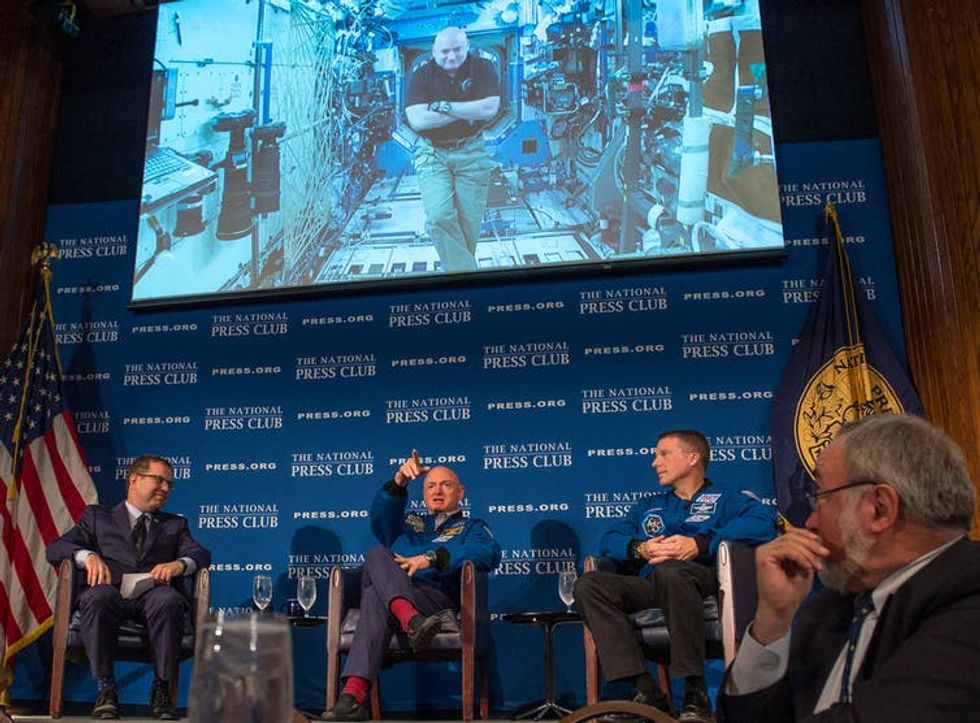
One day before astronaut Scott Kelly reaches the six-month mark in space, he talks live from onboard the ISS with John Hughs, left, his twin brother Mark Kelly and Astronaut Terry Virts, right.
NASA put out a call and selected 10 peer-reviewed investigations from around the country for the TWINS Study. Studies included molecular, physiological and behavioral measures, and for the first time ever in astronauts, “omics”-based studies. Some teams evaluated the impact of space on the genome – the entire complement of DNA in a cell (genomics). Other teams examined which genes were turned on and producing a molecule called mRNA (transcriptomics). Some studies focused on how chemical modifications – which do not alter the DNA code – affected the regulation of the genes (epigenomics). Some researchers explored the proteins produced in the cells (proteomics), whereas others scrutinized the products of metabolism (metabolomics).
There were also studies examining how the space environment might alter the microbiome – the collection of bacteria, viruses and fungi that live in and on our bodies. One investigation examined the immune response to the flu vaccine. Other teams searched Scott’s biological samples for biomarkers of atherosclerosis and upward fluid shifts in the body due to microgravity, which can affect vision and cause headaches. Cognitive performance was also evaluated using computer-run cognition tests specifically designed for astronauts.
More than 300 biological samples – stool, urine and blood – were collected from the twins at multiple times before, during and after the one year mission.
The Kelly twins are without a doubt one of the most profiled pairs – on or off our planet. They are also one of the most interviewed. One question often asked is whether Scott will return from space younger than Mark – a situation reminiscent of “Interstellar” or Einstein’s so-called “Twin Paradox.” However, because the ISS is not traveling anywhere near the speed of light relative to us, time dilation – or the slowing of time due to motion – is very minimal. So any age difference between the brothers would only be a few milliseconds.
Telomeres are the protective sections of DNA at the tip of the chromosomes. As people age the telomeres get shorter.
Even so, the question of spaceflight-associated aging and the accompanying risk of developing age-related diseases like dementia, cardiovascular disease and cancer – during or after a mission – is an important one, and one that we aimed to address directly with our study of telomere length.
Telomeres are the ends of chromosomes that protect them from damage and from “fraying” – much like the end of a shoestring. Telomeres are critical for maintaining chromosome and genome stability. However, telomeres naturally shorten as our cells divide, and so also as we age. The rate at which telomeres shorten over time is influenced by many factors, including oxidative stress and inflammation, nutrition, physical activity, psychological stresses and environmental exposures like air pollution, UV rays and ionizing radiation. Thus, telomere length reflects an individual’s genetics, experiences and exposures, and so are informative indicators of general health and aging.
Telomeres and aging
Our study proposed that the unique stresses and out-of-this-world exposures the astronauts experience during spaceflight – things like isolation, microgravity, high carbon dioxide levels and galactic cosmic rays – would accelerate telomere shortening and aging. To test this, we evaluated telomere length in blood samples received from both twins before, during and after the one year mission.
Scott and Mark started the study with relatively similar telomere lengths, which is consistent with a strong genetic component. Also as expected, the length of Earth-bound Mark’s telomeres was relatively stable over the course of the study. But much to our surprise, Scott’s telomeres were significantly longer at every time point and in every sample tested during spaceflight. That was exactly the opposite of what we expected.
Furthermore, upon Scott’s return to Earth, telomere length shortened rapidly, then stabilized during the following months to near pre-flight averages. However, from the perspective of aging and risk of disease, he had many more short telomeres after spaceflight than he did before. Our challenge now is to figure out how and why such spaceflight specific shifts in telomere length dynamics are occurring.
Our findings will have relevance to earthlings as well, since we all grow old and develop age-related conditions. These TWINS Study results may provide new clues into the processes involved, and thereby improve our understanding of what we might do to avoid them or extend health span.
The long-term health effects of long duration spaceflight are yet to be determined, but the TWINS Study represents a landmark step in humankind’s journey to the moon, Mars and beyond…and to making science fiction science fact.
US President Donald Trump said Thursday that he will attend ceremonies to mark the 75th anniversary of the D-Day landings in Normandy that broke Nazi Germany's grip on France.
"I'll be there," he told reporters in the White House.
Operation Overlord was launched on June 6, 1944, sending waves of US and other Allied soldiers onto the French coast where they dislodged German forces and began the liberation of France and the eventual battle for Germany itself, ending in defeat for the Nazis.
The Normandy trip will add to a relatively busy summer of international travel for Trump, who is also expected to go to Japan twice and to a G7 summit in August in Biarritz, France.





 AFP / NARINDER NANU
 AFP / NARINDER NANU
  AFP / NARINDER NANU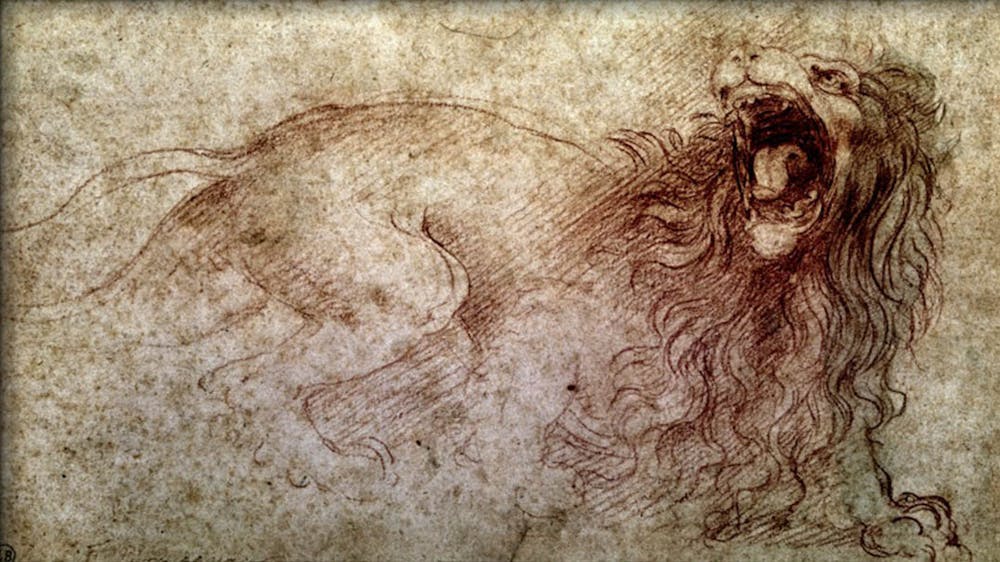


 AFP /
AFP / AFP / Sabrina BLANCHARD