Former FBI official Phil Mudd explained why European leaders have ample reason to distrust the United States at the G20 summit in the wake of President Donald Trump's relationship to Russia.
That lack of confidence is likely to create a cloud over the G20 Summit in Argentina, the CNN analyst argued Friday evening.
"If you're sitting in the table over the next day or so in those meetings and have a conversation about Ukraine and what has been happening in terms of Russia's confrontation with Ukrainians, if you're British or German and look across the table and see President Trump, how do you trust him?" Mudd mused.
That reaction, he added, would be "based on not only this week, but what you have seen over the past year-and-a-half-plus."
"Are you going to say, 'this is the tradition of NATO, we're in this together and we have to contain the Russians, formerly the Soviets?" the intelligence expert said. "Or you do you say 'the counterpart who has been with us since World War II and before has more interest in cultivating Vladimir Putin than cultivating us?'"
"If I were in Britain or Germany, I would say, 'I don't know the answer to that question.'" Mudd concluded. "I wish I did, but I don't."
Donald Trump had a dream of building a golden 100-story tower overlooking the Kremlin in Moscow, the crowning achievement of his global real estate empire.
" Russia is one of the hottest places in the world for investment," he said in 2007.
"We will be in Moscow at some point."
But his pursuit of the Trump Tower logo gleaming over the Russian capital now threatens his presidency.
On Thursday, his former lawyer Michael Cohen admitted in a court filing that they pursued the project throughout the first half of 2016 via contacts with Russian President Vladimir Putin's office, even after the real estate tycoon had captured the Republican nomination for the US presidency.
Felix Sater, another Trump associate who worked with Cohen on the project, told Buzzfeed and other media that they even planned to gift the $50 million penthouse to Putin -- who is now accused by US intelligence of helping Trump win the 2016 election.
"All the oligarchs would line up to live in the same building as Putin," Sater said.
Cohen's admission contradicted previous claims he, Trump and Trump's family made that they had no business relations with Russia at the time.
Trump on Thursday branded his onetime top assistant an outright liar. Still, the billionaire added, pursuing a deal with Russians during the 2016 presidential race wasn't illegal.
"There was a good chance that I wouldn't have won, in which case I would have gotten back into the business, and why should I lose lots of opportunities?" Trump said.
- 30-year Moscow dream -
Trump was already one of the titans of New York real estate, known for his gold-trimmed flagship Trump Tower on Fifth Avenue, when he got the Moscow bug in 1986 in a lunch with Soviet ambassador Yuri Dubinin.
"Dubinin's daughter, it turned out, had read about Trump Tower and knew all about it," Trump recalled in his book "The Art of the Deal."
"One thing led to another and now I'm talking about building a large luxury hotel, across the street from the Kremlin."
He traveled with then-wife Ivana to view potential sites the following year.
"It was an extraordinary experience," he wrote. "I was impressed with the ambition of the Soviet officials to make a deal."
The tycoon was bogged down over the next decade by multiple bankruptcies in his Atlantic City casinos.
By 1997, he was back at the idea, discussing a possible casino project with rising political star General Alexander Lebed.
He knew there was money and appreciation of his name: he was already selling Trump-branded condominiums in Florida to rich Russians.
- 'I really like Putin' -
In the mid-2000s, Trump's son Donald Jr. made a half-dozen trips to Russia. One idea was to renovate an old Moscow hotel and rebrand it in the name of Trump's daughter Ivanka, who was creating her own line of jewelry.
Yet Russia was hard, Donald Jr. said in a 2008 speech.
"As much as we want to take our business over there, Russia is just a different world ... It is a question of who knows who, whose brother is paying off who. ... It really is a scary place."
Still, with the help of Russia-born Sater, they kept pushing, and Trump was enamored with Russia's strongman leader.
"I really like Vladimir Putin. I respect him. He does his work well. Much better than our Bush," he told Russian journalists.
The US financial crisis then intervened. But by 2013 Trump was back, taking his Miss Universe pageant to Moscow where he would try to advance new property projects.
His partner in the pageant was Moscow mall developer Aras Agalarov, then launching into the massive riverside Crocus City development.
“TRUMP TOWER-MOSCOW is next," Trump tweeted after the show.
By then Trump was already seriously mulling a White House run. He didn't put his Russia plans on hold for it.
"The Russian market is attracted to me," he told the US magazine Real Estate weekly about his 2013 visit.
"I have a great relationship with many Russians, and almost all of the oligarchs were in the room."
- Former spy was Moscow intermediary -
Court filings Thursday show that Cohen and Sater avidly pursued a new project through early 2016, with their eyes on well-connected partners and Russian bankers. Their main intermediary for contacts, according to Buzzfeed, was a former senior Russian military intelligence officer.
The court filings said Cohen kept Trump and his children up-to-date on the project.
In May 2016 Sater passed on to Cohen an invitation to attend a Russian economic forum the next month from a top Putin aide.
"The entire business class of Russia will be there as well," Sater wrote.
But Cohen never went.
On Friday Trump continued to play it all down, saying the Cohen admission was part of a political "witch hunt" against him.
"Against all odds, I decide to run for President & continue to run my business-very legal & very cool, talked about it on the campaign trail," he tweeted.
"Lightly looked at doing a building somewhere in Russia. Put up zero money, zero guarantees and didn't do the project."
President Donald Trump has tried to claim renegotiating the North American Free Trade Agreement as a monumental achievement of his administration, but Canadian Prime Minister Justin Trudeau coldly undermined the president's ploy on Friday at a signing ceremony for the new deal.
As a candidate, Trump had decried NAFTA — signed by his opponent's husband — as the "single worst deal ever approved." He even threatened to pull out of the deal entirely.
Once in office, Trump tried to play hardball with his negotiating partners, but eventually, representatives from Canada, the United States and Mexico came up with some relatively minor changes to NAFTA that leave the basic structure of the deal in place.
Obviously, the fact that only minor changes were made isn't satisfying for Trump, so he has taken to denying reality, saying that he's gotten rid of NAFTA, and dubbing the new deal the USMCA (United States, Mexico, and Canada.) He appears to hope that this new name will dupe his followers.
But instead of adopting Trump's nakedly transparent branding strategy on Friday, Trudeau referred to the deal in his remarks as the "new North American Free Trade Agreement," as the LA Times pointed out. This was a subtle but pointed rebuke to Trump.
Trudeau also brought up the recent announcement by General Motors that the company will be closing several factories in both the U.S. and Canada, calling it a "heavy blow." Trump declined to mention the development at all, which has clearly embarrassed the man who promised during his campaign that no factories would close under his watch. Trump's economic adviser Kudlow said that the administration believed that changes to NAFTA would make this type of closures unnecessary, but the management at GM apparently disagrees.
And the Canadian prime minister hit Trump on one of the most strained features of the countries' relationship: Trump's tariffs.
"Donald ... we need to keep working to remove the tariffs on steel and aluminum between our countries,” Trudeau said.
Overall, the performance laid waste to the farce that Trump is a master dealmaker. His "new deal" is hardly new, is failing to live up to his promises, and leaves many problems of his own making left to be solved. It hasn't even been approved by Congress yet, and its fate remains uncertain.
And while Trudeau was standing in front of Trump, he decided to emphasize the American president's failures.
Saudi-owned Al Arabiya TV reported that U.S President Donald Trump and Saudi Crown Prince Mohammed bin Salman had a friendly meeting on the sidelines of the G20 summit in Buenos Aires on Friday.
The television channel did not give further details.
Reporting By Ali Abdelaty; Editing by Andrew Heavens
Americans were stunned when former Trump "fixer" and personal attorney Michael Cohen revealed in a plea agreement with Robert Mueller on Thursday that Donald Trump and his real estate company had been negotiating with Russia for a Trump Tower in Moscow as recently as June of 2016, when he was the GOP's presumptive nominee for president.
President Trump had insisted all throughout the campaign that he had no business dealings in Russia. Now, to defend those dealings, he took to Twitter early Friday morning, calling them "very legal & very cool":
He did not, in fact, talk about Trump Tower Moscow on the campaign trail.
People on social media couldn't help but mock the beleaguered and embattled President for yet another lie – and a bad one at that –COOL with hilarious results. Take a look:
G20 powers geared for summit talks on Friday in a deserted Argentine capital, after an incident-packed buildup dominated by controversies pitting US President Donald Trump against Russia and his combative stance on trade and climate change.
With Buenos Aires on security lockdown, Trump along with the Russian and Chinese presidents were among the world leaders gathered against a backdrop of tensions surrounding also the Ukraine conflict and relations with Saudi Arabia.
On the G20 margins, Trump scored one victory for his "America First" agenda with the signing of a successor to the North American free trade pact NAFTA, the US-Mexico-Canada Agreement (USMCA).
Although the new pact inherits key features from the old one, Trump has declared it a victory for the US workers he claims were cheated by NAFTA and on Friday called it the most "modern and balanced agreement in history."
"This is a model agreement that changes the trade landscape forever," Trump said at the signing ceremony in Buenos Aires.
The landscape was more rocky on the Russia front. Trump abruptly cancelled a planned meeting with President Vladimir Putin, citing Russia's recent seizure of three Ukrainian ships, but remains billed to dine with President Xi Jinping on Saturday after igniting a trade war with China.
The US president began Friday with another Twitter blast defending his past business dealings in Russia, a day after his ex-lawyer pleaded guilty to lying to Congress in the context of an investigation into allegations that Putin's government meddled to help elect Trump to the White House.
If Ukraine was the stated reason to cancel his talks with Putin, the latest revelations in the probe showed that Trump cannot escape the lengthening shadow of what he again called the "witch hunt" at home when he comes to international fora like the G20.
Putin jetted into Buenos Aires Friday morning, and the Kremlin said it "regrets" Trump's decision to scrap the meeting.
Amid the Ukraine crisis, European Union president Donald Tusk said he was "sure" that the EU would roll over its sanctions on Russia next month. And on the G20 front, he admitted the world was undergoing a "difficult moment" overall.
Protesters have vowed a mass rally later Friday as Argentina endures a crippling economic crisis, underlining security concerns after recent football violence forced the relocation of a showpiece final to Spain.
But the government is vowing zero tolerance of any unrest, and declared a public holiday for Friday, shuttering the metro system and keeping the normally choked roads largely free of traffic.
"The summit seems a nonsense to me," call center worker Agustina Vianello, 25, told AFP.
"We are in a bad situation, and we're putting a pile of money into this? Everything's high security. It's strange to see everything so empty," she said.
- Trade, China -
Trump has cast his talks Saturday with Xi as a deadline for China to cave on his key trade concerns, including access for US companies and protection of their intellectual property.
The US leader has slapped $250 billion in tariffs on the world's second-biggest economy and threatened more to come in January.
German Chancellor Angela Merkel meanwhile was to miss the summit's opening after her plane was forced to make an emergency landing in Cologne due to what she called a "serious" technical problem.
She eventually took off on a flight from Madrid bound for Buenos Aires on Friday.
Her temporary absence could complicate French President Emmanuel Macron's attempts to build a European front against Trump at the G20.
Macron on Thursday rejected those who wish to confront economic challenges by being "bellicose, isolationist and closing down borders."
Among the other leaders at the summit will be Saudi Crown Prince Mohammed bin Salman, the focus of tensions over the murder of one of his prominent critics in October.
Macron said he would raise the killing of journalist Jamal Khashoggi with the crown prince on the sidelines of the summit.
- Climate dispute -
G20 sources said climate change was emerging as the biggest stumbling block to agreement on a joint communique when the summit concludes on Saturday.
Trump has yanked the United States out of the landmark Paris climate accord. His opposition to collective action stands in defiance of scientists' increasingly urgent warnings that policy action is desperately needed to counter the climate threat.
With a major UN meeting on climate change starting next week in Poland straight after the G20, UN chief Antonio Guterres said in Buenos Aires that "this is a make-it-or-break-it moment."
US objections on climate and trade have seen two major summits this year, of the Group of Seven democracies and the Asia-Pacific Economic Cooperation forum, end without the once-routine statements.
"Will we even have a (G20) communique? It really is an open question," said former Canadian negotiator Thomas Bernes, a senior fellow at the Ontario-based Centre for International Governance Innovation.
Former US ambassador Christopher Hill told MSNBC on Friday that Trump has so "diminished" the presidency that no one at the G20 summit in Argentina takes him seriously anymore.
"I think what we're really seeing is a much diminished American presidency," Hill said, pointing to the president's many problems, from his former lawyer Michael Cohen's cooperation with special counsel Robert Mueller to losing control of Congress.
"It's a sense that this is a president who simply has never mastered his brief. He doesn't seem to understand these issues," Hill said, casting doubt on the president's ability to do his job.
"All he can do is continue to be a disrupter. The world, they don't believe anything he says," he added. "I don't think people are taking him seriously right now, and I think this is the real problem moving forward."
Russian President Vladimir Putin will have a brief impromptu meeting with U.S. President Donald Trump in Argentina just as he will with other leaders at the G20 summit, RIA news agency cited Kremlin spokesman Dmitry Peskov as saying on Friday.
Trump on Thursday abruptly canceled a planned meeting with Putin in Argentina after Russia captured three Ukrainian navy vessels and their crews off the coast of Crimea.
(Reporting by Maria Tsvetkova; Writing by Polina Nikolskaya; Editing by Christian Lowe and Tom Balmforth)
U.S. President Donald Trump, Canada’s Prime Minister Justin Trudeau and Mexico’s President Enrique Pena Nieto signed a new trade agreement on Friday known as the United States-Mexico-Canada Agreement (USMCA).
Before he signed, Trudeau told Trump the two needed to keep working together to remove tariffs on steel and aluminum.
Reporting by Roberta Rampton; Writing by Caroline Stauffer
Among the more than 7,000 people who are part of the migrant caravan – a group of Central American refugees fleeing extreme violence in their home countries – a smaller group of about 80 LGBTQ individuals has broken off from the larger group. These individuals decided to travel separately, in part, due to discrimination they faced from fellow travelers.
They will face a unique set of challenges when they arrive at the U.S. border.
LGBTQ asylum-seekers coming to the U.S. face a dramatically higher risk of violence due to homophobia and transphobia, particularly in immigration detention facilities, where they will likely be sent upon their arrival. A 2013 study by the Government Accountability Office found that transgender detainees account for 1 of every 5 confirmed sexual assaults in ICE custody, even though only 1 out of 500 detainees is trans.
My own research has focused on another hurdle LGBTQ people face when seeking asylum: proving their gender or sexual identity.
Gay? Prove it
Asylum law in the United States allows individuals to seek asylum due to persecution or well-founded fear of future persecution on account of race, religion, nationality, political opinion or membership in a particular social group.
Historically, LGBTQ people were deemed “psychopathic personalities” and statutorily barred from entering the country. It was only 1990 when that law was finally repealed and the Board of Immigration Appeals first declared LGBTQ people eligible for asylum as members of a “particular social group.”
However, in order to qualify under a “particular social group,” you must prove your membership in that group. For LGBTQ people, this means they must prove to a judge or asylum officer that they really are LGBTQ.
So how exactly does someone prove this?
This is precisely the question I have sought to answer in my research.
Gay enough for the courts?
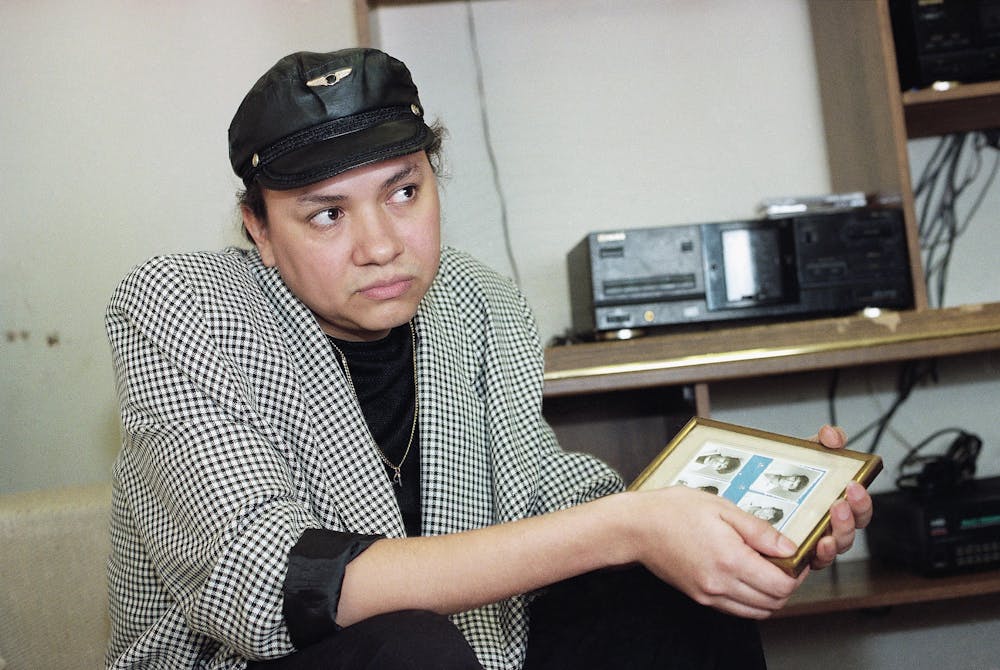
Jose Cruz, a gay man from El Salvador, sits on a bed in his apartment, Oct. 25, 1996, in Hempstead, New York. He was granted asylum in the United States based on his sexual orientation.
Throughout the 1990s and into the early 2000s, courts often used gendered stereotypes – the effeminate gay man or the butch lesbian – to determine a person’s sexuality in LGBTQ asylum claims. As one immigration judge declared, “Neither [his] dress, nor his mannerisms, nor his style of speech give any indication that he is a homosexual.”
My research suggests that the use of such stereotypes to discredit claimants has decreased substantially in recent years, especially since the Obama administration added new training for new asylum officers on LGBTQ claims. The training directs decision-makers to account for how the asylum-seeker identifies themselves and does not require bodily proof of transgender status, as many other areas of law do.
Questions about claimants’ sexual practices have been used in the past to discern sexuality in asylum claims. Sometimes such questions still find their way into asylum hearings, but appellate courts now routinely strike down decisions that explicitly use sex acts to categorize claimants. U.S. Citizenship and Immigration Services guidelines even state that, “The applicant’s specific sexual practices are not relevant to the claim for asylum or refugee status. Therefore, asking questions about ‘what he or she does in bed’ is never appropriate.”
Instead of relying on stereotypes and sex acts, judges today generally respond positively to stories about how claimants came to realize they were LGBTQ or “different” as proof of their sexual or gender identity. The lawyers I observed typically guided their clients through a series of questions meant to elicit a “coming out” story, of sorts.
Expanding the story
While I would argue that these changes indicate improvement in the asylum process for LGBTQ people, challenges remain.
In the same way that sexual and gender expressions vary across cultures – and even within cultures – identity development also varies across cultural contexts.
This means that not everyone will have a neat, linear story to tell about how they came to a particular gender or sexual identity. Those who do not may find that courts are less likely to find their claims credible.
During my fieldwork I witnessed a gay claimant from rural Ghana struggle to make his claim comprehensible to an immigration judge because his sense of time was different than our own culturally specific understanding of linear progress. For instance, he did not know precisely when his birthday was or how old he was because his tribe did not celebrate yearly birthdays. This caused a string of misunderstandings between the claimant and the judge.
The legal archive is also peppered with claims by trans folks who are told by judges that they should have “come out” publicly and to the court earlier in the process because information about their gender identity was “always” available. However, transitioning – the process of changing one’s gender presentation and sometimes one’s body to be in line with one’s internal gender identity – isn’t always so simple.
Without access to appropriate care, it may not be possible for some individuals to transition the way, and with the speed, they wish. For others, social stigma may mean they live part of their lives as the gender they were assigned at birth for safety, even when that doesn’t match their sense of self. Still others may identify as gender non-conforming in ways that don’t fit the stories about trans people we are used to hearing. Sometimes, cultures do not even clearly distinguish between gay and trans people.
For example, several Latinx asylum-seekers I encountered during my research initially understood themselves as gay, even though by U.S. standards we would likely consider them transgender. Only after becoming immersed in U.S. culture did they eventually come to a trans identity, sometimes well after their asylum claim was complete. But if that transition were to happen while their claim was being decided, they run the risk of courts finding them not credible.
These issues point not only to the ways that the asylum process creates barriers for LGBTQ refugees and defines gender and sexuality in specific ways. They also speak to the way these decisions reflect and shape broader cultural notions of citizenship. Examining these current border skirmishes through the experiences of LGBTQ asylum-seekers helps clarify how gender and sexuality continue to structure our understanding of national belonging and individual worth.
Once an anti-Semitic rumor moved from fringe to the mainstream, it took less than two weeks for violence to erupt. The false allegation that liberal philanthropist George Soros was funding or supporting a caravan of Honduran refugees heading to the U.S. spread wildly from a single tweet posted on Oct. 14.
Along withfar-right memes, that allegation helped motivate both an allegedmail-bomber and a massshooter at a Pittsburgh synagogue. The way these messages traveled across the internet in this short time span is just one example of how extremist messages and memes circulate with incredible speed across mainstream social media platforms.
From our vantage point as researchers of visual and digital communication, memes – short, often image-based forms of communication – are powerful engines of persuasion, even though they can appear innocuous or even humorous. Perhaps the best known examples are LOLCats memes, pairing funny pictures of cats with customizable phrases or sentences. Memes can disseminate information quickly because they invite people to share or remix content with little effort required, making widespread dispersal more likely.
Memes need not be humorous or factual to be functional. All they need to do is attract attention online, which often translates into mainstream media coverage. That makes memes potent tools for distributing disinformation. Moreover, the online and mainstream platforms that amplify memes’ circulation can weaponize false claims and encourage conspiracy theorists – sometimes toward violence.
Memes move conspiracies
Understanding how these messages embolden anti-Semitism and other forms of terrorism involves grappling with how white supremacists use digital media. As we detail in our forthcoming book “Make America Meme Again,” messages and memes weaponized in far-right networks are deft political tools that move swiftly across social and traditional media. Because memes are stealthy political messages that usually offer rebellious or irreverent humor, they can be easily retweeted, shared or even pasted to the side of a van.
Before the dawn of today’s social media network, right-wing extremists were more difficult to find, often gathering in local communities and later discreetly in online forums unknown to the vast majority of internet users. Paranoid, rabid discourses of this ilk still boil around those darker corners of the internet. Today, memes help right-wing extremists communicate with one another and with mainstream audiences.
Soros has been demonized by right-wing activists for years, if not decades. Long before the Pittsburgh attack and the mail bombings, conspiracy theories about him were common on all sorts of right-wing discussion areas – including on Infowars, 4chan, Reddit and Gab. Starting in March 2018, the terms “caravan,” “immigrants” and “Soros” were frequently posted together on Twitter and Facebook. Memes depicting Soros as an evil fascist facilitating an invasion were commonplace.
The alleged mail bomber covered his van with “images and slogans often found on fringe right-wing social media accounts.” But the suspect didn’t find them on radical sites where white supremacists hide. Instead, based on his social media activity, he likely was radicalized in the same place most people look at cute photos of friends’ kids and check up on Aunt Beatrice – Facebook.
By October, discussions of the “caravan of immigrants” had grown beyond social media. Within a week of that Oct. 14 tweet alleging Soros was funding a group of refugees seeking asylum, far-right commentator Alex Jones broadcast the conspiracy on Infowars, to his audience of over 1 million daily visitors.
The conspiracy grew from there, with the video or related images popping up on nearly every platform. Eventually the conspiracy reached hundreds of thousands of potential viewers – including the men who would allegedly become the mail bomber and the synagogueshooter.
The two men may never have known of each other or the other’s plans. But their actions intertwined with a viciously networked conspiracy theory.
Connecting to mainstream media
Once there is enough social media attention on a topic or claim, it may be covered in more traditional news outlets. That can spread the idea even more widely, and lend credence to inaccuracies and lies. Politicians may also notice online discussion and join in, as U.S. Sen. Ted Cruz and a clerk for Texas’ Harris County did with the purported Soros connection to the migrant caravan.
Conspiratorial ideas often become an echo chamber, in which each post draws more attention than the last, generating stronger outrage and escalating the conspiracy. The average user who looks at a conspiratorial meme may not believe its message, but many users may. Even people who don’t believe it initially might come to assume it’s true after seeing an idea several times from different sources. Still others might spread the conspiracy just for amusement in the distress of others.
Demonize, divide, conquer
Memes, tweets and other forms of propaganda are designed to rile up constituents. Scaring voters with purported invasions was one way to infuriate voters as they headed to vote in the midterm elections.
When anti-Semitic, racist and xenophobic ideas spread through social media networks, they can infect a host of mainstream information sources – and make fear and violence more likely. That broadens the picture of a dangerous world from which people need protection. Fear appeals of this sort can influence voting, and even push people to take matters into their own violent hands. Until social media platforms or federal agencies find ways to diminish extremism, the proliferation of far-right memes, videos and texts will continue to imperil the citizenry.
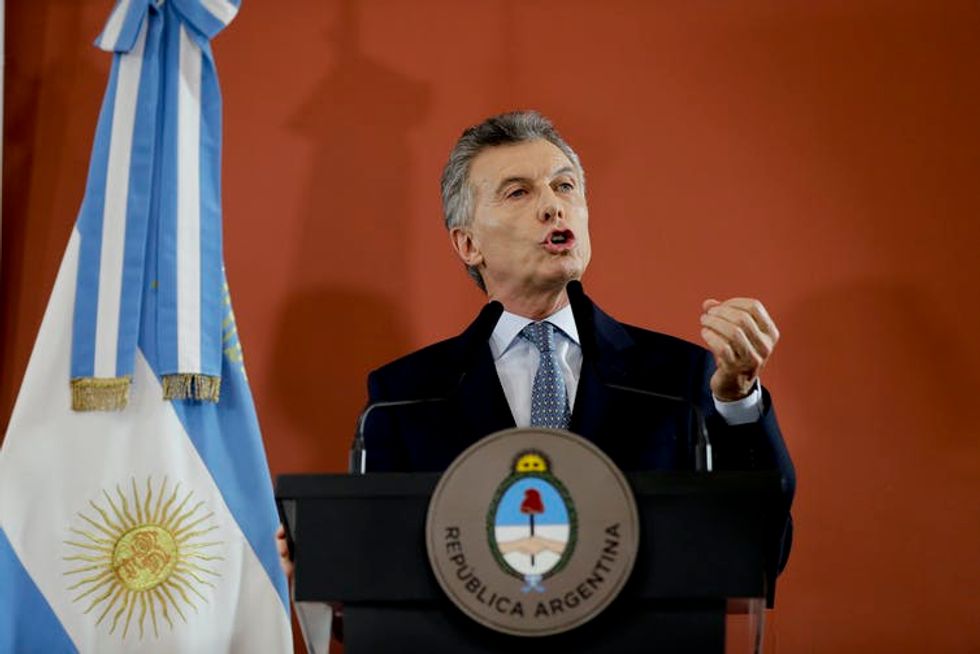
And although their host, Argentine President Mauricio Macri, probably won’t want to talk about the dire state of his country’s economy, heads of state need only use a cash machine to see evidence of it. A U.S. dollar worth just 20 pesos in April today converts into almost double that, making the Argentine currency the world’s worst performer this year.
We’ve been following the ebbs and flows of the Argentine economy for two decades and are currently wrapping up a book on economic and fiscal policy in Argentina, Brazil and Chile. Here’s a quick look at what went wrong and how it could get better.
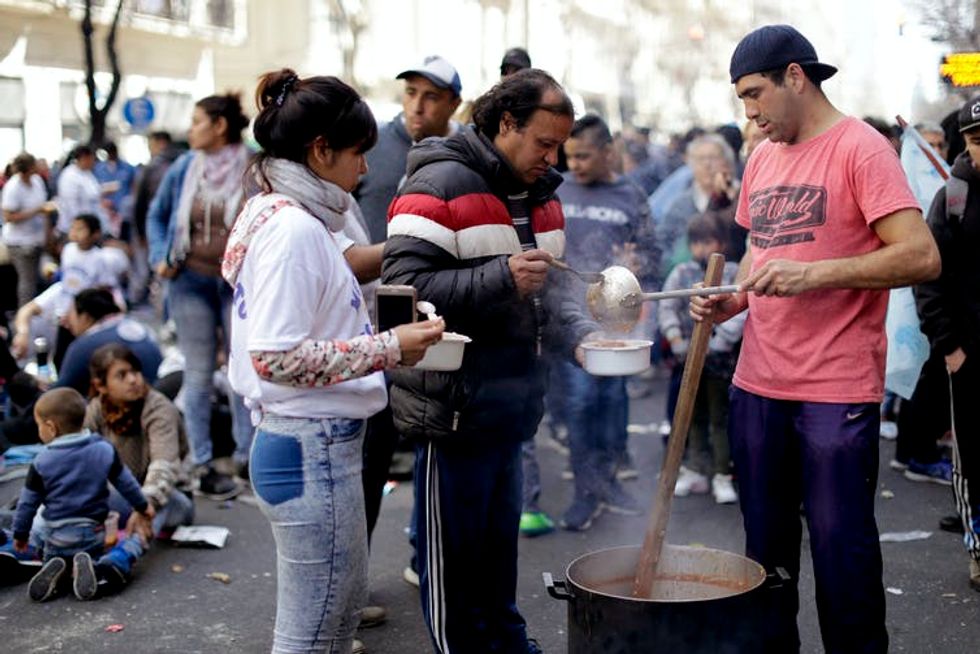
A man serves food at a soup kitchen in Buenos Aires.
For Argentina, it’s more of the same. The country has suffered through many economic crises in recent decades. And pretty much every time, the catastrophic meltdowns ended with some combination of unsustainable national debt, high unemployment, rising poverty rates, looting, bank runs, capital flight and hyperinflation. That in turn set the stage for the next economic crisis.
But it didn’t have to happen this time. Only two years ago, Argentina’s leadership had appeared to learn lessons from the past and were governing the economy pretty effectively. Capital controls helped stabilize the peso and strengthen the financial sector, while prudent government spending helped reduce poverty. Consumer spending grew and unemployment and income inequality fell.
The wrong policies
So when Macri became president at the end of 2015, there was a foundation of beneficial policies in place that supported the government’s coffers – as well as some challenges.
But, instead of pursuing a path of fiscal responsibility to rein in spending and inflation, the center-right Macri decided to cut taxes for businesses and borrowed record amounts in dollars to do so. At the same time, he eliminated the capital controls put in place in 2002.
Unsurprisingly, all of this made the country more vulnerable to a crisis, which began in May when a particularly bad drought – the most expensive in Argentina’s history – dried up important export crops, such as soybeans and corn. Argentina is the world’s third-largest exporter of both.
Foreign investors, concerned about the government’s ability to meet its obligations, began dumping short-term central bank debt. Meanwhile Argentines, acutely aware of any whiff of economic trouble, began to get rid of their pesos too.
Argentina immediately drained $15 billion of the IMF’s money trying to stabilize the peso.
It succeeded, but, to keep the peso from falling further, the central bank has been selling tens of billions of pesos worth of bonds at yields as high as 70 percent – the highest in the world.
Although that has staunched the bleeding, the wound remains deep. The peso is hovering near a record low, and economists recently revised their forecast for 2018 inflation to 47.5 percent, double their estimate in April. To make matters worse, the IMF expects the Argentine economy to shrink 1.9 percent in 2019 after contracting an estimated 2.6 percent this year.
Fortunately, there’s some room for optimism. Finding its way out of this mess, however, depends on whether Argentina follows through on the IMF’s condition to eliminate the budget deficit by 2019.
And whether it adopts other prudent policies such as increasing public revenue by re-instituting export taxes and putting in place currency controls to ensure a stable peso.
The prolonged transition period – currently one of the the world’s lengthiest – has given Mexicans a preview of what presidential leadership will look like under López Obrador: aggressive.
Since its July 1 general election, Mexico has effectively been run by parallel governments with very different agendas. President Enrique Peña Nieto, Mexico’s conservative and highly unpopular outgoing leader, has all but disappeared from the public eye, even as tensions with the United States over the treatment of Central American migrants run high.
Meanwhile, López Obrador has been increasingly visible, offering asylum and temporary work permits to refugees, pushing his legislative priorities and deciding the fate of major infrastructure projects – though, strictly speaking, he cannot follow through on any of these decisions until after his inauguration on Saturday.
The president-elect’s disregard for constitutional restrictions has many political analysts in the country, myself included, concerned about how he will use his executive power once in office.
A regressive transformation of Mexico
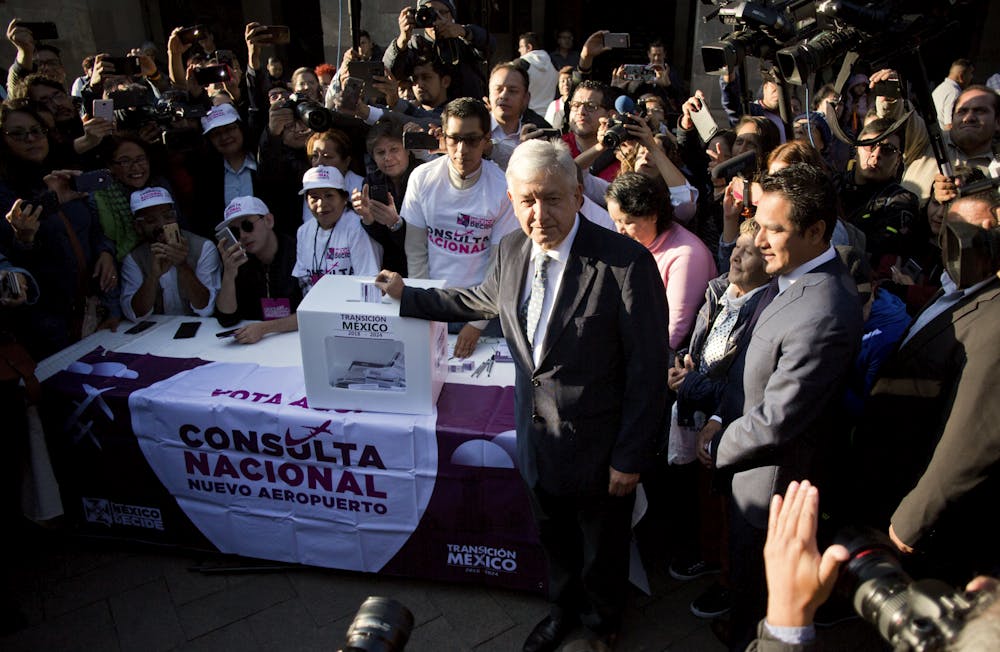
Since July, López Obrador has unilaterally called two “people’s polls,” circumventing a constitutional requirement that all popular referenda be approved by the Supreme Court and administered by the national election authority.
Seventy percent of the nearly 1.1 million people who cast their ballots wanted to scrap the $13.3 billion project, which López Obrador had harshly criticized on the campaign trail.
Opposition lawmakers and protesters retorted that Mexican law requires a 40 percent voter turnout for a popular referendum to be considered binding. López Obrador polled 1.1 million people in a country of 130 million.
Nonetheless, the president-elect immediately announced the termination of the airport project in favor of revamping an unused military airport north of the capital.
As engineers, academics and the business sector also denounced the decision to scrap the new airport, the Mexican peso plummeted amid investor concern about national stability.
López Obrador responded to criticism with a populist evasion, saying simply that “the people are wise.”
A ‘national consultation’ on the fate of Mexico City’s new airport polled just 1.1 million people in 535 towns.
A month later, López Obrador’s transitional government called another unconstitutional referendum to decide the fate of another major infrastructure project. In late November, 900,000 voters determined that the Mexican government should build the “Maya Train,” a 932-mile rail line that would connect five southern Mexican states and the Yucatan Peninsula.
Not consulted prior to the referendum: the Mayan communities traversed by the proposed railroad and who, by law, must be included in all decision-making that impacts their indigenous territories.
Nonetheless, López Obrador has declared that the rail project will be completed by the end of his six-year term.
Mexico’s powerful presidency
López Obrador’s misuse of direct democracy to expand his executive powers while not even president sends worrisome signals about how he will govern Mexico.
The Mexican presidency is already an enormously powerful office. It was designed that way in the 1920s by the authoritarian Revolutionary Institutional Party, known as the PRI, which ruled the country virtually uncontested for nearly the entire 20th century.
After 80 years in power, the PRI lost the presidency in 2000 but was restored to power with President Peña Nieto in 2012.
López Obrador, a former Mexico City mayor who has unsuccessfully run for president twice before, won this year in large part because he promised to make Mexico’s centralized, stagnant political system more inclusive and consultative.
Legislatively, López Obrador will have the power to push through his transformative agenda.
His political party, Morena, secured majorities in both the Mexican Senate and lower Chamber of Deputies in July’s election. That also gives López Obrador the right to replace up to two justices on Mexico’s Supreme Court.
As part of his plan to slash public spending and eradicate corruption, López Obrador has released an austerity budget that includes laying off 70 percent of non-unionized Mexican government workers. An estimated 276,290 public employees will lose their jobs, according to Viridiana Ríos, an expert on the Mexican economy.
Bureaucrats who remain will be asked to work from Monday through Saturday for over eight hours a day.
López Obrador justifies the downsizing by quoting Benito Juárez, the celebrated indigenous president who ruled Mexico from 1858 to 1872. Juárez thought public officials should live in “honorable modesty,” avoiding idleness and excess.
Few doubt that Mexico’s government bureaucracy is bloated, and that expunging the rampant corruption of Peña Nieto’s PRI party will require serious restructuring. However, the working conditions López Obrador proposes violate Mexican labor standards, which guarantee job security and an eight-hour work day.
There’s a logistical problem here, too. Implementing López Obrador’s ambitious policy agenda asks a lot of Mexico’s federal government. The president-elect now intends to transform his nation with an underpaid, overworked and understaffed bureaucracy.
Broken promises
López Obrador has angered other supporters by breaking a key campaign promise.
As a candidate, López Obrador pledged to reduce violence in Mexico by de-escalating the country’s war on drugs. Rather than using soldiers to fight crime, as Mexico has done since 2006, he said he would professionalize the Mexican police and grant pardons to low-level drug traffickers willing to leave their illicit business.
The security plan was underdeveloped, and when pressed for details on the campaign trail, López Obrador simply responded that Mexico needs “justice,” not “revenge.”
The number of criminal groups operating in Mexico surged from 20 in 2007, the year after the full-frontal war on drugs began, to 200 in 2011, according to the Mexican university CIDE. By last year, Mexico had 85 homicides a day – the highest murder rate since record-keeping began in the 1980s.
López Obrador has since radically changed his strategy for “pacifying” Mexico.
On Nov. 14, the president-elect released a National Security Plan that continues to rely on the Mexican armed forces for fighting crime. Lawmakers from his Morena party have introduced a bill to create a National Guard, a new crime-fighting force that would combine military and civilian police under a single military command.
Mexican political pundit Denise Dresser has dubbed López Obrador’s strategy as the current cartel war “on steroids.” Security expert Alejandro Madrazo wrote in The New York Times that the decision is a “historic error” that squanders the opportunity to have a national dialogue about the role of the military in law enforcement.
Mexicans gave López Obrador a mandate to revolutionize the government so that it finally works for them. The president-elect’s power grabs, austerity budget and U-turn on security are early signs that he may not deliver the transformation they so eagerly await.