EU countries on Thursday approved a raft of retaliatory tariffs, including on whiskey and motorcycles, against painful duties imposed by US President Donald Trump on European metals, sources said.
The 28-member bloc agreed to activate the countermeasures after Trump on June 1 followed through on his threat to impose tariffs on European steel and aluminium exports.
"Member states have today unanimously supported the commission's plan for the adoption of rebalancing measures on the US tariffs on steel and aluminium," a European Commission source told AFP on condition of anonymity.
The source added that the tariffs would take effect "in coming days", with other officials saying they would be implemented by the beginning of July.
From blue jeans to motorbikes and whiskey, the EU's hit-list of products targeted for tariffs with the US reads like a catalogue of emblematic American exports.
Brussels first drew up the list in March when Trump initially floated the 25 percent tariffs on steel imports and 10 percent on aluminium, which also target Canada, Mexico and other close allies.
"The EU will exercise its rights on US products valued at up to 2.8 billion euros ($3.3 billion) of trade, as notified to the WTO," the commission source added.
Transatlantic ties are at their lowest level for many years due to rows over a host of issues including the tariffs, the Paris climate agreement, the Iran nuclear deal and the new US embassy in Jerusalem.
A U.S. Senate Commerce Committee panel plans to call a former Cambridge Analytica contractor at the center of a scandal involving the use of data from millions of Facebook users, a committee source told Reuters on Thursday.
The panel’s subcommittee on Consumer Protection, Product Safety, Insurance, and Data Security will hold a hearing next Tuesday on data privacy risks focusing on Cambridge Analytica, a British political consultancy, and other Facebook Inc (FB.O) partners, the committee announced Wednesday.
The session follows hearings in April with Facebook Chief Executive Mark Zuckerberg and will focus “on the collection and use of social media data, the privacy concerns raised in the wake of the Cambridge Analytica/Facebook scandal, and potential steps to protect consumers,” the committee said.
The committee will call Aleksandr Kogan, a contractor for Cambridge Analytica, to testify, a source briefed on the matter said. A lawyer for Kogan did not immediately respond to a request for comment.
Facebook said in April that the personal information of up to 87 million users, mostly in the United States, may have been improperly shared with Cambridge Analytica. The London-based consultancy’s clients included President Donald Trump’s 2016 election campaign.
Facebook says Kogan harvested the data by creating an app on the social media network that was downloaded by 270,000 people, providing access not only to their own personal data but also data from their friends. Facebook said Kogan then violated its policies by passing the data to Cambridge Analytica.
Cambridge Analytica disputed Facebook’s estimate of how many users were affected.
Cambridge Analytica and its British parent, SCL Elections Ltd, said in May that they would shut down immediately and begin bankruptcy proceedings in both the United Kingdom and the United States after suffering a sharp drop in business. Cambridge Analytica filed for Chapter 7 bankruptcy in New York last month.
In April, Kogan, who worked for the University of Cambridge, told British lawmakers that all the data he collected had, to the best of his knowledge, been deleted. He said he would double-check that none remained.
“This has been a very painful experience, because, when I entered into all of this, Facebook was a close ally,” Kogan said. “I was thinking this would be helpful to my academic career and my relationship with Facebook. It has very clearly done the complete opposite.”
Also expected to appear at next week’s hearing are John Battelle, who helped found Wired Magazine and is a board member of database marketing company Acxiom Corp (ACXM.O), and Ashkan Soltani, who was former chief technologist for the Federal Trade Commission during the administration of President Barack Obama.
Reporting by David Shepardson; editing by Jonathan Oatis
A recent decision by the United States against victims of domestic violence has doomed the Canadian government’s attempts to stem the flow of would-be refugees flooding into Quebec from New York.
The short-term consequences will be more chaos at the border and in the policy units of Immigration, Refugees and Citizenship Canada and the Canadian Border Services Agency. The long-term consequences will be more tension between Ottawa and Quebec City, and better fortunes for the Conservative Party.
This wasn’t a deliberate attack. Canada is just collateral damage in the U.S. war on immigration.
Specifically, he overturned an immigration appeals court ruling that granted asylum to a woman who suffered domestic abuse and who could not get protection from authorities in her own country of El Salvador.
How does this relate to Canada?
Sessions’ proclamation puts U.S. refugee policy in direct conflict with the refugee policy of Canada.
Canada turns back would-be-refugees who arrive from the U.S. because, in theory, the two countries have similar asylum systems based on similar values and international law.
The 2002 Safe Third Country Agreement rests on three pillars: That both countries follow two United Nations treaties, the 1951 Convention Relating to the Status of Refugees and the 1984 Convention on Torture; that both have administrative systems that fairly and properly evaluate refugee claims; and that both respect human rights and have an independent and impartial judicial system.
Sneaking into Canada
The agreement requires would-be refugees seek asylum in the U.S. if they land there first, but there are exceptions. One way around the law is to sneak into Canada and ask for asylum without crossing at an official border.
This rule applies to almost anyone who is in the U.S. regardless of how they got there. For example, Central Americans may have entered the U.S. illegally after walking through Mexico. Nigerians may have flown in with a study visa or tourist visa.
In some cases, people may have been in the U.S. legally for years. Realizing they will be killed if they go home, they then come to Canada for protection because they think they have a better chance winning a refugee claim here than in the U.S. Some may even have applied for refugee status in the U.S. and been rejected.
(For example, the Salvadoran woman that Sessions said couldn’t file a refugee claim would have a very good chance in Canada if she came here — but only if she sneaked into the country. If she showed up at an official border crossing, she would be turned back to the United States.)
Crossings increased after Trump’s win
It used to be rare that people sneaked across the border to avoid the Safe Third Country Agreement so they could ask for asylum in Canada, but that changed after Donald Trump won the U.S. presidency.
Last year, more than 18,000 people crossed fields, ditches and streams to reach Canada without being screened at an official border station. Most of them crossed from New York into Quebec.
The Quebec government was not amused. It complained about the cost of sheltering the asylum seekers and popular opinion turned against the flood of would-be refugees.
At the same time, internal polling showed Canadians in general were becoming less sympathetic to immigration, partly because of the influx of irregular refugee claimants.
Opposition MPs have seized on the issue, hammering Prime Minister Justin Trudeau to turn back all refugee claimants who come to Canada from the U.S., even if they don’t cross at an official border.
Trudeau urged to quit agreement
On the other side, many of Trudeau’s allies have urged him to abandon the Safe Third Country Agreement, saying the U.S. no longer protects refugees as it should. Even members of the Liberal government that originally signed the agreement are urging Trudeau to suspend it.
Immigration lawyer Peter Edelmann predicted that Sessions’ ruling will force Canada to act.
“This announcement makes it clear that the minister needs to reconsider if the U.S. is a safe third country,” he said.
“It is clear that for a woman who is facing violence and has a credible fear, sending her to the U.S. is not sending her to a safe place. There appears to be no argument that the U.S. is a safe third country for that claimant.”
Before this week, Trudeau seemed more inclined to toughen the border and the agreement than to abandon it.
Hussen recently mused about changing the Safe Third Country Agreement so that Canada could automatically reject asylum seekers even if they didn’t enter Canada at an official border crossing. The new system would rely on fingerprints and eye scans taken when people first arrived in the U.S. and then made what are now called “irregular crossings.”
It’s messy
So, it’s messy. But Sessions just made it much messier by flat-out promising to return women to homes and countries where they are likely to be beaten and even killed.
There are other areas of refugee law where the two countries diverge, but this is one the Liberal government will not be able to ignore.
The prime minister has staked the moral authority of his government on gender equality. From the gender-balanced cabinet (remember “Because it’s 2015”?) to the G7 focus on female empowerment and economic equality, raising the status of women has been the signature value of his government.
If Trudeau abandons the Safe Third Country Agreement to allow more refugees to enter at the border, he will be going against the trend of public opinion in Canada and handing the Conservative Party a ready-made issue for the next federal election.
If he strengthens the Safe Third Country Agreement, he will knowingly risk the lives of women who are hunted in their own homelands.
If he does nothing, the flow of asylum seekers sneaking into Canada will increase, and he will be labelled weak and indecisive.
Remember Alan Kurdi, the Syrian toddler whose death on a beach in Turkey helped turn the election for Trudeau? Someone in the Prime Minister’s Office must be shivering with the thought the next election could feature the body of a woman who was turned away from Canada because we consider the United States a safe country.
Boston's WCVB reported that Andover High School Principal Philip Conrad was "horrified" when he discovered that quote typically attributed to Nazi propaganda minister Joseph Goebbels inside the 2017-2018 yearbook.
"Make the lie big, make it simple, keep saying it, and eventually they will believe it," the quote printed inside the yearbook read.
"Quoting a racist dictator bent on genocide or his minister of propaganda has no place in our school or our community and it is deeply upsetting to all of us," Principal Conrad wrote in a statement.
After the senior's quote was revealed, a surprising local leader came to their defense — a rabbi at a nearby synagogue.
"I don’t think it was anti-Semitic,” Rabbi Robert Goldstein of Andover's Temple Emanuel told WCVB. “I think it was totally innocent on the part of the high school student who chose this quote. I think it’s probably a reference to all this talk about fake news and what’s real and what’s not real."
WCVB noted that the quote, which was missed by faculty and students who vetted the yearbook, came after three anti-Semitic incidents involving swastikas being drawn on desks at Andover High. One of the desks was in a classroom led by a Jewish teacher.
Watch a report on the controversial yearbook quote below, via CBS Boston:
Former FBI Director James Comey deviated from the bureau’s norms in handling a probe into former presidential candidate Hillary Clinton, but there is no evidence his actions before the 2016 election were motivated by political bias, a Justice Department watchdog report concludes, Bloomberg News reported on Thursday.
“While we did not find that these decisions were the result of political bias on Comey’s part, we nevertheless concluded that by departing so clearly and dramatically from FBI and department norms, the decisions negatively impacted the perception of the FBI and the department as fair administrators of justice,” Inspector General Michael Horowitz said in the report’s conclusions, which were obtained by Bloomberg.
The report by Horowitz on the FBI’s handling of a probe into Clinton’s emails, is due to be released publicly at 2 p.m. (1800 GMT). It arose from a review he launched about a week before President Donald Trump took office in January 2017.
The inquiry has focused on whether Comey’s public statements about the FBI probe of Clinton’s use of a private email server while she was secretary of state were based on “improper considerations.”
In July 2016, Comey held an unusual news conference to explain why the FBI would not be recommending criminal charges against Democrat Clinton over her use of the private server, instead of a State Department server, for some official business.
He chastised Clinton for being “extremely careless” but said there was insufficient evidence to charge her with a federal crime. That upset Republicans who said Comey’s statement could have helped Clinton’s election campaign.
But in October 2016, less than two weeks before Election Day, Comey sent members of Congress a letter disclosing that the probe was being reopened after new emails were found on the computer of the husband of top Clinton aide Huma Abedin.
Clinton has since said that Comey’s letter contributed to her unexpected defeat by Trump. Two days before the Nov. 8 election, Comey said the FBI had found no additional evidence in the new emails.
FBI LEAKS?
The Inspector General also examined whether FBI employees leaked information about investigations of the Clinton Foundation charitable organization and emails in a bid to help Trump’s campaign.
Law enforcement officials previously told Reuters the information was leaked to former New York Mayor Rudy Giuliani, an adviser to the Trump campaign. He now represents Trump in Special Counsel Robert Mueller’s probe into whether Russia interfered in the 2016 election.
The report will also discuss Peter Strzok and Lisa Page, two FBI staffers whom Republicans accused of bias against Trump after thousands of text messages sent via their work-issued mobile phones were made public.
While some of their messages were anti-Trump, others took aim at lawmakers such as U.S. Senator Bernie Sanders, whom Clinton defeated for the Democratic presidential nomination.
Page and Strzok were involved in both the Clinton and Russia probes. Mueller removed Strzok from his team after Horowitz disclosed the texts to him.
Members of several key U.S. House and Senate committees are expected to be briefed on the report in the early afternoon before its public release, according to documents seen by Reuters.
Comey was fired by Trump in May 2017 while leading an investigation into whether the Trump campaign colluded with Russia, an allegation the president has denied.
Reporting by Sarah N. Lynch and Mark Hosenball; Editing by John Walcott and Alistair Bell
The idea of “two Americas,” or “red” and “blue” states, now dominates public discussion. “Political polarization,” the Pew Research Center reports, “is a defining feature of American politics today.”
But the idea that America is politically polarized isn’t new.
This week marks the 160th anniversary of Abraham Lincoln’s “House Divided” speech, one of the most important addresses in U.S. history. Lincoln delivered it on June 16, 1858, to accept the Illinois Republican nomination for Senate. The speech marked his entrance into national politics at a time when the nation was profoundly at odds over slavery.
On the occasion of its 160th anniversary, Lincoln’s speech offers timely lessons about the costs of deep-seated political polarization.
My research examines how communities remember – and sometimes fail to remember – the lessons of the past. Lincoln’s description of the Union as a house divided is well-remembered today. But many Americans fail to heed its deeper lessons about equality and the moral foundations of popular government.
The divided states of America
To cite the language of journalist Bill Bishop’s best-seller, “The Big Sort,” Americans have sorted themselves into distinct, homogeneous groups.
Complex social, moral, legal and even scientific questions are now filtered through the lens of opposing party identifications. Political scientists Daniel Hopkins and John Sides conclude that U.S. “polarization has deep structural and historical roots” with “no easy solutions.”
In his “House Divided” speech, Lincoln addressed a nation even more fiercely divided by partisan acrimony, regional differences and economic tensions than the U.S. of today.
Illinois’ Old State Capitol circa 1858, the year Lincoln gave his ‘House Divided’ speech there.
Abraham Lincoln Presidential Library & Museum
Lincoln began his speech by attempting to predict whether a calamity was coming and if it could be prevented:
“If we could first know where we are, and whither we are tending, we could then better judge what to do, and how to do it … I believe this government cannot endure, permanently half slave and half free.”
The alternative to bitter polarization that Lincoln offered didn’t prevent the Civil War. But it shaped postwar understanding of the territorial, political and even armed conflicts that led to it and the lessons to be learned from it.
Union first
Above all, Lincoln stressed in his speech that “a crisis” over slavery was imminent. He asked Americans to choose the common purpose that would best serve their Union – a government of all free or all slave states – before the crisis chose for them.
Lincoln developed the idea that the Union is exceptional in public statements from 1858 until the end of the Civil War. In his First Inaugural in 1861, Lincoln called the Union “perpetual,” and “much older than the Constitution … [N]o State upon its own mere motion can lawfully get out of the Union.” For years, Lincoln held that Americans belong to the Union before they belong to political parties.
His reasoning purposefully echoed George Washington’s Farewell Address of 1796, which warned Americans that “the spirit of party” is a prime threat to “Union … a main prop of your liberty.” For Lincoln, Americans’ common identification with the guiding ideal of equality should transcend their affiliations with political parties.
Consider the symbolism of Lincoln’s main metaphor, the Union as a house:
“A house divided against itself cannot stand …
I do not expect the Union to be dissolved – I do not expect the house to fall – but I do expect it will cease to be divided.”
Building and maintaining a house is familial and collaborative. Family conflicts are inevitable; households fall apart if families don’t resolve those conflicts.
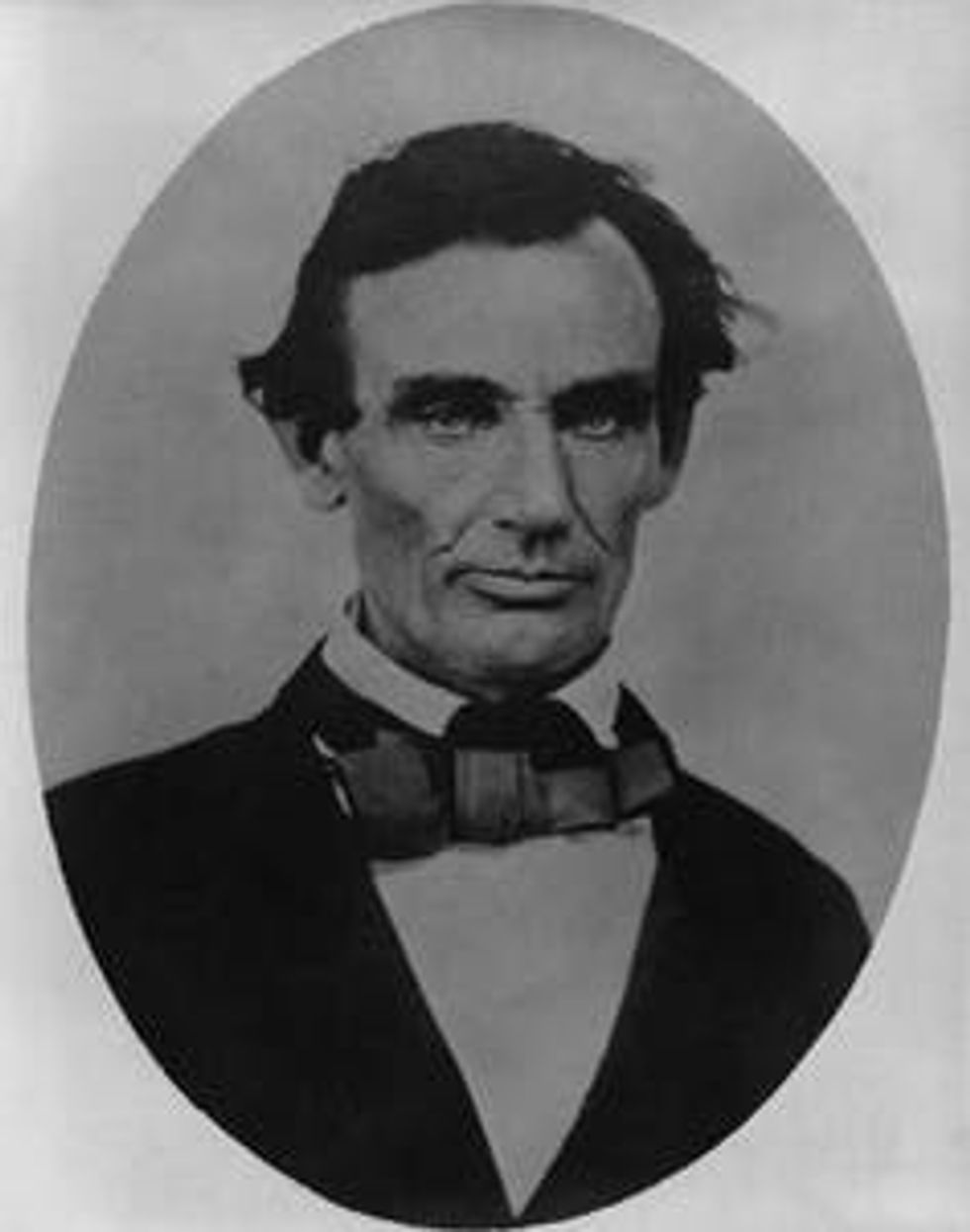
Lincoln in 1858.
Shutterstock
The metaphor of a house emphasizes interdependence, cooperation and shared purpose. It asks how citizens might build and maintain something together, despite natural differences, rather than live and work separately.
These ideas have been lost in social and political debates today, which are dominated by competing party agendas and talk of irreconcilable “red” and “blue” state mentalities.
Lincoln’s central warning – “A house divided against itself cannot stand” – was rich in moral significance. A house should rest on a firm physical foundation for the safety of the family who lives in it. The Union, Lincoln implied, should rest on a firm moral foundation: a bedrock dedication to equality.
The Union, he believed, cannot be a compact of convenience or a loose-knit confederation. It was founded for a clear moral purpose: to extend conditions of equality to as many people as possible. The “new nation” that “our fathers brought forth” in 1776, Lincoln would say most memorably in his 1863 Gettysburg Address, was “dedicated to the proposition that all men are created equal.” Commitment to the principle of equality was an essential, not optional, basis of membership within.
Beware false prophets
Bipartisan compromise sounds good – but it can erode fundamental commitments to equality. By 1858, the U.S. had witnessed decades’ worth of political compromises over slavery: the Missouri Compromise of 1820, the Compromise of 1850 and the Kansas-Nebraska Act of 1854. All of these measures maintained the institution of slavery while purporting to limit it.
According to Lincoln, such compromises only led to more intense conflict:
“We are now far into the fifth year, since a policy was initiated, with the avowed object, and confident promise, of putting an end to slavery agitation. Under the operation of that policy, that agitation has not only, not ceased, but has constantly augmented.”
Lincoln warned of false political prophets who earned praise for short-term bipartisan compromises without taking a firm stand on fundamental forms of inequality. They aimed to build a “political dynasty,” not a strong union:
“Our cause, then, must be intrusted to, and conducted by its own undoubted friends – those whose hands are free, whose hearts are in the work – who do care for the result.”
Lincoln’s opponent in the Senate campaign, incumbent Democratic Sen. Stephen A. Douglas, claimed to not care whether territories voted to become free or slave states so long as the elections reflected the popular will in those territories. The “machinery” of such compromises over principles of equality, Lincoln said, constructs only “temporary scaffolding,” hastily fabricated to win elections before being “kicked to the winds.”
Equality over polarization
On its 160th anniversary, I believe Lincoln’s “House Divided” speech offers alternative ways to imagine the nation than as a patchwork of “red” and “blue” states.
Americans belong to a union first, parties second. Party machinery and false political prophets divide the house of the people; the people have the power to stabilize that house if they choose to do so. The union was founded on a dedication to equality. It retains a firm moral foundation by preserving commitments to principles of equality over region or party.
The primary offense against the principle of equality in Lincoln’s time was slavery. But Americans can apply the logic of his argument to contemporary inequities based on race, employment, gender, voting rights, criminal justice, religion and more. The nation is a house divided, many times over, in all of those cases.
Lincoln didn’t claim that perfect equality could be achieved. But he saw broad commitments to the idea of equality as essential to the ongoing work of creating, as the Constitution puts it, a more perfect union – and a freer one for all.
The union must “become all one thing, or all the other” in order to be truly free. On this guiding principle, Lincoln declared, there can be no partisan dispute and no bipartisan compromise.
In April, a 25-year-old black woman named Chikesia Clemons was violently arrested by police at a Waffle House restaurant in Alabama.
A video of the arrest that went viral shows police pulling Clemons from her chair and throwing her to the floor. In the process, her breasts are exposed and her dress rides up in the back. When she attempts to cover her breasts, the two officers on top of her threaten to break her arm for “resisting.”
Clemons’ experience is not unique. In the U.S., black women are not afforded the same regard for bodily privacy as white women.
Another example: In an investigation of the Baltimore City Police Department, the Department of Justice found that the Baltimore Police Department frequently engaged in unjustified strip searches of African-Americans. In one instance, Baltimore police conducted a strip search of a black woman, including an anal cavity search, on a sidewalk in broad daylight and in full public view. The woman’s pleas to not be forced to disrobe in public were ignored. Her offense? A broken headlight.
While the #MeToo movement has been successful in bringing down several high-profile assailants, critics continue to argue that it has been monopolized by middle- and upper-class white women, particularly white Hollywood actresses. This, despite the fact that a black woman, Tarana Burke, created the Me Too campaign more than a decade ago. These criticisms reflect the fact that black women have experienced sexual violence differently than white women.
As a philosopher of race and gender who has written about sexual harassment, I offer historical context on the ways that black women experience sexual abuse, often by the authority of the state, as a way to think about black women’s contemporary experiences as the kinds of experiences that #MeToo should address.
History of black women’s bodies on display
As early as the 17th century, European men wrote travel narratives about their trips to West Africa to capture, enslave and trade African people. Their writings offer a window into how they perceived African women and what they thought primarily European male readers would find titillating.
In particular, their descriptions of West African women’s style of dance played a role in shaping European perceptions of black women’s sexual immorality and availability.
These travel accounts were the popular media of their day and offered some of the first reports of continental Africa to average Europeans. For example, Frenchman Jean Barbot wrote of African men and women “knocking bellies together very indecently” while “uttering some dirty mysterious words.” Meanwhile, naval officer Abraham Duqesne characterized African women as desiring the “caresses of white men.”
Because African women differed from European women both in attire and bodily movement, European travel writers regarded African women as sexually available and immoral. European settlers carried these attitudes to the United States where enslaved black women were subjected to violent sexual abuse and forced nudity as routine social practice, in ways that would have been unthinkable toward white women.
Sexual violence and the father of gynecology
A statue of J. Marion Sims. ‘The Father of Modern Gynecology’ stands on the Capitol grounds in Montgomery, Ala., Jan. 25, 2006.
AP Photo/Rob Carr
By the 19th century, treating black and white women differently was firmly entrenched in society. Nowhere was this more evident than in the practice of J. Marion Sims, the physician widely regarded by gynecologists as the “father of modern gynecology.” The convention of the period was for physicians to conduct gynecological examinations of white women with averted gazes while the patients remained as clothed as possible.
However, Sims also conducted medical experiments on enslaved black women that ultimately resulted in a technique to repair vesicovaginal fistula, an opening that can develop between the vaginal wall and the bladder or large intestine, sometimes as a result of childbirth. The enslaved black women were been stripped completely naked and examined on all fours, as Sims and other physicians took turns using a specially created speculum that enabled full viewing of the vagina. Private citizens were also allowed to watch these experiments and they, too, were invited to witness the full exposure of enslaved women’s vaginas.
Sims conducted his experiments without anesthesia, despite the fact that ether was known and in use by the time he performed later surgeries. Black women were denied anesthesia on the grounds that black people did not feel pain in the same ways that white people felt pain, a perception that still exists today. For example, one study found that when people viewed images of blacks receiving painful stimuli, like needle pricks, they responded with less empathy than when they viewed similar images of white people in pain.
Sexual violence in a court of law
In New York in 1925, another historical example shows how black women’s exposed bodies have been treated with indifference. Kip Rhinelander, a member of New York’s high society, was set to wed Alice Beatrice Jones, a working-class biracial woman. Their union drew national attention.
Although New York did not legally prohibit interracial marriage as other states did at that time, society strongly disapproved of interracial marriage.
Once their marriage was made public, Kip filed for divorce on the grounds of fraud. The salient question in the divorce hearing was whether Kip knew that Alice was black at the time of their marriage.
In order to answer that question, Alice’s attorney suggested that Alice bare her breasts in front of the all-white male jury, judge and attorneys in order to prove her racial identity. By viewing the shading of her areolas and legs, he said, the jurors could assess whether Kip – who had admitted to premarital sex with her – should have known her racial identity.
The judge directed Alice to follow through. Neither Alice Rhinelander’s tears nor her connection to a prominent white family could save her from the indignity of forced nudity in front of strangers. Ultimately, the jury decided that Alice was, in fact, “of colored blood” and that she did not conceal or misrepresent her racial identity.
The past is present
The hostility to black women’s bodily privacy and dignity in these examples isn’t accidental. Rather, it is part of the history of how black women have been cast in U.S. society.
In the Sims and Rhinelander examples, the legal status of enslavement and weight of the court validated the coercive display of black women’s bodies. The Department of Justice found that the Baltimore police used the weight of their badges to force compliance with public strip searches. Likewise, in the Waffle House example, although Clemons’ initial exposure may not have been intentional, the police responded to her cries and her attempts to cover herself by using their authority to threaten her with further harm.
This is a unique form of sexual violence experienced by black women. The convergence of race and gender in black women’s lives has created the social conditions in which black women are coerced and often expected, under threat of punishment by the government, to suffer the exposure of intimate body parts.
Race and gender converge in black women’s lives and have created the social conditions under which black women are coerced and expected to suffer the exposure of intimate body parts, or else face punishment. If movements like #MeToo are serious about combating sexual violence, then they have to also understand these practices as sexual violence.
North Korea's state news service this week has aired footage that purports to show President Donald Trump saluting one of leader Kim Jong-un's generals.
The footage, which has not yet been verified as authentic, shows Trump in Singapore shaking hands with assorted North Korean officials.
When he approaches a uniformed general, the president initially holds out his hand for a handshake. The general responds by giving the president a salute -- and the president, in turn salutes back.
The general then extends his hand for a formal handshake.
Watch the video, which was captured by the BBC's global media monitoring service, below.
Republican senators on Wednesday said embattled Environmental Protection Agency chief Scott Pruitt should testify before the U.S. Congress to address the list of ethics scandals he faces, but stopped short of calling for his resignation.
Pruitt came under fire earlier on Wednesday after a report by the Washington Post alleged that the EPA administrator tasked one of his aides and sought help from Republican political donors to find his wife a job.
The report prompted Fox News television and radio host Laura Ingraham to call on Pruitt to resign. She is one of the most prominent Conservative voices to call for his resignation.
The EPA chief has been under scrutiny the last few months amid reports involving questionable spending on travel and use of security detail, connections with lobbyists and industry groups and use of his office for favors.
Pruitt currently faces a dozen investigations by the Office of the Inspector General, Congress and the White House.
An EPA spokesperson was not immediately available for comment.
President Donald Trump has so far defended Pruitt and praised him for carrying out his policies despite the barrage of negative media reports.
On Ingraham’s radio show on Wednesday, fellow Oklahoman and Pruitt ally Republican Senator James Inhofe stopped short of calling for his resignation but said if the stream of scandals does not stop, he would be forced to ask him to step down.
“I think something needs to happen to change that,” he told Ingraham. “One of those alternatives would be for him to leave that job.”
A spokeswoman for Inhofe later told Reuters that while the senator is not ready to call for resignation, “he has concerns about the reports coming out and wants to hear directly from Pruitt” in a hearing.
Other Senate Republicans have started to call for more action against the administrator in recent days.
“I support Sen. @JimInhofe’s call for a hearing on EPA Administrator Pruitt’s scandals; and I continue to urge the President to take a hard look at Mr. Pruitt’s actions – as I do not feel that Mr. Pruitt is serving @RealDonaldTrump’s best interests,” Iowa Republican Senator Joni Ernst wrote on Twitter on Wednesday.
Wyoming Senator John Barrasso, chair of the Senate environment committee that has oversight of the EPA, said that he plans to call Pruitt to testify before his panel about his scandals later this year, his spokesman Mike Danylak said.
Barrasso also sent a letter this week to Alaska Republican Senator Lisa Murkowski, who chairs the appropriations committee for Interior and Environment, to request that there be sufficient funding for the EPA’s Inspector General’s office to carry out several open investigations into Pruitt’s conduct.
“The Office of Inspector General has not only expanded a number of ongoing reviews, but has also initiated additional reviews concerning a wide range of allegations related to the Office of the Administrator,” his letter said.
Reporting By Valerie Volcovici; editing by Diane Craft
An Australian court on Thursday slashed a record libel payout for actress Rebel Wilson, saying there was insufficient evidence a series of magazine articles published by Bauer Media prevented her from getting lucrative roles in Hollywood.
The star of three “Pitch Perfect” movies and “Bridesmaids” won A$4.6 million ($3.5 million) in damages from the German publisher last year after a court found a series of articles accusing her of lying about her age, name and childhood events had cost her roles.
But Bauer, backed by a host of large Australian media companies, appealed the decision in February, arguing the damages bill was too high.
On Thursday, Victorian state appeals court cut Wilson’s payout to just A$600,000.
“For a considerable number of reasons, the critical inferences drawn by the judge could not be upheld,” three judges in the Victorian state appeals court wrote in a judgment.
“There was no basis in the evidence for making any award of damages for economic loss.”
The judge who determined the initial payout had relied on testimony from Wilson and two Hollywood agents that the articles, which were not published in the United States, still would have influenced movie industry decision makers, the appeals court judges added.
Wilson’s legal representatives were not immediately available for comment.
Bauer said in a statement that it welcomed the court’s decision.
When Wilson won the case last year, it was an Australian record for a case, much higher than the A$389,000 maximum previously set, by using her “global reach” as justification.
Reporting by Nicholas Ford; Edited by Byron Kaye and Robert Birsel
The U.S. Justice Department’s internal watchdog will release a long-awaited report on Thursday on the FBI’s handling of the Hillary Clinton email probe that she said contributed to her 2016 presidential election loss to Republican Donald Trump.
The report by Inspector General Michael Horowitz, which will be released at 2 p.m., arose from a review he launched about a week before Trump took office in January 2017.
The inquiry has focused on whether former FBI Director James Comey’s public statements about the bureau’s probe of Clinton’s use of a private email server while secretary of state were based on “improper considerations.”
In July 2016, Comey held an unusual news conference to explain why the FBI would not be recommending criminal charges against Clinton over her use of the private server. He chastised her for being “extremely careless” but said there was insufficient evidence to charge her with a federal crime.
In October 2016, less than two weeks before Election Day, Comey sent members of Congress a letter disclosing that the probe was being reopened after new emails were found on the computer of former U.S. Representative Anthony Weiner, the husband of top Clinton aide Huma Abedin.
Two days before the Nov. 8 election, Comey said the FBI had found no new evidence.
Comey was fired by Trump in May 2017 while leading an investigation into whether the Trump campaign colluded with Russia, an allegation the president has denied.
The Inspector General also examined whether FBI employees leaked information about investigations of the Clinton Foundation charitable organization and emails in a bid to help Trump’s campaign.
Law enforcement officials previously told Reuters the information was leaked to former New York Mayor Rudy Giuliani, an adviser to the Trump campaign. He now represents Trump in Special Counsel Robert Mueller’s probe into whether Russia interfered in the 2016 election.
The report will also discuss Peter Strzok and Lisa Page, two FBI staffers whom Republicans accused of bias against Trump after thousands of text messages sent via their work-issued mobile phones were made public.
While some of their messages were anti-Trump, others took aim at lawmakers such as U.S. Senator Bernie Sanders, whom Clinton defeated for the Democratic presidential nomination.
Page and Strzok were involved in both the Clinton and Russia probes. Mueller removed Strzok from his team after Horowitz disclosed the texts to him.
Members of several key U.S. House and Senate committees are expected to be briefed on the report in the early afternoon before its public release, according to documents seen by Reuters.
Reporting by Sarah N. Lynch and Mark Hosenball; Editing by John Walcott and Peter Cooney
Tough sanctions will remain on North Korea until its complete denuclearization, the U.S. secretary of state said on Thursday, apparently contradicting the North’s view that the process agreed at this week’s summit would be phased and reciprocal.
U.S. President Donald Trump and North Korean leader Kim Jong Un issued a joint statement after their Singapore meeting that reaffirmed the North’s commitment to “work toward complete denuclearization of the Korean Peninsula”, while Trump “committed to provide security guarantees”.
Trump later told a news conference he would end joint U.S.-South Korean military exercises.
“President Trump has been incredibly clear about the sequencing of denuclearization and relief from the sanctions,” Secretary of State Mike Pompeo told reporters after meeting South Korea’s president and Japan’s foreign minister in Seoul.
“We are going to get complete denuclearization; only then will there be relief from the sanctions,” he said.
North Korean state media reported on Wednesday Kim and Trump had recognized the principle of “step-by-step and simultaneous action” to achieve peace and denuclearization on the Korean peninsula.
The summit statement provided no details on when North Korea would give up its nuclear weapons program or how the dismantling might be verified.
Skeptics of how much the meeting achieved pointed to the North Korean leadership’s long-held view that nuclear weapons are a bulwark against what it fears are U.S. plans to overthrow it and unite the Korean peninsula.
However, South Korean President Moon Jae-In said the world, through the summit, had escaped the threat of war, echoing Trump’s upbeat assessment of his meeting with Kim.
“What’s most important was that the people of the world, including those in the United States, Japan and Koreans, have all been able to escape the threat of war, nuclear weapons and missiles,” Moon told Pompeo.
Pompeo insisted North Korea was committed to giving up its nuclear arsenal but said it would “be a process, not an easy one”.
Kim understood getting rid of his nuclear arsenal needed to be done quickly and there would only be relief from stringent U.N. sanctions on North Korea after its “complete denuclearization”, Pompeo said.
Moon later said South Korea would be flexible when it comes to military pressure on North Korea if it is sincere about denuclearization.
Also on Thursday, North and South Korea held their first military talks in more than a decade. The talks followed on from an inter-Korean summit in April at which Moon and Kim agreed to defuse tension and cease “hostile acts”.
‘EVERYBODY MUCH SAFER’
The United States has long insisted on complete, verifiable and irreversible denuclearization by North Korea.
But the summit statement reference to North Korea committing to work toward the complete denuclearization of the peninsula has used been by North Korea in the past to include a U.S. nuclear umbrella in the region, and echoes promises it has failed to keep.
Trump returned to the United States on Wednesday and took to Twitter to hail the meeting, the first between a sitting U.S. president and a North Korean leader, as a major win for American security.
“Everybody can now feel much safer than the day I took office,” Trump tweeted. “There is no longer a nuclear threat from North Korea.”
Democratic critics in the United States said the agreement was short on detail and the Republican president had made too many concessions to Kim, whose country is under U.N. sanctions for its nuclear and weapons programs and is widely condemned for human rights abuses.
Pompeo said Trump’s comments about the reduced threat from North Korea were made “with eyes wide open”.
“It could be the case that our effort won’t ... work but we are determined to set the conditions so that we can right this failure of decades and reset the conditions for North Korea’s participation in the community of nations,” Pompeo said after a trilateral meeting with South Korean Foreign Minister Kang Kyung-wha and Japanese Foreign Minister Taro Kono.
MAINTAIN READINESS
Japan has reacted to Trump’s plan to cancel military exercises with South Korea with concern, saying the drills are vital for East Asian security.
Two North Korean missiles flew over Japan last year as North Korea made rapid advances in developing a missile capable of striking the U.S. mainland with a nuclear warhead.
Tokyo is working on arranging a meeting between Prime Minister Shinzo Abe and Kim, with one possibility being an Abe visit to Pyongyang around August, the Yomiuri newspaper reported.
A Japanese government source familiar with the matter told Reuters officials aimed to discuss a summit with North Korean officials at a regional security conference in Mongolia on Thursday and Friday.
Kang said South Korea and the United States shared the same goals and approach to achieving denuclearization.
“The issue of South Korea-U.S. joint exercises is one that should be discussed,” Kang said. “But the issues of the alliance should be dealt with under the premise we maintain joint ironclad defense posture.”
The U.S. intelligence assessment of the nuclear and other military threat posed by North Korea to U.S. and allied forces remained unchanged despite Trump and Moon’s assertions about the North Korean nuclear threat being over, a senior U.S. official responsible for studying the North Korean military said.
U.S. officials said it was unclear what types of training involving U.S. and South Korean troops might cross into Trump’s now forbidden zone of “war games”. But big, joint U.S.-South Korean exercises appeared off-limits under the new guidance.
“Make no mistake, we are going to maintain the readiness of our forces in South Korea,” said one U.S. official, speaking on condition of anonymity. The official acknowledged, however, it was still not certain how that was going to happen.
The United States maintains about 28,500 soldiers in South Korea, which remains in a technical state of war with the North after the 1950-53 Korean War ended in a truce rather than a peace treaty.
Reporting by David Brunnstrom and Christine Kim in SEOUL; Additional by Josh Smith and Hyonhee Shin in SEOUL, Yoshifumi Takemoto and Chang-Ran Kim in TOKYO and Phil Stewart in WASHINGTON; Writing by Lincoln Feast; Editing by Paul Tait, Robert Birsel
Los Angeles prosecutors said on Wednesday that their sex crimes team was reviewing a case against “Rocky” actor Sylvester Stallone.
Los Angeles District Attorney’s office spokesman Greg Risling did not give details but said the case was presented by police in the California beach city of Santa Monica.
Representatives for Stallone, 71, did not immediately return a call for comment on Wednesday.
In December, Stallone’s attorney Martin Singer said that a woman had “filed a police report alleging a rape that occurred 27 years ago.”
“My client categorically disputes the claim,” Singer said in a statement at the time.
Santa Monica police said in December they were investigating a complaint that was made in November 2017 of alleged sexual misconduct in the 1990s by the actor.
Stallone skyrocketed to fame in 1976 with his Oscar-winning boxing movie “Rocky” and went on to become one of Hollywood’s biggest action stars through the “Rambo” and “Rocky” film franchises.
California has a complex statute of limitations for criminal prosecutions of sexual abuse but offenses must generally be prosecuted within 10 years.
Hollywood has been roiled in the past eight months by accusations of sexual assault against dozens of actors, directors and filmmakers, leading to many major figures being forced to step down or dropped from creative projects.
Producer Harvey Weinstein was charged in New York with rape and sexual assault last month. He entered a not guilty plea.
Comedian Bill Cosby was convicted in April of drugging and sexually assaulting a woman in 2004.
Reporting by Jill Serjeant; Editing by Bill Tarrant




 Chaos is coming.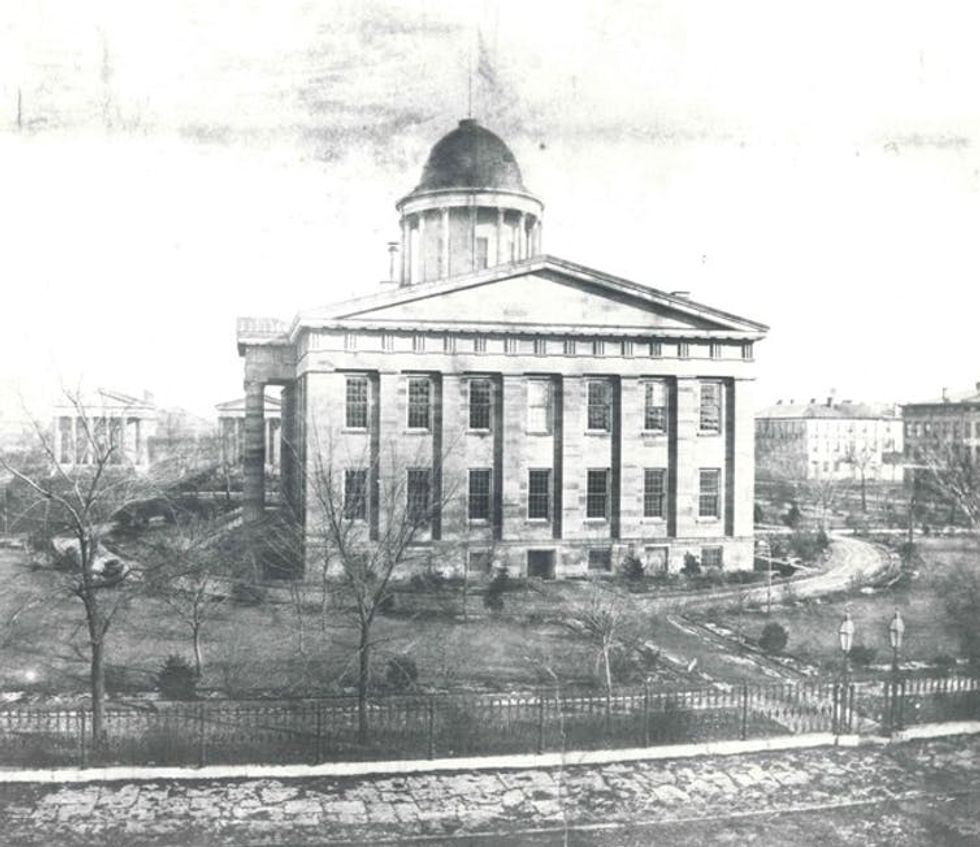
 The union must “become all one thing, or all the other” in order to be truly free. On this guiding principle, Lincoln declared, there can be no partisan dispute and no bipartisan compromise.
 Race and gender converge in black women’s lives and have created the social conditions under which black women are coerced and expected to suffer the exposure of intimate body parts, or else face punishment. If movements like #MeToo are serious about combating sexual violence, then they have to also understand these practices as sexual violence.