The murder of anti-Kremlin reporter Arkady Babchenko was widely reported and condemned on Tuesday. But on Wednesday he showed up alive at a news conference in Ukraine.
The prominent 41-year-old journalist was reported to have been shot dead in the stairwell of his apartment building in Kiev in an apparent assassination.
"About a half hour ago, he showed up at a news conference alive, living and breathing. That's him there as part of what was apparently a sting operation to catch some bad actors," remarked MSNBC host Hallie Jackson.
She went on to describe the story as "crazy" and "bonkers."
Ukraine admitted that it had staged the fake assassination as part of a "special operation."
MSNBC foreign correspondent Matt Bradley said the operation was "meant to catch people who were trying to kill" Babchenko.
"He said in that press conference that one of those people had been captured, and the security services -- the ones who staged his death -- they said that they were trying to catch Russian agents," he added.
Adult film star Stormy Daniels’ attorney is expected to ask a federal judge on Wednesday to address claims that President Donald Trump’s longtime personal lawyer, Michael Cohen, leaked audio recordings seized from Cohen in raids of his home and office to news media outlets.
The issue was among several slated to come up in a hearing before U.S. District Judge Kimba Wood in Manhattan, who is also expected to get an update on a review of materials federal agents seized in the April raids.
Cohen, who has not been charged with any crime, is under investigation by the U.S. attorney’s office in Manhattan regarding his business dealings.
The investigation stems in part from a referral by Special Counsel Robert Mueller, who is probing whether Trump’s 2016 presidential campaign colluded with Russia. Trump has repeatedly said there was no collusion, and Russia has denied interfering in the U.S. presidential elections.
Cohen has worked for Trump for more than a decade, first as counsel at the Trump Organization and later as his personal lawyer.
In 2016, Cohen paid Daniels $130,000. Daniels has said the payment was intended to buy her silence about a sexual encounter she says she had with Trump in 2006. The president has denied the allegation.
Daniels’ outspoken attorney, Michael Avenatti, said in a letter last week that he had reason to believe that Cohen had leaked audio recordings, which he said may relate to his client, to media outlets. Avenatti asked that Wood ask Cohen about the possible leaks.
Avenatti has also asked Wood to allow him to represent Daniels in the Cohen case. He has said he believes some of the seized materials could relate to Daniels, whose real name is Stephanie Clifford.
Cohen has asked Wood to deny Avenatti permission to appear before the federal court, saying he violated court rules by making what he characterized as false statements about Cohen in frequent news media appearances.
After the raids on Cohen’s home and office, Cohen and Trump asked the judge to block prosecutors from reviewing the seized documents, citing attorney-client privilege.
Wood responded by appointing former U.S. District Judge Barbara Jones as a so-called special master to review whether any of the documents were shielded by attorney-client privilege before turning them over to prosecutors.
In a court filing on Tuesday evening, Jones said she had already turned over to prosecutors more than 290,000 seized items that were not marked privileged by Cohen or Trump.
She said that more than a million items from three seized phones had also been designated as not privileged by Cohen and Trump, and would be turned over to prosecutors Wednesday after a final review.
Cohen and Trump have made at least 252 claims of privilege, according to the filing.
A number of Cohen’s financial dealings since Trump’s January 2017 inauguration have become public.
Swiss drugmaker Novartis AG has said it had paid Cohen nearly $1.2 million as a consultant; U.S. telecommunications company AT&T Inc said it made payments of $600,000; and South Korea’s Korea Aerospace Industries Ltd said it hired him for $150,000.
Cohen also received $500,000 from Columbus Nova Llc, a New York company linked to Russian businessman Viktor Vekselberg. The firm has said the transaction had nothing to do with Vekselberg.
Mueller’s investigation, which began in May 2017, has yielded 17 indictments and five guilty pleas so far.
Reporting by Brendan Pierson in New York; editing by Jonathan Oatis
Russian Foreign Minister Sergei Lavrov has rejected Ukraine’s allegation that Moscow was behind Tuesday’s murder of a Russian dissident journalist in Kiev, Russia’s state news agency TASS reported.
Arkady Babchenko, a critic of President Vladimir Putin, was shot dead in the Ukrainian capital on Tuesday where he lived in exile. He fled Russia after he received threats for saying he did not mourn the victims of a Russian defense ministry plane crash in 2016.
Ukrainian Prime Minister Volodymyr Groysman said in a social media posting late on Tuesday he was convinced that what he called “the Russian totalitarian machine” had not forgiven Babchenko for what Groysman called his honesty.
Lavrov, who called Babchenko’s killing a tragedy, said the allegation was nonsense and a continuation of what he called Kiev’s anti-Russian course.
“...The investigation has not even started and the prime minister of the Ukrainian government has already announced that the Russian intelligence services did it,” TASS cited Lavrov as saying.
Groysman’s accusations were a matter of regret, Lavrov was quoted as saying.
Babchenko’s murder was the fourth of a Kremlin critic in the Ukrainian capital in two years. None of the other murders, which Kiev has also blamed on Russia, have been solved.
Reporting by Andrew Osborn and Maria Kiselyova; Editing by Raissa Kasolowsky
This article is published in collaboration with researchers from the ISYEB (Institut de Systématique, Évolution, Biodiversité, Muséum national d'Histoire naturelle, Sorbonne Universités). Each month, they publish an article describing new species and cataloguing living organisms.
One of the consequences of globalisation and increased international trade in goods is the introduction of invasive species. In France, we have seen recently the arrival and proliferation of the “devil bug”, the Asian hornet and the Siberian chipmunk, as well as land flatworms such as Platydemus manokwari (from New Guinea) and Obama nungara (from South America).
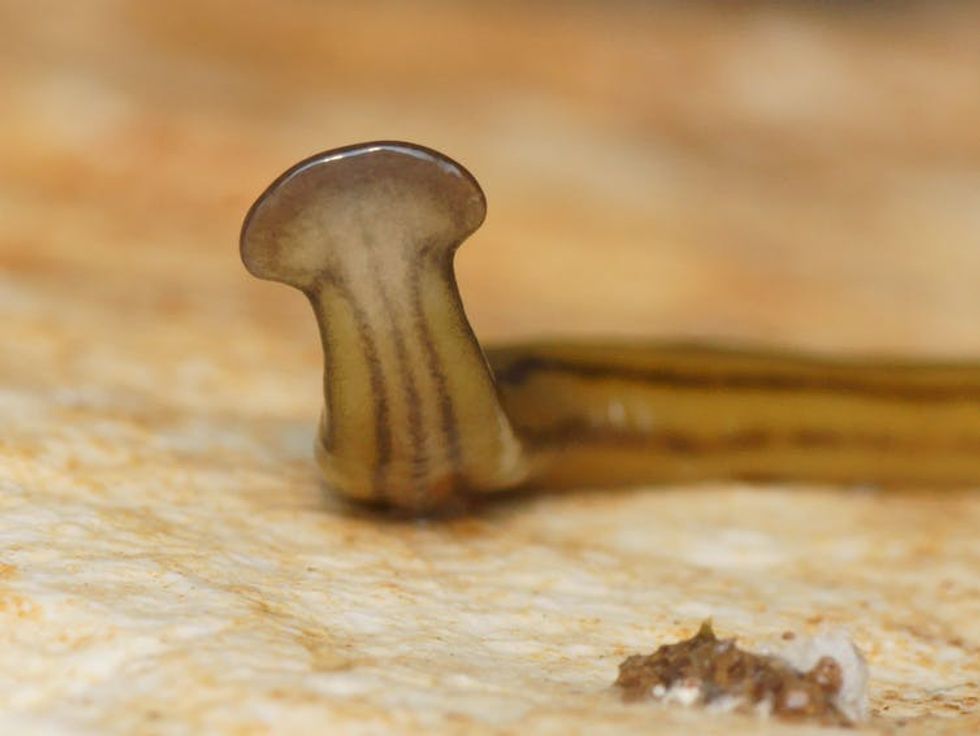
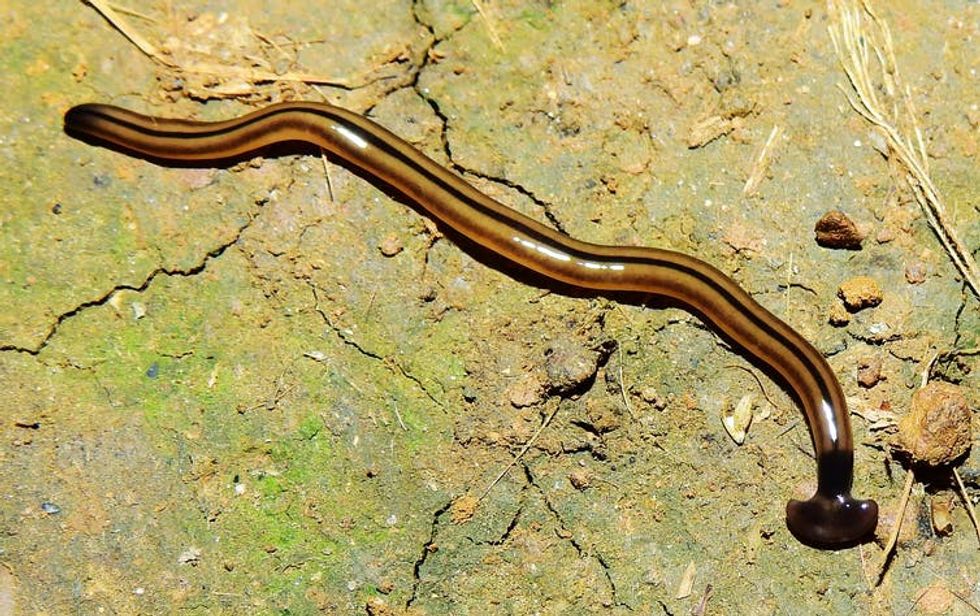
These flatworms, which move from continent to continent as plants and soil are transported, are generally of modest size, about 5 cm long – they can be held in the hand, although it is a bad idea to touch them. Among them, however, is a group of “giant” species, all of which have a “hammerhead”: the bipaliines, belonging to the genera Bipalium and Diversibipalium. The largest can reach 1 metre in length, and are mostly from Asia.
40 centimetres long
Our team has just published the results of five years of work with the help of citizen scientists, who sent us photographs and also specimens. More than 700 reports of land flatworms were received, of which more than 100 were bipaliines. Two of the species present in France, and sometimes very abundant, can reach 40 cm long. Think about this before you continue: if you’re reading this article on your laptop, 40 cm is easily longer than your screen is wide…
The head of Diversibipalium multilineatum. This species can reach 40 cm in length.
Land flatworms consume soil fauna and pose a threat to soil biodiversity and ecological balance. Species of Bipalium feed on earthworms, and are able to kill and eat prey much larger than themselves. To do so, the Bipalium have a chemical armament including tetrodotoxin, one of the most powerful neurotoxins in the world, a thousand times more so than cyanide. Tetrodotoxin is the weapon of choice of the fugu, the poisonous fish beloved in Japan and eaten very carefully.
While our survey of land flatworms was originally intended only for mainland France, we received reports from the French overseas territories of Guadeloupe, Martinique, Saint Martin, Saint Barthélemy, French Guiana, Réunion, Mayotte and Polynesia, as well as from countries such as Switzerland, Monaco and Portugal. Unexpectedly, some of the citizens’ testimonials date back 20 years, as volunteers sent us older photographs and even videos from as far back to 1999.
In France, the two dominant species are Bipalium kewense and Diversibipalium multilineatum, which can reach 40 cm in length. Curiously, Bipalium kewense was also found in Guadeloupe, Martinique and French Guiana. A relatively small species, Bipalium vagum, has been found in several islands of the West Indies, French Guiana and Reunion, but not in metropolitan France. An unknown species, “black” Diversibipalium, was found in France, in a single location. A probably new species, “blue” Diversibipalium, was found only in Mayotte; this species is particularly spectacular with its iridescent turquoise colour.
The Pyrénées-Atlantiques, a small paradise for giant worms…
In France itself, most of the bipaliines were found in the south, but very curiously, almost half of the reports come from a single department: the Pyrénées-Atlantiques, especially in the coastal area between Bayonne and the Spanish border. Land flatworms, which come from the semitropical regions of Asia, have two enemies: cold in winter and drought in summer. It seems that the Pyrénées-Atlantiques, with their mild winters and never-quite-dry summers, are a little paradise for them.
Reports of bipaliines in mainland France, obtained thanks to citizen scientists.
Our molecular studies show that species found in several localities around the world are perfectly homogeneous from a genetic point of view, even when the specimens come from several continents. These species do not practice sexual reproduction and each individual is therefore a clone of its parent: a small piece detaches from the posterior part of the animal and turns into an adult, a phenomenon called fission. Asexual reproduction is a way for an alien species to quickly invade a territory. It also means that every worm is, in a sense, potentially immortal.
Scientists should be concerned
When we started working on this initiative in 2013, we did what every scientist does at the beginning of a new project – we looked for articles written by other scientists on the subject. To our astonishment, we found almost nothing on this subject in France, even though the invasion began more than 20 years ago. It seems paradoxical that the invasion of Europe by spectacular and highly visible animals that are also potentially dangerous for biodiversity had not attracted the attention of any scientist or institution up to now.
Bipalium vagum, present in most French territories in the tropics, photographed here in French Guiana.
Citizens sometimes told us about their having brought specimens to research centres or universities only to have their fanciful identifications dismissed out of hand (“These are nothing but leeches, not interesting at all”). It is clear that efforts need to be made to better educate not only the public, but also scholars about the land flatworms. That said, those who couldn’t identify them 20 years ago had an excuse – they weren’t there.
The results of our study have been published in English, as is the general practice in science these days. To inform the public in France and its overseas territories, we have also written a full version in French of our article on the bipaliines, as we did, in 2013, for the arrival of Platydemus manokwari. Now, no more excuses!
And what of France’s European neighbour, the United Kingdom? Has it been spared from such invaders? Well, yes… and no. There are not yet any reports of the giant Bipalium or Diversibipalium flatworms in British gardens, the weather likely being too cold for these semitropical animals. But one species features a scientific name with a very English origin, Bipalium kewense – in Latin it means “from Kew”, because it was described in 1878 from specimens found in a hothouse of the Kew botanical gardens, near London. So there are giant flatworms present, but probably only in the hothouses. Other invasive flatworms have made the UK their home, however, including the New Zealand flatworm, Arthurdendyus triangulatus, which has decimated native earthworms since the 1980s. Adding insult to injury, the British Isles are the only place in Europe where this highly destructive species is established.
China lashed out on Wednesday at renewed threats from the White House on trade, warning that it was ready to fight back if Washington was looking for a trade war, days ahead of a planned visit by U.S. Commerce Secretary Wilbur Ross.
In an unexpected change in tone, the United States said on Tuesday that it still held the threat of imposing tariffs on $50 billion of imports from China unless it addressed the issue of theft of American intellectual property.
Washington also said it will press ahead with restrictions on investment by Chinese companies in the United States as well as export controls for goods exported to China.
Its tougher stance comes as President Donald Trump prepares for a June 12 summit with North Korean leader Kim Jong Un, whose key diplomatic backer is China, and as Washington steps up efforts to counter what it sees as Beijing’s efforts to limit freedom of navigation in the South China Sea.
The trade escalation came after the two sides had agreed during talks in Washington this month to find steps to narrow China’s $375 billion trade surplus. Ross is expected to try to get China to agree to firm numbers to buy more U.S. goods during a June 2-4 visit to the Chinese capital.
“We urge the United States to keep its promise, and meet China halfway in the spirit of the joint statement,” Chinese Foreign Ministry spokeswoman Hua Chunying told a daily news briefing, adding that China would take “resolute and forceful” measures to protect its interests if Washington insists upon acting in an “arbitrary and reckless manner”.
“When it comes to international relations, every time a country does an about face and contradicts itself, it’s another blow to, and a squandering of, its reputation,” Hua said.
China has said it will respond in kind to threats by Trump to impose tariffs on up to $150 billion of Chinese goods.
It was not clear if the developments would have any impact on the planned visit to China by Ross. China’s Foreign Ministry referred questions to the Commerce Ministry, which did not reply to a fax seeking comment.
Several U.S. officials arrived in Beijing on Wednesday for talks, according to a U.S. embassy spokeswoman, including Under Secretary of Agriculture Ted McKinney; the U.S. Trade Representative’s chief agricultural negotiator, Gregg Doud; and Commerce Department Deputy Assistant Secretary Alan Turley.
Trade war fears had receded after the Trump administration said it had reached a deal to put ZTE Corp back in business after banning China’s second-biggest telecoms equipment maker from buying U.S. technology parts for seven years.
The easing in tension had fueled optimism that agreement was imminent for Chinese antitrust clearance for San Diego-based Qualcomm Inc’s $44 billion purchase of Netherlands-based NXP Semiconductors NV, which has been hanging in the balance amid the trade dispute.
A team of Qualcomm lawyers that is expecting to meet with Chinese regulators ahead of Ross’s arrival remained in San Diego as of late Tuesday, a source familiar with the matter said.
“On hold now,” another person familiar with Qualcomm’s talks with the Chinese government said on Wednesday, declining to be identified as the negotiations are confidential.
“Trump is crazy. Crazy tactics might work, though,” the person added.
TARIFFS AND TACTICS
William Zarit, chairman of the American Chamber of Commerce in China, said the U.S. threat of tariffs appeared to have been “somewhat effective”.
“I don’t think it is only a tactic, personally,” he told reporters on Wednesday, adding that the group does not view tariffs as the best way to address the trade frictions.
“The thinking became that if the U.S. doesn’t have any leverage and there is no pressure on our Chinese friends, then we will not have serious negotiations.”
The Global Times, an influential tabloid run by the ruling Communist Party’s official People’s Daily, said the United States was suffering from a “delusion” and warned that the “trade renege could leave Washington dancing with itself”.
State news agency Xinhua said China hoped that the United States would not act impulsively but stood ready to fight to protect its own interests.
“China will continue to hold pragmatic consultations with the United States’ delegation and hope that the United States will act in accordance with the spirit of the joint statement.”
Also on Tuesday, a White House official said the U.S. government plans to shorten the length of visas issued to some Chinese citizens as part of a strategy to prevent intellectual property theft by U.S. rivals.
Citing a document issued by the Trump administration in December, the official said the U.S. government would consider restrictions on visas for science and technology students from some countries.
Additional reporting by Brenda Goh in SHANGHAI and Matthew Miller, Ben Blanchard, Dominique Patton and Yawen Chen in BEIJING; Writing by Ryan Woo and Tony Munroe; Editing by Kim Coghill
Morgan Freeman's lawyer demanded Tuesday that CNN retract a story accusing the 80-year-old movie star of multiple cases of sexual harassment.
"We presented CNN with objective evidence, including videotapes and on-the-record denials by the claimed 'victims,' that the alleged incident that gave rise to the story never happened," lawyer Robert Schwartz said in a statement.
In a letter sent to the television news network, the lawyer accused CNN of "malicious intent, falsehoods, sleight-of-hand, an absence of editorial control and journalistic malpractice."
Schwartz said in a later statement that "we proved to CNN, beyond any doubt, that the whole story was built on fakery. The credibility of the entire CNN attack on Mr Freeman has now been undermined."
Sixteen people -- eight of whom say they were victims -- last week described to CNN a range of troubling behavior by Freeman on production sets or promotional tours.
The actor issued a quick apology after the report was published.
"Anyone who knows me or has worked with me knows I am not someone who would intentionally offend or knowingly make anyone feel uneasy," Freeman said in a statement.
"I apologize to anyone who felt uncomfortable or disrespected -- that was never my intent."
One of the journalists behind the CNN report, Chloe Melas, said her own encounter with Freeman, when she was six-months pregnant, prompted her to produce the piece.
She said that during a press conference for the 2017 movie "Going in Style," Freeman looked her up and down and said "Boy, I wish I was in there."
The article also quoted an unnamed production assistant on the same film who accused Freeman of massaging the small of her back without her consent, and of trying tried to lift her skirt while asking if she was wearing underwear.
In the wake of the Harvey Weinstein scandal in Hollywood, the veteran actor is already facing the fallout from the accusations, including the possible withdrawal of a Lifetime Achievement Award he was given earlier this year by the Screen Actors Guild.
In his letter, Schwartz accused Melas of "baiting and prodding" a number of "so-called witnesses" to malign Freeman.
Tyra Martin, one of the television journalists cited in the CNN report, denied she was one of the accusers and said the news network "totally misrepresented" a video in which she had interviewed Freeman. The report "took my remarks out of context," she added.
Martin acknowledged having felt ill at ease one time when she stood up and Freeman asked her not to pull her skirt back down after it had ridden up. She said, however, that her interviews with the movie star "were always fun for me."
Despite his initial apology, Freeman later issued a denial of the claims against him.
"I am devastated that 80 years of my life is at risk of being undermined, in the blink of an eye, by Thursday’s media reports," he said.
The rapid development of so-called NBIC technologies – nanotechnology, biotechnology, information technology and cognitive science – are giving rise to possibilities that have long been the domain of science fiction. Disease, ageing and even death are all human realities that these technologies seek to end.
They may enable us to enjoy greater “morphological freedom” – we could take on new forms through prosthetics or genetic engineering. Or advance our cognitive capacities. We could use brain-computer interfaces to link us to advanced artificial intelligence (AI).
Nanobots could roam our bloodstream to monitor our health and enhance our emotional propensities for joy, love or other emotions. Advances in one area often raise new possibilities in others, and this “convergence” may bring about radical changes to our world in the near-future.
“Transhumanism” is the idea that humans should transcend their current natural state and limitations through the use of technology – that we should embrace self-directed human evolution. If the history of technological progress can be seen as humankind’s attempt to tame nature to better serve its needs, transhumanism is the logical continuation: the revision of humankind’s nature to better serve its fantasies.
As David Pearce, a leading proponent of transhumanism and co-founder of Humanity+, says:
If we want to live in paradise, we will have to engineer it ourselves. If we want eternal life, then we’ll need to rewrite our bug-ridden genetic code and become god-like … only hi-tech solutions can ever eradicate suffering from the world. Compassion alone is not enough.
But there is a darker side to the naive faith that Pearce and other proponents have in transhumanism – one that is decidedly dystopian.
There is unlikely to be a clear moment when we emerge as transhuman. Rather technologies will become more intrusive and integrate seamlessly with the human body. Technology has long been thought of as an extension of the self. Many aspects of our social world, not least our financial systems, are already largely machine-based. There is much to learn from these evolving human/machine hybrid systems.
Yet the often Utopian language and expectations that surround and shape our understanding of these developments have been under-interrogated. The profound changes that lie ahead are often talked about in abstract ways, because evolutionary “advancements” are deemed so radical that they ignore the reality of current social conditions.
In this way, transhumanism becomes a kind of “techno-anthropocentrism”, in which transhumanists often underestimate the complexity of our relationship with technology. They see it as a controllable, malleable tool that, with the correct logic and scientific rigour, can be turned to any end. In fact, just as technological developments are dependent on and reflective of the environment in which they arise, they in turn feed back into the culture and create new dynamics – often imperceptibly.
Situating transhumanism, then, within the broader social, cultural, political, and economic contexts within which it emerges is vital to understanding how ethical it is.
Competitive environments
Max More and Natasha Vita-More, in their edited volume The Transhumanist Reader, claim the need in transhumanism “for inclusivity, plurality and continuous questioning of our knowledge”.
Yet these three principles are incompatible with developing transformative technologies within the prevailing system from which they are currently emerging: advanced capitalism.
One problem is that a highly competitive social environment doesn’t lend itself to diverse ways of being. Instead it demands increasingly efficient behaviour. Take students, for example. If some have access to pills that allow them to achieve better results, can other students afford not to follow? This is already a quandary. Increasing numbers of students reportedly pop performance-enhancing pills. And if pills become more powerful, or if the enhancements involve genetic engineering or intrusive nanotechnology that offer even stronger competitive advantages, what then? Rejecting an advanced technological orthodoxy could potentially render someone socially and economically moribund (perhaps evolutionarily so), while everyone with access is effectively forced to participate to keep up.
Going beyond everyday limits is suggestive of some kind of liberation. However, here it is an imprisoning compulsion to act a certain way. We literally have to transcend in order to conform (and survive). The more extreme the transcendence, the more profound the decision to conform and the imperative to do so.
The systemic forces cajoling the individual into being “upgraded” to remain competitive also play out on a geo-political level. One area where technology R&D has the greatest transhumanist potential is defence. DARPA (the US defence department responsible for developing military technologies), which is attempting to create “metabolically dominant soldiers”, is a clear example of how vested interests of a particular social system could determine the development of radically powerful transformative technologies that have destructive rather than Utopian applications.
The rush to develop super-intelligent AI by globally competitive and mutually distrustful nation states could also become an arms race. In Radical Evolution, novelist Verner Vinge describes a scenario in which superhuman intelligence is the “ultimate weapon”. Ideally, mankind would proceed with the utmost care in developing such a powerful and transformative innovation.
There is quite rightly a huge amount of trepidation around the creation of super-intelligence and the emergence of “the singularity” – the idea that once AI reaches a certain level it will rapidly redesign itself, leading to an explosion of intelligence that will quickly surpass that of humans (something that will happen by 2029 according to futurist Ray Kurzweil). If the world takes the shape of whatever the most powerful AI is programmed (or reprograms itself) to desire, it even opens the possibility of evolution taking a turn for the entirely banal – could an AI destroy humankind from a desire to produce the most paperclips for example?
It’s also difficult to conceive of any aspect of humanity that could not be “improved” by being made more efficient at satisfying the demands of a competitive system. It is the system, then, that determines humanity’s evolution – without taking any view on what humans are or what they should be. One of the ways in which advanced capitalism proves extremely dynamic is in its ideology of moral and metaphysical neutrality. As philosopher Michael Sandel says: markets don’t wag fingers. In advanced capitalism, maximising one’s spending power maximises one’s ability to flourish – hence shopping could be said to be a primary moral imperative of the individual.
If biotech has rendered human nature entirely revisable, then it has no grain to direct or constrain our designs on it. And so whose designs will our successor post-human artefacts likely bear? I have little doubt that in our vastly consumerist, media-saturated capitalist economy, market forces will have their way. So – the commercial imperative would be the true architect of the future human.
Whether the evolutionary process is determined by a super-intelligent AI or advanced capitalism, we may be compelled to conform to a perpetual transcendence that only makes us more efficient at activities demanded by the most powerful system. The end point is predictably an entirely nonhuman – though very efficient – technological entity derived from humanity that doesn’t necessarily serve a purpose that a modern-day human would value in any way. The ability to serve the system effectively will be the driving force. This is also true of natural evolution – technology is not a simple tool that allows us to engineer ourselves out of this conundrum. But transhumanism could amplify the speed and least desirable aspects of the process.
Information authoritarianism
For bioethicist Julian Savulescu, the main reason humans must be enhanced is for our species to survive. He says we face a Bermuda Triangle of extinction: radical technological power, liberal democracy and our moral nature. As a transhumanist, Savulescu extols technological progress, also deeming it inevitable and unstoppable. It is liberal democracy – and particularly our moral nature – that should alter.
The failings of humankind to deal with global problems are increasingly obvious. But Savulescu neglects to situate our moral failings within their wider cultural, political and economic context, instead believing that solutions lie within our biological make up.
Yet how would Savulescu’s morality-enhancing technologies be disseminated, prescribed and potentially enforced to address the moral failings they seek to “cure”? This would likely reside in the power structures that may well bear much of the responsibility for these failings in the first place. He’s also quickly drawn into revealing how relative and contestable the concept of “morality” is:
We will need to relax our commitment to maximum protection of privacy. We’re seeing an increase in the surveillance of individuals and that will be necessary if we are to avert the threats that those with antisocial personality disorder, fanaticism, represent through their access to radically enhanced technology.
Such surveillance allows corporations and governments to access and make use of extremely valuable information. In Who Owns the Future, internet pioneer Jaron Lanier explains:
Troves of dossiers on the private lives and inner beings of ordinary people, collected over digital networks, are packaged into a new private form of elite money … It is a new kind of security the rich trade in, and the value is naturally driven up. It becomes a giant-scale levee inaccessible to ordinary people.
Crucially, this levee is also invisible to most people. Its impacts extend beyond skewing the economic system towards elites to significantly altering the very conception of liberty, because the authority of power is both radically more effective and dispersed.
Foucault’s notion that we live in a panoptic society – one in which the sense of being perpetually watched instils discipline – is now stretched to the point where today’s incessant machinery has been called a “superpanopticon”. The knowledge and information that transhumanist technologies will tend to create could strengthen existing power structures that cement the inherent logic of the system in which the knowledge arises.
This is in part evident in the tendency of algorithms toward race and gender bias, which reflects our already existing social failings. Information technology tends to interpret the world in defined ways: it privileges information that is easily measurable, such as GDP, at the expense of unquantifiable information such as human happiness or well-being. As invasive technologies provide ever more granular data about us, this data may in a very real sense come to define the world – and intangible information may not maintain its rightful place in human affairs.
Systemic dehumanisation
Existing inequities will surely be magnified with the introduction of highly effective psycho-pharmaceuticals, genetic modification, super intelligence, brain-computer interfaces, nanotechnology, robotic prosthetics, and the possible development of life expansion. They are all fundamentally inegalitarian, based on a notion of limitlessness rather than a standard level of physical and mental well-being we’ve come to assume in healthcare. It’s not easy to conceive of a way in which these potentialities can be enjoyed by all.
In Britain, they include the 30,000 people whose deaths in 2015 were linked to health and social care cuts and the many who perished in the Grenfell Tower fire. Their deaths can be said to have resulted from systematic marginalisation.
Unprecedented acute concentration of wealth happens alongside these expulsions. Advanced economic and technical achievements enable this wealth and the expulsion of surplus groups. At the same time, Sassen writes, they create a kind of nebulous centrelessness as the locus of power:
The oppressed have often risen against their masters. But today the oppressed have mostly been expelled and survive a great distance from their oppressors … The “oppressor” is increasingly a complex system that combines persons, networks, and machines with no obvious centre.
Surplus populations removed from the productive aspects of the social world may rapidly increase in the near future as improvements in AI and robotics potentially result in significant automation unemployment. Large swaths of society may become productively and economically redundant. For historian Yuval Noah Harari “the most important question in 21st-century economics may well be: what should we do with all the superfluous people?”
We would be left with the scenario of a small elite that has an almost total concentration of wealth with access to the most powerfully transformative technologies in world history and a redundant mass of people, no longer suited to the evolutionary environment in which they find themselves and entirely dependent on the benevolence of that elite. The dehumanising treatment of today’s expelled groups shows that prevailing liberal values in developed countries don’t always extend to those who don’t share the same privilege, race, culture or religion.
In an era of radical technological power, the masses may even represent a significant security threat to the elite, which could be used to justify aggressive and authoritarian actions (perhaps enabled further by a culture of surveillance).
In their transhumanist tract, The Proactionary Imperative, Steve Fuller and Veronika Lipinska argue that we are obliged to pursue techno-scientific progress relentlessly, until we achieve our god-like destiny or infinite power – effectively to serve God by becoming God. They unabashedly reveal the incipient violence and destruction such Promethean aims would require: “replacing the natural with the artificial is so key to proactionary strategy … at least as a serious possibility if not a likelihood [it will lead to] the long-term environmental degradation of the Earth.”
The extent of suffering they would be willing to gamble in their cosmic casino is only fully evident when analysing what their project would mean for individual human beings:
A proactionary world would not merely tolerate risk-taking but outright encourage it, as people are provided with legal incentives to speculate with their bio-economic assets. Living riskily would amount to an entrepreneurship of the self … [proactionaries] seek large long-term benefits for survivors of a revolutionary regime that would permit many harms along the way.
The economic fragility that humans may soon be faced with as a result of automation unemployment would likely prove extremely useful to proactionary goals. In a society where vast swaths of people are reliant on handouts for survival, market forces would determine that less social security means people will risk more for a lower reward, so “proactionaries would reinvent the welfare state as a vehicle for fostering securitised risk taking” while “the proactionary state would operate like a venture capitalist writ large”.
At the heart of this is the removal of basic rights for “Humanity 1.0”, Fuller’s term for modern, non-augmented human beings, replaced with duties towards the future augmented Humanity 2.0. Hence the very code of our being can and perhaps must be monetised: “personal autonomy should be seen as a politically licensed franchise whereby individuals understand their bodies as akin to plots of land in what might be called the ‘genetic commons’”.
The neoliberal preoccupation with privatisation would so extend to human beings. Indeed, the lifetime of debt that is the reality for most citizens in developed advanced capitalist nations, takes a further step when you are born into debt – simply by being alive “you are invested with capital on which a return is expected”.
Socially moribund masses may thus be forced to serve the technoscientific super-project of Humanity 2.0, which uses the ideology of market fundamentalism in its quest for perpetual progress and maximum productivity. The only significant difference is that the stated aim of godlike capabilities in Humanity 2.0 is overt, as opposed to the undefined end determined by the infinite “progress” of an ever more efficient market logic that we have now.
A new politics
Some transhumanists are beginning to understand that the most serious limitations to what humans can achieve are social and cultural – not technical. However, all too often their reframing of politics falls into the same trap as their techno-centric worldview. They commonly argue the new political poles are not left-right but techno-conservative or techno-progressive (and even techno-libertarian and techno-sceptic). Meanwhile Fuller and Lipinska argue that the new political poles will be up and down instead of left and right: those who want to dominate the skies and became all powerful, and those who want to preserve the Earth and its species-rich diversity. It is a false dichotomy. Preservation of the latter is likely to be necessary for any hope of achieving the former.
Transhumanism and advanced capitalism are two processes which value “progress” and “efficiency” above everything else. The former as a means to power and the latter as a means to profit. Humans become vessels to serve these values. Transhuman possibilities urgently call for a politics with more clearly delineated and explicit humane values to provide a safer environment in which to foster these profound changes. Where we stand on questions of social justice and environmental sustainability has never been more important. Technology doesn’t allow us to escape these questions – it doesn’t permit political neutrality. The contrary is true. It determines that our politics have never been more important. Savulescu is right when he says radical technologies are coming. He is wrong in thinking they will fix our morality. They will reflect it.
I have personal interest in arachnophobia – the fear of spiders – because I am a spider expert, but also because my daughter has it. She is not alone. According to the American Psychiatric Association, phobias affect more than one in ten people in the US, and of those individuals, up to 40% of phobias are related to bugs (including spiders), mice, snake and bats.
There are clearly a lot of arachnophobes. But do they know why they fear spiders? Can they do something to control those fears?
Once bitten twice shy?
Psychologists believe that one reason why people fear spiders is because of some direct experience with the arachnids instilled that fear in them. This is known as the “conditioning” view of arachnophobia.
In 1991, Graham Davey at City University London ran a study to understand more about this view. He interviewed 118 undergraduate students about their fears of spiders. About 75% of the people sampled were either mildly or severely afraid of spiders. Of those most were female. (This gender bias in arachnophobia has been supported subsequent research.)
There was also an effect from family. Those people fearful of spiders reported having a family member with similar fears, but the study was unable to separate genetic factors from environmental ones. What is surprising is that Davey found that archanophobia wasn’t the result of specific “spider trauma”, which means there was no support for the conditioning view.
So what makes spiders so terrifying? Surely it must be the threat of being bitten? Davey looked at that issue too. It turns out that it is not so much a fear of being bitten, but rather the seemingly erratic movements of spiders, and their “legginess”. Davey said:
Animal fears may represent a functionally distinct set of adaptive responses which have been selected for during the evolutionary history of the human species.
A criticism of Davey’s work is that perhaps “conditioning” cannot be so easily dismissed, because the spider-trauma event may have occurred during childhood, and a specific spider event may be buried deep within memories. In 1997, Peter Muris and his colleagues at the University of Maastricht tried to looked into this.
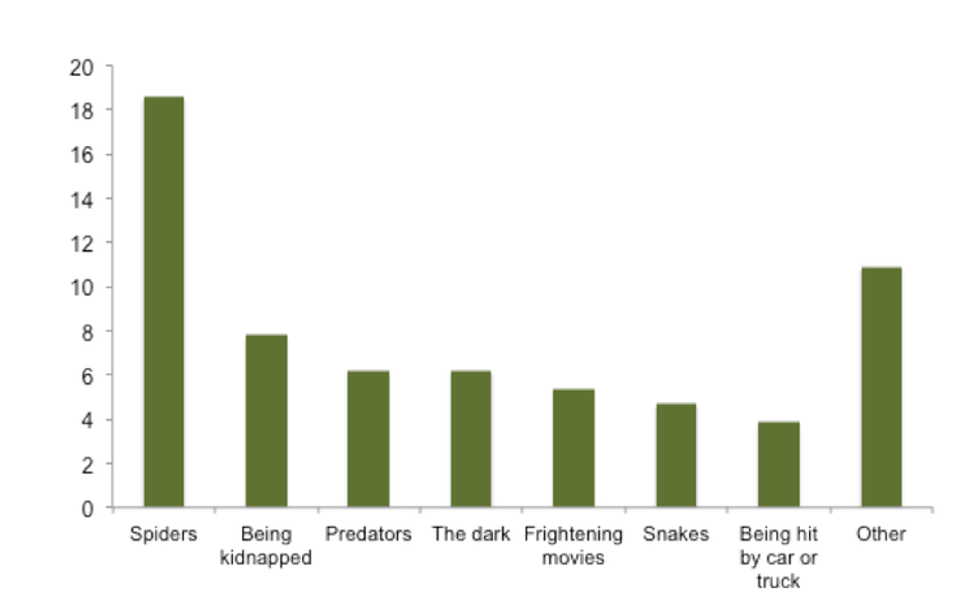
Not surprisingly, if you give kids a list of things that might be scary for them, the vast majority check off things like not breathing, getting hit by a car, bombs, fire or burglars as quite important. Interestingly, if you give them a free option to tell researchers what sorts of things they fear the most, both boys and girls report “spiders” as their top fear (the second fear is being kidnapped, third is predators and fourth is the dark).
This is surprising. Of all the things kids might report, they list spiders as the number one fear. So in contrast to Davey’s work, Muris finds that the kids that were most fearful of spiders could relate that fear to specific events. Perhaps conditioning is the pathway to arachnophobia.
But before we can be sure that conditioning is the main reason, we need to ensure that genetic factors are not involved too. In 2003, John Hettema at the Virginia Institute for Psychiatric and Behavioural Genetics and his colleagues conducted twin studies to tease apart genetic factors.
Identical twins have identical DNA but tend to live in different environments in adult life, which allows researchers to find out how genes affect behaviour. When Hettema recorded the responses of twins to “fear-relevant” images (spiders, snakes) compared to “fear-irrelevant” images (circles, triangles). Statistical analysis of the results revealed that genetic influences were “substantial”, which means that arachnophobia is inheritable. You need not necessarily experience spiders to be fearful of them.
So, to my dissatisfaction, arachnophobia is here to stay. But there may be a simple technique to reduce the fear these bugs cause. In 2013, Paul Siegel at the State University of New York and his colleague published a study that helped volunteers lessen their arachnophobia.
They first split the volunteers into phobic and non-phobic groups, based on simple spider-fear tests. After a week of doing these tests, both the groups were then given exposed to images of flowers or spiders, but the exposure was for such a very short time.
The idea was that people can’t recognise the images consciously, but it has an effect on their subconscious. When the spider-fear tests were carried out on both these groups again, those who feared spiders had become less afraid.
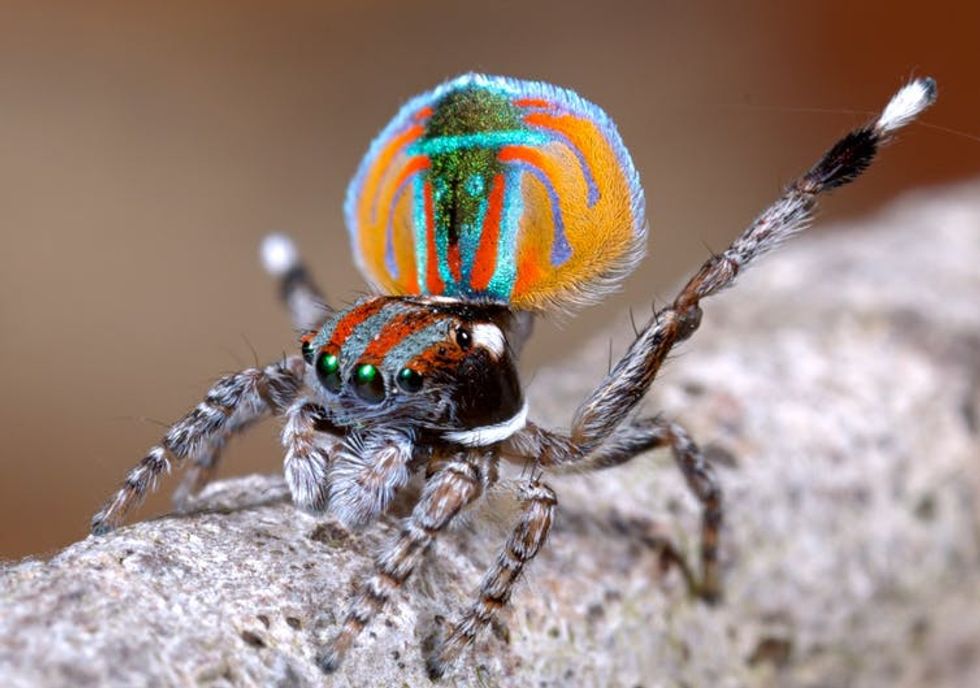
While other general conclusions are hard to draw from the literature on arachnophobia, arachnologists like me should rejoice at the results of Hettema’s study. If nothing else, at least sharing images of spiders may help reduce arahnophobia.
Businesses can play a major role in either facilitating modern slavery or eradicating it. Yet firms are addressing modern slavery in their supply chains in many different ways, and the ways in which they report on their activity is sometimes vague and not particularly helpful. That’s the main finding from our new research into modern slavery business reporting in response to recent UK legislation.
Awareness of the problem of modern slavery led to the passing of the Modern Slavery Act in 2015. The law requires businesses that supply goods or services with a turnover in excess of £36m to issue an annual slavery and human trafficking statement. This should outline the steps taken to ensure slavery is not occurring in any part of the business and, importantly, supply chain where it is harder to track if workers are trafficked or trapped into working in poor conditions.
The emphasis on the supply chain raises the stakes for organisations substantially. Their statements have to be made publicly available and be approved by the organisation’s leaders.
There are no fixed requirements for what must be included. But it has been suggested that the statement include details of the organisation’s structure; its policies on slavery and human trafficking; due diligence processes; the parts of its supply chain that are vulnerable and the steps taken to manage this risk; an assessment of the effectiveness of actions taken; and, details of training offered on modern slavery and human trafficking.
Companies have a great deal of freedom to decide what they say and do not say about modern slavery. This means there remains a vagueness surrounding the information they disclose.
What we found
We analysed the latest modern slavery statements released by 101 firms in the clothing and textiles sector. This is an industry with supply chains all over the world, high labour intensity, and one that has experienced major problems with the way it conducts its business in recent years. The industry is particularly susceptible to modern slavery due to the number of low-skilled jobs involved and this is compounded by the demand for fast, cheap fashion.
For most companies we looked at, this was the first statement they had released since the 2015 Modern Slavery Act came into effect. Overall, we found a limited number of fairly standard detection and remediation practices, mainly aimed at first-tier suppliers. The most common detection practice is to conduct an audit against a company code of conduct.
Nike, for example, publishes a code of conduct that its suppliers are expected to follow, alongside its global supplier list. Audits are carried out against the code of conduct, which requires a “respected, safe, fair and sustainable” working environment. Online retailer Asos, meanwhile, provides detailed action plans of their remediation techniques for modern slavery issues such as migrant, refugee, child and contract workers.
The most common response to the discovery that a supplier is not meeting a buyer’s expectations is to put a plan in place to remedy this. A series of corrective actions are agreed, planned over a reasonable timeframe, supported by the buyer and overseen by regular follow-up audits. For example, an investment into the equipment workers are using may be agreed upon.
In reality, this is not as good a solution for modern slavery as it is for other, often more minor social issues. Issues like blocked fire exits or poor chemical safety are easy for companies to identify and their suppliers to fix – without causing too much of a public relations headache (unless they are only identified in the aftermath of a major disaster).
But something as criminal and deliberate as forced labour makes it hard for buyers to act in any other way than reporting it to the appropriate authorities and cracking down on it. So the intangible element of how workers are treated, which can be difficult to evaluate, may offer greater temptation for the supplier (or their supplier) to hide violations.
It’s difficult to evaluate how supply chain workers are treated.
Buyers cannot easily support or allow for solutions to modern slavery discoveries without admitting fault – as any response other than reporting it to the appropriate authorities could be interpreted as being complicit in criminal activity.
Substantial diversity
There was substantial diversity in the statements we analysed. This reflects the newness of the legislation and it’s likely that responses will become more standardised over time, as expectations develop.
Only 62% of the 101 statements we looked at had been formally signed by the board of directors – despite this being a requirement of the legislation. This draws into question whether the legislation has elevated modern slavery from the procurement department to the boardroom. It also challenges the idea that a firm’s disclosure strategy is in line with its overall corporate strategy.
Another issue we found was that firms refer to future plans or achievements that related to other social or even environmental issues like reducing their water use, possibly as a distraction tactic – to divert attention away from how little they have done, in some cases, about modern slavery so far.
For detection practices to be rolled out across global supply chains, firms may need to work together to have a greater say with suppliers and law enforcers. Or they may need to mobilise vulnerable workers to their raise concerns – a form of whistleblowing.
Companies must also examine what part they may play in encouraging modern slavery, such as by driving down supplier prices or demanding ever-quicker production. These practices play a big role in pushing suppliers to pursue cheap labour solutions and illicit subcontracting.
Postcolonial scholarship has overwhelmingly focused on the legacy of Western empires – but despite a long history of foreign expansionism and domination, Russia, in its various incarnations, has never received the same amount of critical scrutiny. The Tsarist empire’s position outside the West proper, the Soviet Union’s stated opposition to imperialism, and the fact that Russia’s empire was a contiguous land empire rather than an overseas one all helped shield it from postcolonial critique.
The result is a strange oversight – especially considering the fact that the heir to the largest continental empire in modern history clearly remains uncomfortable with the independence of many of its former subordinates.
That discomfort stems from an imperial mindset that has survived the 20th century’s revolutions and geopolitical transformations, and which remains fundamentally entwined with Russia’s complex and longstanding sense of its place in the world.
Neither fully European nor fully Asian but instead splayed over the Eurasian landmass, Russia has always struggled with its ambiguous identity. Pre-modern Russia was Christian, but Orthodox; in the 19th century, its intellectual elites engaged in Europe’s great enlightenment debates, while its autocratic government and feudal-agrarian economy increasingly set it apart from a liberalising, industrialising Europe. Similarly, the Bolsheviks’ Marxism-Leninism was simultaneously a product of the European enlightenment and a clear ideological break from Euro-American capitalism.
The upshot is that for centuries, Russia’s multifaceted, complex identity has led it to justify its imperial dominion in its own peculiar way, over subjects both Eastern and Western. Like its Western counterparts, Russia pursued distinct civilising missions that it imposed – by force if necessary – on subject peoples in a centuries-old pattern that has continued into the present. But unlike the Western powers, it did so by arrogating itself “spheres of influence” situated in both East and West.
The Emperors’ club: Tsar Nicholas II with Germany’s Kaiser Wilhelm II, 1913.
Depending on when and where they were undertaken, these civilising ventures were enforced in different ways. In “its” East – the Caucasus and Central Asia – imperial Russia styled itself a protector of Christianity, or an “enlightening force” much in the same way as Western powers, using identifiably Orientalist tropes against Muslim “backwardness” and Eastern “irrationality”. In the West, conversely, Russia posed as a guarantor of Orthodoxy against the corrupting dangers of Catholic “Jesuitism”, or the more liberal expressions of the European enlightenment.
Soviet Russia invoked Marxism-Leninism to justify a similar onslaught, this time against “bourgeois nationalisms” – first in areas like Ukraine, and after World War Two, in Eastern and Central Europe. This it managed to do while also framing a campaign against Islamic traditions as a secular struggle against oriental backwardness.
Today, in an age where formal empire is considered anathema, this Eastern/Western ambiguity still shapes Russia’s attitude towards “its” neighbourhood. It means the Kremlin can argue that its western “dominions” are in fact separate from the West proper, while simultaneously justifying its lordship over “irrational orientals”.
Russia to the rescue
To distinguish itself from the liberal West, the Putin government elevates and glorifies traditional elements of Russian identity, among them Orthodox Christianity and carefully selected aspects of the Soviet legacy – chief among them the “Great Patriotic War”, the Russian term for the fight against Nazi Germany on the Eastern Front.
By invoking this history, Putin’s Russia lays claim to an “authentic”, traditional European identity. The West, so the argument goes, has degenerated into postmodern decadence, and only Russia is able to salvage Europe’s conservatively defined values before they fall victim to what Putin has called “chaotic darkness”.
On another front, Russia defines itself as a civilising force over Caucasian and Central Asian “Orientals”, whom it presents as irrational and prone to misrule. Accordingly, the “authenticity” of Western and Eastern nations and peoples is defined on distinctly Russian terms.
The “good”, “authentic” Ukrainian is by definition pro-Russian, and so is the “authentic” Chechen or Georgian. Those in the “Russian” East who do not conform are branded as madmen and Islamist terrorists; in “its” West, they are fascists or moral degenerates.
Non-Russian Ukraine is apparently the most deviant, with the Kremlin frequently making largely unfounded accusations that Kiev is under the sway of neo-Nazis. The Russian government’s descriptions of its Eastern opponents are no less flattering, harking back to Tsarist and early Soviet times. Adversaries such as Georgia’s Mikhail Saakashvili or Chechnya’s Dzhokhar Dudayev are “madmen”, “brigands” and “bandits”; meanwhile, back in Russia itself, ordinary “individuals of Caucasian (or Central Asian) nationality” are routinely confronted with that ultimate indicator of imperial hierarchy: racism.
This is about more than just “Putinism”. It is a pattern that’s repeated itself for centuries, and it stems from a deeply held aspiration to “great power” status. The Tsarist Empire did it, so did the Soviet Union, and so does today’s Russian Federation. “Decolonising” the Kremlin might therefore take much longer, and much more, than overthrowing the Tsar, dismantling the Soviet Union, or securing some kind of “regime change” in today’s Moscow. It will require nothing less than a fundamental redefinition of Russian identity.
Today we fully expect film, television and theatre to use music to shape meaning. The screeching violins of Psycho and the menacing Jaws theme, for instance, both depend upon a shared 20th-century dramatic language in which music indicates mood. Rewind 400 years and it may not seem like the same is true. Take Shakespearean drama. Many modern productions choose to avoid historical music altogether, preferring new compositions or pre-recorded popular songs that more obviously indicate mood to modern ears.
Yes, early modern theatre was a little more restrained in its musical practices when compared to the near-constant musical underscore of screens large and small today. But music was actually an equally important component of Shakespeare’s dramaturgy, often combined with words, action and the occasional firework to shape dramatic meaning.
Indeed, 16th and 17th-century playhouse music was in one sense even more “real” than later equivalents. It typically existed within the world of the play: it was audible to the onstage characters. In contrast, the modern norm is music as underscore, sounds that shape mood for the audience but are not part of the dramatic world.
To understand just how important music is to Shakespeare’s dramatic craft, we have to do more than simply recover playhouse musical practices. We must also consider what it meant to listen to music with early modern ears, and therefore how Shakespeare expected his audiences to respond.
How would a Jacobean servant react to a trumpet flourish? What about a merchant to an emotive ballad? Or hidden music, rumbling up from under the stage? I have been pondering these questions of late, surveying many texts of the period in search of popular ideas of how music might affect you. In particular, my recent research traced ideas apparently familiar to the average playgoer, rather than the specialist views of composers, theorists and occupational musicians.
A winter’s miracle
What emerges is not always as we might expect. Shakespeare’s audience firmly believed that music needed to be seen as well as heard to be experienced properly. They had an extremely high opinion of music’s connection to the celestial and the supernatural and therefore its power over body and soul, to the degree that it was considered physically impossible not to listen when harmony sounded. Even music’s relationship with memory and imagination was understood in terms very different from those of modern neurological studies.
These beliefs may seem arcane, and irrelevant to our encounters with Shakespeare today. But by ignoring them, we are missing out on Shakespeare’s dramatic intentions. We may even find ourselves in manifest danger of not understanding him.
The Winter’s Tale is an important play in this regard. It hinges on a barely plausible resurrection in the final scene when Hermione’s statue is brought to life by music. Today, the scene is typically staged as an elaborate but somewhat unconvincing deception. Hermione, it is implied, has simply been hiding for the 16 years between her supposed death and the revelation of the statue.
A mid-19th century ink drawing of the statue of Hermione coming to life.
But early modern subjects may have seen this scene very differently, if we consider how they thought of music. Alongside the natural scepticism that this fantastical plotline raises, Shakespeare’s first audiences would have brought with them a firm conviction that music can compel the body and even resurrect. Indeed, Shakespeare seems particularly fond of the “musical resurrection” motif, which has its origins in alchemical theory. Similarly, in Pericles, written a few years before The Winter’s Tale, Cerimon uses “rough and woeful” music to help bring Thaisa back to life.
Music making meaning
In light of early modern musical beliefs, then, it seems likely that Shakespeare wanted a somewhat complex and equivocal conclusion to The Winter’s Tale. Rather than inviting a straightforward interpretation of the scene, as performances today often encourage, the statue could be a hoax, but could equally be a mythical story of music’s power. A “winter’s tale” is, after all, another name for a fairy story.
Music was a dramatic tool for Shakespeare, used deliberately and precisely to shape meaning at the conclusion of The Winter’s Tale, and in many other plays including Richard III, Othello and Antony and Cleopatra. Neither is Shakespeare alone in this regard. Many of his contemporaries, such as John Fletcher, Thomas Heywood, John Marston and Thomas Middleton made similar use of music’s dramatic potential.
Careful consideration of popular musical culture in Shakespeare’s time can help reveal crucial nuances in his storytelling. This is important to note, because these details might otherwise be missed at a historical distance of some four centuries. 20th-century underscoring may be the most famous form of music as a dramatic medium. But in a slightly different idiom, Shakespeare and his contemporaries might just have got there first.
By building networks of fake and automated accounts on Twitter, governments and businesses can artificially inflate the popularity and influence of individual accounts and create trendsusing hashtags. Put differently, malicious users can employ Twitter to spread and amplify disinformation to its real users.
Governments and social media companies are racing to keep up with events, and companies like Facebook and Twitter are adapting their internal policies to forestall more onerous government regulations.
Will this be enough to protect democracy and free speech?
Specifically, can Twitter effectively limit its use for foreign influence by eliminating bots and fake accounts from its platform for one of the world’s most polarizing political figures, the current U.S. president?
Twitter’s policy problem
Twitter has been forced into the spotlight given its personal use by Trump and its prominence in digital diplomacy, its targeting by social media marketer Devumi for fraudulent marketing, its citation in Special Counsel Robert Mueller’s indictments against Russian conspirators and its central role in establishing new regulations for social media.
If Twitter is unable or unwilling to follow through on its promise to address this issue, it isn’t because of a lack of policies — it’s due to ineffective design and enforcement.
By January 2018, Twitter published an update. It found 3,814 accounts operated by the Internet Research Agency (IRA), an outfit of the Russian government. These accounts tweeted 175,000 times, reaching 1.4 million Americans during the election.
But a week later, the New York Times revealed Devumi sold more than 200 million followers to 39,000 clients using roughly 3.5 million fake accounts. Shortly after, Mueller indicted Russia’s IRA and its conspirators for executing an influence campaign, citing the instrumental role of social media, including Twitter, in the 2016 U.S. presidential election.
Twitter has therefore become an unwitting instrument for foreign influence and political propaganda. Not only is the IRA-run network of bots still active, but some of Devumi’s clients are prominent foreign officials, including an editor of China’s state-run news agency and an adviser to Ecuador’s president.
To compound the problem, false information spreads faster than factual information. The Parkland high school shooting illustrates how the potent combination of disinformation and bots can exacerbate partisan tensions and thwart democratic discourse. Not only did fake Russian accounts race to fill the Twittersphere with divisive content following the shooting, but a doctored video circulated in which student survivors of the shooting were seen tearing up the Constitution.
Tweeting his way to the presidency
Major events from 2013 to 2018.
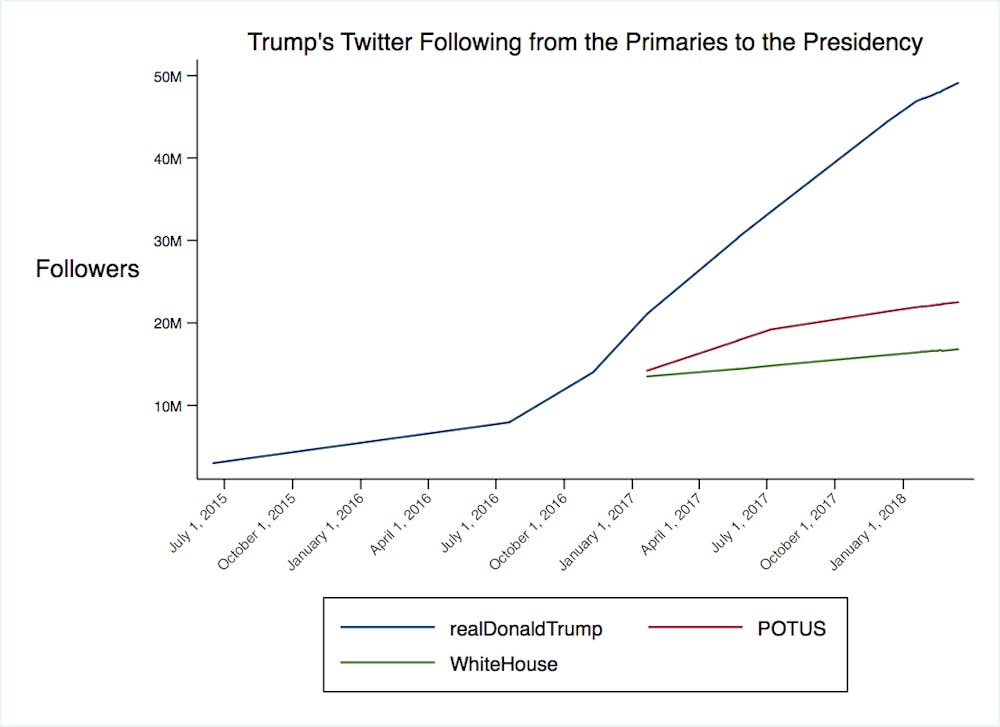
Using our timeline above of major events credited with attracting bot activities, we tracked followers and engagement of the three Twitter accounts attached to Trump. The @realDonaldTrump account should be a particular attraction for bots and fake accounts given its size, volatility, and the expressed interest of government-affiliated Russians in Trump’s political influence. Therefore the effects of Twitter’s platform changes aimed at eliminating fake and automated followers should be especially noticeable here.
Trump’s Twitter following from the primaries to the presidency per account.
Twitter; Internet Archive's Wayback Machine
It’s clear that Twitter’s platform changes (expanded definition of “spam” in November 2017 and enforcement of new policies on Dec. 18, 2017) has not had the expected effects. With fake accounts making up about 15 per cent of Twitter’s active users, plus third-party estimates that up to 30 per cent of @realDonaldTrump’s followers are fake, we would have expected to see a noticeable drop in Trump followers and engagement after the platform changes.
Instead, his followers and engagement rose steadily from 2015 on (as did the @WhiteHouse and @POTUS accounts, although much more slowly). This suggests one of three possibilities:
The platform changes were a publicity move rather than a substantive change of practice;
Despite its best intentions and efforts, the technical task of removing and blocking bots is more difficult than anticipated, or;
Bots are quick, adaptable and able to keep pace with any attempts to eliminate them.
What next?
Twitter’s unsuccessful battle against bots and fake accounts demonstrates the problem of corporate self-regulation and suggests the need for coordinated and likely coercive government intervention. Companies have strong incentives to pass vague policies to provide flexibility and to avoid undercutting their economic model. As enforcement is in the hands of the corporation, policies that are open to interpretation protect them from pressures to enact costly measures.
The initial evidence presented here reinforces these concerns.
Privately governed social media platforms, integral to many individuals’ daily lives, have yet to be held accountable for past political interference in democratic processes. Individual companies themselves have limited incentives to enact strong measures to protect democratic processes in the future, as this would disadvantage them in an incredibly competitive and lucrative economic market.
The remaining option is government regulation, which could occur at the national or international level.
Given states’ incentives to keep regulation lax to encourage corporations to remain in their jurisdictions, the only option to prevent malicious manipulation of social media may be international cooperation for a new global information communication technology regime.
This article is part of a three-part package exploring immunity and infectious diseases around the world.
Human beings are large, complex, multicellular, multi-organ systems. We reproduce slowly and rely on a breadth of mechanisms that allow us to control the myriad of rapidly replicating, simple life forms that have evolved to live in or on us.
The system of defence is referred to collectively as immunity.
The word itself comes from the Latin immunis, describing the status of returned soldiers (Genio immunium) in the Roman state who were, for a time, exempt from paying taxes.
Our immunity protects us from many illnesses, including some forms of cancer. New cancer therapeutics, called immunotherapies, work by boosting our immune cells to fight cancer cells that have found ways to evade them.
The immune system is divided into two interactive spheres, the much older “innate” sphere, and the more recently evolved “adaptive” sphere. A primary challenge for the very specifically targeted cells that form the basis of adaptive immunity is to distinguish “self” (our own body cells and tissues) from “non-self” – the foreign invaders. When that goes wrong, we can develop autoimmune diseases such as multiple sclerosis or rheumatoid arthritis.
The human body is host to many organisms over a lifetime. Some are dangerous to health (pathogens), some are benign, and some are necessary for proper functioning.
Most of the genetic material we carry around with us is “non-self”: principally harmless bacteria (called “commensals”) that live in the gastrointestinal tract.
Traditionally, studies focused on the “bad bugs” in our gut that cause diarrhoea and dysentery. But more recently, we’re learning there are also good guys. And there’s a general consensus we need to know more about the “microbiome”, the mass of bacteria in any “clinically normal” gut.
Gut bacteria provide essential vitamin B12 and when they die, release myriad proteins that will be broken down into amino acids, which the body needs. About 30% of our poo is comprised of dead bacteria.
Apart from our microbiome, normal human beings also have a substantial “virome”. Viruses differ from bacteria (which are cells in their own right) in that they are much simpler and can only replicate in living cells.
The greatest number of viruses we carry around are the “bacteriophages”, which infect the commensal bacteria in our gut. Not all “phages” are, however, benign. For example, the toxin that causes human diphtheria is encoded in the genome of a bacteriophage.
There’s also a spectrum of viruses that persistently infect our body tissues. The most familiar are herpes viruses, like those that cause cold sores (H. simplex) and shingles (H. zoster). Both viruses hide out in the nervous system and are normally under immune control. They re-emerge to cause problems as a consequence of tissue stress (such as a sunburnt lip) or as immunity declines with age (shingles). This is why a booster shingles vaccine is recommended for the elderly.
The innate system ranges from processes as basic as phagocytosis (ingestion of bacteria), to molecules like the interferons produced by any virus-infected cell that can limit replication. Such innate systems are found right across the evolutionary spectrum and don’t target specific pathogens.
The much younger adaptive immune system is what we stimulate with vaccines. A property of small white blood cells called lymphocytes, it divides broadly into two lineages: the B cells and T cells. These bear the extraordinarily diverse and very specific immunoglobulin (Ig) and T cell receptor (TCR) recognition molecules that detect invading pathogens (bacteria, virus, fungi and so on).
The immunoglobulins bind to “non-self” (foreign) proteins called “antigens”, while the T cell receptors are specifically targeted to “self” transplantation molecules.
The assassins of the immune system are then switched on; the killer T cells that eliminate virus-infected (or cancer) cells. Also activated are the “helper” T cells that secrete various molecules to “help” both the B cells and killer T cells differentiate and do their work.
All lymphocyte responses work by massive cell division in the lymph nodes (the “glands” in our neck that swell when we get a sore throat). This process is started by small numbers of “naive” B and T cells that haven’t encountered the invader before, and only stops when the foreign invader is eliminated.
The B cells differentiate into large protein-secreting cells called plasma cells, which produce the protective antibodies (immunoglobulins) that circulate for years in our blood.
Most of the T cells die off after they’ve done their job, but some survive so they can remember how to target specific invaders. They can be rapidly recalled to their “killer” or “helper” function.
Prior infection or the administration of non-living or “attenuated” (to cause a very mild infection) vaccines sets up the memory so protective antibodies are immediately available to bind (and neutralise) pathogens like the polio or measles virus. While immune T cells are rapidly recalled to “assassin” status and eliminate pathogen-infected cells.
As you may have gathered from this very brief and far too simplified account, the immune system is extraordinarily complex. And it’s also very finely balanced with, for example, cross reactive responses to bacterial proteins sometimes setting us up for autoimmune diseases.
Another example of autoimmunity is rheumatoid arthritis, which can be triggered by blood-borne chemicals from tobacco smoke that modify “self” transplantation molecules in the joints.
And when we talk about the possible effects of the microbiome, or the “too clean” hypothesis, we’re discussing how exposure to bacteria and viruses can modify that immune balance in ways that directly affect our wellbeing. This is a very active area of research which, given the underlying complexity, presents scientists with big challenges as we seek to reach verifiable conclusions.







 And what of France’s European neighbour, the United Kingdom? Has it been spared from such invaders? Well, yes… and no. There are not yet any reports of the giant Bipalium or Diversibipalium flatworms in British gardens, the weather likely being too cold for these semitropical animals. But one species features a scientific name with a very English origin, Bipalium kewense – in Latin it means “from Kew”, because it was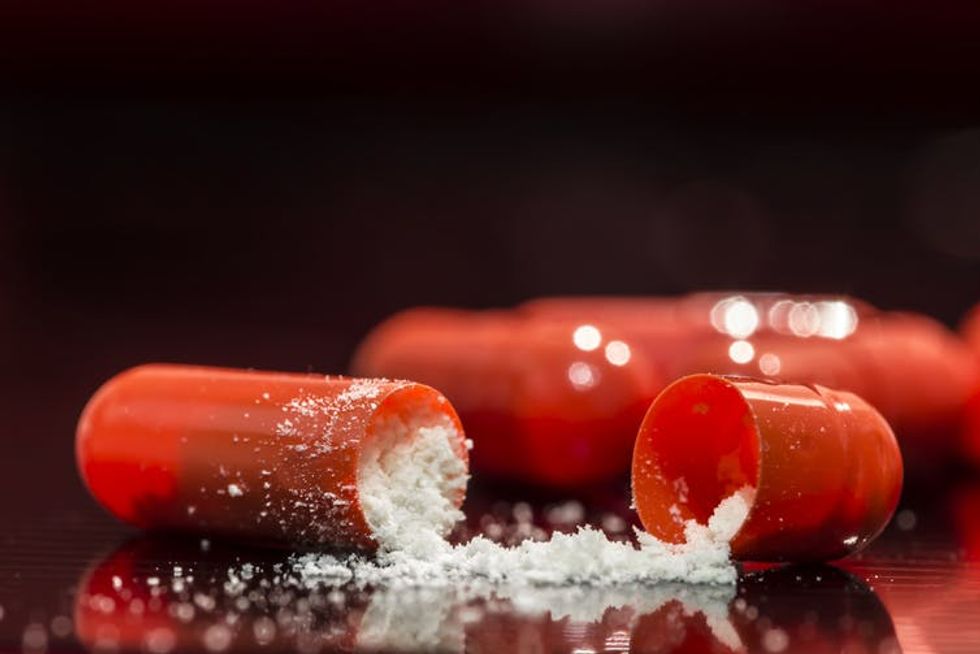




 Transhumanism and advanced capitalism are two processes which value “progress” and “efficiency” above everything else. The former as a means to power and the latter as a means to profit. Humans become vessels to serve these values. Transhuman possibilities urgently call for a politics with more clearly delineated and explicit humane values to provide a safer environment in which to foster these profound changes. Where we stand on questions of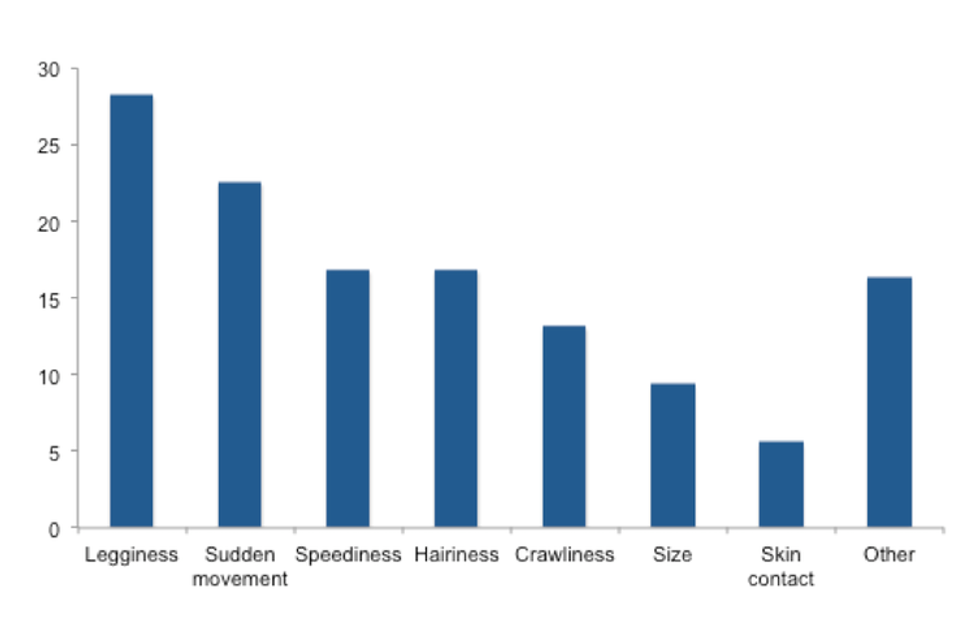
 While other general conclusions are hard to draw from the literature on arachnophobia, arachnologists like me should rejoice at the results of Hettema’s study. If nothing else, at least sharing images of spiders may help reduce arahnophobia.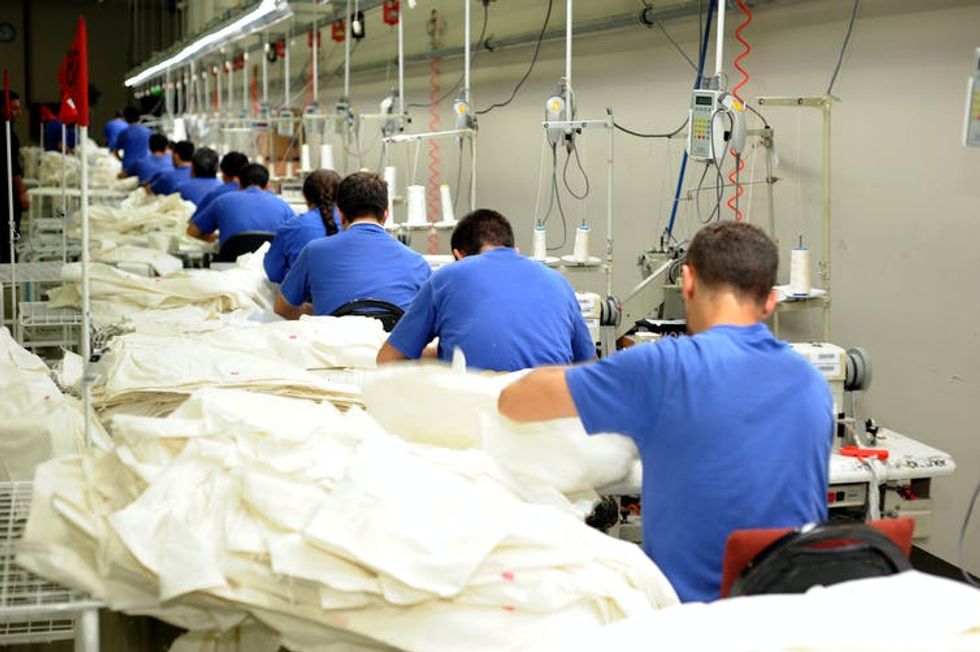
 Companies must also examine what part they may play in encouraging modern slavery, such as by driving down supplier prices or demanding ever-quicker production. These practices play a big role in pushing suppliers to pursue cheap labour solutions and illicit subcontracting.
 This is about more than just “Putinism”. It is a pattern that’s repeated itself for centuries, and it stems from a deeply held aspiration to “great power” status. The Tsarist Empire did it, so did the Soviet Union, and so does today’s Russian Federation. “Decolonising” the Kremlin might therefore take much longer, and much more, than overthrowing the Tsar, dismantling the Soviet Union, or securing some kind of “regime change” in today’s Moscow. It will require nothing less than a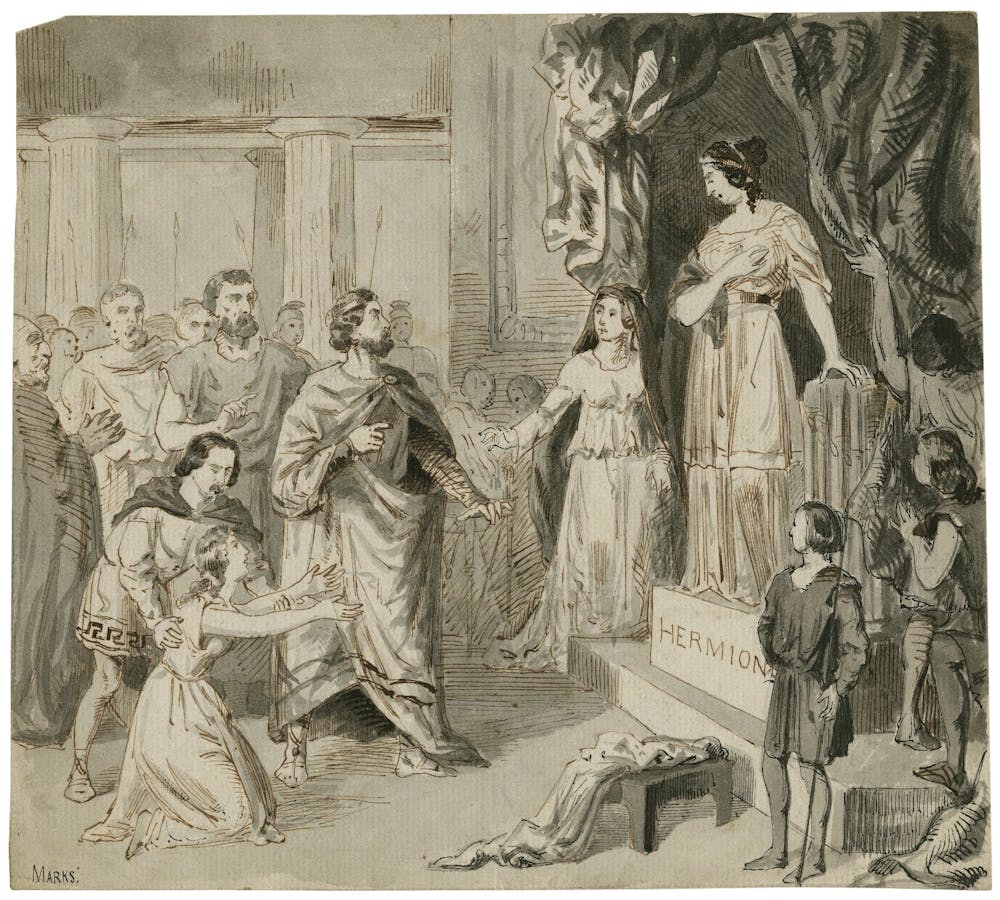
 Careful consideration of popular musical culture in Shakespeare’s time can help reveal crucial nuances in his storytelling. This is important to note, because these details might otherwise be missed at a historical distance of some four centuries. 20th-century underscoring may be the most famous form of music as a dramatic medium. But in a slightly different idiom, Shakespeare and his contemporaries might just have got there first.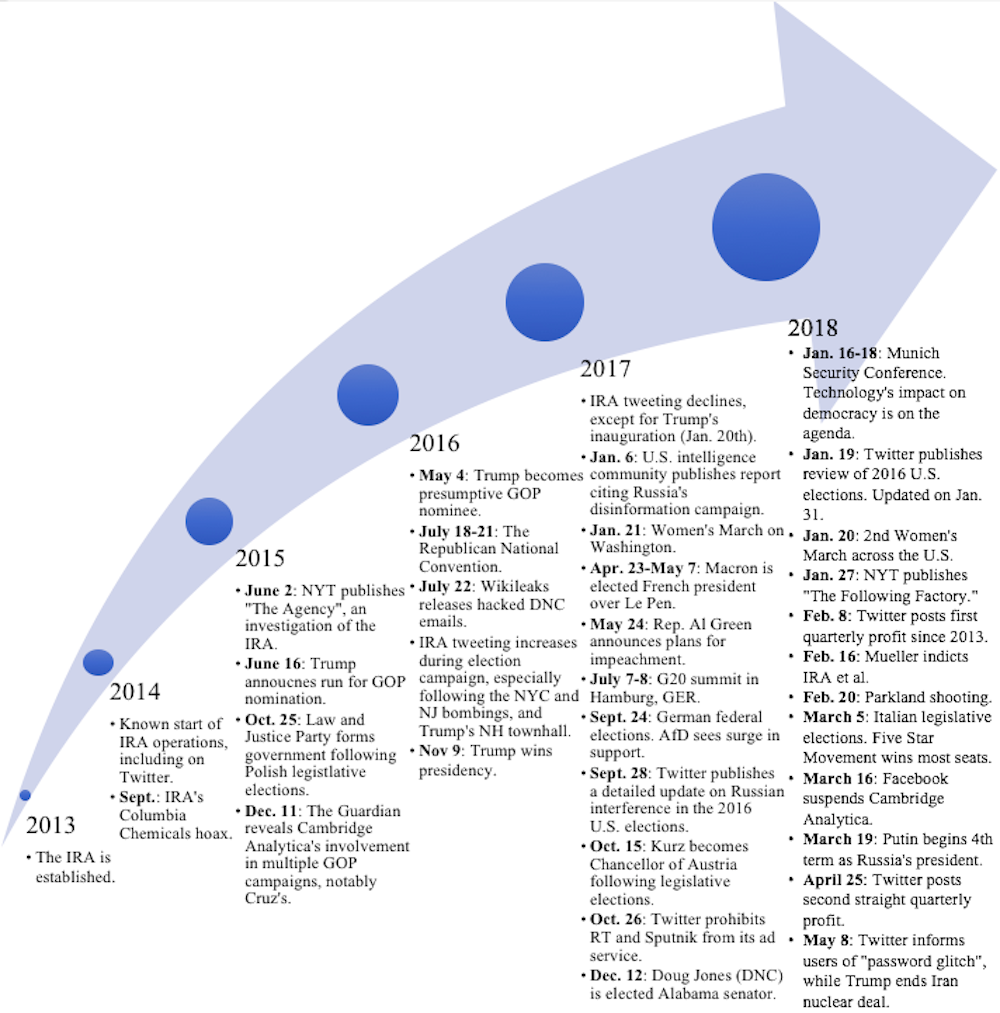
 Given states’ incentives to keep regulation lax to encourage corporations to remain in their jurisdictions, the only option to prevent malicious manipulation of social media may be international cooperation for a
  And when we talk about the possible effects of the microbiome, or the “too clean” hypothesis, we’re discussing how exposure to bacteria and viruses can modify that immune balance in ways that directly affect our wellbeing. This is a very active area of research which, given the underlying complexity, presents scientists with big challenges as we seek to reach verifiable conclusions.
