South Korean President Moon Jae-in met North Korean leader Kim Jong Un on Saturday to discuss Kim’s possible upcoming summit with U.S. President Donald Trump, the South said, the second inter-Korean summit in as many months.
Moon and Kim met just north of the heavily militarised border in the afternoon to exchange views to pave way for a summit between North Korea and the United States, South Korea’s presidential office said.
Moon will announce the outcome of his two-hour meeting with Kim on Sunday morning, officials aid.
Reporting by Hyunjoo Jin and Soyoung Kim; Editing by Alison Williams
Ireland is set to liberalize some of the world’s most restrictive abortion laws after exit polls suggested a landslide vote for change in what was until recently one of Europe’s most socially conservative countries.
As the vote count began on Saturday morning, a spokesman for an anti-abortion umbrella group Save The 8th John McGuirk conceded there was “no prospect” the country’s abortion ban, imposed in a 1983 referendum, would be retained.
“It’s a Yes” read a banner front-page headline in the country’s best-selling newspaper, the Irish Independent after two exit polls suggested a landslide win, which it described it as “a massive moment in Ireland’s social history”.
An Irish Times/Ipsos MRBI exit poll suggested that voters in the once deeply Catholic nation had on Friday backed change by 68 percent to 32 percent. An RTE/Behaviour & Attitudes survey put the margin at 69 percent to 31 percent.
If confirmed, the outcome will be the latest milestone on a path of change for a country which only legalized divorce by a razor thin majority in 1995 before becoming the first in the world to adopt gay marriage by popular vote three years ago.
Voters were asked if they wish to scrap the eighth amendment to the constitution, which gives an unborn child and its mother equal rights to life. The consequent prohibition on abortion was partly lifted in 2013 for cases where the mother’s life was in danger.
“It’s looking like we will make history tomorrow,” Prime Minister Leo Varadkar, who was in favor of change, said on Friday night on Twitter.
Vote-counting began at 0800 GMT across the country on Saturday, with the first indication of official results expected mid-morning. Campaigners for change, wearing “Repeal” jumpers and “Yes” badges, gathered at the main Dublin count center, many in tears and hugging each other.
“It’s incredible. For all the years and years and years we’ve been trying to look after women and not been able to look after women, this means everything,” said Mary Higgins, obstetrician and Together For Yes campaigner.
“Yes” campaigners argued that with over 3,000 women traveling to Britain each year for terminations - a right enshrined in a 1992 referendum - and others ordering pills illegally online, abortion is already a reality in Ireland.
For the “No” campaign, the outcome was seen as a disaster. “What Irish voters did yesterday is a tragedy of historic proportions,” Save The 8th said in a statement. “However, a wrong does not become a right simply because a majority support it.”
PARLIAMENTARY BATTLE
No social issue has divided Ireland’s 4.8 million people as sharply as abortion, which was pushed up the political agenda by the death in 2012 of a 31-year-old Indian immigrant from a septic miscarriage after she was refused a termination.
Campaigners left flowers and candles at a large mural of the woman, Savita Halappanavar, in central Dublin.
The Irish Times exit poll showed overwhelming majorities in all age groups under 65 voted for change, including almost nine in every 10 voters under the age of 24.
The fiercely contested vote divided political parties, saw the once-mighty church take a back seat, with the campaign defined by women on both sides publicly describing their personal experiences of terminations.
Although not on the ballot paper, the “No” camp sought to seize on government plans to allow abortions with no restriction up to 12 weeks into a pregnancy if the referendum is carried, calling it a step too far for most voters.
“There is no prospect of the legislation not being passed” Save The 8th spokesman McGuirk told state broadcaster RTE, before appealing for tolerance and respect from “those who find themselves in the majority now”.
The result is likely to be followed by a battle in parliament on how exactly access to abortion will be increased.
“We now have to hold the government to what they have said, that they want to see a situation where abortion will be rare,” said leading anti-abortion campaigner Cora Sherlock.
Colm O’Riain, a 44-year-old school teacher who was at one of the main Dublin county centers with his infant son Ruarai who was born 14 weeks premature in November, was also looking to the future.
“For him (his son), it’s a different Ireland that we’re moving onto. It’s an Ireland that is more tolerant, more inclusive and where he can be whatever he wants without fear of recrimination,” he said.
The people of Ireland are set to liberalize some of the world’s most restrictive abortion laws by a landslide, an exit poll showed on Friday, as voters demanded change in what two decades ago was one of Europe’s most socially conservative countries.
The Irish Times/Ipsos MRBI exit poll suggested that voters in the once deeply Catholic nation had backed a referendum by a margin of 68 percent to 32 percent. A second exit poll was due to be published by 2230 GMT.
Turnout could be one of the highest for a referendum, national broadcaster RTE reported, potentially topping the 61 percent who backed gay marriage by a large margin in 2015 as voters queued outside polling stations throughout the day in the blistering sunshine.
Irish Prime Minister Leo Varadkar, who is in favor of change and has called the referendum a once-in-a-generation chance, said earlier on Friday that he was “quietly confident” that the high turnout was a good sign.
Vote-counting begins at 0800 GMT on Saturday, with the first indication of results expected mid-morning.
Voters were asked if they wish to scrap a 1983 amendment to the constitution that gives an unborn child and its mother equal rights to life. The consequent prohibition on abortion was partly lifted in 2013 for cases where the mother’s life is in danger.
Ireland legalized divorce by a razor-thin majority only in 1995, but became the first country to adopt gay marriage by popular vote in a 2015 referendum.
But no social issue has divided its 4.8 million people as sharply as abortion, which was pushed up the political agenda by the death in 2012 of a 31-year-old Indian immigrant from a septic miscarriage after she was refused a termination.
“I think this issue is important because it’s been 35 years since any person has had a choice to vote,” said Sophie O’Gara, 28, who was voting “Yes” near Dublin’s bustling ‘Silicon Docks’, home to some of the world’s biggest technology firms.
“So many women have travelled across to England to take care of their family and healthcare needs and I think it’s a disgrace and it needs to change,” she said, referring to women who travel to Britain for abortions.
FIERCE CAMPAIGN
The fiercely contested vote has divided political parties, seen the once-mighty church take a back seat, and become a test case for how global internet giants deal with social media advertising in political campaigns.
Unlike in 1983, when religion was front and center and abortion was a taboo subject for most, the campaign was defined by women on both sides publicly describing their personal experiences of terminations.
“Yes” campaigners have argued that with over 3,000 women traveling to Britain each year for terminations — a right enshrined in a 1992 referendum — and others ordering pills illegally online, abortion is already a reality in Ireland.
Although not on the ballot paper, the “No” camp has seized on government plans to allow abortions with no restriction up to 12 weeks into a pregnancy if the referendum is carried, calling it a human rights issue and a step too far for most voters.
“I think it’s important that we protect the unborn babies, people don’t care anymore about the dignity of human life. I’ve a family myself and I think it’s really important,” said John Devlin, a marketing worker in his 50s voting “No” near Dublin’s city center.
The Irish government’s push to liberalize the laws is in contrast to the United States, where abortion has long been legal, but President Donald Trump backs stripping federal funding from women’s health care clinics that offer abortions.
HOME TO VOTE
Videos shared on social media showed scores of voters arriving home at Irish airports from abroad. Ireland does not allow expatriates to vote via post or in embassies but those away for less than 18 months remain on the electoral roll.
As with the gay marriage referendum, those using the #hometovote hashtag on Twitter appeared overwhelmingly to back change. Many posted photos of themselves wearing sweatshirts bearing the “Repeal” slogan.
“Women and girls should not be made into healthcare refugees when they are in a time of crisis,” said Niamh Kelly, 27, who paid 800 euros and traveled 20 hours to return home from Hanoi where she works as an English teacher.
“This is a once in a lifetime generation chance to lift the culture of shame that surrounds this issue so it was really important to me to be part of that.”
Additional reporting by Emily Roe; Editing by William Maclean, Angus MacSwan and Grant McCool
A third lava flow from Hawaii’s erupting Kilauea volcano streamed into the ocean on Thursday as U.S. Marine Corps helicopters stood by to evacuate a Big Island community should molten rock or huge cracks block its final escape route.
Six huge fissures sent rivers of molten rock through a blackened, volcanic wilderness that was once jungle, farmland and rural homes.
Kilauea, one of the world’s most active volcanoes, entered the fourth week of what may be an unprecedented, simultaneous eruption at its summit crater and along a six-mile (9.7-km) string of fissures 25 miles (40 km) down its east flank.
At about 6 p.m. local time on Thursday, the volcano erupted at its summit, sending ash 10,000 feet (3000 m) into the air. The wind may carry ash to the southwest toward the Pahala area, the Hawaiian Volcano Observatory said.
At least 50 rural homes and other structures have been destroyed by lava from fissures in a small area of the Big Island. Some 2,000 people have faced mandatory evacuations and another 2,000 in coastal communities may be forced to leave their homes if State Highway 130, their last exit, becomes blocked.
The U.S. Marine Corps deployed two CH-53E Super Stallion helicopters to Hilo, about 24 miles north (39 miles), in support of a task force standing by in case an air evacuation is needed. Each helicopter can carry up to 50 people at a time.
“We now have the capacity to evacuate all of the estimated population of lower Puna south of the lava flow within a few hours,” Brigadier General Kenneth Hara of the Hawaii National Guard said in a statement.
Road crews dumped material into cracks on the road and covered them with steel plates in an effort to keep the highway open.
“Talks and discussions have been underway for possible air evacuations if it did come to that,” Tim Sakahara, Hawaii Department of Transportation, told reporters in a conference call.
Up at Kilauea’s 4,091-foot (1,246-meter) summit, at least 12 explosions a day on average are pumping ash plumes thousands of feet (meters) into the sky. Ash drifted up to 26 miles (42 km)southwest to dust the black sands of Punaluu beach with gray powder before blowing out to sea.
Down on the east flank of the volcano, six fissures re-erupted in lava fountains, as volcanic activity moved west towards Highway 130.
Geologists said that after three weeks of escalating activity, Kilauea volcano has entered a “steady state” of eruption.
“It’s probably going to do this for a little while longer,” said U.S. Geological Survey scientist Wendy Stovall on the conference call, describing the stage of the eruption as the “middle” or “kind of the steady state.”
While a roughly 10-square-mile (26-sq-km) area of the Puna district has been ravaged, authorities stressed the eruption was having limited effects on the Connecticut-sized island that is a major tourist destination.
Norwegian Cruise Line said it would reinstate port calls to the island’s two largest cities, Kona and Hilo, after cancelling them in recent weeks. Crystal Symphony cruises also said it planned to return to the two ports after cancelling a Wednesday Hilo stop due to “an abundance of caution.”
Additional reporting by Jolyn Rosa in Honolulu and Marco Garcia in Pahala, Hawaii; Writing and additional reporting by Andrew Hay; Editing by Bill Tarrant and Sandra Maler
Canadian Prime Minister Justin Trudeau spoke with U.S. President Donald Trump on Friday and raised “strong concerns” about a U.S. probe into car and truck imports that was launched this week, the prime minister’s office said.
The two leaders also discussed the North American Free Trade Agreement (NAFTA) negotiations and bringing talks to a timely conclusion, Trudeau’s office said in a statement.
Reporting by Leah Schnurr; Editing by James Dalgleish
The U.S. Department of Transportation told Congress it opposes a Senate bill that would require new rules prohibiting airline fees that are not “reasonable and proportional,” along with many other new consumer protections that the administration deems “unnecessary and wasteful,” according to a letter seen on Friday by Reuters.
The U.S. House in April passed a bill to reauthorize the Federal Aviation Administration by a 393-to-13 vote. It now moves to the Senate, which could take up the issue as early as next month. The Senate Commerce Committee in July 2017 passed a version of legislation to extend the FAA.
The DOT said the Senate airline fee provision requiring rules barring “unreasonable” cancellation, baggage, seat selection and same-day change fees would mark a return to the pre-1978 era before airline deregulation.
The bill said the government must review whether fees are “disproportionate to the costs incurred by the air carrier.”
U.S. airlines’ revenues from baggage and reservation change fees increased from $5.7 billion in 2010 to $7.5 billion in 2017. Other fees are not reported to regulators.
The letter said both bills have a number of consumer mandates that are “unnecessary and wasteful” and “would constitute significant regulatory overreach.”
The Trump administration called provisions that would bar airlines from denying seats to passengers who have already checked in or were cleared by the gate attendant to board “objectionable” because it would make it more difficult or prohibit airlines from continuing the practice “of overselling their scheduled flights to compensate for ‘no shows.’”
The letter suggested a passenger could need to be involuntarily bumped for a federal air marshal.
The proposals were prompted by outrage following the forcible removal in April 2017 of a United passenger from his seat in Chicago. United has since banned the practice.
The top Democrat on the Senate Commerce Committee, Bill Nelson, said the letter “reads more like something written by the airlines instead of the government watchdog that’s supposed to be protecting consumers.”
Both bills would require the department to issue regulations permanently banning mobile phone calls onboard planes. The letter called that “problematic,” noting that the Federal Communications Commission has not approved regulations to permit calls.
Reporting by David Shepardson; Editing by Dan Grebler
The provision “represents a giant step backwards, presents a risk of even wider re-regulation of the airline industry, and ultimately would harm air carriers and consumers alike,” the DOT’s deputy general counsel, James Owens, said in the May 23 letter.
Airlines for America, an airline trade group representing United Airlines Inc, American Airlines Group Inc, Southwest Airlines Co and others, said previously the provision would result in “government-mandated price controls” and should be rejected. The House bill does not have the provision.
The Chinese government has approved five trademark applications sought by Ivanka Trump Marks, LLC, the watchdog group Citizens for Responsibility and Ethics in Washington (CREW) revealed on Friday.
The approval came the same week President Donald Trump reversed course on sanctions for Chinese mobile electronics company ZTE.
"This isn’t the first time that Ivanka’s and President Trump’s business connections to China have raised potential ethics issues," CREW noted. "About 72 hours before his announcement, the Chinese government also agreed to loan $500 million to a project in Indonesia in which the Trump Organization is a partner."
The First Daughter's "limited liability corporation" already holds more than a dozen trademarks in China and has multiple pending applications.
"Last year, Ivanka’s business won preliminary approval for three trademarks on the same day that she dined with Chinese President Xi Jinping at Mar-a-Lago," the watchdog group noted. "Earlier this year, Trump announced tariffs against China that exempted clothing — including clothing imports from Ivanka’s Chinese manufacturers."
The former federal corruption prosecutor who runs CREW noted the impact of the revelations.
"More conflicts of interest and more potential for using the White House for self-enrichment," CREW Executive Director Noah Bookbinder tweeted.
The Trump administration told lawmakers the U.S. government has reached a deal to put Chinese telecommunications company ZTE Corp back in business, a senior congressional aide said on Friday.
The deal, communicated to officials on Capitol Hill by the Commerce Department, requires ZTE to pay a substantial fine, place American compliance officers at the company and change its management team, the aide said. The Commerce Department would then lift an order preventing ZTE from buying U.S. products.
In April, ZTE was banned from buying American technology components for seven years for breaking an agreement reached after it violated U.S. sanctions against Iran and North Korea. The Commerce Department decision would allow it to resume business with U.S. companies, including Qualcomm Inc, the chipmaker that is a ZTE supplier.
U.S. President Donald Trump on Tuesday floated a plan to fine ZTE up to $1.3 billion and shake up its management as his administration considered rolling back more severe penalties that have crippled the Chinese telecommunications company.
The White House did not immediately confirm news of the latest deal.
“We’ll let you know when we have an announcement on that front,” spokeswoman Sarah Sanders said.
The president’s earlier proposal ran into immediate resistance in Congress, where Democrats and Trump’s fellow Republicans accused the president of bending to pressure from Beijing to ease up on a company that has admitted to violating sanctions on Iran.
After the latest report, Republican Senator Marco Rubio tweeted, “Yes they have a deal in mind. It is a great deal... for #ZTE & China. #China crushes U.S. companies with no mercy & they use these telecom companies to spy & steal from us.”
Rubio added that Congress should act to stop Trump from letting ZTE get back into business.
News of the deal came a week before U.S. Commerce Secretary Wilbur Ross is scheduled to visit China for another round of talks amid ongoing trade frictions between the world’s two largest economies.
Reporting by Roberta Rampton and Doina Chiacu; Writing by Chris Sanders; editing by Jonathan Oatis
The trial date for U.S. President Donald Trump’s former campaign manager, Paul Manafort, has been postponed to July 24 in the Eastern District of Virginia District Court, according to a court filing on Friday.
The judge has not yet responded to Manafort’s request to dismiss the charges, although a different judge refused a separate effort to dismiss charges in the District Court for the District of Columbia.
Reporting by Makini Brice; Editing by Doina Chiacu
The FBI warned on Friday that foreign cyber criminals had compromised “hundreds of thousands” of home and small office router devices around the world which direct traffic on the internet by forwarding data packets between computer networks.
In a public service announcement, the FBI it has discovered that the foreign cyber criminals used a VPNFilter malware that can collect peoples’ information, exploit their devices and also block network traffic.
The announcement did not provide any details about where the criminals might be based, or what their motivations could be.
“The size and scope of the infrastructure by VPNFilter malware is significant,” the FBI said, adding that it is capable of rendering peoples’ routers “inoperable.”
It said the malware is hard to detect, due to encryption and other tactics.
The FBI urged people to reboot their devices to temporarily disrupt the malware and help identify infected devices.
People should also consider disabling remote management settings, changing passwords to replace them with more secure ones and upgrading to the latest firmware.
Reporting by Sarah N. Lynch; Editing by David Gregorio
Film producer Harvey Weinstein surrendered to New York City police on Friday on charges of rape and sex abuse and was taken to court in handcuffs, months after he was toppled from Hollywood’s highest ranks by scores of women accusing him of misconduct.
More than 70 women have accused the co-founder of the Miramax film studio and Weinstein Co of sexual misconduct, including rape, with some allegations dating back decades.
He has denied having non-consensual sex with anyone.
The accusations, first reported by the New York Times and the New Yorker last year, gave rise to the #MeToo movement in which hundreds of women have publicly accused powerful men in business, government and entertainment of misconduct.
Weinstein, 66, is charged with rape, sexual misconduct, sex abuse and committing a criminal sex act against two women, the New York Police Department said in a statement, which did not identify the women.
Weinstein, wearing a dark jacket over a blue sweater and white open-collared shirt and dark jeans, gave a weak smile as police officers escorted him inside a lower Manhattan police station at about 7:25 a.m. EDT (1125 GMT).
He carried thick books under his right arm, including what appeared to be biographies of the Broadway musical duo of Richard Rodgers and Oscar Hammerstein II, and Elia Kazan, the director of such classic Hollywood films as “On the Waterfront” and “A Streetcar Named Desire.”
About 90 minutes later, Weinstein left the police station in handcuffs, flanked by two officers.
He was due to appear later in the day for arraignment at a Manhattan courthouse where a judge is expected to release him on bail, according to media reports.
Weinstein’s spokesman Juda Engelmayer and his lawyer Benjamin Brafman both declined to comment to Reuters on Thursday on the imminent charges.
The charges followed a months-long investigation that involved the Manhattan district attorney’s office.
One case involves allegations by Lucia Evans, a former aspiring actress who told the New Yorker that Weinstein forced her to give him oral sex in 2004, the Times reported.
Entertainment industry heavyweights have distanced themselves from Weinstein since the accusations became public. The board of the Weinstein Co fired him and the company filed for bankruptcy in March.
In 2017, he was expelled from the Academy of Motion Picture Arts and Sciences after racking up Oscars for a string of films that helped define independent cinema in the 1990s, including “The Crying Game,” “Shakespeare in Love” and “Pulp Fiction.”
Weinstein was a fixture in the most elite entertainment circles of Manhattan and Los Angeles until his accusers came forward. He sought treatment for sex addiction at a facility in Scottsdale, Arizona, the New York Times reported.
London’s Metropolitan Police have said they are investigating an allegation of sexual assault against Weinstein, while prosecutors in Los Angeles said in February they were reviewing three accusations of sexual assault against him.
Brafman said in a May court filing that federal prosecutors in New York had opened a separate criminal investigation into the allegations.
Actress Ashley Judd last month sued Weinstein, saying he cost her a part in 1998 in the film “The Lord of the Rings” after she rejected his sexual advances, charges that Weinstein has denied.
Other actresses who have publicly accused Weinstein of sexual misconduct include Rose McGowan, Uma Thurman and Salma Hayek.
Additional reporting by Brendan O'Brien, Peter Szekely and Jonathan Allen in New York; Writing by Jonathan Allen; Editing by Jeffrey Benkoe
For Americans growing up between the 1950s and the 1980s, religion was not a regular presence on television. Aside from Sunday morning shows or occasional commercials, religious programming issued end-time warnings, sought monetary contributions, or staged faith healings. But it did not cover news.
As a scholar of religion and politics in America, I believe it is important to understand the impact of the medium at this point of time as well as how it came to have such influence.
The growth of Christian media
American Christians have historically used new media to spread the gospel. In the 19th century, evangelicals used pamphlets and advertising techniques. The early 20th century produced a religious radio subculture that is still thriving in programs like the ones offered by Focus on the Family or Moody Radio.
While there was occasionally a political overtone to these programs, most of them refrained from explicit commentary. This changed beginning in the 1970s, in large part, because of two related political trends:
One, since the late 1970s, largely fundamentalist Protestant organizations like the Moral Majority took to popularizing Christian conservatism. These organizations rallied national support to influence politicians to oppose abortion rights and the Equal Rights Amendment, among other causes.
Two, around the same time, beginning with Ronald Reagan’s presidency, conservative politicians started to harness evangelicals as a voting bloc. As a result, many of these politicians began paying closer attention to Christian media for indications of this bloc’s concerns. This gave Christian media further influence in the political world.
The televangelists
The above political changes were reflected in the rapid growth of Christian shows on cable television.
Pat Robertson’s longstanding talk show “The 700 Club,” the end-times prophecy show “Jack Van Impe Presents” and others began to address what was happening in the news from a Biblical perspective. They claimed they were providing viewers with “real” explanations that media and liberal politicians covered up. These shows also reinforced conservative talking points as objective facts.
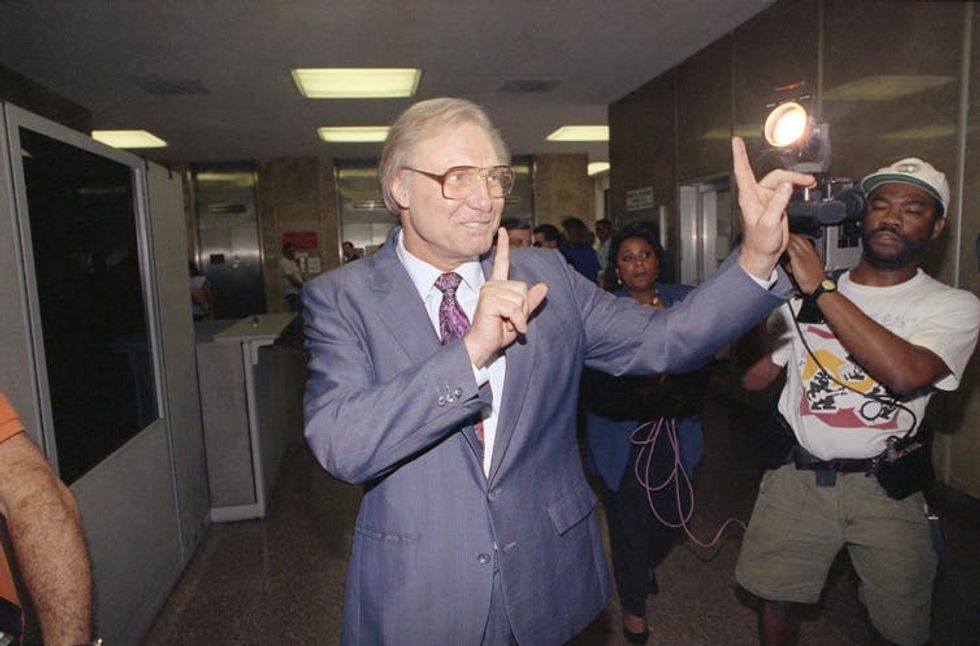
Evangelist Jimmy Swaggart.
AP Photo/Bill Haber
It is true that during this period, American “televangelists” experienced several withering scandals. Evangelist Jimmy Swaggart, for example, was discovered with a prostitute, and televangelist Jim Bakker was convicted of fraud. This led some scholars to suggest that religious television “went underground” because of this disrepute.
For example, from the mid-1990s, popular films and novels like “Left Behind” suggested that viewers with the “wrong” religious or political beliefs would suffer damnation. Such films and literature attracted tens of millions of viewers and readers.
Furthermore, Christian media was used to advance conservative biases. Authors and advocates of textbooks and curricula, for example, downplayed the women’s movement in American history or referred to slavery as “involuntary immigration.” Such changes were adopted in some Christian schools and their authors were often featured in Christian media. Even when the influence was indirect, the media, schools and entertainment mutually reinforced each others’ ideas.
There is considerable evidence, then, of the connections between evangelical media broadly speaking, Christian news specifically, and a conservative Republican base that sought steady support and advocacy from it.
Why this matters
The power of these programs is more than simply the stories covered or guests interviewed – it is their social impact on religious beliefs.
Christian news is effective in conveying its views because it repeats claims that viewers already believe, and provides them with particular emotional experiences that are described as facts. This way of viewing the world has moved closer to the center of conservative politics since the 1980s, a period of time when the Christian right acquired more influence in American politics.
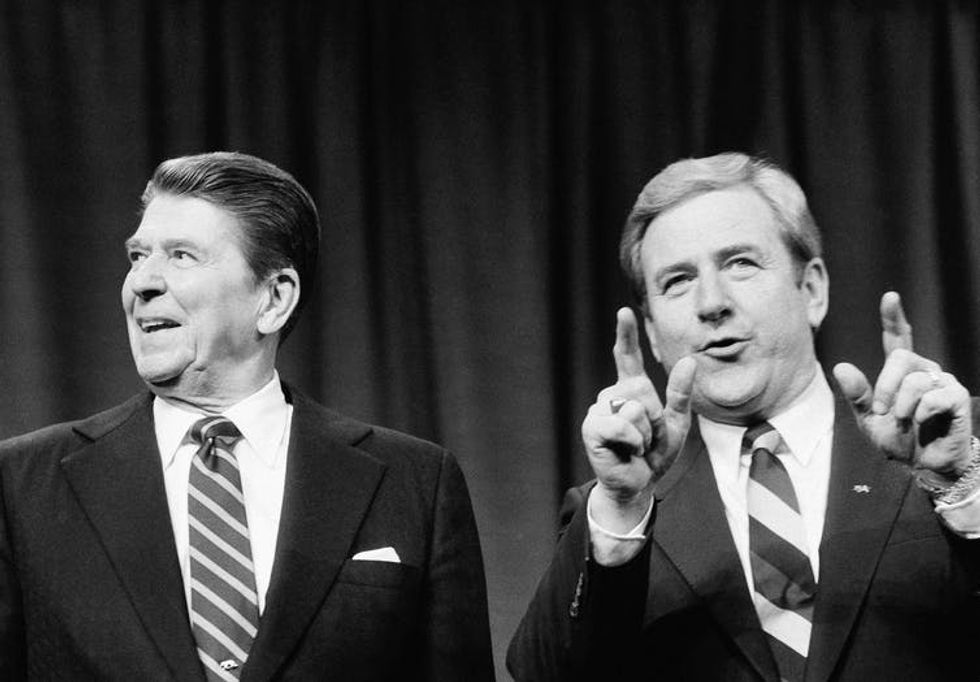
The themes central to Christian television were more consistently those of the Republican Party. Consider how in the 1980s, Ronald Reagan began to be depicted as God’s agent on Earth. In the 1990s, the growth of multinational corporations and trade deals was decried as part of a demonic “new world order.” And today, when Islamophobia is on the rise, Christian television channels depict and celebrate President Trump as the fighter-in-chief, who defends Christians despite his personal faults.
President Ronald Reagan with Rev. Jerry Falwell.
AP Photo/Ira Schwarz
These attitudes are reflected in the contemporary news programs themselves.
For example, Robert Jeffress of Dallas’ First Baptist Church has called Islam a “false religion” that is demonically inspired. Such claims have been widespread since September 11, 2001, but on Jeffress’ “Pathway to Victory” program, with an audience estimated in the millions, they are given a vast reach without the facts of Islam ever being addressed.
Further, Christian Broadcasting Network news regularly features stories about Christians persecuted in Turkey or India. While such persecution clearly does occur in places across the world, it is often cited by CBN and other outlets to support the idea that American Christians are censored or otherwise embattled by liberalism or secularism.
Amplifying one view?
The growing regularity of such examples has significant implications for American politics.
First, assertions that religious liberty is being violated around the world are put out endlessly in what I call “the resonance chamber of American public life,” in which repetition, aided by social media, helps claims to achieve legitimacy. Second, stories on the Christian news channels are constantly tailored to the idea that viewers are being persecuted.
By presenting itself as authoritative, trustworthy journalism, Christian news reassures viewers that they do not need to consult mainstream media in order to be informed. More dangerously, it authorizes a particular, often conspiratorial way of viewing the world. It denounces neutrality or accountability to multiple constituencies as burdensome or even hostile to Christian faith.
Sadly, tens of millions of its viewers are left without a sense of two of democracy’s most necessary foundations: the value of multiple viewpoints and shared political participation.
President Donald Trump tweeted this week that he would order the Department of Justice to investigate whether the FBI, under President Barack Obama, had “infiltrated or surveilled” his presidential campaign “for political purposes.”
Trump was referring to the FBI’s use of an informant to gather information in its probe of Russian interference in the 2016 election.
As an FBI historian, I believe an examination of how the FBI has handled and used informants in the past will shed light on this current controversy.
Informants get the information
Informants — an informal term for what the FBI really calls Confidential Human Sources — are, and always have been, one of the most basic sources of information in FBI and police investigations. As sources of information they are what counterintelligence professionals sometimes call “assets,” not spies.
The FBI does not “place” or insert informants, as it would do with undercover FBI agents. Informants are people who are already in a position to know or learn information and who willingly cooperate with the FBI. Most often, informants cooperate because they’re concerned with something they’ve seen or heard.
In writing my book “Hoover’s War on Gays: Exposing the FBI’s "Sex Deviates” Program,“ I uncovered the identities of many FBI informants. Sometimes, they seek out the FBI and offer their services to an FBI agent handler out of concern for what they’ve seen. Such was the case with Dr. Alfred Gross, who had previously worked with the FBI and who in 1952 regarded a gay civil rights group he met as threatening because he viewed them as mentally ill.
Others became informants because they were strong anti-communists during the Cold War, like Warren Scarberry, an informant I uncovered who believed he saw in the Mattachine Society of Washington the work of Communists. He called and visited the FBI about this.
Still others acted out of a personal sense of patriotism or were criminal conspirators looking for a deal with prosecutors. Informants run the spectrum of motivations, from selfless to selfish.
A well-placed informant
In President Trump’s self-described "spygate,” the FBI’s informant was a retired international affairs professor at Cambridge University named Stefan Halper. Halper had established GOP connections. He worked variously for Republican presidents including Richard Nixon, Gerald Ford, Ronald Reagan and George H.W. Bush. He was also a man who long served the U.S. intelligence community as a source.
Stefan Halper has been identified as the informant who helped the FBI’s Russiainvestigation.
Wikipedia
It’s unsurprising, then, the FBI used Halper in its counterintelligence probe. Most significantly, he happened to have been in a unique position where he had connections to Trump campaign officials who all had different types of Russian contacts. These included Trump campaign co-chair Sam Clovis and Trump foreign policy advisers Michael Flynn, Carter Page and George Papadopoulos.
Today’s FBI does not practice political espionage at the behest of presidents or anyone else, and informants are not part of anything like that. There are investigative guidelines and congressional oversight mechanisms to prevent it. That was not always true: During the tenure of FBI Director J. Edgar Hoover (1924-1972), the FBI conducted unchecked political surveillance operations. The Hoover FBI also used informants in these efforts to monitor, for example, FDR’s foreign policy critics, civil rights leader Martin Luther King Jr., student radicals and the anti-war movement, and to keep tabs on the LGBT community.
Hoover’s abuses forced reforms
Hoover’s actions were violations of Americans’ civil liberties and the trust placed in law enforcement. Precisely because of these Hoover-era abuses, special investigative regulations were put into place about the use of informants in the 1970s.
If an FBI probe is particularly sensitive and potentially involves “a greater risk to civil liberties,” then FBI agents are required to seek higher levels of authorization for their use. In the Hoover era, there was little to no oversight in the use of informants, let alone more intrusive investigative techniques. Today’s FBI is not the Hoover FBI.
Yet even during the Hoover years, informants were key to more standard FBI national security investigations.
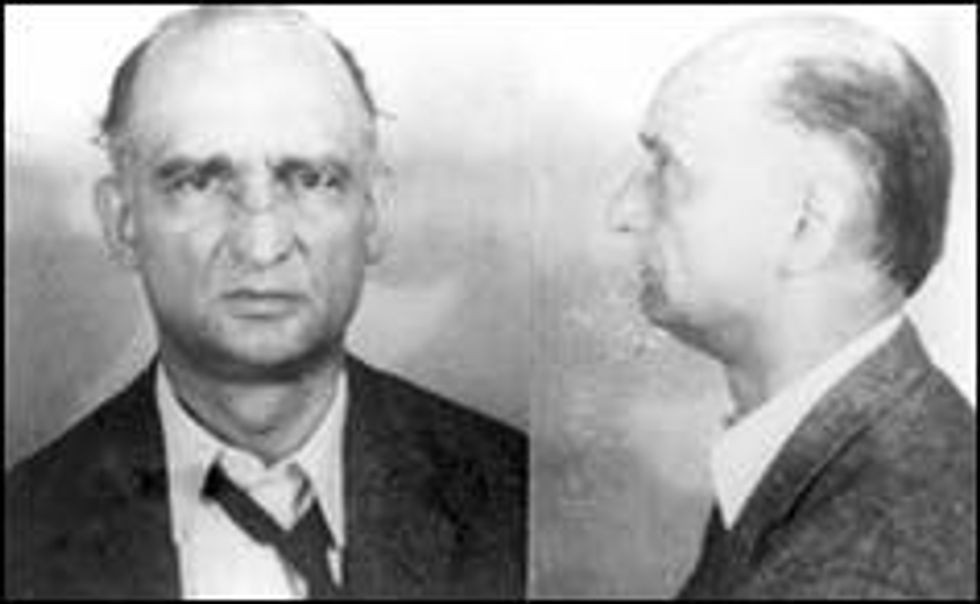
The FBI captured Russian spy Rudolf Abel — who was portrayed in the 2015 Tom Hanks film “Bridge of Spies” — because an FBI informant within Abel’s circle, named Reino Haynaham, talked. In 1965, the FBI quickly apprehended the murderers of civil rights activist Viola Liuzzo in Alabama because it had a paid informant within the Ku Klux Klan, Gary Thomas Rowe Jr.
The FBI captured Russian spy Rudolf Abel with the help of an informant.
Wikimedia
It is no surprise, then, that FBI officials used a confidential human source in its counterintelligence probe about Russian election meddling.
The informant was in a position to gather information early in the FBI investigation. That basic information undoubtedly was then further developed and enhanced with more traditional documented sources, as is evidenced by the fact that both Michael Flynn and George Papadopoulos pleaded guilty and are now cooperating with the Mueller investigation.
What we see in today’s example is less about spying than a glimpse into how FBI national security investigations operate and unfold – and how they can sometimes be politicized.




 Sadly, tens of millions of its viewers are left without a sense of two of democracy’s most necessary foundations: the value of multiple viewpoints and shared political participation.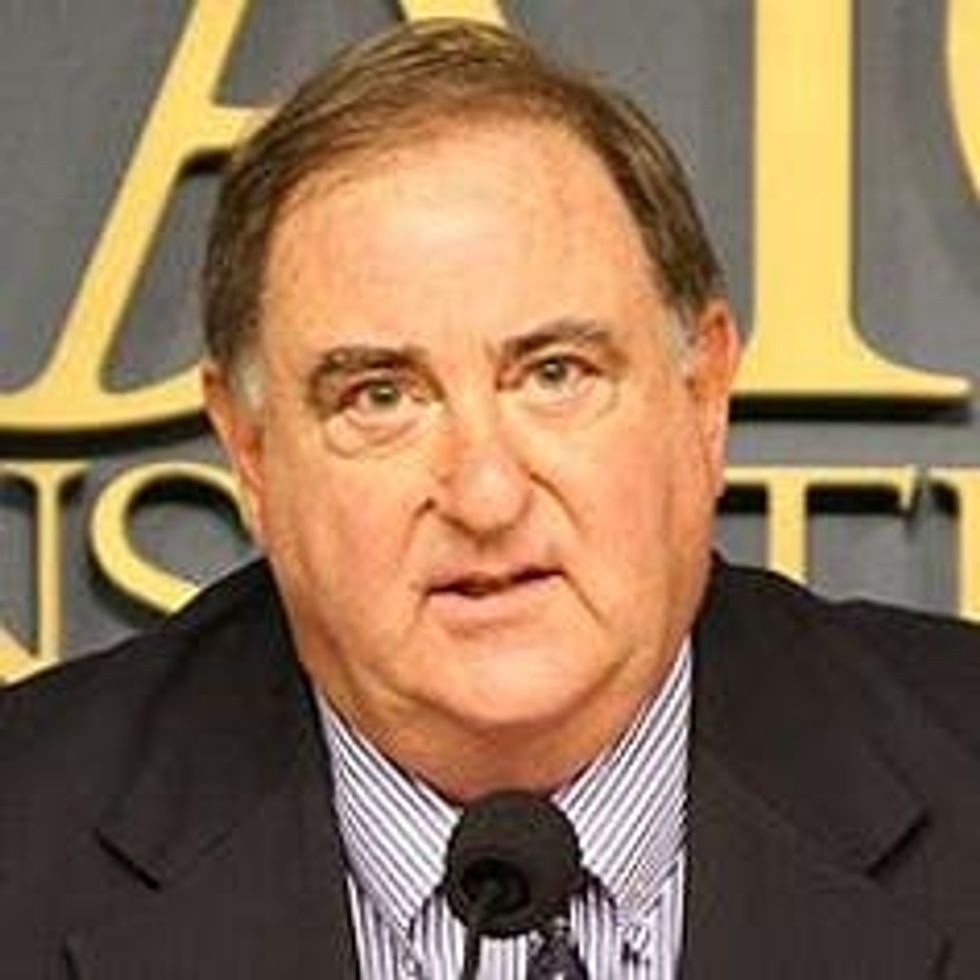
 What we see in today’s example is less about spying than a glimpse into how FBI national security investigations operate and unfold – and how they can sometimes be politicized.