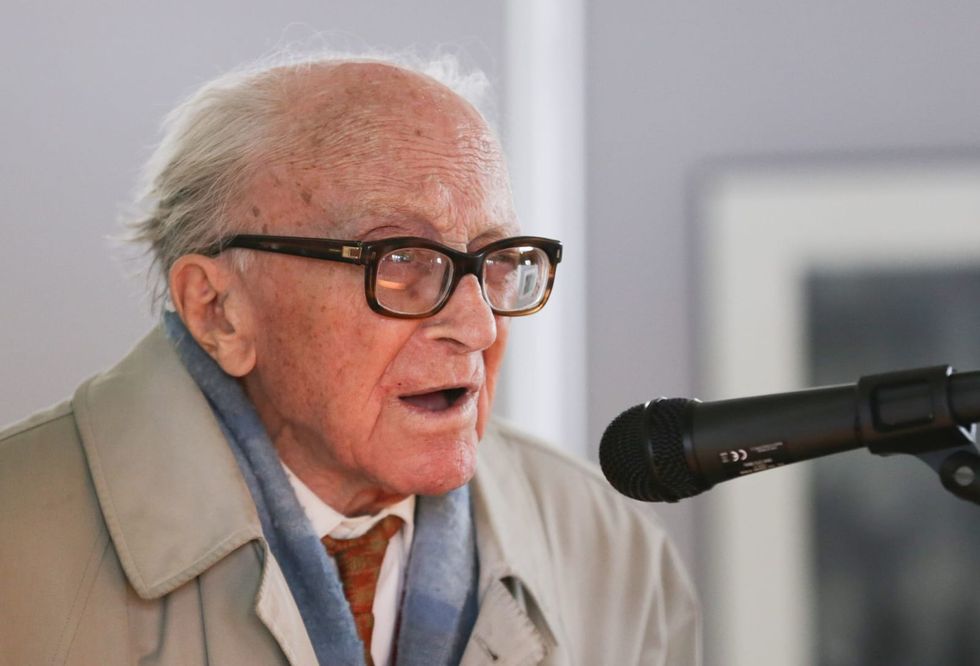
Author and survivor of several concentration camps, Boris Pahor, speaks during the opening of the exhibition "The Last Witnesses - Memories of the Prisoners of the Fascist Camp" at Neuengamme Concentration Camp. Italian-Slovenian writer Pahor is dead at the age of 108. picture alliance / dpa
dpa international provides clear and unbiased coverage of the world's biggest news stories. Headquartered in Germany, we offer an independent European perspective.
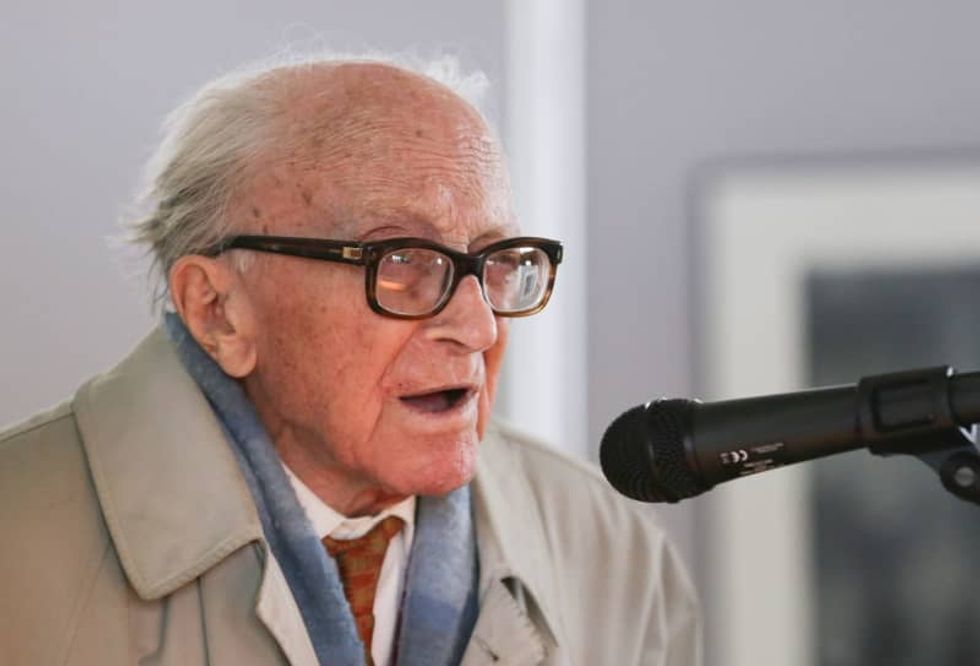
Author and survivor of several concentration camps, Boris Pahor, speaks during the opening of the exhibition "The Last Witnesses - Memories of the Prisoners of the Fascist Camp" at Neuengamme Concentration Camp. Italian-Slovenian writer Pahor is dead at the age of 108. picture alliance / dpa
Italian-Slovenian writer and concentration camp survivor Boris Pahor is dead at the age of 108. The news of his death was confirmed by Slovenian President Borut Pahor (no relation) on Monday.
Pahor was one of the most important Slovenian-language authors and a literary witness of the 20th century. His autobiographical and award-winning novel "Necropolis" describes the 15 months he spent in five German concentration camps and the struggle against death. Other important works are "A Difficult Spring" and "A Villa by the Lake."
"He was an eyewitness, a witness, an admonisher," the Slovenian president said, adding that he was, "the conscience of Slovenia, Europe and the world. A man who demanded for himself the freedom to think differently and demanded the same freedom for others."
Born on August 26, 1913, in Trieste - which was then part of the Austro-Hungarian Empire - Pahor's family belonged to the city's Slovenian minority. The existence of Slovenes in the then multi-cultural port city was as much a recurring theme of his prose as the prisoners' struggle for survival in the German concentration camps and the period afterwards.
Pahor joined the communist-led Slovenian partisans during World War II. He was captured by Slovenian collaborators in January 1944 and taken to Dachau concentration camp by the German occupiers. He went on to survive stays in four subsequent camps - Natzweiler-Struthof, Dora-Mittelbau, Harzungen and Bergen-Belsen.
After the war he returned to Italy, where he studied in Padua and taught at a grammar school in Trieste.
He later took a critical stance towards communism in Yugoslavia. He brought up common taboos there, such as the summary murder of thousands of actual and alleged collaborators of the Germans by the partisans, who had been led by Yugoslav head of state Josip Broz Tito.
In one of his last interviews on Slovenian television, he said, "I wanted to testify and tell what I experienced so that others can learn how and what can happen."
The Slovenian Foreign Ministry paid tribute to him as a "pillar and defender of the Slovenian word". He had fought for the rights of minorities as a resolute opponent of the totalitarian systems - fascism, Nazism and communism - that he himself had experienced.