



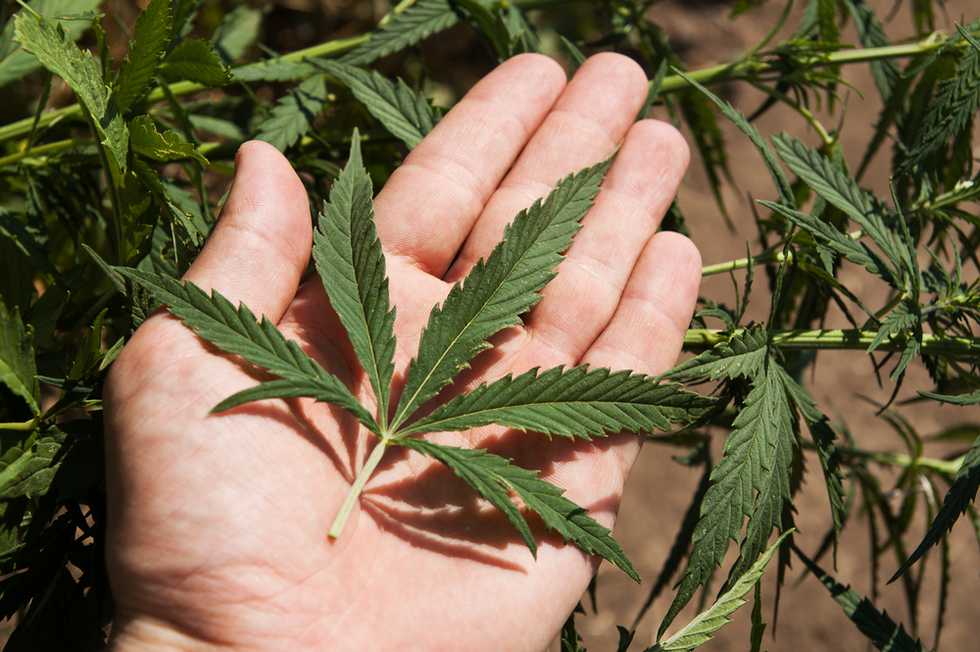
A Washington State University team of bio-anthropologists theorize that humans first used the cannabis plant for its medicinal qualities rather than for the euphoric high it produces when eaten or smoked.
Sally Chew wrote at the Fix that the group of scientists studied one of the last remaining indigenous hunter-gatherer tribes, the nomadic Aka people of Africa's Congo Basin.
The Aka -- who some people call Pygmies -- are among the world's heaviest pot smokers. The Washington State team found that the Aka's heavy cannabis use is a means of self-medicating for an otherwise-deadly group infestation of intestinal worms. However, the tribe members themselves will tell you that they use the drug for its psychoactive qualities.
Anthropologist Barry Hewlett studied the Aka in the 1970s and wrote in 1977 that the tribespeople smoke cannabis "to increase their courage on a hunt, dance better, increase their vital force, or to increase their work capacity when working for Europeans or village people."
The WSU study -- led by scientist Ed Hagen -- found the same and theorized that the Aka are unconsciously self-medicating. Far back in their history, the tribespeople used cannabis as medicine, but have come over time to ritualize and enjoy the high.
In fact, Hagen believes that all plant-based drugs have come to humanity through a similar path.
In an email to Chew, Hagen said, “We might have evolved a ‘taste’ for drugs for some utilitarian reason, such as defense against parasites, but then we elaborate this behavior in rituals, etc., exactly as we do for eating food and every other utilitarian behavior."
He continued, “Countless rituals have developed around food that do not relate to nutrition. The same goes for sex, clothing, shelter and other utilitarian behaviors. All these behaviors are (and were) essential to survival and reproduction, but we humans have a tendency to elaborate everything. We think the same might be true of recreational drugs.”
According to psychologist Christian P. Mueller, that would make the Aka's marijuana use "instrumental," i.e., use for purposes other than to get stoned. People make "instrumental" use of drugs, Mueller argued in the journal Behavioral Brain Science, when they are using them "in order to facilitate other, non-drug-related behaviors."
Instrumental drug use can be as varied as drinking a cup of coffee to stay awake at work or taking peyote to enhance a religious ritual.
Mueller wrote that drug use is as common to humans as the desires for food, shelter and sex. It is, he said, “a stable and widespread behavior in its own right." One psychologist, Ronald K. Siegel, calls the will to intoxicate oneself humanity's "fourth drive."
Hagen said that humans and the plants they use to get high have "coevolved," with humans selecting plants to more closely meet their needs. This could explain, he said, why the opium poppy, marijuana, tobacco and other plants contain chemicals that mimic the actions of human brain chemicals like serotonin, dopamine and adrenaline.
Drug use is distinct from drug abuse, Mueller says, and abusers and addicts are, in fact, rare among widespread drug users. In fact, he believes, “Understanding the everyday utility and the learning mechanisms of non-addictive psychotropic drug use may help to prevent abuse and the transition to drug addiction in the future.”
