



U.S. President Donald Trump struggled on Thursday to win over skeptical members of his own Republican Party to begin dismantling Obamacare in the House of Representatives or risk failure on one of his top legislative priorities.
The effort is seen by financial markets as a crucial test of Trump's ability to work with Congress to deliver on his agenda, including planned tax cuts.
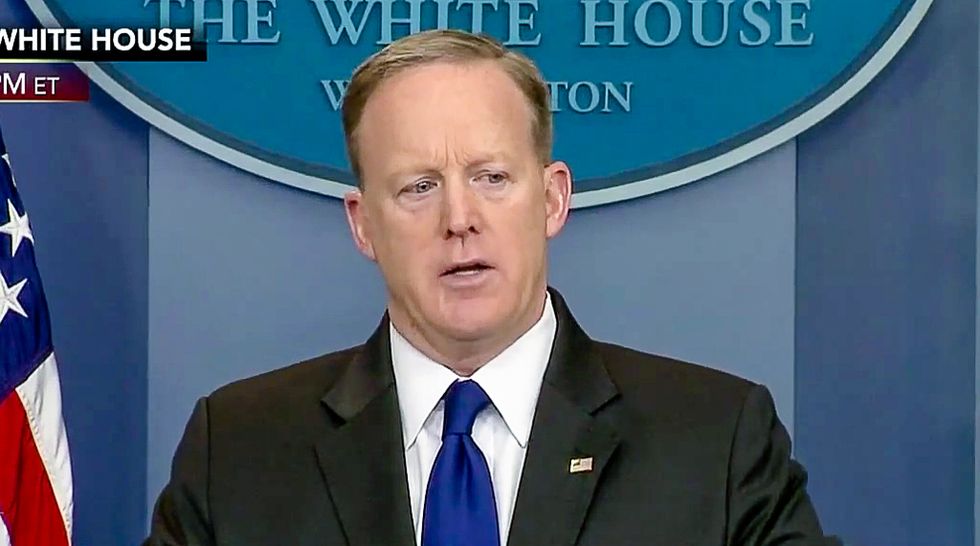
White House spokesman Sean Spicer said a vote on the bill was still on track to take place on Thursday but as of early afternoon, lawmakers said no time had been set.
House Ways and Means Committee Chairman Kevin Brady told reporters that progress was being made toward moving a bill forward but he gave no indications that a vote would be imminent on the House floor.
"We're having meetings with members of a number of caucuses," Brady said, adding that leaders were "listening to the ways they want to see improvements made" to the bill.
Although Republicans have a majority in the House, Democrats are united against the bill and Trump and House Speaker Paul Ryan, who has championed the bill, can afford to lose only 21 Republican votes. On Thursday morning, MSNBC said a count by NBC News showed that 30 Republicans were planning to vote "no" or were leaning that way.
On Thursday, the seventh anniversary of Obama signing his healthcare reform into law, Trump met at the White House on Thursday morning with some of the bill's strongest opponents - the conservative House Freedom Caucus. Its members say the bill, known formally as the American Health Care Act, does not go far enough to undo Obamacare.
Representative Mark Meadows, chairman of the House Freedom Caucus, said after the meeting that he was hopeful that conservatives' requests would be incorporated into the bill.
"I'm expecting that we're going to negotiate in good faith and hopefully get to a 'yes' before 7 o'clock tonight," Meadows said.
"NOTHING NEW"
But Freedom Caucus member Justin Amash was more pessimistic after the meeting with Trump.
"Nothing new came out of it," he said. "They're not going to pass the bill."
As Trump courted conservative lawmakers, Ryan and other House leaders focused on trying to rally the support of moderate Republicans but it was a difficult balancing act.
While conservative Republicans are pushing for more aggressive cuts to Obamacare mandates, some moderates in the party are worried that the legislation would hit some of their core voters by depriving them of insurance.
Uncertainty over the bill has rattled financial markets. U.S. stock markets rose steadily in recent months on optimism over a pro-business Trump agenda but fell back sharply on Tuesday as investors worried that failure to push through the healthcare bill could hurt other Trump priorities such as tax cuts and infrastructure spending.
After dropping more than 1 percent on Tuesday on the hint Trump’s legislative agenda might falter with healthcare, the U.S. benchmark S&P 500 stock index hovered just above break-even on Thursday. It has since recovered some ground, but investors are choosing to hold fire until they have a better understanding of whether or not the vote will take place or be postponed.
U.S. Treasuries were slightly weaker with the benchmark 10-year Treasury yield holding at 2.41 percent. Gold prices were slightly lower at $1,246 an ounce while the dollar was little changed against its major trading partners.
WHAT ARE IMPLICATIONS?
"Investors are concerned ... if this vote goes poorly, then what are the implications for tax reform and repatriation of offshore capital," said John Traynor, chief investment officer at People's United Bank in Bridgeport, Connecticut.
The normally well-scripted House, which runs on tight rules that lay out the duration of debates on legislation and approximate times for votes, was anything but scripted on Thursday.
The Rules Committee, which is the gatekeeper for all legislation heading to the House floor, had not yet set the parameters of the debate, including any amendments that would be allowed. Republicans still did not know exactly what would be in the legislation.
Republican control of the White House, the Senate and the House has given the party a chance to achieve what it has aimed to do for seven years - overturn Obama's 2010 Affordable Care Act.
The law aimed to boost the number of Americans with health insurance through mandates on individuals and employers, and income-based subsidies. Some 20 million Americans gained insurance coverage through the law.
The House replacement plan would rescind the taxes created by Obamacare, repeal a penalty against people who do not buy coverage, slash funding for the Medicaid program for the poor and disabled, and modify tax subsidies that help individuals buy plans.
One risk for Trump is that changes to the bill to satisfy conservatives could turn moderates against it, and also of complicating the work of their colleagues in the Senate.
The nonpartisan Congressional Budget Office estimated 14 million people would lose medical coverage under the Republican plan by next year. It also said 24 million fewer people would be insured by 2026.
Spicer, at his daily news briefing, said support was building for the healthcare legislation.
"I expect it to climb hour by hour," he said
Graphic on Obamacare and Republican healthcare bill (https://tmsnrt.rs/2n0ZMKf)
Graphic on shifting positions in the U.S. Senate on Republican healthcare bill (https://tmsnrt.rs/2mUE4Xf)
Graphic on poll on Americans' views of the Republican healthcare bill ( https://tmsnrt.rs/2n7f3e4)
(Additional reporting by Roberta Rampton, Susan Cornwell, Jeff Mason, Doina Chiacu, Steve Holland and Richard Cowan; Writing by Frances Kerry; Editing by Michael Perry and Bill Trott)
