




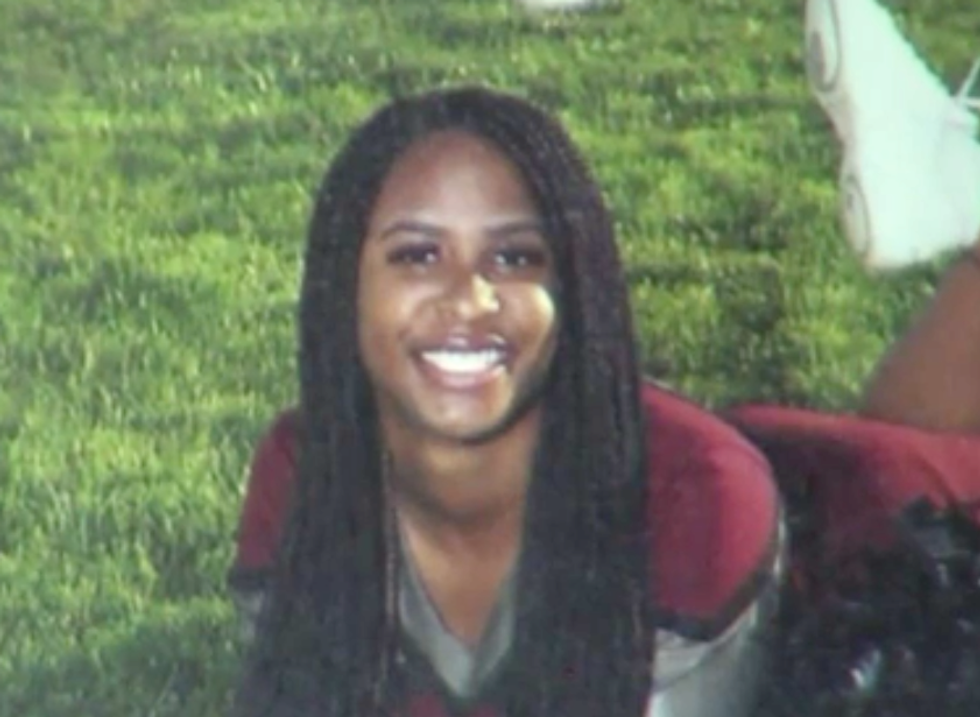
The family of a 15-year-old girl in Stockton, CA says that hospital staff dismissed the girl's complaints of chest pain twice and ignored signs of the blood clots that ended up killing her.
TheRoot.com said that Yunique Morris' family believe the fact that she was black played a role in doctors' refusal to take her seriously when she said she was ill and in pain.
Weeks ago, the 15-year-old cheerleader at Weston Ranch High School went to San Joaquin General Hospital, said her grandmother Wanda Ely.
Ely told Fox 40 News that the doctor at San Joaquin diagnosed Yunique with chest-wall pain, gave her pain medicine and antibiotics and sent her home.
“Her health just started going downhill," Ely said. "It got to the point where she couldn’t even go up and down a flight of stairs without getting out of breath.”
Days later Yunique returned to the hospital and saw the same physician, who insisted that the girl was merely experiencing inflammation and that more serious intervention was not needed.
Days passed and the teen grew more and more ill.
Then last Thursday, she sent her mother a frantic text message that said, "I NEED TO GO TO THE HOSPITAL, I JUST PASSED OUT, I’M THROWING UP NOW."
Yunique's older brother rushed her to San Joaquin's emergency room where doctors diagnosed her with multiple blood clots in her chest and rushed to save her life. Their efforts were in vain, however. Hours later, Yunique was dead.
Racial disparities are a fact of life -- and death -- for black patients in the U.S. healthcare system.
A study published in 2015 by University of Southern California found that black patients report a higher level of difficulty getting physicians and hospital staff to take their concerns seriously. Racial stereotyping by hospital staff can leave patients feeling helpless and ignored, and sometimes in more pain.
The Guardian reported last year that black patients in the U.S. are half as likely to be prescribed opioid pain medication.
These issues, said Cleopatra Abdou, Ph.D. -- an assistant professor at the USC Davis School of Gerontology and Department of Psychology -- "can affect healthcare efficacy and even prompt some patients to avoid care altogether."
Watch video about this story, embedded below:
