



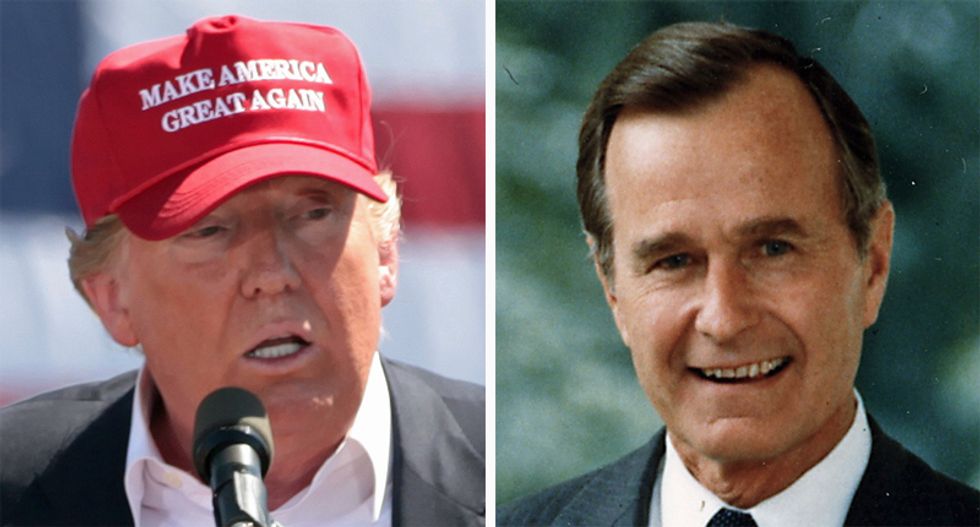
Ever since the late President George H.W. Bush lost his re-election bid to Arkansas Democrat Bill Clinton after breaking his pledge to oppose all new taxes, the GOP has made a point of promising lower taxes to prospective voters.
That will not work anymore, argues a Washington Post columnist.
Bush's rehearsal of his "read my lips" pledge was "a turning point in the history of the modern Republican Party," argues Charles Lane, "yet Bush may have lived just long enough to witness the moment at which tax cuts have finally reached the point of diminishing political returns for Republicans."
Today's voters no longer support lowering taxes, Lane argues, especially in light of the $1.5 trillion revenue reduction approved by a Republican-controlled Congress and signed by President Trump in December 2017.
The elder President Bush opposed Supply Side Economics and supported balancing the budget by raising taxes.
After his loss, Republicans pivoted hard to tax cuts. For the last 50 years of the 20th century, a majority of voters thought taxes were too high. That is no longer true.
"The main source of dissatisfaction with the tax system now appears to be the public’s view that it favors the rich; only 24 percent say upper-income people are paying their 'fair share,' according to the April 2017 Gallup survey," said Lane.
And were the GOP to try to activate voters by cutting taxes, they would be cutting into bone.
"The GOP is a victim of its own past tax-cutting success: There just isn’t that much more 'relief' to grant," he writes. "The GOP may have no way out of this predicament. Trump’s last-minute promise of more tax cuts just before the election achieved nothing, and there is no chance to fulfill the Republicans’ other promise — to make the 2017 law’s individual cuts, set to expire in 2025, permanent."
Read the column here.
