


Quantcast
Connect with us

Angry Japanese protesters demand a stop to indigenous dolphin hunting

Published

on

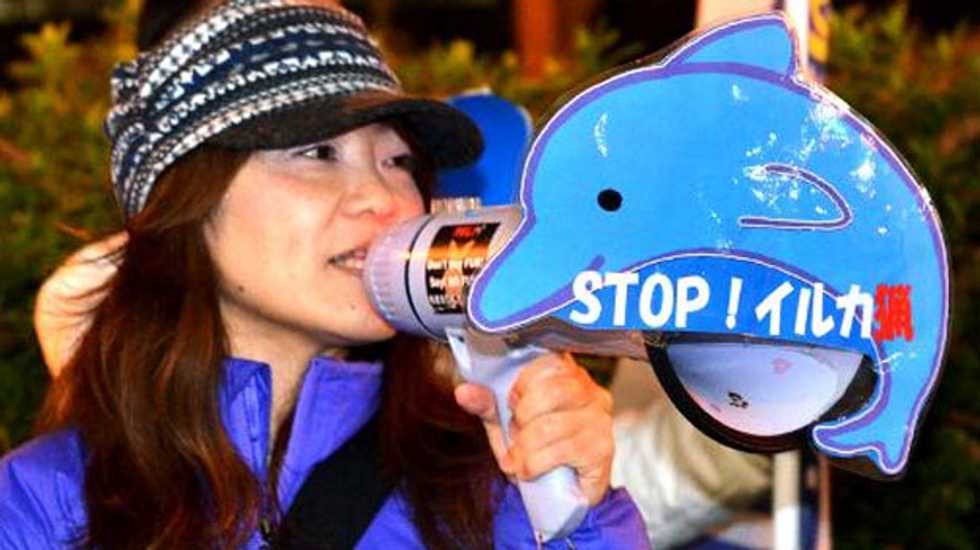
Activists protesting against Japan’s indigenous dolphin hunting held a rally in Tokyo Friday, calling on officials to stop sales of the marine mammals to aquariums and as meat.

Some two dozen campaigners, mostly Japanese, congregated in front of the Fisheries Agency with banners and pictures, urging the government to ban dolphin catching.

“Most Japanese people do not know about dolphin hunting,” said Noriko Ikeda, who organised the rally and a member of Action for Marine Mammals.

ADVERTISEMENT

“The government has argued the practise is part of the Japanese tradition and food culture.

“But reality is that it is extremely rare to find Japanese people who wish to eat dolphins. The real problem is that hunt is driven by demand for live dolphins among aquariums to put on dolphin shows,” she said.

The US ambassador to Japan Caroline Kennedy recently tweeted her concern at the “inhumaneness” of a Japanese village’s traditional dolphin hunt.

“Deeply concerned by inhumaneness of drive hunt dolphin killing. USG (US Government) opposes drive hunt fisheries,” she said in an online post.

Every year the fishermen of Taiji in western Japan corral hundreds of dolphins in a secluded bay, select a few dozen for sale to aquariums and marine parks and kill the rest for meat.

ADVERTISEMENT

Activists from the international militant environmental group Sea Shepherd have streamed live footage of the dolphin capture in Taiji, which drew worldwide attention in 2010 when it became the subject of the Academy Award-winning documentary “The Cove”.

Defenders of the hunt say it is a tradition and point out that the animals it targets are not endangered, a position echoed by the Japanese government.

They say Western objections are hypocritical and ignore the vastly larger number of cows, pigs and sheep butchered to satisfy demand elsewhere.

ADVERTISEMENT

The Japanese activists who gathered Friday said dolphin hunting was tarnishing Japan’s reputation as Tokyo prepares to host the 2020 summer Olympic Games.

ADVERTISEMENT

Report typos and corrections to: [email protected].
READ COMMENTS - JOIN THE DISCUSSION
Continue Reading

Facebook

Coronavirus: Who is most at risk of dying?

Published

on

As the number of confirmed coronavirus cases across 61 countries hit 86,000 Saturday with nearly 3,000 deaths to date, the profile of those most at risk of dying is coming into focus, experts told AFP.

But the overall mortality rate remains uncertain, they said.

The World Health Organization raised its global risk assessment to its top level Friday, with the global health crisis edging closer to a pandemic.

Among those infected with the virus, older adults with preexisting heart conditions or hypertension face a sharply higher risk, according to preliminary statistics, including from a study covering more than 72,000 patients in China.

Continue Reading

2020 Election

Silicon Valley weighs ‘shades of blue’ in presidential pick

Published

on

The young and idealistic voters in Silicon Valley are largely united against US President Donald Trump, but split over the rival Democratic hopefuls as the crucial Super Tuesday primaries loom.

Frontrunner Bernie Sanders has gotten the most donations from the "internet industry," according to tracking by the Center for Responsive Politics with rivals Pete Buttigieg and Elizabeth Warren not far behind in the tallies.

"Silicon Valley is many shades of blue," said Vivek Wadhwa, an entrepreneur and author who is a professor at Carnegie Mellon University's Silicon Valley branch.

"It is polarized, and it is polarized on the extreme left. There is a consensus here that Donald Trump is the enemy."

Continue Reading
 

Breaking Banner

Coronavirus time bomb: America’s uninsured and brutal work culture

Published

on

Like many Americans, bartender Danjale Williams is worried about the growing threat of the novel coronavirus.

What makes the 22-year-old in Washington even more frightened: The thought of medical bills she just can't afford, as one of almost 27.5 million people in the United States who don't have health insurance.

"I definitely would second guess before going to the doctor, because the doctor's bill is crazy," she said. "If it did come down to that, I don't have enough savings to keep me healthy."

As the virus begins spreading in the west of the country, where the first death was reported Saturday, public health experts warned the US has several characteristics unique among wealthy nations that make it vulnerable.

Continue Reading
 
 
close-image