




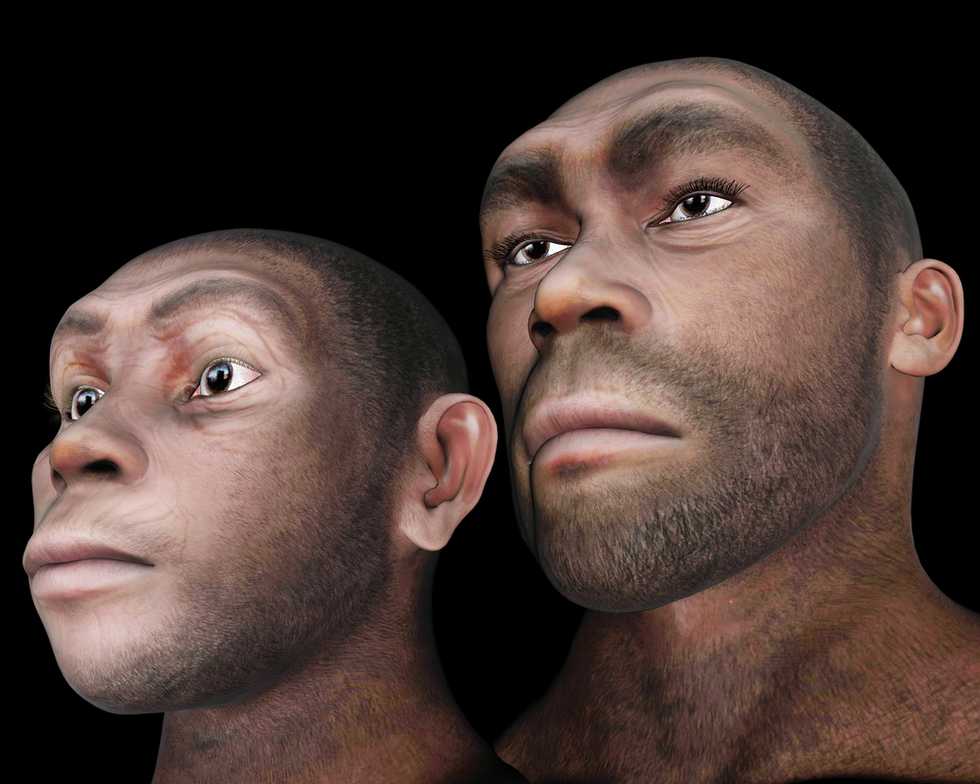
Engravings found on a 400,000-year-old seashell are causing scientists to rethink long-held notions of how humanity developed.
According to the Australian National University's Dr. Stephen Munro, the findings "rewrite history" as we know it.
The fossilized mussel shell, discovered in Java 100 years ago, has been engraved with a zig-zag pattern that is the oldest known use of pattern by Homo erectus to decorate an object.
“This is the first time we have found evidence for Homo erectus behaving this way,” Munro said.
These engravings are 300,000 years older than the previously oldest known patterned engravings, which were made either by Neanderthals or modern humans (Homo sapiens) 100,000 years ago.
The discovery of the Javanese engraved shells pushes back our conception of when humans were believed to have begun these types of behaviors by millennia, Munro said.
“It puts these large bivalve shells and the tools used to engrave them, into the hands of Homo erectus, and will change the way we think about this early human species,” he said.
In the order of human evolution, Homo erectus predated the Neanderthal and Homo sapiens species. There is still some debate as to whether Neanderthal and Homo erectus occupied the Earth at the same time.
It's still unknown whether the Javanese mussel shells were engraved purely for decoration or for another use.
Munro traveled to the Netherlands to view the collection of fossil shells, which were collected in Java by naturalist Eugene Dubois. The Australian scientist described the moment at which he realized the lines on the shells were man-made as a "eureka moment."
“It was a eureka moment. I could see immediately that they were man-made engravings. There was no other explanation," he said.
The team published their findings in the journal Nature last week.
