




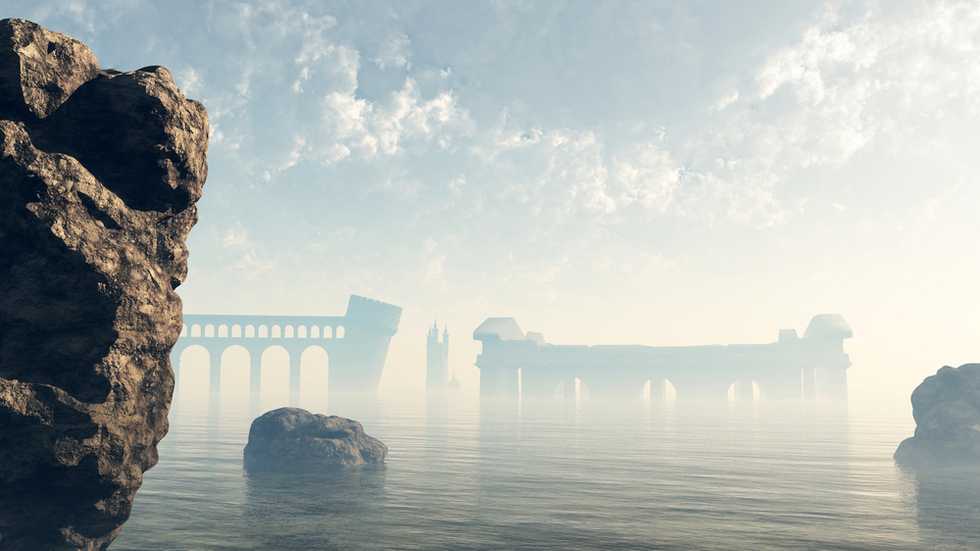
Divers exploring an ancient shipwreck discovered ingots of what may be the legendary ancient metal orichalcum, which was said to have been originally forged in the lost kingdom of Atlantis.
According to Discovery News, the diving team was exploring a 2,600-year-old shipwreck off the coast of Sicily when they found the lumps of metal.
The sunken ship was probably bringing its cargo from somewhere in Greece or Asia Minor, say scientists, when it went down just outside the harbor at the port city of Gela, possibly while trying to make landfall during a storm. The ancient wreck is located about 1,000 feet from shore at a depth of about 3.5 meters.
"The wreck dates to the first half of the sixth century [B.C.]," said Sebastiano Tusa, Sicily's superintendent of the Sea Office, to Discovery.
"Nothing similar has ever been found," Tusa continued. "We knew orichalcum from ancient texts and a few ornamental objects," but the 39 ingots found in the ruins of the ship are like nothing seen in the modern world.
Orichalcum has been referred to in ancient texts and was said to line the halls of the Temple of Poseidon on the mythical island kingdom of Atlantis. The spires of Atlantis were said to shine "with the red light of orichalcum" in a fourth century B.C. text by Plato.
The metal was purportedly invented by Cadmus -- an alchemist from Greek and Phoenician myth -- and was second in value only to gold in the ancient world.
Today, many scientists agree that orichalcum was a brass-like alloy that, Discovery said, was made by a process known as cementation, which involved "the reaction of zinc ore, charcoal and copper metal in a crucible."
Engineer Dario Panetta analyzed the ingots from the wreck via X-ray fluorescence and found that they are made up of 75 to 80 percent copper and 15 to 20 percent of zinc with traces of other metals including nickel, lead and iron.
Retired physics professor Enrico Mattievich disagrees that these ingots represent orichalcum, which wasn't brass-like at all, he says.
"It appears they are lumps of latone metal, an alloy of copper, zinc and lead," said Mattievich.
Tusa told Discovery that whether or not the ingots are truly orichalcum, they provide valuable insight into the business and economic life of Gela, which has been a port city for thousands of years.
"It will provide us with precious information on Sicily's most ancient economic history," said Tusa.
