



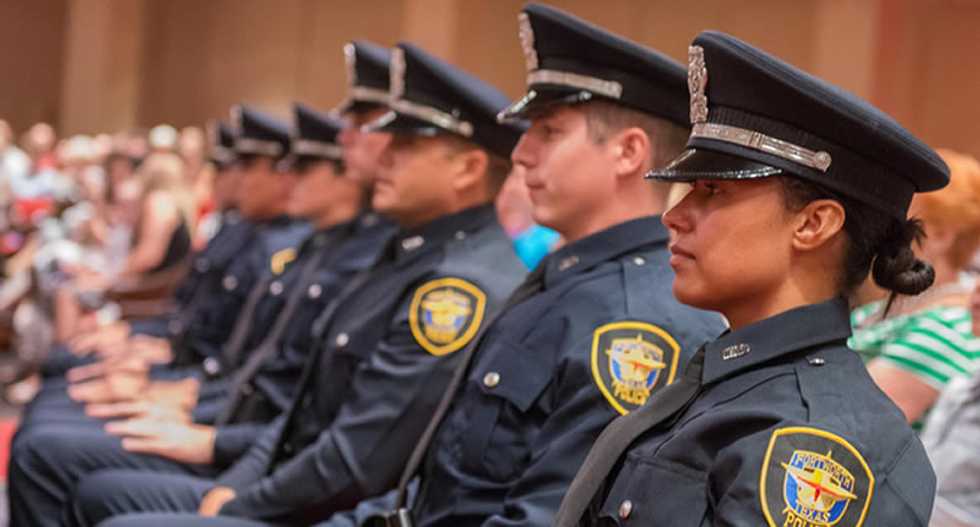
A new study at Michigan State University reveals that college-educated police officers are less likely to use force on citizens -- but that they are also far more likely to be dissatisfied with their job and quit.
In the study, Michigan State criminologist William Terrill demonstrated that cops with a college education are more likely to have negative views of their superior and eschew the rigors of the community policing, a practice which typically decreases the number of violent encounters between police officers and citizens.
"Our latest results on police views might lead one to question whether a college education is beneficial for officers," Terrill said in a press release.
"But our research is a mixed bag, and you have to take into account the behavioral effect as well. If you use less force on individuals, your police department is going to be viewed as more legitimate and trustworthy and you're not going to have all the protests we're having across the country."
Terrill and his team analyzed data from 2,109 police officers in seven metropolitan police departments, and though none of which required a 4-year degree to apply for a position on the force, 45 percent of the offers surveyed possessed one. The majority of those who did majored in criminal justice -- but the type of degree made no difference in the officer's dissatisfaction with their job and supervisors.
Because officers having college degrees is a relatively new development, Terrill suggested that one reason for the dissatisfaction could simply be a matter of seniority.
"We're throwing the least experienced officers into the most difficult situations simply because of their lack of seniority," he said. "It's like taking someone right out of medical school and asking them to perform heart surgery."
College graduates, he added, have also been trained to engage in problem-solving skills and argument, and may bristle at the managerial style of the previous generations of cops.
"For those departments that hire college grads," he said, "I think you have to be more open-minded as a police administrator and understand who it is you're bringing in."
