




The British Parliament voted Tuesday to allow scientists to move forward on creating human beings made from the combined DNA of three people.
The BBC reported that the U.K. is the first nation to allow genetic modification of human embryos. Scientists say the technique will enable parents with some genetic disorders to have children without passing on inherited abnormalities.
The House of Commons passed legislation in favor of the new technique by a vote of 382 in favor versus 128 against. The measure goes to the House of Lords next, where it is expected to pass.
Proponents of the practice call it "a light at the end of a dark tunnel" for families who have been unable to have children because of disorders like mitochondrial disease.
Critics, on the other hand, say that the practice raises serious ethics and safety concerns, raising the specter of pick-and-choose "designer babies."
In a statement, British Prime Minister David Cameron played down concerns, saying that scientists just want to give families a fair shot at producing healthy offspring.
"We're not playing god here, we're just making sure that two parents who want a healthy baby can have one," Cameron said.
Mitochondria are tiny compartments in cells that help the cell convert food into energy. Mitochondria have their own DNA that is independent of the DNA which determines a person's hair and eye color and other immutable birth traits.
In mothers with mitochondrial disease, the offspring are born with defective mitochondrial DNA and suffer complications of the brain, muscle wasting, blindness and heart problems.
Sharon Bernardi, who lost seven children to mitochondrial disease, said that she is "overwhelmed" by the decision to move legislation forward.
"This has been a long process in my family," Bernardi said. "I've lost six babies to this mitochondrial disease, obviously, and then I had Edward."
Edward Bernardi was the only child in his family to survive past infancy, but died last year at the age of 21.
"Having to bury seven children," said Susan Bernardi, "it's not what a mother is supposed to do."
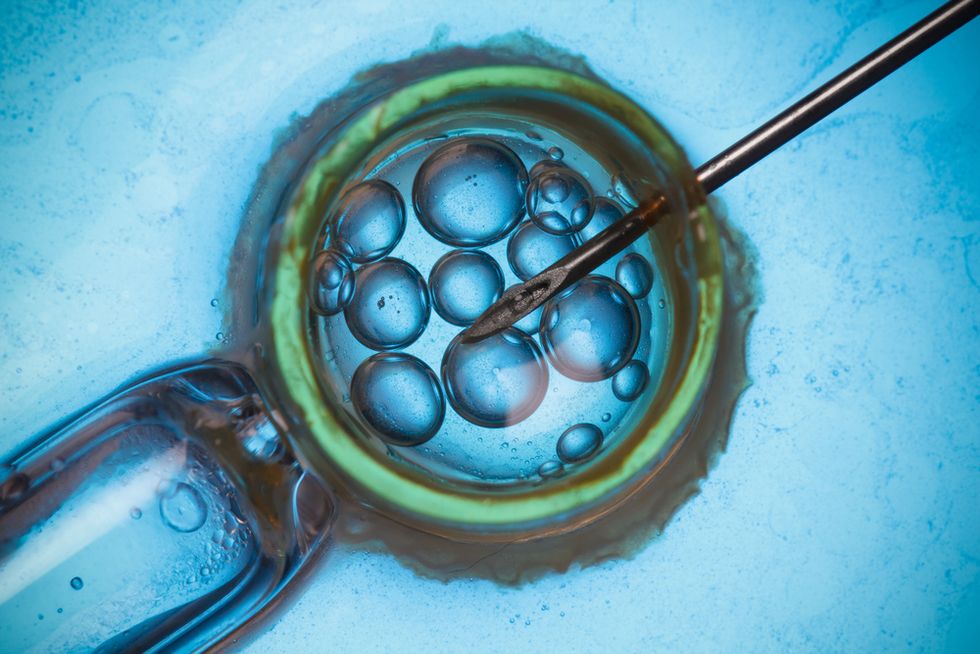
The new technique is akin to in vitro fertilization. Mitochondrial DNA from a healthy woman is spliced into a fertilized embryo from a father and a mother with mitochondrial disease. The resulting offspring contain .01 percent of the donor DNA, but the change is permanent. They do not pass on mitochondrial disease to their children.
"This is a bold step to take, but it is a considered and informed step," said U.K. Health Minister Jane Ellison on Tuesday.
Watch video about this story, embedded below:
