




As the April 12, 2015 premiere of the fifth season of Game of Thrones approaches, George R.R. Martin is taking to YouTube to remind viewers of how the show's complicated caste system actually works -- and to suggest the vital role bastards will play in the upcoming season.
"Technically speaking," Martin begins, "a bastard is just any child born out of wedlock. Medieval societies, like Westeros, tended to be more religious than modern societies, more superstitious. They knew nothing about genetics or DNA, but they had their own version of it -- blood, and blood will tell."
"The grand maker of bastards in the Seven Kingdoms is Robert Baratheon," the king whose wife, Cersei, had murdered in the first season. Martin explains that at the beginning of season two, King Joffrey has four of Robert's bastards murdered, but one escapes -- Gendry, who looks very much like a young version of his father.
"Westeros has a very strict class structure," Martin continues, "and the 'smallfolk,' as they are called, probably produce as many bastards as the noble classes, but they don't have any surnames. The noble houses do have their surnames, and when they produce bastards, they can't have their father's name -- so they give them simple, declarative names that tell you that they have noble blood in them, but they are bastard-born."
These generic names differ from region to region. "In the North," Martin says, "it's 'Snow.' In the Vale of Arryn it's 'Stone'; in the Riverlands, it's 'Rivers'; in the Westerlands, it's 'Hill'; in the Iron Islands, it's 'Pyke'; in the Reach, it's 'Flowers'; in the area around King's Landing, the name 'Waters' has been used, and in the Stormlands it's 'Storm' and in Dorne it's 'Sand.'"
Showrunner D.B. Weiss then notes that Dorne -- an area that will be of central importance in the new season -- has very different customs from the rest of Westeros. They do not despise their bastards the way those in the other six kingdoms do.
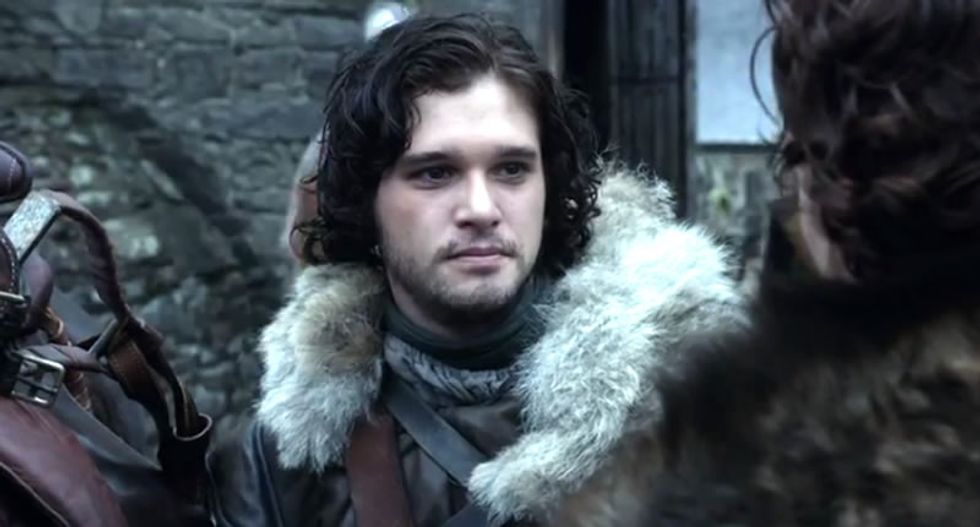
Martin notes that there are differences not just between how kingdoms treat bastards, but how families do. "The bastard child is a member of the family," he says, "but he has no inheritance rights. A lot of bastards gravitate to the Wall" -- like Jon Snow, Ned Stark's bastard son -- "because they can rise there to officers and commanders. The Wall is a more egalitarian society, but not perfectly so, as they still favor those of noble birth" like Jon Snow.
The second-class citizenship of bastards like Jon Snow and Ramsay Snow will be driving forces in the upcoming season. "Ramsay Snow is the bastard son of Roose Bolton," Martin says. "He grew up knowing he was a lord's son, but completely disinherited and not a part of the castle life. But when Roose's son died, he was all Roose had left."
"Ramsay had a problematic relationship with his father," Weiss adds, "because I think all psychopaths have problematic relationships with their fathers. His main goal in life is to be given the acknowledgment and respect of his father that he's been denied his entire life."
Martin and Weiss then discuss how the difference between how Roose and Ned treated Ramsay and Jon, respectively, will be critical to how the narrative develops in the upcoming season.
Watch the entire video via the Game of Thrones YouTube channel below.
