




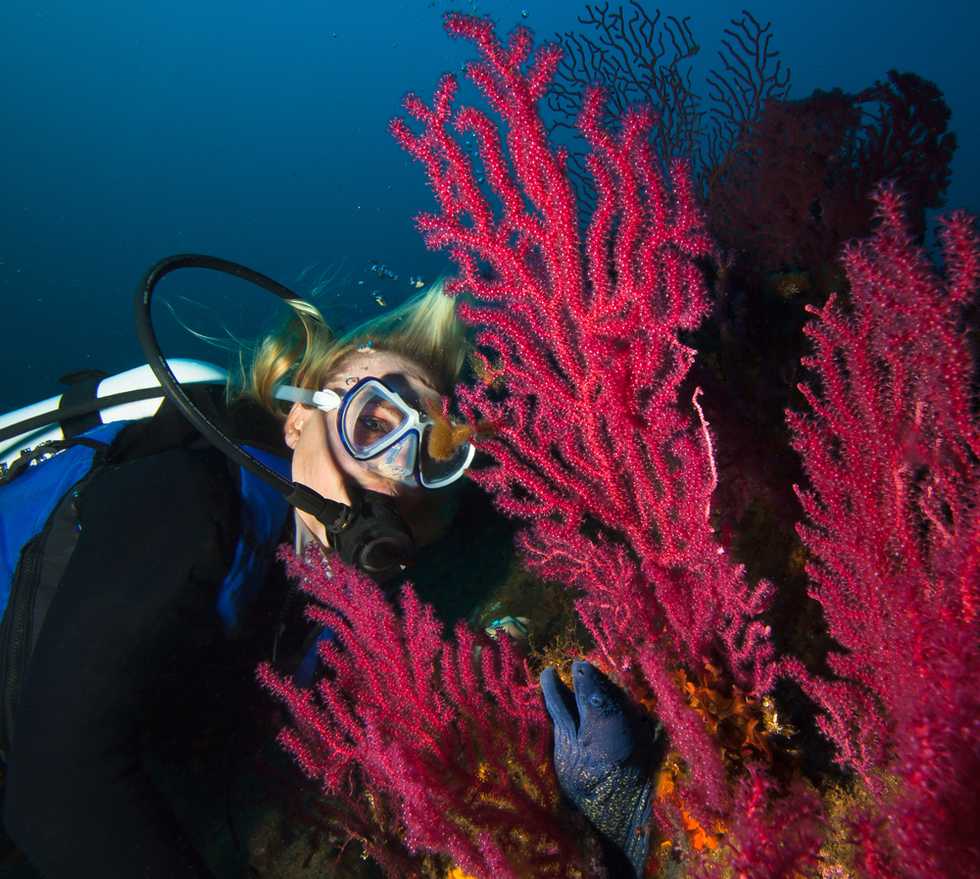
A group of scientists has discovered a massive coral reef where it was believed that no reef could exist -- the mouth of the Amazon River.
According to the L.A. Times, the reef covers 3,700 square miles and supports a "vibrant ecosystem" of plants, fish and other organisms that depend on the reef structure for lie.
University of Georgia oceanographer Patricia Yager told the Times that when the idea was first suggested to her by researcher Rodrigo Moura of the Federal University of Rio de Janeiro, she thought it was impossible. Coral reefs need abundant sunlight to survive and river mouths typically carry loads of sun-blocking sediment into the sea.
“I kind of looked at him like he was crazy, thinking, ‘You know how muddy it is there -- how could there possibly be a reef there?’” Yager said.
And yet, when she accompanied Moura to the site of the reef and the ship's crew dredged the sea floor, they brought up a dazzlingly diverse array of reef life.
“Unbelievably, he brought up onboard the deck just the most amazing things I’d ever seen...beautiful, colorful reef animals that I had no idea were down there,” she recounted.
Coral are tiny animals related to jellyfish and sea anemones that harvest calcium and carbonate from the seawater around them to build rock-hard structures that can stretch for thousands of miles. Coral reefs are home to a wide array of plants and animals and play a vital role in the oceans' biodiversity. However, the organisms are sensitive to changes in water acidity and temperature. Climate change and human activity are killing off reefs at alarming rates around the world.
Fabiano Thompson, an oceanographer at the Federal University in Rio, told Smithsonian magazine, "This is something totally new and different from what is present in any other part of the globe."
"But until now," he said, "it’s been almost completely overlooked.”
The Washington Post noted that the reef's discovery comes "at a time when reefs worldwide are under immense stress."
"Last week, a task force in Australia reported that 93 percent of the Great Barrier Reef has suffered at least some bleaching," wrote the Post's Sarah Kaplan. "The warming of oceans because of climate change and El Niño have weakened the world's coral for months, scientists say, causing damage from Hawaii to the Indian Ocean."
The newly discovered reef is under threat from local fishing and oil drilling, said Yager, although it is currently unclear how severe the threat is. Researchers are concerned that the reef will begin to die before they can fully explore it.
“Isn’t that always the case," Yager told the Times, "you don’t know what you’ve got until it’s gone?”

