




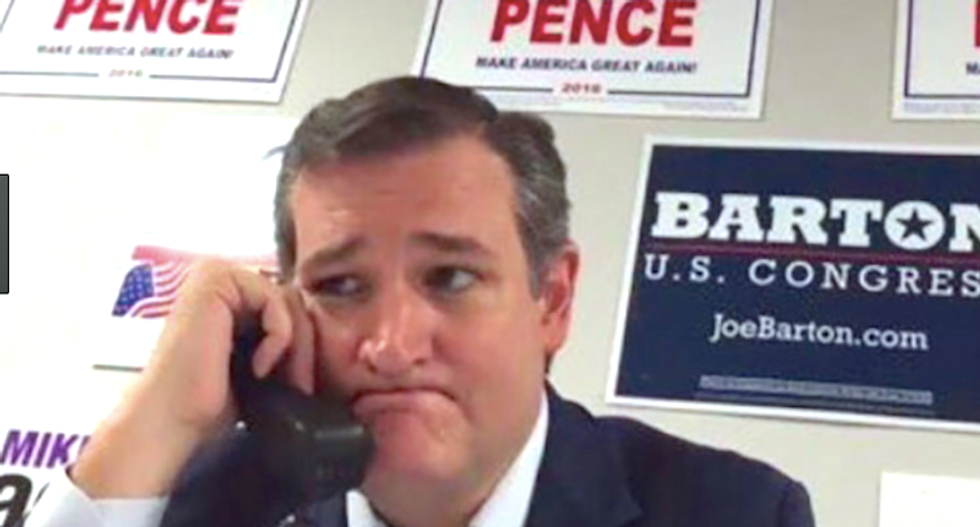
On the heels of the Alabama election, deep red parts of Texas are also ready to turn.
An NPR report explained that every Republican in the state will be forced to fight for their seat for the first time in 25 years. Candidate filing in the Secretary of State's office show that a Democrat running in each of the 36 congressional districts in the state. It's a record setting number at a time that President Donald Trump opted to mock those saying they're in "the resistance."
It's a stark contrast from the 2016 election when eight congressional seats held by Republicans went completely uncontested.
"We are seeing a groundswell of unusually high support and mobilization among progressive Democrats who are really angered by the Trump administration," said Mark Jones a political science fellow at Rice University's Baker Institute.
Unlike Alabama, Texas' demographics have been shifting as Latino voters turn political to fight back against racist policies and candidates. The state might be red, but Democrats are "more motivated than they've been in years," NPR described.
[caption id="" align="aligncenter" width="353"]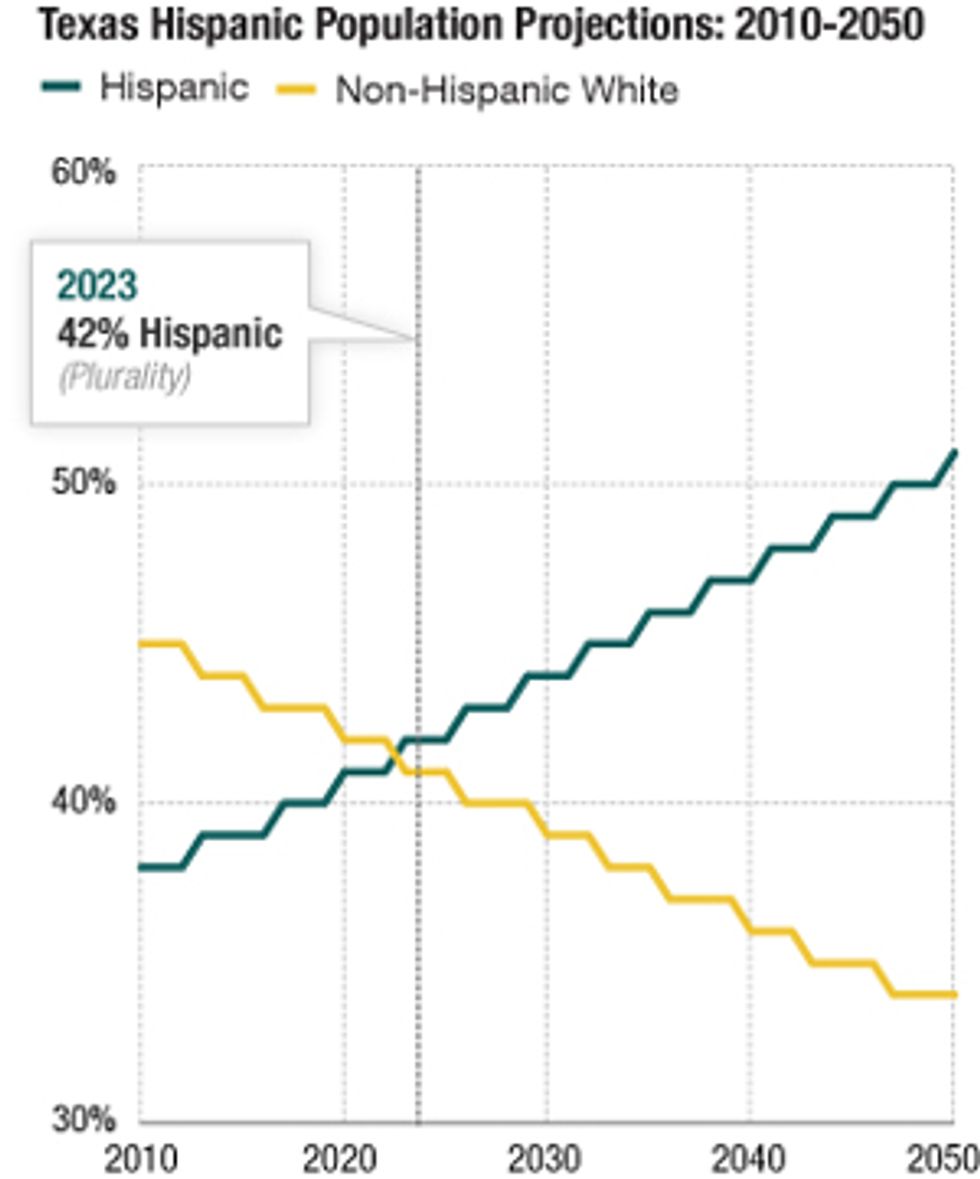 (Photo via NPR)[/caption]
The gap might be a significant one for Democrats to close, but in a world where Democrat just won the U.S. Senate race, suddenly anything seems possible for the opposition.
The resistance doesn't end at federal seats, however, Democrats are also running in 89 percent of the seats in the Texas house and 88 percent of the Texas Senate. The Texas Democratic Party hasn't managed to make that happen since at least 1992.
"We are seeing Democrats come out to run not only for the goal of challenging and doing something to voice their opposition to President Trump," Jones said. "But we are seeing Democrats come out in several districts where, in the past, Democrats had no chance whatsoever and had difficult time recruiting top-quality candidates."
The midterm elections traditionally delivers gains for opposition party occupying the White House. The most recent example is the tea party backlash to President Barack Obama in 2010.
Jones went on to say that the resistance has been motivated against Trump and it's led to "enthusiasm and mobilization" among Democrats. He was quick to say that it doesn't mean that Democrats will make huge gains, but it's a big step after the 2016 election, where 28 GOP seats went uncontested.
[caption id="" align="aligncenter" width="601"] (Photo: Brennan Center)[/caption]
"Outside of [congressional district] 23, held by Will Hurd, all of the Republican-held districts today, more likely than not, will stay Republican-held districts," Jones explained. "But they are not locks, and certainly we can't consider them to be sure-things."
He went on to claim that it will likely take a perfect storm for Democrats to make significant gains in Congress. Conversely, picking off many Republicans might be enough to influence the moderate wing to stop compromising with the far right.
Texas Democratic Party spokesperson Tariq Thowfeek noted Democrats only need to take back 24 seats to take back the house.
"I think four of those seats can come from Texas," he said.
The congressional map doesn't help Democrats, either. Federal courts have declared that the districts drawn by the Republican legislature are intentionally discriminatory. Minority voters, who typically benefit Democratic candidates, are broken up in multiple districts.
There are three seats currently held by Republicans that Hillary Clinton won in 2016. Democrats think those are up for grabs, NPR explained.
District 7, currently held by Rep. John Culberson, R-Houston
District 23, currently held by Rep. Will Hurd, R-Helotes
District 32, currently held by Rep. Pete Sessions, R-Dallas
In their U.S. Senate race, Beto O'Rourke is ready to do anything to beat Sen. Ted Cruz (R-TX) and he's starting out strong with a $2.1 million war chest. After the Alabama election was called for Doug Jones, former Housing and Urban Development Secretary Julián Castro warned Cruz that he should be afraid.
As was the case in Alabama, so much comes down to voter turnout. If the GOP can keep their voters engaged, they might hold the seats. If Democrats continue their uprising, there could be an upset.
