




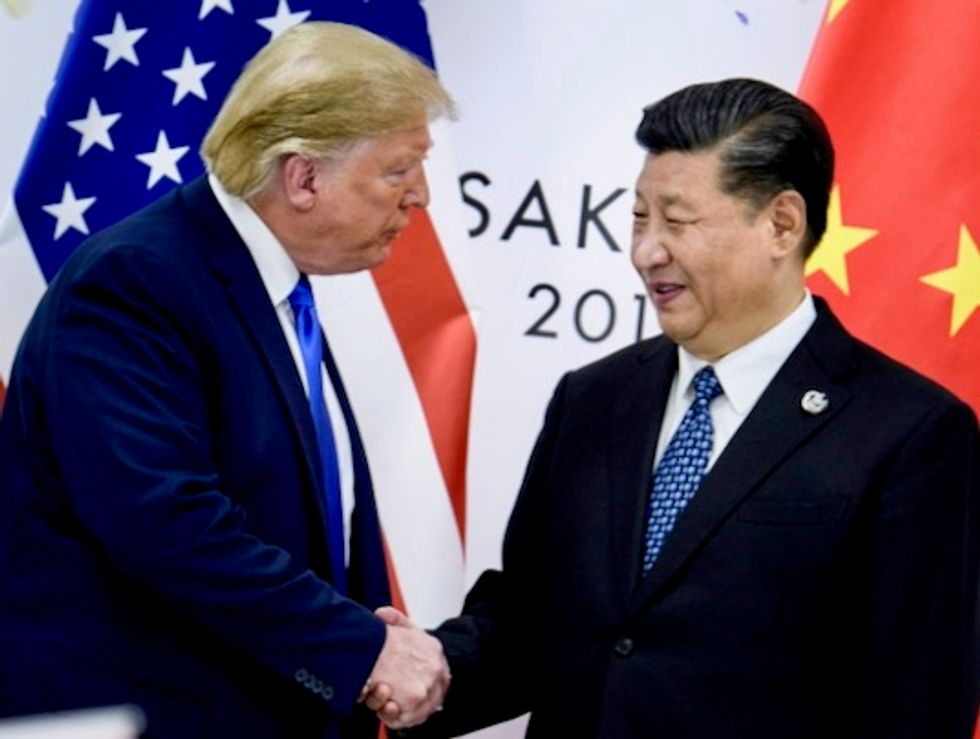
In the midst of a terrible few weeks of scandals and bad news, President Donald Trump managed to announce a piece of good news for his agenda: his administration has tentatively announced a partial resolution to the trade war with China, in which the nation will make a large purchase of U.S. exports and Trump will agree to reduce some tariffs on Chinese goods.
The deal will likely calm down unstable markets, and reduce the risk of a recession in 2020. But even now, according to Shawn Donnan in Bloomberg, experts remain unconvinced this deal will fix Trump's trade problems — or that it is even a sign that he is getting what he wants at all.
"The surge in Chinese purchases of U.S. farm products that is the biggest win for Trump in the agreement unveiled Friday is one that was first offered by Beijing more than two years ago," wrote Donnan. "It will be accompanied by unspecified commitments on intellectual property and currency and will go some way to repairing the damage done to U.S. agriculture since tit-for-tat tariffs began more than 18 months ago."
"But even if it gels in the way that Trump outlined Friday, the agreement is far smaller in scope than what the president himself once envisioned, or what was on the table when talks broke down in May," added Donnan. "It also leaves major questions hanging in the wind amid a broader relationship showing plenty of signs of souring — ranging from the Chinese furor over an NBA executive’s backing for the growing protests in Hong Kong to the administration’s invocation for the first time this week of human rights to crack down on Chinese tech companies and visas for officials."
“This deal hardly resolves any of the major underlying sources of trade and economic frictions between the two countries,” said former IMF China expert Eswar Prasad.
The bottom line is that the deal is potentially a win for Trump and for the nation — but there remain a number of unanswered questions and conflicts that have yet to be resolved.
